



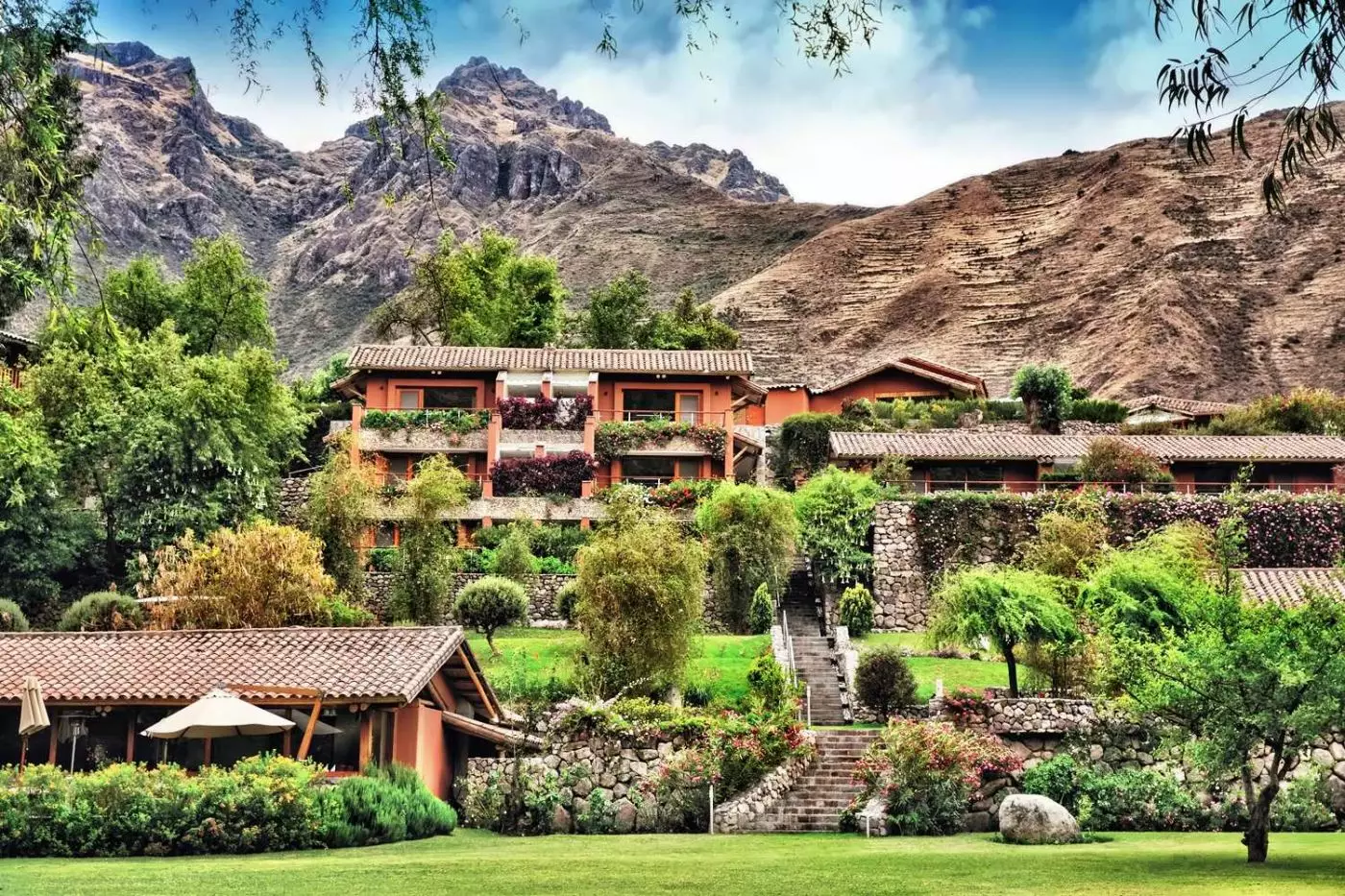
Belmond Hotel Rio Sagrado
Prices From 790 USD
+2
More amenities
- Adventure
- Sustainable
Rio Sagrado, A Belmond Hotel, Sacred Valley occupies a rare green stretch beside the Urubamba River, between Cusco and Machu...
Please choose a hotel or destination from the list.
We couldn’t open your search results. Please try again.
Your private search
Finding exceptional stays
The Sacred Valley is a landscape of river, cultivated fields and Andean villages, with luxury hotels that invite you to settle into the valley rather than simply pass through it. Choose a base for the kind of days you want: time beside the Urubamba River, rural views or a closer encounter with agricultural life.
Prices From 790 USD
More amenities
Rio Sagrado, A Belmond Hotel, Sacred Valley occupies a rare green stretch beside the Urubamba River, between Cusco and Machu...
Prices From 658 USD
More amenities
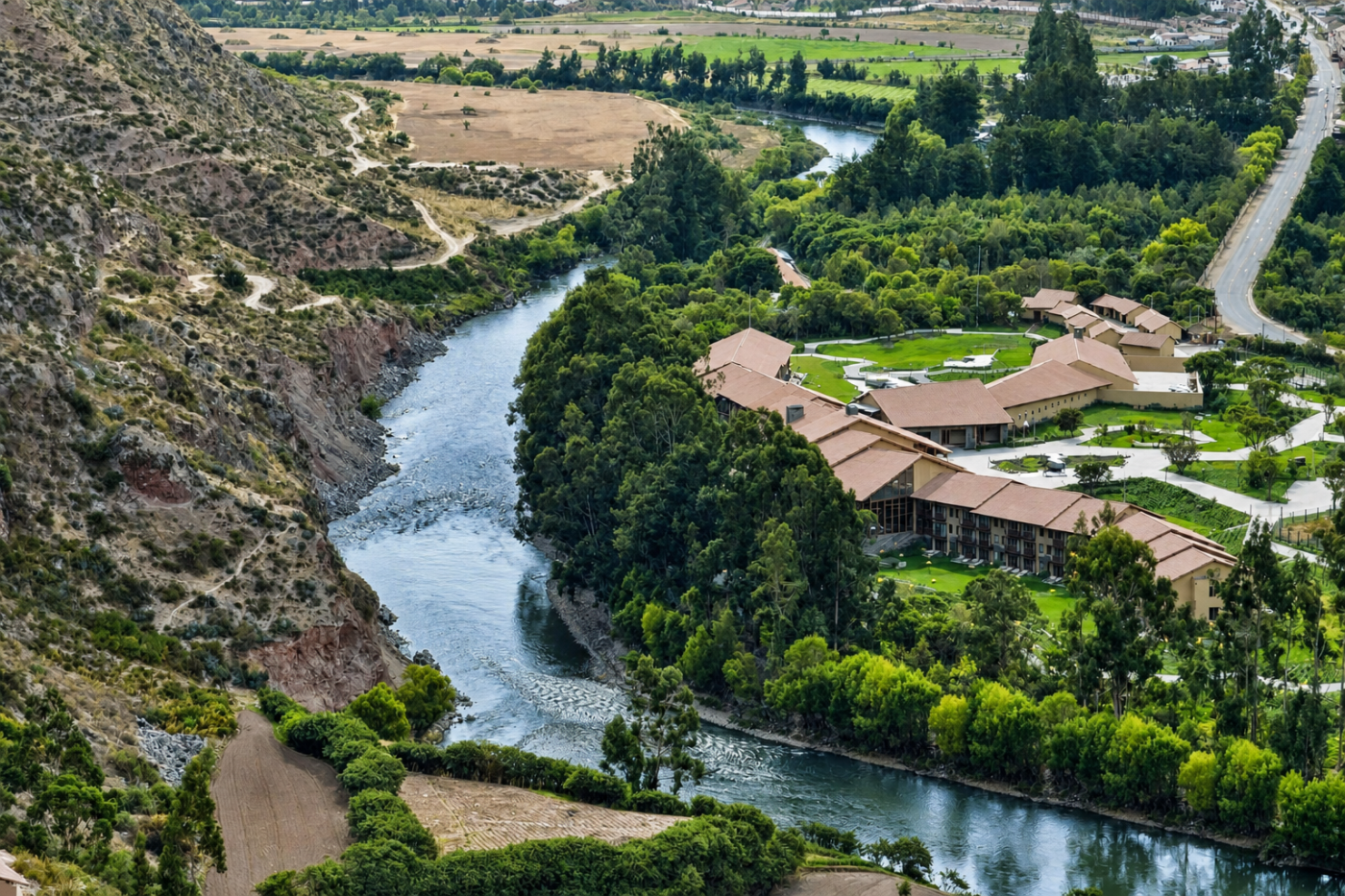
Tambo del Inka Resort places travelers beside the Urubamba River in Peru's Sacred Valley. The Andes rise around the gardens,...
Prices From 531 USD
More amenities
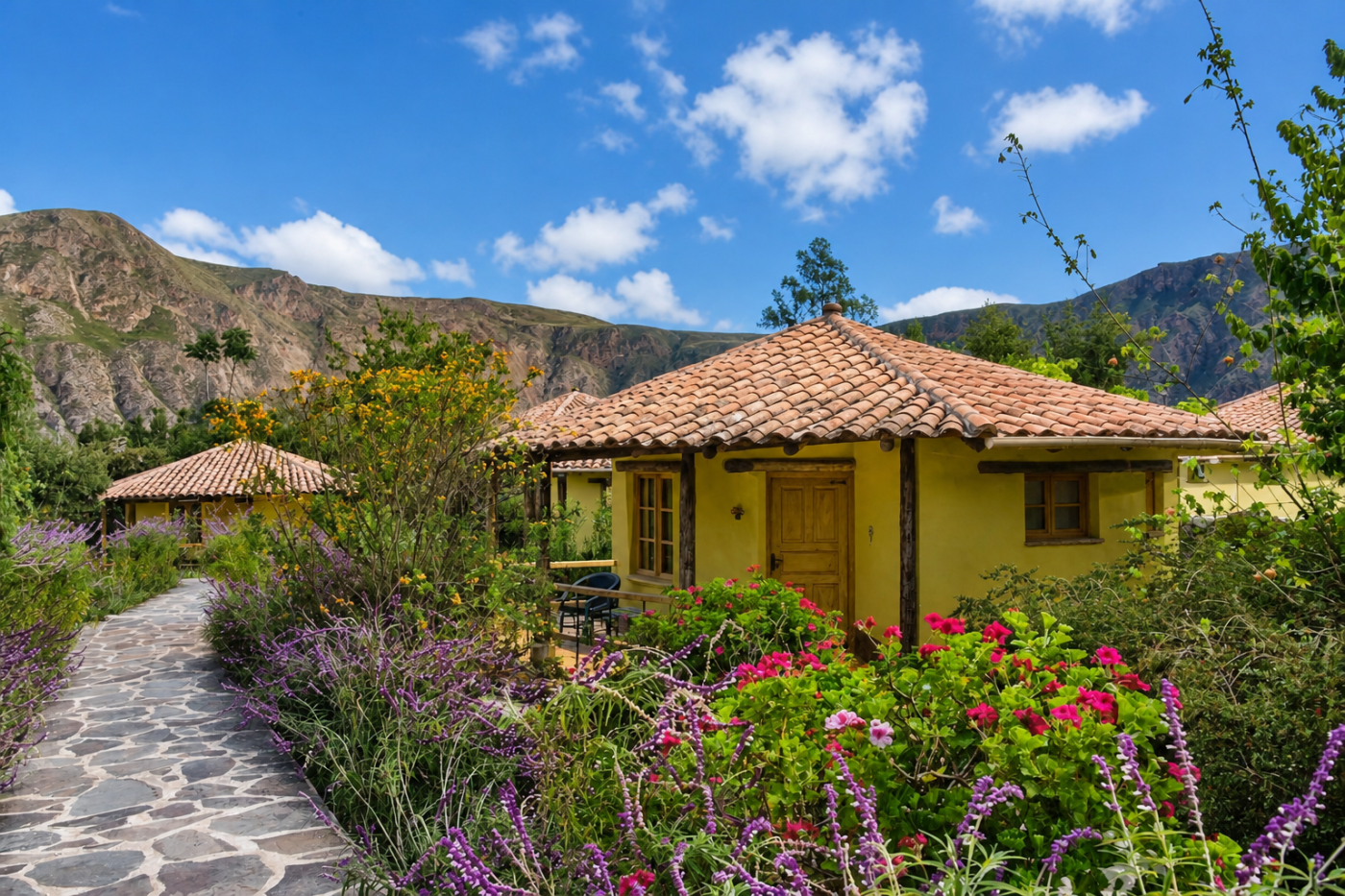
At Sol y Luna, the Sacred Valley is not a view glimpsed from a hotel corridor. Forty-three individual casitas sit among garde...
Prices From 544 USD
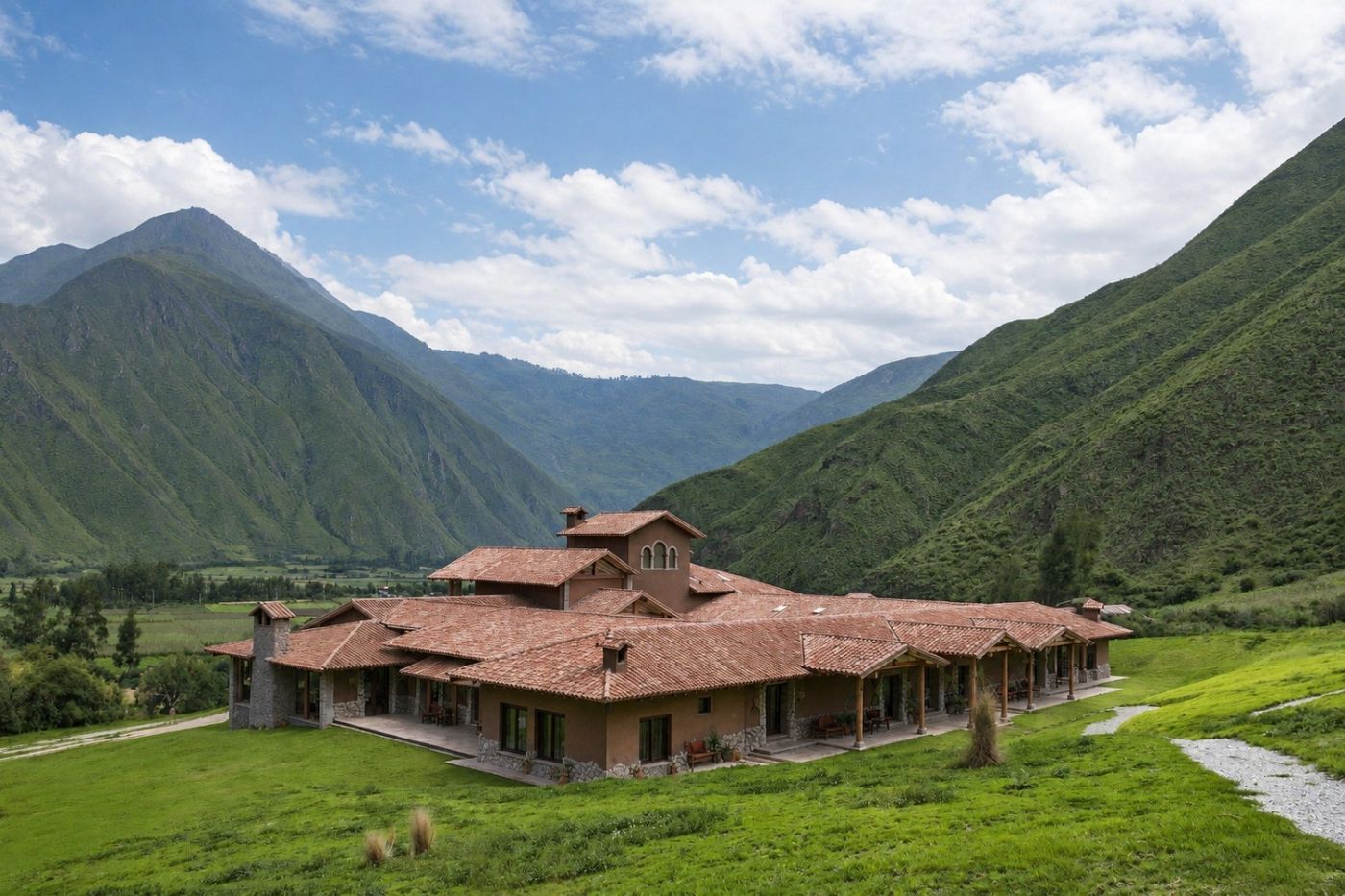
Inkaterra Hacienda Urubamba sits in Peru's Sacred Valley of the Incas, between Cusco and Machu Picchu, surrounded by green mo...
This collection belongs to the wider Sacred Valley, not to a single town centre. Urubamba provides an important point of reference, but the exact hotel setting should lead your choice. A riverbank stay creates a different daily atmosphere from a rural address above the valley floor. Decide whether you want the river close by, a garden setting or longer views across the agricultural landscape.
Rio Sagrado stands beside the Urubamba River on the road towards Ollantaytambo, while Tambo del Inka is in Urubamba itself. Sol y Luna's Fundo Huincho address is also in the Urubamba area. Inkaterra Hacienda Urubamba lies in Huayoccari, within the Huayllabamba district. These are useful reference points for comparing settings; they should not be treated as interchangeable entrances to every village or site.
The valley is more than a succession of archaeological stops. Its cultivated fields, mountains and settlements give a stay its character. Leave an interval for enjoying that setting from the hotel instead of arranging every morning around departure. A private guide can help shape an outing around a particular interest, with the route and walking requirements agreed for your party.
Agriculture offers another way into the place. Hacienda Urubamba's organic farm grows crops including quinoa, giant corn and potatoes. A stay with this kind of rural setting can suit travelers who want the landscape to remain part of their experience between larger visits. Ask about the actual activity arrangements rather than assuming that a farm encounter is included in every reservation.
Yucay makes the valley's agricultural landscape more specific. Its archaeological zone combines terraces, retaining walls and irrigation channels, with water brought from the San Juan ravine and distributed to individual fields. Choose it when you want to understand how water moves through the cultivated slopes, alongside the mountain setting. The engineering gives this outing a clear subject beyond a general drive past fields.
In the village, the remains of the Casa de Sayri Tupac stand at Plaza Manco II and Calle San Martin. They bring a named Inca residence into the settlement rather than a hilltop complex alone. A Yucay visit can connect those built remains with the nearby agricultural works, giving village history and irrigation separate roles in one local outing.
The Cusco guide covers the city's own neighborhoods and cultural visits.
Moray is distinguished by its circular agricultural terraces. Choose a visit for the way cultivation and landscape come together, rather than expecting a town of preserved houses. A guide can help interpret the terrace arrangement without turning theories about its precise functions into established facts. Confirm the actual visitor route for your party.
No. The salt-producing landscape is made up of many small evaporation ponds, rather than one lake. The relationship between the terraces, salt water and working landscape is the reason to visit. Treat production areas as places of work and follow the current visitor arrangements, rather than assuming you can walk freely among every pond.
Choose a visit that explains the making process, including dyeing and weaving, rather than only allowing time to browse finished goods. Chinchero has textile centres where local weavers demonstrate these traditions. Establish whether your visit is a demonstration, a hands-on session or a shop stop, since those are different experiences.
No. Its living settlement retains streets and water channels associated with its Inca layout, alongside the monumental archaeological setting. Leave room to notice how the town is arranged instead of treating it solely as a stone complex above a square. A walk through the settlement and a site visit have distinct purposes.
No. The craft market is in the town, while the archaeological park occupies a separate hillside setting with terraces and other structures. Choose the market for browsing crafts and the park for its archaeological landscape. If both matter to you, specify both in the outing rather than assuming that the name Pisac includes them automatically.