



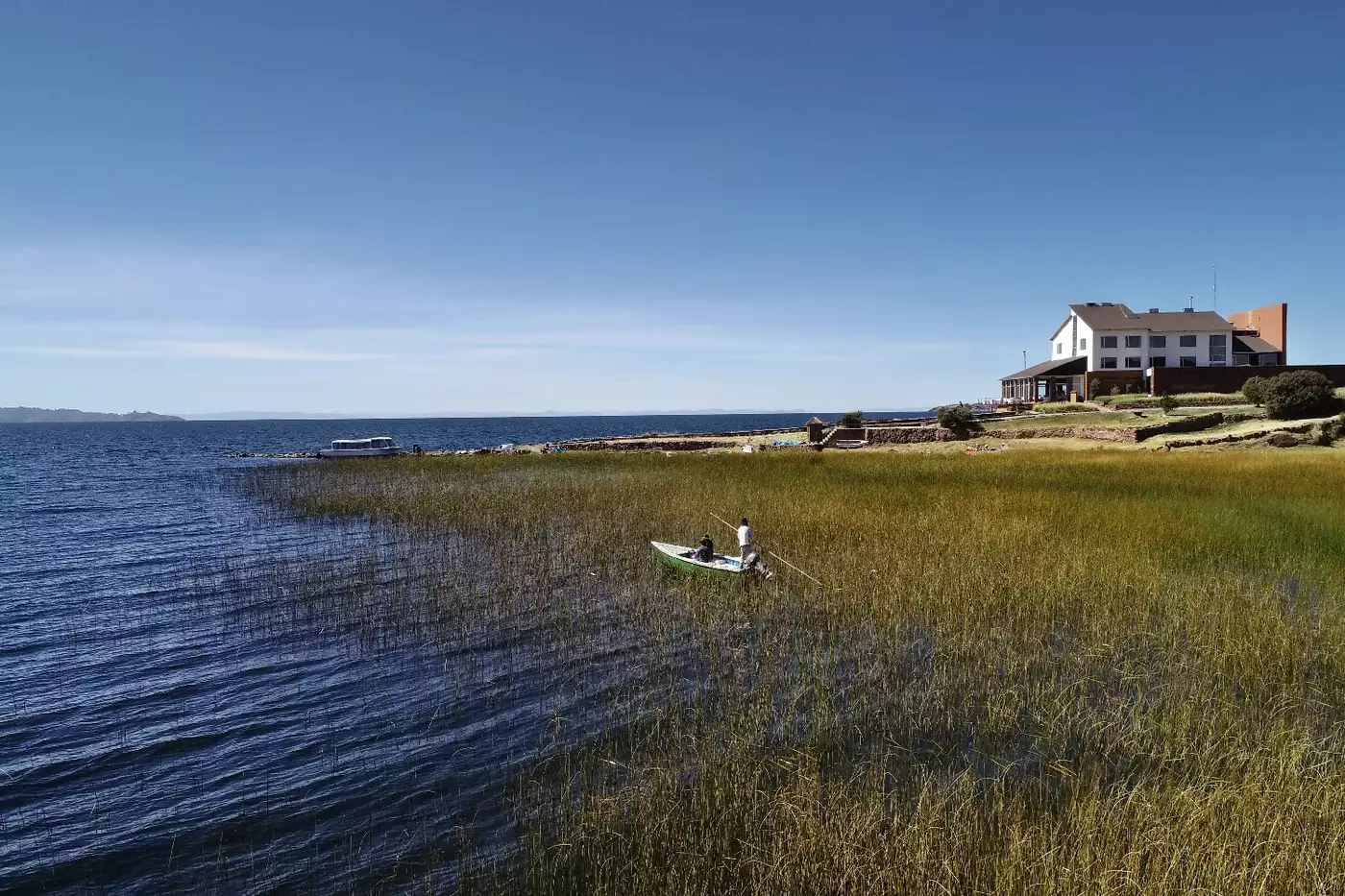
Titilaka Hotel
Prices From 1’364 USD
Infinite skies, snowcapped peaks, and sapphire waters shimmering to the horizon will be your companions at Titilaka, a boutiq...
Please choose a hotel or destination from the list.
We couldn’t open your search results. Please try again.
Your private search
Finding exceptional stays
Puno’s highland lake setting combines open water with the living traditions of Titicaca’s communities. Titilaka gives the stay a peninsula base beside the lake. Choose this stage for island visits and time around the shore, with textile traditions, ceremonial places and regional archaeology offering different cultural interests.
Prices From 1’364 USD
Infinite skies, snowcapped peaks, and sapphire waters shimmering to the horizon will be your companions at Titilaka, a boutiq...
Titilaka’s peninsula setting makes Lake Titicaca part of the stay itself. The hotel is a base for a holiday shaped by the water and the surrounding communities, with cultural outings adding specific reasons to explore beyond the lodge.
Taquile’s textile art is part of everyday community life, with both men and women making the fabrics worn on the island. Knitting and weaving on four-stake ground looms preserve techniques with pre-Hispanic roots. For travellers interested in craft, the island offers a way to understand clothing as a living expression of place.
The chullo is a knitted hat with earflaps. Another characteristic piece is the calendar waistband, a wide woven belt whose designs describe annual ritual and agricultural cycles. Looking at these particular garments gives a textile visit a more precise focus than buying an unspecified souvenir.
Amantaní adds hilltop ceremonial places to the lake journey. Pachatata and Pachamama are associated with offerings to the earth and form part of the island’s sacred geography. The high viewpoints also place the surrounding water and shores within a broad panorama.
This suits an interest in the relationship between a community’s landscape and beliefs. The sacred places belong to that community; an outing to the island does not establish an invitation to a ritual.
Our Peru destination guide helps place that choice within the national landscape.
No. Its peninsula setting offers a lakeside retreat rather than an urban hotel experience. Keep the exact accommodation position clear when choosing the stay. A Puno destination label alone does not tell you whether the surrounding hours will feel city-centered or landscape-led.
No. The floating Uros islands have a particular construction tradition associated with totora. Do not extend that description to every island in the lake. Distinguishing the places makes the cultural geography more interesting and helps you choose the subject of an outing.
Yes. Titilaka’s lake setting includes an interest in the protected wetland environment and its birdlife. Approach observation patiently, without depending on a particular sighting. The habitat itself provides a useful perspective on the lake beyond the familiar broad-water view.
Sillustani is a funerary complex beside Lake Umayo, a different body of water from Titicaca. Its chullpas are stone burial towers associated with the Colla elite. Closely fitted blocks form towers that broaden above a narrower base. Choose it for an interest in the highlands’ funerary architecture, rather than as another island-community visit.
The Carlos Dreyer Museum brings regional archaeology and historical art into a town outing. Its collections include ceramics, stone objects and metalwork from cultures of the Puno region. Gold and silver ornaments and offerings associated with Sillustani add an object-based perspective on the highlands’ past. Choose the museum for these collections alongside the outdoor sites and living traditions around the lake.