



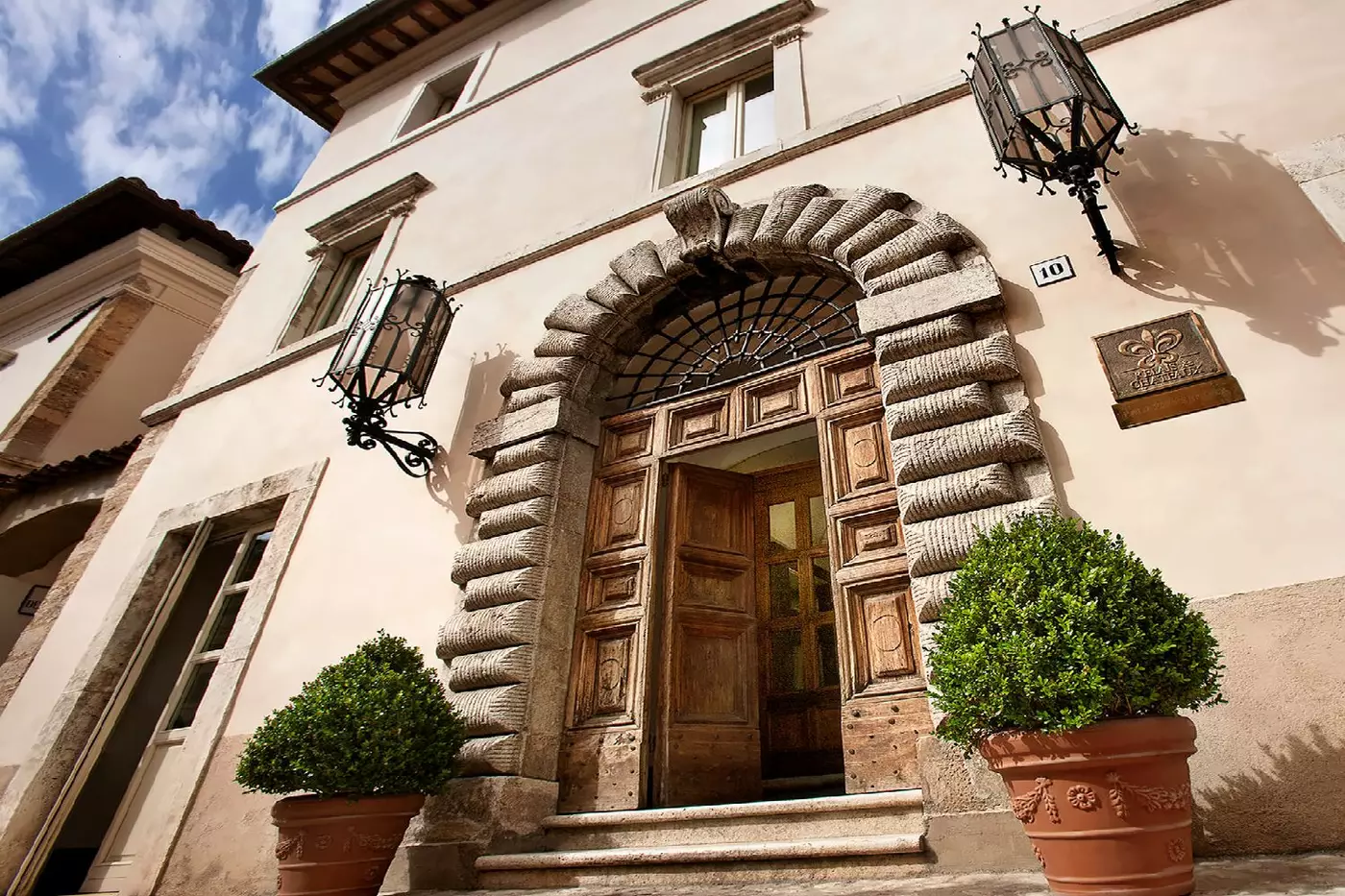
Palazzo Seneca
Prices From 212 USD
+2
More amenities
- Wellness
- Adventure
Palazzo Seneca is a small Umbrian hotel with a strong sense of place. It stands in the historic center of Norcia, a few steps...
Please choose a hotel or destination from the list.
We couldn’t open your search results. Please try again.
Your private search
Finding exceptional stays
Norcia gives an Umbrian luxury stay a particular relationship with food and mountain landscapes. The collection features Palazzo Seneca in the historic centre, creating a town base rather than a remote country estate. Choose it for time in Norcia itself, with selected Sibillini or Valnerina interests adding a different scale of experience around the stay.
Prices From 212 USD
More amenities
Palazzo Seneca is a small Umbrian hotel with a strong sense of place. It stands in the historic center of Norcia, a few steps...
Palazzo Seneca provides a historic-centre hotel reference for Norcia. The town’s fourteenth-century walls give the built centre a defined outline, while the Castellina introduces a different scale of fortification within it. These are specific architectural subjects to consider alongside the surrounding Umbrian landscape.
The Castellina was built in 1554 to Vignola’s design as a fortified residence for the papal legate. Its role brings civic authority into the town’s architectural story. Look at that purpose when choosing a historical subject, rather than treating every substantial building as the same kind of religious monument.
The Marcite near Norcia are permanently irrigated meadows connected with groundwater emerging in many small channels. Their green agricultural landscape gives the area a water-shaped subject beyond the image of a stone-built mountain town.
The wider Italy destination guide places Norcia’s Umbrian town-and-landscape character within the national journey.
It refers to the cured-meat tradition associated with Norcia. That gives a food-focused visit a particular craft subject, distinct from a general restaurant itinerary. Choose it for an interest in how local knowledge and ingredients become part of regional identity.
They are cultivated on the high karst plains of Castelluccio and have a protected geographical identity. That links a familiar ingredient with a specific landscape, giving the food interest a geographical subject beyond the town itself.
No. Their recurring seasonal character is useful context, but the actual flowering depends on conditions. Choose the landscape for more than a single expected photograph, keeping the high plains distinct from an assumption that every visit will look identical.
It is his birthplace and a starting point of the Way of Saint Benedict. Choose that religious and historical thread if it interests you, keeping a longer walking journey distinct from a shorter town visit.
Vallo di Nera adds a Valnerina village visit for an interest in medieval streets and painting. It stands above the Nera River, with sections of castle walls and towers around its stone-built centre. In Santa Maria Assunta, Cola di Pietro da Camerino’s fresco depicts the procession of the White Penitents that passed in 1399; he painted it in 1401. Choose this valley outing for a village and church-art focus, alongside the open landscape of the Sibillini high plains.