



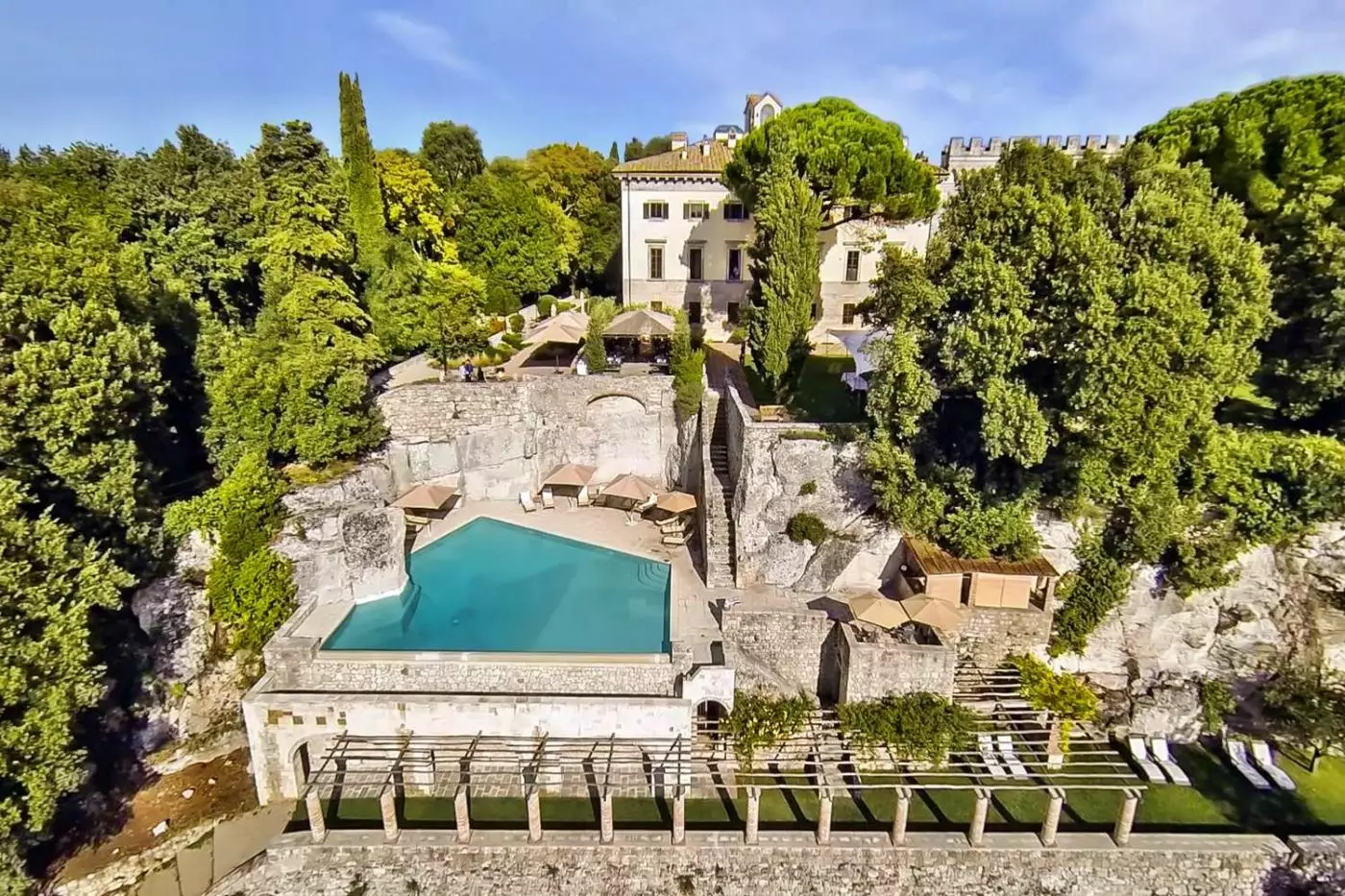
Borgo Pignano Volterra Tuscany
Prices From 475 USD
+3
More amenities
- Sauna
- Culture
- Romantic
Borgo Pignano Volterra Tuscany is a quiet country estate near Volterra, set in the hills between some of Tuscany's most beaut...
Please choose a hotel or destination from the list.
We couldn’t open your search results. Please try again.
Your private search
Finding exceptional stays
Volterra’s hilltop streets bring stone into view at several scales, from an ancient gateway to a medieval square and objects in a collection. Its luxury-hotel landscape includes the countryside setting of Borgo Pignano. Give the town’s built form a place in your plans alongside the interests covered below.
Prices From 475 USD
More amenities
Borgo Pignano Volterra Tuscany is a quiet country estate near Volterra, set in the hills between some of Tuscany's most beaut...
Porta all’Arco is an Etruscan gateway in Volterra’s ancient walls. Three stone heads mark the arch. Their presence makes the gateway a specific architectural subject, rather than simply a boundary to pass through.
The structure brings together different stones: the large jambs, arch and heads do not all use the same material. Look at how the parts meet and how their colours differ. This is a way to appreciate the gateway as a built object without needing to assign an unproven identity to each head.
For a traveler interested in architecture, the gateway and Piazza dei Priori offer different scales of observation. One concentrates attention on an opening and its construction; the medieval square provides a broader civic space. Choose that built-environment focus when you want the town itself, rather than only its collections, to shape the visit.
The Guarnacci collection includes funerary urns made in local stone. Their smaller scale gives close observation a different role from looking at a gateway or square. Material, surface and workmanship can connect those interests without making every object part of the same historical story.
Alabaster also gives Volterra a recognizable material identity.
Our Italy destination guide can help place Volterra within a wider journey through the country.
No. The destination includes estates beyond the town streets. Choose a countryside property for the rural return and plan visits into Volterra as outings. If repeated walks around the center are your priority, give that location preference more weight.
No. The Guarnacci Museum focuses on Etruscan culture and objects. The Alabaster Ecomuseum explores the material and its craft history. They can complement each other, but each should have a clear purpose rather than being treated as the same collection.
The Pinacoteca in Palazzo Minucci-Solaini adds painting to Volterra’s cultural choices. Its collection includes medieval gold-ground panels and Renaissance works such as Luca Signorelli’s Annunciation and Rosso Fiorentino’s Deposition from the Cross, painted in 1521. In Rosso’s work, angular figures and asymmetrical ladders give the scene its tension, with intense reddish colours against a more uniform sky.
No. It belongs to a different historical period. Keep the Roman theater, Etruscan collections and medieval civic center distinct when planning the visit. Their contrast is part of what makes Volterra rewarding.
Montenero Nature Reserve contains “green rocks” formed from fragments of ancient oceanic crust. They create steeper relief than the surrounding clay-and-sand hills. In the Strolla gorge, erosion has cut into basalt, exposing pillow lavas associated with underwater eruptions. Choose this reserve for that volcanic-rock landscape, distinct from Volterra’s worked alabaster and the eroded clay scenery of the Balze.