



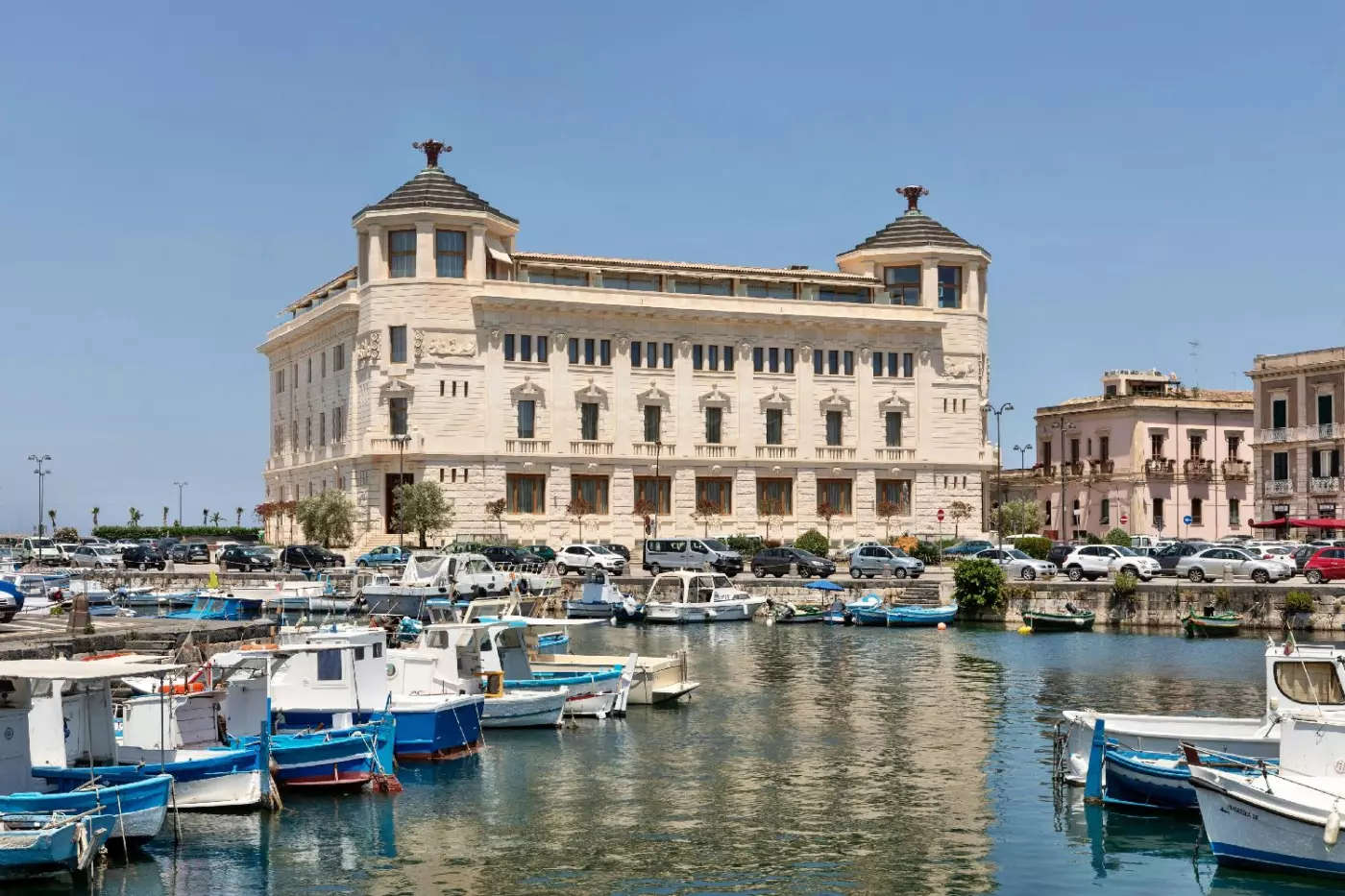
Ortea Palace Hotel
Prices From 418 USD
+2
More amenities
- Culture
- City Vibe
Ortea Palace Hotel, Sicily, Autograph Collection occupies Siracusa's former post office beside Porto Piccolo, at the northern...
Please choose a hotel or destination from the list.
We couldn’t open your search results. Please try again.
Your private search
Finding exceptional stays
Siracusa offers a Sicilian city stay shaped by architecture, myth and the sea. Choose accommodation for the surroundings you want to enjoy between visits. Ortigia gives local exploring a particular focus, with a cathedral incorporating an ancient temple and a spring associated with the story of Arethusa.
Prices From 418 USD
More amenities
Ortea Palace Hotel, Sicily, Autograph Collection occupies Siracusa's former post office beside Porto Piccolo, at the northern...
The cathedral incorporates the ancient Doric Temple of Athena. Its original columns remain visible along the northern side beside Via Minerva, giving a walk a specific architectural detail to seek. The building shows how an earlier structure became part of a later place of worship.
For travelers interested in how architecture changes, this is more than a facade to photograph. Consider the relationship between the surviving columns and the surrounding church. The same building can become the subject of an outing through the way its different forms meet.
Fonte Aretusa has a semicircular basin dating from 1843, with papyrus growing around the water. This is a different subject from monumental stonework: a spring setting tied to the myth of Arethusa and Alphaeus. Choose it for that connection between the city and its stories.
The papyrus and the form of the basin give a focused visit things to notice beyond the general waterfront view. If mythology interests you, the story adds another way to read the setting. Treat the legend as a cultural tradition, rather than a literal account of the spring's formation.
Ortea Palace provides an accommodation reference at the edge of Ortigia. Decide which part of the urban setting you want to enjoy most often, including the hours before a meal or after returning from a visit. Give that relationship weight alongside the principal subjects of the trip.
Our Italy destination guide places Siracusa within a broader journey. Compare onward settings for what they add, allowing the accommodation choice here to reflect your own interests.
No. Ortigia is the historical island part of Siracusa. Keep that scale clear when choosing accommodation and planning visits. The name identifies a particular setting within the city, rather than an unrelated overnight destination.
Its building was the former Syracuse post office, dating from 1920. That is a different historical identity from the city’s classical monuments. Choose the hotel’s architectural character for its own appeal without merging every era into an undifferentiated ancient setting.
Treat the archaeological area as a distinct part of the city visit. It has its own scale and classical subject. Giving it separate attention helps you appreciate both the monuments and the historic-island setting without compressing them into one hurried circuit.
No. A city’s relationship with the water is different from a resort selected for beach days. Choose the accommodation around the urban experience you want. If the beach is central to a wider Sicilian journey, give that chapter a clear purpose of its own.
Palazzo Bellomo’s collection includes Antonello da Messina’s Annunciation of 1474, painted for the Church of the Annunziata in Palazzolo Acreide. Originally an oil painting on wood, it was later transferred to canvas. The scene occupies a domestic interior framed by columns. Mary’s blue cloak and red-and-gold damask contrast with Gabriel’s patterned red velvet. Fine rendering of textiles and a distant green-blue landscape reflect Flemish painting, while the solid figures and construction of space draw on Italian art.