



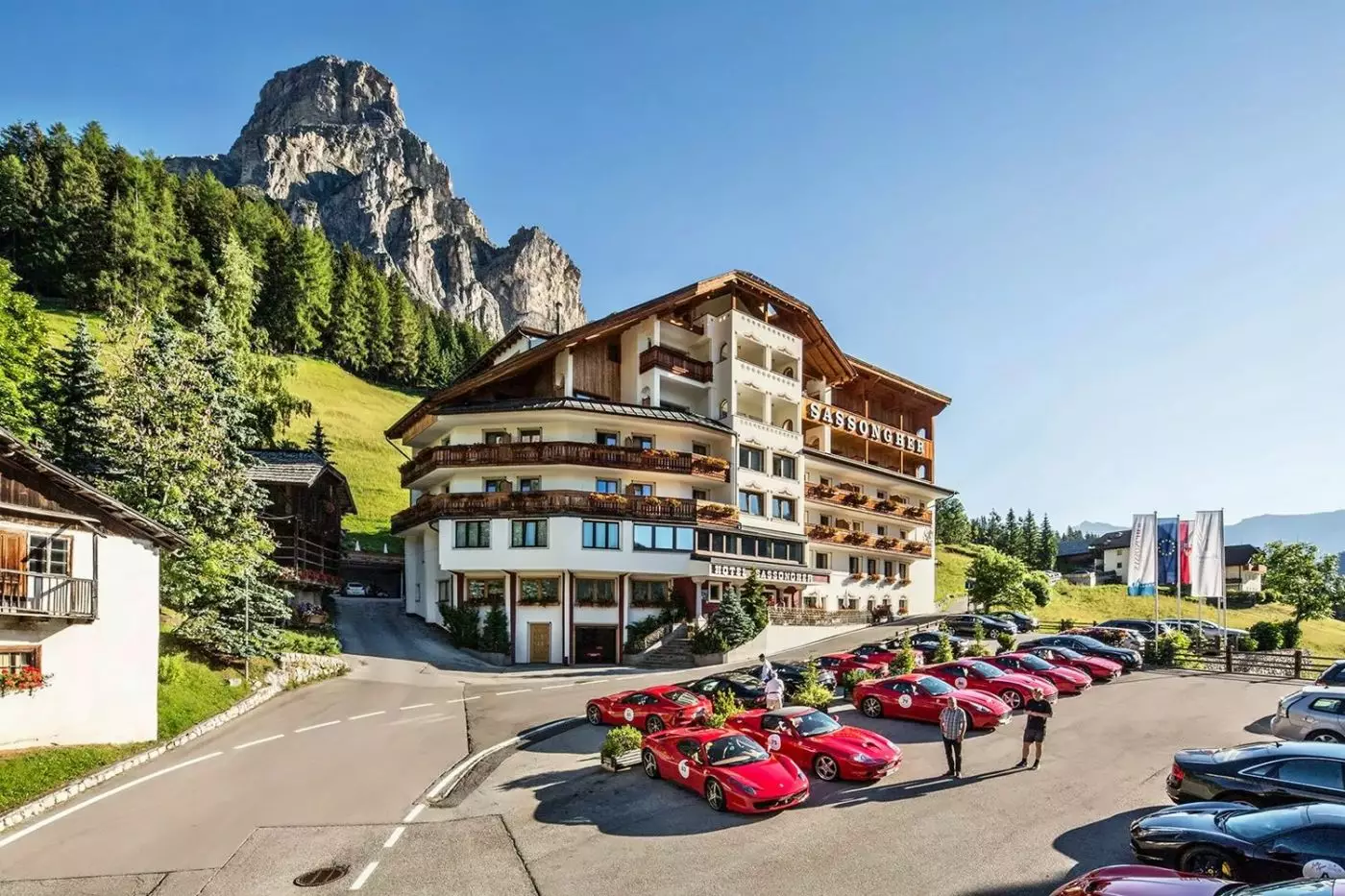
Hotel Sassongher
Prices From 404 USD
+3
More amenities
- Sauna
- Mountain
- Adventure
Hotel Sassongher stands above Corvara in Badia at Strada Sassongher 45, close to the peak that gives the house its name. It i...
Please choose a hotel or destination from the list.
We couldn’t open your search results. Please try again.
Your private search
Finding exceptional stays
Alta Badia brings together six Dolomite villages: Corvara, Colfosco, La Villa, San Cassiano, Badia and La Val. A luxury hotel search here can begin with the village setting, then take a closer interest in the mountains' geological and natural history.
Prices From 404 USD
More amenities
Hotel Sassongher stands above Corvara in Badia at Strada Sassongher 45, close to the peak that gives the house its name. It i...
Hotel Sassongher gives the collection a specific Corvara base. Keep that address in view when looking at the surrounding mountain region: the hotel provides a place to stay, while the subjects you want to explore can lead to other villages and landscapes.
The Museum Ladin Ursus ladinicus in San Cassiano introduces the cave bear whose remains were found in the Conturines cave. Original bones, teeth and skulls, together with a complete cave-bear skeleton, give the subject a physical presence. The museum relates those remains to the fauna, climate and landscape of the Dolomites in the bear's time.
Choose this museum for an interest in prehistoric life and the evidence used to reconstruct it. Its fossil collection also introduces the formation of the Dolomites, linking a village visit with questions about the landscape beyond the buildings.
Puez-Odle is one of the mountain systems within the Dolomites World Heritage property, with Val Badia on its eastern side. Its Gardenaccia and Puez plateaux contrast with ridges and peaks that include Sassongher. That relationship gives a mountain interest more shape than a general description of dramatic scenery.
The rock sequence preserves much of the region's history from the Permian to the Cretaceous, including evidence of ancient atolls and tropical reefs. For travelers drawn to geology, the contrast between broad plateaux and steep rock forms offers a particular subject to investigate. Treat it as a way to understand the mountains, with any actual outdoor route chosen separately for its requirements.
Our Italy destination guide places this Dolomite setting within the country's wider regional choices.
It is a living local culture and language of the Dolomite valleys. Notice it in place names, village traditions and food rather than treating it only as a decorative hotel theme. It gives the region a cultural subject beyond mountain scenery.
The sanctuary above Badia provides a religious and cultural destination within the mountain landscape. Choose it for that particular setting and subject, rather than assuming every mountain outing is organized only around sport.
The parish churches in Corvara and Colfosco offer local architectural subjects. Give one attention as part of a village visit instead of treating every settlement only as a departure point for the slopes or paths.
Its meadows and routes toward the Santa Croce landscape offer another perspective on the region. Choose a suitable local route and season rather than assuming every walk has the same terrain or purpose as a high mountain circuit.
Not necessarily. Alta Badia has Ladin, Italian and German naming traditions. Recognizing that local context helps keep the geography clear when reading signs and descriptions, without assuming that each name refers to another hotel area.