Best for
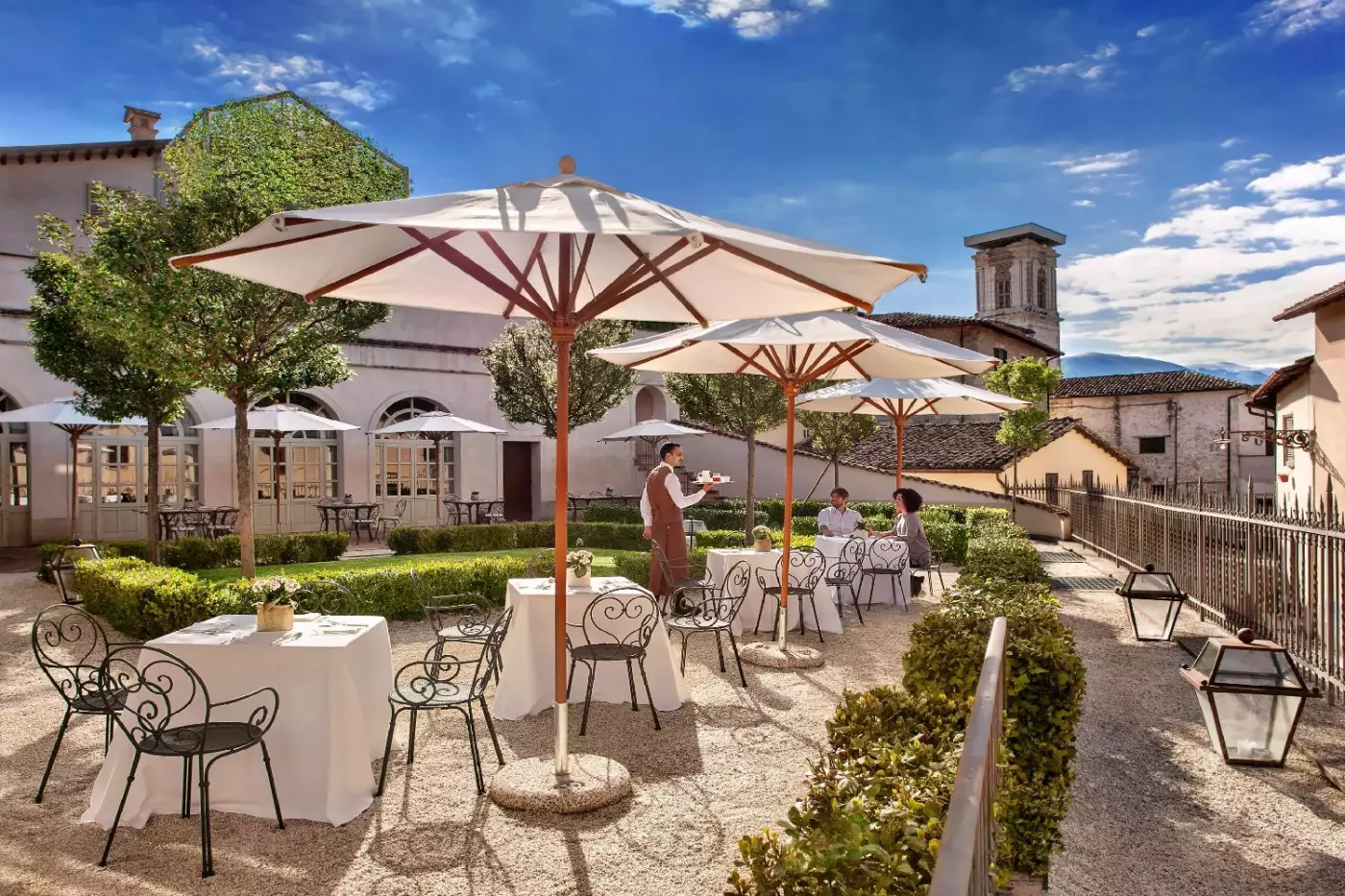
If your plans pair Norcia's historic streets with Sibillini hikes, Palazzo Seneca places the town center on your doorstep.
Please choose a hotel or destination from the list.
We couldn’t open your search results. Please try again.
Your private search
Finding exceptional stays
Best for
If your plans pair Norcia's historic streets with Sibillini hikes, Palazzo Seneca places the town center on your doorstep.
What makes it special
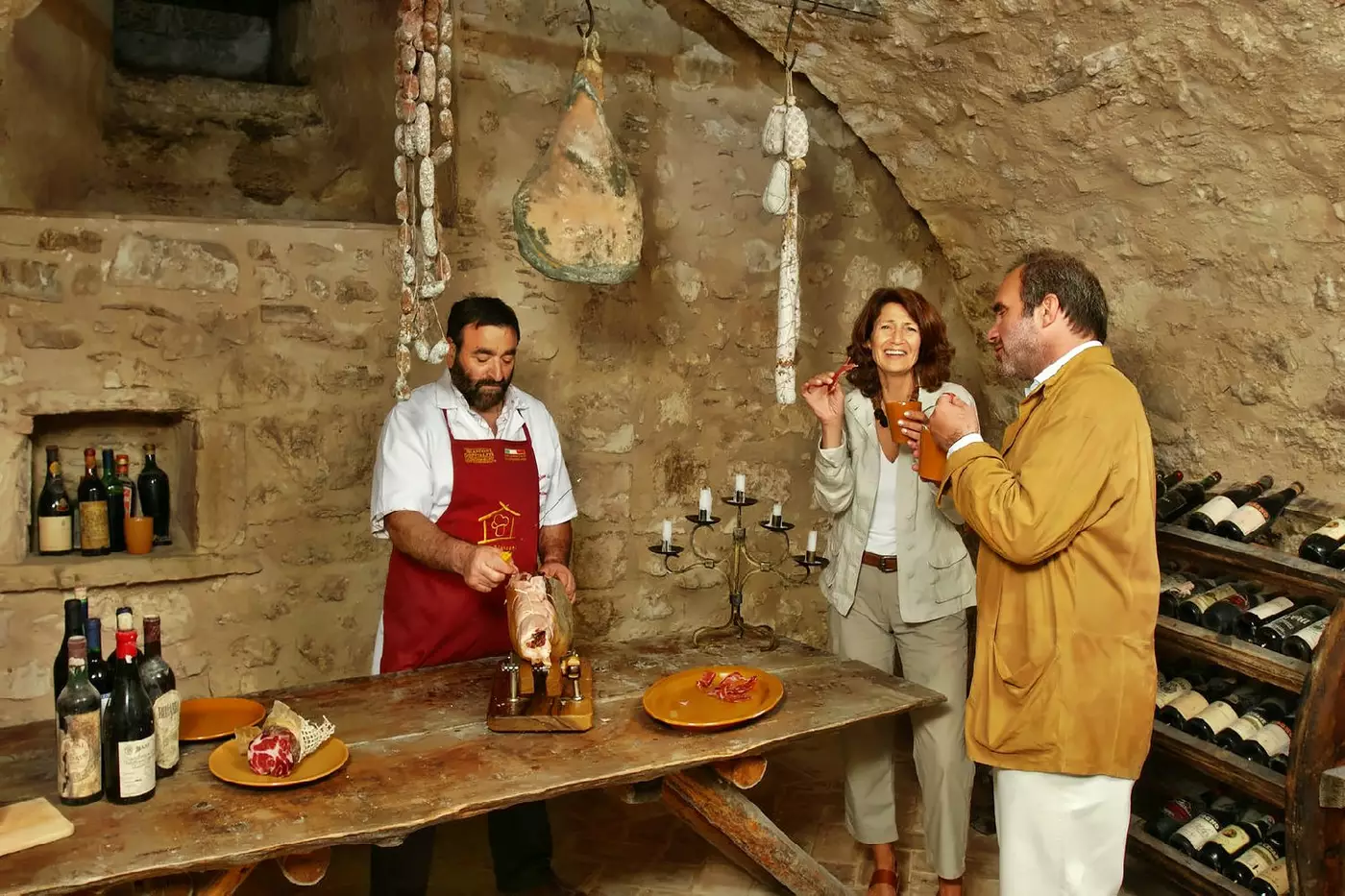
Ask whether the hotel can arrange a truffle hunt outside Norcia; the experience connects a signature local ingredient with the surrounding countryside.
Room to consider
Book the Deluxe with Terrace if outdoor space matters: its terrace looks toward the Sibillini National Park, giving you a view beyond town.
Insider tip
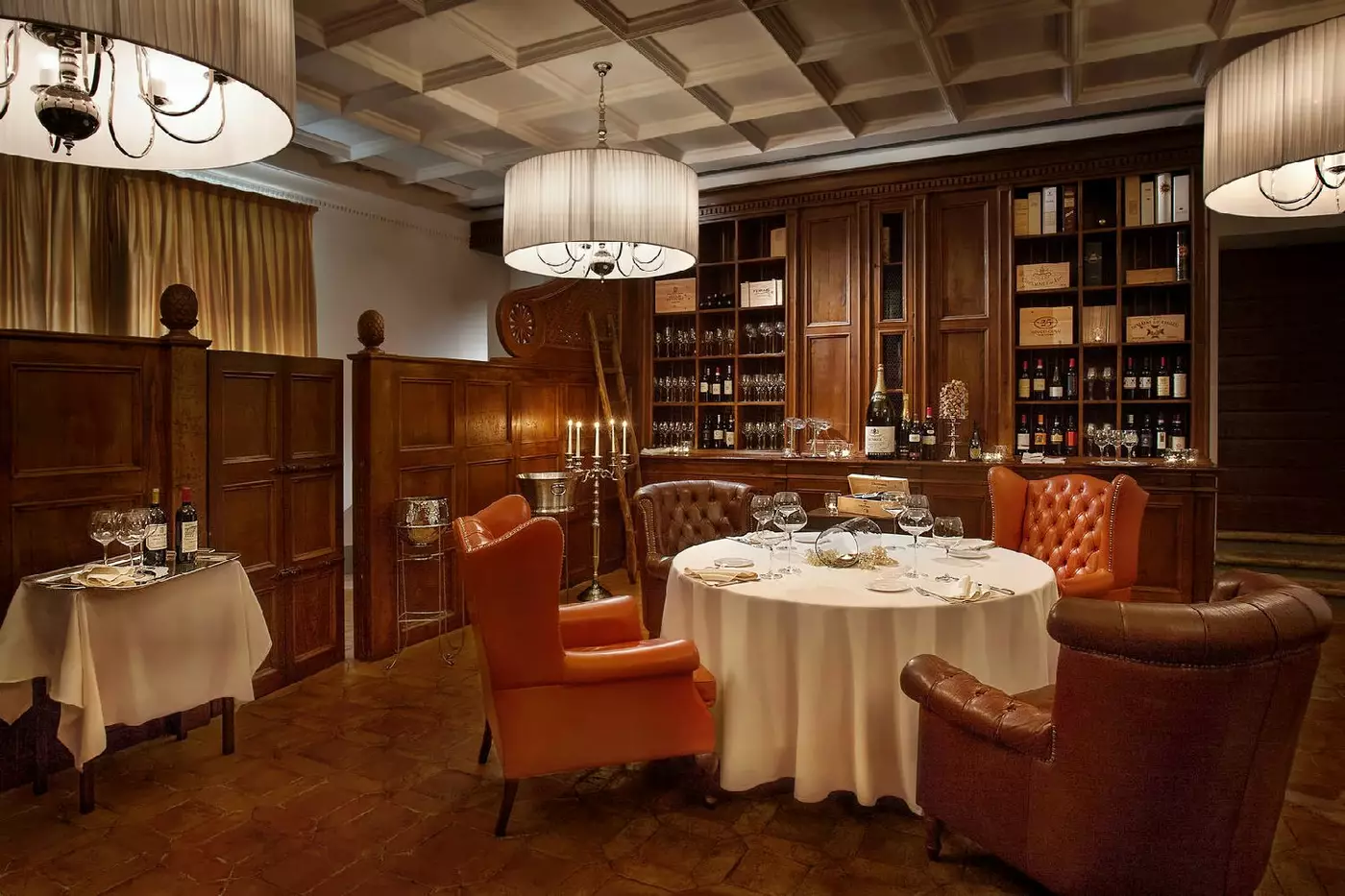
Reserve Vespasia before arrival and ask about its tasting menus; the restaurant requests advance choices, so planning ahead makes dinner easier.
Free membership gives you access to preferred rates, exclusive benefits and current promotions for your stay.
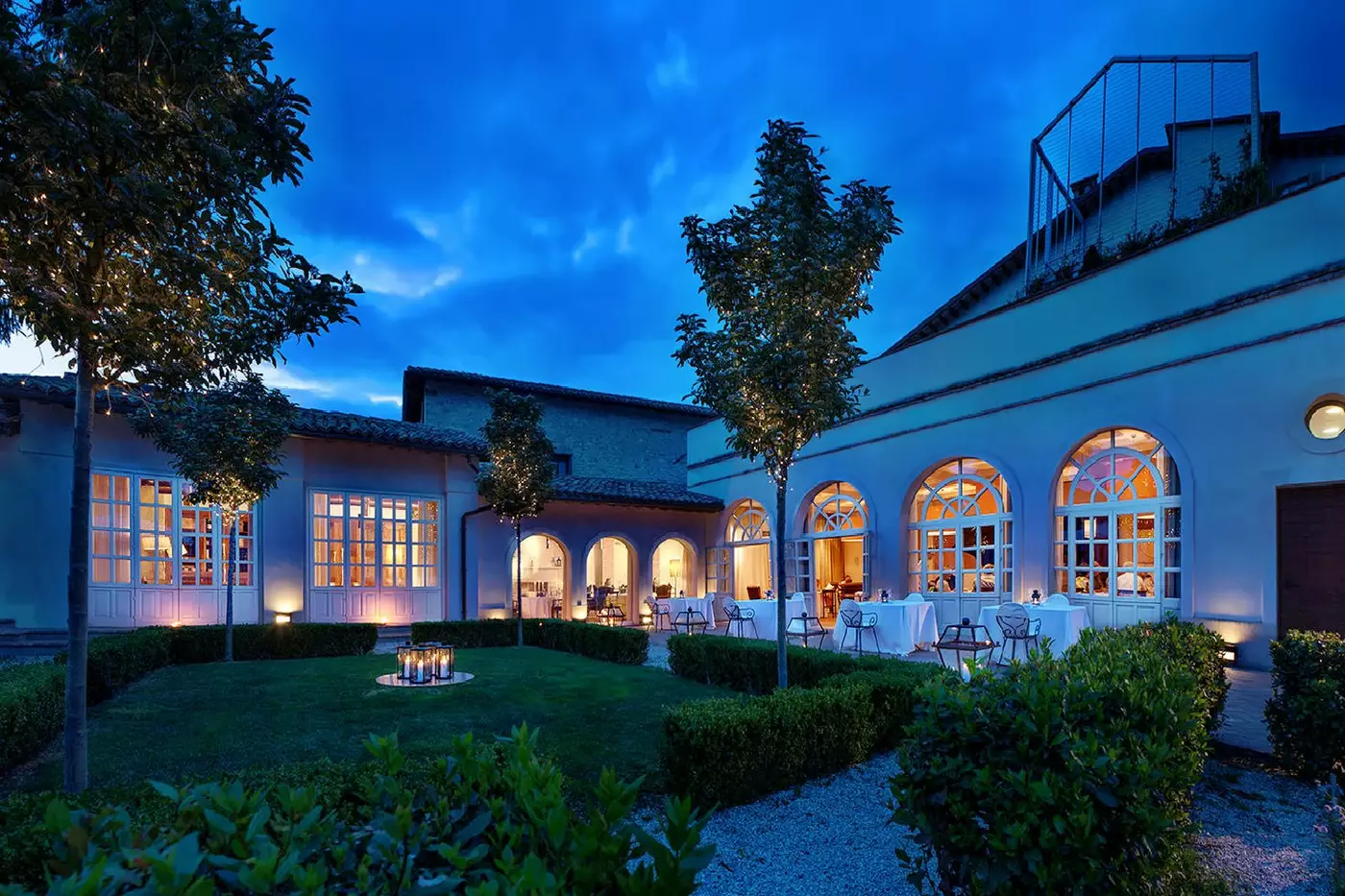
Palazzo Seneca is a small Umbrian hotel with a strong sense of place. It stands in the historic center of Norcia, a few steps from Piazza San Benedetto and close to the mountains, farms, truffle woods, and food traditions that define this part of Umbria. The building is a restored 16th-century residence, shaped by the Bianconi family, whose work in hospitality and dining in Norcia stretches back generations. The result is not a showy country resort, but a warm, finely judged base for travelers who want food, landscape, history, and quiet in equal measure.
Norcia gives the hotel its soul. This is the birthplace of Saint Benedict, a town known for black truffles, cured meats, lentils, cheeses, and access to the Monti Sibillini National Park. It is also a place with visible layers of resilience and rebuilding. Palazzo Seneca sits within that reality, but it offers calm, comfort, and a polished sense of welcome. Guests come here to slow down, eat well, walk, explore the mountains, and feel the rhythm of a small Italian town rather than the pressure of a major city itinerary.
 24
 Casual
 Fitness
 Spa
 Sauna
 Wellness
 Adventure
 Pet Friendly
 Wheelchair Accessible
 Gourmet Restaurant
 Connecting Rooms
No extra bed can be added to this room.
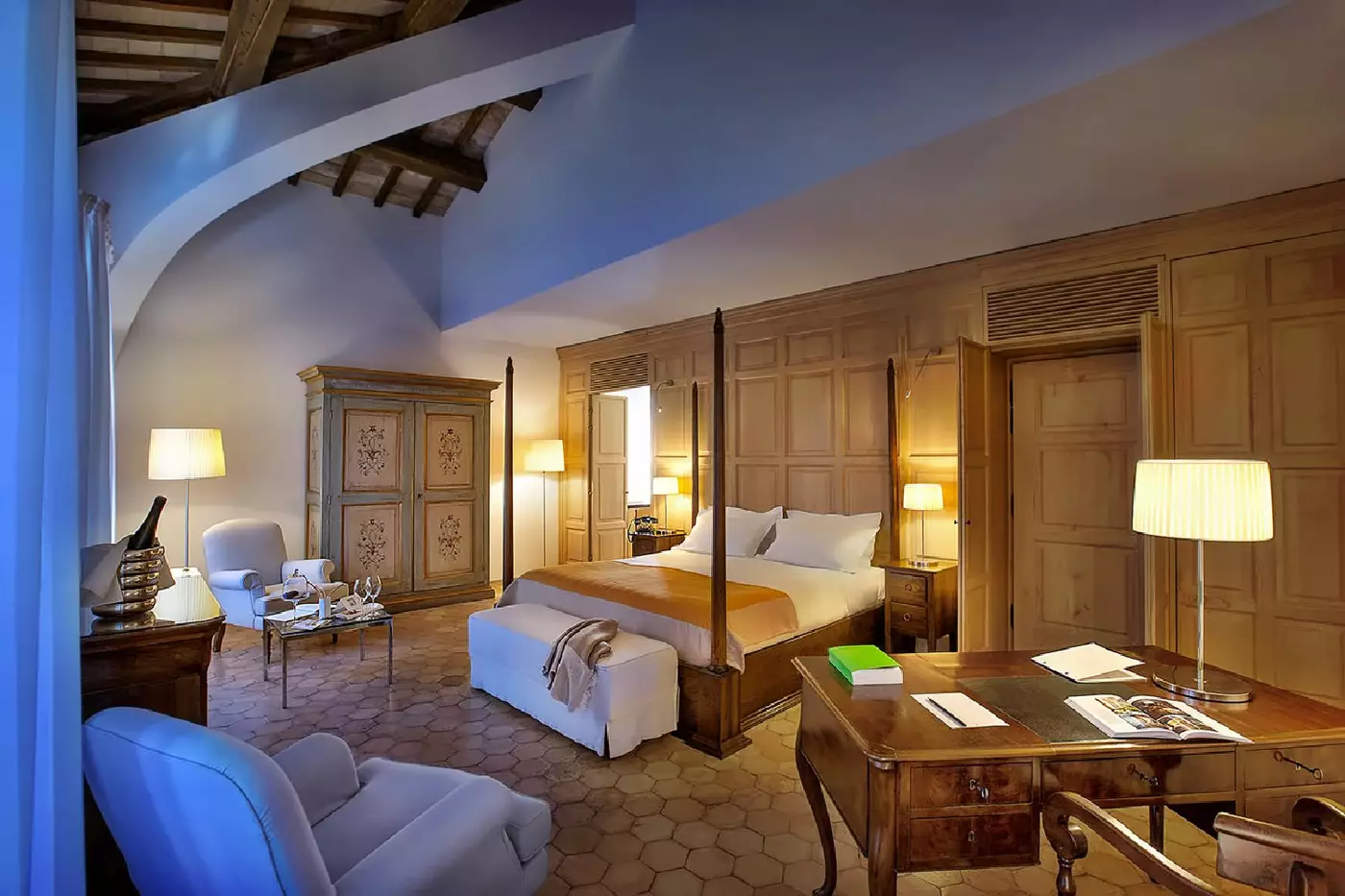
A leather-covered writing desk is made by craftspeople from the Marche region. It accompanies a Cardinal-style chair produced in Umbria, in the style used at the Vatican. The room also has a sitting area and a minibar, with air conditioning provided.
A single-room layout uses a sleigh-style frame made of dark polished wood. It is dressed with white bedding, with an ochre throw across the bed. The mattress has springs that are individually pocketed. Hexagonal Umbrian terracotta tiles are laid beneath the bedroom furniture, with a honey-coloured finish. A tall, narrow mirror has a reddish-brown frame, while long pale curtains hang at the window. The writing desk is positioned below the glazing in this layout.
The bathroom is en suite and has a shower, with a separate toilet. Marble finishes and a makeup mirror are also part of its fittings. From the room, the outlook is across the rooftops of the old town.

A leather-covered writing desk is made by craftspeople from the Marche region. It accompanies a Cardinal-style chair produced in Umbria, in the style used at...
A balcony is available in some rooms within this category.
The writing desk is made by master leatherworkers from the Marche region. It is paired with a Cardinal-style chair, crafted by artisans in Umbria. The chair's form follows the style used by cardinals for meetings at the Vatican. Ecru marble finishes the bathroom, which has a shower.
The bed frames vary between rooms. Wrought-iron canopies are assembled with interlocking joints in the traditional way. Other rooms use carved wooden headboards made by Umbrian craftspeople.
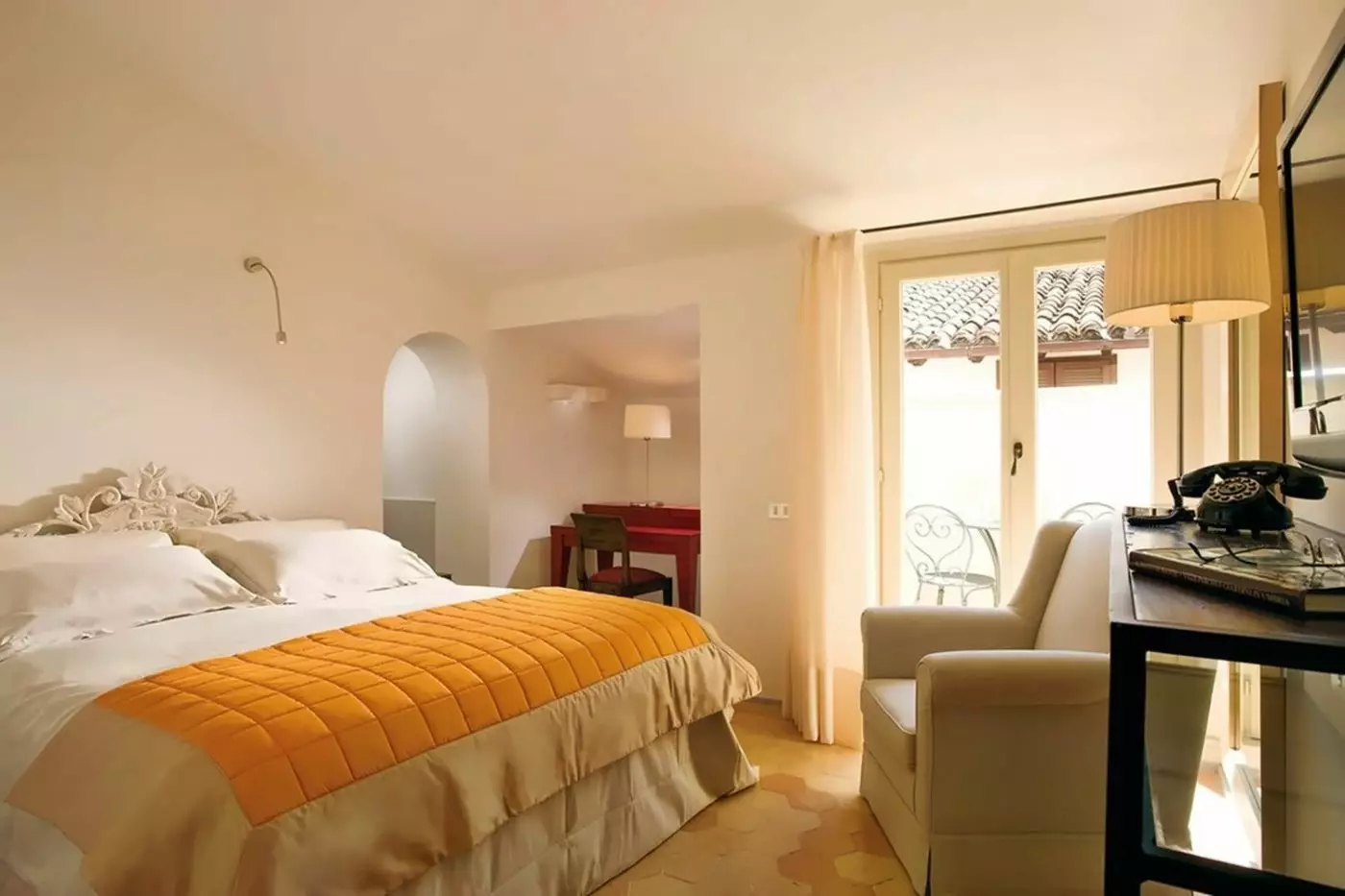
In one version, the headboard has padded brown panels inside a narrow black iron canopy frame. White linens cover the bed, with an ochre throw across them. A reddish-brown desk is paired with a chair, set beside pale curtains at the window. The floor is tiled in a light shade beneath the furniture.

The writing desk is made by master leatherworkers from the Marche region. It is paired with a Cardinal-style chair, crafted by artisans in Umbria. The...
Leather-lined writing desks are made by master tanners from the Marche region. They are paired with Cardinal-style chairs crafted in Umbria, following the style used for meetings at the Vatican. Jute artworks add texture to the walls; the fabric was once used by bakers while bread dough rose.
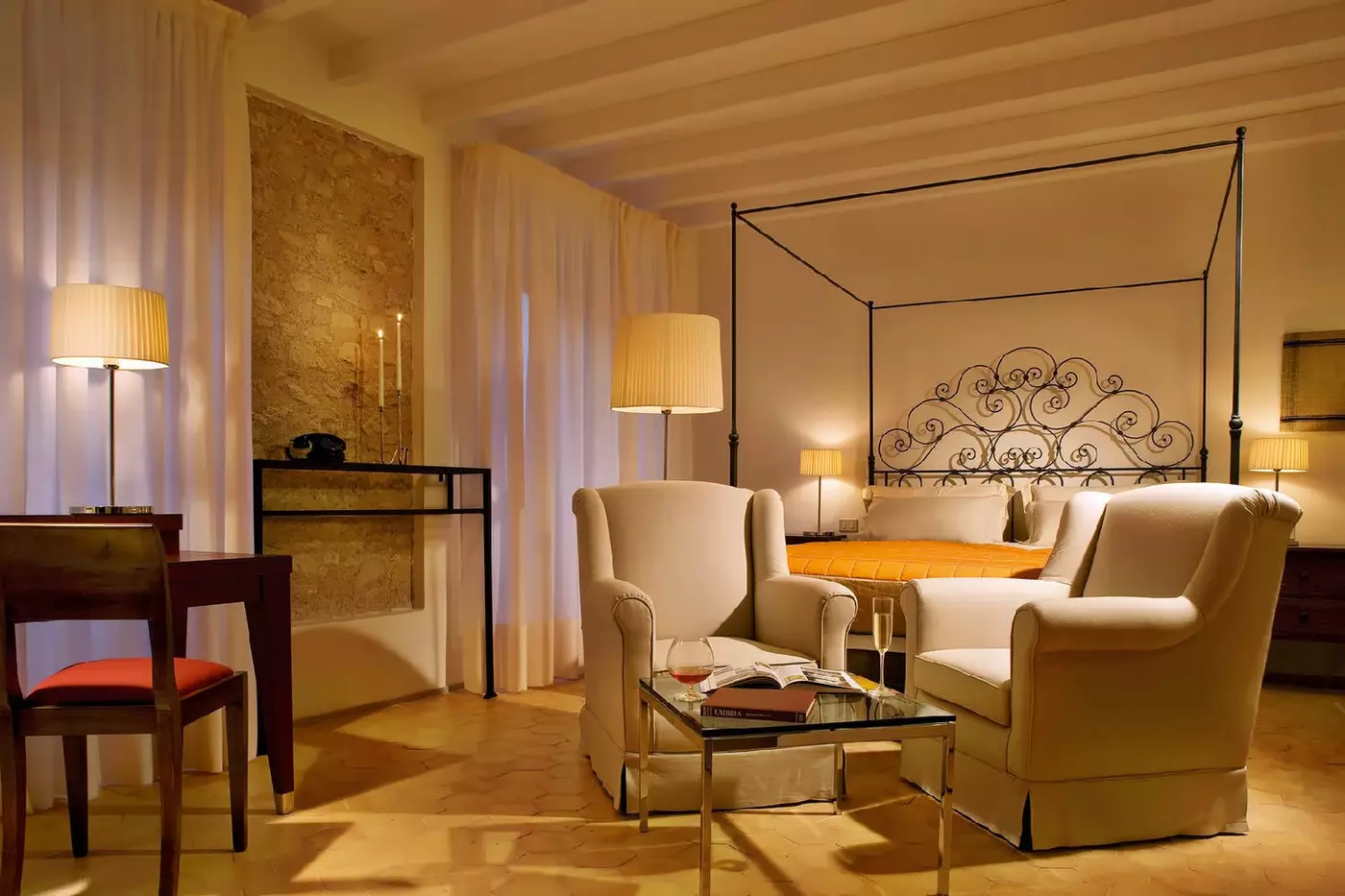
In one interior, a wrought-iron four-poster has a scrolling headboard above white bedding and a pale yellow throw. A tall mirror hangs near the leather-topped desk, and a pale armchair stands by the window. White ceiling beams and honey-coloured hexagonal floor tiles form the backdrop to these furnishings.
Other rooms have carved wooden headboards made by Umbrian artisans. The bathroom is finished in ecru marble, with a bathtub in selected rooms. There is also a separate space for luggage.

Leather-lined writing desks are made by master tanners from the Marche region. They are paired with Cardinal-style chairs crafted in Umbria, following the style used...
Access to the room is via a wooden staircase.
Leather-covered wardrobe doors recall the shape of old travelling trunks. The desks include leather-lined pieces made by craftspeople from the Marche region. Other interiors use antiques from the Seneca family's collection. The antiques date from the 1500s through the 1700s.
One Eremo design has a low, sloping ceiling crossed by dark beams. Terracotta-coloured panels fill the spaces between them. A pale carved headboard stands above white bedding and an ochre throw. Beneath the shuttered window, a dark writing desk is paired with a chair. The floor has honey-coloured tiles in a hexagonal pattern, and there is a pale armchair.
The furnishings also include Cardinal-style chairs crafted in Umbria. Their form follows the style used at the Vatican. Jute wall art draws on a fabric traditionally used in breadmaking, when bakers left dough on it to rise. Ecru marble finishes the bathroom, while wrought-iron canopies appear in some room designs.

Leather-covered wardrobe doors recall the shape of old travelling trunks. The desks include leather-lined pieces made by craftspeople from the Marche region. Other interiors use...
The wardrobe's leather-covered doors recall old travelling trunks. Some desks have leather linings made by craftspeople from the Marche region. Others are restored pieces from the Seneca family's collection and date from the 1500s to the 1700s. Umbrian artisans make the Cardinal-style chairs.
In one bedroom design, a wrought-iron four-poster has a scrolling headboard. White bedding and an ochre throw dress the bed, while two pale armchairs sit at a glass table. Honey-coloured tiles form a hexagonal pattern across the floor. A long woven panel hangs beside the bed, and pale curtains dress the glazing.
Canopy beds are found in some rooms within this category. Jute wall art uses a fabric once associated with breadmaking, when bakers laid dough on it to rise. Ecru marble finishes the bathrooms, and a bathtub is available in selected rooms.

The wardrobe's leather-covered doors recall old travelling trunks. Some desks have leather linings made by craftspeople from the Marche region. Others are restored pieces from...
Additional beds are available on request.
Leather-covered wardrobe doors give the entrance the look of an old travel trunk. The furniture includes Cardinal-style chairs made by Umbrian artisans. A writing desk may be a leather-covered piece made by Marche craftspeople or an antique from the Seneca family's collection. Those antiques date from the 1500s to the 1700s.
One family-room design has two pale armchairs and a brown leather tub chair. A wrought-iron four-poster has an ornate scrolling headboard, with white linens and an ochre throw. An antique wooden writing desk stands against a rough stone wall panel. White ceiling beams cross above honey-coloured hexagonal floor tiles.
Some rooms have iron canopy beds, while jute artworks bring a different texture to the walls. This fabric was traditionally used by bakers to support bread dough as it rose. The bathrooms are clad in ecru marble, with bathtubs in selected rooms.

Leather-covered wardrobe doors give the entrance the look of an old travel trunk. The furniture includes Cardinal-style chairs made by Umbrian artisans. A writing desk...
Restored wardrobes and writing desks from the Seneca family bring several centuries of history into the interior. These pieces date from the 1500s to the 1700s. Umbrian artisans also carved the wooden beds, with antique four-posters in some suites and inlaid headboards in others. Textured jute artworks hang on the walls.
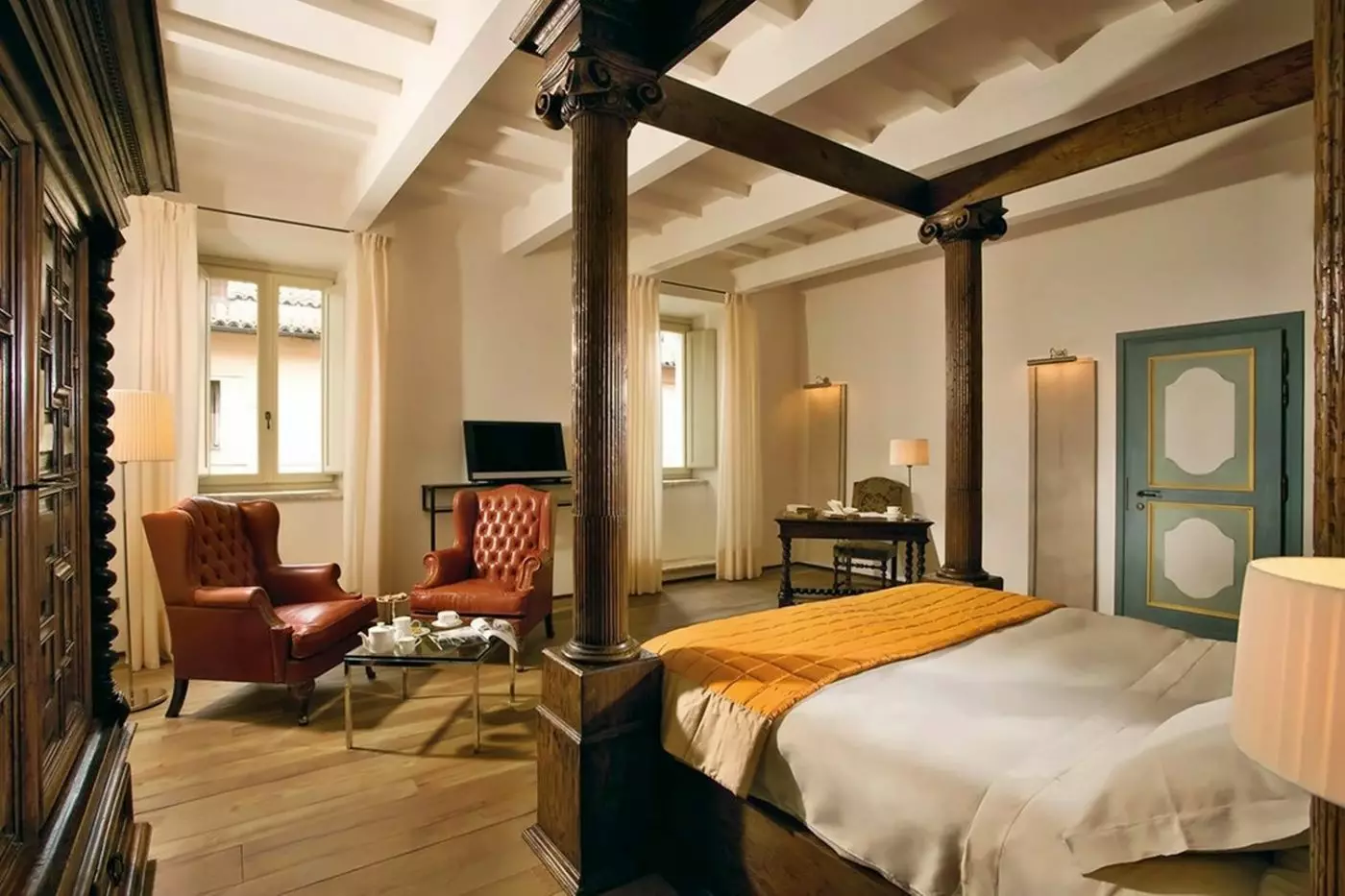
One of the suite's designs combines a tall carved four-poster with a panelled wall and an antique wooden wardrobe. Brown leather armchairs sit at a low glass table. White ceiling beams run above the dark floorboards, while a section of rough stone wall stands beside the windows.
Floor finishes vary across the category, including old-oak parquet and traditional terracotta. The bathrooms use black meteor granite or ecru marble, with a bathtub or double showers in selected suites. A desk and sofa are also part of the furnishings.

Restored wardrobes and writing desks from the Seneca family bring several centuries of history into the interior. These pieces date from the 1500s to the...
The bathtub is in the bedroom; toilets serve both the bedroom and living room.
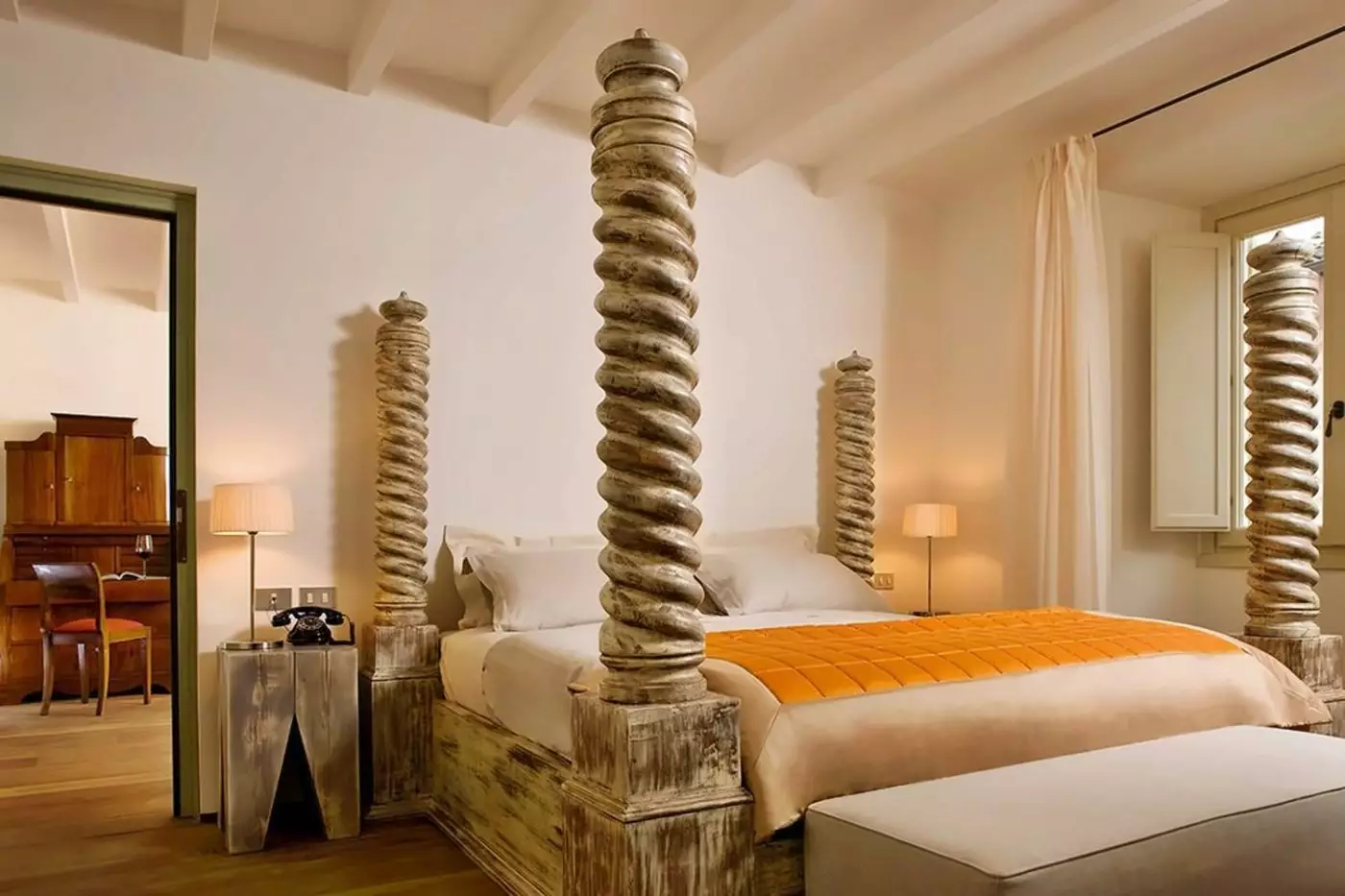
The suite has two entrances, and its living room is separate from the bedroom. A leather sofa furnishes the sitting area. In the hall, a restored antique writing desk is a piece from the Seneca family's own collection. The wooden bedroom four-poster has spiral columns carved by Umbrian artisans.
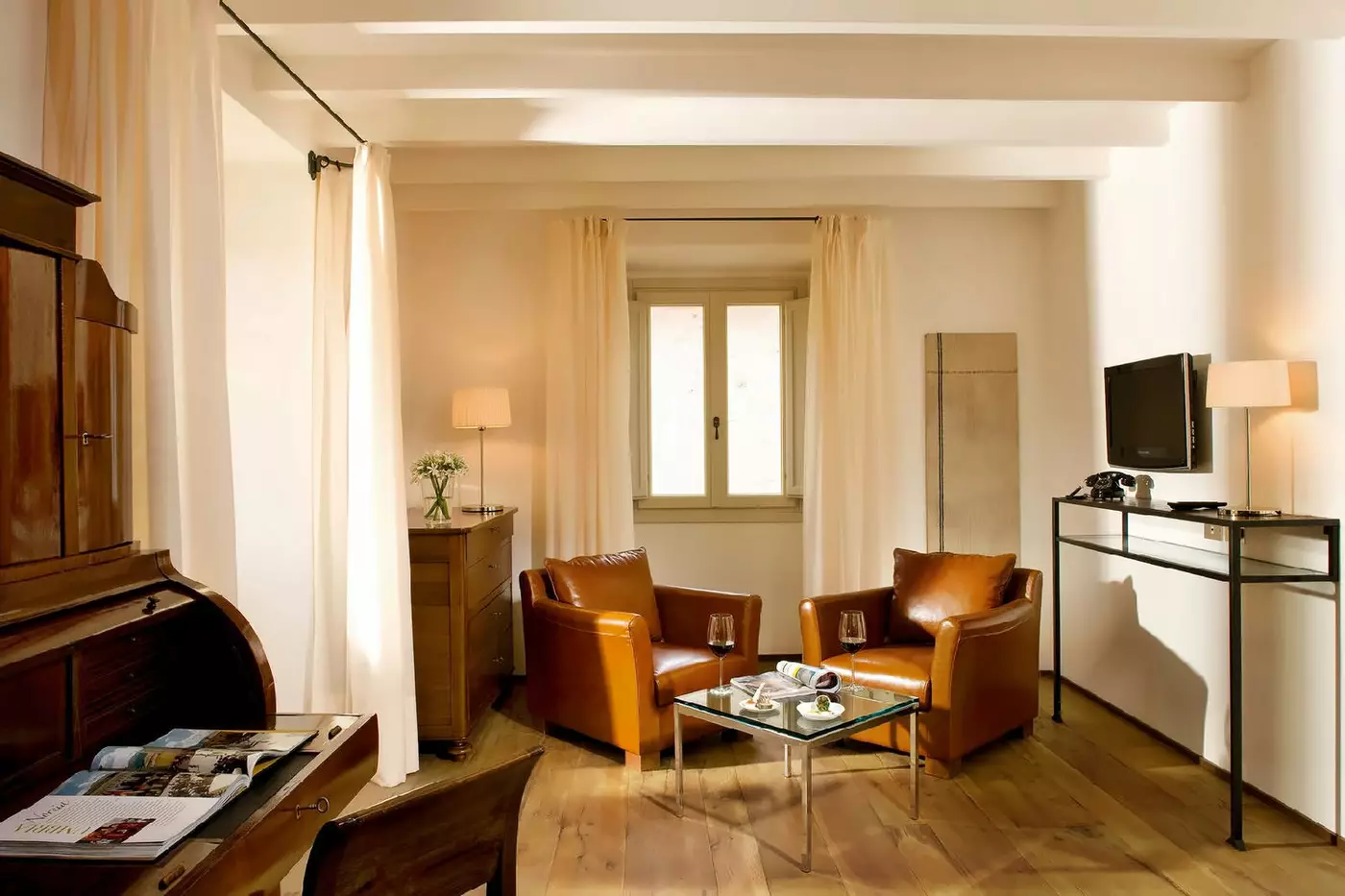
Two tan-brown leather armchairs face a low glass-topped table in one sitting-room layout. An antique wooden secretaire stands to one side, and there is a wooden chest beneath the window. Long pale curtains hang beside the light-coloured walls. White ceiling beams cross above the broad wooden floorboards.
Old-oak parquet is used for the floors, while black meteor granite finishes the bathroom. A Simmons mattress is made with springs that are individually pocketed.

The suite has two entrances, and its living room is separate from the bedroom. A leather sofa furnishes the sitting area. In the hall, a...
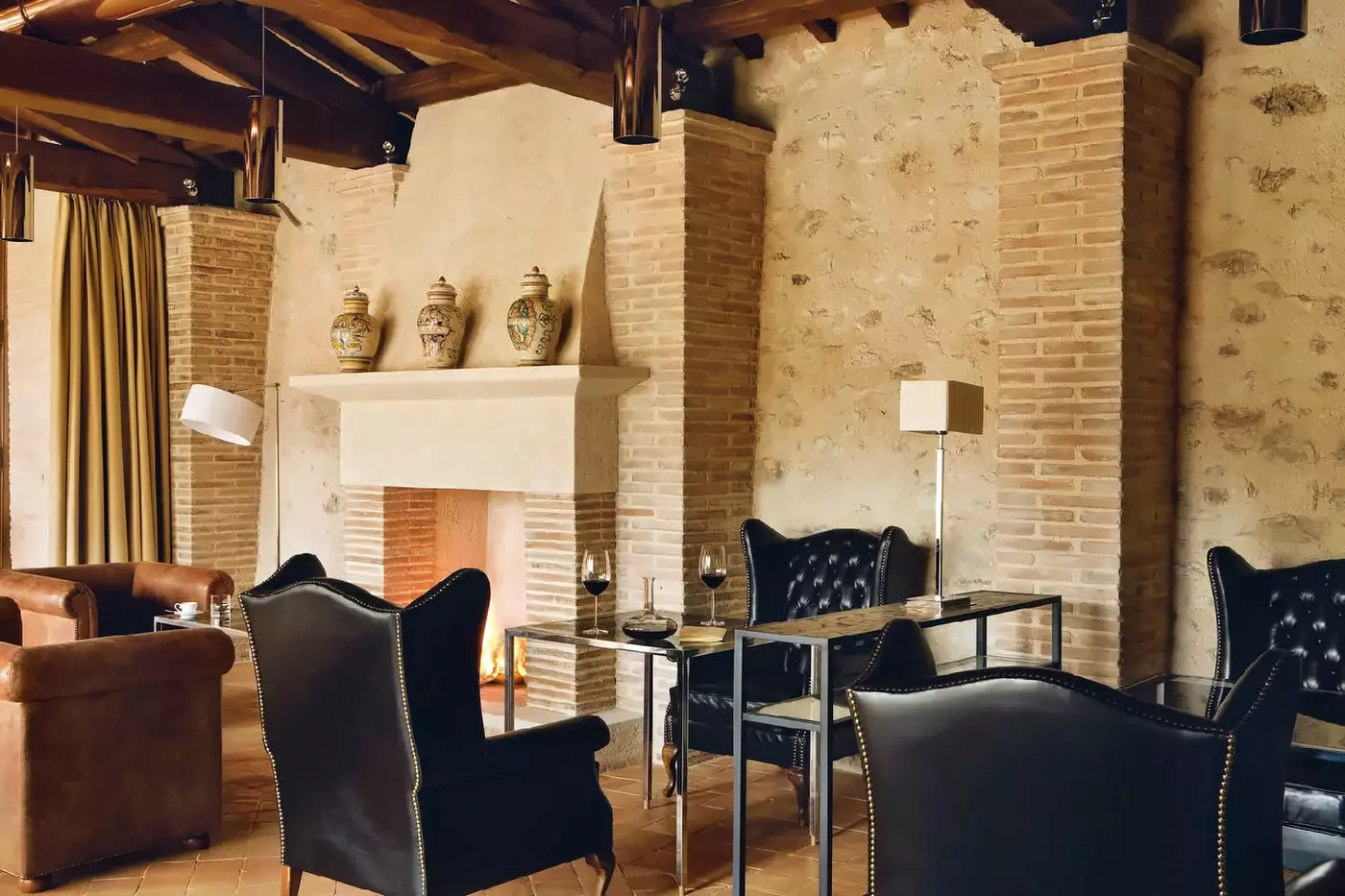
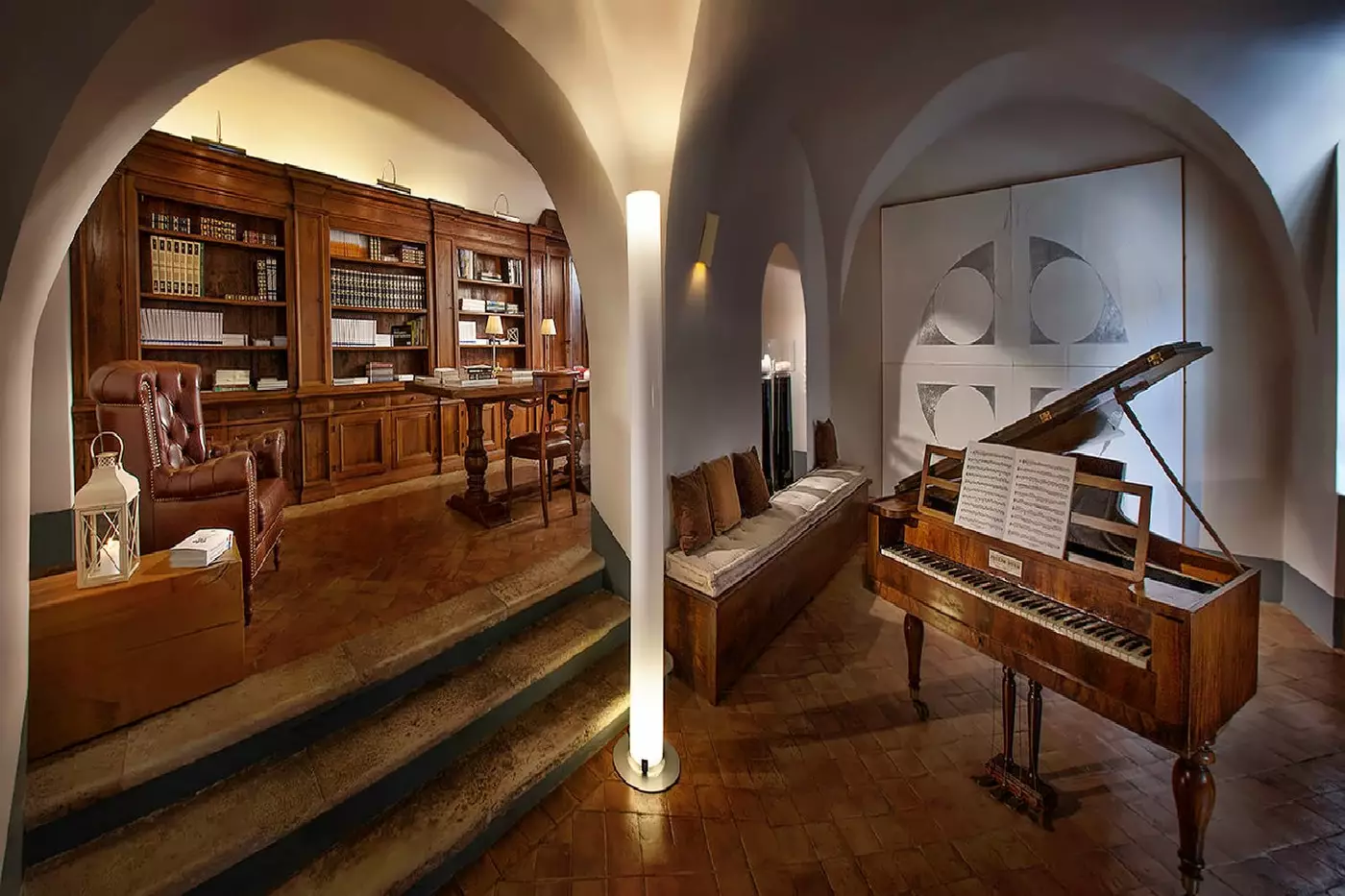
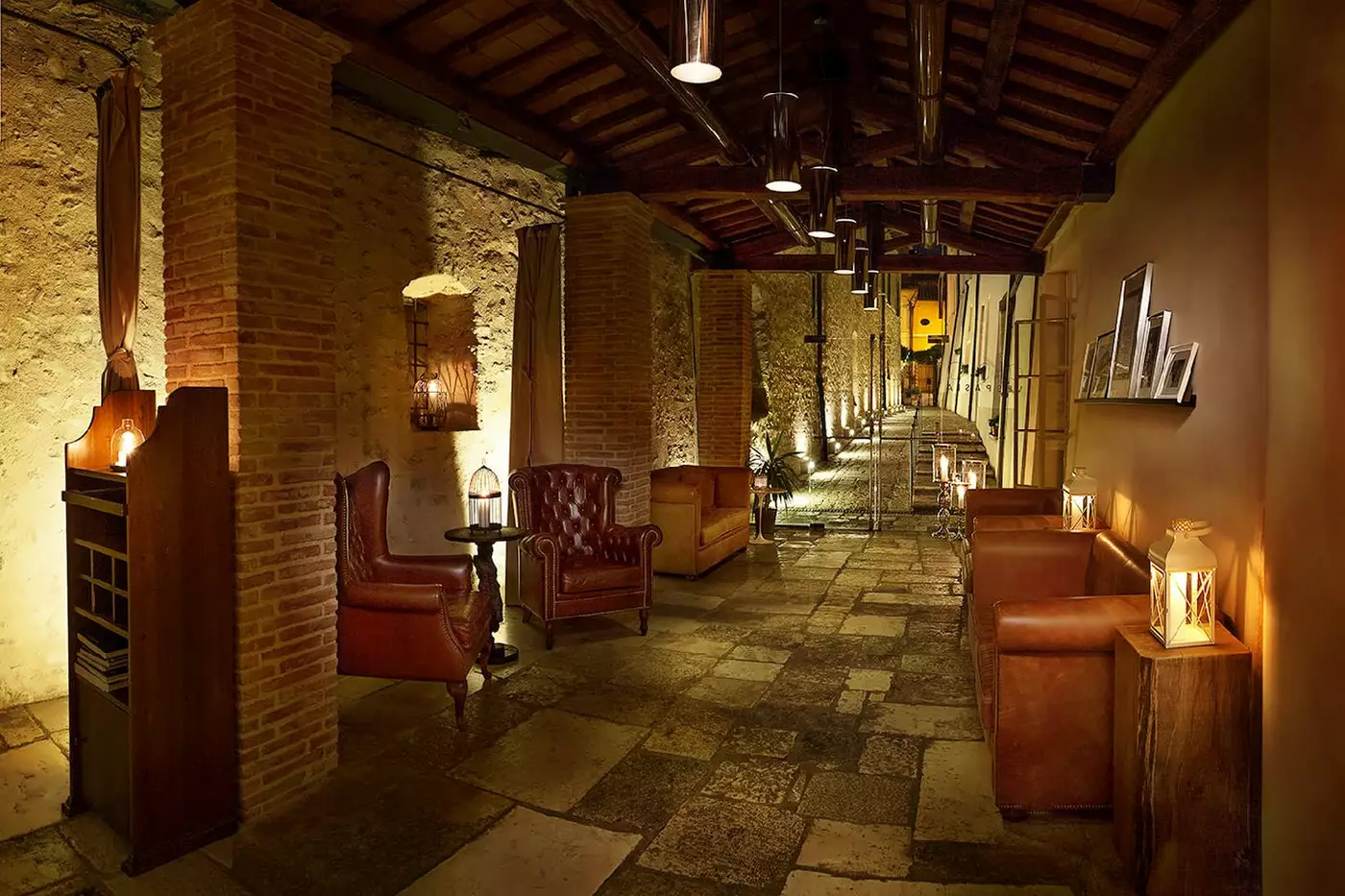
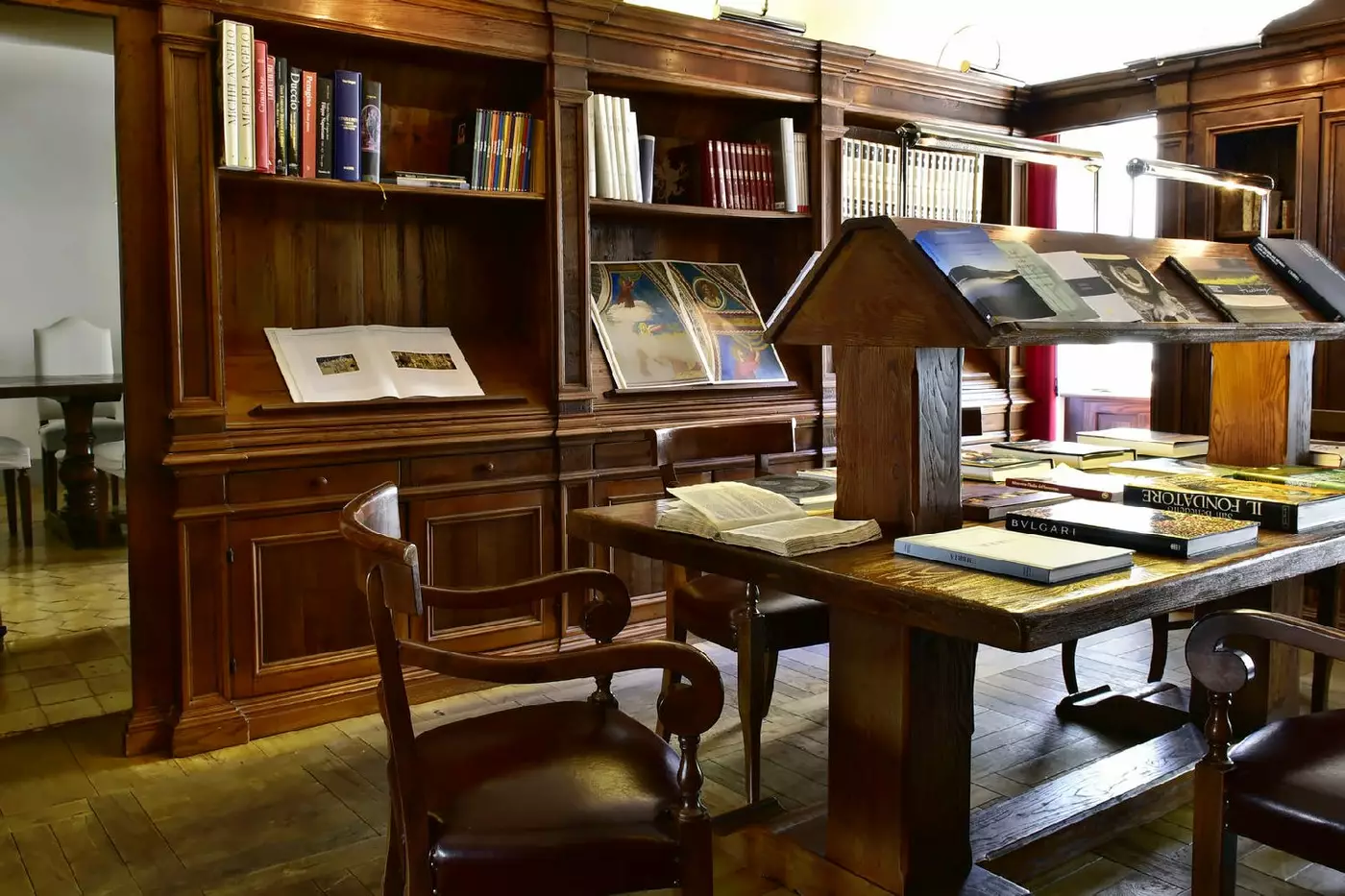
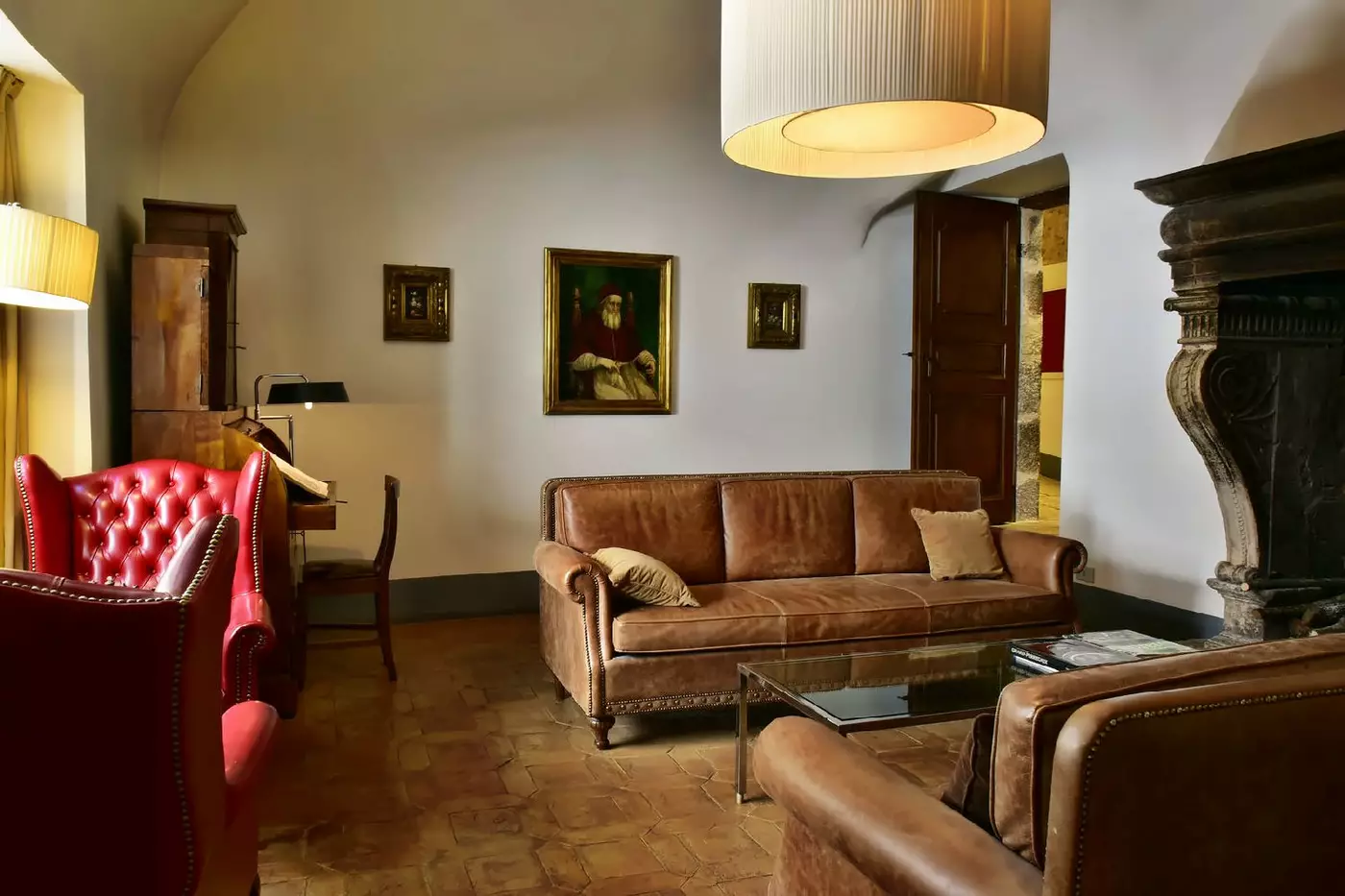
The hotel has the intimacy of a family house rather than the scale of a grand palace. Stone, timber, soft textiles, handmade details, and Umbrian craft create a mood that is refined without feeling precious. The restoration respects the age of the building while keeping the rooms and public areas comfortable for modern stays. Nothing feels loud. The pleasure is in the texture: old walls, warm light, simple flowers, local materials, and staff who understand the town as well as the hotel.
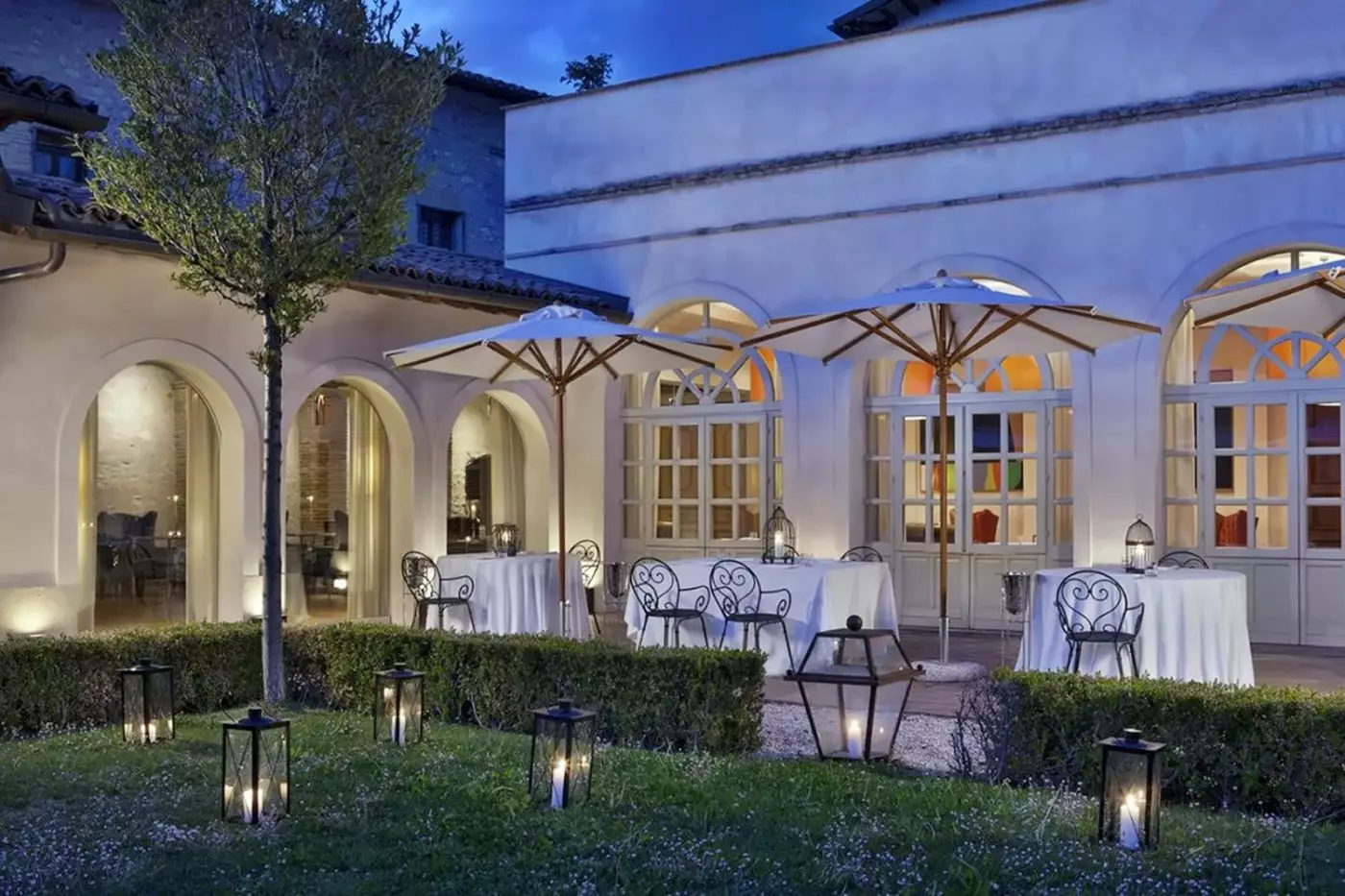
Palazzo Seneca is part of Relais & Chateaux, and that affiliation makes sense here. The hotel is not about spectacle. It is about a certain kind of hospitality: personal, food-led, rooted, and quietly attentive. Guests may arrive after a drive through the Apennines and find the atmosphere instantly slower. The lobby, lounges, breakfast areas, and courtyard all encourage staying awhile rather than rushing back out.
The mood is especially suited to travelers who appreciate restraint. There are no glossy resort gestures, no huge pool scene, and no urban nightlife energy. Instead, Palazzo Seneca gives guests a place to read, recover, eat, and explore. Its charm lies in how naturally it belongs to Norcia.
Rooms and suites are individually designed, as they should be in a historic residence. Categories range from smaller Romantic rooms to Superior, Eremo, Deluxe, Deluxe with Terrace, Junior Suite, and Suite options. The style is earthy and calm, with natural colors, wood, stone, quality fabrics, and bathrooms that often use ecru marble or soft neutral tones. Some rooms look over the rooftops of Norcia, while others offer more space or outdoor elements.
The rooms do not chase fashion. They feel grounded in place, with clean lines, local materials, and enough comfort for a restful stay after days outdoors. Beds are a point of care, and the hotel pays attention to sleep, pillows, light, and quiet. This matters in Norcia, where the day's pleasures may include mountain walks, long meals, and wine rather than late-night entertainment.
Guests should choose category based on how much time they plan to spend indoors. A smaller room can work well for short stays focused on food and hiking. Larger rooms and suites are better for couples planning a slower escape, guests who want space to read, or travelers who use Norcia as a base for several days in Umbria. The hotel is compact, but the better categories add a deeper sense of retreat.
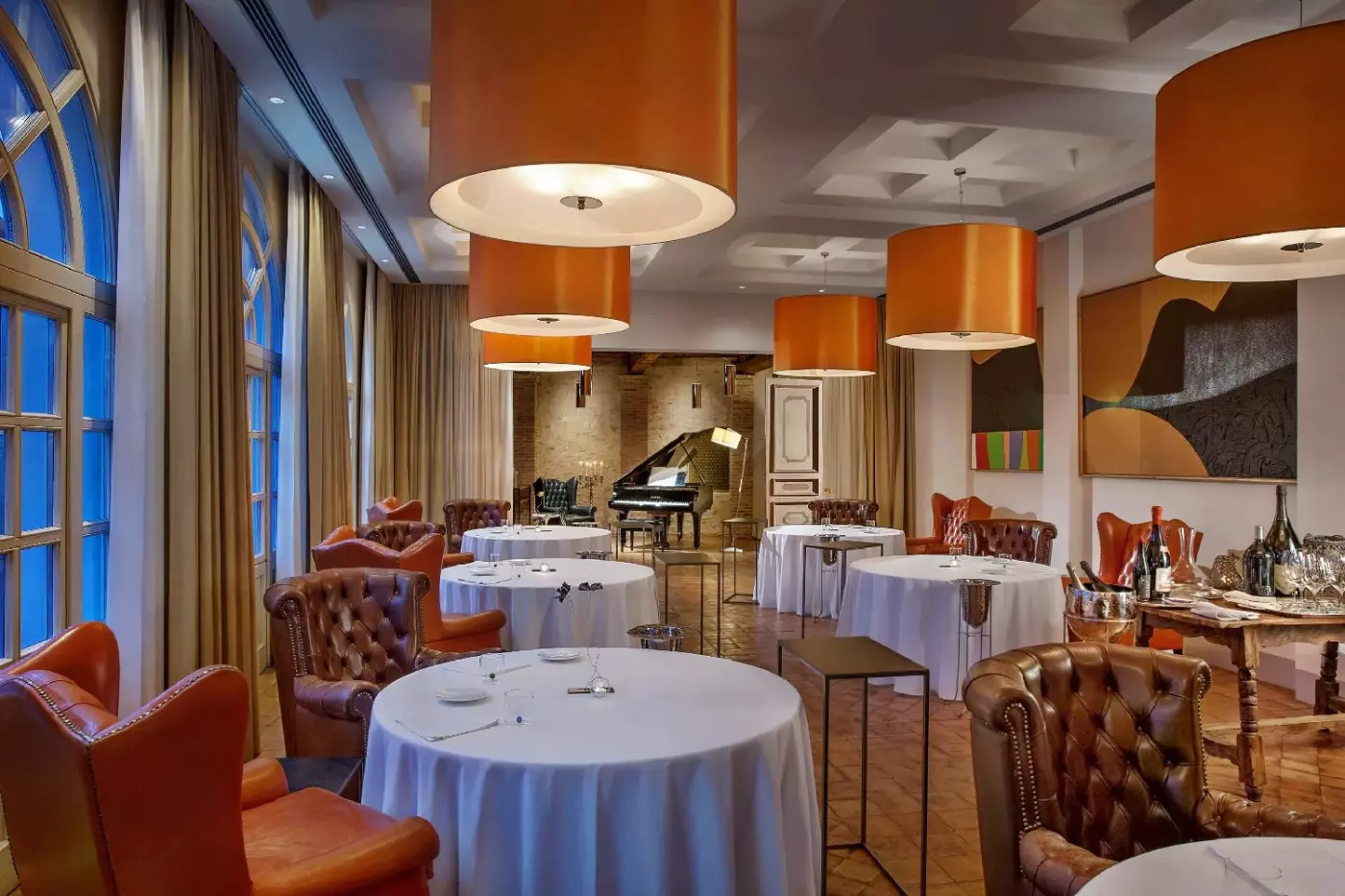
Vespasia is the heart of the hotel for many guests. The restaurant holds a Michelin star and a Green Star in the 2026 guide, reflecting both the quality of the cooking and its close link to local ingredients. The kitchen works with Umbrian produce, farms, truffles, grains, legumes, herbs, and regional flavors. It is a fine dining restaurant, but the best reason to eat here is not formality. It is the way the food speaks directly to Norcia.
The restaurant sits within the same historic house, so dinner feels like part of the hotel rather than a separate event. This is useful in a small town where the strongest table may be just downstairs. Guests can build a stay around one serious dinner at Vespasia, then use other meals to explore simpler local cooking. That balance works well: refined restaurant one night, countryside trattoria or casual lunch the next.
Breakfast is also important. Expect a regional rather than generic mood, with baked goods, jams, cheeses, cured meats, and local touches. Norcia is a food destination, so even simple meals carry weight. The hotel can also arrange experiences around truffles, cooking, local wine, cheese, and regional products. For many travelers, these experiences are as memorable as the room.
The wellness area is set in the old cellars beneath the palazzo. It is small, intimate, and atmospheric, with stone, vaulted ceilings, sauna, Turkish bath, hydro-massage tub, relaxation areas, and treatment options. This is not a large destination spa. It is a quiet place to warm up, unwind, and restore energy after walking or driving through the Umbrian hills.
The hotel's experiences make strong use of the region. Guests can arrange truffle hunting, cooking classes, tastings, rafting, trekking, hiking in the Sibillini mountains, e-bike rides, and countryside excursions. These are not decorative extras. They are the best way to understand why Norcia matters. The town's food culture, mountain setting, and rural traditions are central to the stay.
Travelers who enjoy active days will find plenty to do, especially in good weather. Those who prefer a softer rhythm can keep things simple: breakfast, a walk through town, spa time, dinner, and perhaps one guided food experience. Palazzo Seneca works because it does not force a single version of Umbria on guests. It lets the stay become as active or as quiet as the traveler needs.
The hotel is in Norcia's historic center, close to Piazza San Benedetto and the town's main streets. This makes it easy to step out for a short walk, coffee, a look at local shops, or a slow evening stroll. Norcia is not a large city. Its appeal lies in scale, food, mountain air, and the sense of being in a community with deep roots.
The wider region is the reason to stay longer. The Monti Sibillini National Park offers hiking, views, villages, and highland landscapes. The Valnerina adds rivers, gorges, and outdoor activities. Spoleto, Assisi, Castelluccio, and other Umbrian towns can be part of a broader itinerary, though distances and roads require planning. A car or arranged driver is helpful for most guests.
Norcia is around two and a half hours from Rome by road, depending on route and traffic. That makes Palazzo Seneca possible as part of a Rome-and-Umbria journey, but it should not be treated as a quick side trip. The hotel deserves at least two nights, ideally more, because the reward is in slowing down. This is a place to let the region set the pace.
Palazzo Seneca is different from Umbria's larger countryside estates. Castello di Reschio offers vast private grounds, design drama, riding, and a full estate experience. Borgo dei Conti Resort brings a broader resort setting and more facilities. Palazzo Seneca is smaller, more local, and more town-based. It is better for guests who want Norcia's food culture and mountain access rather than a self-contained country estate.
Compared with hotels in Assisi, Spoleto, or Perugia, Palazzo Seneca feels more remote and more culinary. Those towns may offer easier sightseeing loops and more urban options. Norcia offers stronger access to the Sibillini mountains and a deeper focus on truffles, cured meats, legumes, and rural Umbrian traditions. The trade-off is clear: fewer city comforts, more sense of place.
Compared with Tuscan hill-town hotels, Palazzo Seneca is less polished in the familiar postcard sense and more grounded in mountain Umbria. That is a virtue for travelers who have already seen the classic Tuscan circuit and want a quieter, more food-driven route through central Italy. It is not the obvious choice for everyone, which is exactly why it can feel so rewarding.
Book Palazzo Seneca if you care about food, small-town Italy, warm family hospitality, and access to nature. It is excellent for couples, culinary travelers, hikers, slow-road itineraries, and guests who want a refined base without losing contact with the local town. Vespasia gives the hotel serious dining appeal, while the spa and rooms make it comfortable enough for a restful escape.
Think twice if you want a full resort, a large pool scene, nightlife, designer shopping, or instant access to famous city monuments. Palazzo Seneca asks guests to meet Umbria on its own terms. For the right traveler, that is the whole point. The hotel turns Norcia into more than a stop on the map: it becomes a quiet, flavorful, deeply human part of the journey.
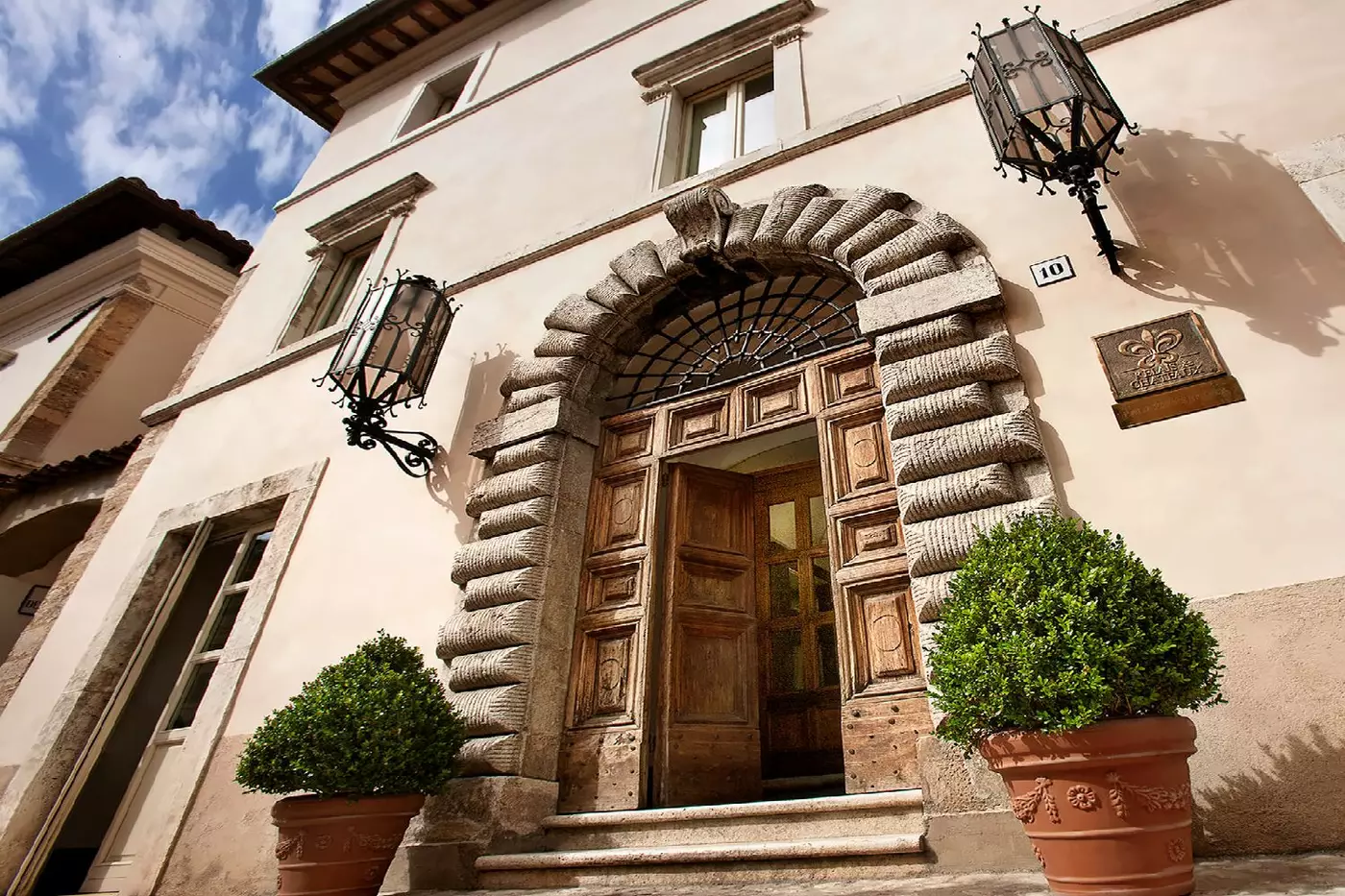
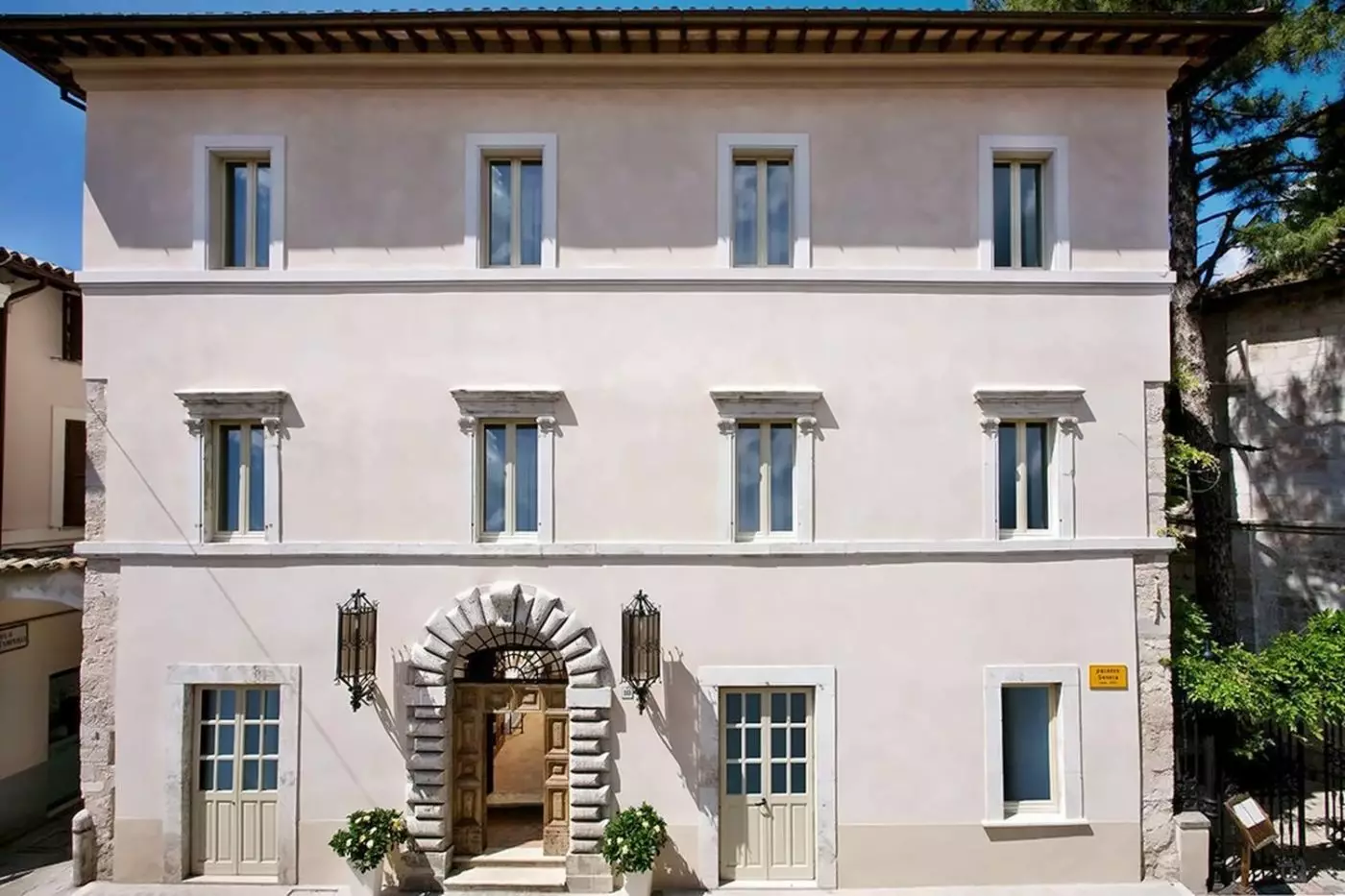
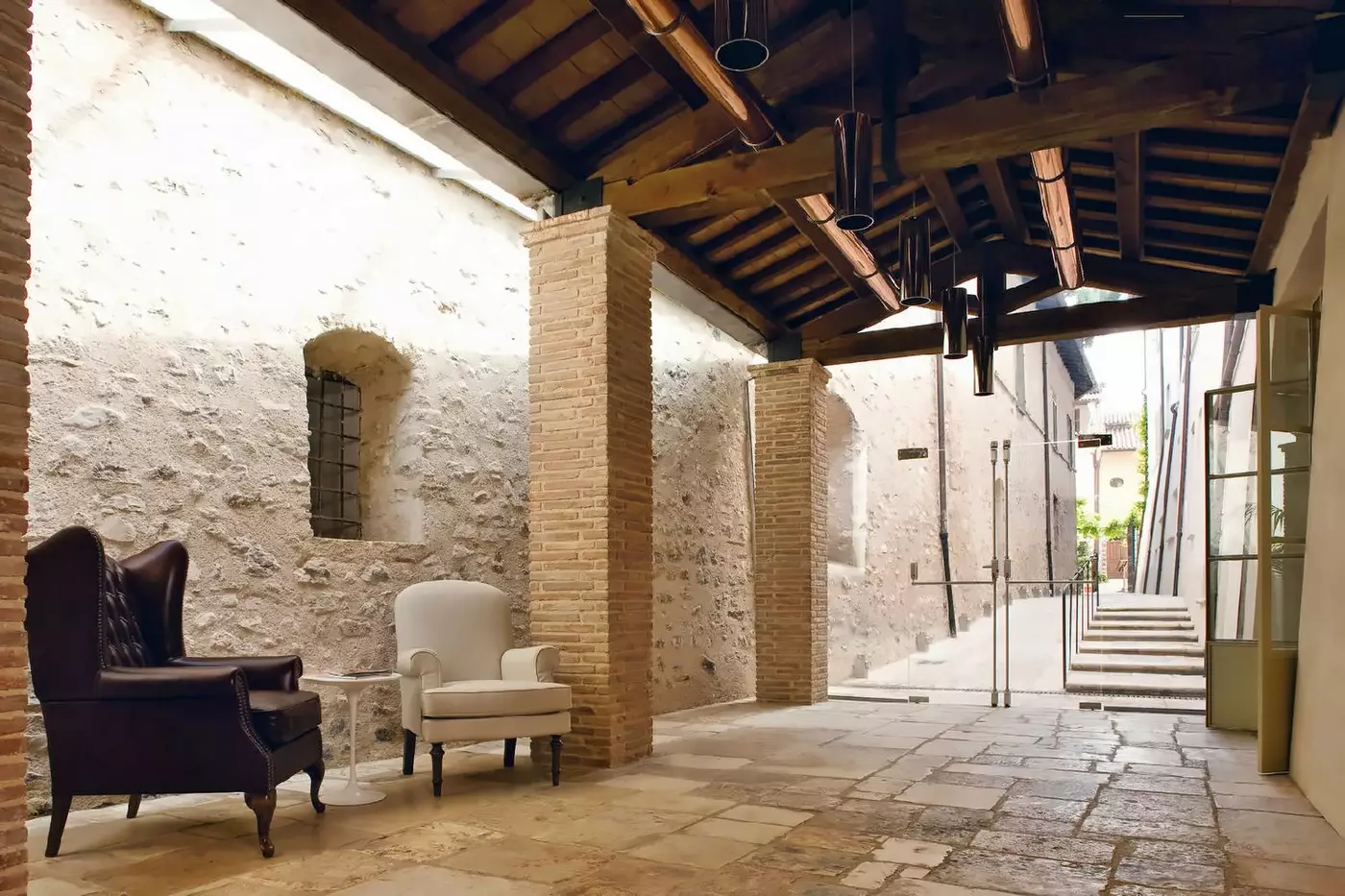
The sixteenth-century palazzo pairs vaulted ceilings and stone floors with Umbrian craftsmanship, making a stay in Norcia feel rooted in its history.
The basement spa sits beneath old stone vaults, offering a quiet place to unwind after exploring Norcia and the surrounding mountains.
The Bianconi family's long hospitality tradition and the hotel's 24 rooms give this historic address the intimate scale of a family-run house.
Via Cesare Battisti, 10/12, 06046 Norcia PG, Italy
Playing this video may share data with YouTube. Please see our Privacy Policy.
Palazzo Seneca is best for luxury travellers who want Norcia, a 16th-century Umbrian palazzo, 24 rooms and suites, Romantic rooms, Deluxe with Terrace, Junior Suite, Suite, Vespasia, one Michelin star, Michelin Green Star, spa in historic vaulted spaces, truffles, Umbrian cuisine, and access to the Sibillini Mountains National Park. It is less ideal for guests who want a large resort, nightlife, or a city-centre shopping base. For couples, food lovers, hikers, slow-travel guests, and travellers who want a deeply local Umbria experience, Palazzo Seneca is one of the region's most distinctive stays.
Yes. Palazzo Seneca is excellent for a food and wine trip because Norcia is one of Italy's great small food destinations and Vespasia gives the hotel a true gastronomic anchor. Guests can build a stay around truffles, cured meats, Umbrian wines, cooking experiences, local producers, and meals that feel connected to the land rather than imported from a generic luxury-hotel playbook.
Yes. Palazzo Seneca is excellent for couples who want a quiet Umbrian stay with historic atmosphere, food, wine, spa time, truffle country, mountain scenery, and a less predictable Italy itinerary. It is especially romantic for travellers who prefer authenticity over glamour. The mood is intimate, local, and slow rather than dramatic or resort-like.
Yes. Palazzo Seneca is a very good base for visiting the Sibillini Mountains National Park. Norcia sits close to mountain routes, hiking areas, scenic drives, Castelluccio, and outdoor activities such as trekking, cycling, rafting, and guided nature experiences. This is one of the hotel's strongest advantages over city hotels in Umbria. You can combine refined dining and historic accommodation with real mountain access.
Yes. Palazzo Seneca has a small spa set within the historic underground spaces of the palazzo. The wellness area is known for vaulted ceilings, ancient stone floors, sauna, steam bath, relaxation areas, and a quiet, intimate atmosphere. It is not a vast resort spa. It is better understood as a calming retreat within the old building, ideal after mountain walks, winter travel, or a long Umbrian lunch.
More amenities
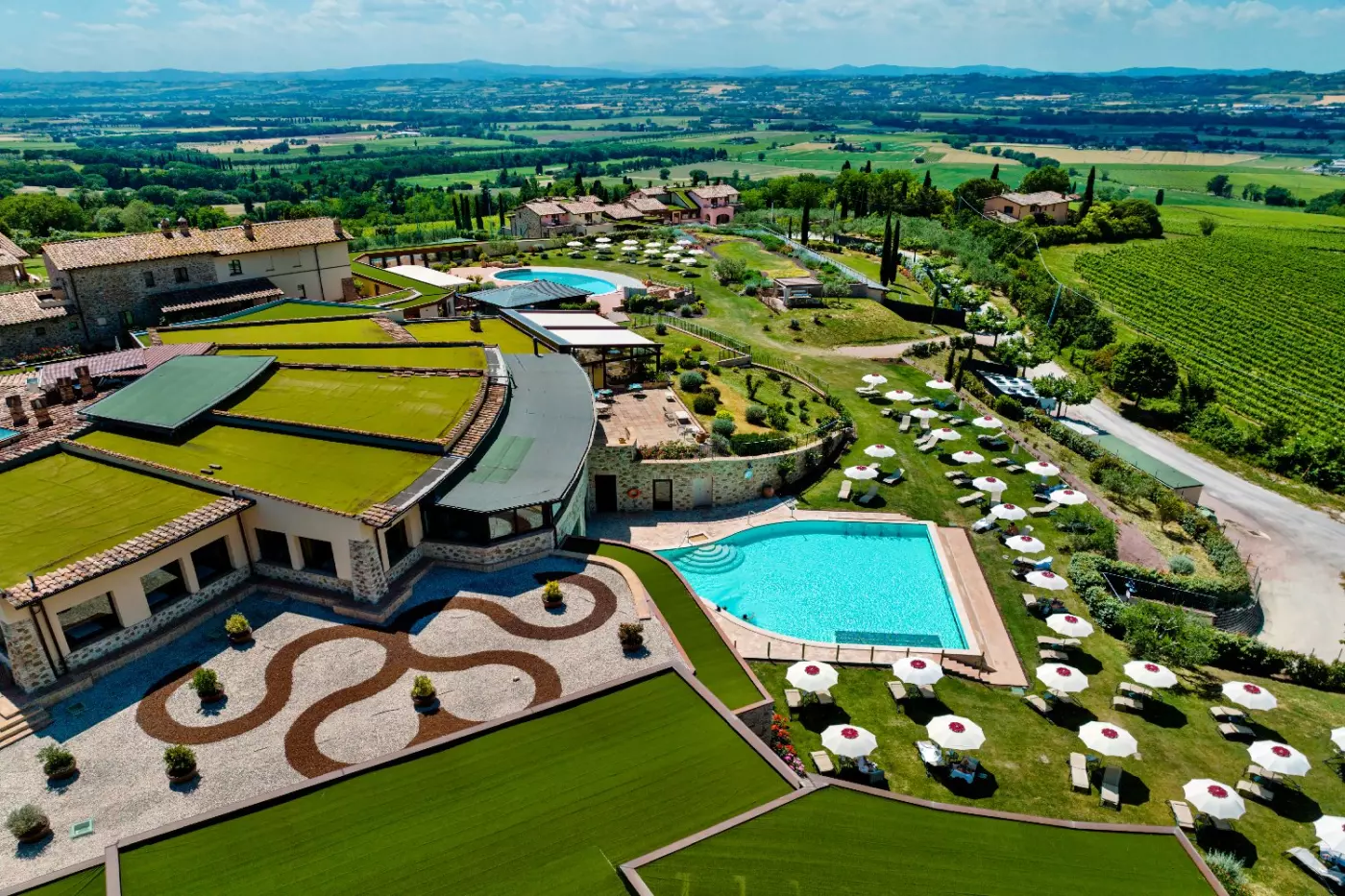
Borgobrufa SPA Resort is an adults-only wellness retreat in Umbria, set on a hill near Perugia with wide views toward Assisi,...

More amenities
Sina Brufani occupies a prominent position on Piazza Italia, at the edge of Perugia's historic centre. Opened in 1884, it loo...
More amenities
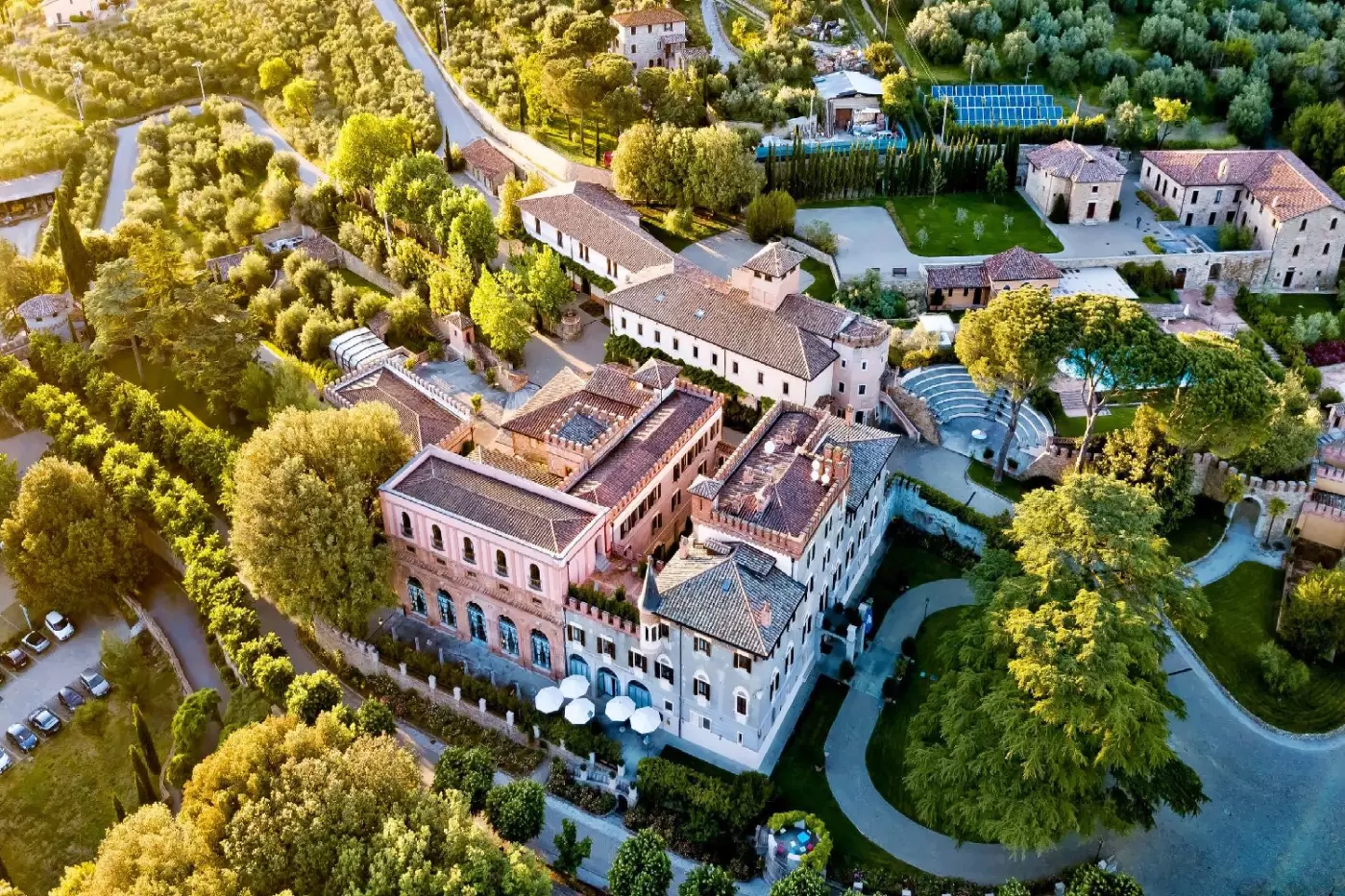
Borgo dei Conti Resort is a five-star country hotel in Montepetriolo, Umbria. It lies about 25 kilometres from Perugia. A maj...