



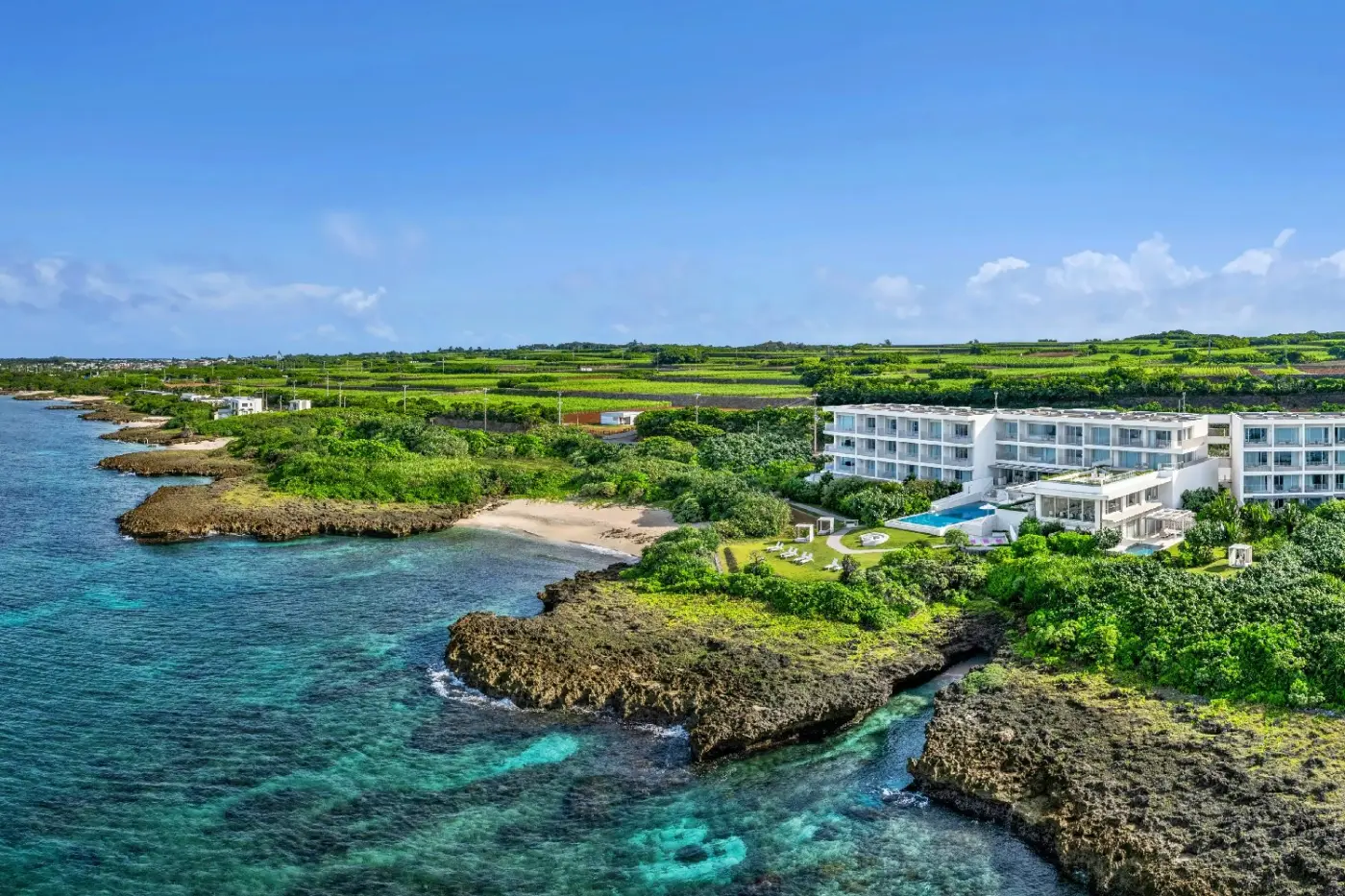
IRAPH SUI Miyako Okinawa
Prices From 302 USD
IRAPH SUI, a Luxury Collection Hotel, Miyako Okinawa is for travelers who want the quiet side of Okinawa rather than a large...
Please choose a hotel or destination from the list.
We couldn’t open your search results. Please try again.
Your private search
Finding exceptional stays
Miyakojima offers an Okinawa island stay with IRAPH SUI on Irabu Island as the collection's accommodation reference. Beyond the coastal setting, textile craft and maritime history provide two specific ways to explore the wider Miyako story.
Prices From 302 USD
IRAPH SUI, a Luxury Collection Hotel, Miyako Okinawa is for travelers who want the quiet side of Okinawa rather than a large...
Reserved for You
Miyako jofu is a textile tradition originating on Miyako Island. Its making begins with ramie plants: fibers are extracted and spun into thread, then tied to create patterns before repeated indigo dyeing and weaving. The finished cloth is beaten with a mallet to refine its texture and luster.
For travelers interested in craft, the process gives a textile more meaning than its surface pattern alone. Consider the relationship between plant fiber, dye and the work of making the cloth. This is a distinct cultural subject for a Miyako visit, with the material itself connecting the interest to the island.
In 1873, the German merchant ship Robertson was wrecked off Miyaguni during a typhoon while traveling from Fuzhou toward Australia. Local residents rescued and cared for the crew. A German expression of gratitude followed in 1876, when a monument was erected in Oyakoshi, Hirara.
The city-designated shipwreck monument concerns another layer of that remembrance: a new monument was erected at the wreck site in 1936. Keep the rescue story and its commemorative history in view when considering this subject. It gives an interest in the coast a human and historical focus, beyond the appearance of the water.
At IRAPH SUI, the sea-facing dining context is a particular part of the accommodation's atmosphere. Give that relationship between dining and the outlook weight if it matters to the hotel setting you want.
Our Japan destination guide places the Miyako hotel search within a broader journey.
Irabu Bridge links the two. Keep the islands distinct even when a road connection makes them part of one journey. A hotel on Irabu and a landmark on Miyako Island do not share the same immediate setting.
It consists of two marine ponds connected with each other and the sea through an underwater cave system. Choose it for that geological interest, treating it as an observational landscape subject rather than another version of time on a beach.
The cape on southeastern Miyako Island provides a rugged headland and lighthouse setting. Choose it for that coastal character, keeping it distinct from an assumption of an immediate outing beside the Irabu hotel.
No. They are different airports. Specify which one belongs to your journey when arranging arrival, rather than relying on a broad Miyakojima destination name. The hotel’s Irabu address should remain clear in that discussion.
Yes. Miyako soba provides a specifically regional food subject alongside the island’s better-known sea scenery. Choose it for that connection with the place, giving a meal its own interest rather than treating every dining choice as interchangeable resort time.