



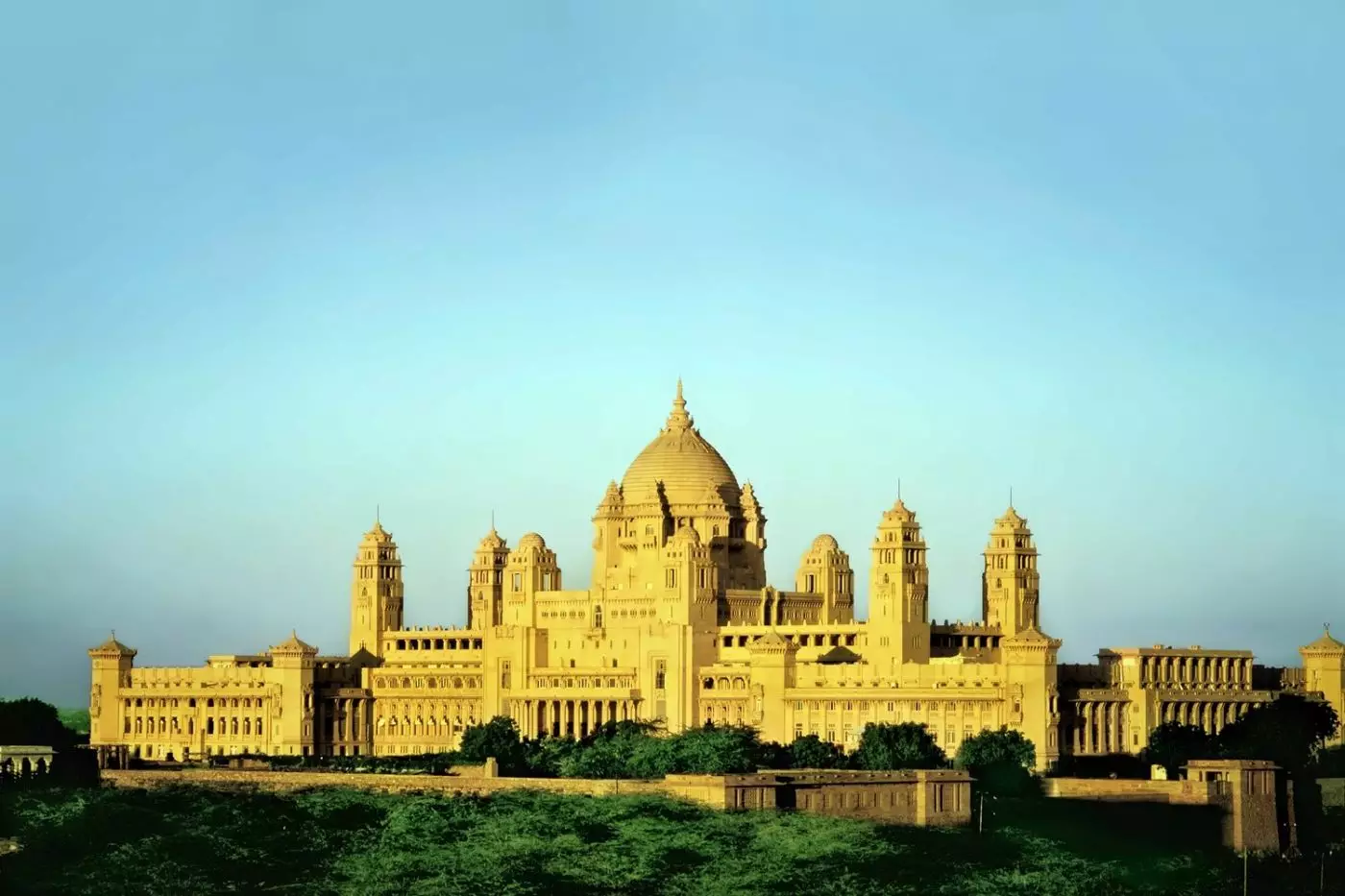
Umaid Bhawan Palace
Prices From 442 USD
+2
More amenities
- Wellness
- Culture
The first sight of Umaid Bhawan Palace explains why Jodhpur feels different from other stops in Rajasthan. A vast golden-sand...
Please choose a hotel or destination from the list.
We couldn’t open your search results. Please try again.
Your private search
Finding exceptional stays
Umaid Bhawan Palace on Chittar Hill provides Jodhpur’s palace-retreat base. Beyond it, Mehrangarh’s rocky skyline, Sardar Market’s trading streets and the city’s stepwell reveal different parts of Marwar’s capital. Native desert plants around the fort add an ecological outing to the royal buildings and older neighbourhoods.
Prices From 442 USD
More amenities
The first sight of Umaid Bhawan Palace explains why Jodhpur feels different from other stops in Rajasthan. A vast golden-sand...
Sardar Market brings spices, traditional clothes and jewellery into the older city. The Clock Tower is a landmark for the surrounding heritage streets, giving a market walk a recognisable starting point. This is the trading side of Jodhpur, with shops and local goods alongside the architecture.
Toorji Ka Jhalra is a stepwell built from rose-red sandstone, with intricate carving and a symmetrical design. It forms part of Jodhpur’s traditional water-management heritage. The structure also had a social role as a gathering place, connecting water provision with urban life in the desert city.
Mehrangarh’s palace architecture includes latticed windows, carved panels and richly decorated walls. Moti Mahal was a royal audience hall, with glass windows contributing to its character. Sheesh Mahal has extensive mirror work with painted religious figures in plaster. These rooms make the fort a visit for interior decoration as well as the defensive skyline above the city.
Rao Jodha Desert Rock Park lies beside Mehrangarh. Its restoration work has focused on plants native to rocky parts of the Thar Desert, replacing an invasive growth of Prosopis juliflora. The underlying rhyolite rock is part of that habitat, making the park a landscape and ecology visit within Jodhpur.
Our India destination guide provides the wider country context.
No. Umaid Bhawan Palace stands on Chittar Hill, while Mehrangarh is Jodhpur's historic fort. They give the city different architectural experiences. Keep them separate when planning visits, rather than assuming that staying at a palace hotel means the fort is part of the same property.
The collections include painting, textiles, arms, decorative arts and objects associated with court life. Choose a subject that interests you instead of trying to give every room equal attention. The museum can make the fort visit more meaningful than a route undertaken solely for the outlook.
It is a marble memorial honoring Maharaja Jaswant Singh II. It provides a different architectural and commemorative interest from the fort. Visit for that particular character rather than treating every royal site as another palace, and leave its individual setting time within the day.
Mandore, north of Jodhpur, was an earlier capital of Marwar. It adds a historical thread beyond the better-known fort skyline. Choose it if that earlier context interests you, giving the outing its own purpose rather than adding it only to lengthen an already full sightseeing list.
No. The government museum is in Umaid Garden, a different place from the palace hotel. Its holdings include local art, crafts and historical objects. The similar name should not obscure the distinction when you decide which cultural visits to include.