



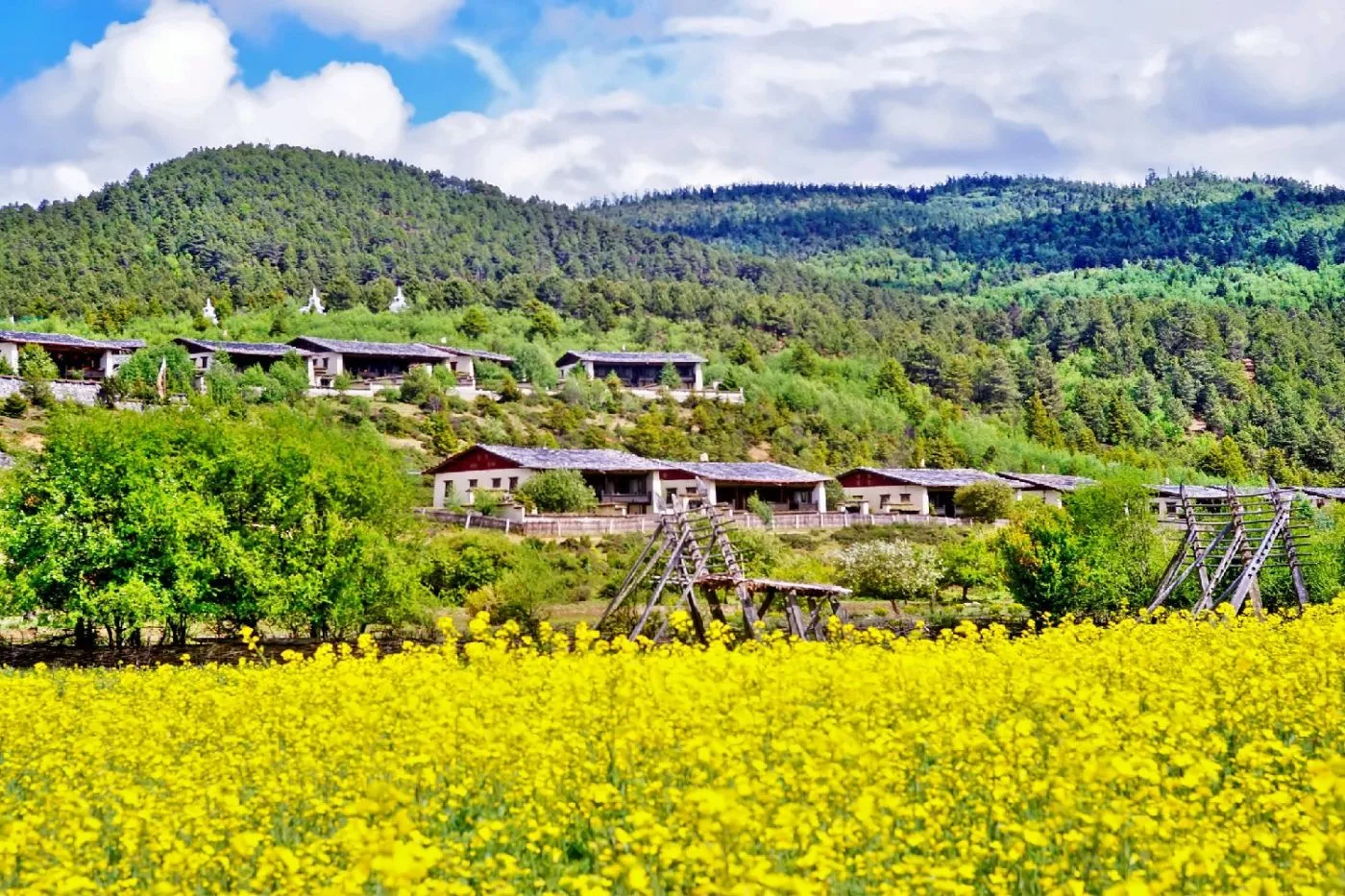
Banyan Tree Ringha
Prices From 149 USD
In Ringha Valley, Banyan Tree Ringha occupies 32 lodges rebuilt from traditional Tibetan farmhouses. Colored wooden posts, ca...
Please choose a hotel or destination from the list.
We couldn’t open your search results. Please try again.
Your private search
Finding exceptional stays
Ringha Valley, around Shangri-La in Yunnan's Diqing region, combines a rural lodge setting with Tibetan domestic architecture. A stay here can include the craft traditions of Nixi, the trading history of Dukezong and the lakes and meadows of Pudacuo, with each place adding a different part of the highland region.
Prices From 149 USD
In Ringha Valley, Banyan Tree Ringha occupies 32 lodges rebuilt from traditional Tibetan farmhouses. Colored wooden posts, ca...
Banyan Tree Ringha is in Hong Po village, Jian Tang. Its accommodation draws on traditional Tibetan homes. The Tibetan Farmhouse is reconstructed from an original village dwelling, with hand-painted Himalayan motifs and woven textiles in the lower living space. These details offer a way into the region’s domestic design through construction, decoration and the use of rooms.
Tangdui village in Nixi township adds a working craft tradition to a Shangri-La journey. Pottery here is made for household use as well as decoration, from cookware to teapots. Its black surface comes from firing and smoke treatment, without an applied glaze.
The clay body combines powdered weathered sandstone with white and red clay. Shaping, drying, firing and finishing turn those materials into durable vessels.
Dukezong's history is tied to the Ancient Tea Horse Road, when horse caravans brought traders into the town. It provides an urban and trading context alongside Ringha's village-dwelling architecture. Ganden Sumtseling Monastery adds a separate religious setting; it is not another name for the old town.
The China hotel guide places this Yunnan chapter within the national journey.
No. This collection includes Banyan Tree Ringha in the Ringha Valley and Shangri-La context. Use the precise hotel address when planning rather than treating the broader regional label as a compact local neighborhood.
No. The architecture and the actual location are separate attributes. A valley lodge may draw on Tibetan homes while providing a different daily setting from accommodation within town streets.
It involves a living religious and cultural setting, calling for attention to that purpose. Choose it for more than the building's appearance, rather than treating every striking place as an interchangeable photograph.
Tsampa is roasted barley flour, often combined with tea or dairy into a compact staple. Butter tea blends tea with butter and salt, giving a savoury drink rather than sweet milk tea. These provide a practical introduction to the barley and dairy traditions associated with Tibetan highland food.
Shudu Lake and Bita Lake are distinct parts of Pudacuo, with the subalpine Militang pasture between them. The park combines lake and wetland environments with grazing landscapes. This gives a nature-focused visit a more precise geographical choice than treating every lake or meadow near Shangri-La as one place.