



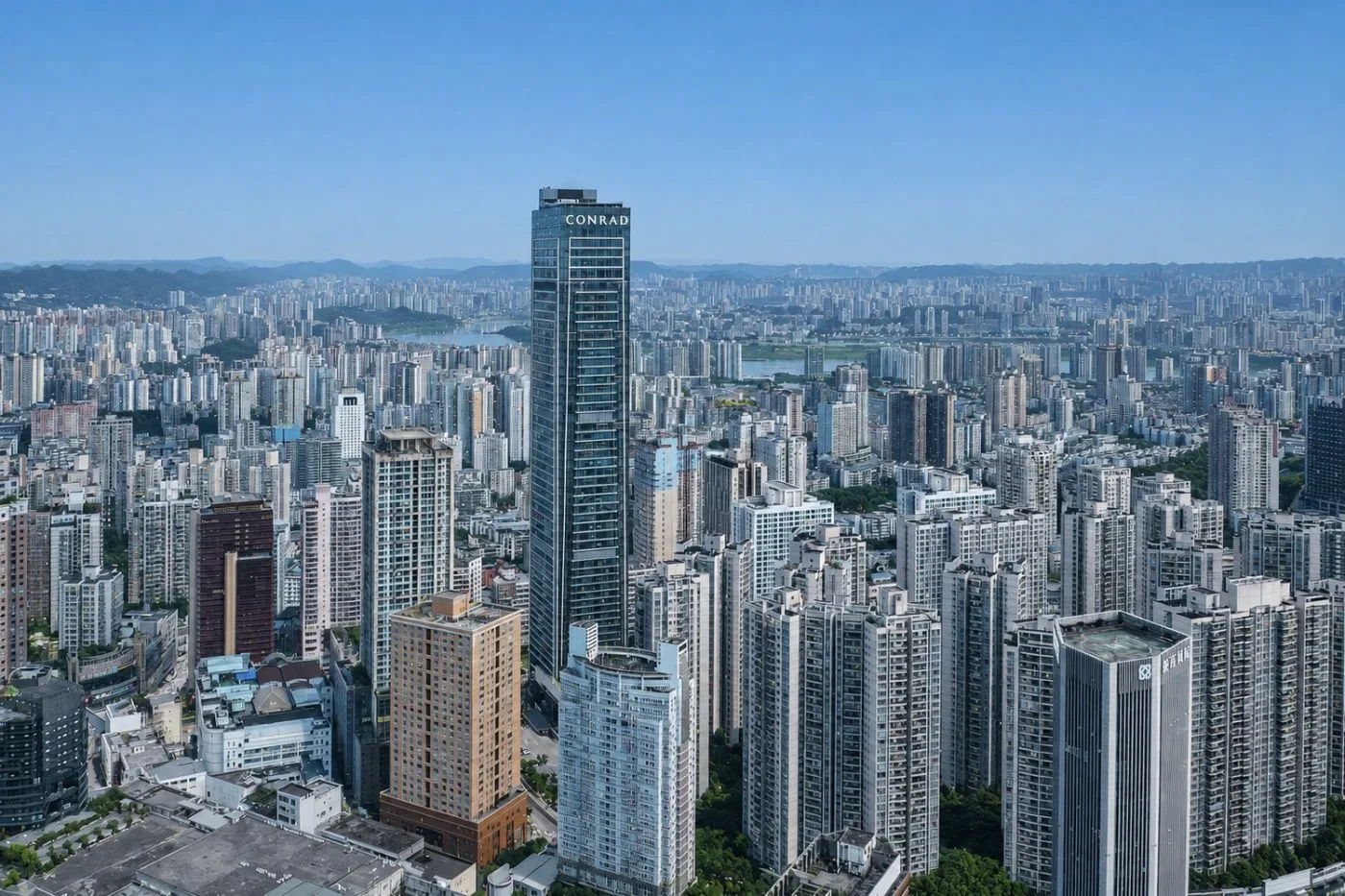
Conrad Chongqing
Prices From 160 USD
Conrad Chongqing is a high-rise luxury hotel in Nanan District, set inside Jafa Center and looking across one of China's most...
Please choose a hotel or destination from the list.
We couldn’t open your search results. Please try again.
Your private search
Finding exceptional stays
Luxury hotels in Chongqing place the city at your door, from its best-known sights to the places locals eat. The decisive choice is which part of this layered river city you want to use each day. An impressive skyline view and a convenient starting point for your walks are different qualities; consider both before choosing the address.
Prices From 160 USD
Conrad Chongqing is a high-rise luxury hotel in Nanan District, set inside Jafa Center and looking across one of China's most...
The Yangtze and Jialing rivers organise central Chongqing's geography, while the hills make the city feel three-dimensional. A short line on a map can conceal a substantial change in level. Plan your outings around real routes and groups of nearby places, rather than assuming that everything visible from the hotel is close on foot.
Yuzhong provides one central perspective; Nan'an gives a different relationship to the city across the Yangtze. Conrad Chongqing is in Nan'an, on West Nanping Road. Its address belongs to the choice of district, rather than being interchangeable with every hotel advertised under the wider Chongqing name.
Huguang Guild Hall in Yuzhong gives the city a social history to explore through its buildings. Guild halls served migrant communities as places for meetings and gatherings; the historic meeting rooms and opera stages show how business and entertainment shared that setting. Choose this subject when you want to understand the people who helped shape Chongqing, giving the buildings attention beyond their appearance. It offers a different purpose from surveying the high-rise skyline: the interest lies in how a community organised its life and expressed it in architecture.
Shibati, also called Eighteen Steps, is a traditional-style area in Yuzhong. Its streets are a modern reconstruction of an older setting, rather than an untouched historic quarter. The old-style buildings against the surrounding modern city make it a useful choice for an interest in urban design and photography. Look at how the city presents its earlier streetscape within today's surroundings. Keep that reconstructed character in mind when deciding what you want from a visit, particularly if your main interest is surviving historic architecture.
For a wider China journey, choose which of Chongqing's city and cultural subjects you want to explore before arranging the onward route.
The old town in Shapingba has a history associated with porcelain and river commerce. Its lanes provide another scale of exploration from the high-rise city. Give it a separate outing rather than assuming it is beside your central hotel.
Its train passes through a building, illustrating the inventive relationship between rail infrastructure and Chongqing's urban terrain. Look at it as a distinctive transport setting rather than evidence that every station provides the same spectacle.
The museum in Yuzhong adds historical and cultural context to the region. It is a useful counterpoint to outdoor viewpoints, particularly when you want to understand the river landscape rather than only admire it.
Yes. Chongqing hotpot is a distinctive part of the city's food culture. Choose a meal with attention to your party's tastes and let it have enough time, instead of treating a characteristic local dinner as a hurried extra.
No. They belong to a different part of the wider municipality and warrant a deliberate cultural excursion. Their UNESCO-listed carvings should be given their own place in the journey rather than added casually between central-city sights.