



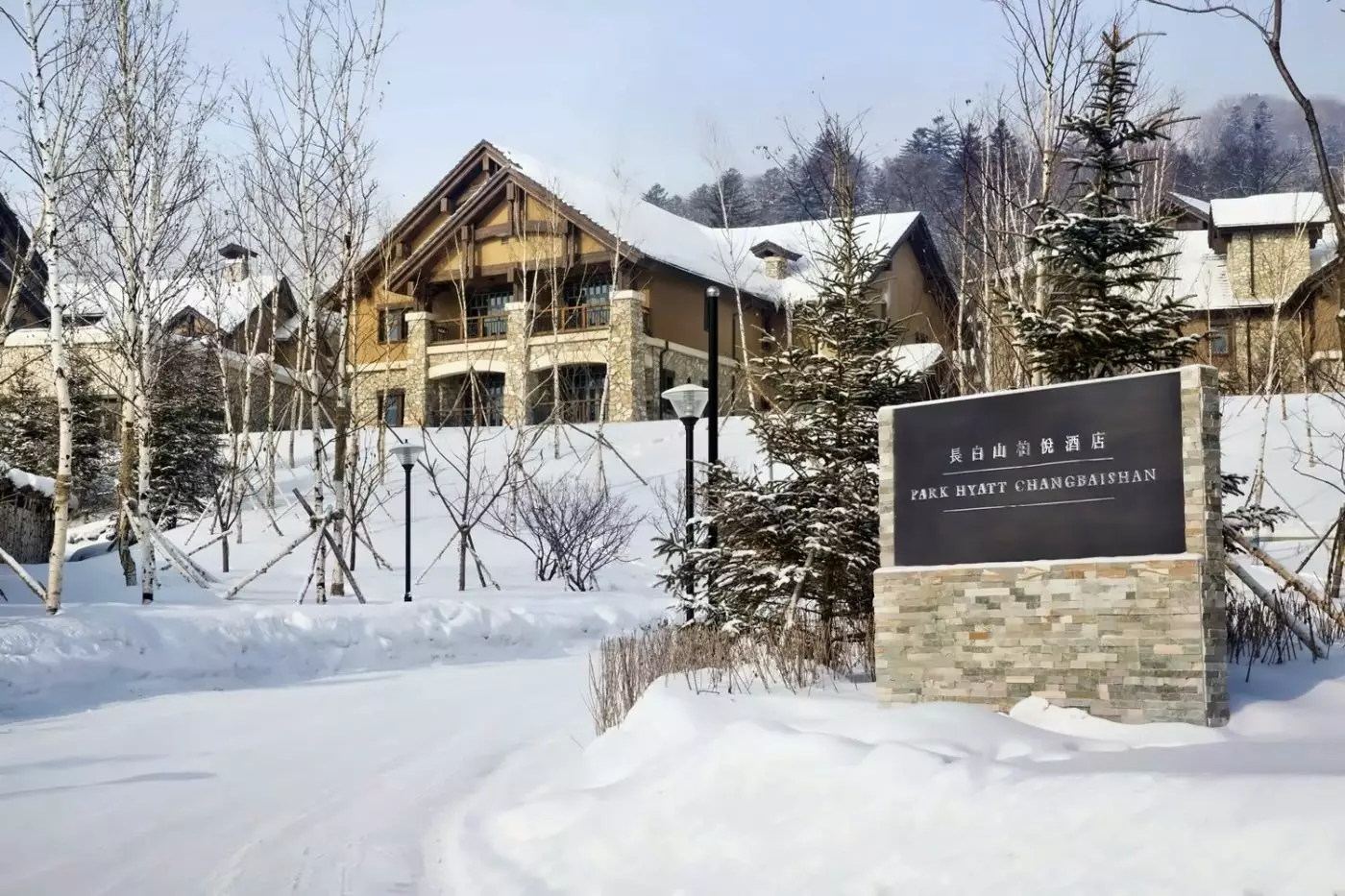
Park Hyatt Changbaishan
Prices From 210 USD
Park Hyatt Changbaishan is a mountain resort inside Changbaishan International Resort in Jilin Province. It is built for trav...
Please choose a hotel or destination from the list.
We couldn’t open your search results. Please try again.
Your private search
Finding exceptional stays
Park Hyatt Changbaishan places this stay in Changbaishan International Resort in Fusong County. The mountain region combines volcanic landforms and changing forest belts with the wooden-building traditions, ginseng culture and food of southeastern Jilin.
Prices From 210 USD
Park Hyatt Changbaishan is a mountain resort inside Changbaishan International Resort in Jilin Province. It is built for trav...
The collection's hotel is a mountain-resort base, with forest surroundings as part of its character. Baishan is a wider administrative area: its counties include Fusong, Jingyu and Changbai, each with its own local traditions and natural resources.
Changbaishan's volcanic history gives the mountain region its distinctive landforms. Tianchi Lake occupies a summit caldera formed by past eruptions.
The broader terrain includes basalt platforms, highlands on basalt slopes and cone-shaped volcanoes.
The region includes forest landscapes and alpine tundra. That change of vegetation gives another way to look at the mountain: the surroundings are not one uniform forest scene.
Mixed Korean-pine and broadleaf forest gives way at higher elevations to dark coniferous forest and Erman's birch woodland, with low shrubs and grasses in the alpine tundra. These plant communities form a vertical sequence across the mountain. For an interest in mature trees, the lower and middle forests are the focus; the high tundra offers low vegetation and exposed mountain forms.
The China hotel guide provides the national context for a mountain-focused journey.
No. Park Hyatt Changbaishan is in Changbaishan International Resort. Use the full address and resort name when choosing the base; a destination grouping does not make a mountain resort an urban hotel.
In Manjiang, within Fusong County, Jinjiang Muwu preserves a community of traditional Manchu wooden houses. They were built without bricks or tiles; the mukeleng building tradition uses logs coated with mud. It offers an architectural and village-history outing in the Changbai region, separate from the volcanic scenery.
The museum explores ginseng gathering, uses and associated customs through objects, pictures and documents. Its collection includes a historic wood carving alongside material connected with the plant and its harvest. The gathering traditions connect the collection with Fusong's identity as a ginseng-growing area.
The area's food includes Northeast Chinese, Korean and Manchu traditions. Korean-style cold noodles combine a cool broth with ingredients such as spicy cabbage, cucumber and pear; Manchu dishes include hot pot. Cold noodles and hot pot give a food-led journey contrasting dishes to explore.
Fusong is closely associated with ginseng and blueberries, while Jingyu is known for mineral-water resources and American ginseng. The distinction gives regional produce an identifiable geography within the wider Baishan area.