



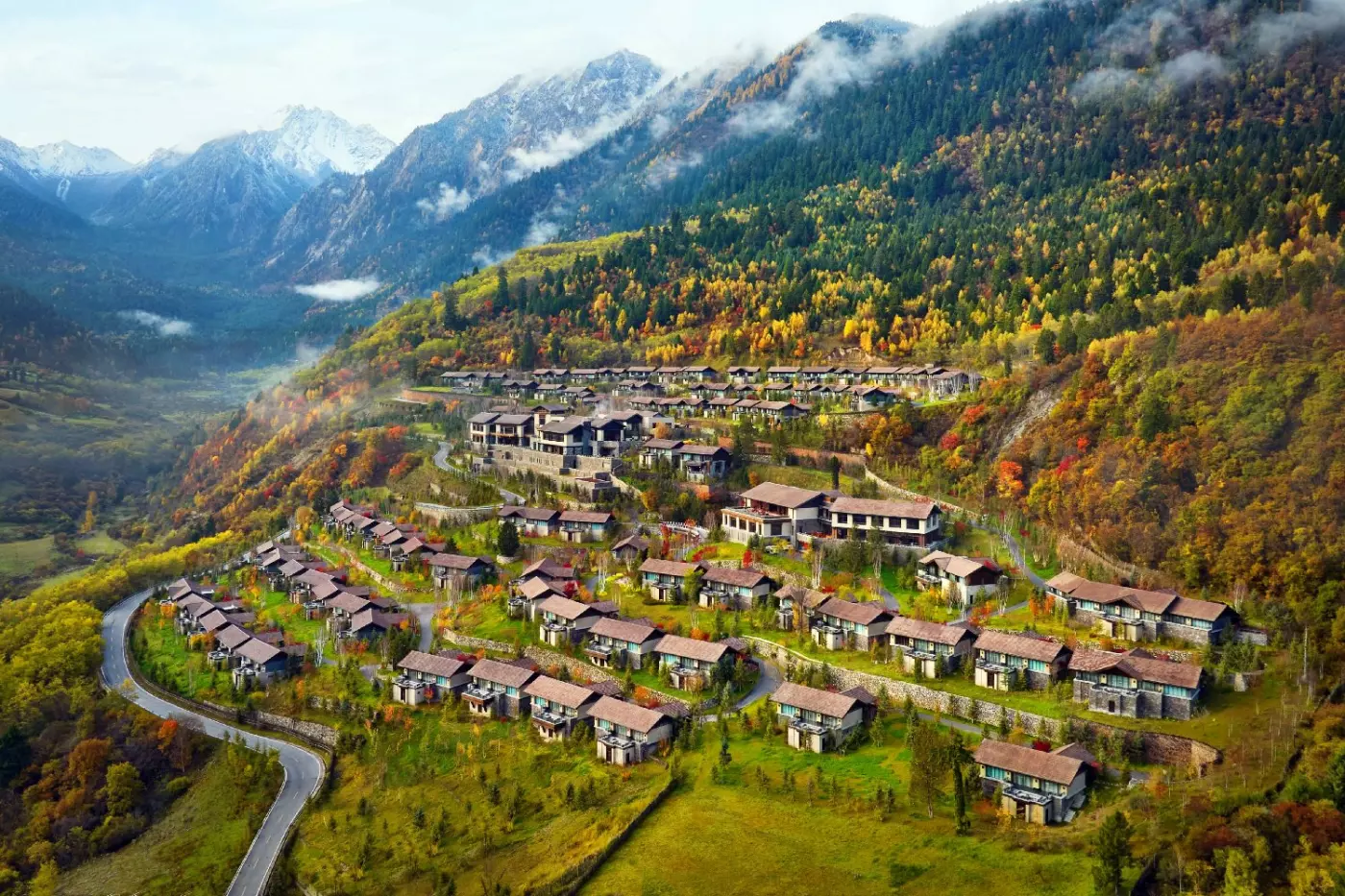
Rissai Valley, a Ritz-Carlton Reserve
Prices From 1’589 USD
+2
More amenities
- Romantic
- Adventure
Rissai Valley, a Ritz-Carlton Reserve sits in Zhongcha Valley near Jiuzhaigou, where the Minshan Mountains give the resort it...
Please choose a hotel or destination from the list.
We couldn’t open your search results. Please try again.
Your private search
Finding exceptional stays
Jiuzhaigou's Minshan setting brings a luxury mountain stay into northern Sichuan's landscape of water, forest and high ground. Rissai Valley, a Ritz-Carlton Reserve, provides the accommodation reference near the protected scenic area, while the region's communities and cooking give the journey further subjects.
Prices From 1’589 USD
More amenities
Rissai Valley, a Ritz-Carlton Reserve sits in Zhongcha Valley near Jiuzhaigou, where the Minshan Mountains give the resort it...
Jiuzhaigou's waterscape connects lakes, streams, waterfalls and underground water, with forests and mountains shaping the view. At Shuzheng Lakes, water passes between terraced pools, crossing natural dikes and flowing through groves of willow, poplar, pine and spruce. The trees stand within this linked waterscape, rather than forming only a backdrop on the slopes.
Tibetan, Han and Qiang communities are part of the region's living identity. For Tibetan religious architecture, Zharu Monastery lies in a valley surrounded by high mountains and the limestone face of Mirror Cliff. Its wood-and-clay buildings include a main hall, scripture tower and living quarters. The hall's golden roofs, bells and symbolic wheel provide specific architectural details to study, alongside the valley's natural forms.
Sichuan, Tibetan and Cantonese cooking appear at Rissai Valley. They provide distinct culinary subjects within the mountain retreat. Tibetan staples add a more local starting point: tsampa is based on barley flour, with preparations that may include walnuts, tea, pea or oat powder. Yak butter tea combines tea with butter and may include cheese and barley; traditional versions are salted. Barley also becomes chang, a drink fermented with yeast in ceramic jars.
The accommodation's villa style adds a private-retreat character to the hotel choice. Our China destination guide provides the wider country context.
It refers to nine Tibetan villages. That meaning helps explain why the region’s identity includes inhabited landscapes and cultural traditions as well as the natural scenery. It should not be understood only as a label for a group of lakes.
No. Huanglong is a separate UNESCO-listed landscape, known for travertine pools and mountain scenery. Choose it as an additional regional subject if that geological interest matters to you, giving it its own place in the itinerary rather than merging the two names.
No. The protected forests support important wildlife, but habitat significance is not a viewing guarantee. Choose Jiuzhaigou for its landscape and ecological interest without treating an animal encounter as an expected part of the stay.
The balance of forest colour, snow and water changes through the year. Choose the landscape character that interests you while keeping the actual conditions flexible. A seasonal theme is useful; a promise that every scene will match a particular photograph is not.
The landscape includes karst and travertine features, where water and limestone are closely connected. Understanding that process adds another way to look at pools and cascades, beyond their colour. It can make an observational visit more rewarding without requiring a specialist expedition.