



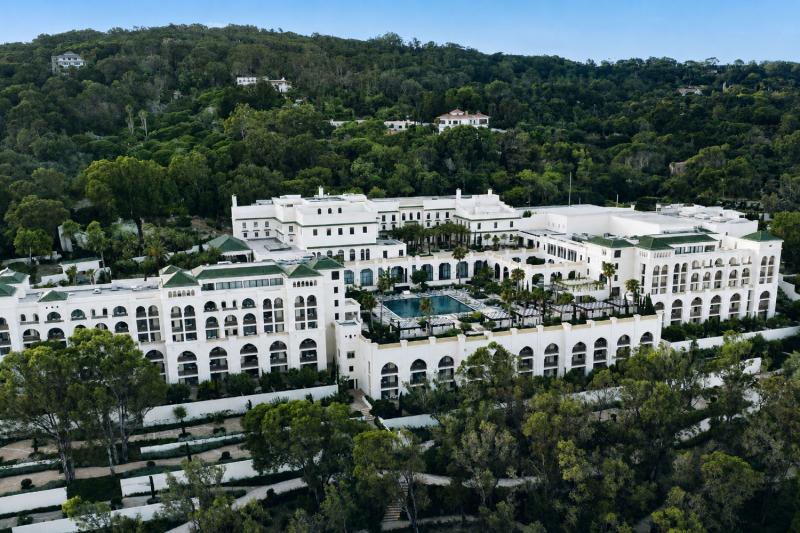
Fairmont Tazi Palace Tangier
Prices From 353 USD
+3
More amenities
- Sauna
- Wellness
- Golf
Fairmont Tazi Palace Tangier sits in the forested hills above the medina, where Andalusian gardens surround a palace conceive...
Please choose a hotel or destination from the list.
We couldn’t open your search results. Please try again.
Your private search
Finding exceptional stays
Tangier gives a luxury hotel search a setting shaped by old streets, religious architecture and forested hills. The medina and Grand Socco provide familiar urban reference points; Saint Andrew's Church adds a specific subject in the city's architectural and community history.
Prices From 353 USD
More amenities
Fairmont Tazi Palace Tangier sits in the forested hills above the medina, where Andalusian gardens surround a palace conceive...
Fairmont Tazi Palace gives the collection a hilltop reference in a forested setting. In the city, the medina and Grand Socco orient an interest in lanes, shops and tea stops. Keep these actual place references in mind when considering the hotel's wider surroundings.
In 1880, Hassan I donated land to the British community for a small Anglican church. A larger replacement building followed in 1894, responding to the growing congregation, and was consecrated in 1905. The sequence places Saint Andrew's within Tangier's nineteenth-century community history.
For a traveler interested in how different communities shaped the city, this provides a named building and a clear historical subject. It also separates the history of the congregation's accommodation from the decorative choices visible in the later church.
Saint Andrew's combines Anglican use with notably Moorish architectural forms. Its minaret-shaped belltower gives the exterior a particular profile. Inside, horseshoe arches, stucco and a cedar ceiling connect the building with Moroccan decorative traditions, including work by craftsmen from Fez.
Look at how structure, surface and material contribute different things: the arch defines an opening, while stucco and wood bring more detailed workmanship. These features provide an architectural interest within Tangier without relying on a general description of the city as a meeting of cultures.
Our Morocco destination guide supplies the wider country context. Use Tangier's specific urban and architectural subjects to give this northern chapter its own identity.
No. A hillside property offers a different return and usually a more deliberate separation from the old streets. Choose around how often you want to go into the city and the atmosphere you want during hotel time, rather than the shared destination name alone.
The Museum of Mediterranean Cultures emphasizes archaeological and ethnographic heritage. The American Legation focuses on a former diplomatic mission and its cultural role. Choose the subject that interests you, with enough time to appreciate it rather than treating the two as interchangeable attractions.
No. They lie on different coastal sides of the Tangier area. Cape Spartel is associated with the Atlantic outlook, while Cape Malabata faces the Mediterranean side. Keep the names distinct when arranging an outing or discussing the view you want.
Choose it when the city and its cultural character are part of the appeal. Coastal time can complement the stay, but a medina-focused trip and a largely settled beach holiday have different requirements. Decide which matters most before selecting the hotel setting.
The Cinémathèque de Tanger occupies the former Cinema Rif on the Grand Socco. Its collection includes documentaries, experimental films and video art. A past selection from the archive brought together Gabriel Veyre’s images of Tangier in 1935, reflections on Moroccan life by Paul Bowles and films about migration and identity.