



Palais Faraj Suites & Spa
Prices From 285 USD
+2
More amenities
- Wellness
- Romantic
Palais Faraj Suites & Spa is a 31-suite palace hotel in Fez, set on a hillside by the old medina with wide views over the cit...
Please choose a hotel or destination from the list.
We couldn’t open your search results. Please try again.
Your private search
Finding exceptional stays
Fez is a city to explore through its materials, workshops and layered streets. Choose a hotel that supports the way you want to spend time in the medina, leaving room for a quieter return after a substantial outing. A cultural stay here rewards attention to individual places rather than an itinerary built only around the number of monuments visited.
Prices From 285 USD
More amenities
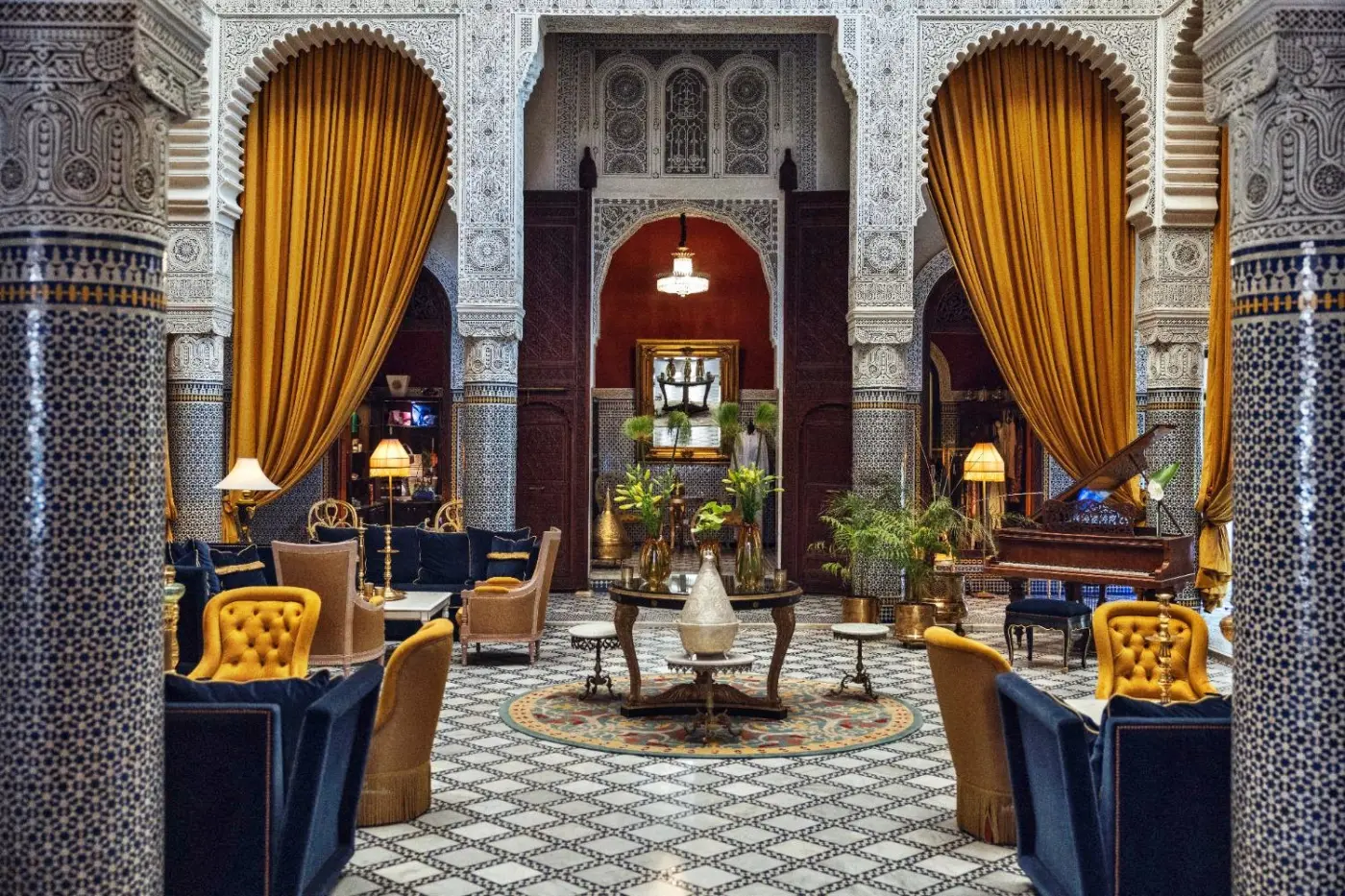
Palais Faraj Suites & Spa is a 31-suite palace hotel in Fez, set on a hillside by the old medina with wide views over the cit...
Prices From 347 USD
More amenities
Riad Fes is a Relais & Chateaux hotel inside the old medina of Fes, set behind a discreet door in one of Morocco's most layer...
A stay within the medina extends the sense of place into the quieter parts of the day. Riad Fès illustrates that relationship, with its location in the historic city rather than a generic position on a regional map. Choose a heritage setting because you want to enjoy it between visits, not only because it provides an attractive backdrop for photographs.
Riad Fès is in the Zerbtana area, while Palais Faraj is at Bab Ziat in the Ziat quarter. These are two particular addresses around the historic city, not a choice between a medina hotel and a beach resort. Keep the quarter in mind when comparing where the day begins.
Seffarine Square gives a craft-focused outing a specific material: the coppersmiths' finely worked trays and teapots, alongside other iron, copper and silver objects. It is a useful choice if metalwork and household design interest you. A pottery visit has a different subject, with the blue ceramics associated with Fez bringing color and painted surfaces into the day.
The Royal Palace gates face the Alaouites esplanade near the Mellah. Their seven bays, zellige, carved plaster and green-tiled frieze make this a study of a monumental facade. The exterior composition is the subject here, rather than an assumed visit through the palace rooms.
The nearby Mellah offers another architectural interest. Its houses have outward-facing windows and wooden or wrought-iron balconies, giving the streets a different relationship with domestic life from the enclosed courtyard residence. Pair the palace facade with these street-facing houses for a visit focused on Fes Jdid, beyond the older medina.
It is a recognizable gateway into the medina, with decorative tilework that gives an architectural introduction to the city. Use it as a point of orientation, then choose the streets and subjects you want to explore beyond it.
The Nejjarine Museum occupies a restored former fondouk and provides that focused subject. Its building and collections give a different perspective from browsing workshops alone. Allow time to look closely rather than treating it as another brief courtyard stop.
Its carved cedar, stucco and decorative surfaces reward an interest in architectural craftsmanship. Choose it for those details, with time to observe the work, rather than assuming every historic interior in Fez offers an identical experience.
Jnan Sbil provides a garden setting within a city visit. It offers a different pace from the medina's workshops and architectural interiors. Give it time as a place to enjoy rather than using it only as a route between other attractions.
Its longstanding specialty is cosmetic and bathing materials, including henna, rhassoul clay, soft soap, kohl and rosewater. It gives a medina visit a focus on personal care traditions rather than furnishings or decorative objects. Browse for those materials if that part of Fassi daily life interests you; the market is not itself a hammam treatment.