



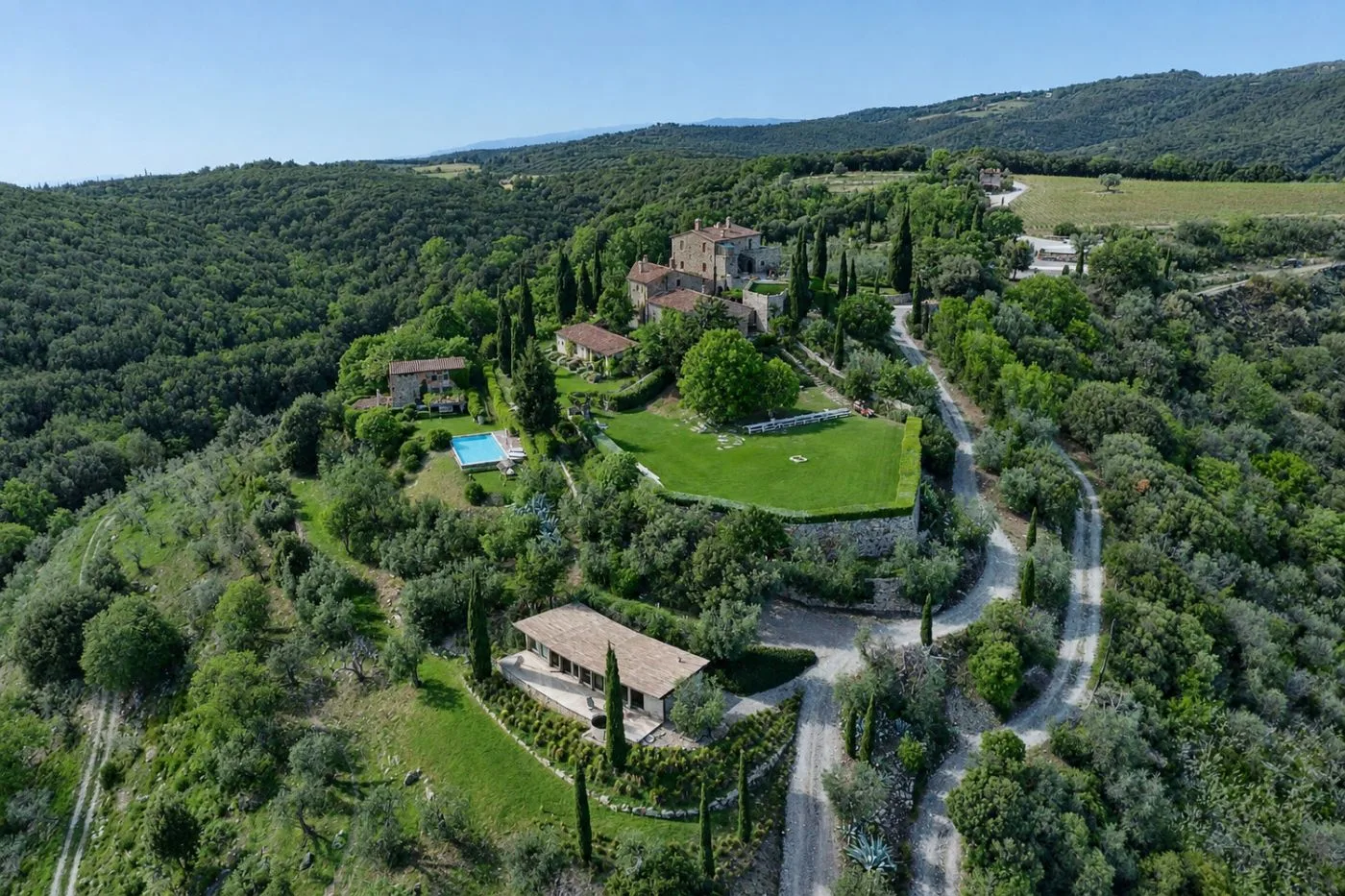
Castello di Vicarello
Prices From 1’055 USD
Castello di Vicarello is a family-run castle retreat in Tuscany's Maremma, set among organic vineyards, old olive groves and...
Please choose a hotel or destination from the list.
We couldn’t open your search results. Please try again.
Your private search
Finding exceptional stays
Castello di Vicarello supplies the Cinigiano collection's rural accommodation reference. In the village itself, Piazza Marconi and its civic clock tower give an interest in local architecture a specific subject beyond the estate landscape.
Prices From 1’055 USD
Castello di Vicarello is a family-run castle retreat in Tuscany's Maremma, set among organic vineyards, old olive groves and...
Castello di Vicarello places the stay in the countryside at Poggi del Sasso. The estate is the accommodation base; central Cinigiano, with its square and civic tower, is a separate village outing.
Cinigiano's clock tower stands in Piazza Marconi at the center of the village. The nineteenth-century structure occupies the site of the medieval town hall. That history gives a village visit a subject in changing civic architecture, rather than only the survival of a medieval streetscape.
Consider the tower in relation to the square. Its later form gives an interest in how settlements change a particular local example.
The municipality's coat of arms appears on the tower. A round clock faces the piazza, while the crenelated upper part encloses the belfry. Those details give a closer look specific features to notice, from the civic emblem to the relationship between the clock and the public space below.
Look at how those elements work together. An architectural interest can focus on a few details rather than viewing the tower only as a distant outline.
Our Italy destination guide supplies the wider country context.
No. It provides the more specific rural location for Castello di Vicarello. Use the full address when choosing the base rather than assuming the collection name describes a compact town-center hotel area.
It identifies the local production area that includes Cinigiano. That gives the visit a particular regional thread, rather than treating all Tuscan wine landscapes as interchangeable.
The Casa Museo recreates a late-nineteenth-century mountain household. Its kitchen and bedroom contain authentic furniture and everyday utensils, while agricultural and woodland tools document work beyond the home. The collection includes objects donated by local residents, placing domestic life alongside field, forest and craft occupations.
They connect the landscape with food and the agricultural character of the estate. A meal or a walk can reveal that relationship without turning the holiday into a formal sequence of tastings.
At Monticello Amiata, the Via delle Fonti follows the connection between the village and its water sources. Fonte Vecchia and Fonte di Sotto supplied households and watered livestock. The route passes through the Marroneta chestnut landscape before reaching the springs.