



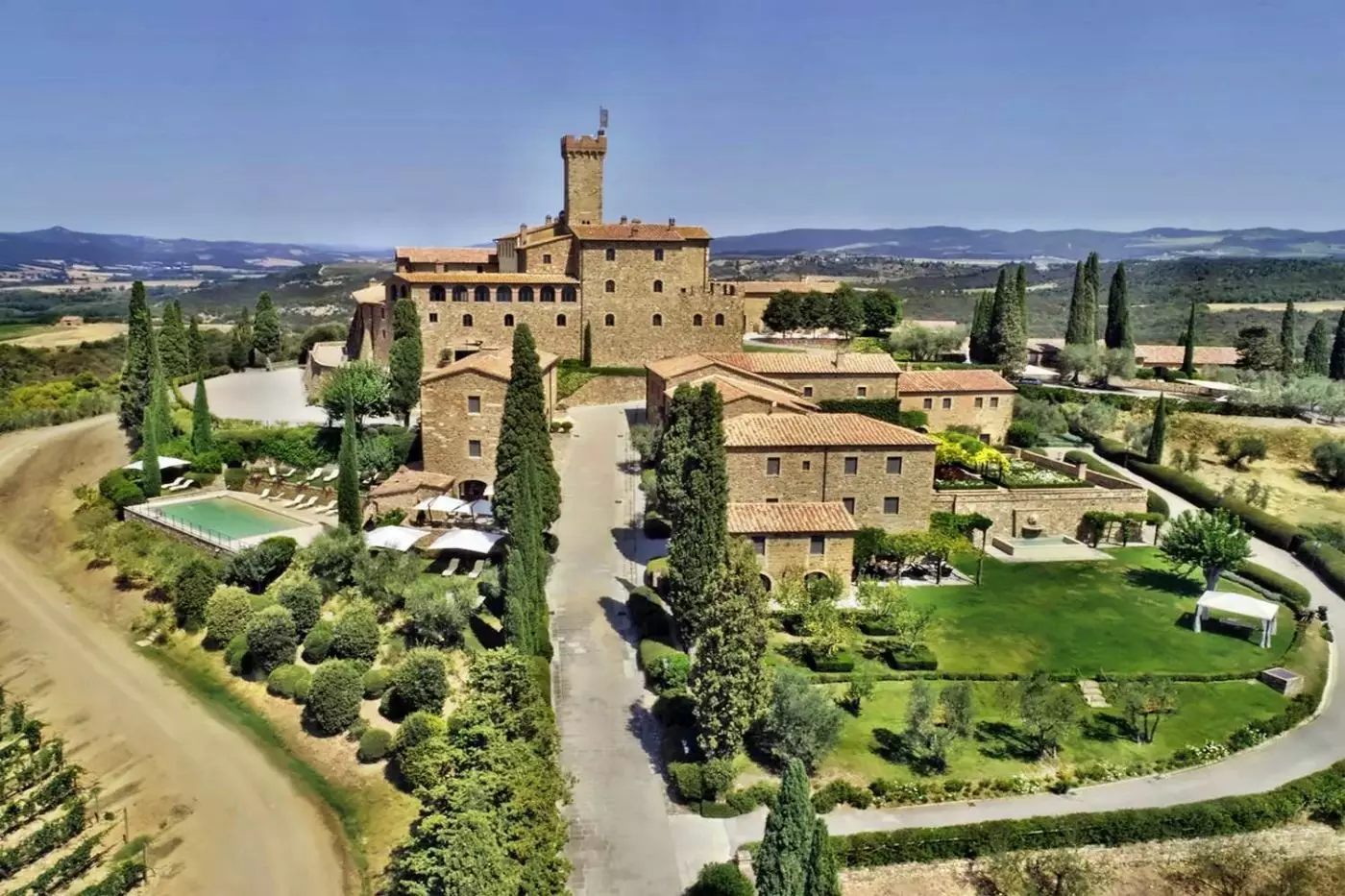
Castello Banfi Il Borgo
Prices From 1’117 USD
Castello Banfi Il Borgo is a small wine resort in Montalcino, Tuscany, beside the Castello di Poggio alle Mura. Its twelve su...
Please choose a hotel or destination from the list.
We couldn’t open your search results. Please try again.
Your private search
Finding exceptional stays
Choose Montalcino for a Tuscan stay in which the hill town and the surrounding estates have different roles. Its steep historic streets invite a focused visit, while vineyards, olive country and rural hotels reward time away from the centre. Decide how much of the day belongs to discovering the place and how much to the countryside base you want to return to.
Prices From 1’117 USD
Castello Banfi Il Borgo is a small wine resort in Montalcino, Tuscany, beside the Castello di Poggio alle Mura. Its twelve su...
Prices From 834 USD
More amenities
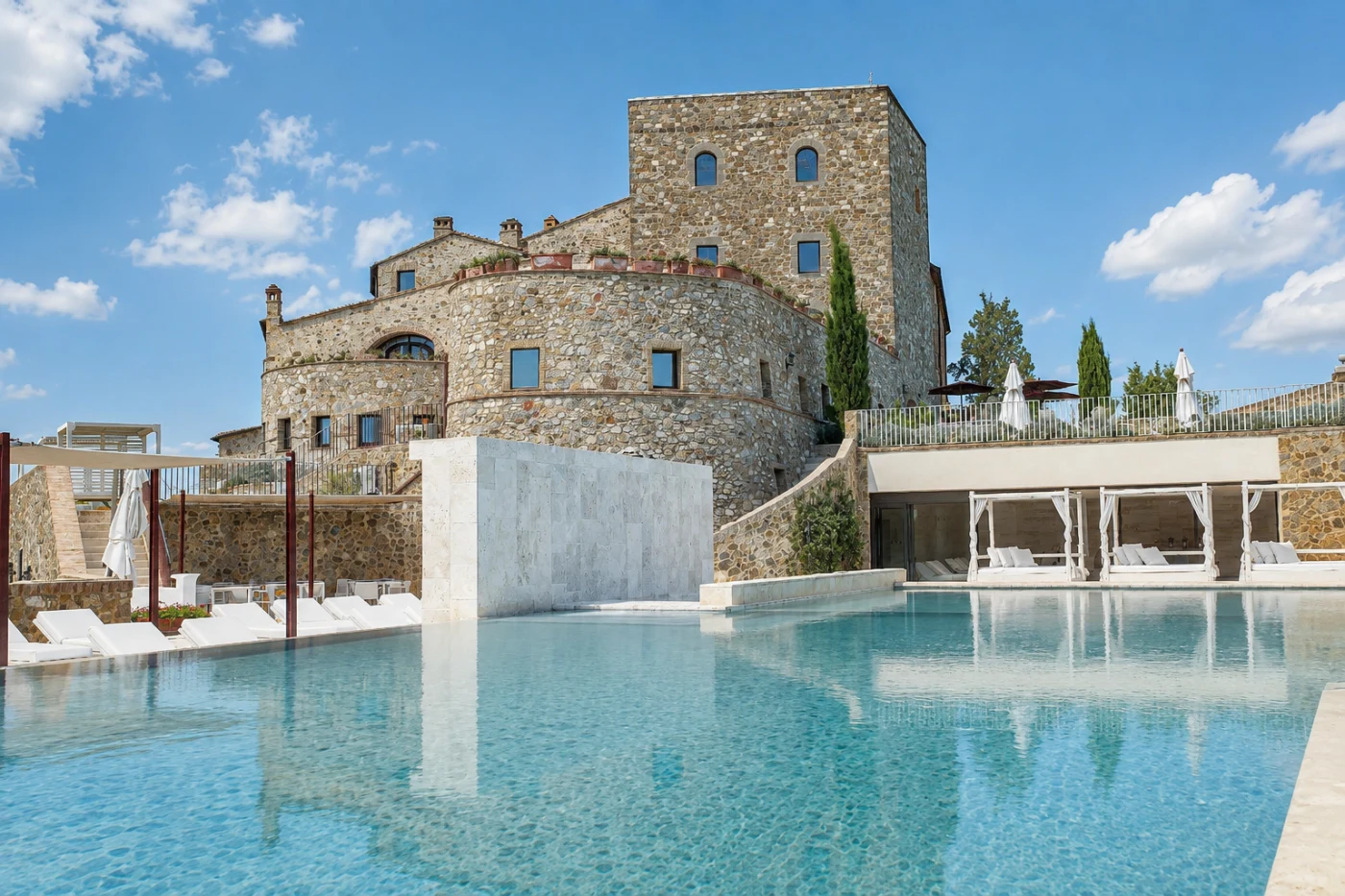
Castello di Velona is a thermal spa resort in Tuscany, occupying a medieval fortress near Montalcino above the Val d'Orcia. I...
Prices From 1’056 USD
More amenities
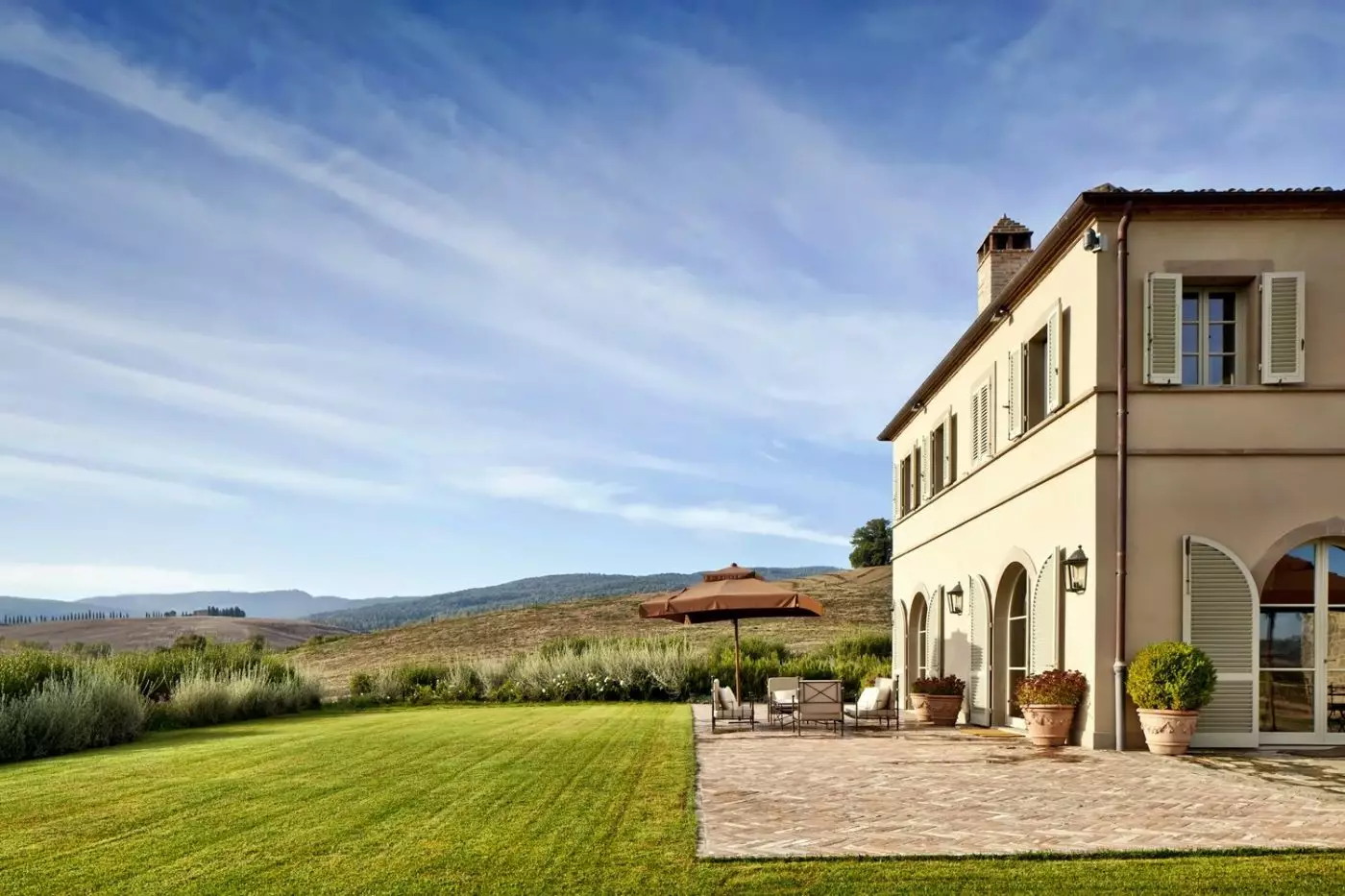
The ruins of a 12th-century castle still stand above the borgo at Rosewood Castiglion del Bosco. A chapel on the estate holds...
Castello Banfi Il Borgo belongs to the Poggio alle Mura estate setting. Castello di Velona is in the Castelnuovo dell’Abate area, while Castiglion del Bosco, A Rosewood Hotel occupies its own rural estate. These are countryside choices within the Montalcino collection, not three hotels opening directly onto the town’s central streets.
Montalcino’s medieval layout includes narrow, steep streets, with the countryside repeatedly coming into view.
In Piazza del Popolo, the Palazzo dei Priori provides a civic-history focus. Its facade and clock tower carry heraldic shields, while the loggia below has ribbed vaulting and a statue of Cosimo I de' Medici. Look at the building from the square for the contrast between the medieval palace and later additions. It offers a different architectural subject from the abbey and military fortress described below.
The vineyards and olive groves around Montalcino give its Val d’Orcia setting a working agricultural character. San Giovanni d'Asso, between the Crete Senesi and Val d'Orcia, adds the area's truffle tradition to that countryside interest. The village developed around a Gothic castle that also served as a granary for Siena's Santa Maria della Scala hospital. Choose this direction for an agricultural and village-history outing beyond the wine estates.
Outside the village, Bosco della Ragnaia is a wooded garden created by the artist Sheppard Craige. It brings a designed woodland setting into the countryside visit, distinct from the vineyards and olive groves.
The Italy destination guide covers wider regional combinations.
Both belong to Montalcino’s Sangiovese tradition, but they are distinct denominations. Brunello is directed toward longer ageing, while Rosso offers a younger expression. Use that difference to shape a conversation with the producer or sommelier rather than assuming Rosso is simply the same wine under another label. Choose actual bottles and vintages individually.
The abbey near Castelnuovo dell’Abate brings Romanesque architecture into a countryside visit. Choose it for the building and its setting, distinct from a wine appointment or a walk through Montalcino’s centre. Respect its religious role and confirm current visitor arrangements instead of assuming that a service, musical experience or every interior area will be available.
The Civic and Diocesan Museum occupies part of the former Sant’Agostino convent and preserves local artistic heritage, including medieval and Renaissance work. Choose it for a closer look at the area’s cultural history rather than only its vineyard identity. Check the current presentation and visiting arrangements before planning around a particular object.
Its pentagonal form makes it a notable example of military architecture. Construction began in 1361, incorporating earlier structures and town walls. Look at how the building gathers those defensive layers rather than treating it only as a viewpoint. Confirm the current visitor route and any tower access separately, with the walking requirements suited to your party.
The Bottle and Glass Museum at Poggio alle Mura explores glassmaking and the evolution of the wine bottle. It offers a material and design perspective distinct from tasting what the bottle contains. Arrange the actual museum visit independently of any cellar appointment, rather than assuming that staying at an estate automatically provides access to every cultural space.