



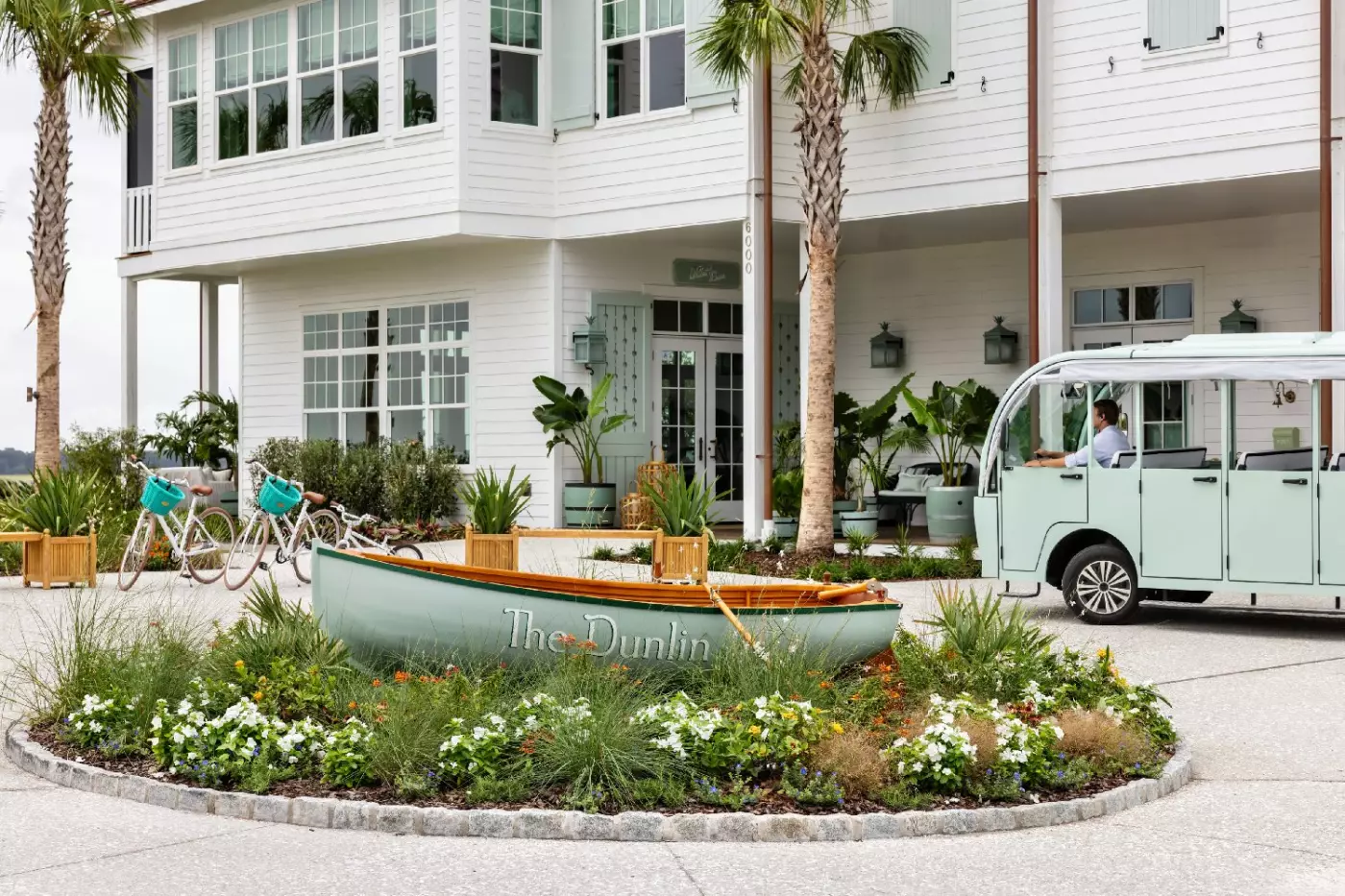
The Dunlin
Prices From 621 USD
+3
More amenities
- Sauna
- Wellness
- Adventure
The Dunlin is a Lowcountry resort on Johns Island, set along the Kiawah River about 20 miles from Charleston. It brings toget...
Please choose a hotel or destination from the list.
We couldn’t open your search results. Please try again.
Your private search
Finding exceptional stays
Johns Island offers a Lowcountry stay shaped by marshland, Southern coastal architecture and the Kiawah River. The collection features The Dunlin, whose porches reflect the appeal of this landscape. Choose a hotel here for its relationship with the island, leaving Charleston's urban interests a distinct part of the wider journey.
Prices From 621 USD
More amenities
The Dunlin is a Lowcountry resort on Johns Island, set along the Kiawah River about 20 miles from Charleston. It brings toget...
Reserved for You
Marshland and a riverfront outlook give this part of Johns Island its coastal character. The Dunlin's porches and Southern coastal style provide a useful hotel reference. The setting deserves attention in its own right: the view from the accommodation, the relationship between buildings and landscape, and the spaces where you spend an afternoon all shape the stay.
Johns Island Presbyterian Church adds an architectural subject beyond the waterside scenery. Its frame meetinghouse form belongs to a building tradition once widespread in South Carolina. Fanlights and arched windows reward attention to individual details, giving the building more interest than a brief historic label.
Let the architecture guide the visit: look at the relationship between the simple meetinghouse form and its more elaborate openings. That contrast provides a way to understand the building without relying on a disputed construction date. It also gives an island outing a defined subject, particularly for travellers who enjoy vernacular buildings as much as grand urban monuments.
A Charleston hotel and a Johns Island base serve different interests. The city's historic streets create a different setting from this part of the Lowcountry. If both places belong in the journey, decide whether changing accommodation would give each setting more attention, rather than treating every coastal address as a substitute for another.
For a broader South Carolina itinerary, select another stop for the particular landscape or cultural subject it adds. A change of base earns its place when it changes the experience, not simply the hotel name.
It is a large Southern live oak within a City of Charleston public park on Johns Island. Choose the visit for the tree and its place in the local landscape, without relying on a precise age claim to explain its interest.
Kiawah Beachwalker Park is on the western end of Kiawah Island, with an ocean beach and river setting. Treat it as a separate coastal outing, keeping the distinction between that public park and the accommodation on Johns Island clear.
No. They are distinct islands. The Dunlin’s Kiawah River setting does not turn its Johns Island address into an accommodation location on Kiawah Island. Use the precise place name when arranging a visit or discussing the base.
Moving Star Hall connects Johns Island with Gullah spirituals and praise-house worship. Historical recordings document sermons, song, testimony and prayer, while the associated society supported visits to sick members and burials. Its small clapboard building dates from 1917.
The Charleston Tea Garden is on Wadmalaw Island, separate from Johns Island. It grows Camellia sinensis, with plants descended from tea brought to Summerville in the late nineteenth century and transferred to Wadmalaw in the 1960s. “First flush” refers to tea made from the bushes’ first spring growth.