



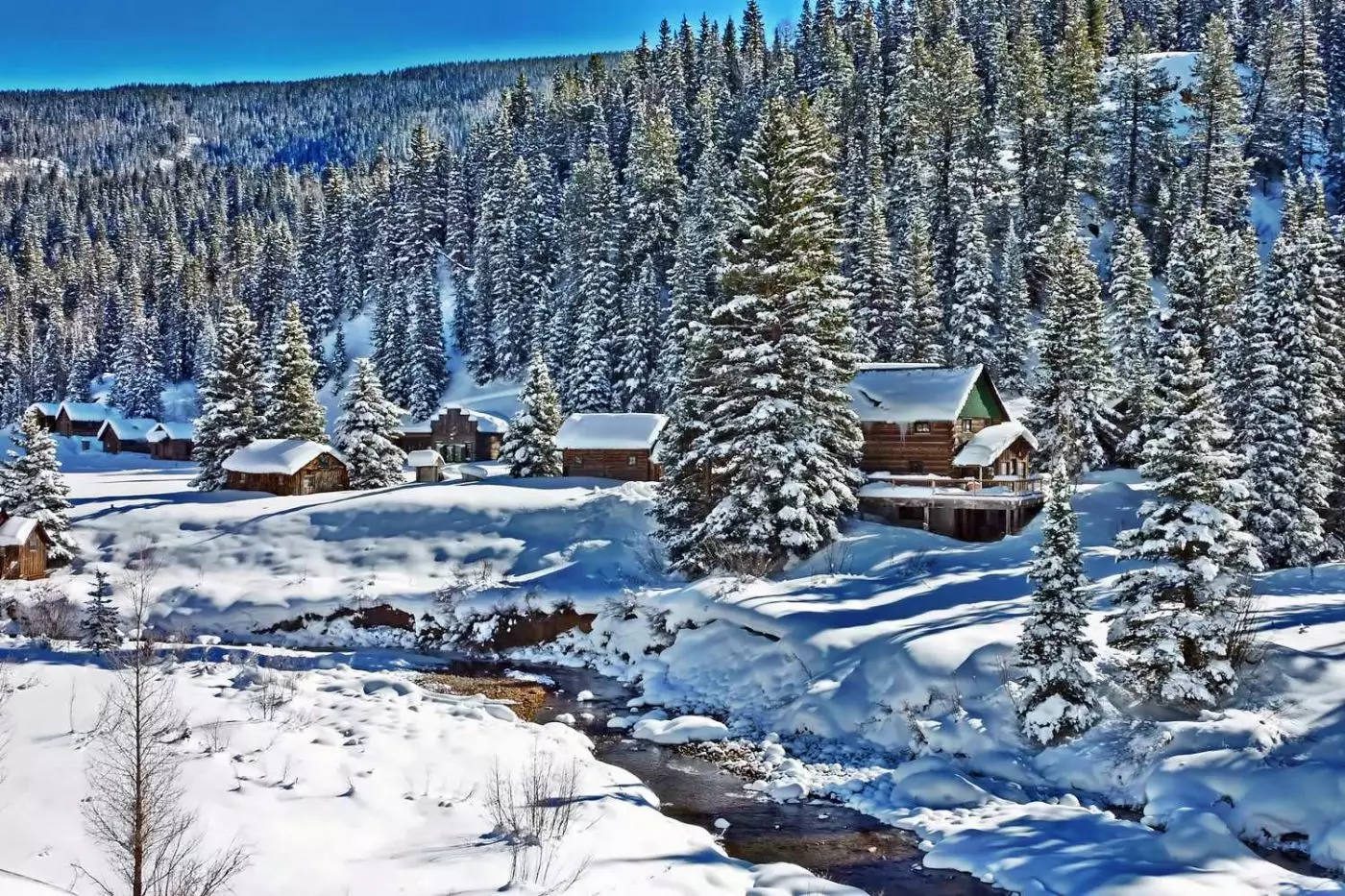
Dunton Hot Springs
Prices From 1’701 USD
+3
More amenities
- Culture
- Romantic
- Adventure
Dunton Hot Springs is a restored ghost-town resort in Colorado's San Juan Mountains, with hand-hewn cabins, mineral springs a...
Please choose a hotel or destination from the list.
We couldn’t open your search results. Please try again.
Your private search
Finding exceptional stays
The Dolores collection leads to Dunton Hot Springs in Colorado’s San Juan Mountains, rather than a hotel on the town’s main street. Choose the stay for that mountain retreat and its sense of separation, then decide which wider southwestern Colorado experiences genuinely belong to the journey.
Prices From 1’701 USD
More amenities
Dunton Hot Springs is a restored ghost-town resort in Colorado's San Juan Mountains, with hand-hewn cabins, mineral springs a...
Dunton Hot Springs occupies a restored former settlement, with cabins and mineral springs contributing to its character. The stay centres on this San Juan mountain setting, with Dolores town and the region’s archaeological places as separate outings.
Dunton began as a mining settlement in the nineteenth century, with log buildings along the West Dolores River. That history explains the cabins and former-town character of the mountain base. A stay here belongs to the alpine valley and its restored settlement, while the regional archaeological sites introduce much earlier communities in a different landscape.
Dolores town lies beside its namesake river and near McPhee Reservoir. It is a separate town-area stop from the Dunton retreat, where river scenery and the surrounding archaeological country become part of the regional visit.
The region’s archaeological sites connect with living Indigenous histories and communities.
Mesa Verde introduces homes built on mesa tops and within natural cliff alcoves. Ancestral Puebloan builders fitted villages to those recesses, using sandstone blocks and mud mortar. Choose this regional heritage chapter for the connection between the architecture and its cliff setting: homes, storage spaces and community buildings occupied the available shelter in the rock.
Hovenweep provides a different architectural focus across the Colorado–Utah border region. Square, round and D-shaped towers stand at canyon heads, often close to springs and seeps; some were built on irregular boulders. Their detailed masonry and unusual positions distinguish them from Mesa Verde’s alcove villages. The towers’ functions remain debated, so they should not all be described as defensive forts.
These archaeological landscapes belong to the wider Four Corners journey, beyond Dunton’s nineteenth-century mining history. Include the sites whose buildings interest you as a separate regional stage, with the mountain settlement remaining the retreat base rather than the location of the ancient pueblos.
A separate Telluride stay adds a mountain-town setting to a wider southwestern Colorado journey.
It introduces the archaeology and cultural heritage of the Four Corners region, including Ancestral Puebloan lives and Native American perspectives. Choose it for that interpretation rather than treating it only as a practical stop before visiting an outdoor site.
The pueblos are on the Canyons of the Ancients Visitor Center grounds near Dolores. They add archaeological places to a museum-area visit, in a different setting and historical period from Dunton’s restored settlement. This is a town-area cultural outing within the wider region.
McPhee Reservoir brings a water-and-landscape interest to time around Dolores. It belongs to the town-area portion of a regional journey, with the reservoir and its surroundings as the focus. This is a different setting from the mineral springs and cabins of the mountain retreat.
The San Juan Skyway is a regional scenic route through this part of Colorado. A selected drive can form part of a wider journey between mountain destinations. Give that drive its own place in the route, instead of assuming a retreat stay needs to include the whole circuit.
Use interpretation to understand the place, follow the guidance at the site and leave remains undisturbed. These landscapes connect with the histories of living communities. Attention and care add more to the visit than searching for an isolated photograph away from the intended route.