



Hotel Albergo Beirut
Prices From 432 USD
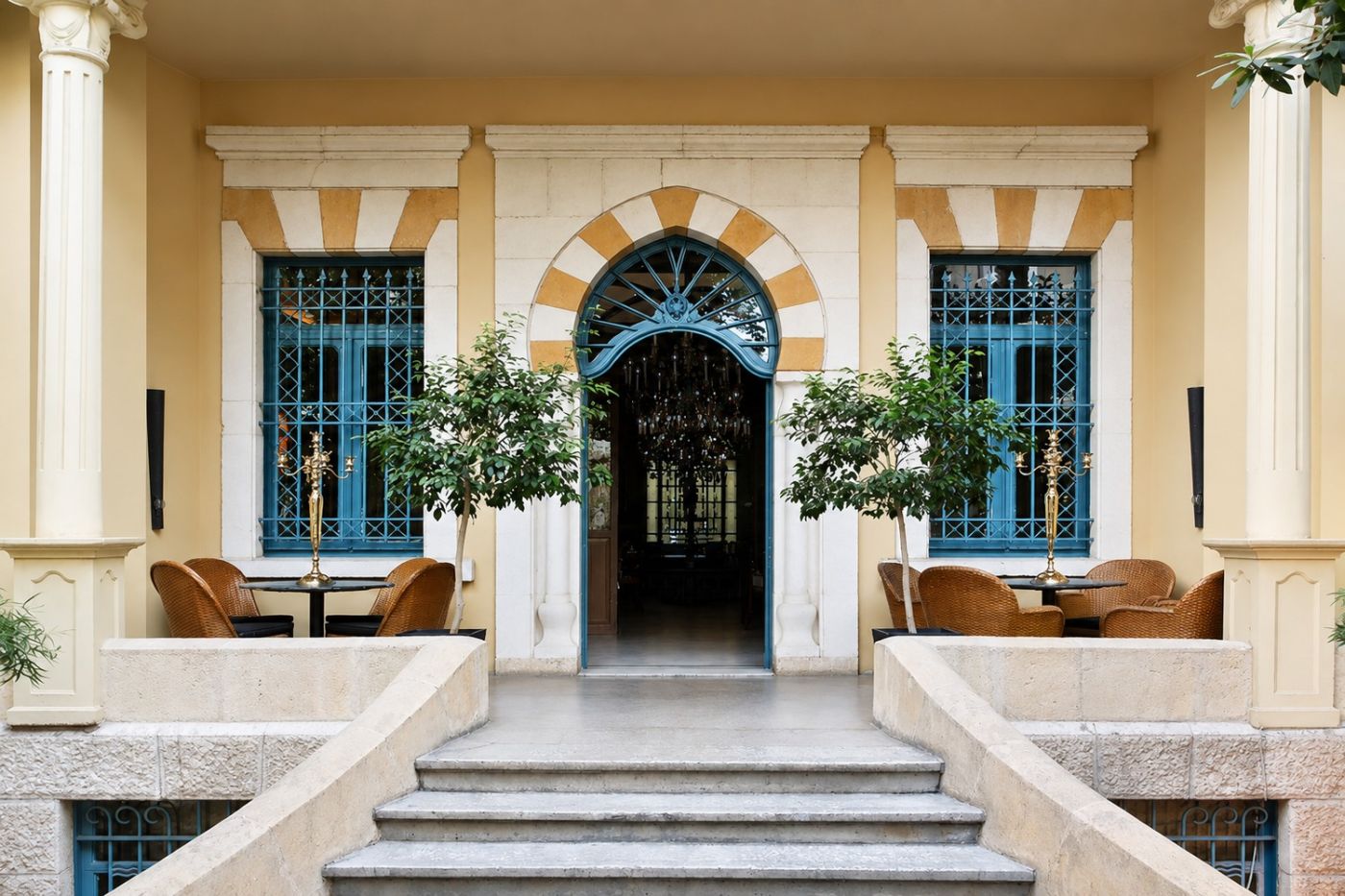
Hotel Albergo in Beirut occupies a 1930s mansion in Achrafieh, where the three-arch design recalls Beirut's traditional house...
Please choose a hotel or destination from the list.
We couldn’t open your search results. Please try again.
Your private search
Finding exceptional stays
Beirut gives a Lebanon stay an urban base, while Byblos on the coast and Baalbek in the inland Bekaa bring different historical landscapes into the journey. Our hotel choice is Hotel Albergo in Beirut’s Achrafieh neighbourhood. Use the capital for city culture, then choose regional heritage interests for what they add beyond it.
Prices From 432 USD
Hotel Albergo in Beirut occupies a 1930s mansion in Achrafieh, where the three-arch design recalls Beirut's traditional house...
The Byblos site museum was created inside the Crusader castle. Its collection traces the site’s history and develops themes of urban growth, the activities of its inhabitants, burial practices and deities. Those subjects give the castle another dimension beyond its outward form.
If everyday history interests you, pay attention to the relationship between an object and the activity it represents. A vessel or a burial object asks a different question from the plan of a city. Choose which kind of evidence holds your attention, rather than assuming the most monumental remains must always be the most engaging.
Part of Baalbek’s site museum lies within the foundations of the great courtyard of the Temple of Jupiter and addresses the Roman period. Another part, within the Arab tower, addresses Islamic periods. The architectural setting is therefore part of how the history is presented, alongside the objects themselves.
For a traveller drawn to buildings, the relationship between foundations, tower and collection can be a useful focus. Consider what survives in a structure and what an object adds to that account. This gives an archaeological interest a more concrete subject than a general description of ancient grandeur.
Hotel Albergo is in Achrafieh, giving the accommodation a Beirut city address. Choose it for the capital’s urban chapter; the coastal and inland places in this guide are regional interests, not other hotel locations in our selection.
Byblos lies north of Beirut on the Mediterranean coast. Its urban layers and sea-facing setting make a different journey from Baalbek, in the agricultural Bekaa Valley inland. Choose the coastal direction for the relationship between town and maritime history, or the Bekaa for a landscape of fields and monumental archaeology. Plan the regional journey around that distinction rather than fitting both into an undifferentiated list of Beirut sights.
The Beirut destination guide develops the capital’s hotel choice.
No. The capital provides a particular urban chapter, while other cultural landscapes retain their own identities. Choose the hotel for your time in Beirut rather than assuming that every nationally significant place belongs to its immediate surroundings.
The Mount Lebanon Range lies between the coastal plain and the Bekaa. Farther east, the Anti-Lebanon Range forms the valley’s other mountain boundary. This topography matters when arranging an inland chapter: the Bekaa is a different landscape beyond the coastal cities, rather than another stop along the shore.
Its association with the history of the Phoenician alphabet gives it a specific cultural significance. Choosing a subject like this can make a heritage interest more meaningful than simply recognizing that a place is old or historically important.
The Sursock Museum in Achrafieh holds modern and contemporary work by predominantly Lebanese artists, including paintings, works on paper and sculpture. It adds a more recent artistic perspective to a journey otherwise focused on archaeological sites. Choose the collection for that contrast with Lebanon’s ancient material history.
In northern Lebanon, Qadisha’s monasteries and hermitages are embedded in a rugged valley landscape. The nearby Forest of the Cedars of God adds a long cultural connection with cedar wood. This is a mountain and monastic heritage subject, distinct from a coastal town or a Roman temple complex.