



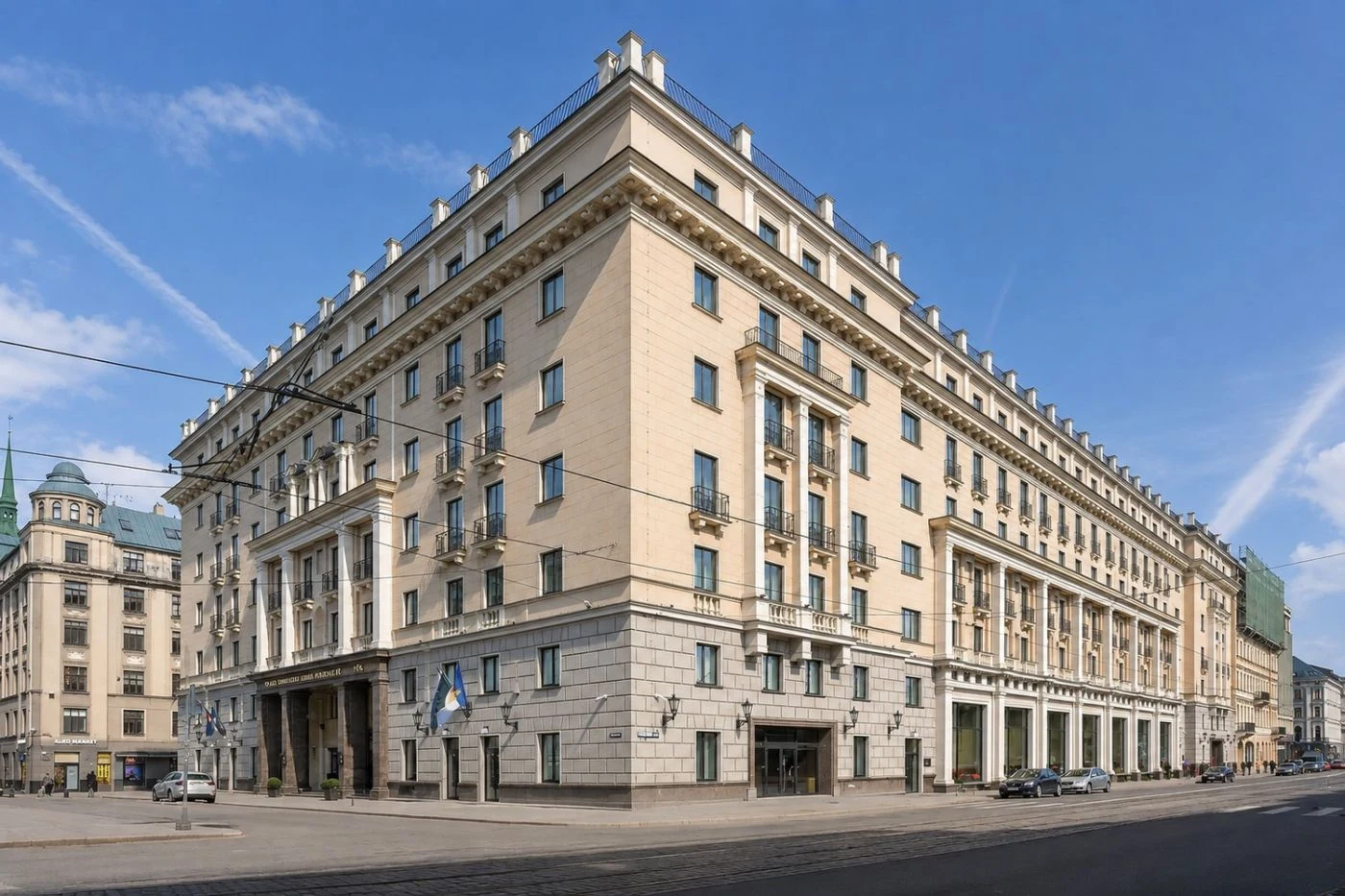
Grand Hotel Kempinski Riga
Prices From 307 USD
+3
More amenities
- Wellness
- Culture
- City Vibe
The Latvian National Opera and Ballet stands opposite Grand Hotel Kempinski Riga, placing a performance, the park, and the Ol...
Please choose a hotel or destination from the list.
We couldn’t open your search results. Please try again.
Your private search
Finding exceptional stays
Riga combines medieval merchant houses, canal-side gardens and wooden residential quarters across the Daugava. Grand Hotel Kempinski's opera-side address provides the central base. An Old Town walk, a park outing and the city's timber-built neighborhoods reveal different parts of Latvian urban life.
Prices From 307 USD
More amenities
The Latvian National Opera and Ballet stands opposite Grand Hotel Kempinski Riga, placing a performance, the park, and the Ol...
Grand Hotel Kempinski Riga is on Aspazijas Boulevard, beside the Latvian National Opera and Ballet. That gives the local luxury choice a useful relationship with the city's historic and cultural center.
Bastejkalns lies beside the Freedom Monument, with paths at several levels around its hill. Stone gardens, cascades, sculptures and small bridges give this central park more variety than a single waterside promenade. Follow the lower paths for the canal setting, or take the hill paths for a different perspective on the gardens. It supplies a planted landscape within the central city.
The Three Brothers on Mazā Pils Street show changes in domestic life across several centuries. In the oldest house, built around 1490, one large room accommodated work, trade and everyday living. The middle house, dated 1646, introduced a large hall and living rooms towards the courtyard. The youngest provided small apartments on each floor.
These arrangements give a visit a focus on how residents used space. The group also houses the Latvian Museum of Architecture, placing the surviving buildings within the country's preservation tradition. It suits an interest in domestic architecture alongside the Old Town's larger churches and civic monuments.
Pārdaugava, on the Daugava's left bank, preserves another side of Riga's building history. Wooden homes and former manor houses offer a change from the Old Town's masonry. Kalnciema Quarter in Āgenskalns combines restored timber architecture with an arts-and-crafts setting, while the surrounding district includes low-rise homes, villas and former industrial buildings.
Ķīpsala has a different residential character. The former fishermen's island mixes restored wooden houses with larger modern buildings. Choose it for the relationship between older timber homes and later city development; Āgenskalns offers the broader neighborhood streetscape. Both outings remain within Riga rather than turning the day into a separate seaside visit.
The Latvia destination guide sets Riga within a wider national journey.
Alberta Street is a key address for exploring that architectural interest. Give the buildings time to reveal their details rather than treating the area as another short Old Town street walk.
The market pavilions reuse structures associated with zeppelin hangars. Their architectural story adds another layer to a food-led visit, beyond the produce and everyday market life.
Its collection gives Latvian art a substantial historical context. Choose it for that national cultural subject rather than assuming a museum visit is simply another way to fill a rainy hour.
The former KGB headquarters interprets a difficult part of Latvia's occupation history. Give that subject space and attention rather than fitting it into the day as an interchangeable attraction.
It is a separate seaside destination. Treat a visit as a change of setting from the city rather than expecting a central hotel stay and a Baltic beach stay to provide the same daily experience.