



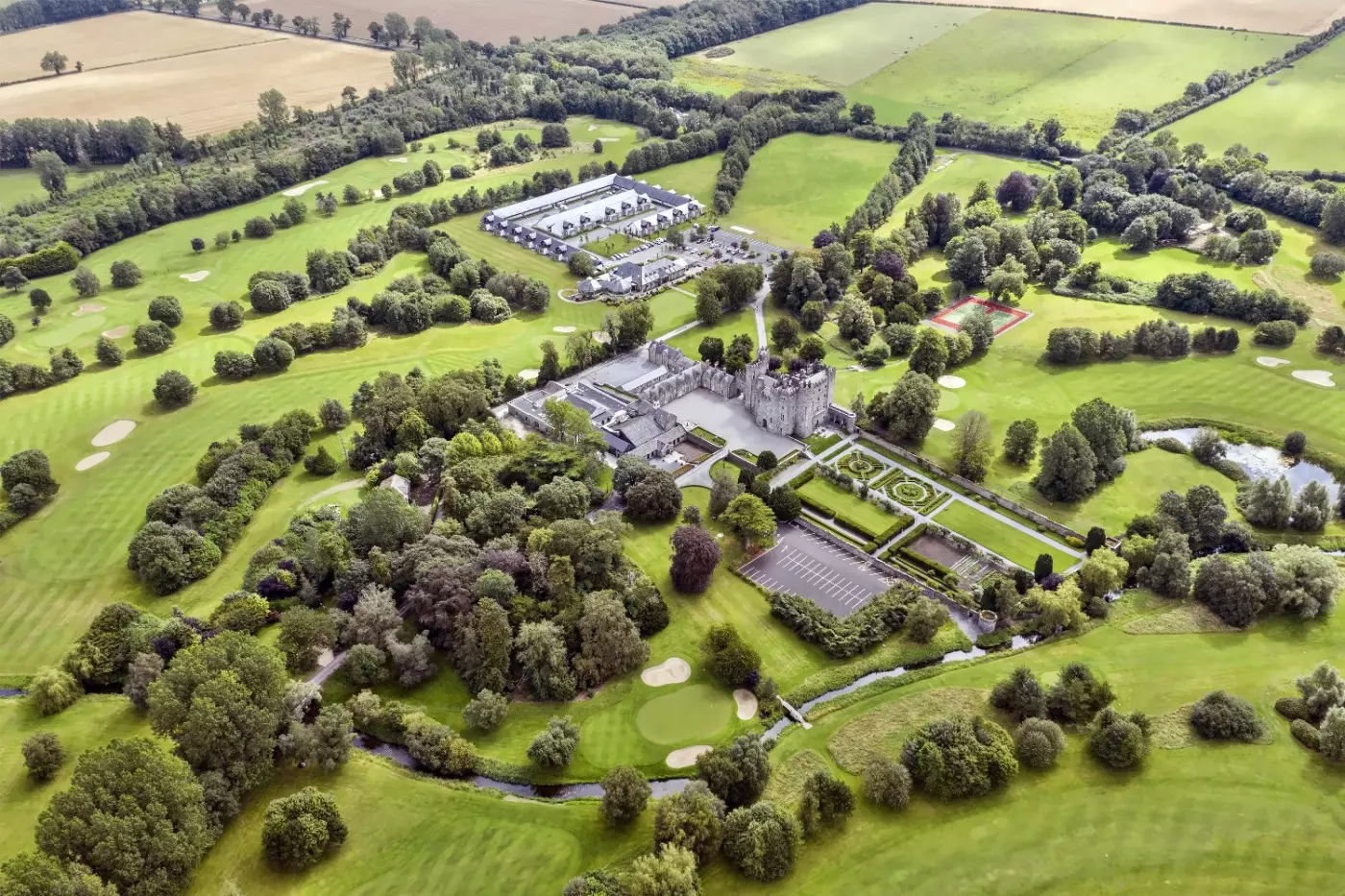
Kilkea Castle
Prices From 349 USD
Kilkea Castle is an Irish castle estate for travellers who want history, golf and countryside space within reach of Dublin. T...
Please choose a hotel or destination from the list.
We couldn’t open your search results. Please try again.
Your private search
Finding exceptional stays
Castledermot combines a country-hotel base with a town worth exploring in its own right. Kilkea Castle supplies the estate reference in southern County Kildare, while the Franciscan friary adds a particular architectural subject to a local visit.
Prices From 349 USD
Kilkea Castle is an Irish castle estate for travellers who want history, golf and countryside space within reach of Dublin. T...
Kilkea Castle gives the destination a distinctive country base. Its demesne offers a different experience from accommodation directly in Castledermot's streets. Choose it when the estate itself is a substantial reason to travel, and allow time to enjoy the immediate setting.
Castledermot's Franciscan friary was established around 1247. The ruined church brings a different architectural subject to a town visit: its thirteenth-century nave and chancel were joined by a fourteenth-century aisle and transept. These parts let an interest in medieval buildings focus on successive stages of construction.
Consider the relationship between the longer body of the church and its later additions. A building history can give a visit a clear subject even when much of a former religious complex has disappeared. Allow time to understand the surviving structure rather than treating a ruin as a single undifferentiated object.
The church was built in coursed granite, with dressed corner stones known as quoins. Lancet windows illuminated the transept and chancel. For a traveler interested in architecture, the stonework and tall window forms provide specific details to notice.
Use those details to look at how the building was assembled and lit. A window opening has a role in the interior as well as an appearance on a wall. This is a useful focus for someone drawn to construction and space, while companions may prefer a shorter look at the overall building.
Our Ireland destination guide supplies the wider country context for a Kildare stay.
The churchyard preserves high crosses and a round tower associated with the older monastic site. These monuments provide a local historical focus distinct from the later castle estate, so allow time to look at them carefully.
Castledermot's heritage trail includes a hogback grave, a carved stone monument with a distinctive form. It adds another cultural layer to a visit, rather than repeating the story told by the high crosses.
No. It is a separate Kildare heritage stop at Moone. Its granite carving is worth considering as a focused addition, especially if early medieval art interests you, rather than assuming it is another monument in the same churchyard.
Its sections were rediscovered and reassembled during the nineteenth century. That restoration story adds another way to look at the monument: its present form reflects the recovery and care of older carved stone, not uninterrupted survival in one piece.
Choose one theme, such as carved stone, and compare what you notice at Castledermot and Moone. Looking closely at form and imagery creates a more memorable visit than driving between several monuments without time to understand them.