



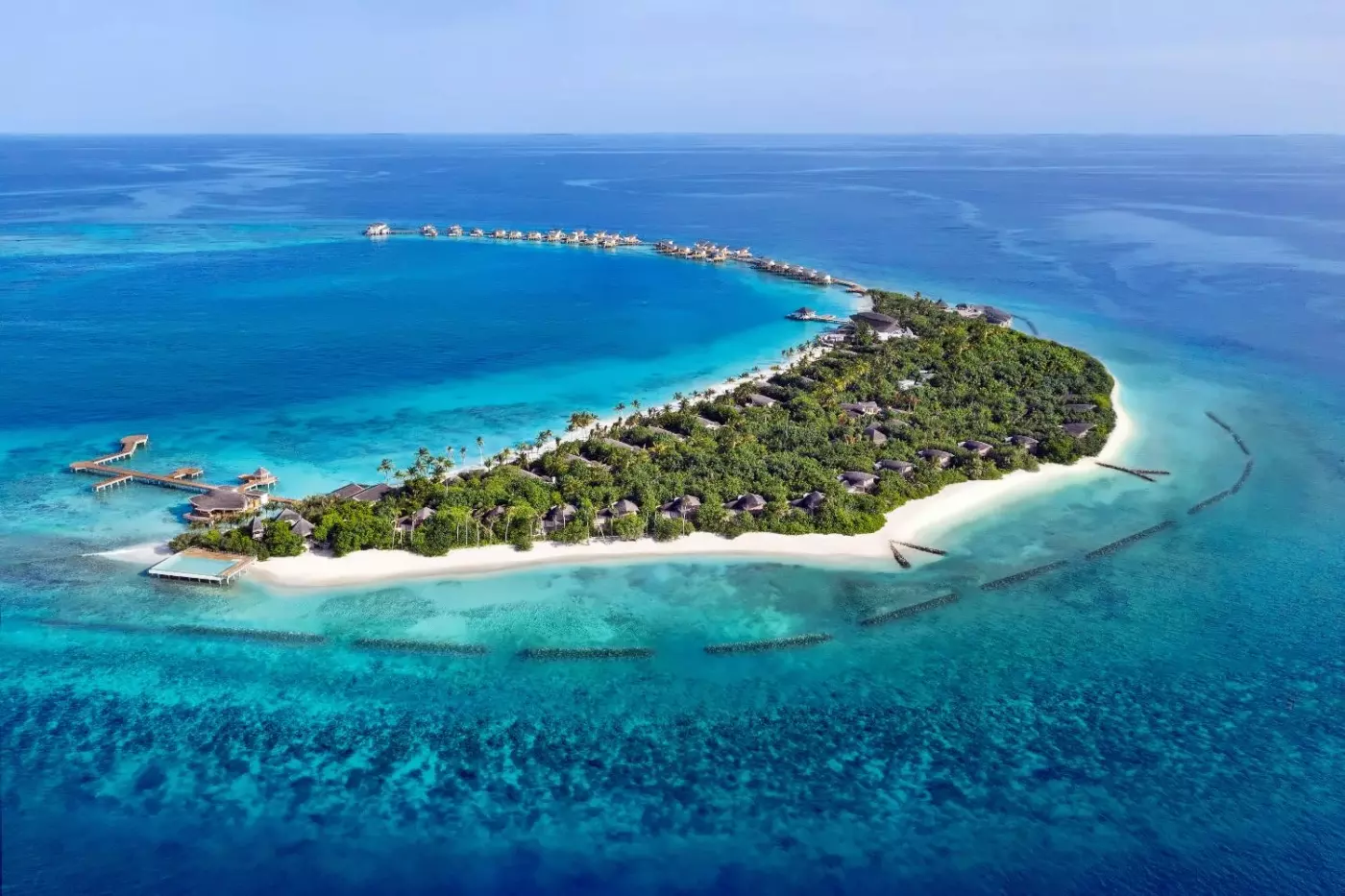
JW Marriott Maldives Resort & Spa
Prices From 745 USD
+3
More amenities
- Sauna
- Wellness
- Beach
JW Marriott Maldives Resort & Spa is the more remote of the two JW Marriott resorts in the Maldives. It sits on Vagaru Island...
Please choose a hotel or destination from the list.
We couldn’t open your search results. Please try again.
Your private search
Finding exceptional stays
Shaviyani Atoll offers a Maldives luxury stay with a wider maritime history beyond the resort setting. JW Marriott Maldives Resort & Spa provides the collection's Vagaru reference, while Maroshi contributes a historical subject within the atoll's island landscape.
Prices From 745 USD
More amenities
JW Marriott Maldives Resort & Spa is the more remote of the two JW Marriott resorts in the Maldives. It sits on Vagaru Island...
JW Marriott Maldives Resort & Spa gives the collection a resort reference on Vagaru. Beach and overwater accommodation create different immediate relationships with the island's sandy edge and the water. Consider those surroundings as part of the hotel choice rather than reducing the stay to a broad Maldives image.
Maroshi is associated with supplying the sail for Kalhuohfummi, the vessel used by Bodu Thakurufaanu in the resistance to Portuguese occupation. In that history, an island contributed through the practical work that allowed a vessel to operate, giving the sea a purpose beyond a leisure setting.
The residents' safeguarding of the vessel's location is another part of that historical association. This introduces a story about local support and maritime logistics within the wider atoll, rather than treating every island only as a resort site.
Knowledge of sea channels and island formations mattered to the campaign associated with Kalhuohfummi. That historical perspective changes the way a maritime landscape can be understood: the water between islands had strategic importance, as well as connecting places.
For a traveler interested in national history, Maroshi provides a named subject to explore intellectually alongside the resort stay. The historical association stands on its own; it does not establish a present-day visitor route or an included hotel experience.
The resort's dive-center setting supplies a point of contact for marine interests. Learning about the environment and selecting a particular activity are different decisions; no promised wildlife sighting is needed to give the underwater landscape a subject.
Our Maldives destination guide supplies the country context for the atoll stay.
No. Vagaru is the resort island, while Shaviyani is the surrounding atoll. Use the island name when identifying the actual hotel setting rather than treating the atoll as one continuous resort.
Farukolhu’s protected landscape includes tree cover, mangroves, wetlands, beach, reef and lagoon. Finihaka Kulhi connects with the ocean, while other freshwater and saltwater wetland areas lie within the island. The wooded, waterlogged interior differs from the sandy shore and the submerged reef around it.
Bolissafaru has a long sandbank attached to its island. Roseate terns use the sandbank for nesting, and turtles nest on the beach. Pemphis trees, known locally as kuredhi, grow on the island behind the white sand spit.
No. The hotel island and other island communities are different settings. If cultural contact is part of your interest, approach it as a considered locally arranged experience, rather than assuming it is an extension of the hotel grounds.
The reef-restoration approach documented at Vagaru uses healthy coral fragments secured to frames in a shallow-lagoon nursery. The frames provide a structure for propagation, with the work directed towards reef rehabilitation.