



Raffles Seychelles
Prices From 945 USD
+3
More amenities
- Beach
- Romantic
- Sustainable
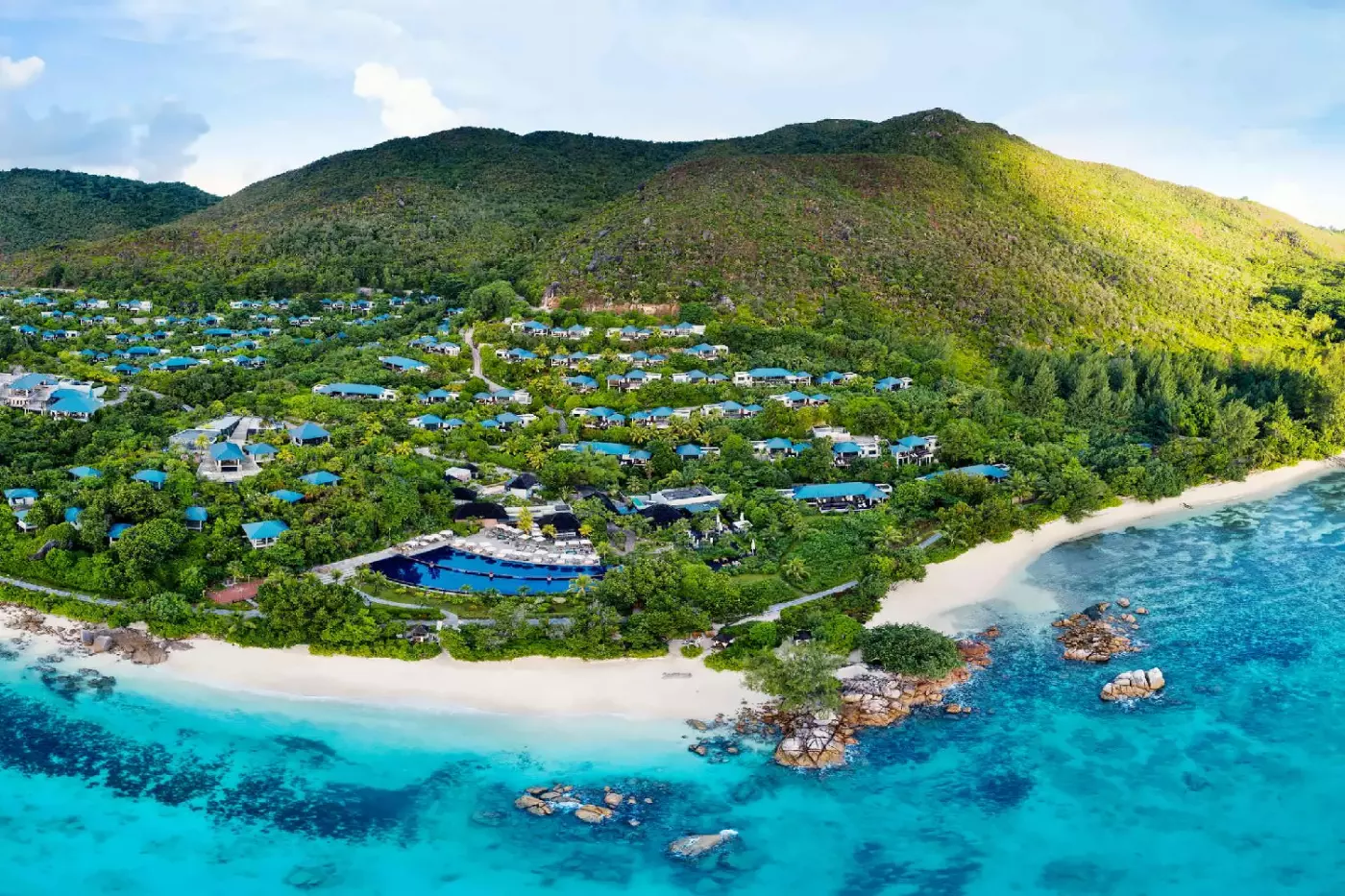
Raffles Seychelles occupies a green hillside above Anse Takamaka on Praslin, with villas stepping down toward the beach rathe...
Please choose a hotel or destination from the list.
We couldn’t open your search results. Please try again.
Your private search
Finding exceptional stays
Praslin gives a Seychelles holiday two strong subjects: an island coast to settle into and an extraordinary palm forest to explore. Choose it for both, rather than treating the greenery as an interruption to beach time. The best hotel decision begins with the shore and outlook you want to return to, then leaves room for the island beyond the resort.
Prices From 945 USD
More amenities
Raffles Seychelles occupies a green hillside above Anse Takamaka on Praslin, with villas stepping down toward the beach rathe...
Reserved for You
Raffles Seychelles occupies Anse Takamaka on Praslin’s north shore. Its hillside and coastal position gives the hotel a particular relationship with the island landscape.
The Vallée de Mai preserves an important remnant of Praslin’s ancient palm forest. Coco de mer palms give the reserve its distinctive identity, while the protected ecosystem supports species found only in the Seychelles. A visit here offers an entirely different perspective from the island’s coast.
Choose time to look and listen in the forest rather than approaching it as a quick scenic detour. The value is in understanding a living habitat, with its layered vegetation and conservation significance.
Anse Lazio provides another coastal subject for travelers who want to explore beyond their hotel shore. Choose a beach outing for the setting itself, while letting conditions guide how you use the water.
Our Seychelles guide provides the wider archipelago context.
Most international journeys begin on Mahé, with an onward connection to Praslin. Plan that island-to-island stage as part of the holiday rather than an afterthought. The actual arrival and departure arrangements should set the framework, leaving enough settled time on Praslin for both its coastal and forest character to emerge.
The Vallée de Mai and surrounding palm forest provide important habitat for the species, but a sighting is not guaranteed. Choose the visit for the ecosystem itself, treating any wildlife encounter as part of the experience rather than its only measure of success.
Coco de mer has separate male and female trees. Mature males carry long catkins, while females bear the large fruits. Young palms cannot be distinguished by appearance in the same way. This gives a botanical walk a precise feature to recognise beyond the scale of the leaves and canopy.
At Cote d'Or, Praslin Museum brings traditional Seychellois household life into the visit. Its old Creole kitchen and interpretation of coconut preparation connect food with the tools and methods of earlier island generations. It offers a cultural counterpart to Praslin's natural-history outings, especially for travellers interested in cooking and everyday heritage.
Curieuse, off Praslin's northeast coast, was used to quarantine people with leprosy. The former Doctor's House at Anse Jose dates from 1873, and leprosarium ruins survive nearby. At Baie Laraie, an old seawall recalls an unsuccessful early-twentieth-century hawksbill-turtle farming project. These traces add social and maritime history to the island landscape.
The French name means nut of the sea. Before sailors knew the palm's island home, they found its large husks drifting as far away as the Maldives and imagined a tree growing beneath the ocean. The name preserves that maritime mystery, rather than describing a palm that grows underwater.