Best for
Choose a performance at the 1891 Palace Theatre on Oxford Street so your evening can end with a short walk back to the Clocktower.
Please choose a hotel or destination from the list.
We couldn’t open your search results. Please try again.
Your private search
Finding exceptional stays
Best for
Choose a performance at the 1891 Palace Theatre on Oxford Street so your evening can end with a short walk back to the Clocktower.
What makes it special
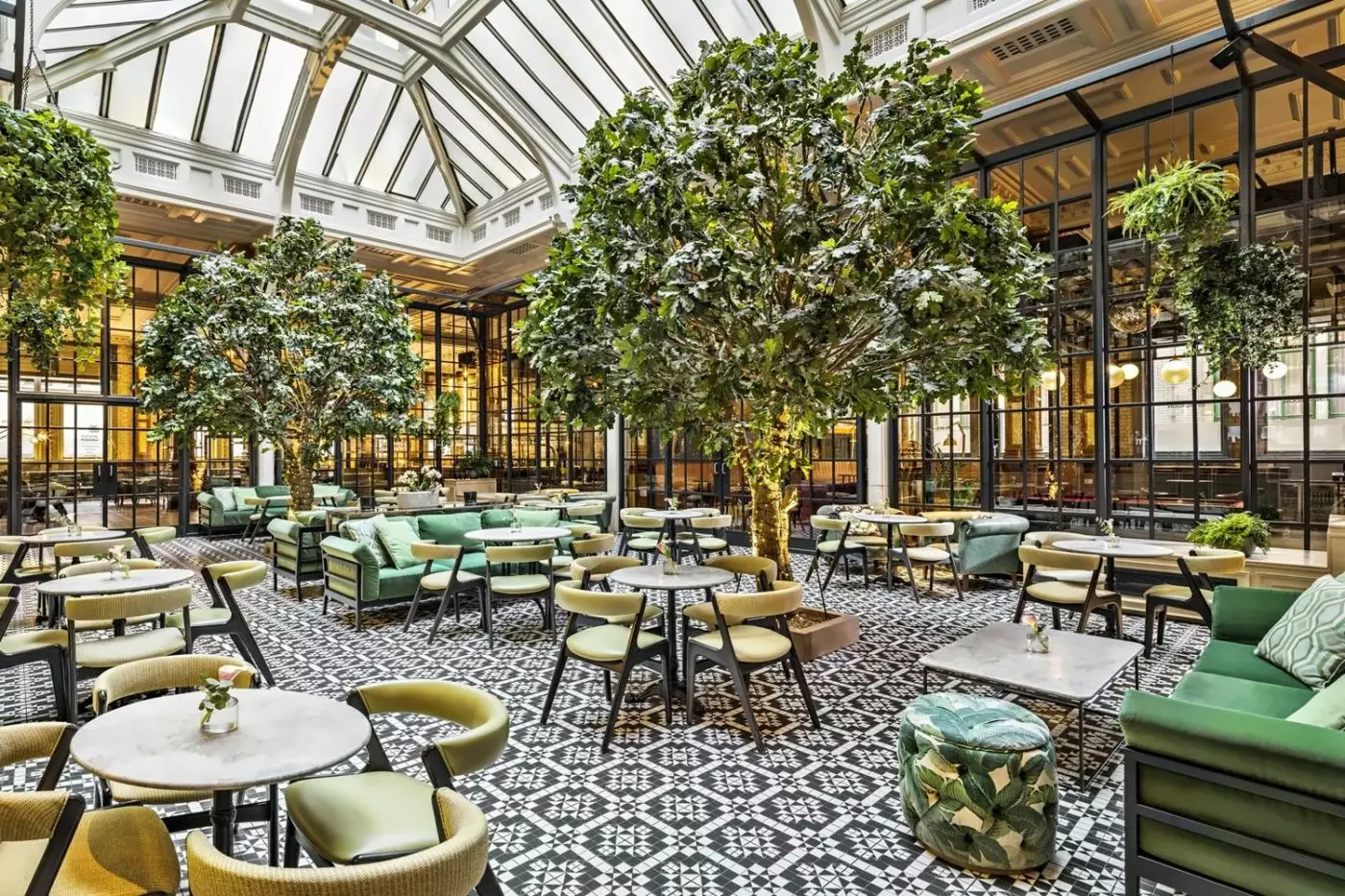
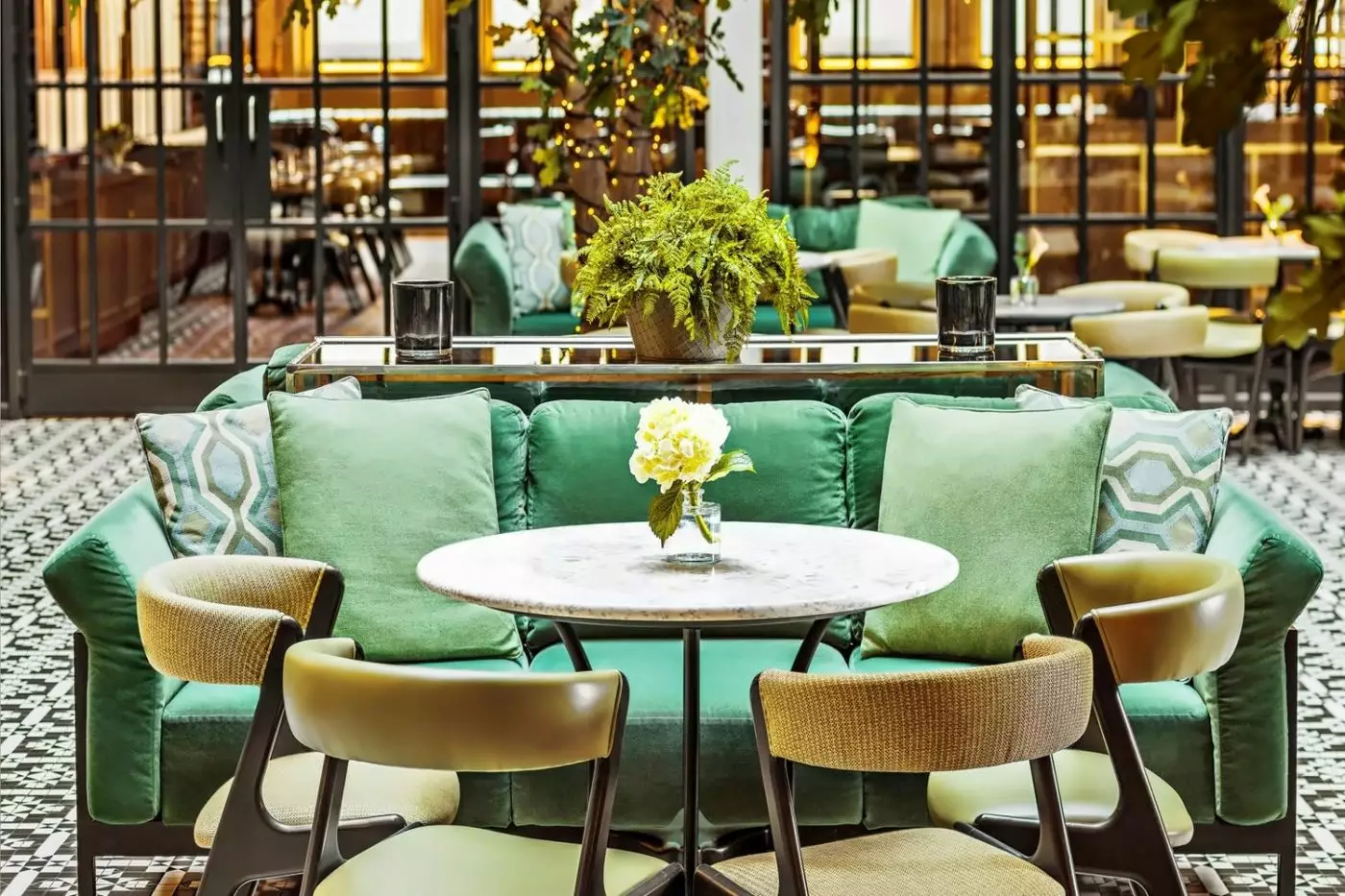
Between city outings, pause in the glass-roofed Winter Garden, where daylight and greenery temper the energy of the hotel's public spaces.
Room to consider
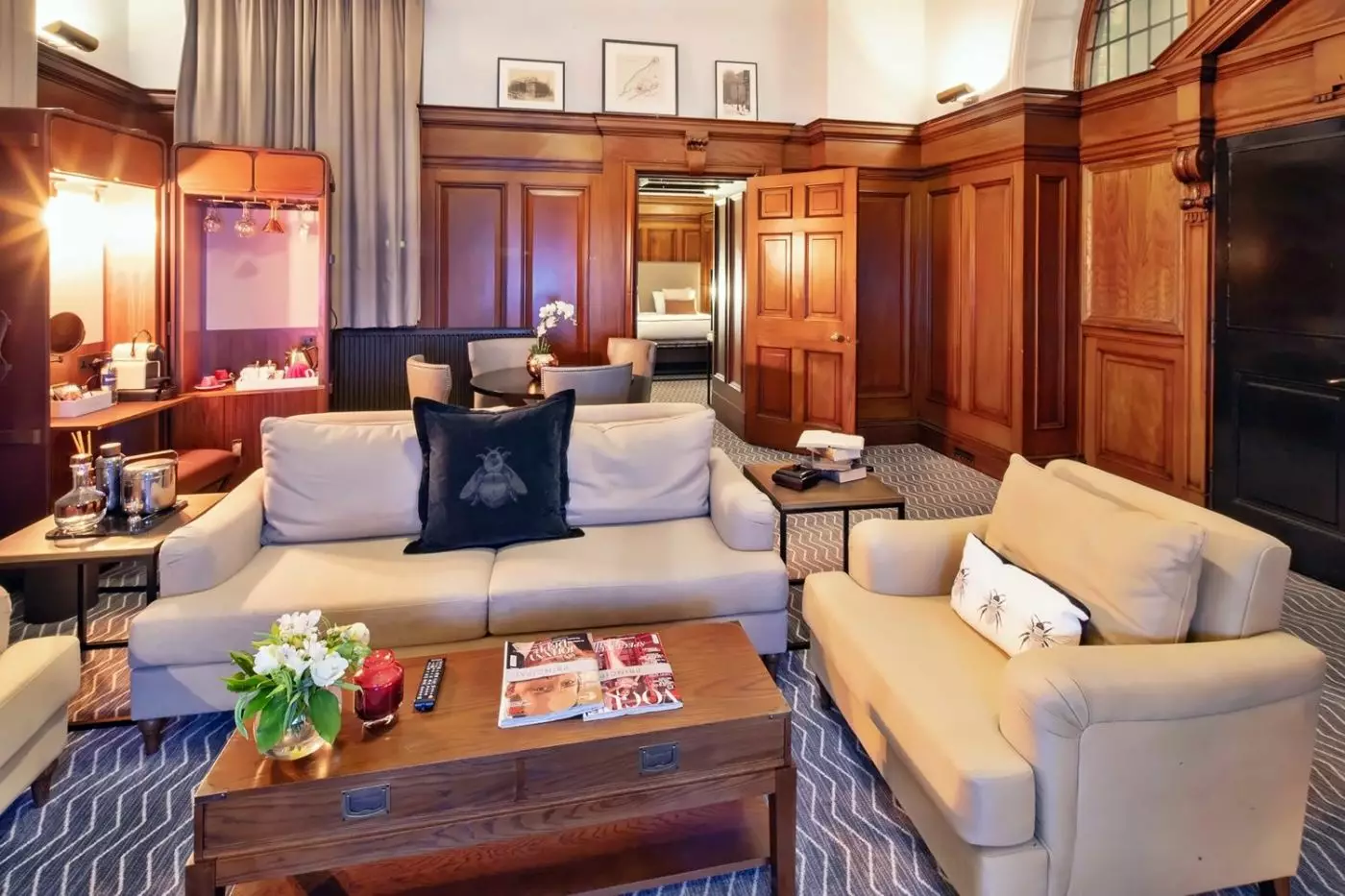
Choose the 1 King Suite for a separate bedroom and dining area, so you can share a meal without giving up space to relax.
Insider tip
Walk to the John Rylands Library on Deansgate and look into the neo-Gothic Historic Reading Room for a quieter stop in central Manchester.
Free membership gives you access to preferred rates, exclusive benefits and current promotions for your stay.
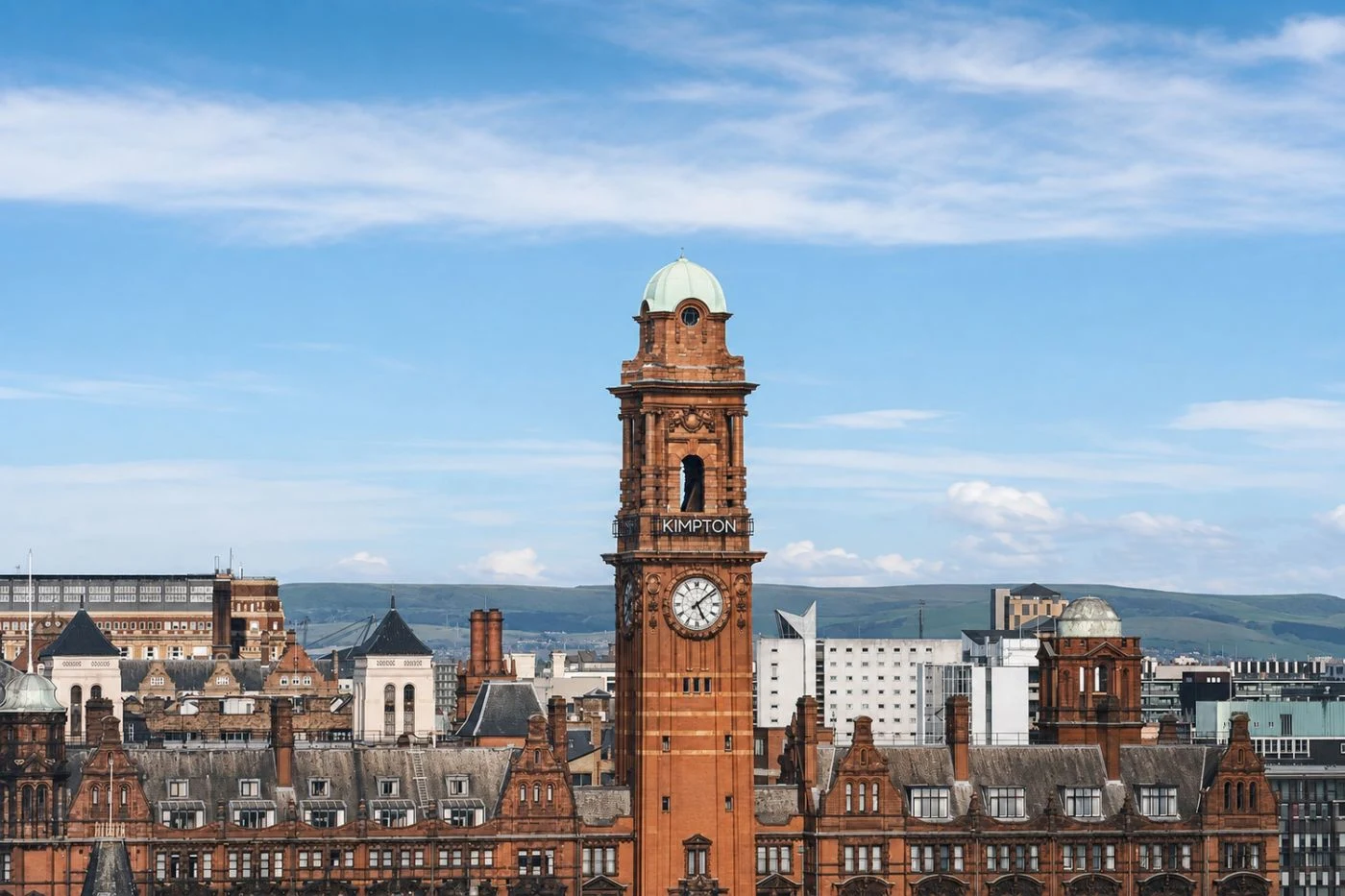
Kimpton Clocktower Hotel is one of Manchester's most recognisable hotel buildings: a vast red terracotta landmark on Oxford Street, beside the Palace Theatre and close to St Peter's Square, Chinatown, Manchester Art Gallery, and the city's music venues. It is not a quiet country-house escape in urban clothing. It is a big, theatrical, city-centre hotel with 270 loft-style rooms and suites, a Grade II listed former Refuge Assurance building, and The Refuge Bar & Restaurant at its social core.
 270
 Relaxed
 Fitness
 Culture
 City Vibe
 Pet Friendly
 Wheelchair Accessible
 Connecting Rooms
Selected rooms are on the lower floors.
Tall arched windows and high ceilings bring a distinctive shape to some interiors. Yellow and dark green patterned walls surround the window seating in one layout, with a green band running above the lower panels. Grey armchairs stand near the curtains, and a bench with a woven pattern sits at the foot of the bed.
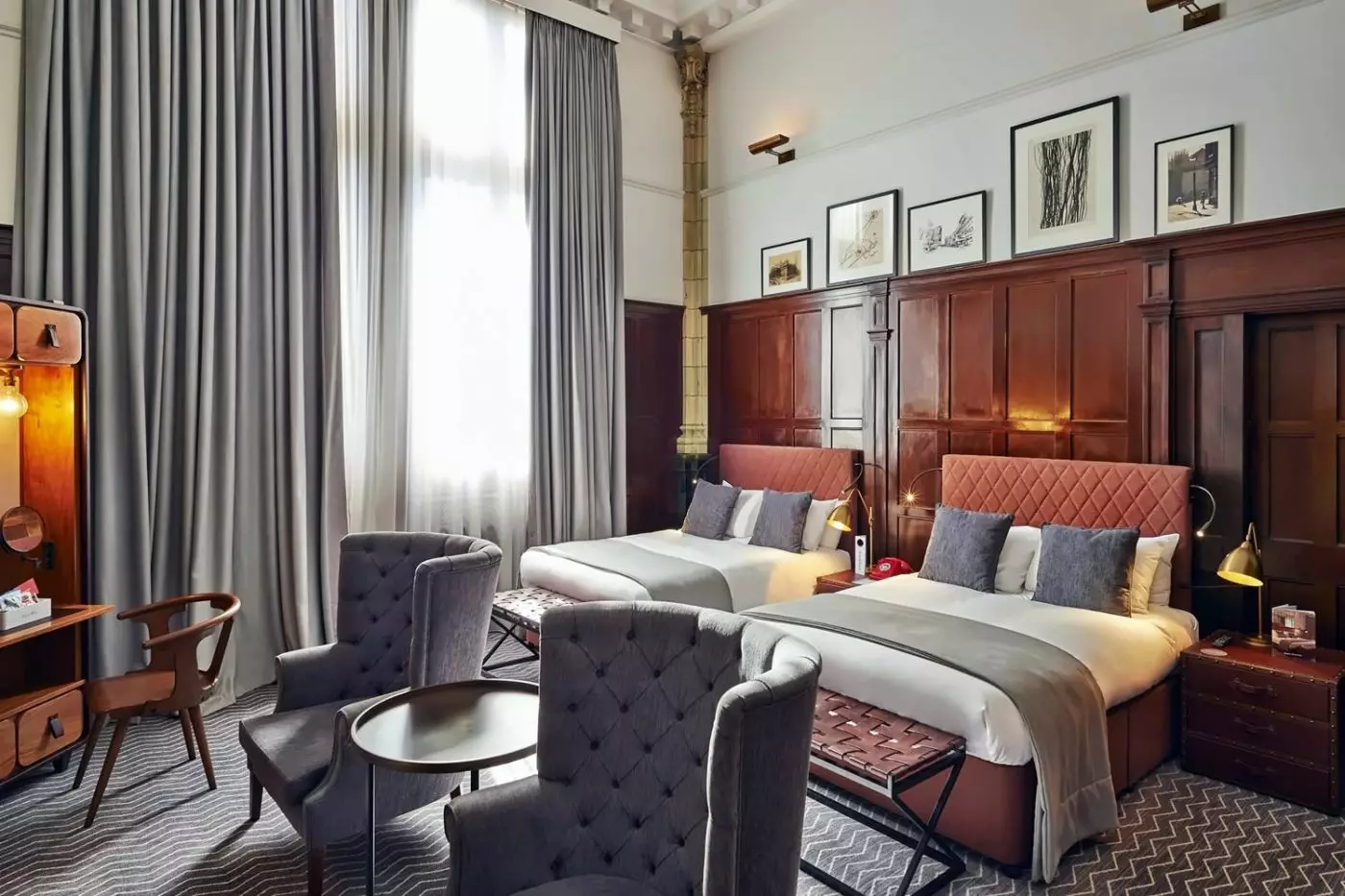
Twin layouts can have wide pale walls, cream padded headboards and a grey buttoned sofa beside a small round table. Ceiling beams and framed city artwork add further detail. A grey zigzag carpet runs beneath the seating. Rooms are spread across three parts of the building, with their own architectural features.

Tall arched windows and high ceilings bring a distinctive shape to some interiors. Yellow and dark green patterned walls surround the window seating in one...
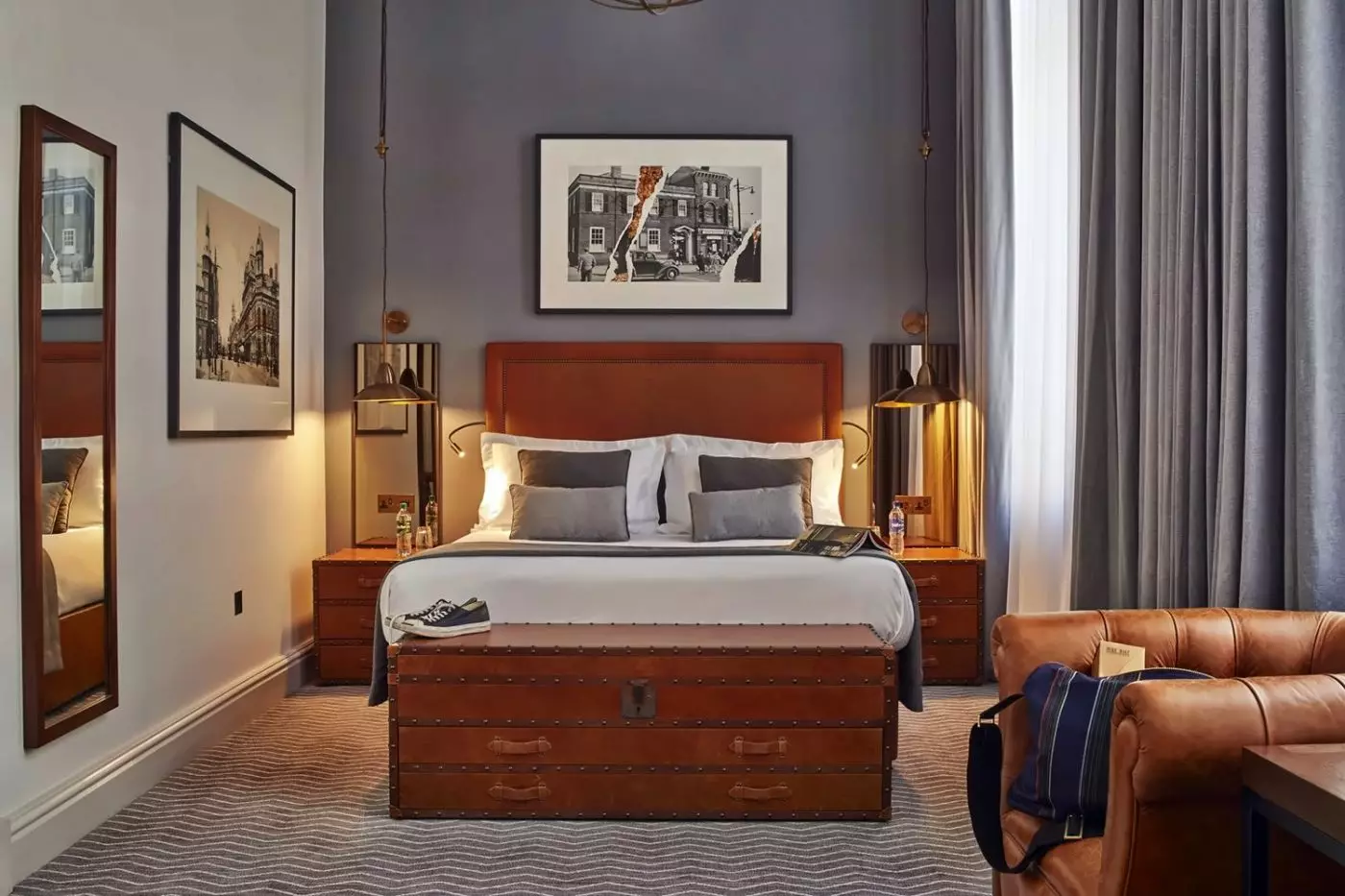
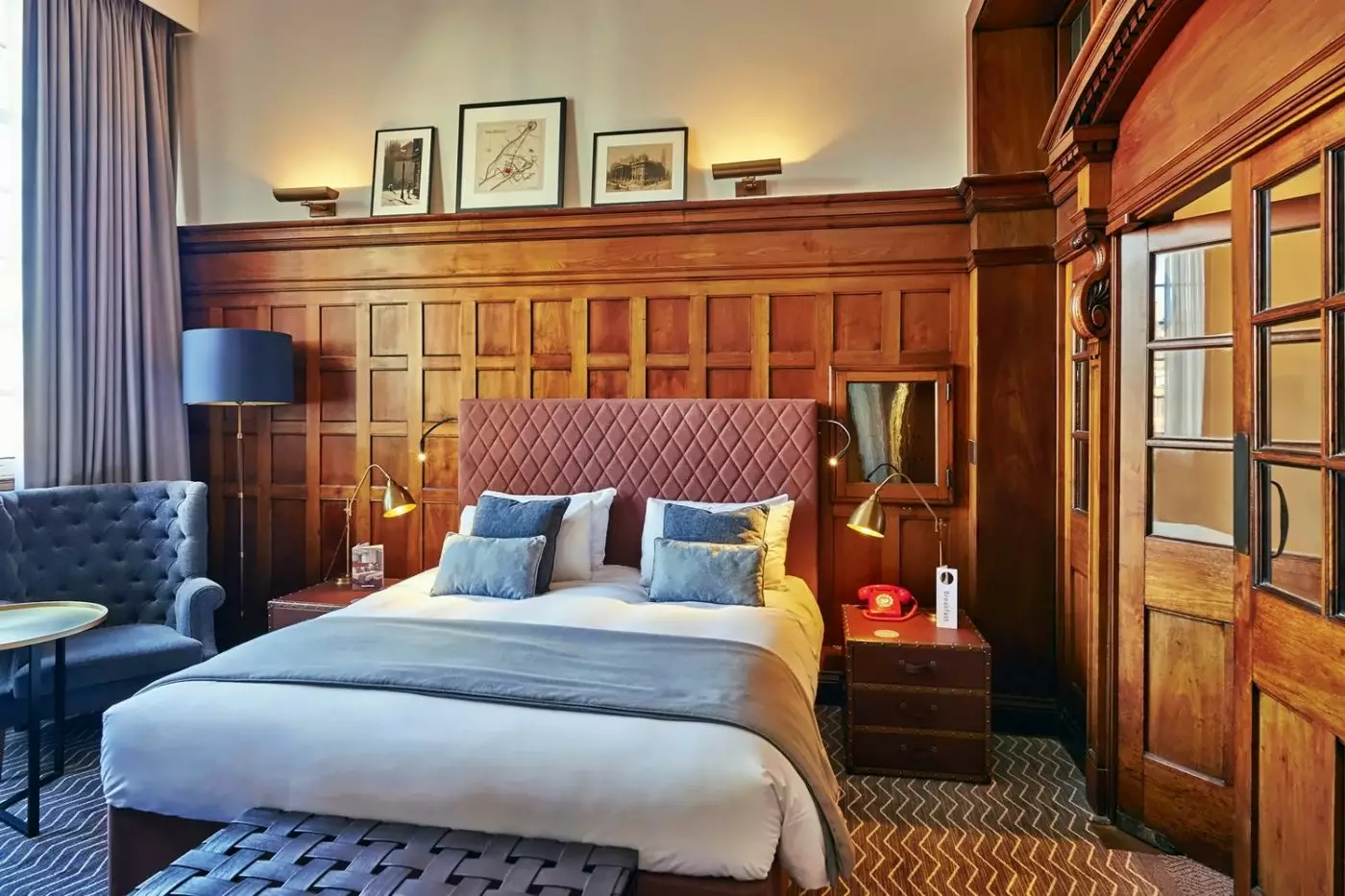
A cream buttoned headboard stretches above the pillows, with a framed purple graphic adding colour to the pale wall. Wooden bedside drawers have trunk-style fronts, and a small metal lamp lights the bedside. Long beige curtains surround the window, while grey zigzag carpet gives the floor a finer pattern.
A doorway links the bedroom to its en suite bathroom. White rectangular tiles cover the lower walls, with a round mirror over a pedestal basin. Two small wall lights sit close to the mirror. The room includes a place to sit beside a small table, with the furniture arranged around the sleeping area.

A cream buttoned headboard stretches above the pillows, with a framed purple graphic adding colour to the pale wall. Wooden bedside drawers have trunk-style fronts,...
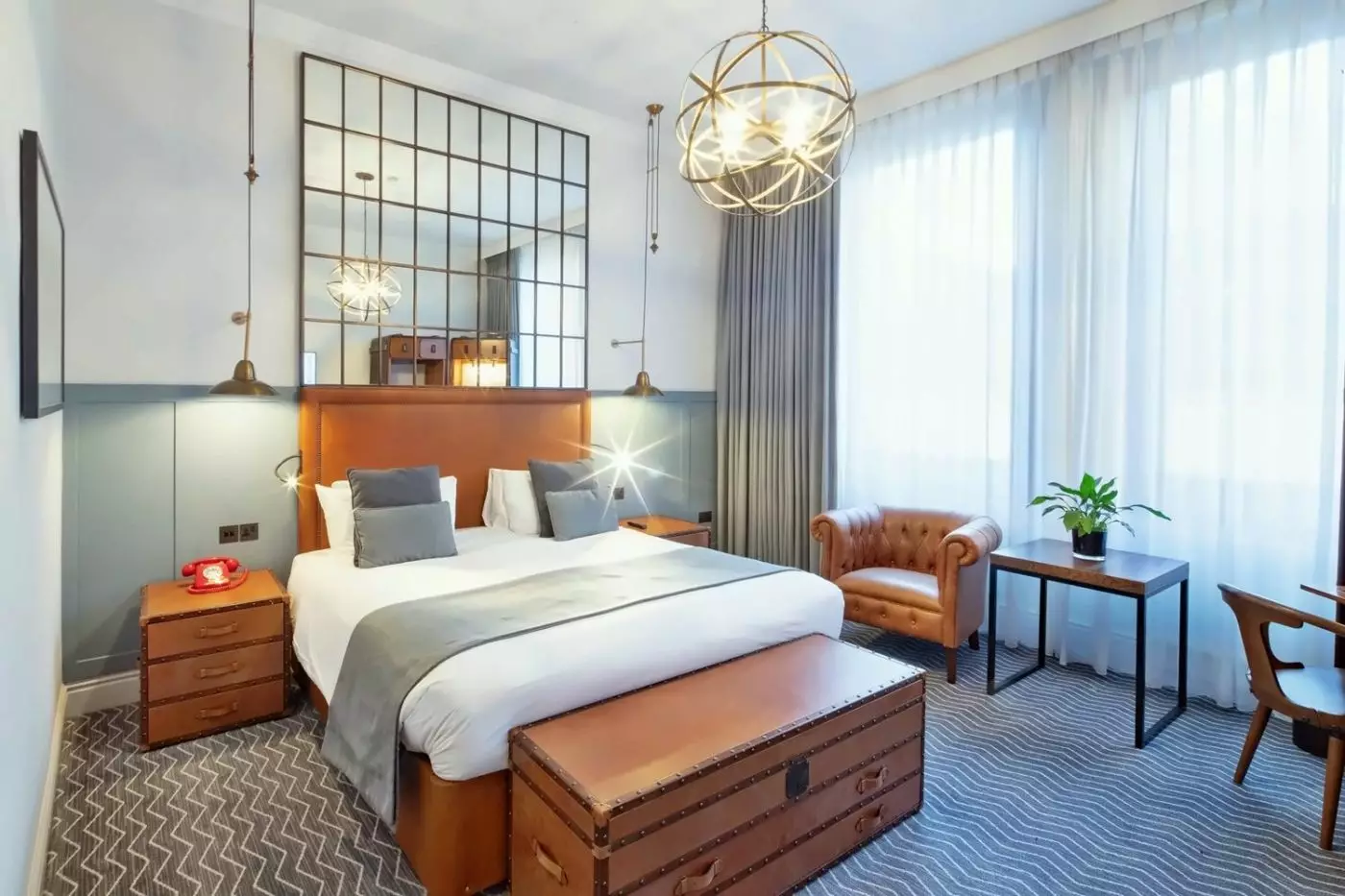
An orb-shaped pendant hangs above the seating, with long curtains framing tall windows. Brown buttoned armchairs gather around a round table in one layout. Grey panels line the lower walls, and a large mirror made of square panes rises above the wood-framed headboard. A trunk stands near the foot of the bed.
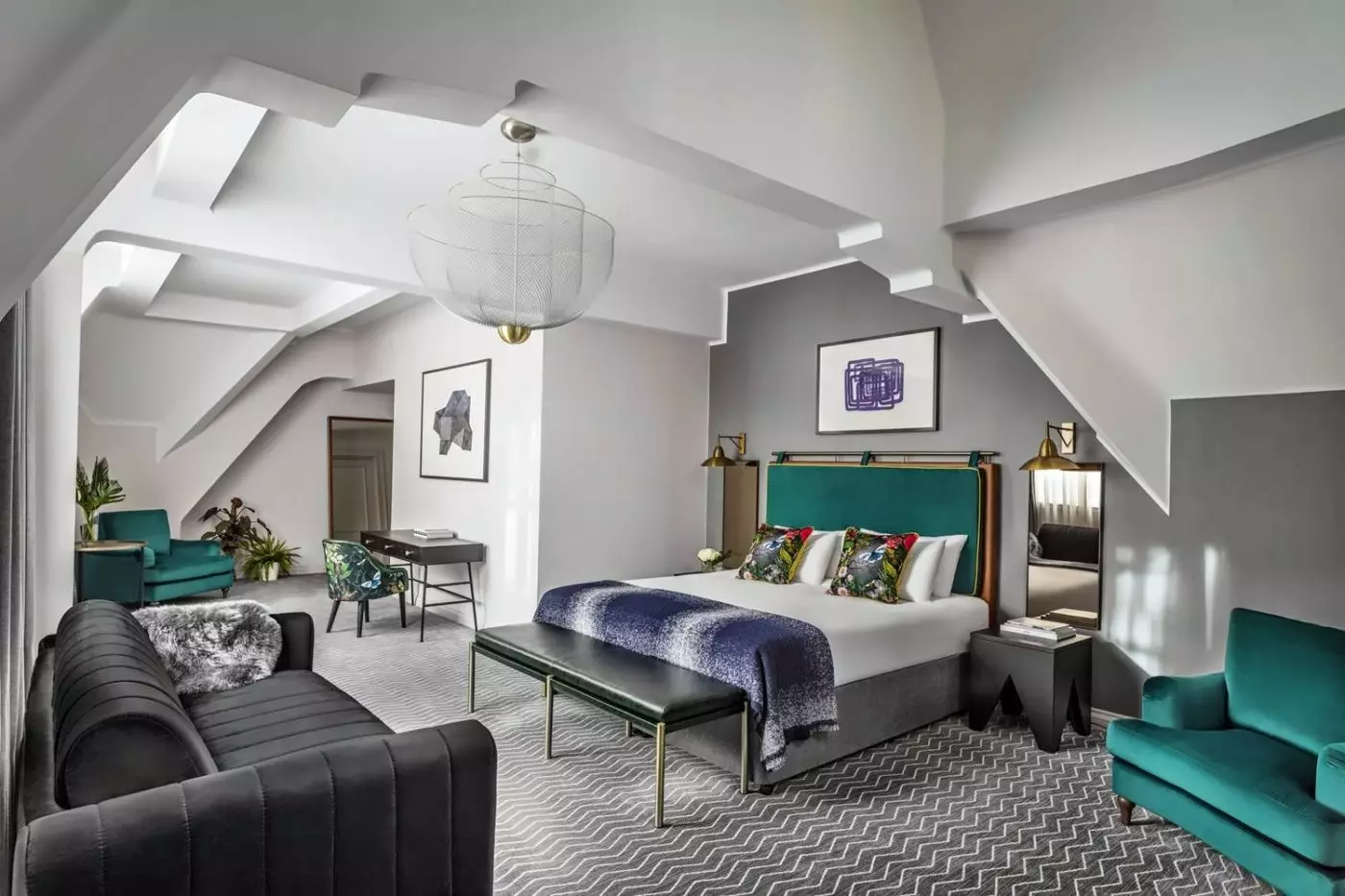
Other layouts use teal padded headboards and grey chairs beside the window. Patterned benches add seating close to the beds, while framed pictures bring colour to the walls. High ceilings give these arrangements their scale. Original wood panelling or tiles appear in selected rooms, so the decorative details differ with the layout.

An orb-shaped pendant hangs above the seating, with long curtains framing tall windows. Brown buttoned armchairs gather around a round table in one layout. Grey...
The lounge shares the room with the sleeping area, with armchairs and a sofa set near the windows. Teal upholstery and green bed covers bring colour against grey walls. Framed graphic pictures hang above the padded headboards, and patterned carpet runs beneath low tables and benches.
Some layouts have long curtains and a row of windows beside the seating, with a table and chairs further into the room. Others sit beneath a sloping ceiling, where a tall lamp stands by the sofa. A wooden wardrobe and bedside cabinets provide storage. The shape of the room and the position of the furniture vary with the booked layout.

The lounge shares the room with the sleeping area, with armchairs and a sofa set near the windows. Teal upholstery and green bed covers bring...
A slim four-poster frame rises above the green padded headboard, with framed pictures on the walls beside it. The window alcove has two blue chairs, set in front of tall glass and long pale curtains.
Teal wingback chairs and a dark sofa with yellow cushions gather around a narrow wooden table. A dining table provides a place for meals. In the bathroom, white rectangular tiles line the lower walls, with patterned tiles underfoot and individual mirrors above the basins. Wood cabinets and bedside tables carry the warmer tones through the interior.

A slim four-poster frame rises above the green padded headboard, with framed pictures on the walls beside it. The window alcove has two blue chairs,...
The bedroom is upstairs; the living and dining area is on the lower floor.
Long grey curtains frame the lounge window, where light chairs sit around a round dining table. A dark buttoned sofa provides another place to sit, close to a wooden writing desk and a patterned chair. Table lamps and round wall lights add warmer points of light around the seating.
The bedroom pairs a brown padded headboard with a buttoned chair and framed graphic artwork. A round mirror hangs above a small table, and grey zigzag carpet runs under the furniture. The staircase has green-painted walls, a metal handrail and patterned carpet on the steps. Framed pictures and another round mirror give the stairwell its own details.
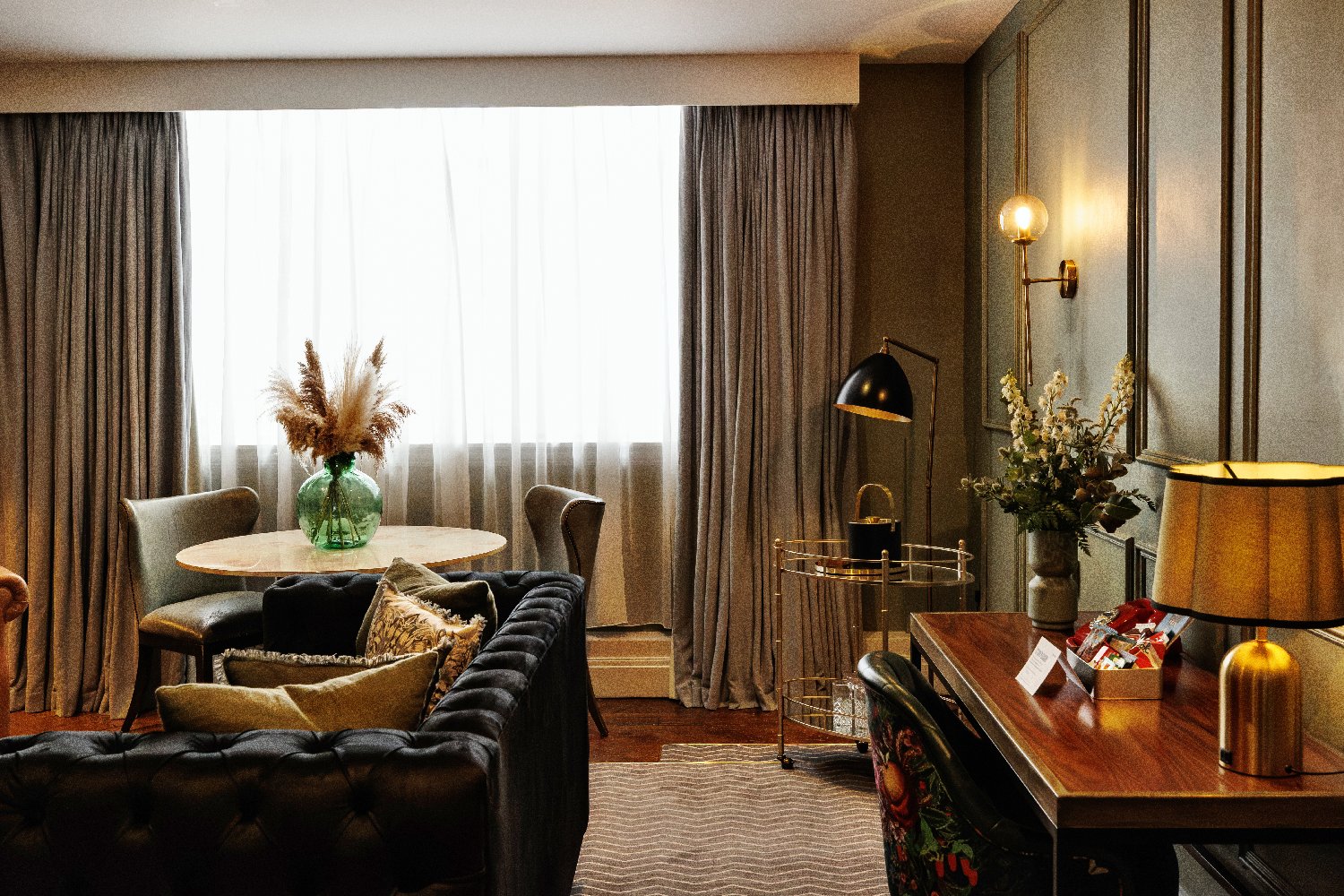
Long grey curtains frame the lounge window, where light chairs sit around a round dining table. A dark buttoned sofa provides another place to sit,...
Wood panels line the bedroom walls, surrounding a slim four-poster frame and green padded headboard. A yellow bedspread and green bench add colour against the darker timber. Tall doors and matching wall panels give this part of the suite a defined setting.
The bedroom is separate from the living and dining areas. Near the lounge window, two green chairs and a small table stand in an alcove reached by a short step. Long pale curtains fall around the glass. Grey padded dining chairs sit beside a larger table, while a circular drinks trolley stands near the seating. A door leads from the bedroom into the bathroom.

Wood panels line the bedroom walls, surrounding a slim four-poster frame and green padded headboard. A yellow bedspread and green bench add colour against the...
Tall curtained windows rise above blue-grey wall panels in the lounge. Green and dark sofas face a low table beneath two open-frame globe lights. Mustard padded chairs sit around an oval dining table with a pale veined top. A wooden sideboard stands below framed abstract artwork.
The main bedroom has wood panelling and a tall teal-and-yellow padded headboard. A dark bench with yellow cushions sits at the foot of the bed. Mirrored wardrobe doors reflect the wall panels. Bathroom layouts pair white rectangular tiles with dark doors and panels. In one arrangement, a black freestanding tub with a white interior stands beside a pedestal basin.

Tall curtained windows rise above blue-grey wall panels in the lounge. Green and dark sofas face a low table beneath two open-frame globe lights. Mustard...
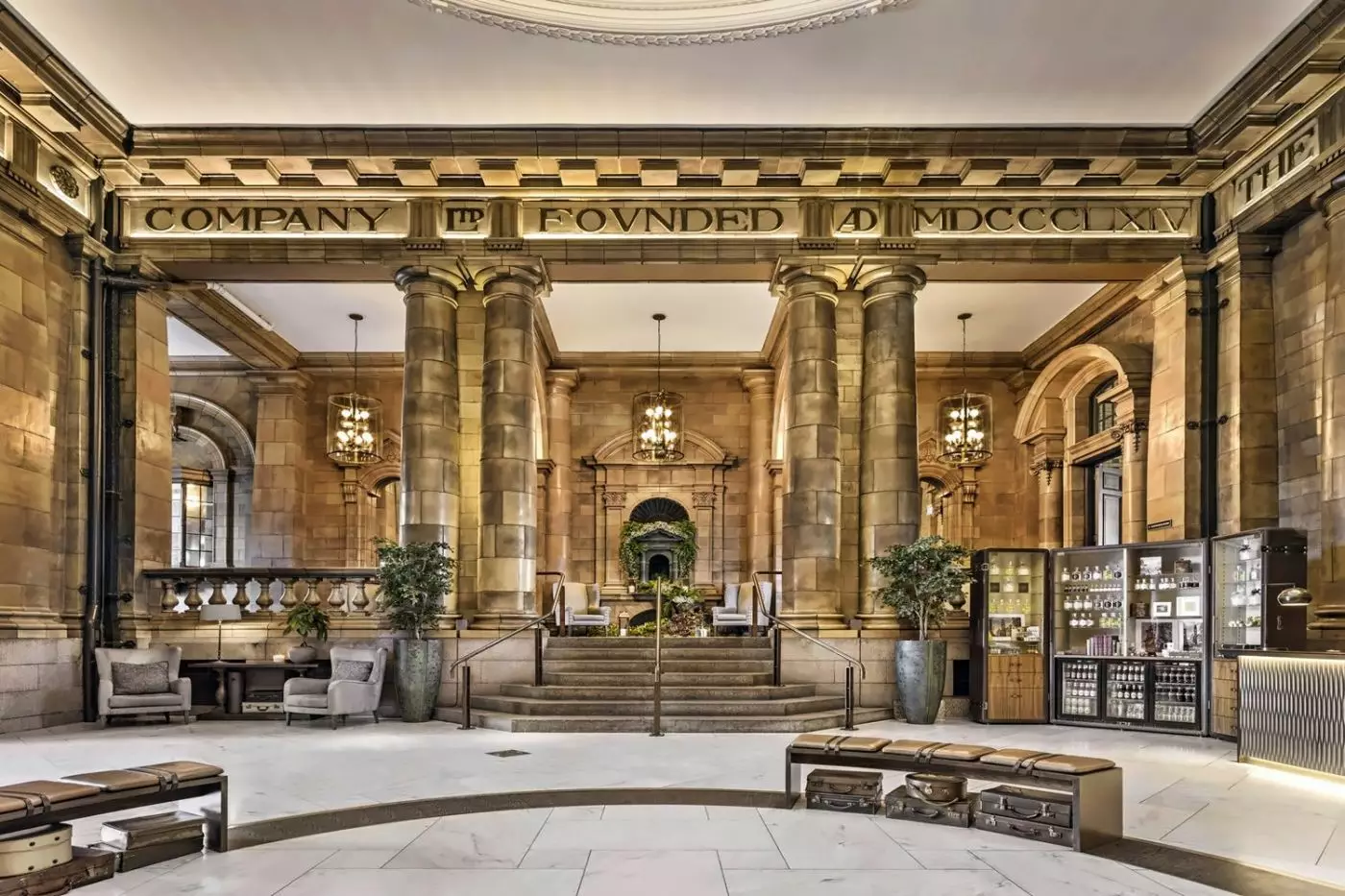
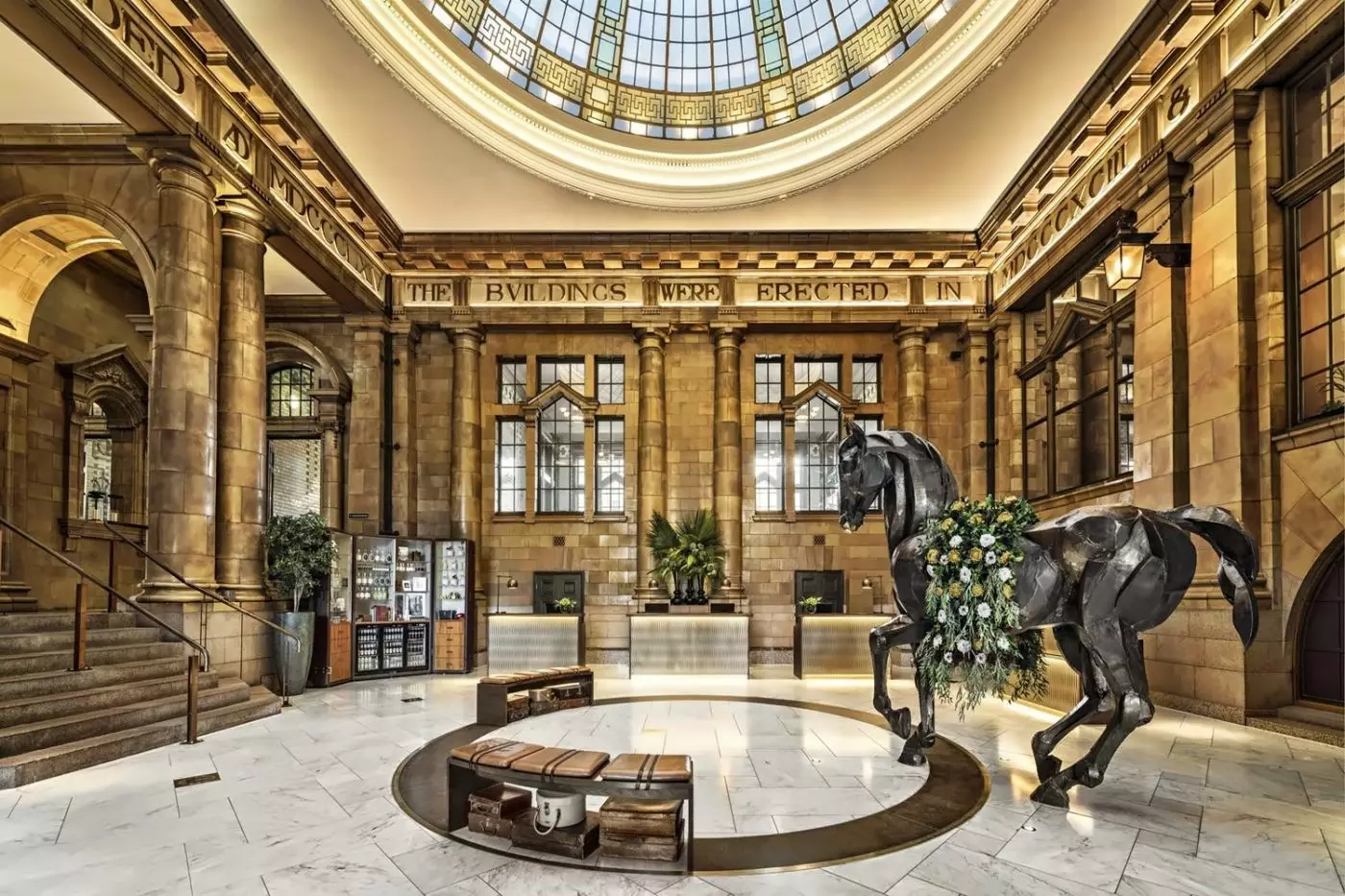
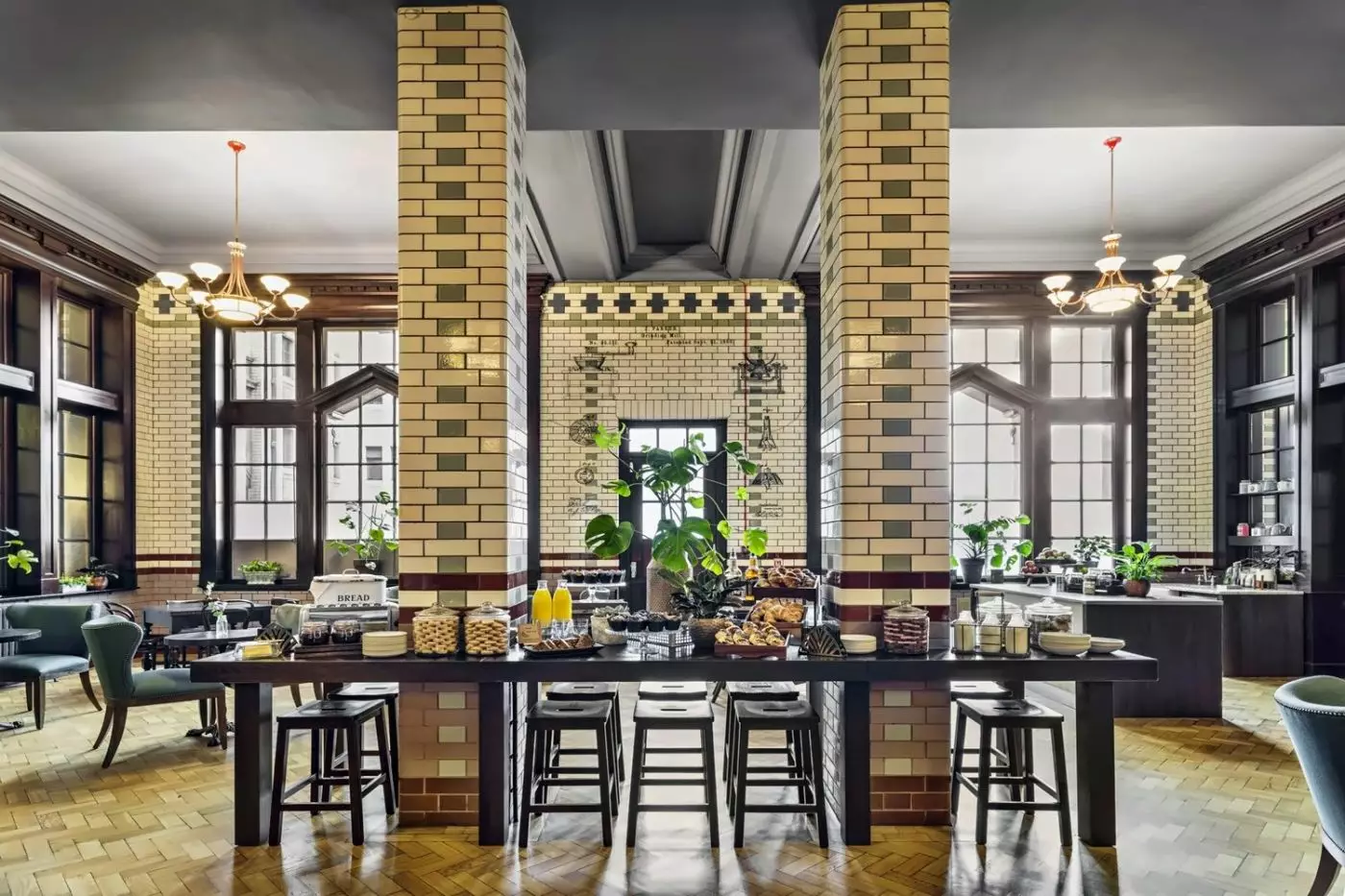
The building gives the hotel its authority. It began as the Refuge Assurance Company headquarters, with the first phase opening in 1895. Alfred Waterhouse, Paul Waterhouse, and Stanley Birkett all shaped parts of the complex over time. The clock tower, glazed tiles, carved wood, stained glass, and generous halls make it feel more civic than domestic.
That matters in a city where many luxury hotels compete through sharper styling or smaller boutique mood. Stock Exchange Hotel feels more intimate and clubby. The Edwardian Manchester is stronger for convention-centre polish and spa-led business stays. Hotel Gotham has a more theatrical Art Deco personality. Kimpton Clocktower Hotel wins when guests want heritage, height, drama, and a building that feels tied to Manchester's working history.
The scale is not for everyone. The hotel is large, and it can feel busy around check-in, events, and The Refuge. Guests who want hushed corridors and a discreet lobby may prefer a smaller address. Guests who like a hotel with energy, history, and a strong local restaurant scene will understand the appeal faster.
The rooms use the building's proportions well. Many have double or triple-height ceilings, large windows, and a loft-like feel that would be hard to copy in a new hotel. The design brings in bold textiles, record-player touches in some categories, graphic detail, and a nod to Manchester's music and industrial past.
There are 270 rooms and suites, including suites for guests who want more space before a performance, business event, or long weekend. The best rooms are not only about size. Height, window line, and building position make a real difference, so guests who care about a dramatic room should choose category with care.
This is not the right hotel if you want soft minimalism or a spa-resort bedroom. It is better for travelers who like buildings with texture. A room here can feel like a private corner of a great converted institution, with Manchester outside and the old Refuge story still visible in the walls.
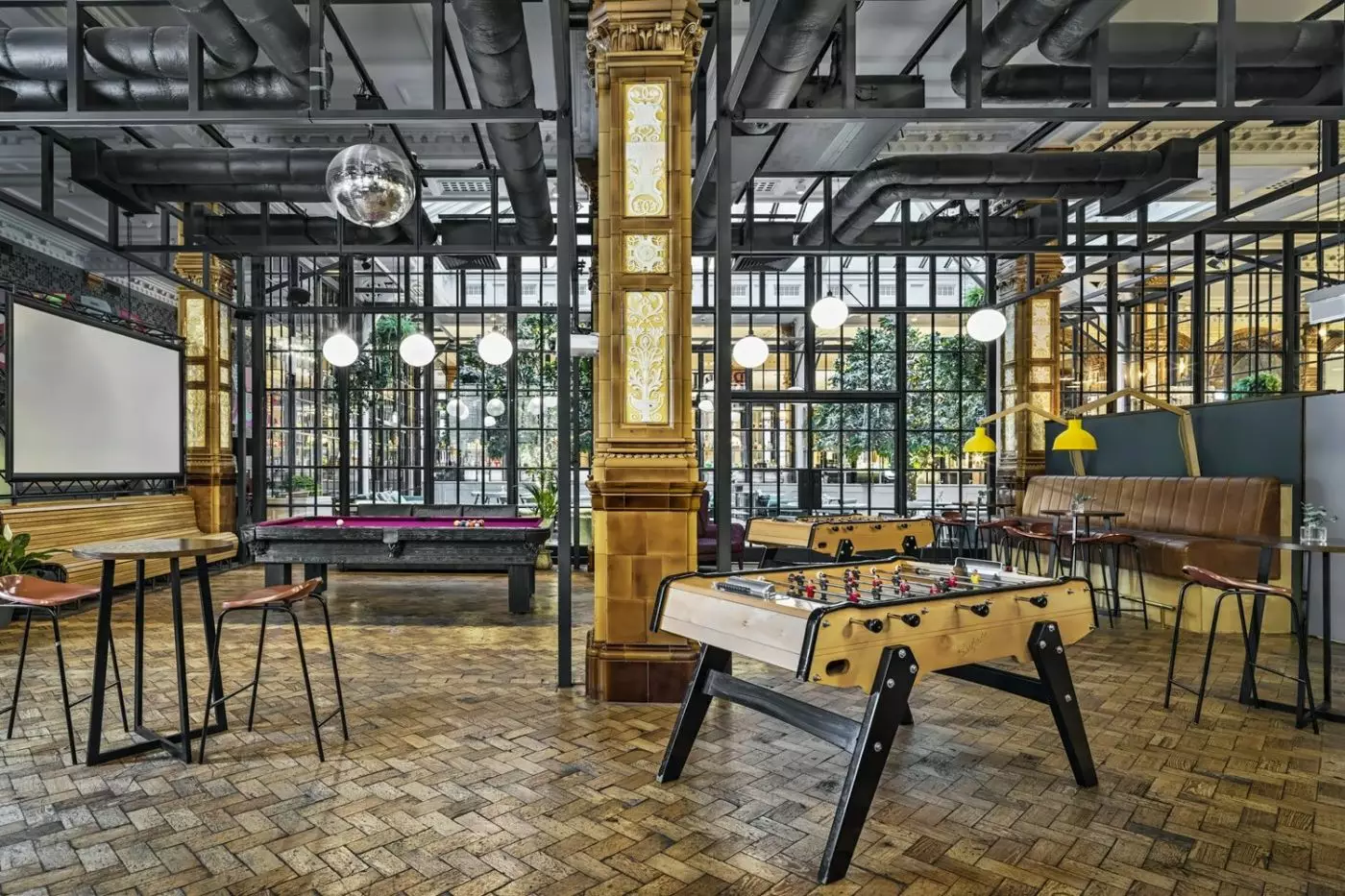
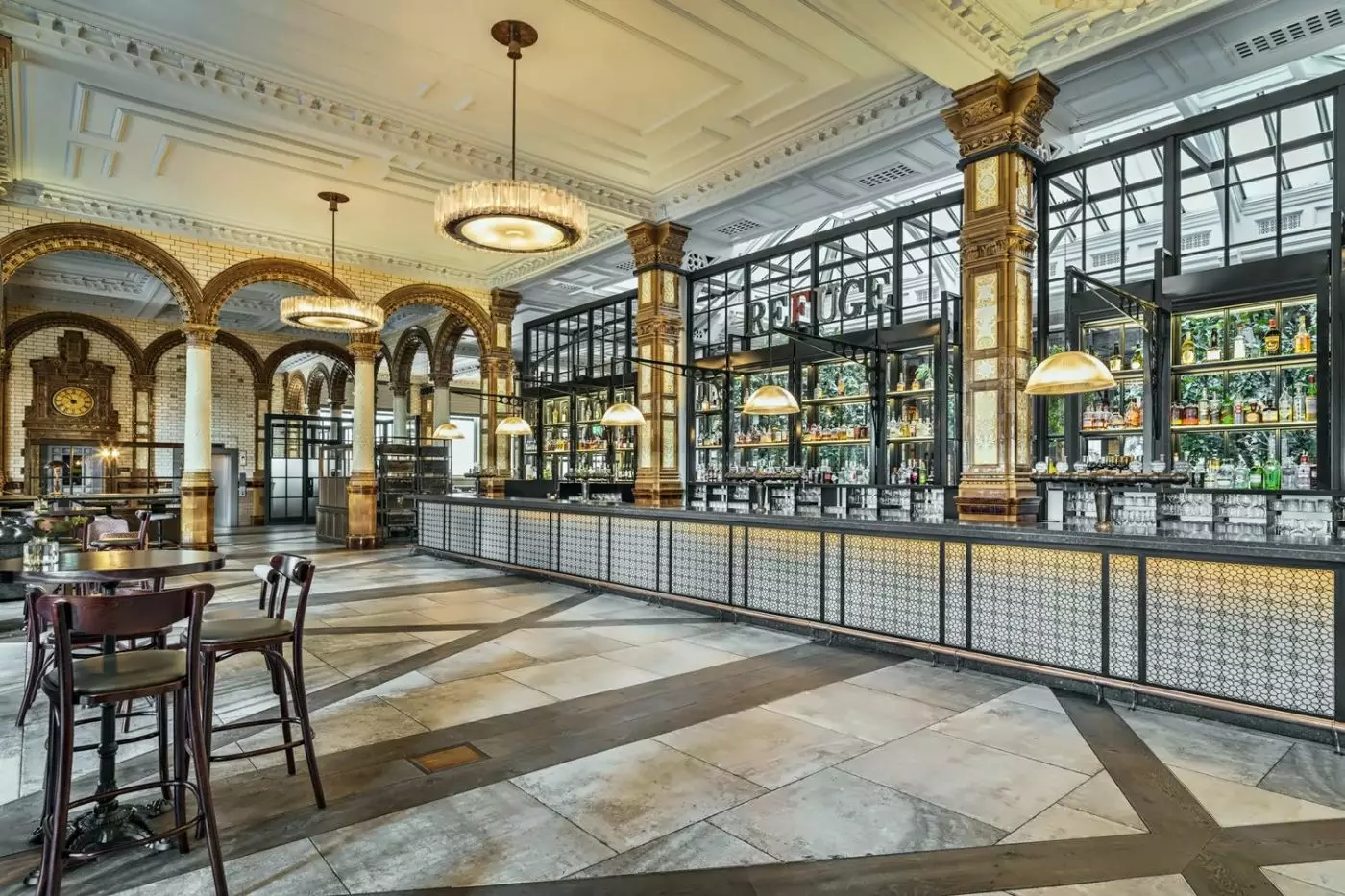
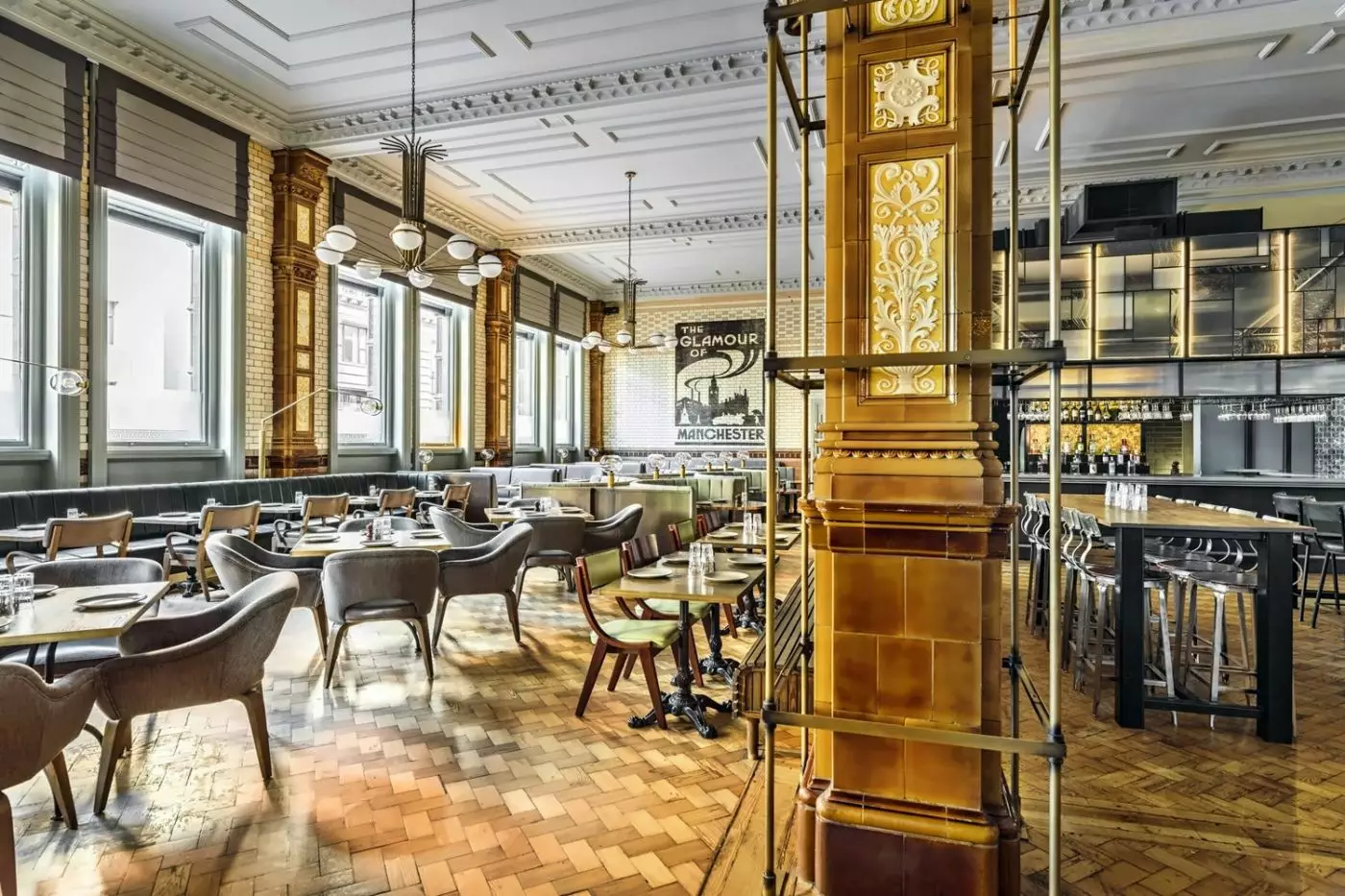
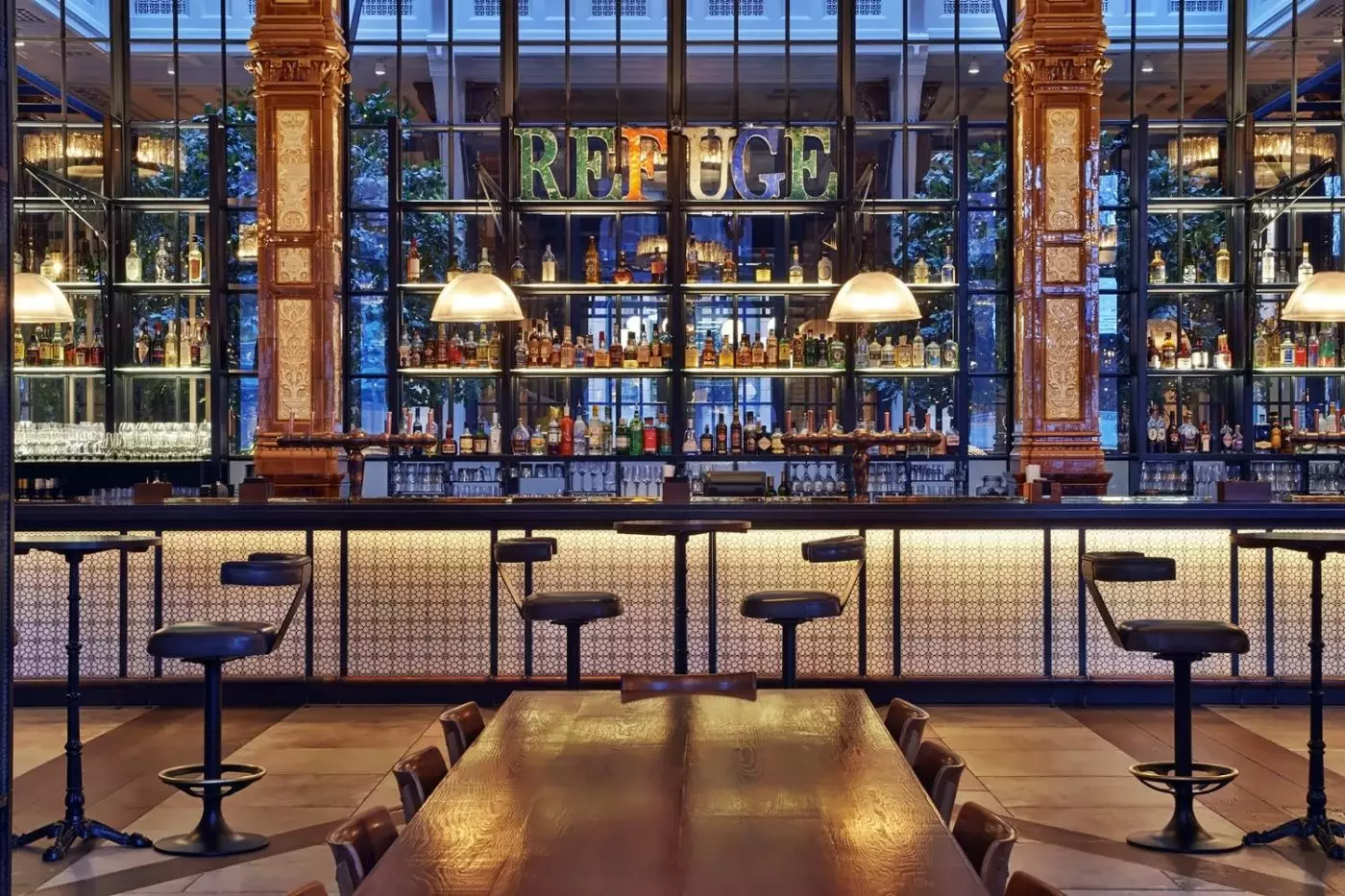
The Refuge Bar & Restaurant is more than a convenient dining room. It is one of the reasons locals know the hotel. The space mixes Victorian scale with a glam-meets-industrial mood, and the menu uses British ingredients with global influences across small and large plates. It works for hotel guests, office groups, theatre nights, and Manchester residents in the same evening.
The Public Bar gives the building a second rhythm. Cocktails, house-made vermouths, classic serves, and more playful drinks keep it from feeling like a lobby lounge. For guests who arrive tired after a train or flight, the useful thing is simple: you do not have to leave the building to find a real Manchester night out.
That also means the hotel can be lively. If your ideal stay involves a silent restaurant and early nights, ask for a room away from busier areas and plan around event dates. If you like a hotel with a pulse, The Refuge is a major advantage.
The location is practical for both culture and business. Palace Theatre is next door, while HOME, Manchester Art Gallery, Chinatown, the Gay Village, and St Peter's Square are all close. Manchester Oxford Road station is nearby, and Piccadilly is also realistic by taxi or on foot, depending on luggage and weather.
For music and events, the hotel has useful reach. O2 Apollo, AO Arena, Co-op Live, Aviva Studios, Bridgewater Hall, and the city's smaller venues are all part of a realistic Manchester itinerary. Football guests can get to Old Trafford or the Etihad without basing themselves beside either stadium.
The setting is urban in every direction. That is part of the charm, but it is not the same as staying in a manicured square or beside a river. The hotel works best for guests who want Manchester as it is: loud at times, creative, social, and layered with old industry and new culture.
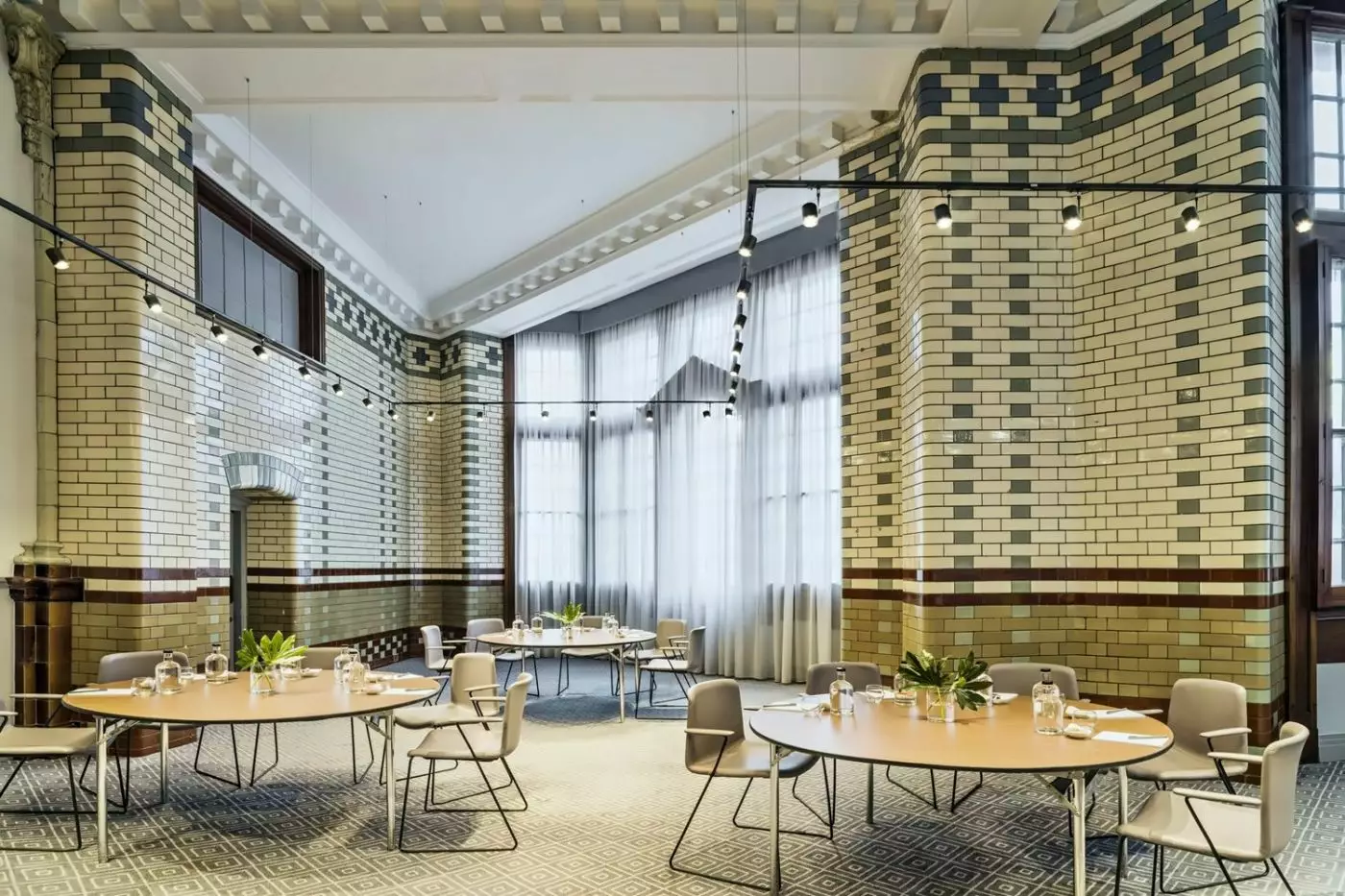
The building's size makes it strong for meetings and events. Its former offices and grand public spaces now support large gatherings, private dining, weddings, and corporate functions. The ballroom heritage adds weight for formal occasions, while the restaurant and bar keep the atmosphere from feeling too corporate.
Practical details are straightforward. Check-in is usually from 3:00 PM, check-out at 12:00 PM, and the hotel is pet-friendly. There is Wi-Fi, room service, fitness facilities, daily housekeeping, concierge support, and a smoke-free policy. Parking in central Manchester should be planned ahead, especially on performance nights and match weekends.
The hotel does not trade on spa facilities in the way The Edwardian Manchester or The Lowry might. Its luxury value is different: historic architecture, large rooms, event capacity, a high-impact restaurant and bar, and a location that places guests in the centre of Manchester's theatre and nightlife map.
Manchester's best hotels each have a clear lane. Stock Exchange Hotel is smaller, more polished, and more discreet. The Lowry has riverside space and a long-established 5-star profile. The Edwardian Manchester suits guests who want a modern city hotel with strong spa and meeting credentials. Dakota is darker, more boutique, and close to the Northern Quarter.
Kimpton Clocktower Hotel is the heritage heavyweight. It offers a larger sense of arrival than most rivals and a restaurant scene that feels connected to the city. Its corridors and public spaces can feel dramatic in a way that newer hotels struggle to match.
The honest caveat is that size brings movement. This is not a tiny luxury hideaway. It is better for theatre weekends, cultural trips, group stays, design-minded business travel, and guests who want to feel Manchester's civic confidence through the building itself.
Book Kimpton Clocktower Hotel if you want a luxury hotel in Manchester with a landmark Oxford Street address, strong history, high-ceilinged rooms, The Refuge, and easy access to theatres, restaurants, bars, galleries, and venues. It suits couples, solo city travelers, business guests, music fans, and anyone who likes hotels with architectural presence.
It is less ideal if you want a spa-led stay, a small boutique hotel, or the quietest room in the city. Guests focused on the Northern Quarter may prefer Dakota. Guests who want a more intimate financial-district feel may prefer Stock Exchange Hotel. Guests who value a larger spa may compare The Edwardian Manchester.
The main reason to choose this hotel is its sense of place. The Refuge Assurance building, 270 rooms, clock tower, The Refuge Bar & Restaurant, Palace Theatre location, and bold Kimpton style make it one of Manchester's most specific luxury hotel stays.
The former Refuge Assurance building gives the stay tangible Manchester character, from its Victorian facade and clock tower to grand interior spaces.
The Refuge's Sunday roast platter is designed for two to share, giving a Manchester weekend an easy finish around one table.
Manchester Art Gallery is a short walk from the Clocktower, with Pre-Raphaelite paintings that extend the stay's Victorian thread beyond the hotel.
Oxford St, Manchester, M60 7HA, United Kingdom
Yes. Kimpton Clocktower Hotel is worth it for travelers who want a landmark Manchester stay with strong design and city access. The hotel combines 270 rooms and suites, Victorian architecture, The Refuge, the Winter Garden, event spaces, and Kimpton personality.
Kimpton Clocktower Hotel is on Oxford Street in Manchester city centre. The location is close to Palace Theatre, Oxford Road Station, restaurants, universities, music venues, shops, and cultural attractions.
Kimpton Clocktower Hotel has 270 rooms and suites in a historic Manchester landmark building. Many rooms feature high ceilings, large windows, bold design, and details inspired by the city's music and industrial heritage.
The hotel is set in the former Refuge Assurance Building, a Grade II listed Manchester icon. Its clocktower, red brick facade, grand interiors, and social spaces make it more memorable than a standard city hotel.
Yes. Kimpton Clocktower Hotel is a strong base for exploring Manchester on foot. Guests can reach theatres, galleries, restaurants, shopping streets, universities, and nightlife without long transfers.

More amenities
The Edwardian Manchester is a five-star city hotel on Peter Street, set inside Manchester's Grade II-listed Free Trade Hall....
More amenities
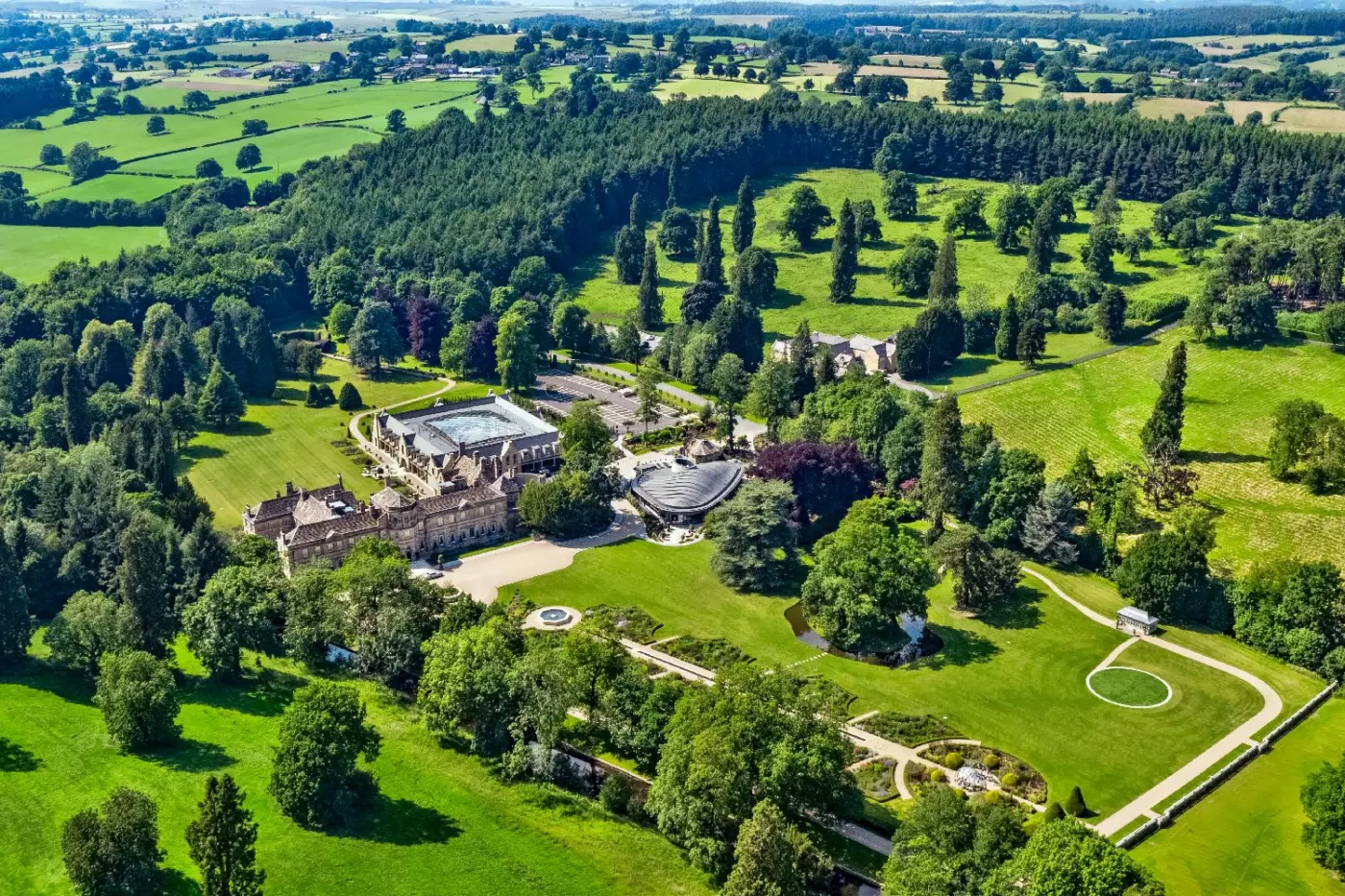
Grantley Hall sits near Ripon, on the edge of the Yorkshire Dales. The River Skell runs through its grounds, passing formal g...
More amenities
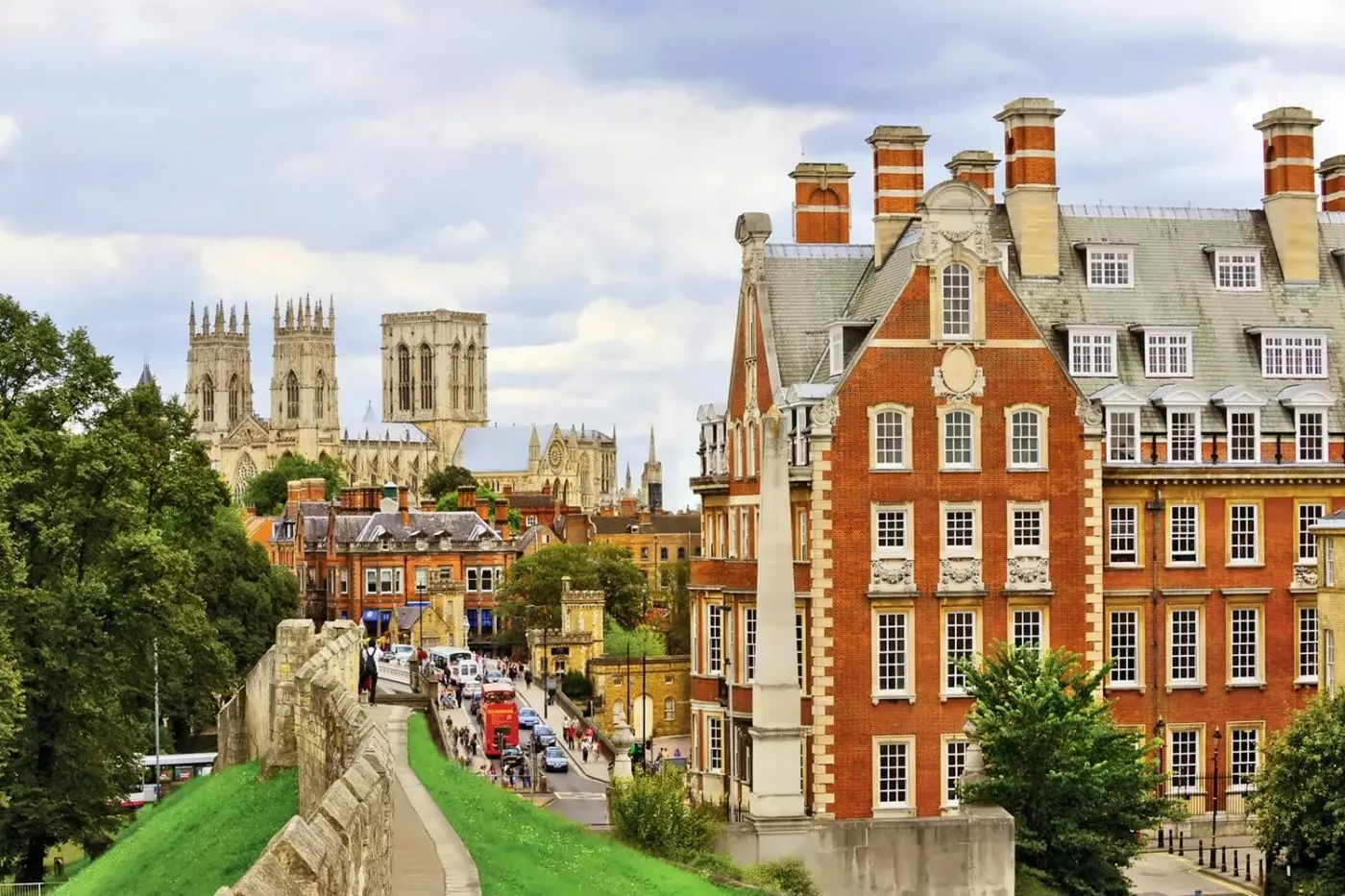
The Grand York is a five-star hotel in the centre of York, set inside the former headquarters of the North Eastern Railway Co...