



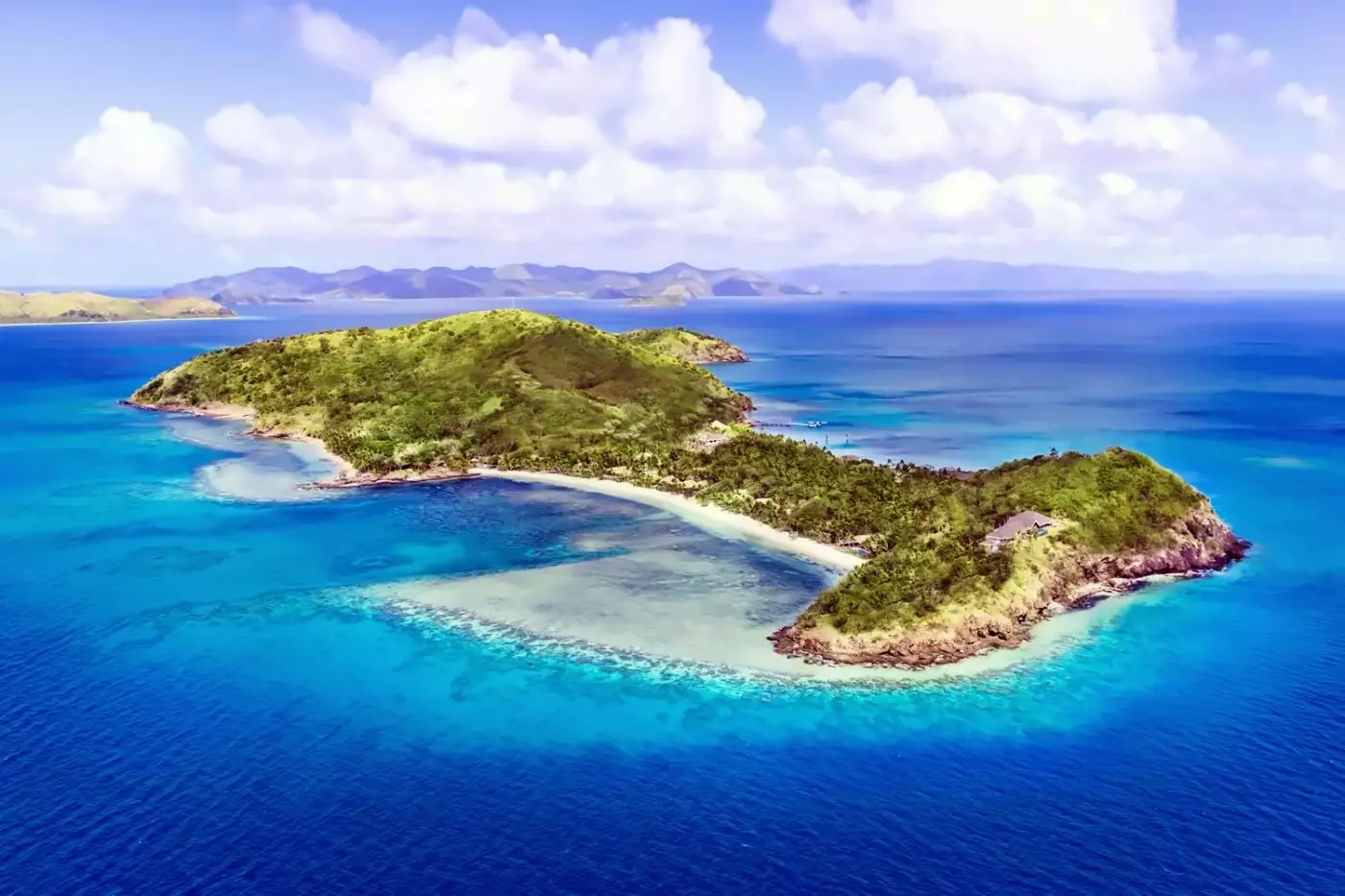
Kokomo Private Island Fiji
Prices From 3’172 USD
+3
More amenities
- Beach
- Romantic
- Adventure
Kokomo Private Island Fiji is a private-island resort for travelers who want Fiji at its most spacious, family-capable, and r...
Please choose a hotel or destination from the list.
We couldn’t open your search results. Please try again.
Your private search
Finding exceptional stays
Yaukuve Island places a Fiji stay in the Kadavu group, with Kokomo Private Island as the accommodation base. The Great Astrolabe Reef environment, coral cultivation and food-growing areas connect a holiday here with both marine life and the practical work of sustaining an island.
Prices From 3’172 USD
More amenities
Kokomo Private Island Fiji is a private-island resort for travelers who want Fiji at its most spacious, family-capable, and r...
Reserved for You
Kokomo Private Island occupies Yaukuve in the northeastern Kadavu group, within the wider Great Astrolabe Reef environment. The island provides a base for a holiday with a strong marine interest, alongside time on shore and among the cultivated grounds.
Coral restoration adds a scientific dimension to the surrounding water. The island's marine team cultivates coral fragments in nurseries before transplanting them to the house reef, with an emphasis on heat-resilient corals. This is about how a reef is maintained and regenerated, alongside the pleasure of seeing its established marine habitats.
Different coral forms need different supports. Vertical tree nurseries hold corals at varied depths; horizontal ropes suit branching corals, while cement disks support encrusting and plate forms that cannot grow on ropes. Those distinctions give a marine-biology interest specific shapes and methods to explore, beyond identifying a single fish or hoping for one wildlife encounter.
Orchards, vegetables and herbs give the island a productive landscape. Edible flowers and fruit grow alongside a hydroponic garden producing crops such as lettuce, tomatoes and cucumbers. Bees help pollinate the growing areas.
Organic waste is mulched and composted for the farm and gardens; glass is crushed for use in concrete. The connection between growing food and handling waste makes this a working island landscape, with cultivation extending beyond decorative tropical planting.
The Fiji guide places this Kadavu-region island within a wider journey.
No. It belongs to the wider Kadavu island group. Keep the island name and the regional reference distinct when planning arrival and onward travel. A Kadavu-region description does not mean every resort occupies the same main island.
No. Diving is an important interest in the region, but a quieter stay can focus on the shore and the island setting. Decide what you want to do during ordinary hotel hours rather than assuming a reef destination requires an intensive underwater itinerary.
Treat any sighting as an opportunity rather than a promise. Choose an outing for the habitat and the experience, with suitable local guidance. A rewarding reef day should not depend entirely on encountering one named animal.
Desalination turns seawater into fresh water, sea salt and brine. Rainwater and treated greywater also support the gardens and farm. For an interest in island life beyond the beach, these systems explain how water is supplied and reused; they are separate from the food crops growing in the gardens.
These villages provide a community context beyond the private-island setting. A village visit centres on local life, with a sevusevu welcome and kava as part of the cultural encounter described for the region. Plan it as a hosted visit with local guidance, rather than treating a village as another resort facility.