



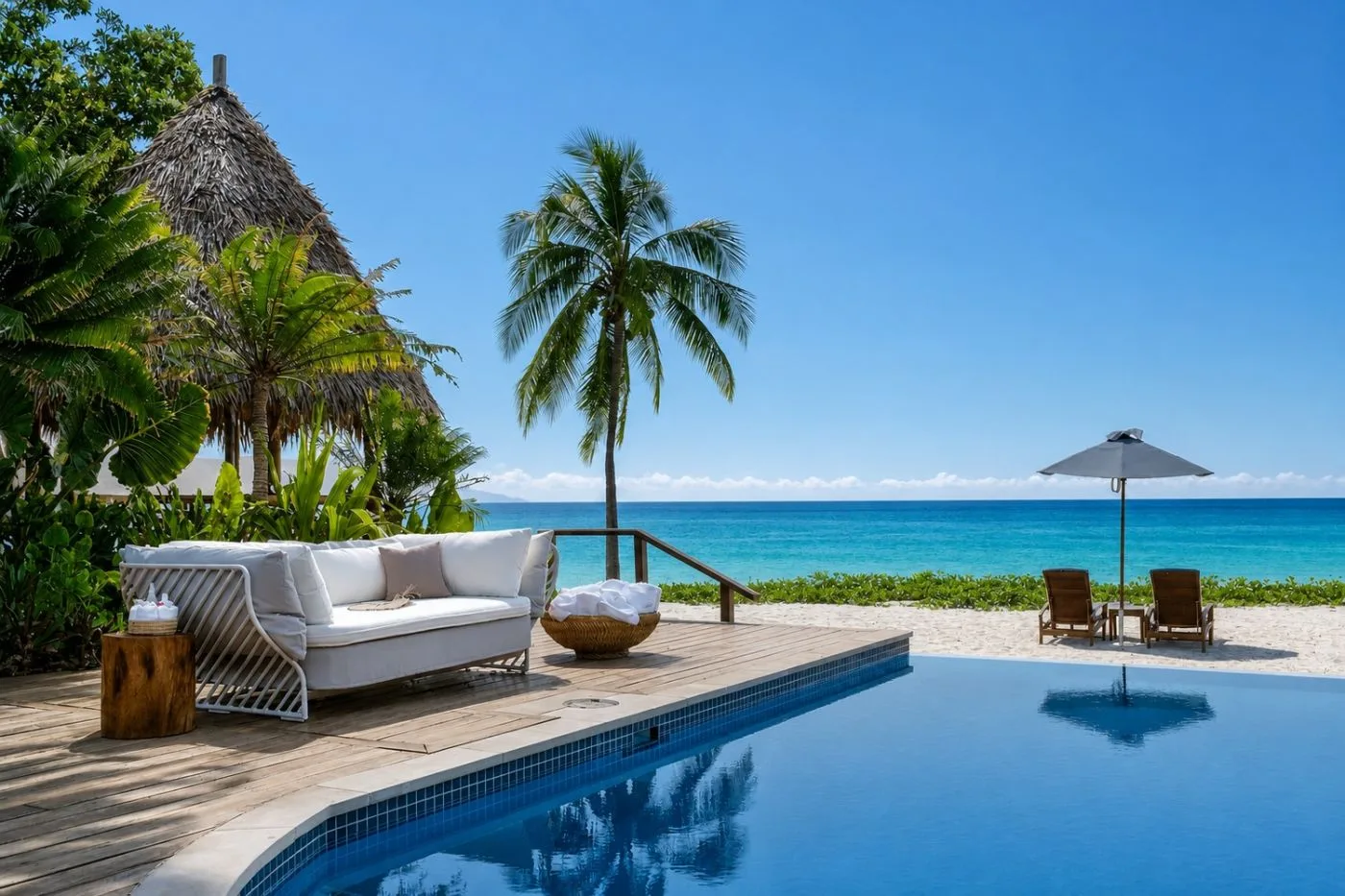
Wakaya Private Island Resort
Prices From 3’250 USD
+3
More amenities
- Beach
- Romantic
- Golf
Look down when you step into a Wakaya bure. The floor is laid in yaka timber, and woven bamboo lines the walls. You could com...
Please choose a hotel or destination from the list.
We couldn’t open your search results. Please try again.
Your private search
Finding exceptional stays
Wakaya, in Fiji’s Lomaiviti group, combines a coastal and marine landscape with an island interior and locally rooted food interests. Wakaya Club provides the hotel reference for this chapter. Choose the place for the subjects you want to explore within the island, including the sea, its land-based setting and the local food traditions.
Prices From 3’250 USD
More amenities
Look down when you step into a Wakaya bure. The floor is laid in yaka timber, and woven bamboo lines the walls. You could com...
Wakaya's beaches, lagoons and coastal cliffs are backed by wooded land and cultivated ground. The island's marine interests and its food-growing landscape give a stay at Wakaya Club different places to explore, from the shoreline to the working gardens.
The sea around Wakaya changes across the island. An extensive reef system encloses a large lagoon to the east, while a deep channel fringes the western shore. Currents bring nutrient-rich water from the channel into the surrounding reefs and lagoon.
These connected habitats have different ecological roles. Manta research around Wakaya distinguishes cleaning stations on the outer reef edge from feeding areas within the lagoon. For an interest in marine life, the relationship between reef, lagoon and deeper water adds a particular reason to choose Wakaya, beyond the colour of its beaches.
The island's farm grows vegetables, herbs and fruit. Leaf crops include several kinds of lettuce, Chinese cabbage and microgreens; eggplant adds another vegetable to the garden. Avocados, citrus, pineapples, bananas, papayas, guava and soursop give the cultivated landscape its tropical fruit character.
Ginger and turmeric grow in the herb garden, adding rhizome crops to the leafy vegetables and tropical fruits.
Wakaya's food traditions draw on both farmed and marine ingredients. Locally raised venison and chickens contribute a land-based element alongside fish such as tuna, wahoo, walu and mahi-mahi. Indian, Mediterranean and Fijian influences inform the culinary approach.
The Fiji guide provides the national context for this island chapter.
No. It belongs to the Lomaiviti group, east of Viti Levu. Keep that geography clear when planning the journey, rather than assuming all Fiji island resorts share the same surrounding archipelago.
Wakaya includes a golf option, providing a different outdoor subject from time in the sea. Choose it because the sport appeals, keeping the experience distinct from assumptions about what a particular hotel booking includes.
Masi is barkcloth made from the inner bark of paper mulberry. The bark is stripped, soaked and beaten into sheets with a wooden mallet, then may be decorated with dyes and stencilled patterns. It has a ceremonial role in Fiji, including presentations and family occasions. Knowing the material adds a craft interest to the woven mats, carving and textiles associated with island culture.
Giant clams are part of the marine life associated with Wakaya. Besides filtering food from seawater, they live with tiny photosynthetic algae in their fleshy mantle. The algae receive protection and help supply the clam with food. This relationship makes the reef an interest in living partnerships as well as colourful shells; it does not require a promised encounter with one animal.
Levuka is on Ovalau, a different island from Wakaya. Fiji's first colonial capital developed as a nineteenth-century port, with timber trading buildings and streets between the waterfront and volcanic slopes. Its history gives the Lomaiviti region a wider maritime and cultural context. A heritage interest in Ovalau is geographically separate from a stay on Wakaya.