



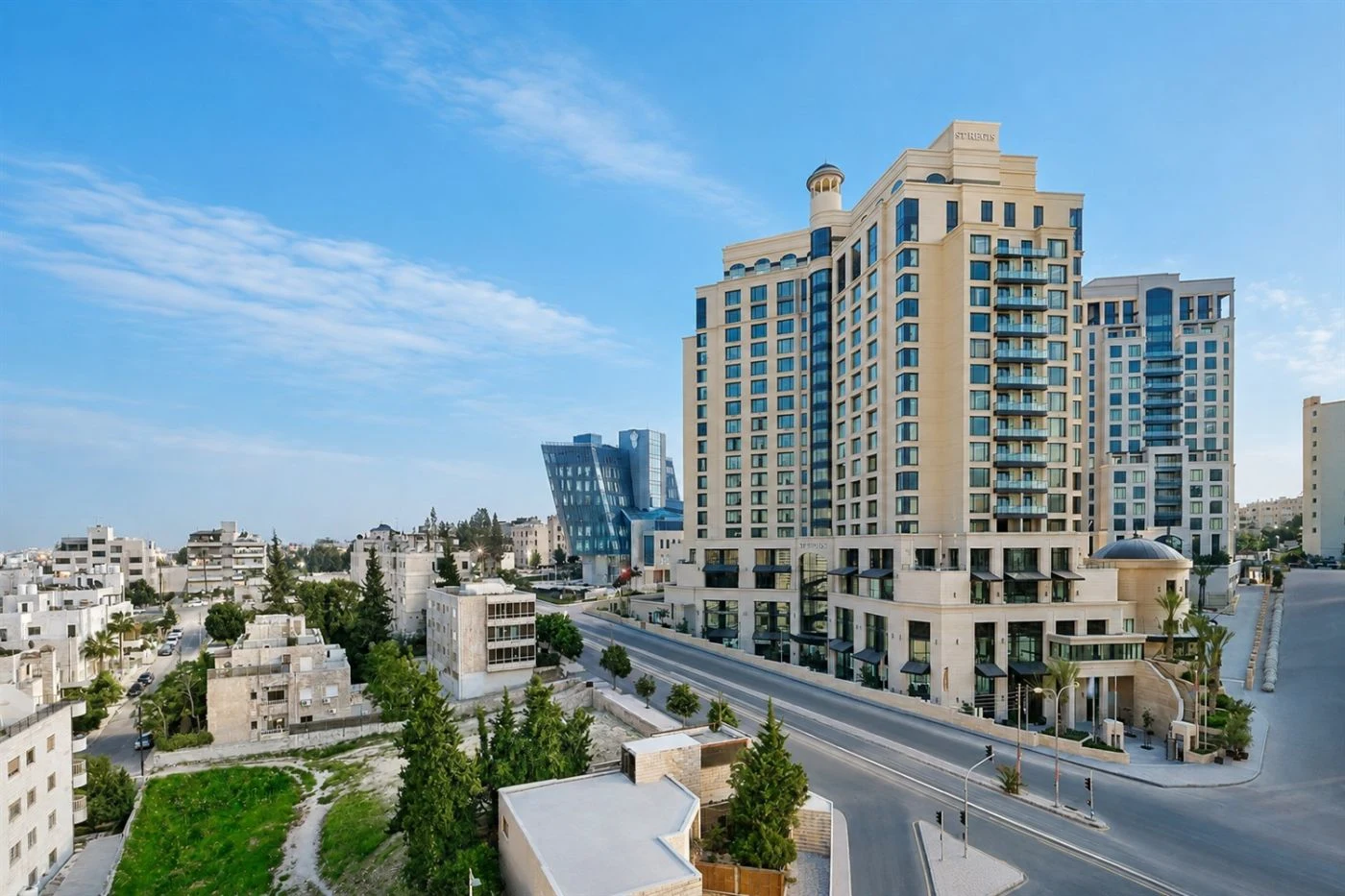
St Regis Amman
Prices From 344 USD
+2
More amenities
- Culture
- City Vibe
The St. Regis Amman stands near the 5th Circle in Abdoun, one of the Jordanian capital's most established diplomatic, residen...
Please choose a hotel or destination from the list.
We couldn’t open your search results. Please try again.
Your private search
Finding exceptional stays
Choose an Amman hotel for the city you want to explore: contemporary districts around the 5th Circle, older streets in Jabal Amman, downtown markets or an art-focused afternoon in Jabal Al Lweibdeh. The collection’s hotels provide a modern urban base. Plan the places beyond that base deliberately rather than assuming every part of this hilly capital belongs to one easy walking circuit.
Prices From 344 USD
More amenities
The St. Regis Amman stands near the 5th Circle in Abdoun, one of the Jordanian capital's most established diplomatic, residen...
Prices From 278 USD
More amenities
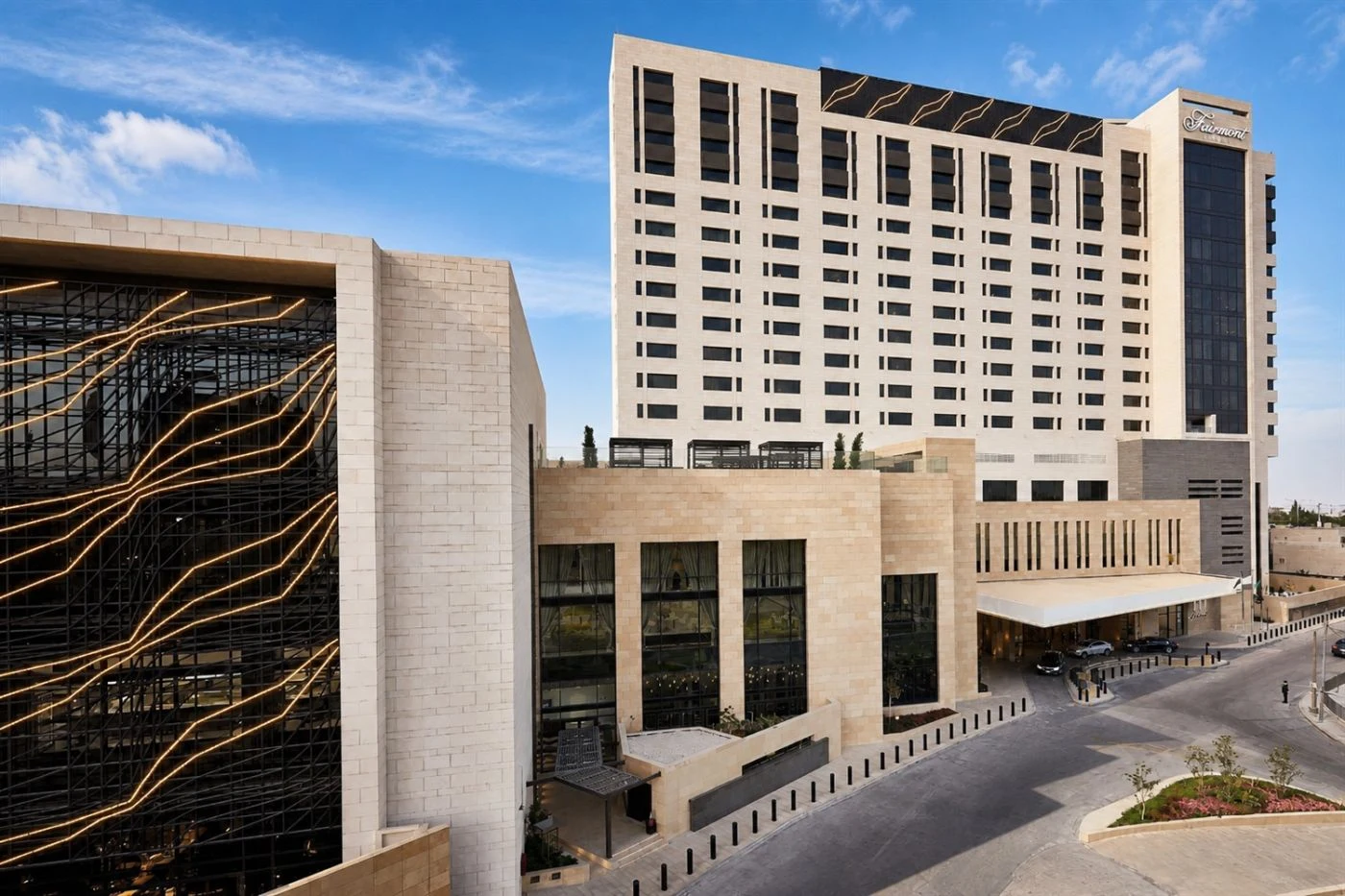
Fairmont Amman is a substantial city hotel at the 5th Circle in Abdoun, with 316 rooms and suites, serviced apartments and a...
Prices From 406 USD
More amenities
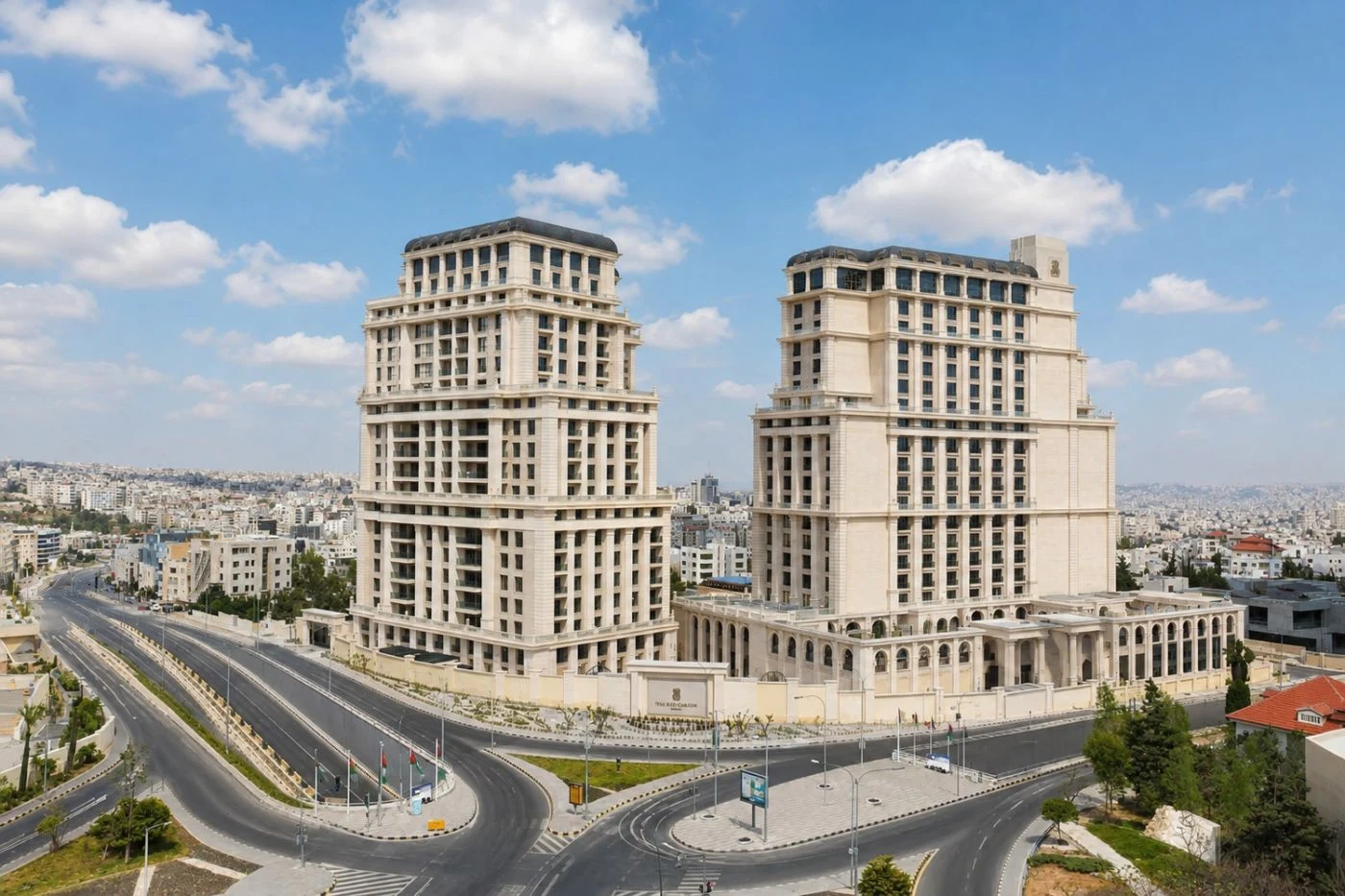
The Ritz Carlton Amman is a modern five-star hotel on Fifth Circle, one of the Jordanian capital's most established luxury di...
Reserved for You
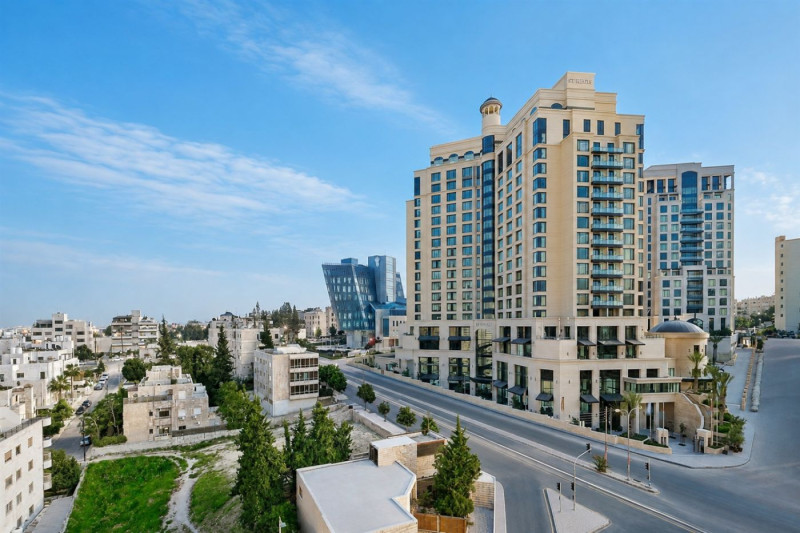
St Regis, Fairmont and Ritz-Carlton give the current collection a concentration around the 5th Circle. Fairmont is on Beirut Street in Abdoun, while Ritz-Carlton has an Al Kindi Street address. Choose this part of Amman for the modern city-hotel setting it offers, without assuming the reservation places you within the downtown archaeological area.
Start with the places you want to revisit and the pattern of your days. Someone returning between meetings will use the base differently from a visitor setting aside a whole day for older neighborhoods. Arrange the outward and return journeys around that routine, leaving the hotel a role beyond simply being the last stop of the evening.
Jabal Amman and Rainbow Street provide one direction for exploring the city’s streets and social life. Downtown markets offer a different setting, with Souq Al-Sukar focused on fruit and vegetables. Choose the neighborhood because its daily life interests you, rather than moving between districts only to complete a list.
Jabal Al Lweibdeh adds an arts-oriented perspective, while Abdali brings a more contemporary shopping-district setting. A selective day might give one area a substantial visit and leave another for the next outing. Amman’s hills are part of its character; confirm the actual route you want rather than assuming that neighboring names on a map imply an identical walk.
Downtown's Roman Nymphaeum on Saqf Al-Sail Street adds a civic-water subject to the ancient city. Built beside a stream, it combined a monumental fountain with a public place to meet and collect water. Its symmetrical, half-octagonal form included a basin, barrel-vaulted lower spaces and niches for marble statues. Choose it for how Roman Philadelphia brought water and daily social life into its architecture, rather than expecting another hilltop palace or theatre.
The Jordan guide covers the regional stages beyond Amman.
The hilltop Citadel brings together remains from several periods, including the Temple of Hercules, a Byzantine church and the Umayyad Palace complex. The Roman Theatre is a different ancient setting below, built into the hillside. Choose time for the historical subject of each rather than assuming that one visit covers both places.
No. The Jordan Museum is in Ras al-Ayn and presents the country’s history and cultural heritage, while the Jordan Archaeological Museum is at the Citadel. Retain the actual museum name when arranging a visit. Their separate locations matter when deciding whether you want a broader collection or to remain within the Citadel outing.
Darat Al Funun focuses on arts and artists from the Arab world, with spaces in historic buildings and an archaeological setting in its gardens. Choose it for that combination of art and place. Check the actual exhibitions for your dates rather than treating a visit as a promise to see a particular artist’s work.
Vehicles provide a perspective on the history of Jordan’s monarchy and the country, alongside other notable cars and motorcycles. Choose it when the machines and their historical associations interest you, rather than expecting another archaeological collection. Give the subject its own time and check the current visitor programme for anything specific you want to see.
Duke’s Diwan is a historic Amman house used as a public space for artists and musicians. Its architectural character offers a different kind of encounter from a large formal museum. Choose it for that intimate setting, and confirm the arrangements for your intended visit rather than assuming that a performance or guided activity is always taking place.