



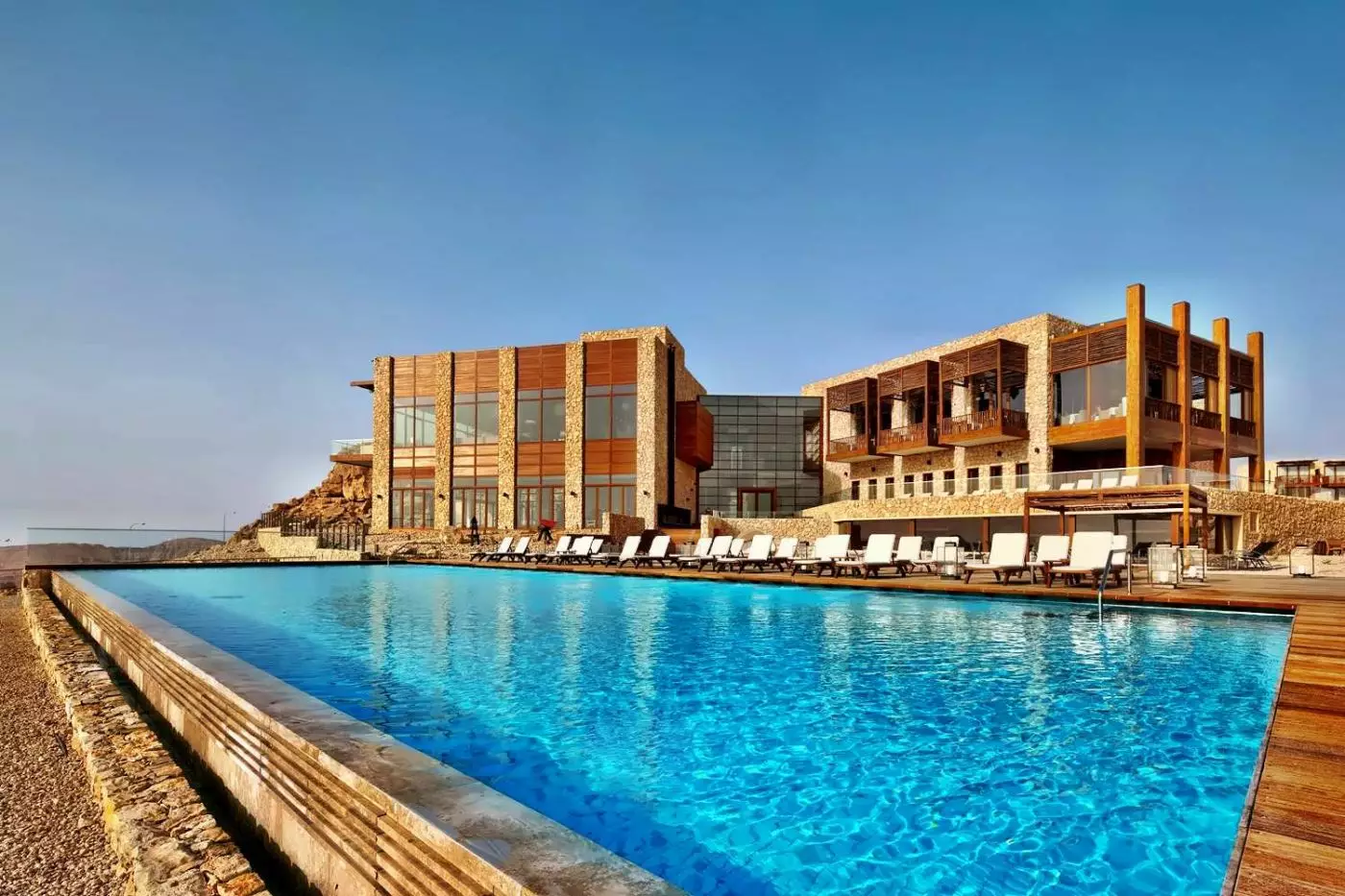
Beresheet Hotel
Prices From 2’534 USD
+2
More amenities
- Wellness
- Adventure
Beresheet Hotel occupies a rare position on the edge of Makhtesh Ramon, also known as the Ramon Crater. It stands in the Nege...
Please choose a hotel or destination from the list.
We couldn’t open your search results. Please try again.
Your private search
Finding exceptional stays
Beresheet places a Mitzpe Ramon stay at the edge of Makhtesh Ramon. The broad Negev basin below the town contains very different local interests: prismatic sandstone, basalt hills and traces of the Nabatean caravan route. A rim-based retreat can include these geological and historical settings while keeping the town and basin as distinct parts of the visit.
Prices From 2’534 USD
More amenities
Beresheet Hotel occupies a rare position on the edge of Makhtesh Ramon, also known as the Ramon Crater. It stands in the Nege...
Beresheet stands at the edge of Makhtesh Ramon, with the basin opening below the town. The hotel’s position provides the elevated setting for the stay; the geological features and archaeological remains within the wider makhtesh are separate outings from that rim base.
The Prism, also known as the Carpentry, is a sandstone hill on the floor of Makhtesh Ramon. Its rock was heated and then cooled into prism-like forms. These angular pieces give the site a particular geological identity within the broad basin.
The Ramon Horns are basalt hills in the southwestern part of the makhtesh. Their rock differs from the sandstone at the Carpentry, introducing another part of the basin’s geological variety.
Saharonim’s archaeological remains include a Nabatean caravanserai on the Incense Route. Camel caravans carried goods including myrrh and frankincense through this desert network. The station provided a stop along those trading journeys, adding a human history to the rocks and open terrain.
The nearby Ein Saharonim spring helps explain why water and route planning mattered to desert travel.
Mitzpe Ramon lies on the Route 40 journey through the Negev, between the Be’er Sheva and Eilat directions. Our Israel destination guide provides the wider national context.
No. It is an erosion landform, rather than an impact crater or volcanic caldera. Understanding that distinction changes how you read the exposed rock and broad basin. Choose a geological interpretation that explains the landscape instead of relying on the everyday meaning of the word crater.
It combines interpretation of the makhtesh's natural phenomena with the story of astronaut Ilan Ramon. That makes it a distinct educational focus, not simply an observation platform. Use current visitor information for arranging a visit, without assuming every display or arrival arrangement is unchanged.
The nature reserve has Dark Sky Park recognition, giving astronomy a meaningful local context. A particular viewing experience still depends on conditions, including cloud and moonlight. Plan it with local guidance and choose the destination for its broader desert character rather than expecting a guaranteed night-sky display.
No. The rim gives an important perspective of its own. Choose a descent or a specific route only when it suits the interests and abilities of your party and current local conditions. A quiet landscape-led visit can be rewarding without a demanding itinerary.
The Desert Sculpture Park near the makhtesh edge provides an art-and-landscape focus. Choose it for the relationship between the works and their surroundings. It offers a different subject from geological interpretation while keeping the wider setting central to the visit.