



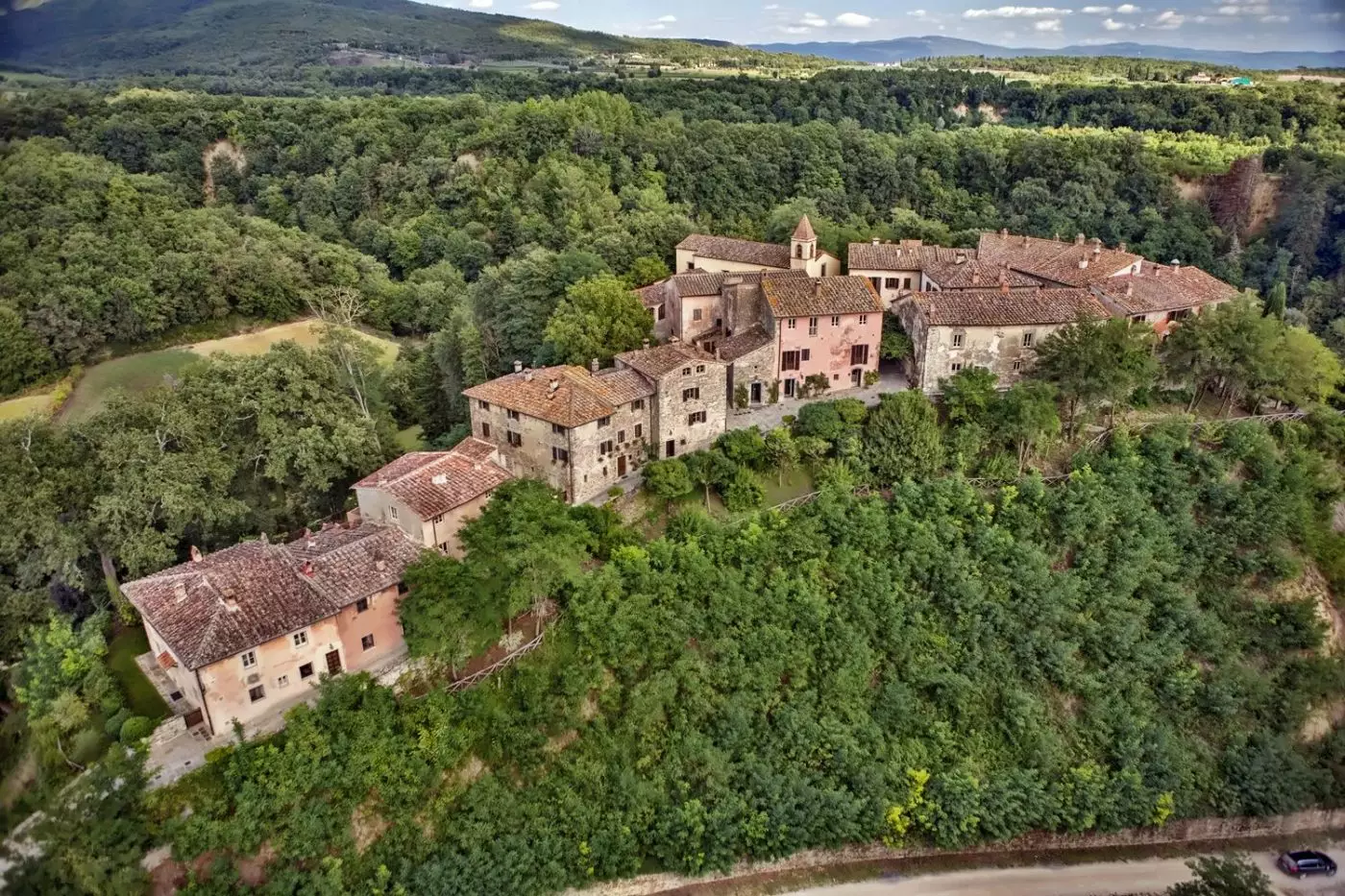
Il Borro
Prices From 535 USD
+3
More amenities
- Sauna
- Culture
- Sustainable
Il Borro is a Tuscan estate organized around a medieval village, not a hotel contained in one building. In the Valdarno count...
Please choose a hotel or destination from the list.
We couldn’t open your search results. Please try again.
Your private search
Finding exceptional stays
A luxury stay around Arezzo combines Tuscan art with a Valdarno country base. Il Borro centres the accommodation on a restored rural hamlet. Visit Arezzo for its historic streets and major artworks, then return to the estate; the city is a cultural outing from this countryside setting.
Prices From 535 USD
More amenities
Il Borro is a Tuscan estate organized around a medieval village, not a hotel contained in one building. In the Valdarno count...
Piazza Grande and the streets around it make a useful starting point for exploring the city. Give a substantial art interest its own place in the day, while allowing the surrounding streets to contribute context rather than treating them only as a route between works.
Il Borro is an estate in Valdarno di Sopra, shaped around a restored hamlet within the Tuscan landscape. That setting supports a retreat-led stay, where time at the property and selected outings share the day. It is not a hotel within Arezzo's central streets, so choose it for the countryside as well as the possibility of visiting the city.
Decide how much of the holiday should take place at the estate and how often you want to visit the city. A traveller planning repeated city evenings has a different priority from someone choosing a country stay with a focused cultural outing.
The National Archaeological Museum Gaio Cilnio Mecenate gives a city visit a focus on Arretine pottery. Arezzo's Roman workshops made fine tableware with a coral-red coating, either plain or decorated in relief. The collection connects finished vessels with the tools used to manufacture them, bringing craft production and dining culture into an art-led stay.
Punches pressed decorative motifs into clay moulds. The design inside a mould emerged in relief on the finished vessel, and a fired mould could produce a series of matching pieces. Makers' stamps recorded a workshop owner's name, a potter's name or both. For travellers interested in ceramics, this makes the manufacturing process as rewarding as the decorated surface: the tools explain how the objects took shape and how workshops identified their work.
A wider Italy journey can combine Arezzo's craft history with other regional stays.
The Legend of the True Cross cycle is in the Basilica of San Francesco. Choose it as a focused art visit, rather than assuming every major Renaissance work associated with the area is held in one general museum.
The house museum connects Giorgio Vasari with the place where he lived and worked. It gives a visit a different perspective from looking only at individual paintings in a broad collection.
Yes. Arezzo has remains of a Roman amphitheater, providing an earlier historical layer. It can add a distinct subject to a visit otherwise centered on Renaissance and later heritage.
It is kept in the Basilica of San Domenico. That gives another church visit a particular artistic reason, rather than making every stop an interchangeable look inside a historic building.
It is a recurring event associated with the city's squares and streets, rather than a permanent daily market experience. Plan around it if that is a central interest; the city remains rewarding for its art and architecture at other times.