



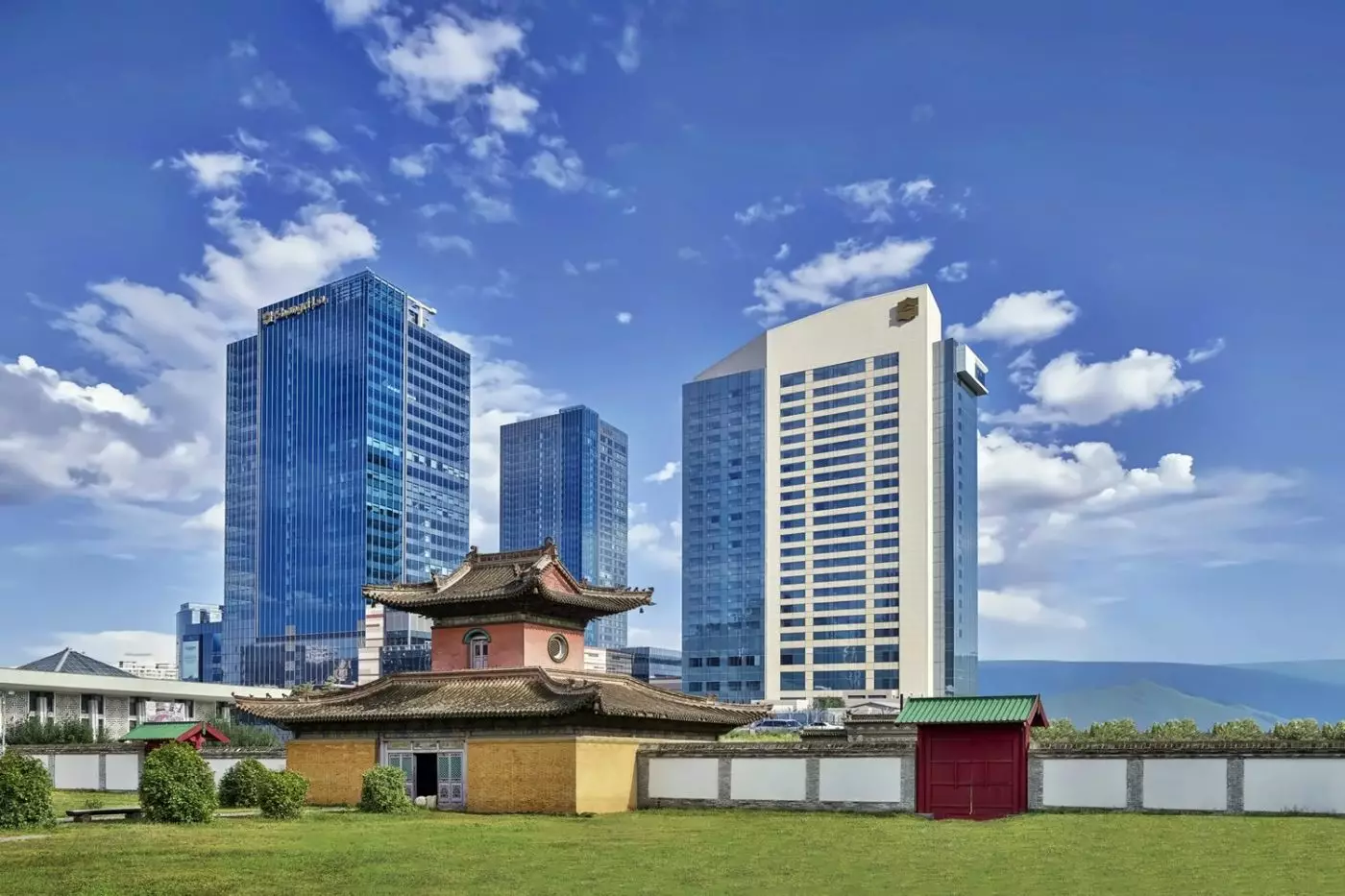
Shangri La Hotel Ulaanbaatar
Prices From 458 USD
+3
More amenities
- Sauna
- Culture
- City Vibe
Shangri-La Ulaanbaatar stands at 19 Olympic Street, close to the civic heart of Mongolia's capital. Government House, Great C...
Please choose a hotel or destination from the list.
We couldn’t open your search results. Please try again.
Your private search
Finding exceptional stays
Ulaanbaatar gives a Mongolia journey a city chapter of national history, Buddhist art and public monuments. Shangri-La Ulaanbaatar on Olympic Street is the central accommodation base. Sukhbaatar Square and the capital’s museums suit time in the city before a countryside journey, with imperial history and everyday Mongolian life explored through different collections.
Prices From 458 USD
More amenities
Shangri-La Ulaanbaatar stands at 19 Olympic Street, close to the civic heart of Mongolia's capital. Government House, Great C...
Shangri-La Ulaanbaatar is on Olympic Street in District 1. This is a city hotel base for museums, central streets and religious heritage. Travellers planning a countryside journey can use the capital for cultural visits that explain the country beyond its open landscapes.
Sukhbaatar Square is a central public space. On its northern side, the Chinggis Khaan monument stands in front of the Government Palace. The square provides an introduction to the capital's ceremonial centre: the national monument and the seat of government share the same public setting.
The Chinggis Khaan National Museum traces a much longer history than the life of one ruler. Collections begin with earlier nomadic states, including the Hunnu, and continue through the Great Mongol Empire towards the early twentieth century. The early halls include royal objects, chariot material and inscriptions; later sections introduce successive states and their rulers.
The Huis Tolgoi inscription gives an interest in early Mongolian language a particular object to seek out. Material from the Turkic and Uighur periods broadens the visit beyond the thirteenth-century empire. These earlier cultures make the museum useful for travellers who want historical context for a longer Mongolia journey.
In the Great Mongol Empire section, a seal associated with Guyug Khan and a copy of an imperial letter to the Pope introduce diplomacy alongside royal clothing and furnishings. The collection allows an interest in political history to extend beyond battles to the material life and international relationships of the court.
Our Mongolia destination guide covers the wider country's regional stays and landscapes.
It can be valuable when museums or religious heritage help you understand the wider trip. Allow real usable hours rather than counting only hotel nights. If the schedule leaves no city time, be honest about the stay's transit role and plan a separate cultural chapter if you want one.
No. The museum is in Ulaanbaatar and has a broad historical collection. The equestrian statue complex at Tsonjin Boldog is a separate destination outside the city. Keep them distinct when discussing an itinerary rather than assuming similar names mean the same visit.
No. It is a religious place with its own life and purpose. A visit requires a different approach from browsing a collection. Be considerate of worship, follow local guidance and avoid assuming a particular ceremony will take place for your visit.
The Fine Arts Zanabazar Museum’s One Day in Mongolia, by Baldugiin Sharav, depicts nomadic practices and human life from birth to death. Made with mineral pigments on cotton, the painting rewards attention to its many activities and figures. This is a different cultural visit from a chronological history museum, with the emphasis on a single detailed work.
The temple museum preserves Buddhist art, including gilded bronze images, sacred paintings and masks used in Tsam ritual dance. The complex was built for the state oracle Luvsankhaidav. Its temple architecture and ritual objects make it a visit for religious art and craft, distinct from attending worship at the living Gandan Monastery.