



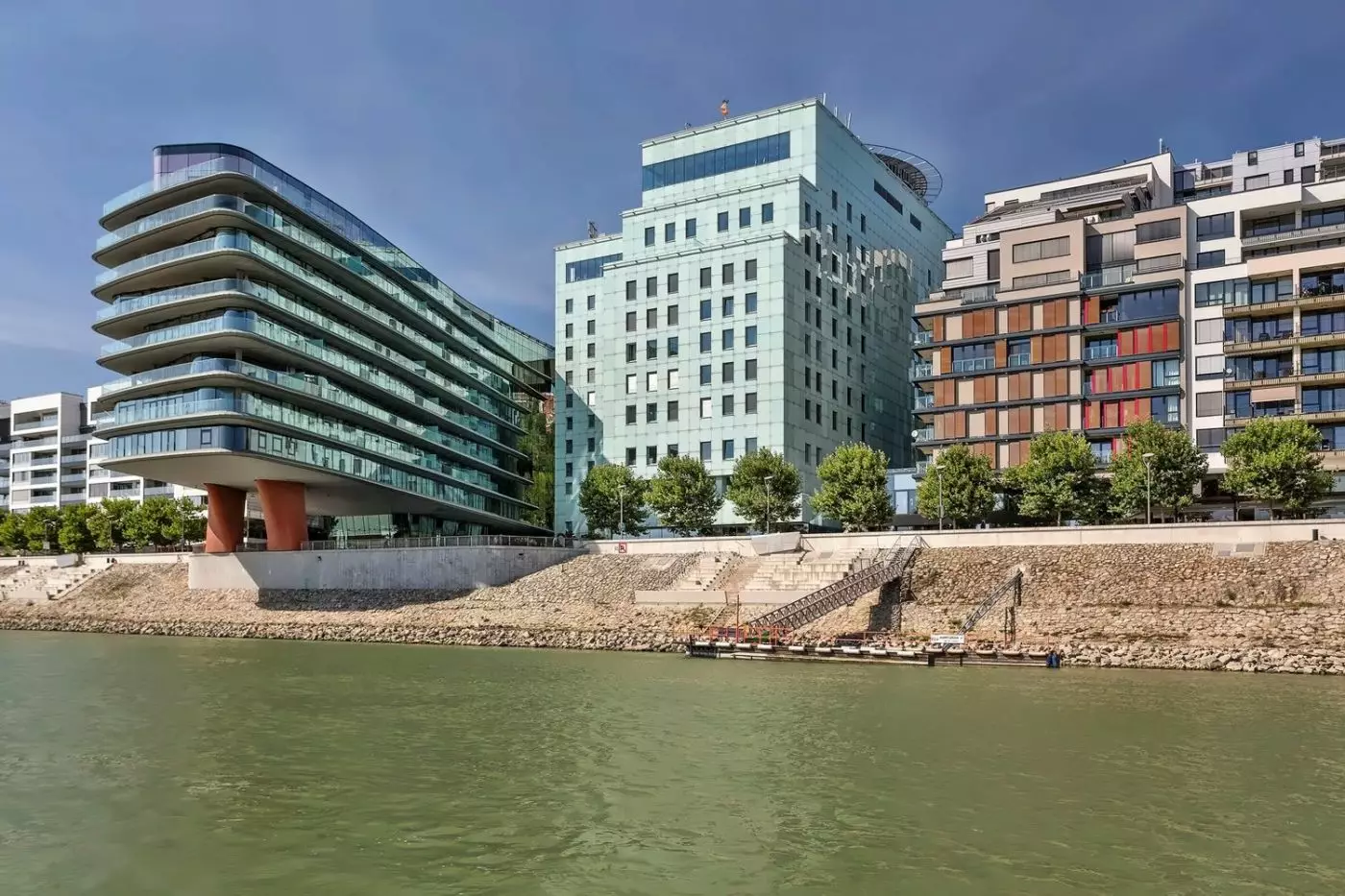
Grand Hotel River Park Bratislava
Prices From 219 USD
+3
More amenities
- Sauna
- Culture
- City Vibe
At Grand Hotel River Park Bratislava, the Danube runs past the restaurant terraces and below the eleventh-floor pool. This co...
Please choose a hotel or destination from the list.
We couldn’t open your search results. Please try again.
Your private search
Finding exceptional stays
Bratislava combines the Danube with a historic center whose civic buildings reveal several stages of the capital's past. Luxury accommodation provides a base for looking beyond a list of monuments. The Old Town Hall and Primate's Palace give the central city particular architectural subjects alongside its wider river landscape.
Prices From 219 USD
More amenities
At Grand Hotel River Park Bratislava, the Danube runs past the restaurant terraces and below the eleventh-floor pool. This co...
Bratislava's Old Town Hall grew from several buildings joined over time. The original Romanesque house of Mayor Jakub was followed by the addition of Unger's House and Pawer's House. A Renaissance arcade was added in 1581.
That layered history makes the complex a useful subject for travelers interested in how a city developed its public buildings. Look for the relationship between individual structures and the larger whole rather than expecting a single building created in one period. This is an architectural interest in the city fabric, not a promise of access to every interior.
The Primate's Palace was built between 1778 and 1781, with a strictly classical façade. Its Hall of Mirrors was the setting for the 1805 treaty between France and Austria. The building connects architectural form with a specific episode in European political history.
The palace also has a collection of seventeenth-century English tapestries made at Mortlake. For someone interested in decorative art, that provides a different subject within the same historical building. Decide whether the architecture, the treaty history or the textiles most interests you before shaping a visit; no current exhibition or entry arrangement is implied here.
Explore our Slovakia hotel guide for the wider regional context.
No. Devin is a separate ruined castle at the Danube-Morava confluence. Plan it as a distinct outing rather than assuming it is another section of the central city castle.
It is the Church of St Elizabeth of Hungary. The familiar Blue Church name refers to its distinctive appearance, and its Art Nouveau character makes it a particular architectural interest rather than a generic church stop.
Not necessarily. A river outlook and a historic-center address are different attributes. Choose the precise base for the kind of mornings and evenings you want.
Yes. The historic center, river landscape and a separate Devin outing offer distinct interests. Give them room in the itinerary rather than judging the city only by the number of sights covered in a few hours.
Choose contrasting subjects, such as the Old Town fabric and the Blue Church's Art Nouveau design. A few clearly different examples can be more revealing than a long sequence of buildings seen without context.