



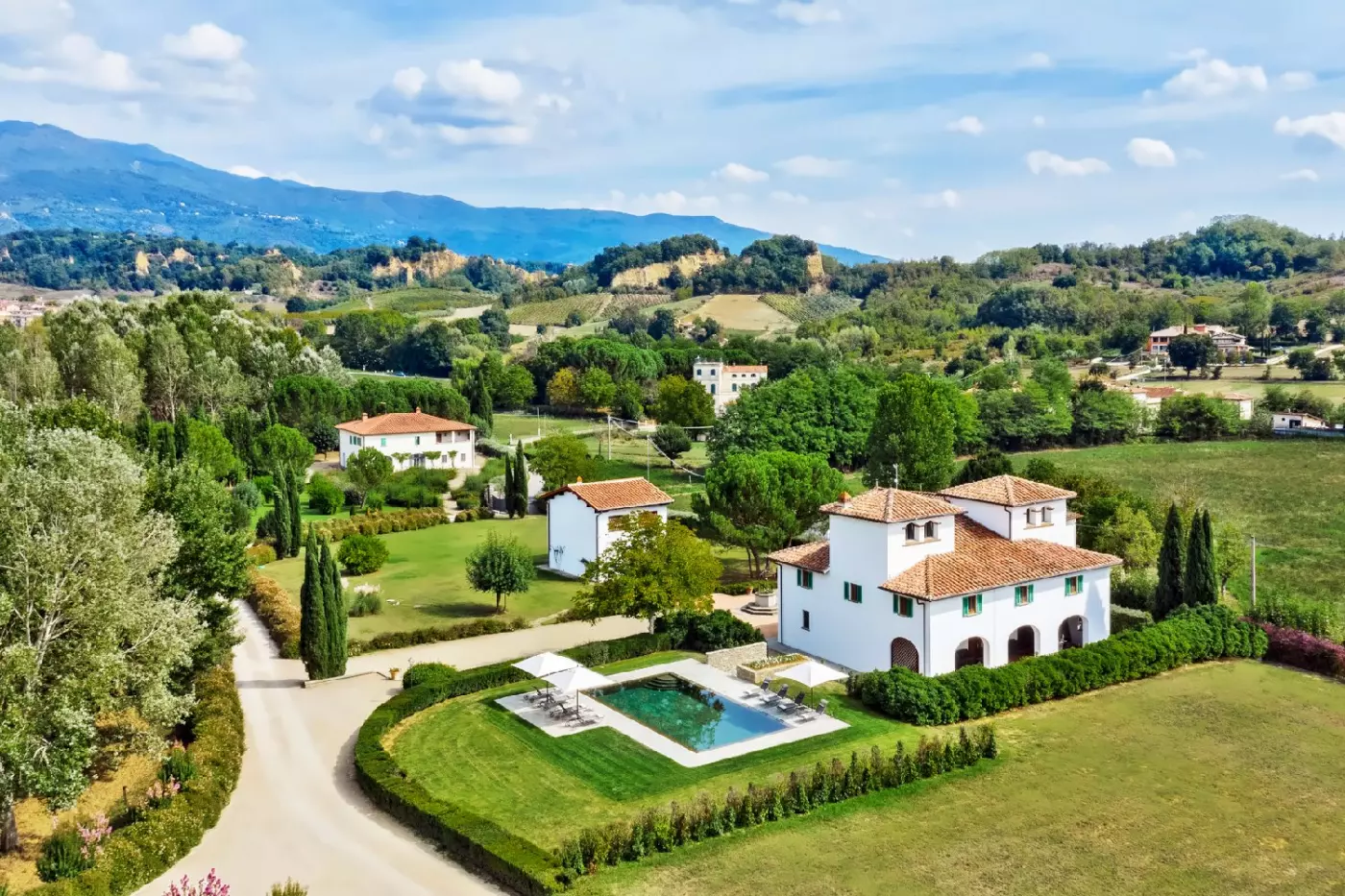
Viesca Toscana
Prices From 335 USD
Viesca Toscana is a peaceful Tuscan estate in Reggello, with villas, suites, gardens, pools, Ferragamo heritage, country dini...
Please choose a hotel or destination from the list.
We couldn’t open your search results. Please try again.
Your private search
Finding exceptional stays
Between the Upper Valdarno and the slopes of Pratomagno, Reggello offers a Tuscan landscape of cultivated hills and woodland. Luxury hotels here provide a base for looking closely at those different environments, with local art adding a separate cultural interest.
Prices From 335 USD
Viesca Toscana is a peaceful Tuscan estate in Reggello, with villas, suites, gardens, pools, Ferragamo heritage, country dini...
Vallombrosa brings forest and an abbey setting into the Reggello area. Its character differs from the olive-growing hills below, offering another subject for travelers who want both nature and cultural context. Give the woodland a defined place in the itinerary rather than assuming all Tuscan countryside looks or feels the same.
Choose a walk for the terrain and your interests, keeping the abbey and surrounding forest in a coherent outing. An architectural interest and a long hike need not share the same plan. A slower visit can be rewarding when the aim is to understand the place.
Olive groves and terraced cultivation help define Reggello's landscape. Food can connect with the countryside around you here: a local olive-oil interest gives a meal a specific agricultural context. Notice the relationship between what is grown and the slopes that shape its setting.
The Upper Valdarno and Pratomagno setting helps explain why a single broad Tuscany label is insufficient. Plan outings around the actual landscape you want to encounter, rather than assuming every famous town is a casual extension of this base.
Viesca Toscana provides an estate-style accommodation reference in the Florentine countryside. Our Italy destination guide places this part of Tuscany within the wider country.
The church of San Pietro in Cascia and the nearby Masaccio museum provide a local cultural subject. The museum holds the San Giovenale Triptych, offering a reason to explore this part of the area independently of a major-city museum itinerary.
No. They are a different protected natural landscape within Reggello’s wider territory. Choose the outing for the environment that interests you, rather than using the names interchangeably or assuming one visit covers both.
The experimental arboreta are collections of trees and shrubs grown for scientific study, including native and introduced plants. Their plots developed under successive curators, beginning with Adolfo di Berenger in the nineteenth century. The site lies on siliceous ground in the transition between chestnut and beech woodland.
It can add character when it helps you understand the place, as with Viesca’s Ferragamo connection. It should sit alongside the accommodation and setting, rather than replace a clear idea of how you want to spend the stay.
Frantoio di Santa Téa preserves the history of oil extraction in Reggello. A stone in its museum records the mill’s construction in 1426. In 1962, Santa Téa adopted centrifugal extraction, moving beyond the older press-and-millstone system. Olive variety and ripeness also influence the flavours of the resulting oil.