



Vista Ostuni
Prices From 1’465 USD
+3
More amenities
- Sauna
- Wellness
- Romantic
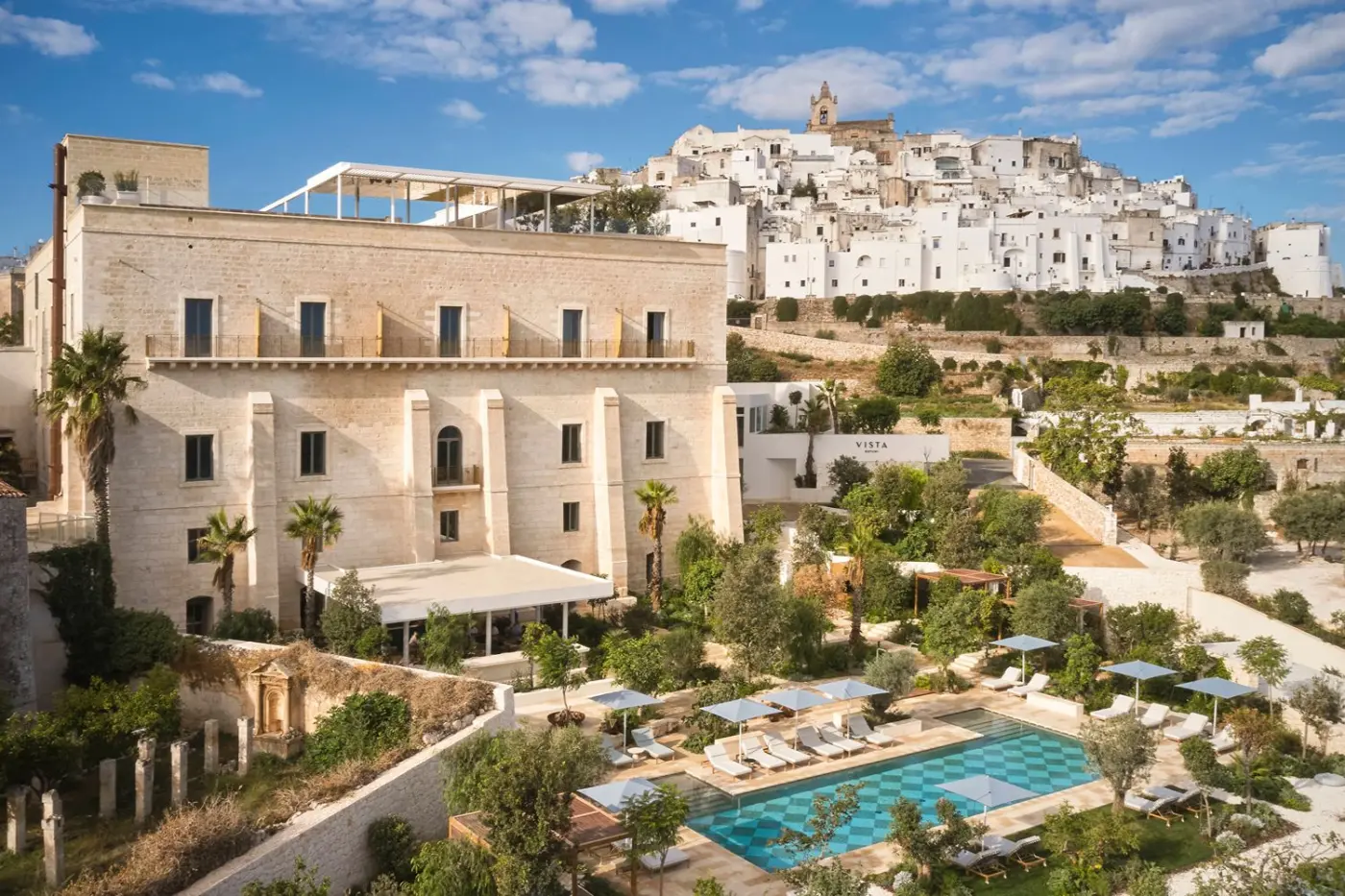
Ostuni's White City rises beyond Vista Ostuni, a five-star hotel in a restored convent and former tobacco factory. Its 28 roo...
Please choose a hotel or destination from the list.
We couldn’t open your search results. Please try again.
Your private search
Finding exceptional stays
Ostuni gives a Puglia hotel stay a cultural history that reaches from prehistoric objects to eighteenth-century religious art. The civic museum brings those periods into a former monastic setting. Alongside an accommodation choice such as Vista Ostuni, it offers a particular subject for travellers interested in how a place's past is preserved.
Prices From 1’465 USD
More amenities
Ostuni's White City rises beyond Vista Ostuni, a five-star hotel in a restored convent and former tobacco factory. Its 28 roo...
Ostuni's civic museum occupies the former Carmelite monastery of Santa Maria Maddalena dei Pazzi, with the adjoining church of San Vito Martire. The church, also known as the Monacelle, was built between 1750 and 1752 by local craftsmen from the design of a Neapolitan engineer.
Its facade marks the beginning of Ostuni's Rococo period. Inside, stone altars and wooden furnishings give the building different materials to consider. An eighteenth-century organ and pulpit belong to that architectural and artistic setting, alongside the archaeological subjects the museum holds.
The collections include material from Messapian chamber tombs discovered in the Foro Boario area. Finds from Ostuni's Medieval Tower and the convent garden add later periods. This gives an archaeological interest a sequence of local sources rather than one general ancient past.
Choose the material that interests you and consider where it was found. A group of objects associated with a tomb asks different questions from finds in a garden or building. Their setting is part of the evidence, alongside the appearance of the individual pieces.
Research at Fontanelle identified cereal remains in fragments of hut plaster, including the complete imprint of an ear of emmer wheat. Early impressed pottery and stone tools add other evidence from Neolithic settlement. Small traces can make everyday life a subject in its own right.
For someone interested in material history, an imprint and a finished vessel provide different ways to look. One preserves a trace of a plant; the other records an object people made. Our Italy destination guide places this Ostuni cultural chapter within a wider journey.
The name comes from the whitewashed character of the historic town. Look for the way those surfaces frame lanes, courts and architectural details. The interest lies in exploring the setting, rather than expecting every building to have an identical appearance.
Choose the exact coastal setting if the beach is your overriding priority. Ostuni’s historic center occupies a different environment. A town-focused stay can include the Adriatic, but a view toward the coast should not be mistaken for accommodation directly on the sand.
Alberobello adds the distinctive architecture of its trulli within the Itria Valley context. Give it a separate purpose from exploring Ostuni’s old town. Choosing that contrast makes a regional outing more meaningful than visiting several places solely because they are nearby.
The Sant’Oronzo vestments offer a textile interest: eight coordinated nineteenth-century pieces in red damask, embroidered with gold floral decoration. A cope, chasuble and paired dalmatics belong to the set.
Vista Ostuni stands on Via Giosuè Pinto, near the historic center rather than within its lanes. The former tobacco-factory building looks toward the White City, with its gardens relating to the surrounding olive landscape.