



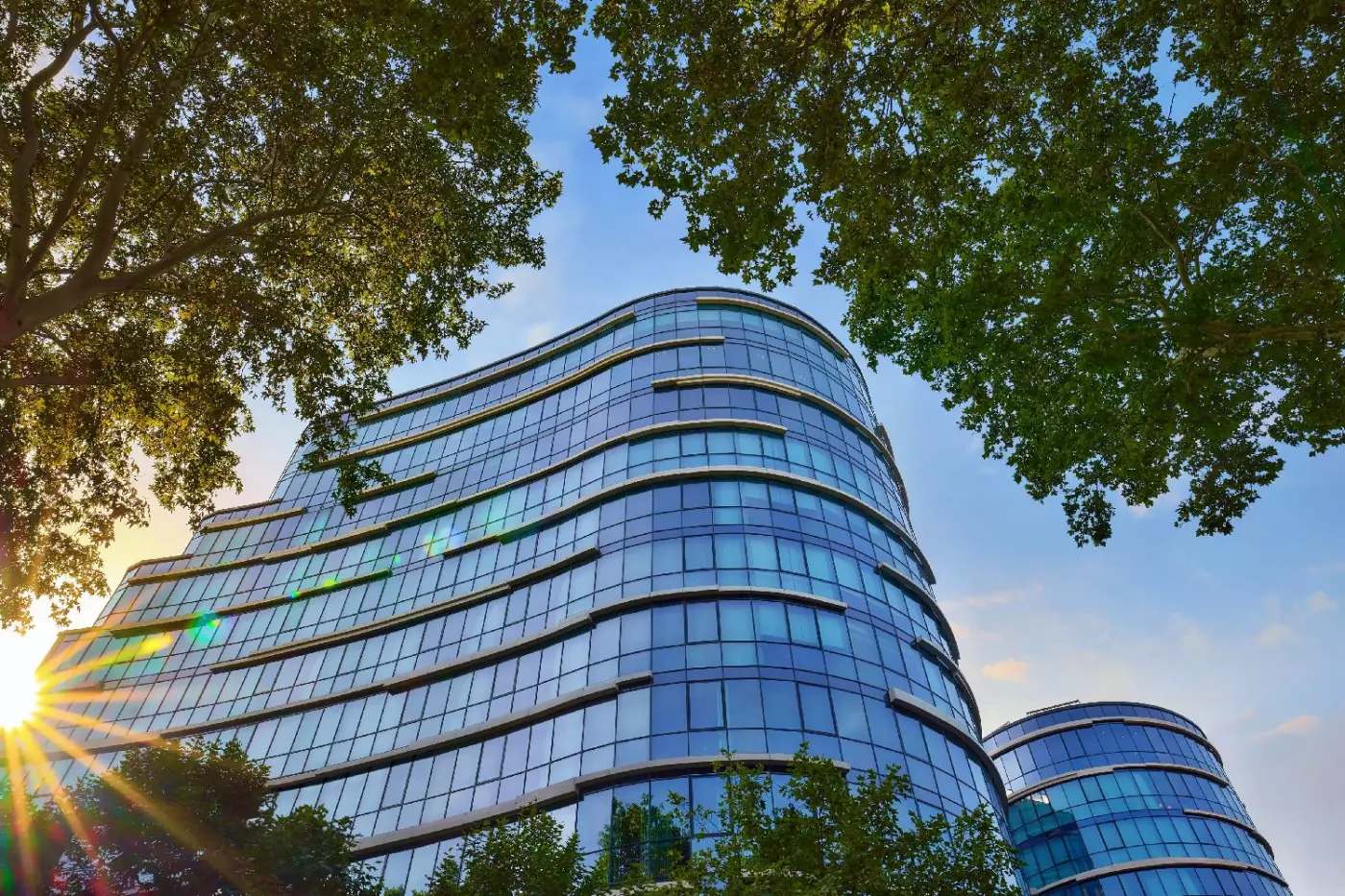
Paragraph Freedom Square Tbilisi
Prices From 354 USD
+3
More amenities
- Sauna
- Culture
- City Vibe
The Paragraph Freedom Square Tbilisi Hotel is in Georgia. This hotel combines modern comfort with a rich cultural heritage. I...
Please choose a hotel or destination from the list.
We couldn’t open your search results. Please try again.
Your private search
Finding exceptional stays
Tbilisi brings several architectural periods into one city setting. Alongside the familiar references of Abanotubani, Rustaveli Avenue and Orbeliantubani, Anchiskhati Basilica and the Bridge of Peace give a stay focused subjects in early religious architecture and modern structural design.
Prices From 354 USD
More amenities
The Paragraph Freedom Square Tbilisi Hotel is in Georgia. This hotel combines modern comfort with a rich cultural heritage. I...
Abanotubani, Rustaveli Avenue and Orbeliantubani provide useful names for understanding Tbilisi. Georgian food supplies another familiar point of interest. Give the city's buildings a subject of their own when architecture is part of what draws you here.
A focused interest can begin with a particular building rather than a complete checklist. Consider whether you are most curious about religious history, materials or the design of public space, then allow attention to the details that serve that interest.
Anchiskhati Basilica stands on Ioane Shavteli Street in the historical district. Built in the sixth century, it was commissioned by King Dachi of Iberia. Its origins give an interest in Tbilisi's religious architecture a specific early reference.
The church received its Anchiskhati name in the seventeenth century after an icon was brought from Anchi Monastery. Its building history and the history of its name therefore belong to different periods. For a traveler interested in how places acquire meaning, that distinction adds depth beyond viewing a church only as an old structure.
The Bridge of Peace is a pedestrian bridge over the Mtkvari River, made of steel and glass. Its design has a sinuous, rounded form. Michele De Lucchi designed its architecture, with construction works dating to 2009–2010.
Consider how the transparent surface and the structural frame relate. An interest in materials can give the bridge a subject beyond its recognizable outline. Someone drawn to engineering may look at how the frame supports the form, while a design-focused companion may give more attention to the overall shape.
These are different ways of looking at the same work, so allow each guest to follow the aspect that interests them. Our Georgia destination guide supplies the wider country context.
No. It is a historic district with a cultural relationship to the city's sulfur baths. A walk can be rewarding in its own right. Arrange any particular bathing experience separately rather than assuming it is an automatic part of visiting the neighborhood.
No. It coordinates several museums and institutions. Choose the actual collection and address relevant to your interests instead of treating the umbrella name as one destination. This helps keep a cultural day focused and avoids unnecessary movement.
Paragraph Freedom Square is at 2 Lado Gudiashvili Street, by the central-square area. Rustaveli Avenue leads from Freedom Square towards theatres, museums and civic buildings. Abanotubani belongs to the older bath district, providing a separate outing from this central base.
Chikhirtma is a Georgian broth-based soup, often made with chicken, eggs, vinegar and flour. In one traditional preparation, beaten eggs mixed with vinegar are stirred into cooled broth, keeping the mixture smooth. Coriander, mint or dill can provide the herbal finish.
The State Silk Museum holds cocoons, preserved silkworm life-cycle material, silk threads and skeins, and natural and chemical dyes. Nineteenth- and twentieth-century egg-carrying boxes record how silkworm eggs were transported. The museum is at 6 Giorgi Tsabadze Street.