



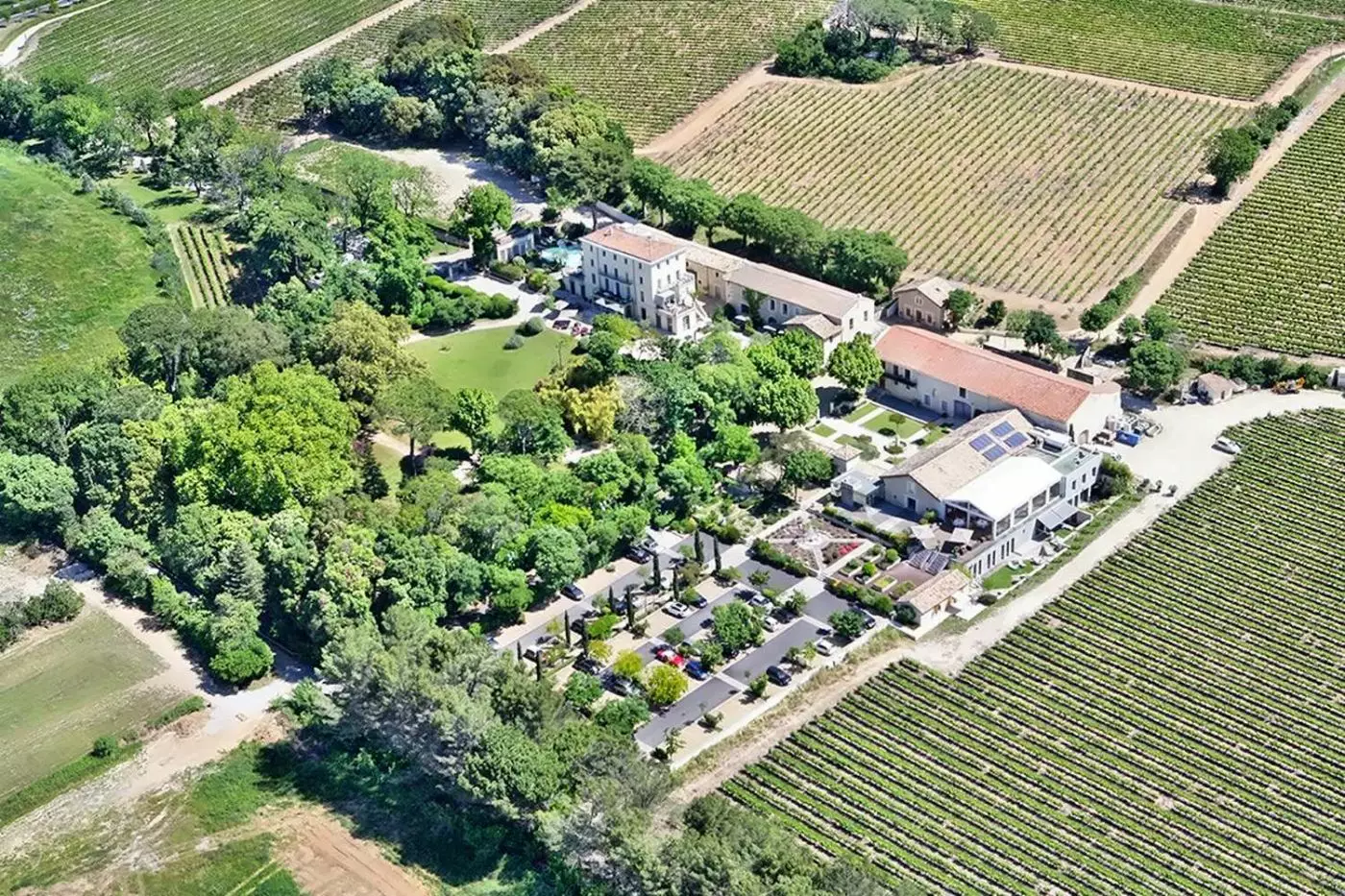
Domaine de Verchant
Prices From 456 USD
+4
More amenities
- Sauna
- Wellness
- Culture
- Romantic
Domaine de Verchant is a five-star vineyard hotel in Castelnau-le-Lez, just outside Montpellier in southern France. A member...
Please choose a hotel or destination from the list.
We couldn’t open your search results. Please try again.
Your private search
Finding exceptional stays
Montpellier brings together a historic city and a different kind of luxury base just outside it. The collection features Domaine de Verchant at Castelnau-le-Lez, a restored vineyard estate. Choose the accommodation for that setting, then give the city’s cultural interests their own place rather than expecting a hotel within the Écusson’s central streets.
Prices From 456 USD
More amenities
Domaine de Verchant is a five-star vineyard hotel in Castelnau-le-Lez, just outside Montpellier in southern France. A member...
Gardens, vineyards and the relationship between a historic château and contemporary interiors give Domaine de Verchant a distinct character.
Montpellier’s Faculty of Medicine occupies a former fourteenth-century monastery beside Saint-Pierre Cathedral. The faculty was officially recognised in 1220, giving the city’s university identity a history far older than its modern student districts. Portraits in the hall include François Rabelais, one of the figures associated with medical study in Montpellier.
Saint-Pierre began as the chapel of the Benedictine monastery of Saint-Benoît before becoming a cathedral in 1536. Its great entrance canopy rests on massive circular supports, a distinctive feature of this Southern Gothic building. The neighbouring faculty and church make this part of the Écusson a choice for an interest in the links between learned and religious institutions.
Elsewhere in the city’s medical heritage, the historic Pharmacy and Chapel of Mercy complex preserves an apothecary with Montpellier earthenware pharmacy pots. These vessels give the history of preparing medicines a material subject beyond university façades.
The Saint-Clément aqueduct brought spring water to the Peyrou, the high point of the city. Henri Pitot directed the eighteenth-century project, and water first reached the Peyrou in 1765. The most conspicuous section, the Arceaux, uses two rows of arches inspired by Roman architecture to cross the valley.
This is an outing for engineering history as well as a monumental city view. The aqueduct answered a practical problem: Montpellier’s earlier wells and public fountains could not keep up with its growing population. Its classical arches belong to the city’s eighteenth-century expansion, rather than to an ancient Roman water system.
Within a wider France journey, this city-and-estate combination can provide a settled southern chapter.
Its European art spans periods from the Renaissance onwards, with painting and other works providing a substantial cultural subject. Choose a particular interest within that range rather than expecting a brief visit to explain the entire collection.
Its architecture draws on classical Greek forms, with monumental perspectives, columns and squares extending towards the Lez. Choose it for that urban-design interest, contrasting it with the more intimate medieval street pattern rather than treating both quarters as the same historical setting.
It provides a botanical landscape near the city centre. Choose it for an interest in plants or a change from architectural interiors, giving the visit its own purpose rather than seeing it merely as a pause between museums.
It is a medieval Jewish ritual bath, with remains of the earlier synagogue in the same building. That gives the city’s history another distinct subject, worth approaching for its religious and cultural significance rather than as an unusual architectural curiosity alone.
No. It is the name of a venue within Domaine de Verchant’s Castelnau-le-Lez setting. Keep the actual location clear when choosing the stay; a restaurant name should not create an expectation of an oceanfront hotel.