



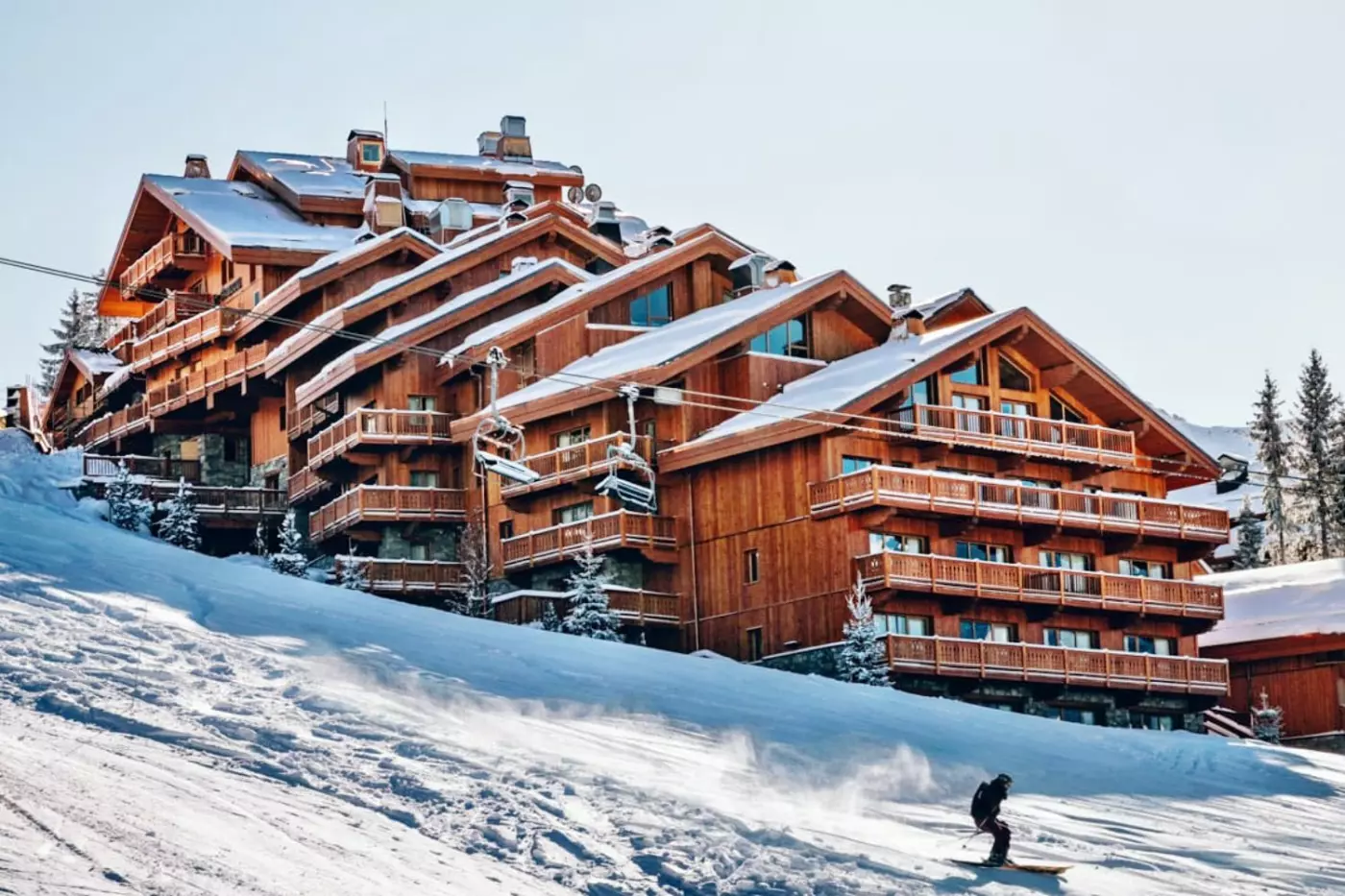
Le Coucou Meribel
Prices From 1’277 USD
+3
More amenities
- Sauna
- Wellness
- Mountain
Le Coucou Meribel is a playful five-star ski hotel set high in the Belvedere area of Meribel, directly on the edge of the slo...
Please choose a hotel or destination from the list.
We couldn’t open your search results. Please try again.
Your private search
Finding exceptional stays
Méribel combines an Alpine hotel stay with a distinctive chalet landscape. Le Coucou provides a Belvédère retreat, while the resort's stone, timber and pitched roofs give an architectural interest its own place in the holiday. Choose a base for the mountain relationship you want to enjoy, then look more closely at the buildings around it.
Prices From 1’277 USD
More amenities
Le Coucou Meribel is a playful five-star ski hotel set high in the Belvedere area of Meribel, directly on the edge of the slo...
Le Coucou stands in the heights of Belvédère near the Rond-Point des Pistes. That position gives the accommodation a particular relationship with the mountain landscape. Consider the outlook you want to enjoy during time at the hotel, alongside the interior atmosphere that appeals to you.
The Three Valleys provides a broader context for a winter-sport journey. Keep the hotel choice connected to your own plans within that landscape. A room selected for an extended retreat may have a different role from one used mainly between days outside.
Wood and stone, slate-covered pitched roofs and buildings of controlled height became defining elements of Méribel's chalet architecture. Look at those materials together: the roofline and the scale of a building contribute to its relationship with the surrounding slopes.
For someone interested in design, an architectural walk can focus on how that shared vocabulary changes from one building to another. Notice where timber, masonry and roof shape establish continuity. This gives the streets a subject beyond the view at the end of them.
Peter Lindsay led the resort's post-war development, with architect Christian Durupt carrying forward principles established by Paul Sirvin: traditional materials, integration with the environment and attention to the landscape. The chalet appearance was part of a deliberate approach to building a resort.
That history offers a useful way to read what you see. Consider both the mountain forms and the decisions made by the people who designed the accommodation landscape. Our France destination guide supplies the wider country context for another chapter of the journey.
They are distinct parts of the wider resort. Choose the precise district according to the setting you want each day rather than relying on the shared Méribel name. A useful accommodation comparison starts with that local geography.
Its traditional mountain architecture, church, museum and local-life setting provide a contrast with more activity-centered resort districts. Consider it for a focused cultural outing. It can broaden the stay without needing to become another sporting day.
It is associated with the Mottaret side of the wider mountain landscape. Keep the exact area in mind when choosing an outing. A regional natural feature should not be assumed to sit immediately outside accommodation elsewhere in Méribel.
At Raffort, between Les Allues and Méribel, a watermill and sawmill share one roof beside the river. Openings in the walls frame the mill and sawmill machinery. Interpretation covers forestry and water as an energy source, with tools and woodcarvings among the material on site.
Cembro pines, also called arolles or Swiss stone pines, grow with spruce in the Tuéda forest and carry their needles in bundles of five. Spotted nutcrackers collect and bury the seeds as winter stores; unrecovered caches help new trees grow. The forest also shelters rare plants, including twinflower, which grows in moss beneath conifers.