



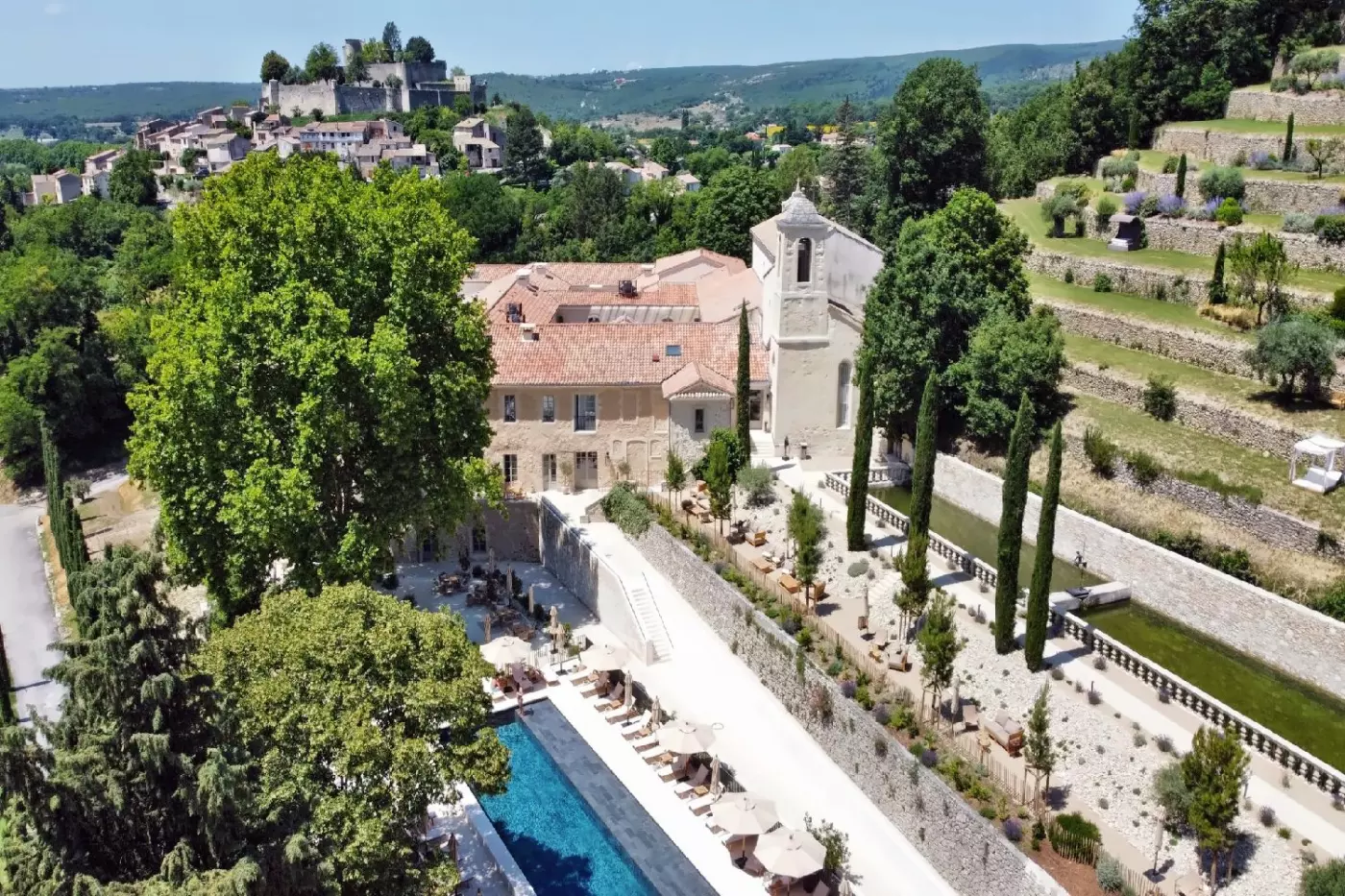
Le Couvent des Minimes
Prices From 502 USD
+3
More amenities
- Wellness
- Culture
- Sustainable
Le Couvent des Minimes gives a stay in Provence a different center of gravity. Its 17th-century convent stands beside the vil...
Please choose a hotel or destination from the list.
We couldn’t open your search results. Please try again.
Your private search
Finding exceptional stays
Mane is a Haute-Provence village of cobbled lanes, fountains and hillside stone buildings. Le Couvent des Minimes brings a former-convent hotel and spa to the stay. Beyond the hotel, Salagon combines a Romanesque priory with gardens that trace the plants of everyday life, from medieval food crops to ingredients brought from other continents.
Prices From 502 USD
More amenities
Le Couvent des Minimes gives a stay in Provence a different center of gravity. Its 17th-century convent stands beside the vil...
Mane's calades are cobbled lanes winding between old facades, doorways and fountains. They make the village itself a rewarding outing from Le Couvent des Minimes. The settlement rises beneath its medieval citadel; its streets offer a different architectural experience from the former convent's hospitality spaces.
The surrounding rural buildings include cabanons pointus: small huts assembled from dry stone without mortar. Dating principally from the eighteenth and nineteenth centuries, they belong to the agricultural landscape. Their close-fitted masonry adds a vernacular counterpoint to the larger religious buildings around Mane.
At Salagon, the twelfth-century church has two naves, alongside a later Renaissance house. Aurelie Nemours's windows introduce a striking modern element into the church: selenium-red glass crossed by perpendicular lead lines. The geometric design brings colour into the Romanesque space without turning the windows into narrative pictures. Salagon suits a cultural outing for visitors interested in how contemporary art can work within historic architecture.
The medieval garden draws on illuminated manuscripts and old agricultural and plant texts. Food beds sit alongside medicinal plants and plants associated with flowers, fibres and dyes. This is the place for a garden visit centred on cultivation before crops from the Americas entered European kitchens.
The garden of modern times broadens the food story across continents. Wheat, vines and olives represent Europe and the Mediterranean; rice, citrus and spices bring in Asia, while maize, squash and beans introduce the Americas. These familiar foods give families and cooks a tangible way into the collection, beyond the pleasure of the planting itself.
For other regions to combine with Haute-Provence, explore our France destination guide.
It is an inland Haute-Provence setting. Choose it for village life, gardens and a retreat rhythm rather than a conventional seaside holiday. A broader Provence label should not conceal the difference between inland and coastal accommodation choices.
It concerns the relationship between plants and people, including their uses and cultural meaning. That gives the gardens a subject beyond ornamental planting. Consider the visit for that connection with local life rather than simply as another pretty outdoor setting.
They are separate places in Mane. The former-convent hotel and the priory museum-and-garden setting each contribute a different experience. Keep their identities clear when planning the visit rather than assuming one historic name refers to the whole stay.
Plant study and cultivation formed an important part of life at the Couvent des Minimes. That historical thread connects the building with the wider local landscape. It can add meaning to a retreat without turning the stay into a specialist botanical itinerary.
The bridge over the Laye is medieval despite its Roman name. Its three arches decrease in size beneath a gently humped deck, with triangular cutwaters supporting the piers. The beige limestone and unequal arches make it a distinctive example of local bridge building, separate from the village's religious architecture.