



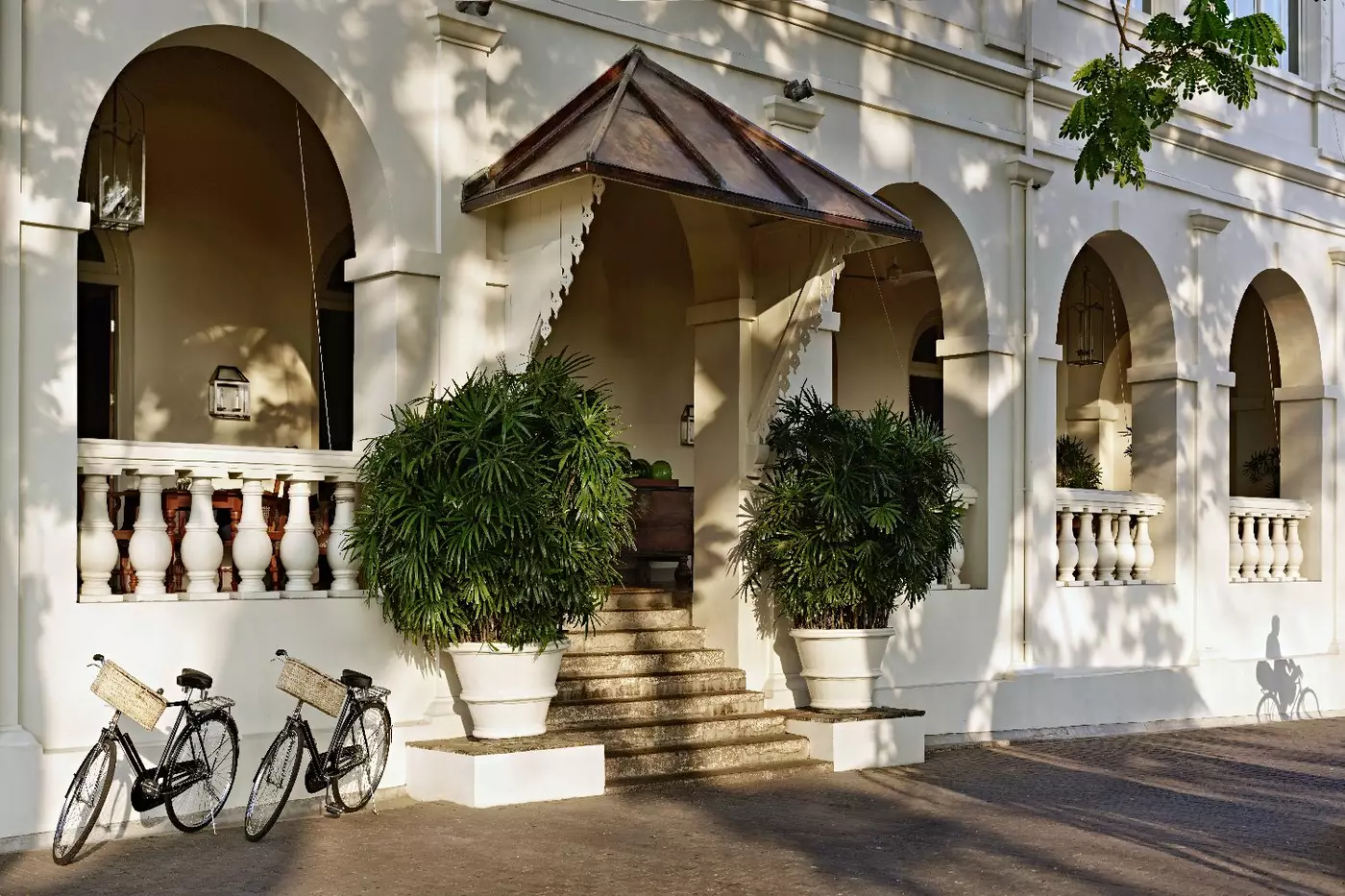
Amangalla
Prices From 1’113 USD
+4
More amenities
- Sauna
- Culture
- City Vibe
- Adventure
Amangalla is a heritage hotel at 10 Church Street inside Galle Fort, Sri Lanka, with a garden pool and the spa known as The B...
Please choose a hotel or destination from the list.
We couldn’t open your search results. Please try again.
Your private search
Finding exceptional stays
Amangalla places a Galle stay inside the fort, at 10 Church Street. The surrounding streets, ramparts and maritime buildings make the historic town the centre of the visit. Churches and colonial-era houses sit alongside homes and everyday activity, with the sea beyond the walls.
Prices From 1’113 USD
More amenities
Amangalla is a heritage hotel at 10 Church Street inside Galle Fort, Sri Lanka, with a garden pool and the spa known as The B...
Reserved for You
Amangalla provides the hotel base inside Galle Fort. A stay here puts the accommodation within the historic street pattern, so the fort is part of the surroundings on returning from an outing as well as a place to visit. Church Street supplies a specific address within the town.
Galle Fort brings European architecture and South Asian traditions into one urban ensemble, reflected in its UNESCO recognition. The narrow street grid includes gabled roofs, thick walls, columned verandas and courtyards. These features show how colonial-era buildings were adapted for tropical living.
The ramparts follow the rocky promontory rather than a regular geometric plan. Bastions occupy both seaward and landward positions, with coral and granite used in the defences. The outer fortifications therefore add the harbour-edge landscape and military engineering to the street walk inside.
The Dutch Reformed Church dates from 1755, while All Saints is an Anglican church. They give a cultural walk two named religious stops within the fort. The lighthouse adds the maritime edge of the town, linking the fortified streets with the coast.
Hiyare adds a forest-and-freshwater outing in the Galle district. Rainforest borders the reservoir, with the Wildlife Conservation Society Galle’s education and research centre providing a focus for learning about the habitat. Choose an educational forest visit when plant life and restoration interest you alongside the fort’s architectural history. The society’s Hiyare nursery grows native rainforest trees, including hora and na, for projects restoring forest fragments and mangroves in the southwest.
Our Sri Lanka destination guide places Galle’s southern coastal-city setting within a wider journey.
No. Galle Fort remains a living urban setting with homes, religious buildings and everyday activity. Approach the streets with that in mind. Its appeal comes partly from the interaction between heritage and ordinary life, rather than from being an isolated collection of monuments.
The VOC-period hospital building has been restored for shops and restaurants. It combines a surviving piece of the fort’s administrative history with present-day dining and browsing. This makes it a specific stop for seeing how a historic building has been reused within the town.
The Maritime Archaeology Museum occupies a historic Dutch warehouse in the fort. Its displays include material from shipwrecks around Sri Lanka’s coast, such as ceramics and navigational instruments. It gives the port’s trading history a museum focus alongside the architectural walks through the town.
Choose a coastal resort setting when the beach is the overriding purpose. Galle is especially rewarding when heritage streets and architecture are part of the attraction. You can combine the two experiences, but a fort hotel should be selected for its own strengths.
The clock tower is a British-era addition dating from 1883, associated with the entrance to the historic area. It adds a named landmark to a fort walk and another period of the town’s history alongside its Dutch buildings.