



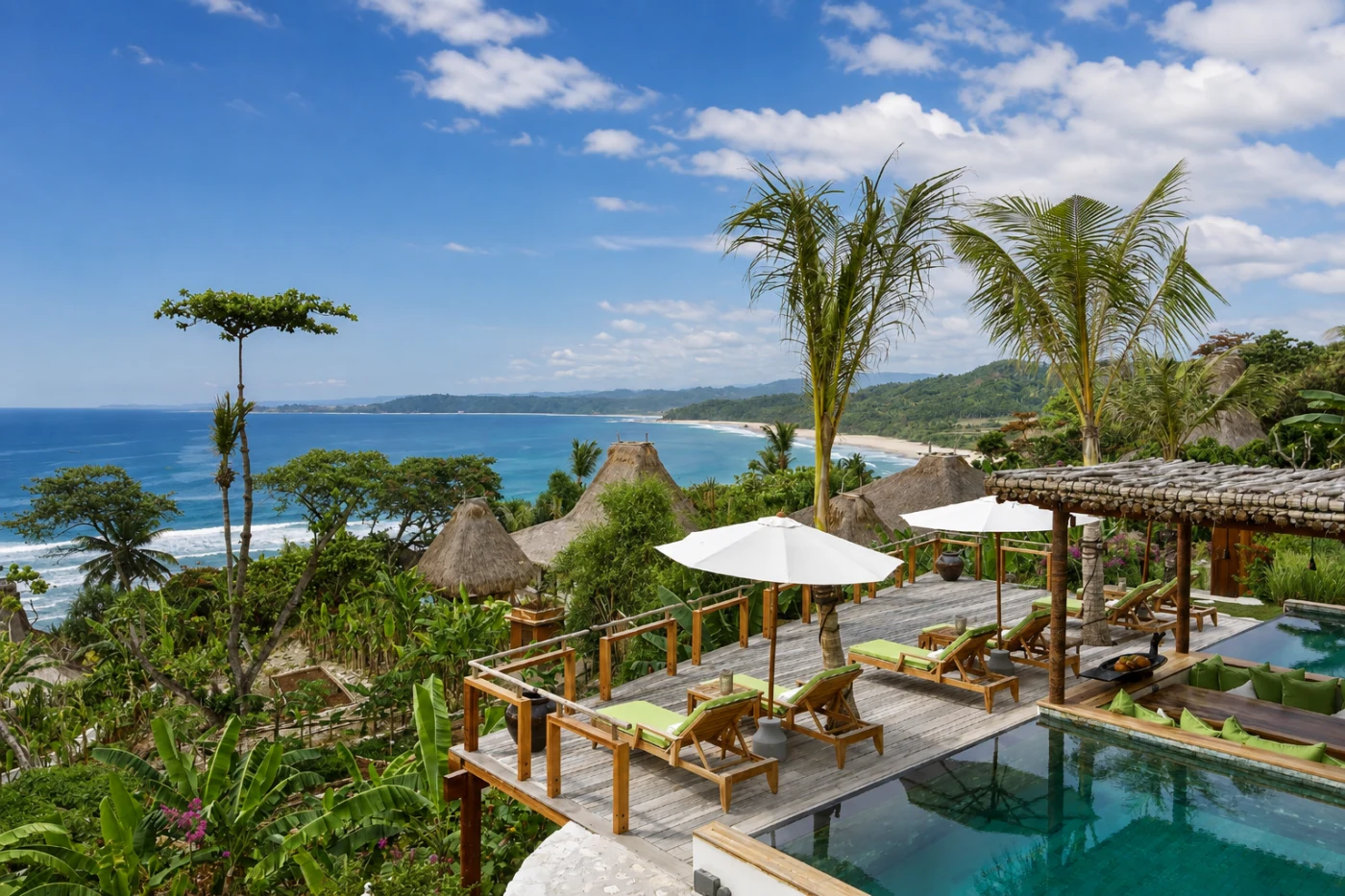
Nihi Sumba
Prices From 3’139 USD
+2
More amenities
- Beach
- Adventure
NIHI Sumba asks more of a journey than a Bali beach resort, and gives something quite different in return. Its villas and est...
Please choose a hotel or destination from the list.
We couldn’t open your search results. Please try again.
Your private search
Finding exceptional stays
NIHI Sumba places this island stay on the coast in Wanokaka, West Sumba. The surrounding countryside brings rice cultivation and village craft into a beach holiday. Traditional house construction offers another reason to explore, alongside the textile and cultural interests that give Sumba a character distinct from other Indonesian islands.
Prices From 3’139 USD
More amenities
NIHI Sumba asks more of a journey than a Bali beach resort, and gives something quite different in return. Its villas and est...
NIHI’s coastal setting belongs to the western side of the island. For outings beyond the resort, the Wanokaka valley’s rice fields and river settlements provide a local agricultural landscape. They are a different starting point from a journey centred on Waingapu in the east.
Sumba’s high-roofed houses are built with materials such as wood, bamboo and alang-alang grass, with rattan used to bind structural elements. The tower-like roof is supported by a substantial timber framework. A village visit can therefore hold a practical architectural interest: how local materials and accumulated building knowledge produce a structure suited to its setting.
Forms and construction vary between communities. In traditional raised houses, spaces beneath the living floor have been used for livestock and equipment, while food and valued possessions can be stored higher in the building. These arrangements connect the house with the household’s working life. They provide more to discuss with a knowledgeable local host than the height of the roof alone.
Litti village is known for ceramics, providing a clay-craft interest alongside Sumba’s woven fabrics. Choose it when you are interested in the island’s making traditions, with pottery giving the visit a different material and technique from woven cloth.
Sumba includes different towns and cultural areas. Waikabubak and the villages around Waingapu are separate references, not neighboring names to combine casually into one short excursion. Select the part of the island that fits your chosen base and give a broader route its own time.
The Indonesia destination guide places this western Sumba stay within a wider national journey.
Sumba’s traditional woven textiles carry local patterns and cultural meaning. Give the making and regional context attention when choosing a piece, rather than treating every fabric as an interchangeable island memento.
It refers to ancestral beliefs connected with Sumba’s traditions. Approach related places with local guidance and respect, without assuming a visitor has unrestricted access to ceremonies or private community life.
No. Prailiu is associated with the Waingapu area, while Waikabubak is a different island reference. Keep those locations distinct when choosing a realistic cultural route.
No. The island also offers coastal downtime, cultural interests and textile traditions. Choose the holiday for those genuine interests, rather than assuming that a strong surfing identity requires every guest to surf.
No. Such places have cultural and community significance. An informed approach matters more than collecting photographs, and local expectations should shape how the visit takes place.