Best for
Base yourself in Nihonbashi for Tokyo business and sightseeing, with a basement entrance to Mitsukoshimae subway station simplifying trips across the city.
Please choose a hotel or destination from the list.
We couldn’t open your search results. Please try again.
Your private search
Finding exceptional stays
Best for
Base yourself in Nihonbashi for Tokyo business and sightseeing, with a basement entrance to Mitsukoshimae subway station simplifying trips across the city.
What makes it special
Book lunch at The Pizza Bar on 38th for counter-served pizzas from the brick oven; children aged six and older are welcome.
Room to consider
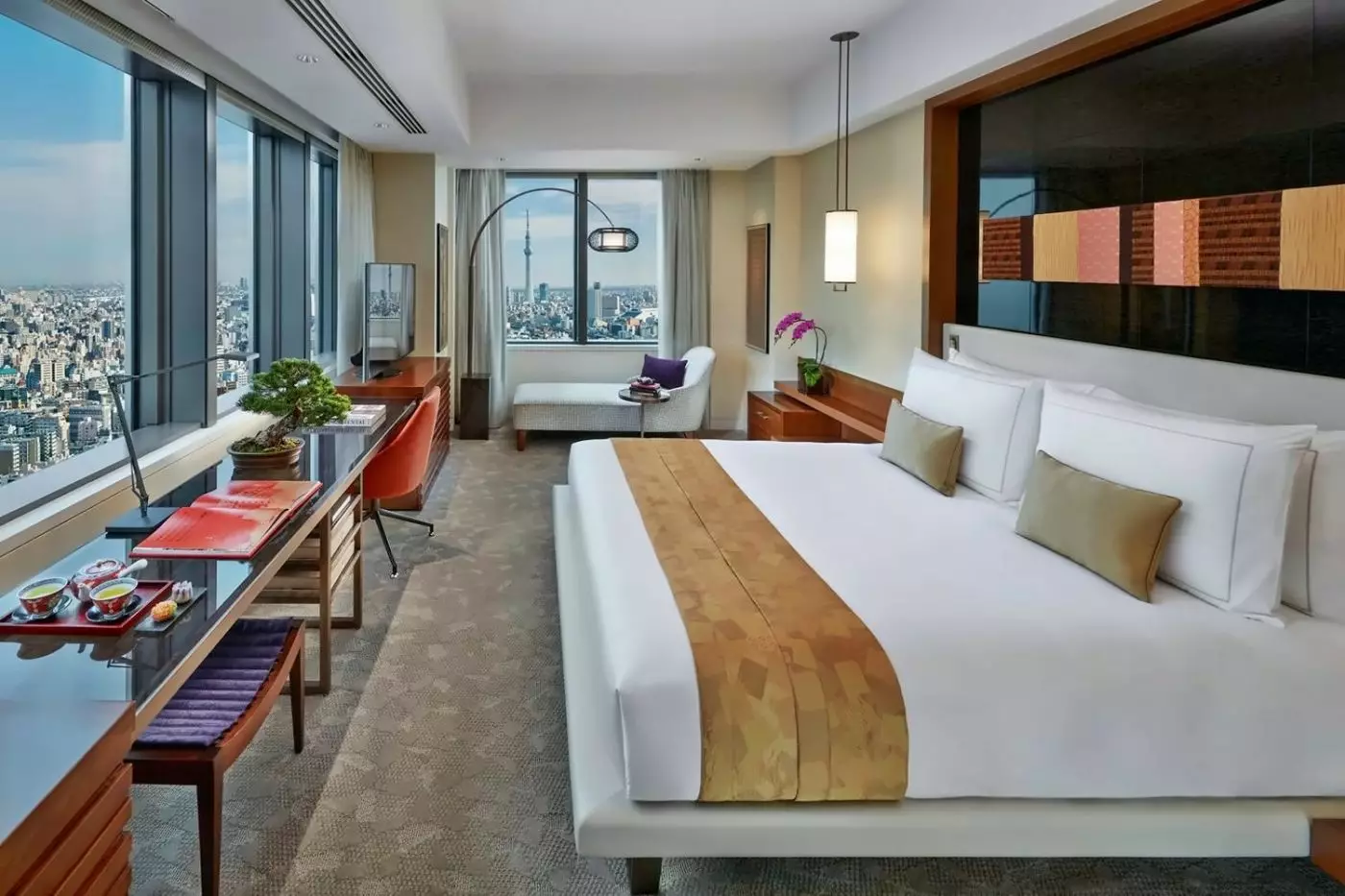
Choose a Deluxe Corner Room for daylight through two walls of windows and a lounge area, with space for no more than two guests.
Insider tip
Arrive an hour before your spa appointment to leave time for consultation; late arrivals do not receive an extension to their treatment.
Free membership gives you access to preferred rates, exclusive benefits and current promotions for your stay.
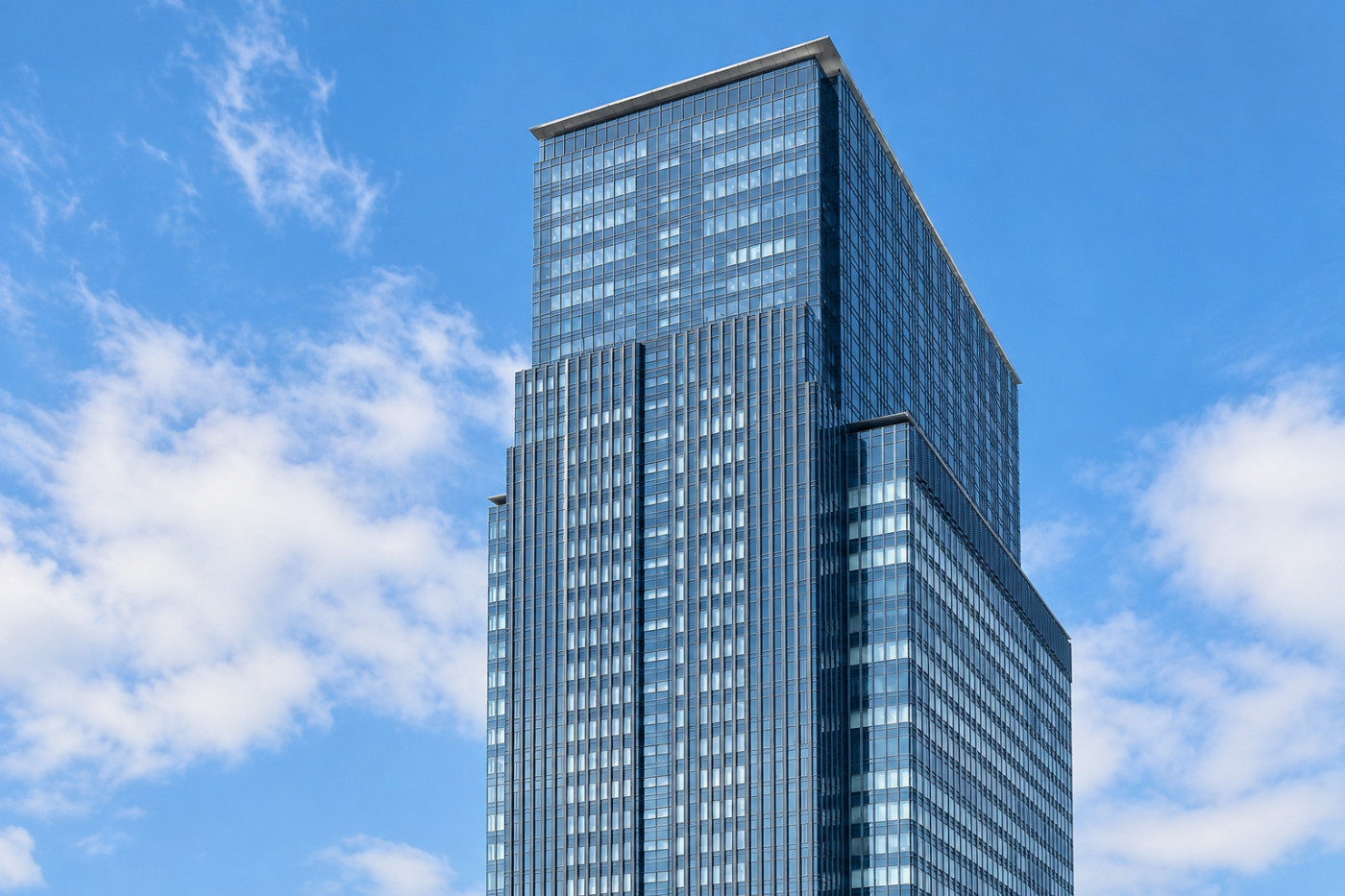
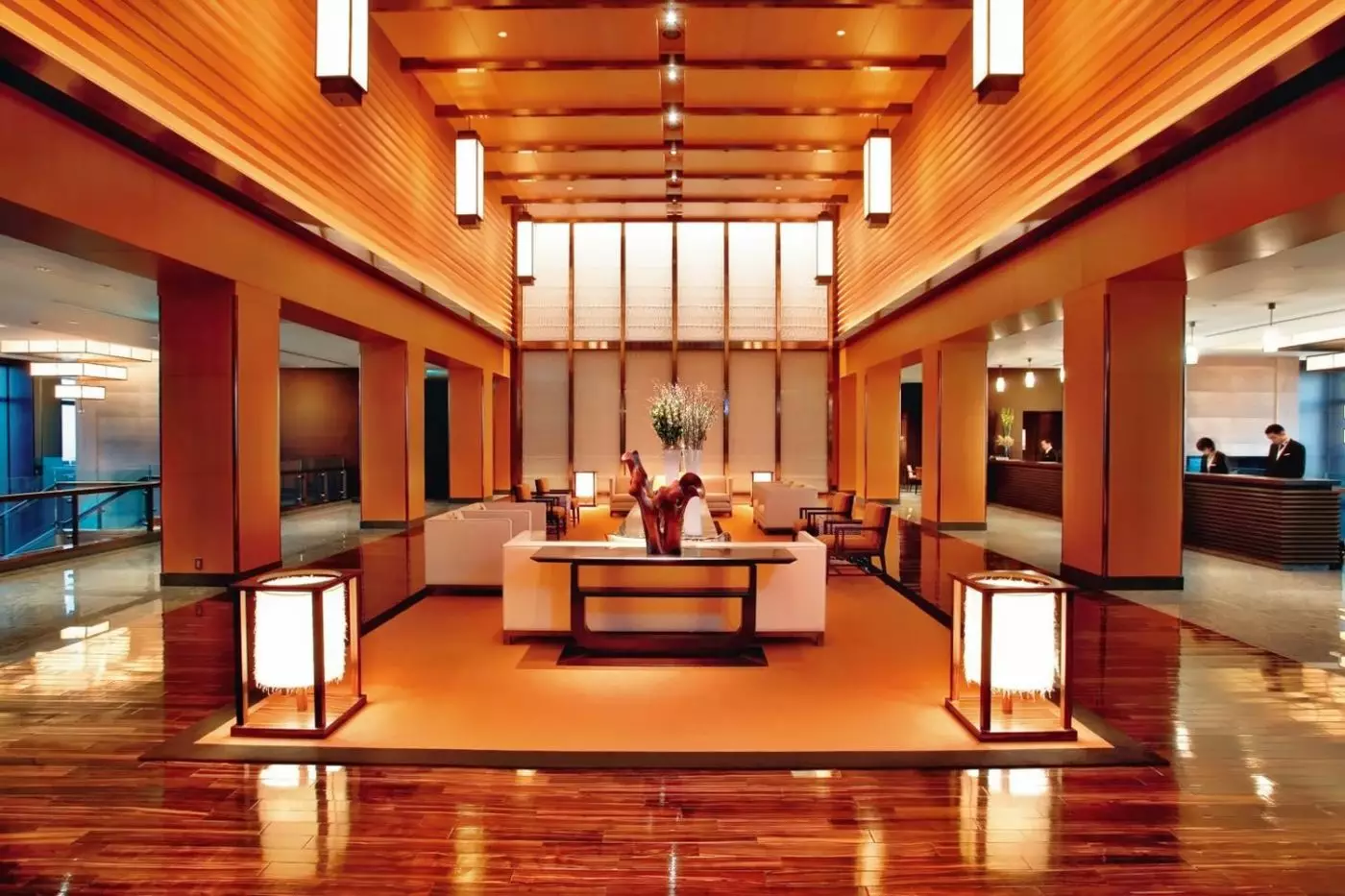
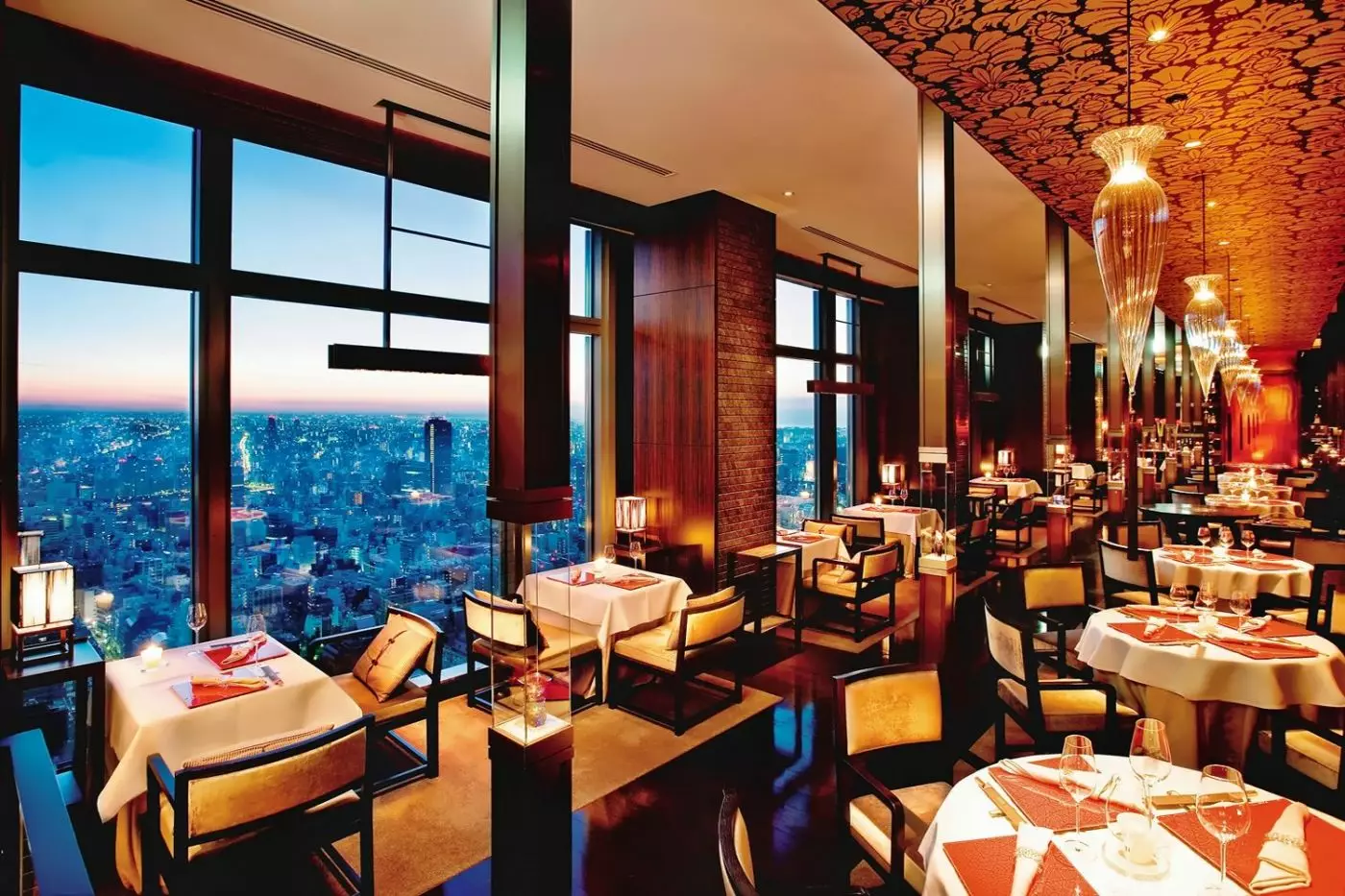
At Mandarin Oriental Tokyo, the lift ride is part of arriving. The hotel occupies the upper floors of Nihonbashi Mitsui Tower, above a district known for department stores, established shops, and commerce. Guests come up from 2-1-1 Nihonbashi Muromachi to find the city spread across the windows. The height gives this address its character: broad views, substantial dining choices, and a composed place to return to after work or sightseeing.
 179
 Charming
 Fitness
 Spa
 Sauna
 Culture
 City Vibe
 Wheelchair Accessible
 Connecting Rooms
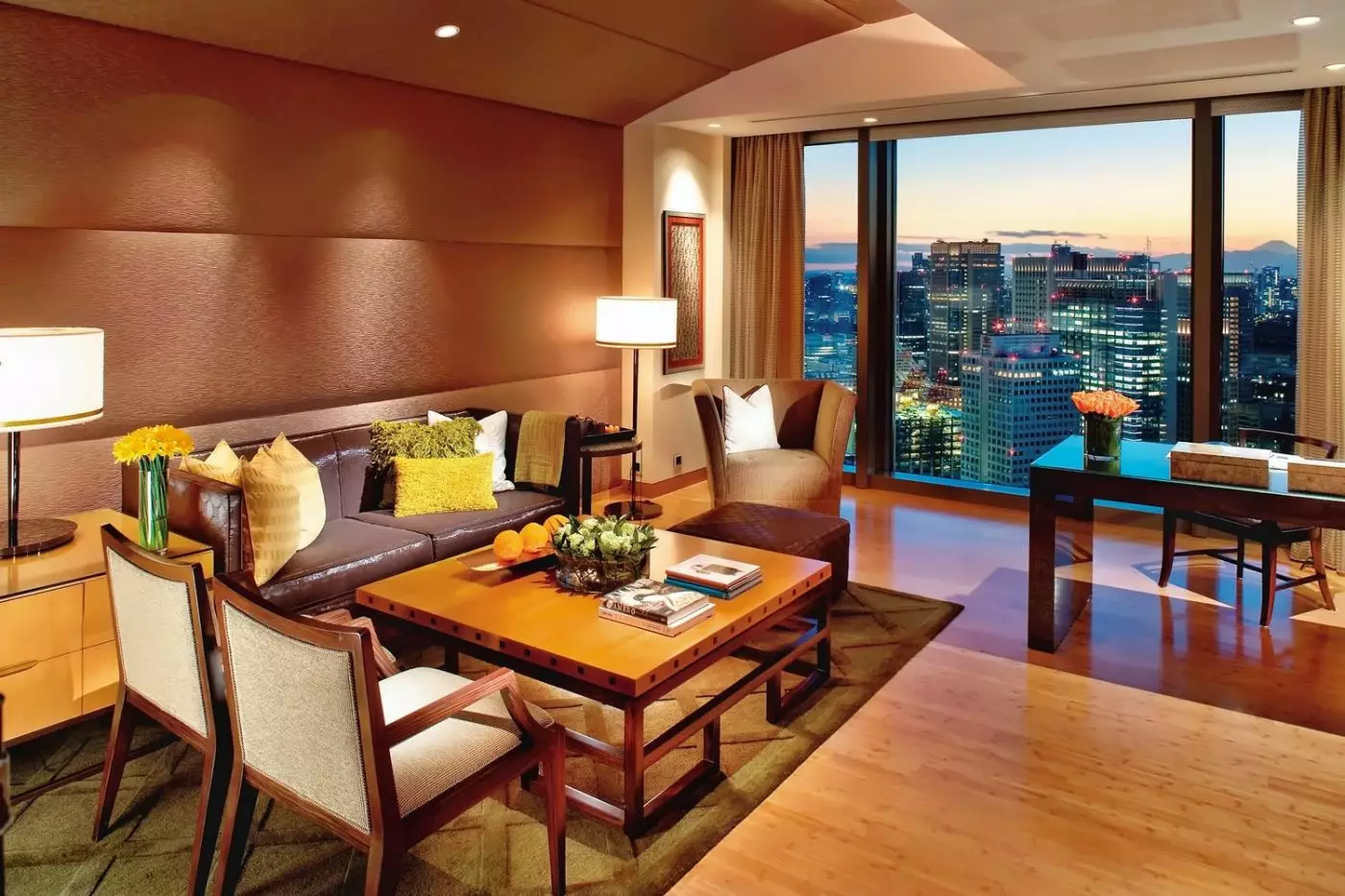
Rich golds and warm oranges run through the crafted fabrics. Soft washi light shades introduce a traditional Japanese material among the contemporary furnishings. A seating area and workspace sit within the room.
Egyptian cotton linens dress the bed, and a pass-through box is provided for laundry. These rooms occupy floors 32 to 36.

Rich golds and warm oranges run through the crafted fabrics. Soft washi light shades introduce a traditional Japanese material among the contemporary furnishings. A seating...
You can request connecting rooms. These are subject to availability.
Windows line two walls of this corner room. A lighting fixture made from fine bamboo strings was crafted by a Japanese artisan, adding a delicate structure to the contemporary interior. Soft tones and selected local artworks shape the decor.
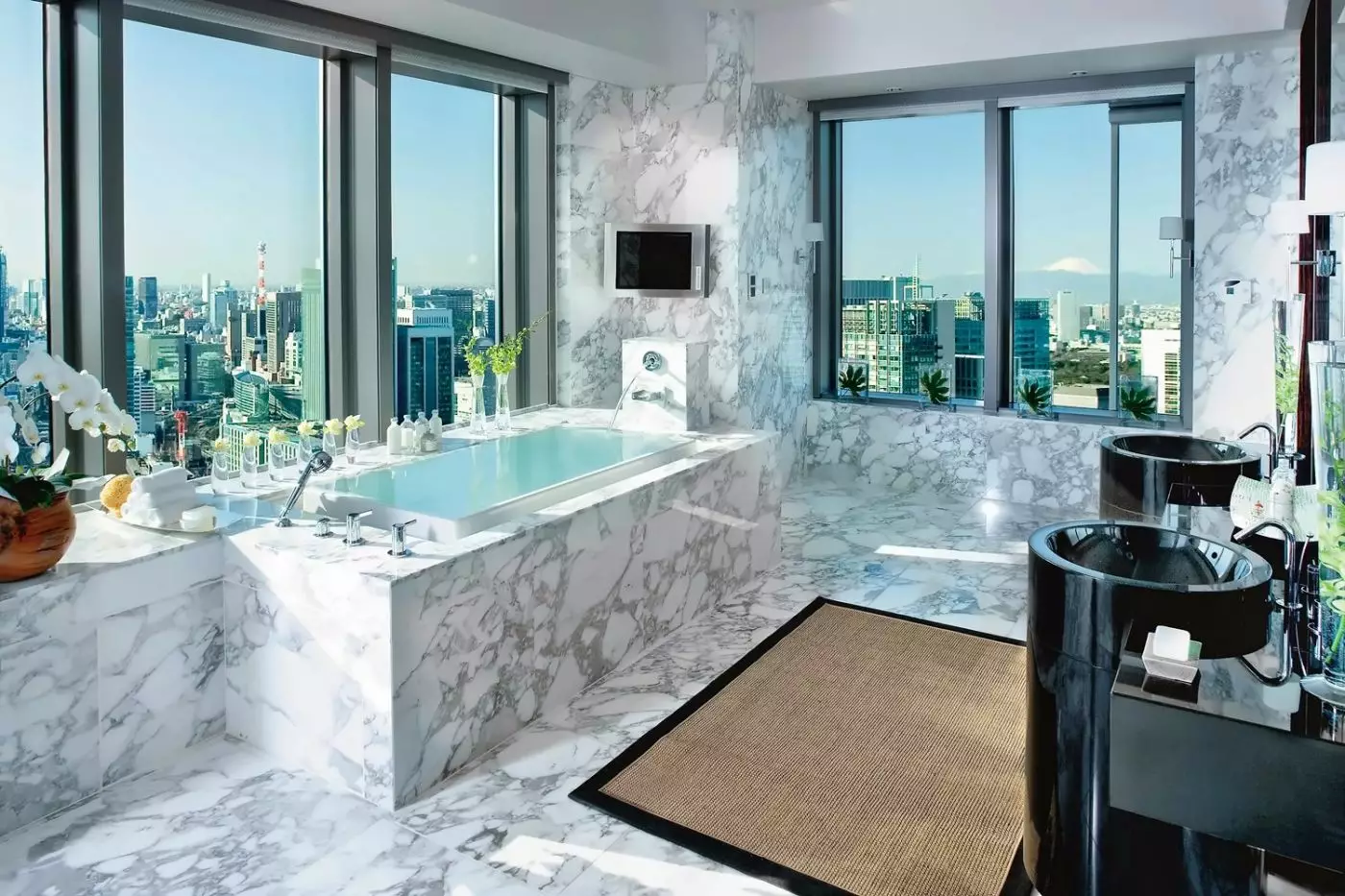
The bathroom sits beside a window and has a deep sunken bathtub. A lounge area provides seating within the room, with Japanese design carried through the furnishings. The corner rooms are on floors 33 to 36.

Windows line two walls of this corner room. A lighting fixture made from fine bamboo strings was crafted by a Japanese artisan, adding a delicate...
Subtle twig and fallen-leaf motifs appear in the wallpaper and soft furnishings. Gold and orange shades run through the crafted fabrics. Natural textiles and wood add layers to the Japanese-inspired design, with elegant lamps lighting the interior.
A sofa and desk furnish the living area. A lacquered box holds pyjamas, yukata and slippers as a traditional room detail. Full-height windows extend alongside the interior, and the bathroom also has a window.

Subtle twig and fallen-leaf motifs appear in the wallpaper and soft furnishings. Gold and orange shades run through the crafted fabrics. Natural textiles and wood...
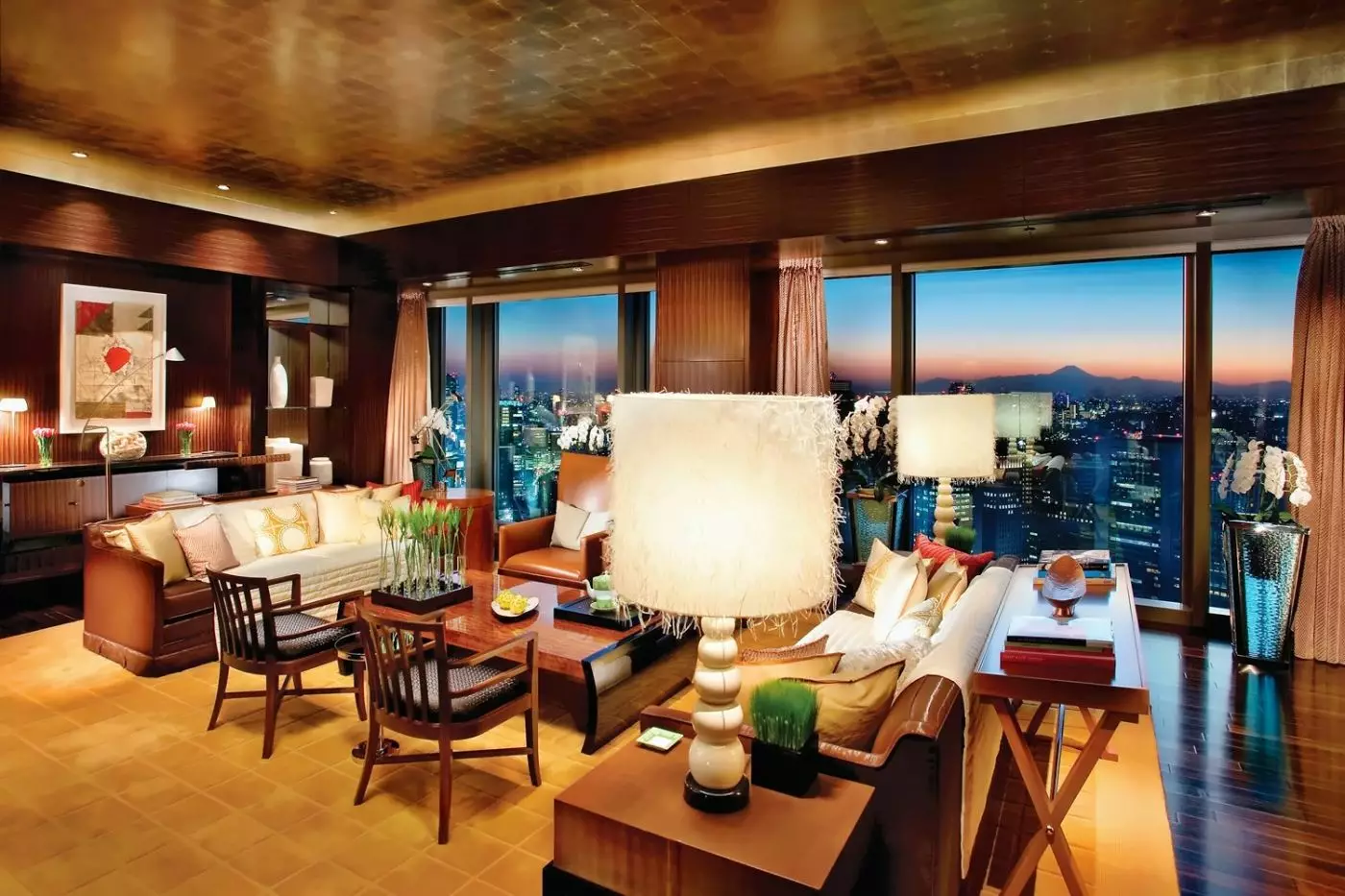
Mount Fuji may be visible from west-facing rooms, depending on the weather.
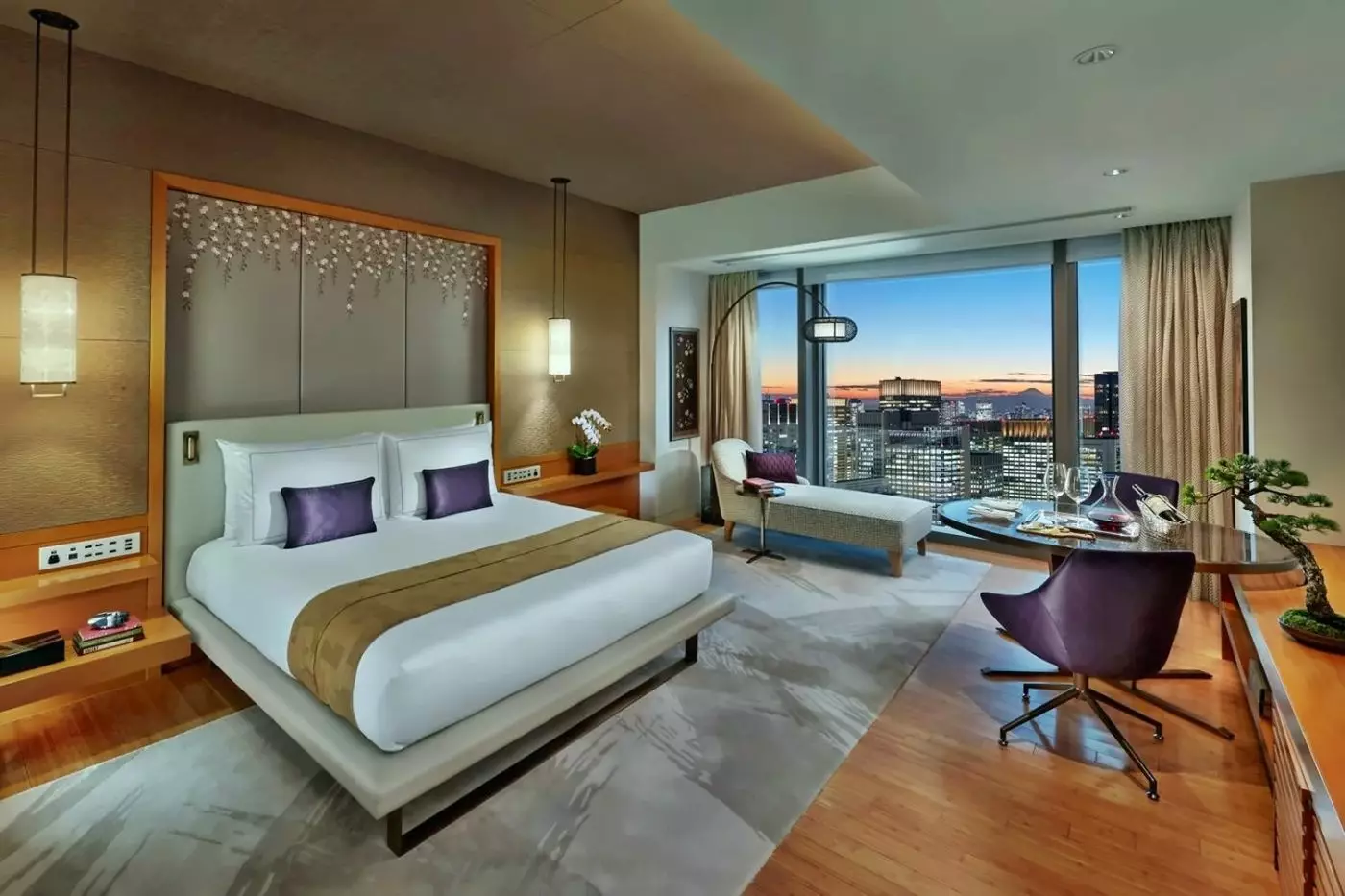
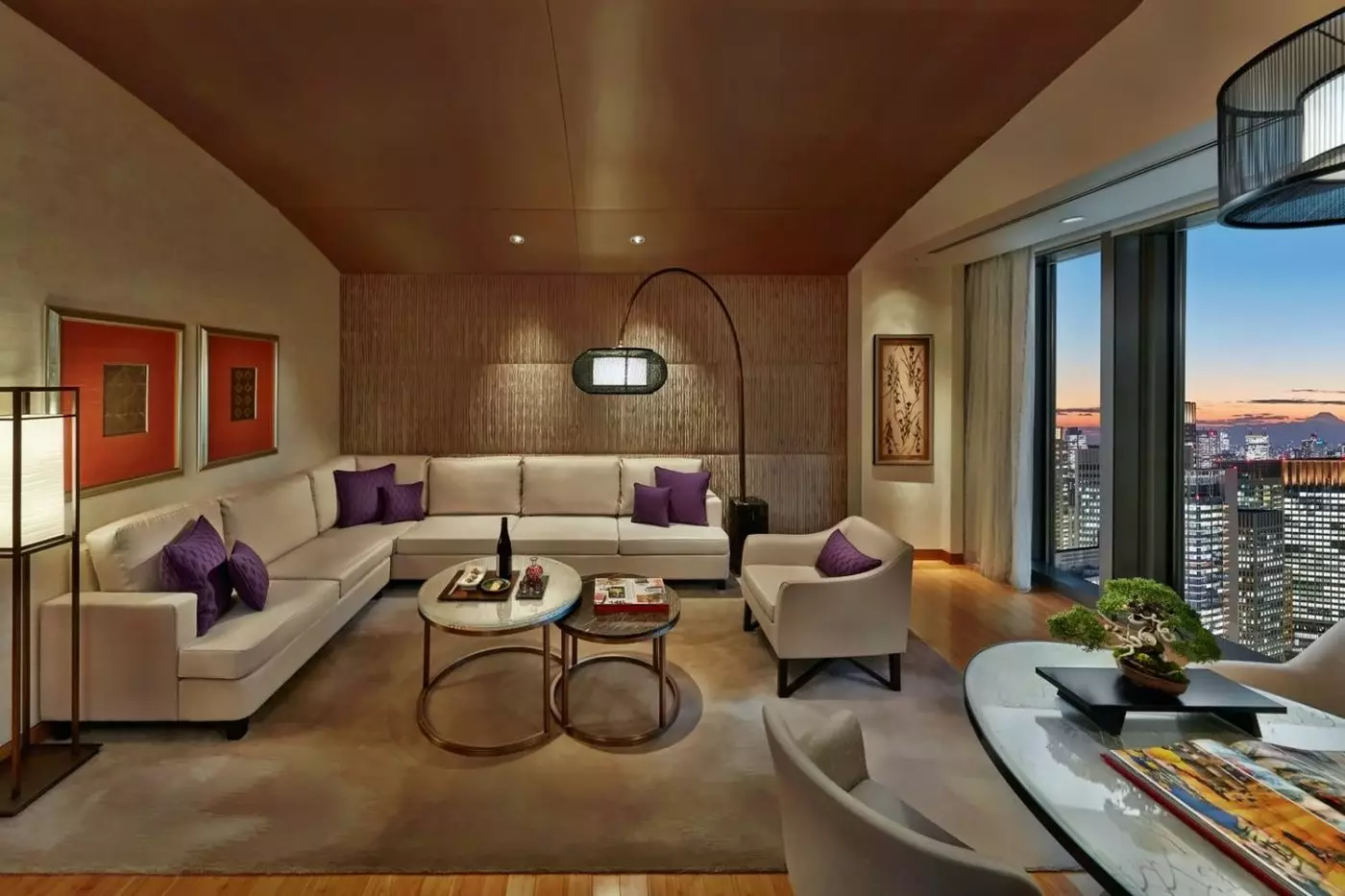
Bamboo floors and bespoke Japanese fabrics furnish the room. Weeping cherry blossoms appear in the embroidered headboard artwork. Japanese ink and brushwork inspire the carpet pattern. Lacquered boxes add a traditional finish.
The lounge sits beside the bedroom, with modern furniture among the crafted surfaces. These rooms occupy floors 30 to 36.

Bamboo floors and bespoke Japanese fabrics furnish the room. Weeping cherry blossoms appear in the embroidered headboard artwork. Japanese ink and brushwork inspire the carpet...
The bedroom sits apart from the living room, where seating and a desk furnish the reception space. Large windows run through the suite, with soft, low lighting in the bedroom.
A guest powder room serves the living area. King-bed suites are on floor 30; twin-bed layouts occupy floors 31 and 32.

The bedroom sits apart from the living room, where seating and a desk furnish the reception space. Large windows run through the suite, with soft,...
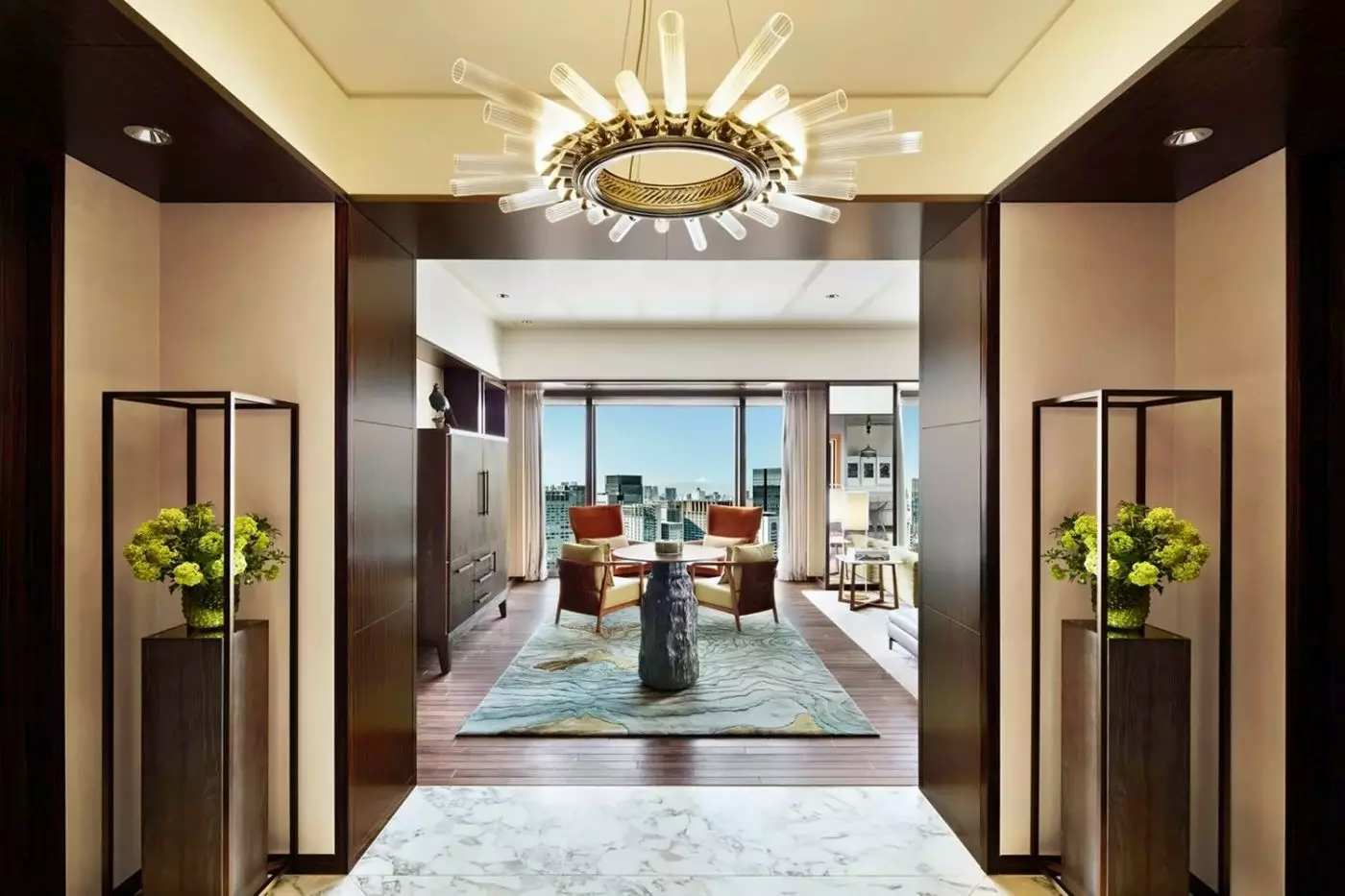
A foyer leads to a separate bedroom and living room in this corner suite. The sofa and chairs are upholstered in fabrics with Japanese decorative details. Traditional Isegata stencil designs feature in the interior.
Built-in wardrobes and a make-up table serve the bedroom. A guest powder room sits beside the reception area.

A foyer leads to a separate bedroom and living room in this corner suite. The sofa and chairs are upholstered in fabrics with Japanese decorative...
Cloud and breeze motifs take their inspiration from Japanese ink artistry. A gold-leaf embossed cabinet adds a different finish to the interior, alongside Asian artwork. The bedroom has large windows and soft lighting.
Comfortable seating fills the living room. The suite includes guest powder rooms, serving the reception spaces separately from the main bathroom. Its corner setting is on floors 30 to 32.

Cloud and breeze motifs take their inspiration from Japanese ink artistry. A gold-leaf embossed cabinet adds a different finish to the interior, alongside Asian artwork....
Washi-paper lampshades take their shape from Japanese Andon lanterns. They hang in an asymmetrical arrangement, while embroidered wisteria in bloom forms the headboard artwork. Warm tones and woven rugs carry through the bedroom.
A large living room includes seating and a desk. A make-up table stands among the bedroom furnishings. These suites occupy floors 33 to 36.

Washi-paper lampshades take their shape from Japanese Andon lanterns. They hang in an asymmetrical arrangement, while embroidered wisteria in bloom forms the headboard artwork. Warm...
The layout combines two hotel rooms through a connecting door. Japanese artwork and soft tones carry through the interiors, while large windows extend alongside the sleeping areas.
Each bedroom is served by its own bathroom, with a deep bathtub in both. The pair comprises a Deluxe Corner room and a Deluxe Premier room on floors 33 to 36.

The layout combines two hotel rooms through a connecting door. Japanese artwork and soft tones carry through the interiors, while large windows extend alongside the...
Smooth wood, clean lines and soft colours give the interiors a contemporary Japanese character. The bedrooms sit apart from a shared living room, which has seating for time together.
Floor-to-ceiling windows bring daylight into the suite. This layout is on floor 30.

Smooth wood, clean lines and soft colours give the interiors a contemporary Japanese character. The bedrooms sit apart from a shared living room, which has...
Calm tones, smooth surfaces and soft textures run through the Japanese-inspired interior. The bedrooms sit beside a central living area, furnished for time together. Broad windows face in two directions from the corner setting.
Asian artwork decorates the rooms, with clean lines throughout the furniture. The suite occupies floors 30 to 32.

Calm tones, smooth surfaces and soft textures run through the Japanese-inspired interior. The bedrooms sit beside a central living area, furnished for time together. Broad...
Paper lampshades take their shape from Andon lanterns. Embroidered cherry blossoms form the headboard artwork, with soft fabrics and clean lines around them.
The bedrooms have a separate living room. Marble finishes in the bathrooms contrast with the softer reception furnishings. The suites sit on the upper floors and have a modern Japanese design.

Paper lampshades take their shape from Andon lanterns. Embroidered cherry blossoms form the headboard artwork, with soft fabrics and clean lines around them. The bedrooms...
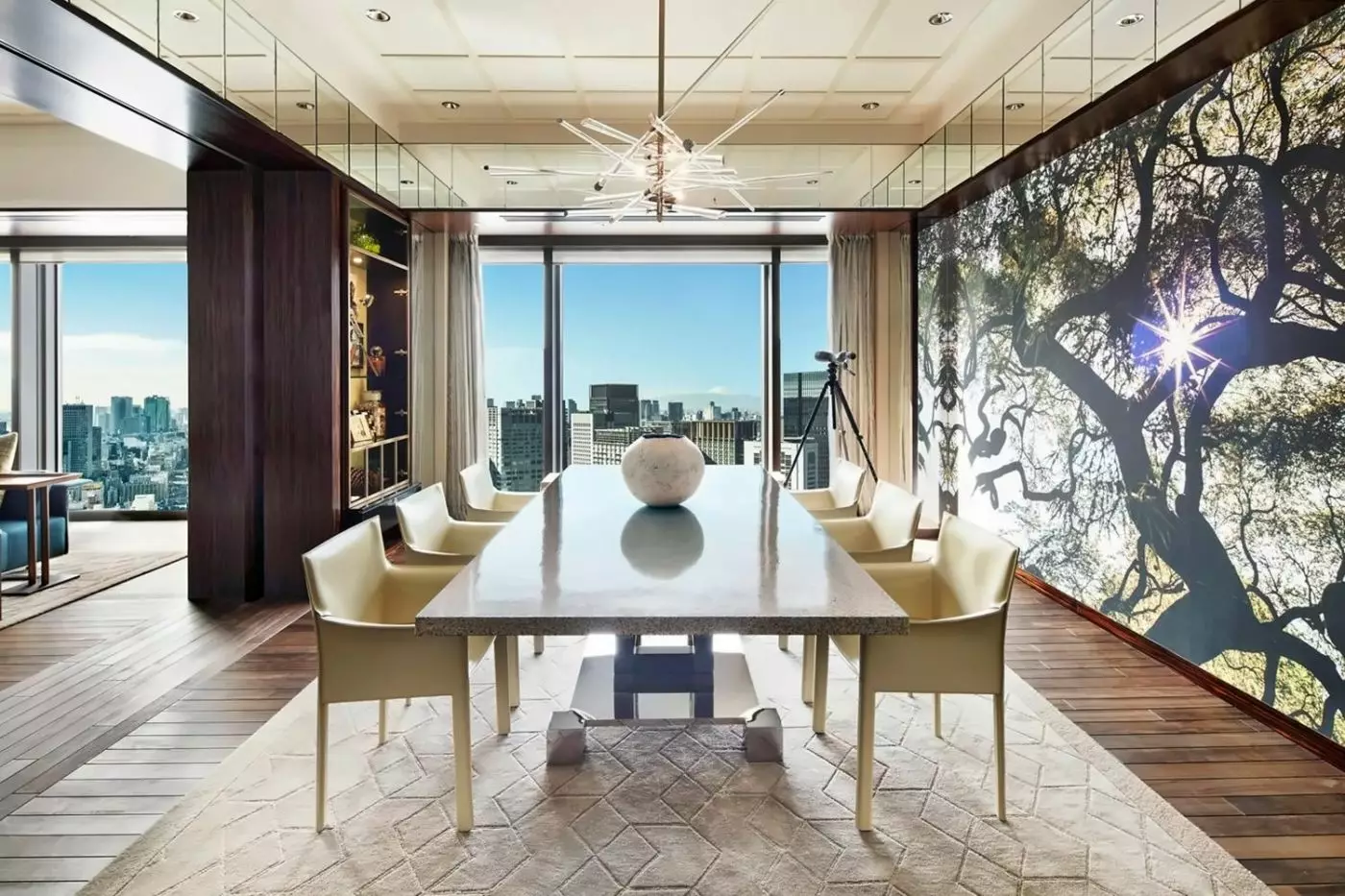
Tree-branch wall art fills the dining room, drawing on sunlight seen through Tokyo’s parks. The bedroom ceiling evokes the sky through a canopy of leaves, continuing this nature-inspired design. Full-height windows run through the suite.
Several seating areas fill the living room, alongside a library for reading. A study provides another room within the reception layout. Exclusive artworks carry through the interiors. The suite sits on the hotel’s thirty-sixth floor.

Tree-branch wall art fills the dining room, drawing on sunlight seen through Tokyo’s parks. The bedroom ceiling evokes the sky through a canopy of leaves,...
Sun-dappled tree branches appear in the dining-room wall art. In the main bedroom, the ceiling suggests a leafy canopy overhead. These park-inspired details carry through a residential interior with several seating areas.
The living room has a library corner, and a private mini bar is stocked with Baccarat glassware. A study forms another part of the reception layout. The suite occupies floor 36, with full-height windows throughout its rooms.

Sun-dappled tree branches appear in the dining-room wall art. In the main bedroom, the ceiling suggests a leafy canopy overhead. These park-inspired details carry through...
A Deluxe Corner king room links to a Deluxe Premier twin room. Each has its own bathroom with a deep soaking bathtub, so the connecting arrangement retains two separate bathing spaces.
Japanese artwork forms part of the interiors. The corner component has windows on two walls, while the connecting pair occupies floors 33 to 36.
A Deluxe Corner king room links to a Deluxe Premier twin room. Each has its own bathroom with a deep soaking bathtub, so the connecting...
Nihonbashi is useful when plans take you across central Tokyo. Mitsukoshimae Station, served by the Ginza and Hanzomon lines, and JR Shin-Nihonbashi Station both offer direct access to the building. The hotel puts Tokyo Station's Nihonbashi Exit an eight-minute walk away. Meetings in Marunouchi and onward Shinkansen journeys are therefore relatively simple, while Ginza is an easy subway or taxi trip.
The neighborhood has a different rhythm from Shibuya, Roppongi, or Omotesando. Its department stores, food halls, and long-standing shops reward time on foot, but those evening districts are outings rather than strolls from the lobby. Guests who want nightlife or fashion boutiques immediately outside may prefer another Tokyo address. For repeat visitors, business travelers, and couples who plan their days around the city, Nihonbashi offers a calmer point of return.
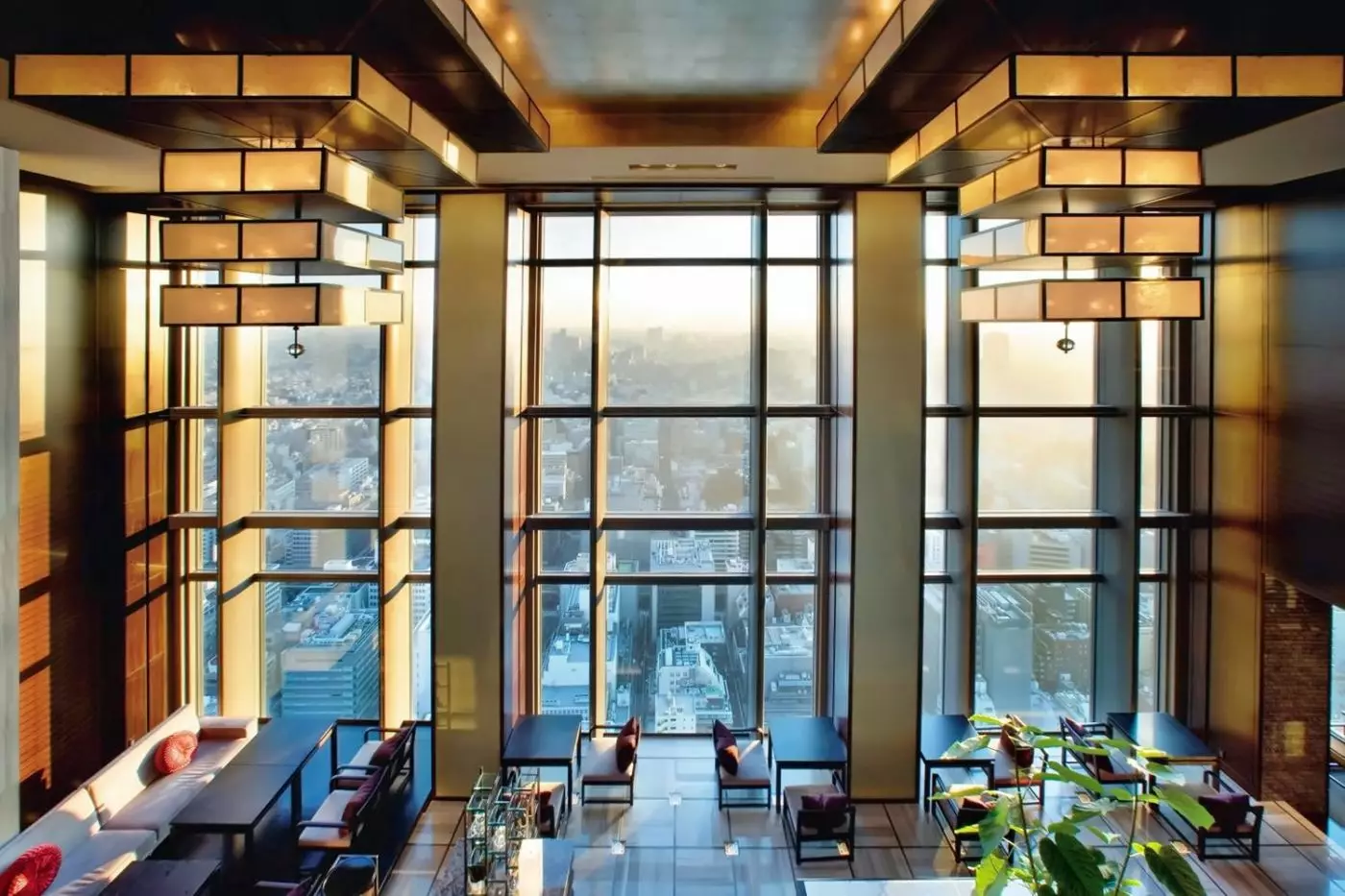
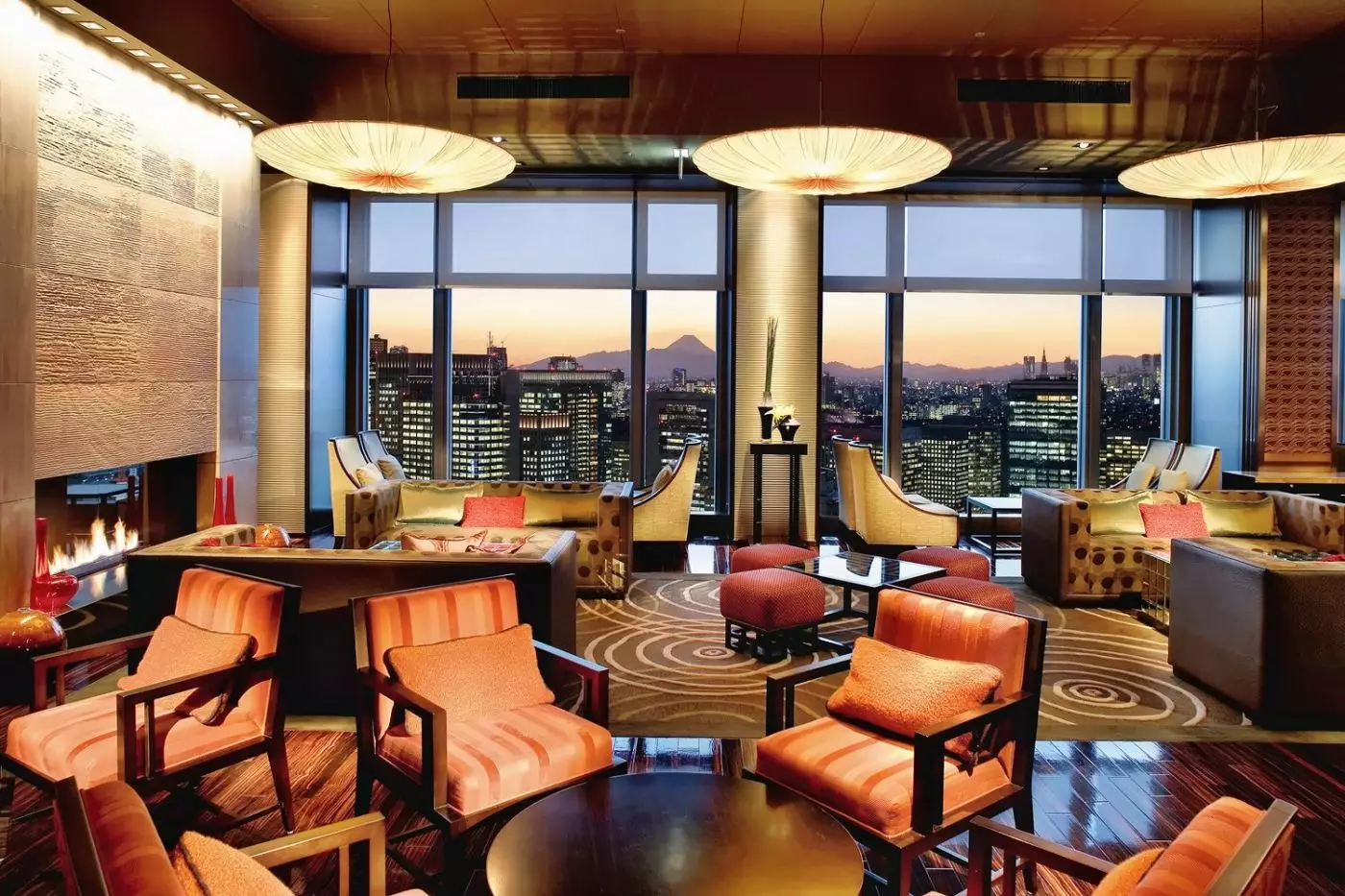
Height continues to shape the stay once you are inside. Guest rooms occupy floors 30 through 36; restaurants, lounges, and The Spa extend the experience higher in the tower. Tokyo Skytree appears from some angles, and Mount Fuji may be visible from selected rooms in clear weather. The outlook changes with room position and conditions, so a particular landmark view is worth confirming when choosing a category.
The hotel has 157 rooms and 22 suites, 179 accommodations in all. Floor-to-ceiling windows give many of them their defining feature, while contemporary Japanese details bring warmth to a large international hotel. The bathrooms have deep soaking tubs and separate walk-in showers. A valet closet, available in room descriptions, allows deliveries without an interruption at the door. It is a practical detail for guests working irregular hours or spending more time in their room.
Room choice begins with outlook and layout. Deluxe categories give travelers generous space by central Tokyo standards. A Deluxe Corner Room adds windows on two sides and a brighter sense of openness, whereas a Mandarin Grand Room is a larger choice for guests who want more room to settle in. The exact direction of a view matters more than a broad promise of skyline scenery. Ask which category faces the part of Tokyo you most want to see.
A suite is worthwhile when living and sleeping areas need clearer separation. The current range includes one- and two-bedroom configurations, and selected connecting options make shared trips easier to arrange. Larger suites can support a private conversation or a longer stay without turning the bedroom into a workspace. Yet the hotel's essential experience does not depend on its highest category: light, elevation, and a measured atmosphere run through the guest floors.
This is a polished city hotel, not a small design property or a low-rise inn. Its formality can be reassuring after a long flight or a full day of appointments. Guests who favor a more playful, social hotel may find the mood restrained; those who want a quiet room above busy streets will understand the appeal quickly.
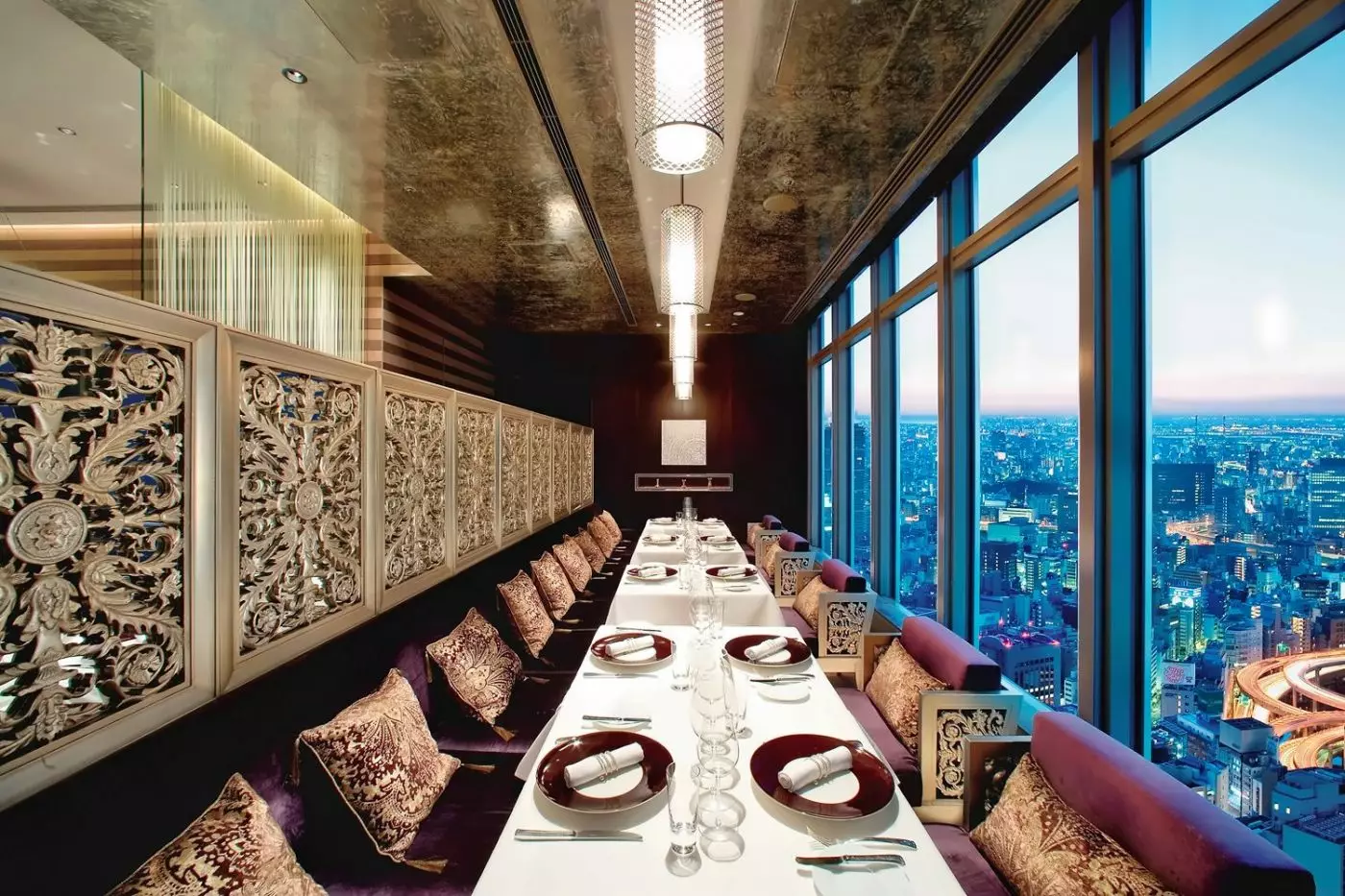
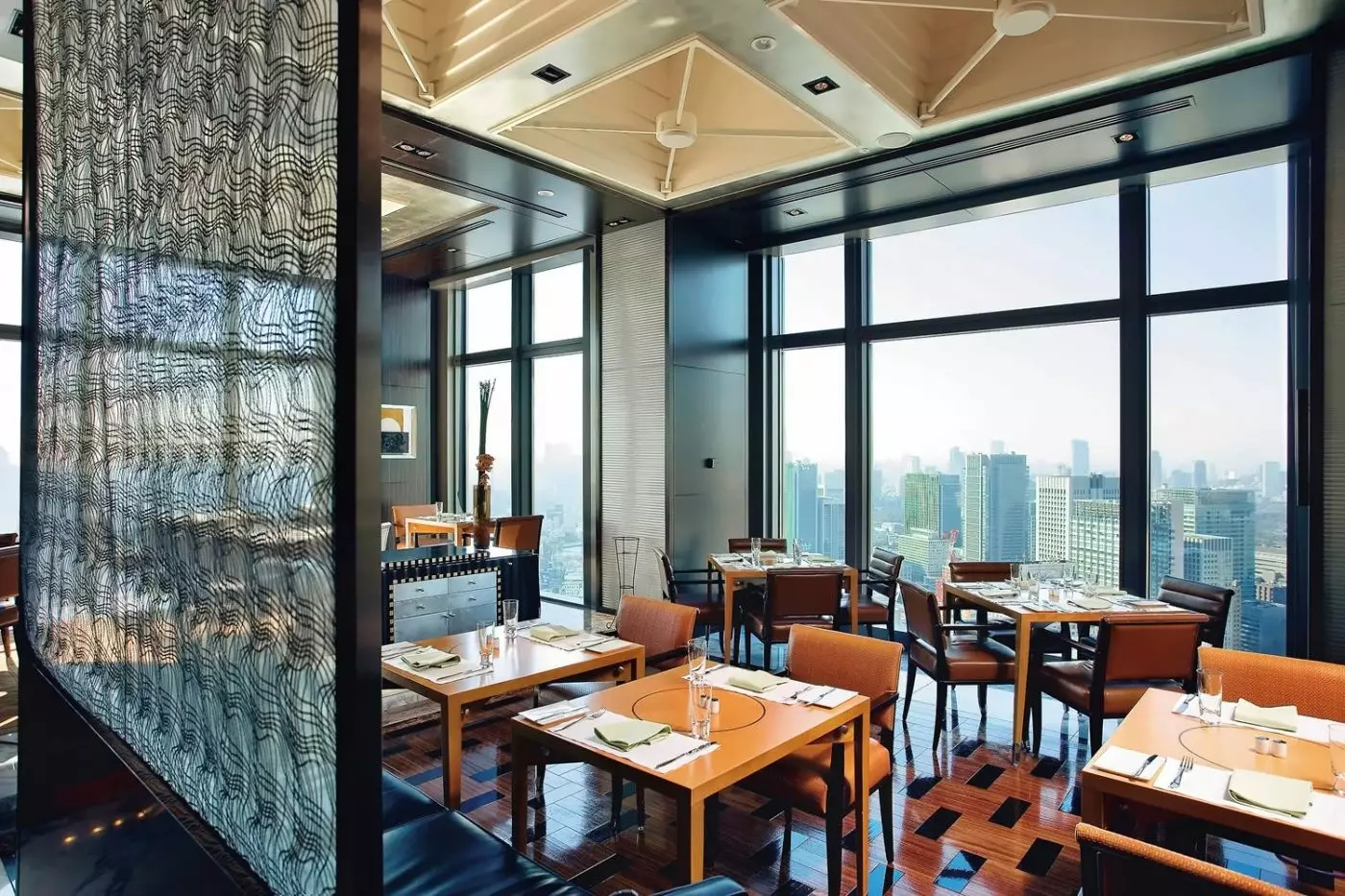
Dining is one of the clearest reasons to stay here. Signature serves French cuisine with space for private meals. Sense brings Cantonese cooking to the 37th floor, where Tokyo Skytree is part of the outlook. K'shiki offers Italian food in a more relaxed setting. Ventaglio, on the second floor, takes a different approach with international buffet dining and a bright, high-ceilinged room. These are genuinely different settings, not variations of the same hotel restaurant.
The counters ask for a more deliberate evening. At The Pizza Bar on 38th, guests sit close to the pizzaiolo as pizzas come from the brick oven. Tapas Molecular Bar uses a counter format for inventive courses that play with texture and temperature. It suits a curious diner willing to give the meal time and attention, rather than someone looking for an uncomplicated dinner after travel.
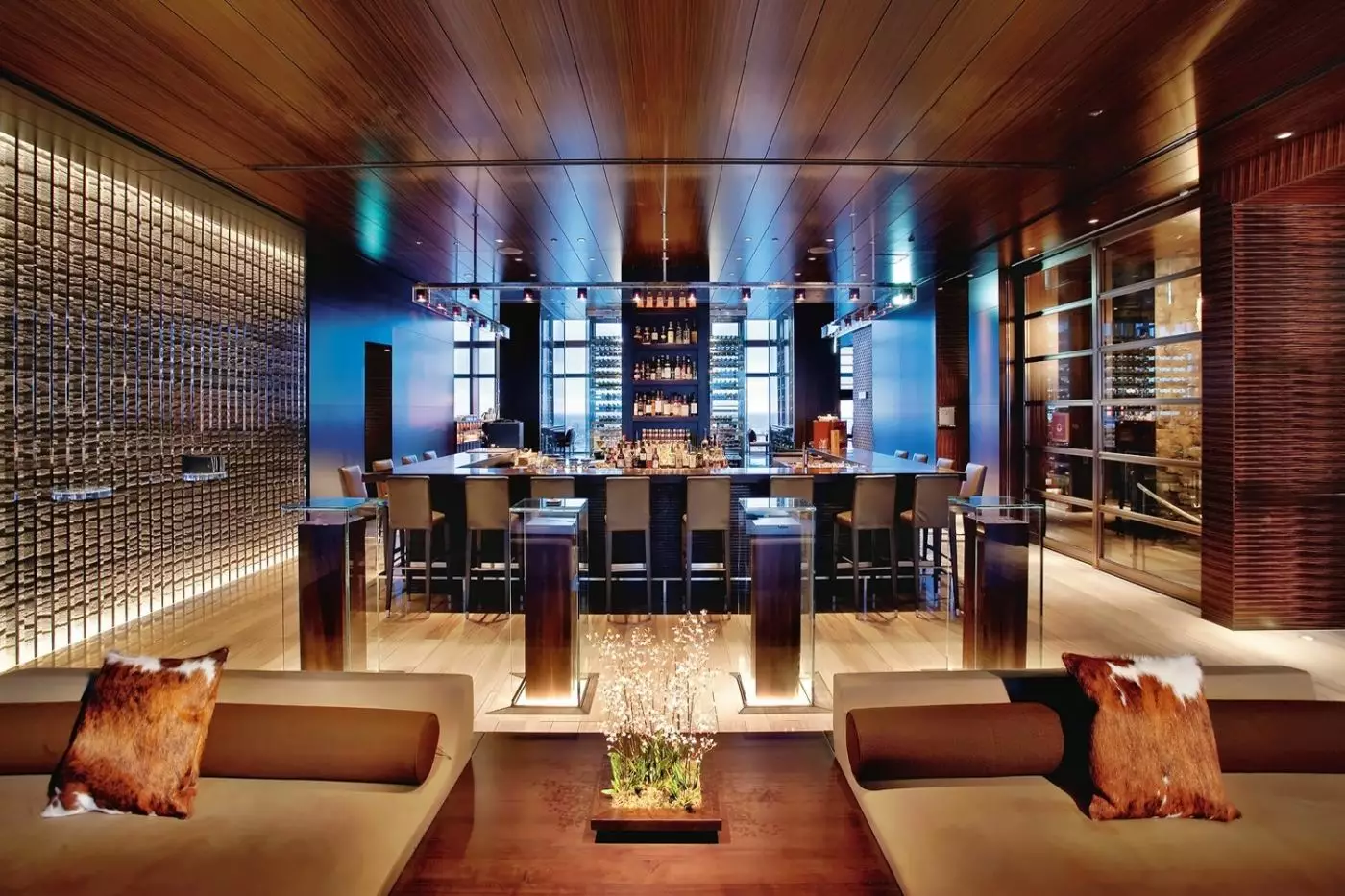
Sushi Shin by Miyakawa serves Edomae-style sushi at a hinoki counter on the 38th floor, with ingredients sourced from Hokkaido and Tokyo's Toyosu market. Oriental Lounge offers afternoon tea and a place for lighter meetings; Mandarin Bar covers cocktails; Sense Tea Corner focuses on Chinese tea. The Cellar provides a private dining setting, while the street-level Gourmet Shop is useful for bread, cakes, and food to take away.
That range changes a short stay. Breakfast, a business lunch, a focused counter dinner, and a late drink can take place within the same building without feeling like repeats. Reservations are sensible for the small counters and formal rooms. Families should check the policy of each venue, as the intimate dining experiences do not all have the same age rules.
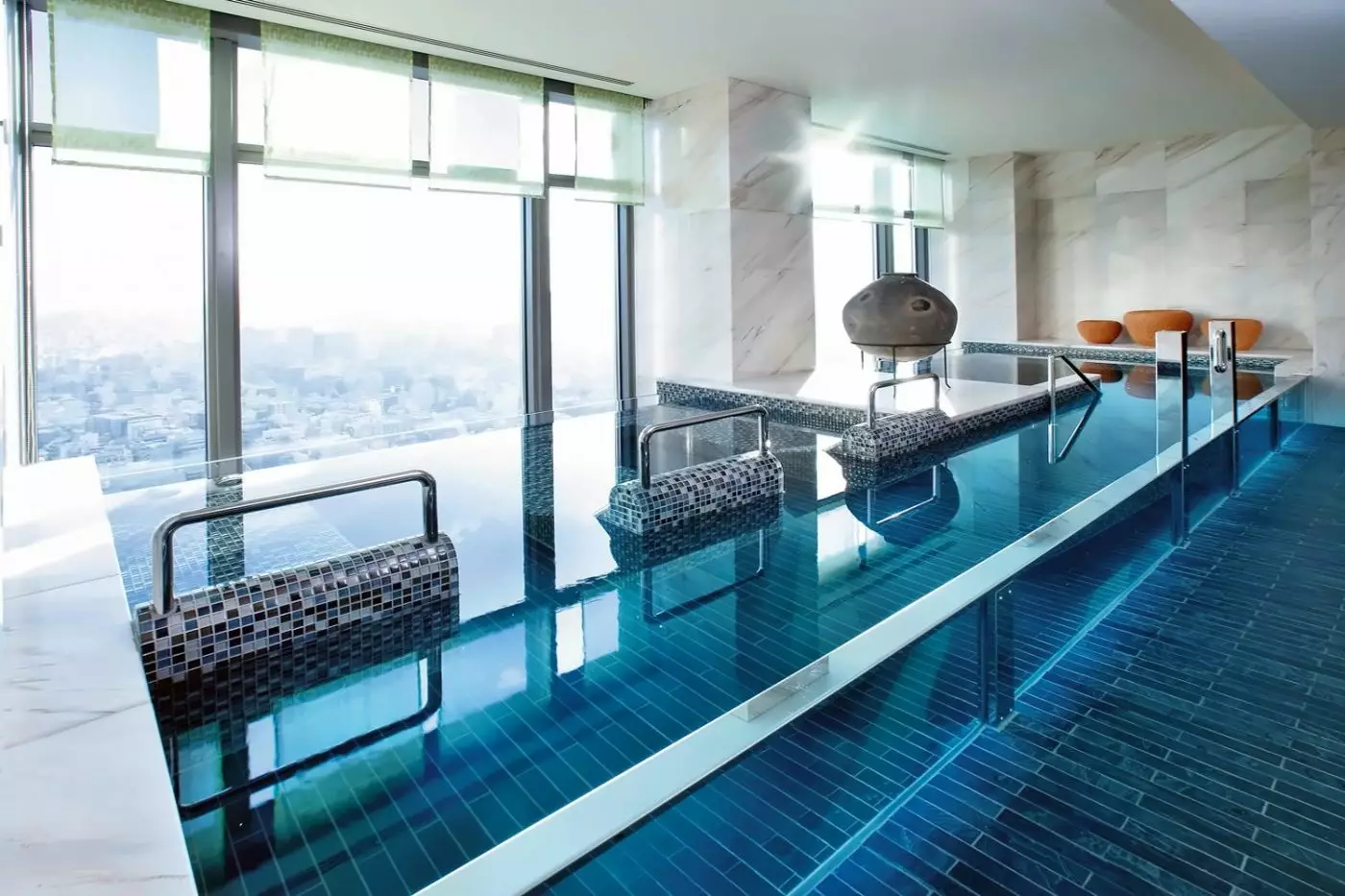
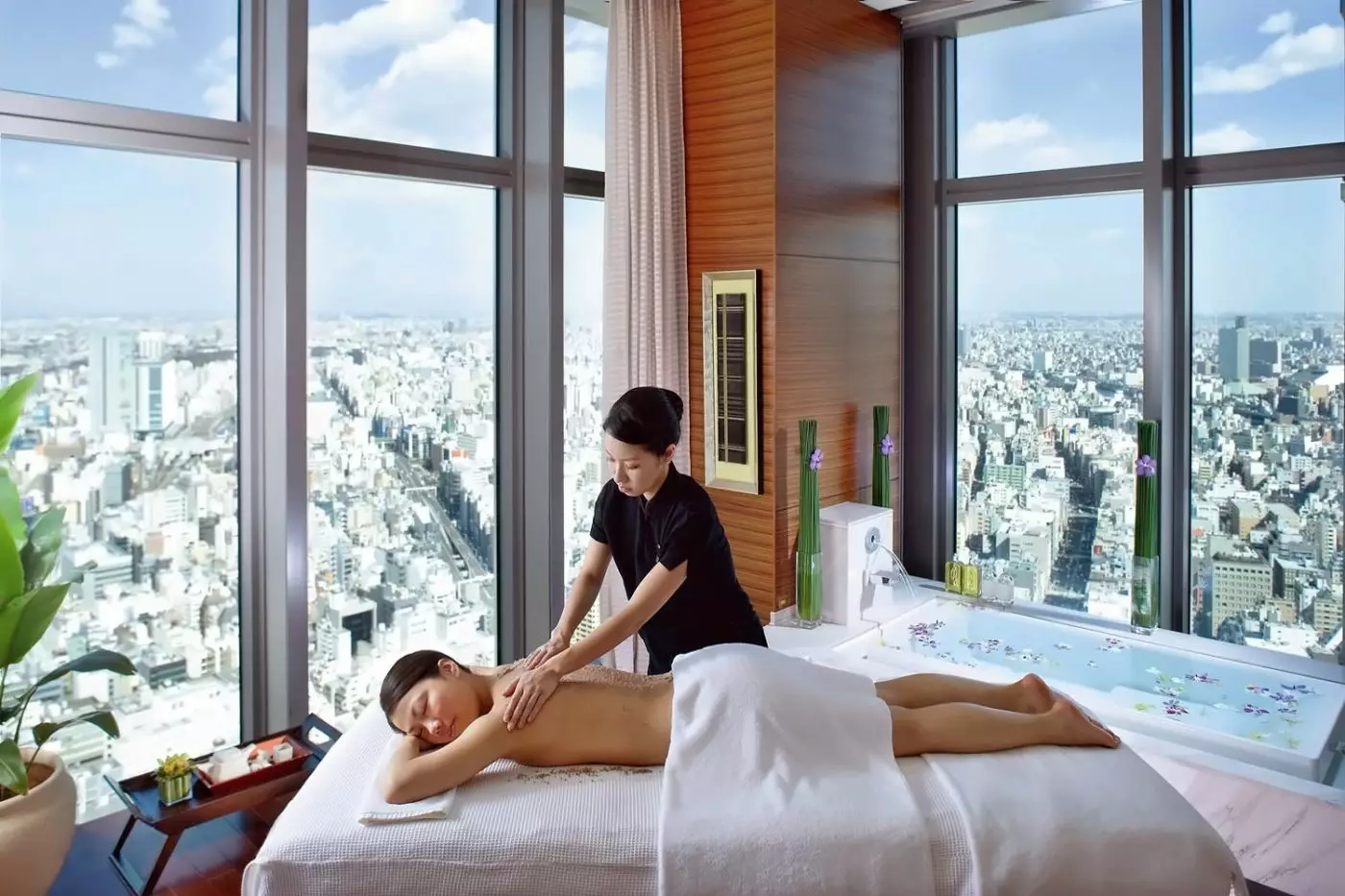
The Spa at Mandarin Oriental Tokyo is on the 37th floor, pairing treatment rooms with city views and heat-and-water facilities. Its vitality pool and water lounges belong to that spa experience. They are not a full-size recreational pool for swimming laps or family play. This distinction matters for guests who regard a conventional pool as essential to a hotel stay.
For others, the spa makes particular sense after a long flight or days spent walking Tokyo. Heat, water, and treatments create a pause without requiring an excursion across town. The fitness center sits high in the building as well, with another view over the city. These spaces serve a metropolitan stay rather than trying to make the hotel feel like a resort.
The skyline connects the spa with the rooms and restaurants. On clear days it gives a remarkable sense of distance; when visibility is poor, the height still separates the hotel from the street's pace. This is a useful kind of calm, particularly when the itinerary moves between meetings, trains, museums, and dinner.
Mandarin Oriental Tokyo is especially well matched to business travelers, food-focused couples, and repeat visitors who know how they want to use the city. It also works for first-time guests who value straightforward transport and a quieter return at night. Direct station access helps on rainy or hot days, and Tokyo Station is close enough to make an onward rail journey manageable.
Families have connecting options and a choice of casual and formal meals, though the overall mood is more metropolitan than resort-like. Guests seeking extensive children's facilities, a large swimming pool, or nightlife at the doorstep should weigh those priorities carefully. Those who put dining, elevated rooms, and central connections first will find a more convincing balance here.
The address and the tower work together. Nihonbashi supplies history, shops, and transport; the upper floors provide distance and light; the restaurants give good reason to stay in after dark. Mandarin Oriental, Tokyo makes a complex city easier to navigate without pretending that every part of it is just outside the door.
Signature's private dining room accommodates up to eight guests for French cooking, allowing a small group to share a meal in its own space.
Hotel guests aged sixteen and older can use the fitness center around the clock, making exercise easier to fit around flights and meetings.
The street-level Gourmet Shop sells sandwiches, breads, and cakes to take away or eat in, giving you a casual alternative to restaurant meals.
2-1-1 Nihonbashimuromachi, Chuo City, Tokyo, 103-8328, Japan
Playing this video may share data with YouTube. Please see our Privacy Policy.
Yes. Mandarin Oriental, Tokyo is a strong choice for travelers who want high-floor views and polished service in Nihonbashi. The hotel combines spacious rooms, dramatic skyline views, acclaimed dining, a serene spa, and easy access to central Tokyo.
Mandarin Oriental, Tokyo is located at 2-1-1 Nihonbashi Muromachi, in the Nihonbashi Mitsui Tower. The setting is useful for Tokyo Station, Mitsukoshimae Station, Marunouchi, Ginza, business meetings, and historic Nihonbashi walks.
The hotel occupies the upper floors of the Nihonbashi Mitsui Tower, with wide views across the city. Guests choose it for the high-rise arrival, strong dining, refined Japanese design, attentive service, and calm above central Tokyo.
Mandarin Oriental, Tokyo has 179 guestrooms and suites. The rooms sit high above Nihonbashi, giving many guests skyline views, generous space, and a quiet retreat from the city.
Rooms are spacious for Tokyo, with floor-to-ceiling windows, Japanese design details, large bathrooms, and high-floor views. They suit guests who want calm interiors, city outlooks, strong service, and convenient access to Tokyo's business districts.
More amenities
Shangri La Tokyo sits beside Tokyo Station in the Marunouchi Trust Tower Main, giving guests one of the most convenient luxur...
More amenities
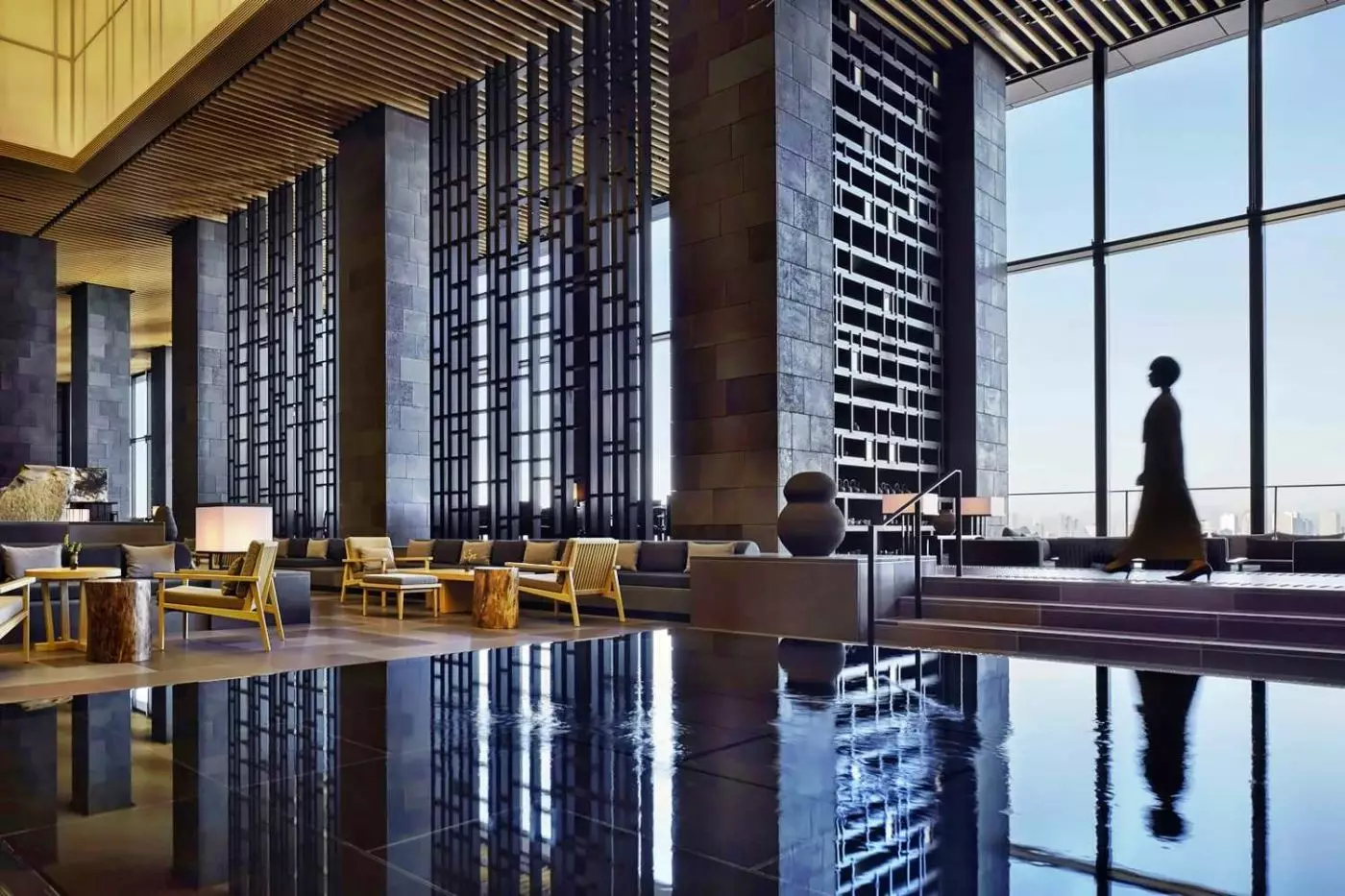
Aman Tokyo is a luxury hotel in Otemachi Tower, near Tokyo Station and the Imperial Palace Gardens. Its 84 suites place the e...
More amenities
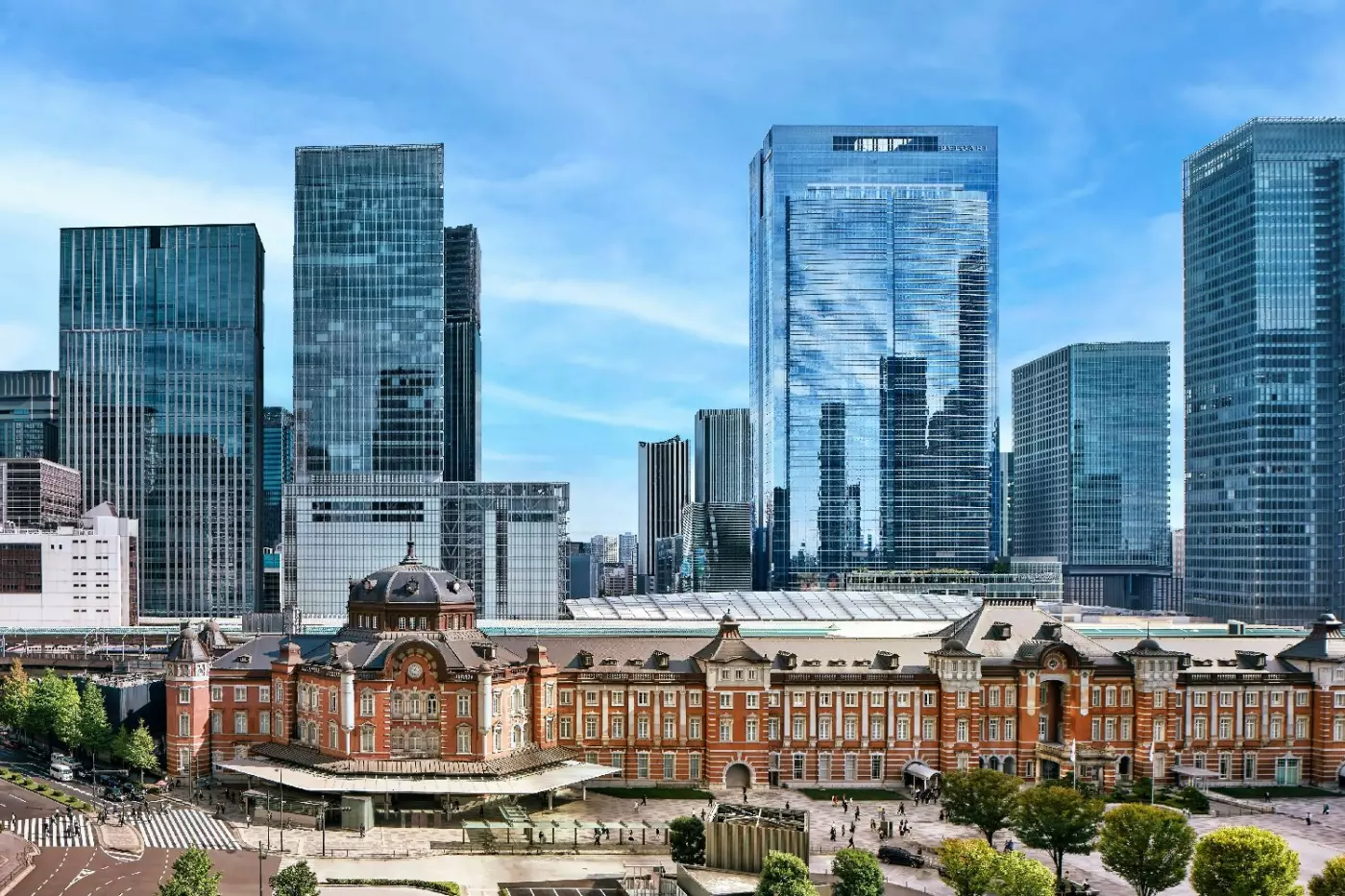
Bulgari Hotel Tokyo occupies the 40th to 45th floors of Tokyo Midtown Yaesu, directly above one of the city's key transport a...