

Best for
Couples get peaceful grounds, spa time, tea experiences, refined dining, garden walks, and quiet suites or villas. It is especially strong for anniversaries, wellness weekends, and Shanghai stays that need privacy and calm.
Please choose a hotel or destination from the list.
Your private search
Finding exceptional stays
Best for
Couples get peaceful grounds, spa time, tea experiences, refined dining, garden walks, and quiet suites or villas. It is especially strong for anniversaries, wellness weekends, and Shanghai stays that need privacy and calm.
Room to consider
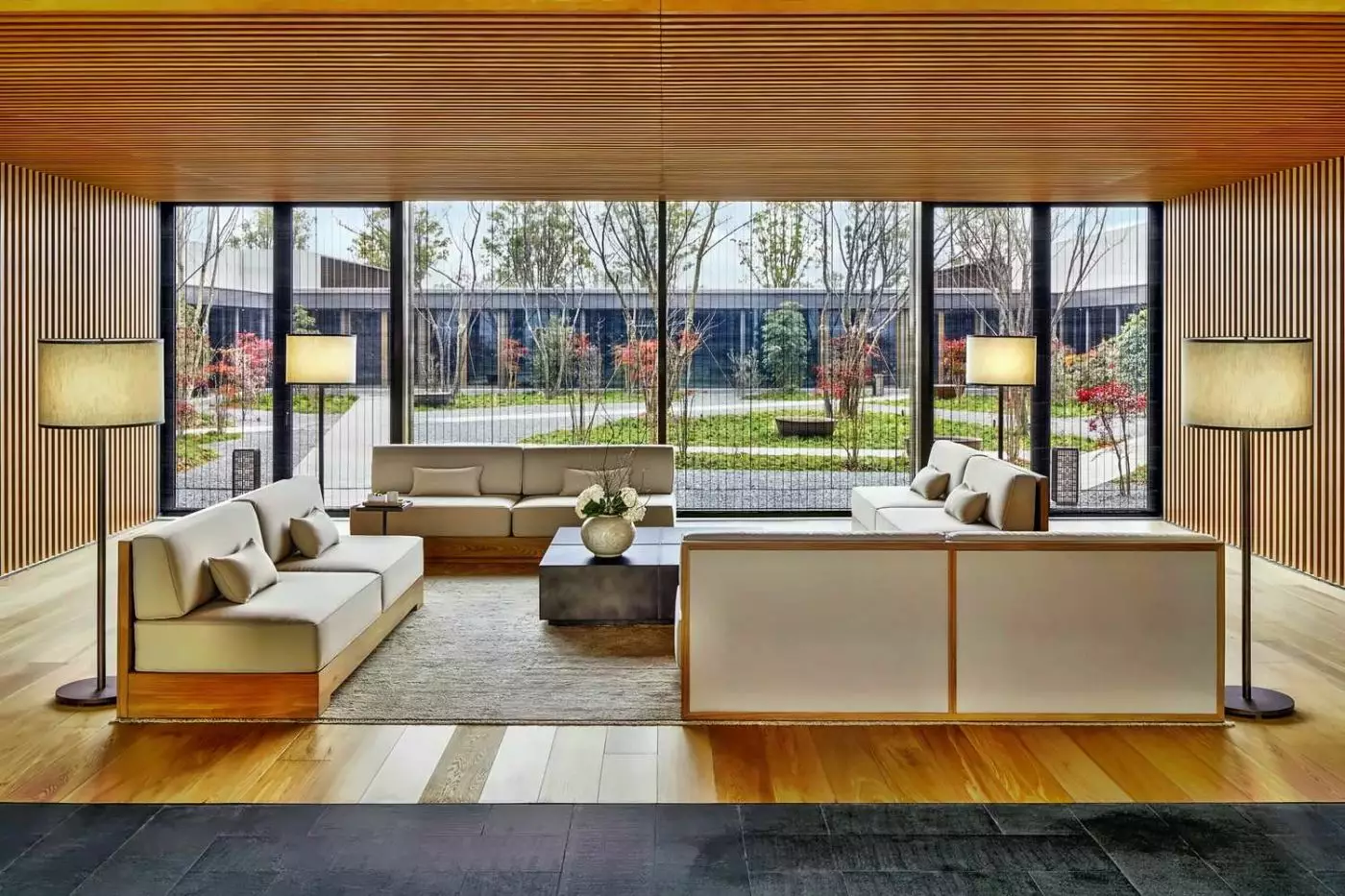
Suites and pavilions have calm modern interiors, garden views, outdoor space, natural materials, and a refined residential mood. The ancient villas add more heritage character, with restored stone, timber, courtyards, and larger layouts.
Insider tip
Amanyangyun is on the outskirts of Shanghai, set in a large landscaped sanctuary away from the city's busiest districts. The location suits travelers who want a peaceful resort stay while keeping Shanghai's dining, shopping, museums, and business areas reachable by car.
Free membership gives you access to preferred rates, exclusive benefits and current promotions for your stay.
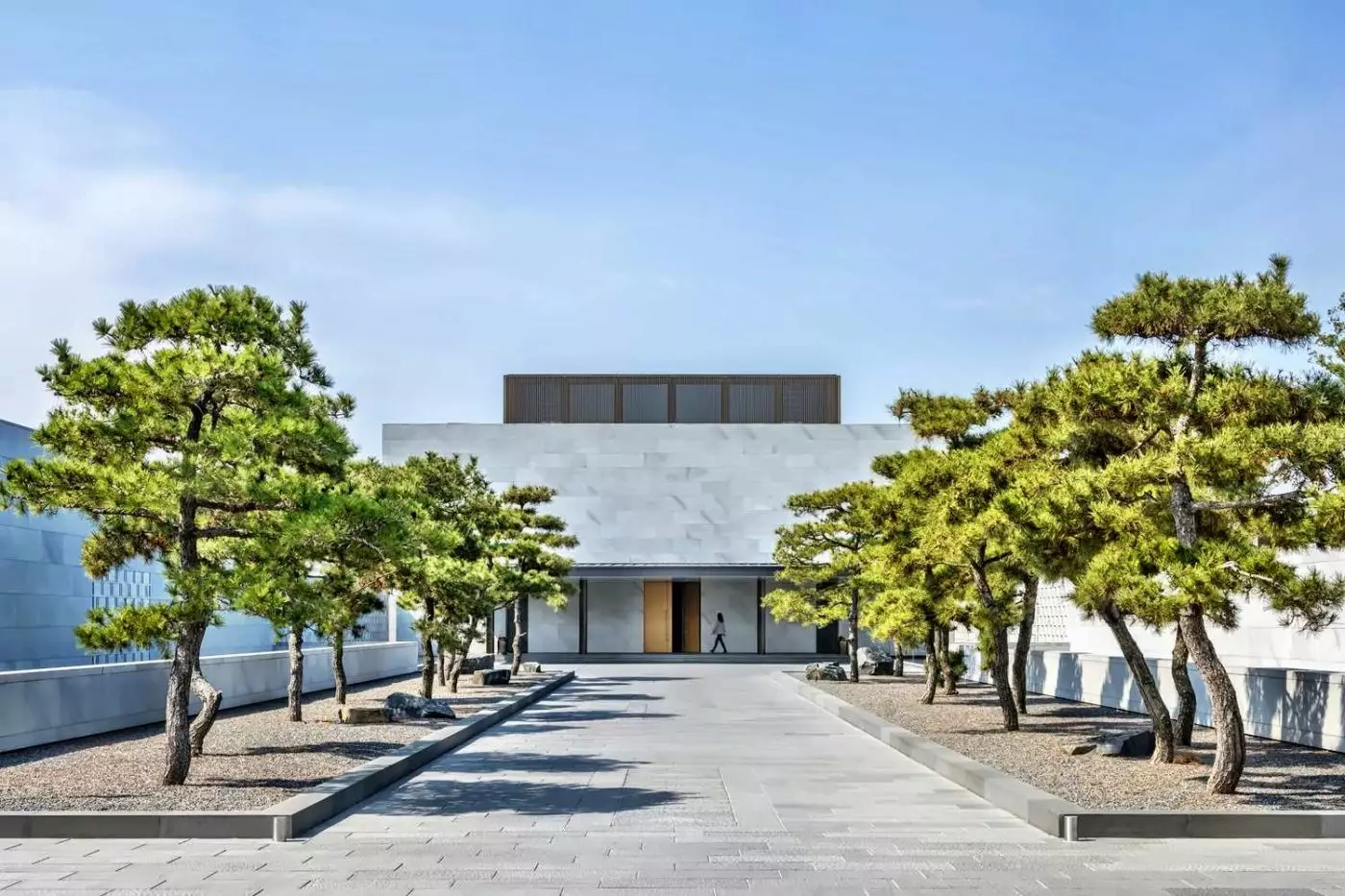
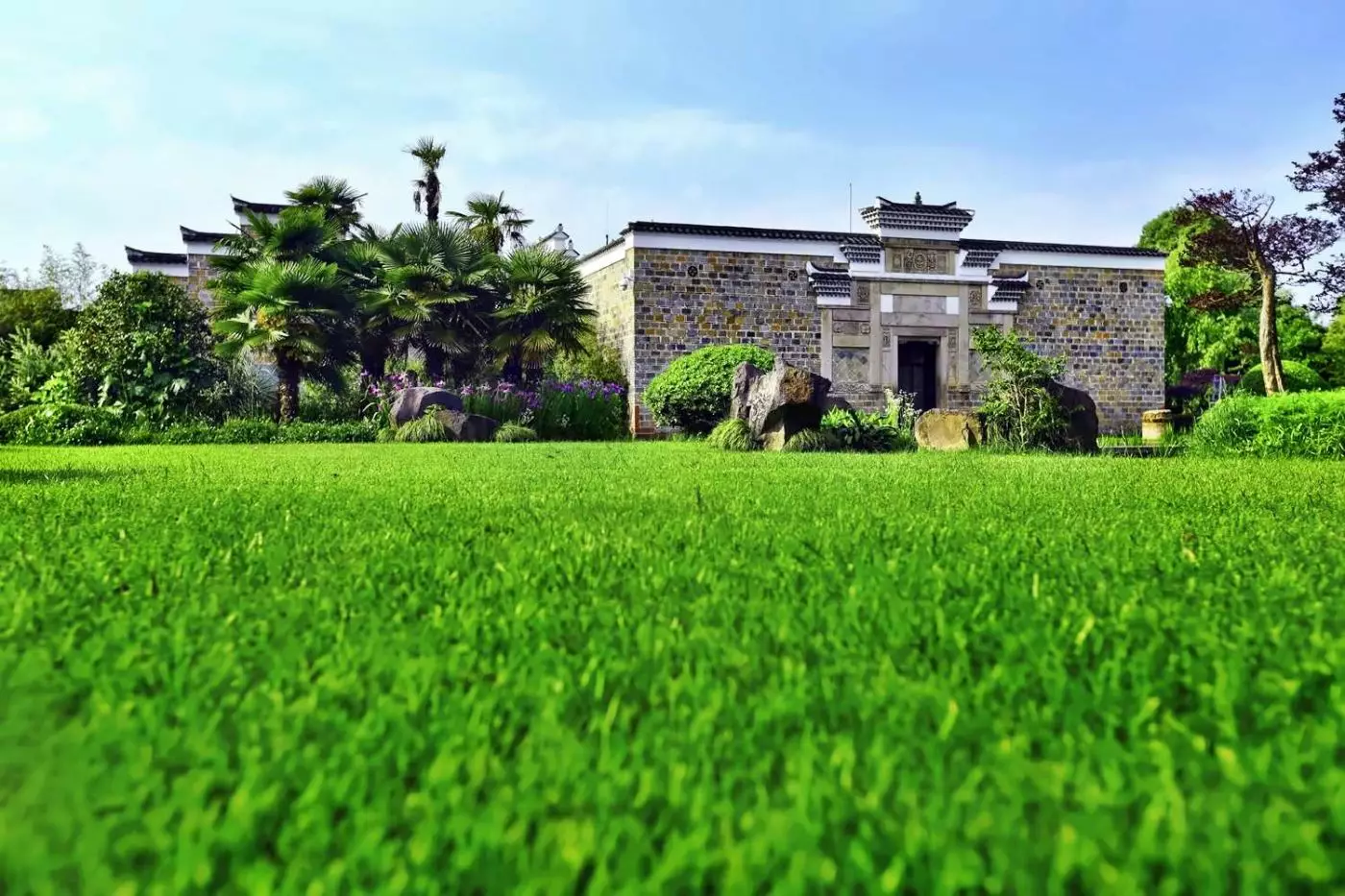
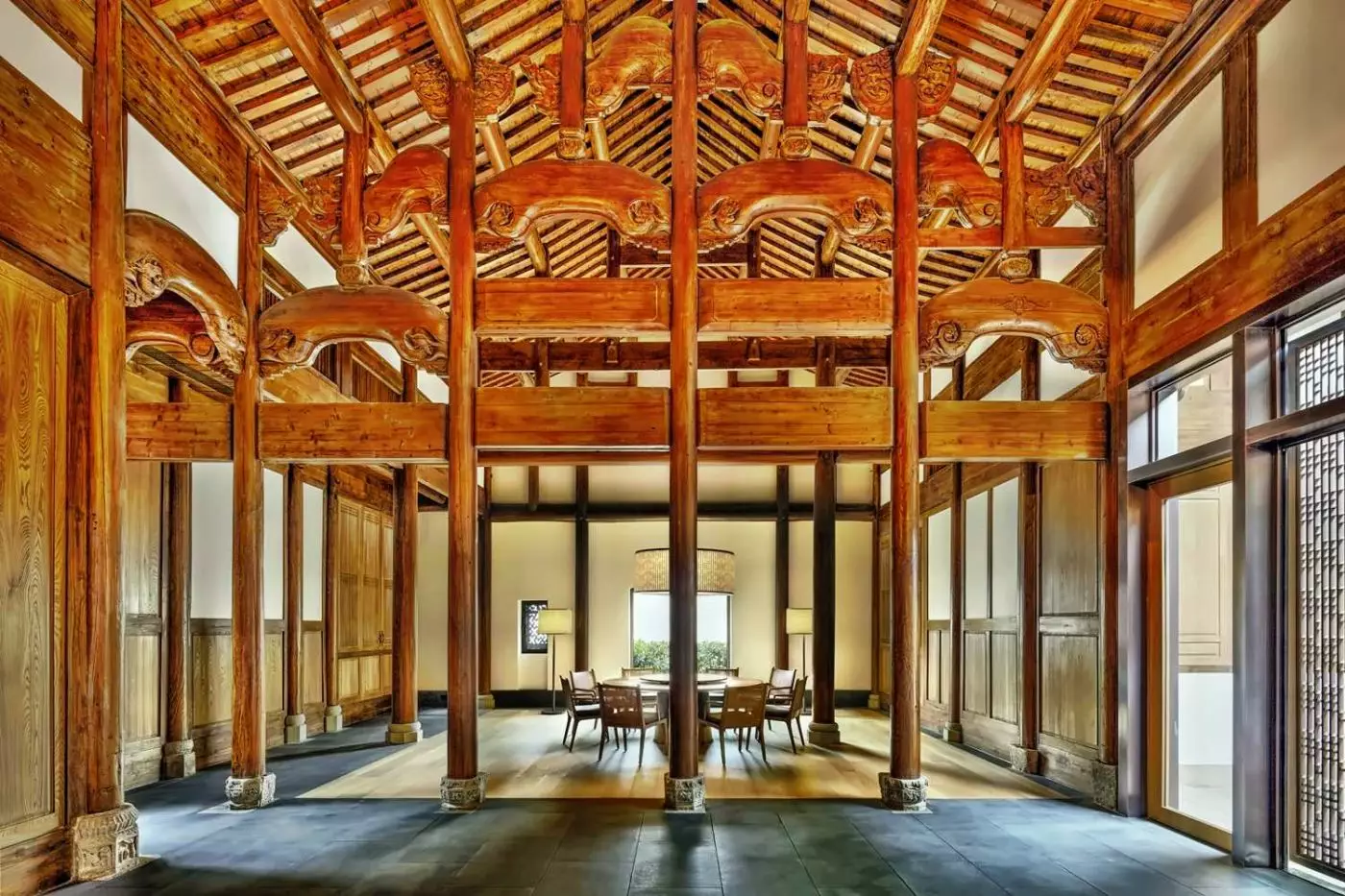
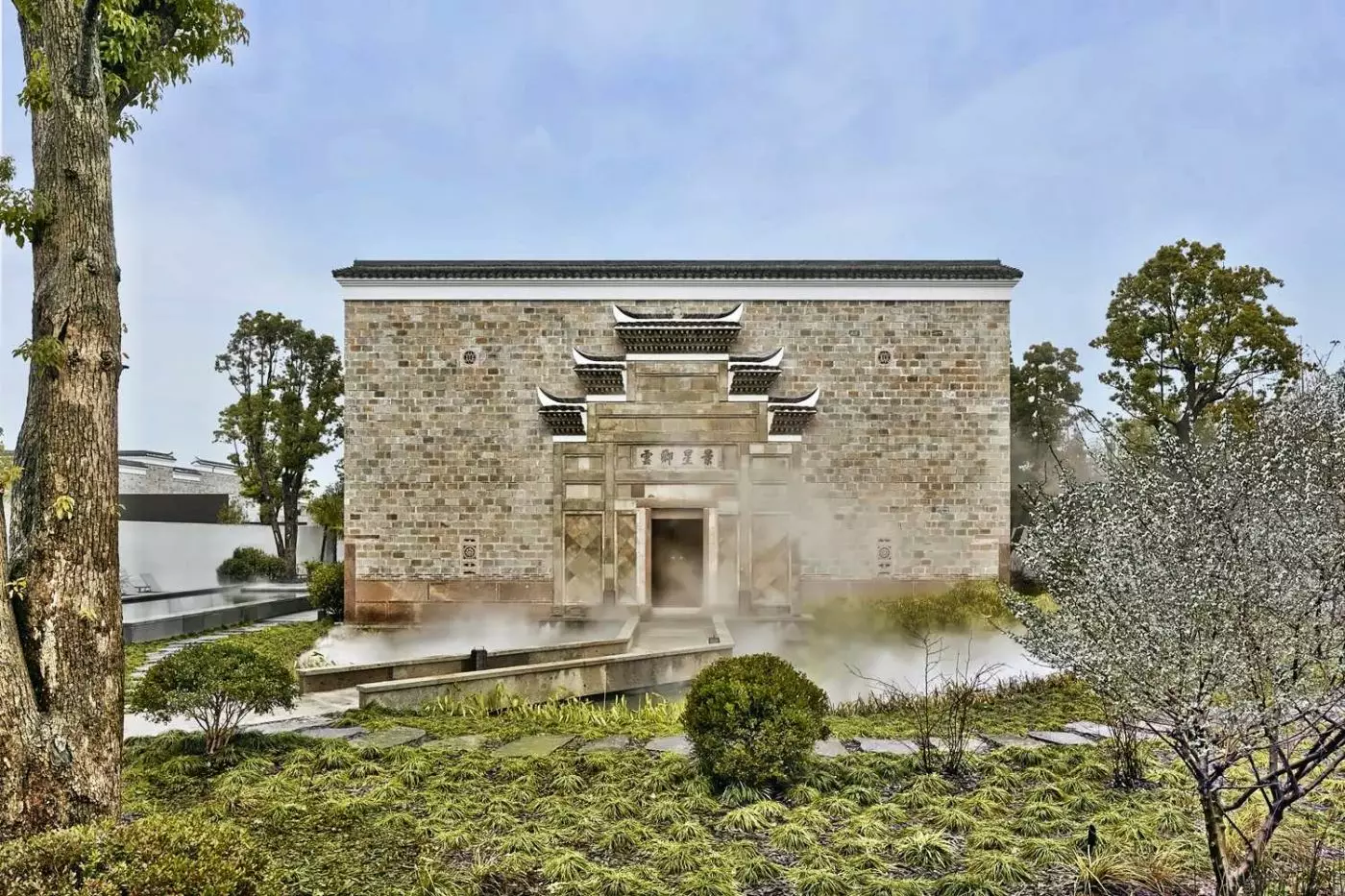
Amanyangyun is a resort on the edge of Shanghai, built around a rescued camphor forest and restored Ming and Qing dynasty houses. Ancient trees and historic villas were moved from Jiangxi province and rebuilt here, creating a village-like retreat around lakes, gardens, courtyards, and quiet paths. The setting gives a Shanghai stay an unusually close connection to China's architectural heritage, with time to explore it beyond the bedroom.
 47
47
 Relaxed
 Fitness
 Spa
Spa
 Sauna
Sauna
 Wellness
 Romantic
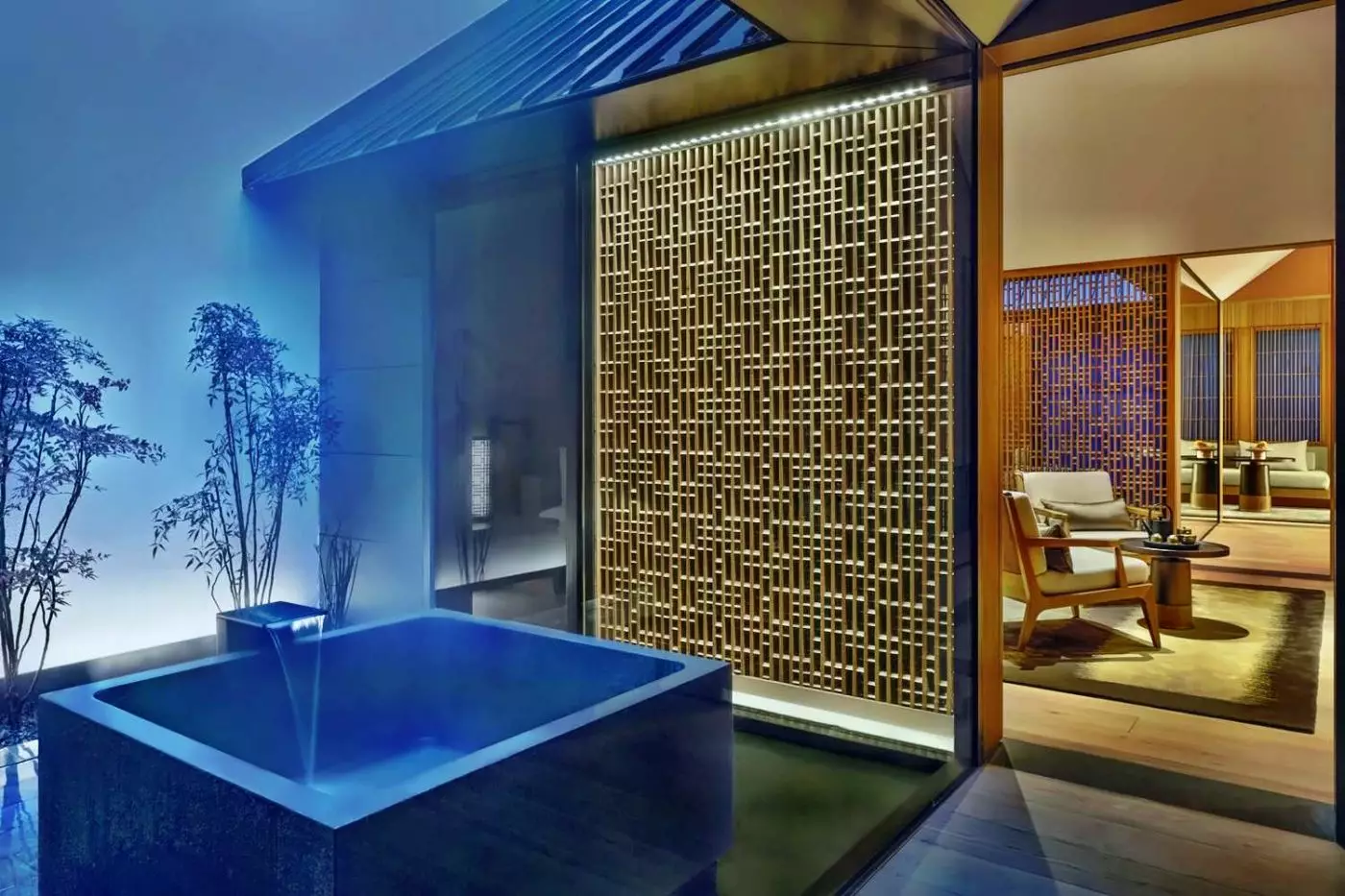
Carved lattice shutters filter daylight into a combined bedroom and living area. Two shaded courtyards lie outside: one has a central fireplace, while the other holds an outdoor bath and shower. Bamboo surrounds these open spaces, with tall windows keeping the garden in view from indoors.
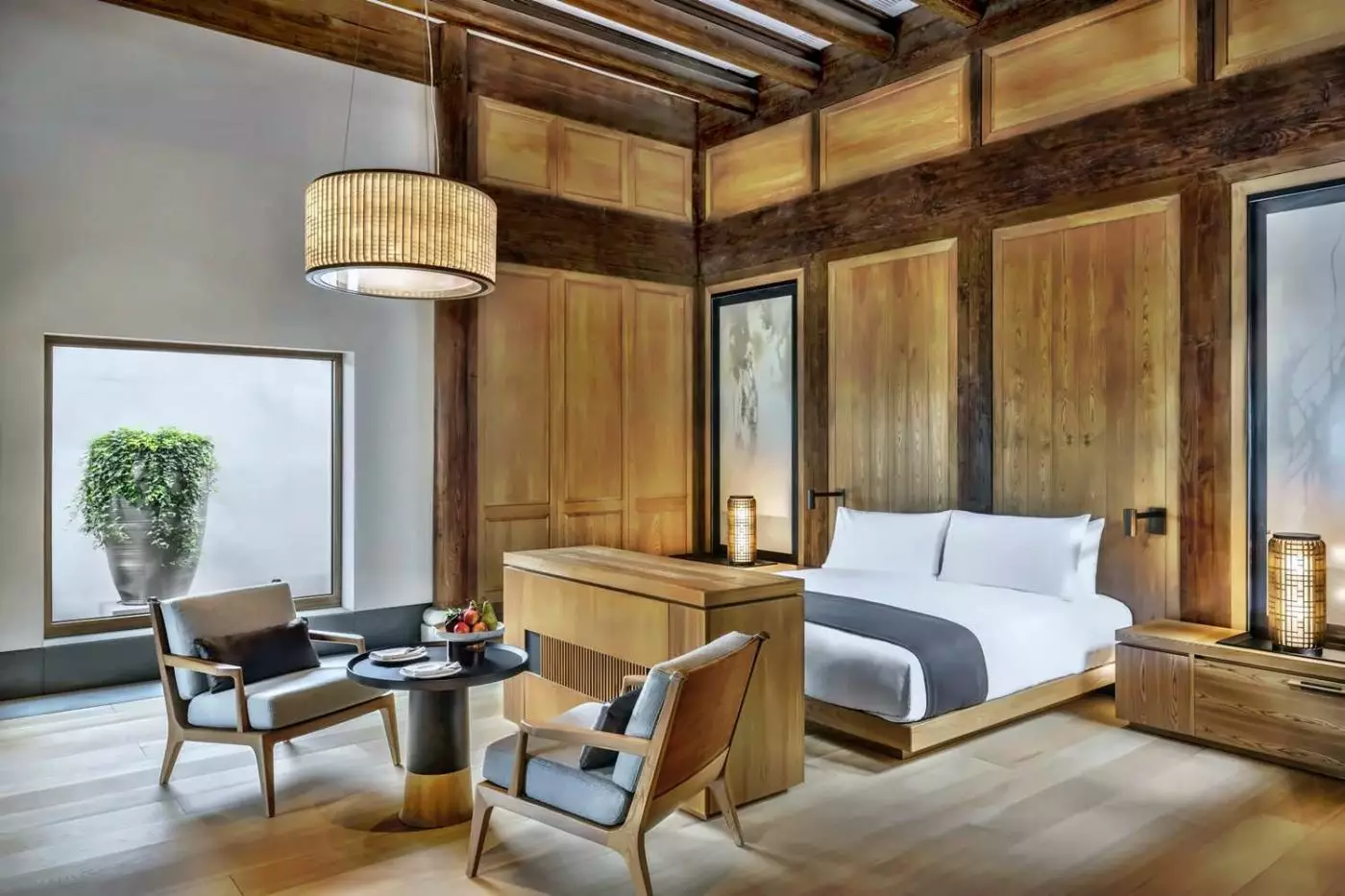
Wood panels and pale fabrics set a quiet tone around the bed and seating area. A writing desk and large wardrobes complete the room. The en-suite bathroom offers an indoor bathtub as well as two basins, with the shower and toilet in separate spaces. The suite is close to the resort's wellness facilities.

Carved lattice shutters filter daylight into a combined bedroom and living area. Two shaded courtyards lie outside: one has a central fireplace, while the other...
Bamboo grows beyond the private outdoor space, where a bath and shower sit in the open air. Another courtyard has a fireplace. The pavilion occupies a modern wing of a restored villa, with a living area and tall windows beside the bed.
Warm wood panels rise to the peak of the ceiling, while lattice screens frame the windows. Two cushioned chairs face a small round table at the foot of the bed. Indoors, the bathroom has two basins, a large bathtub, a separate shower and an enclosed toilet. Wardrobes provide storage within the room.

Bamboo grows beyond the private outdoor space, where a bath and shower sit in the open air. Another courtyard has a fireplace. The pavilion occupies...
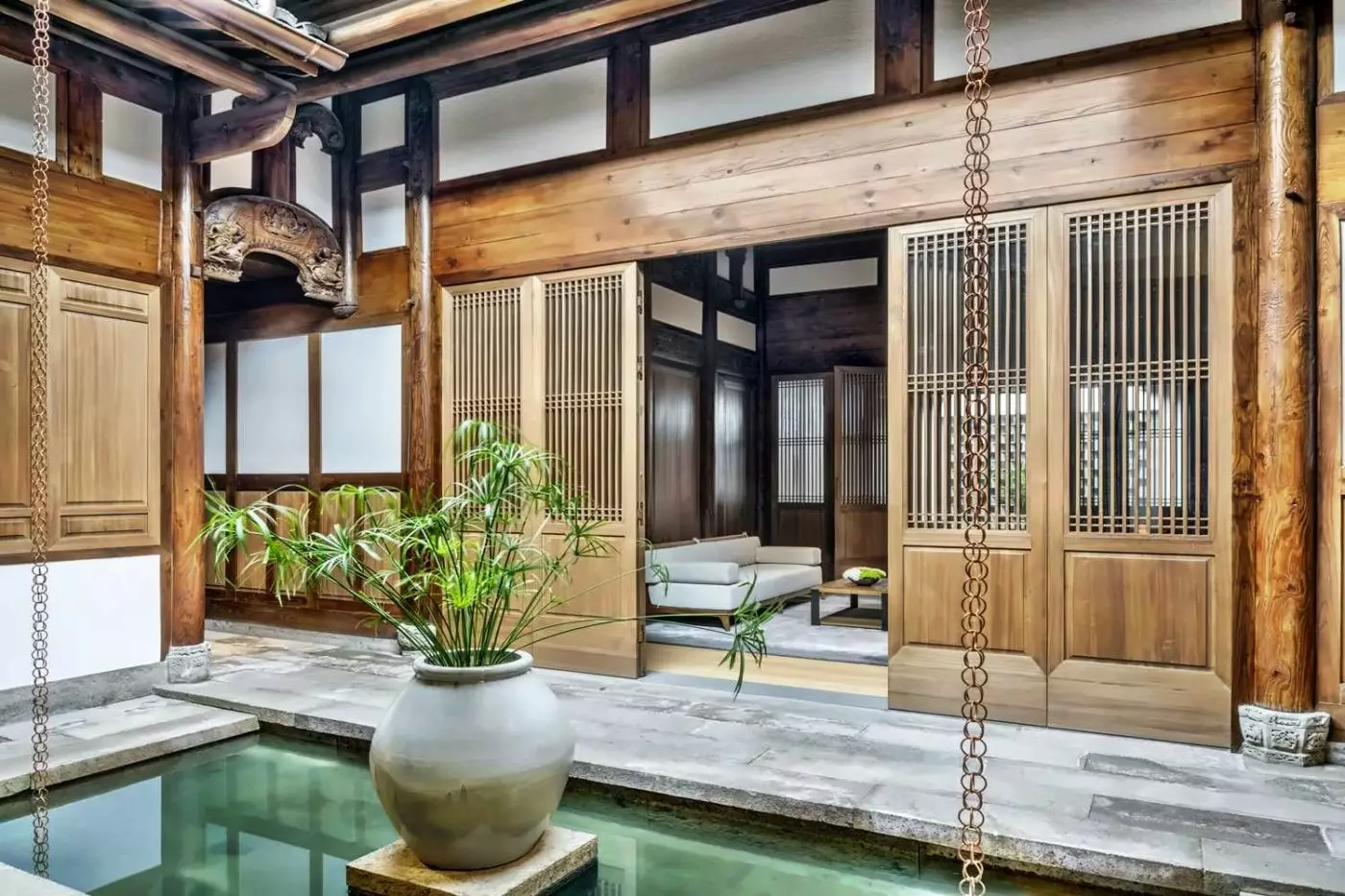
A private courtyard links the bedroom and living room, with an outdoor bathtub set within its walls. The rooms sit in the villa's modern wing. Indoors, a central fireplace and warm wood finishes give the living space its character, with a long cushioned sofa and a round table beside it.
A desk occupies its own corner of the lounge, away from the separate bedroom. Lattice screens and large windows look towards the garden, and a walk-in wardrobe provides room to unpack. The en-suite bathroom has two basins and an indoor bathtub, with a separate shower and toilet.

A private courtyard links the bedroom and living room, with an outdoor bathtub set within its walls. The rooms sit in the villa's modern wing....
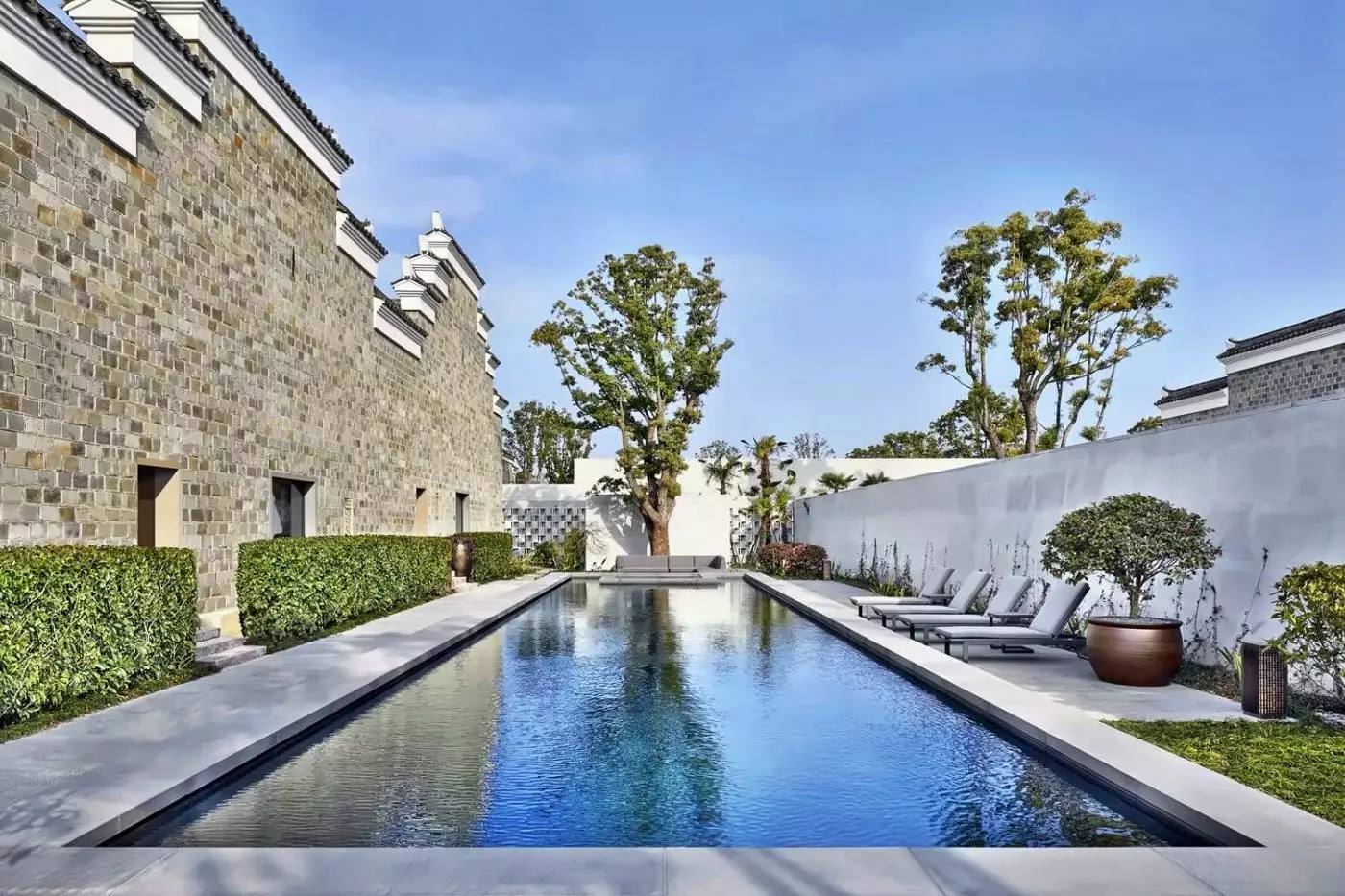
The outdoor courtyard and swimming pool are shared with other guests in the villa.
High ceilings and carved details frame the rooms in a restored house. The interiors draw on Ming and Qing design, with large rooms for living and dining. Sofas furnish a separate lounge, and a desk provides a place to write.
The bedroom faces the courtyard and has large wardrobes. Its bathroom includes a freestanding tub, two basins, a separate shower and toilet. Timber columns stand on carved stone bases within the old house. The building was moved from Jiangxi and carefully rebuilt here.

High ceilings and carved details frame the rooms in a restored house. The interiors draw on Ming and Qing design, with large rooms for living...
The garden courtyard and swimming pool are shared with other guests staying in the villa.
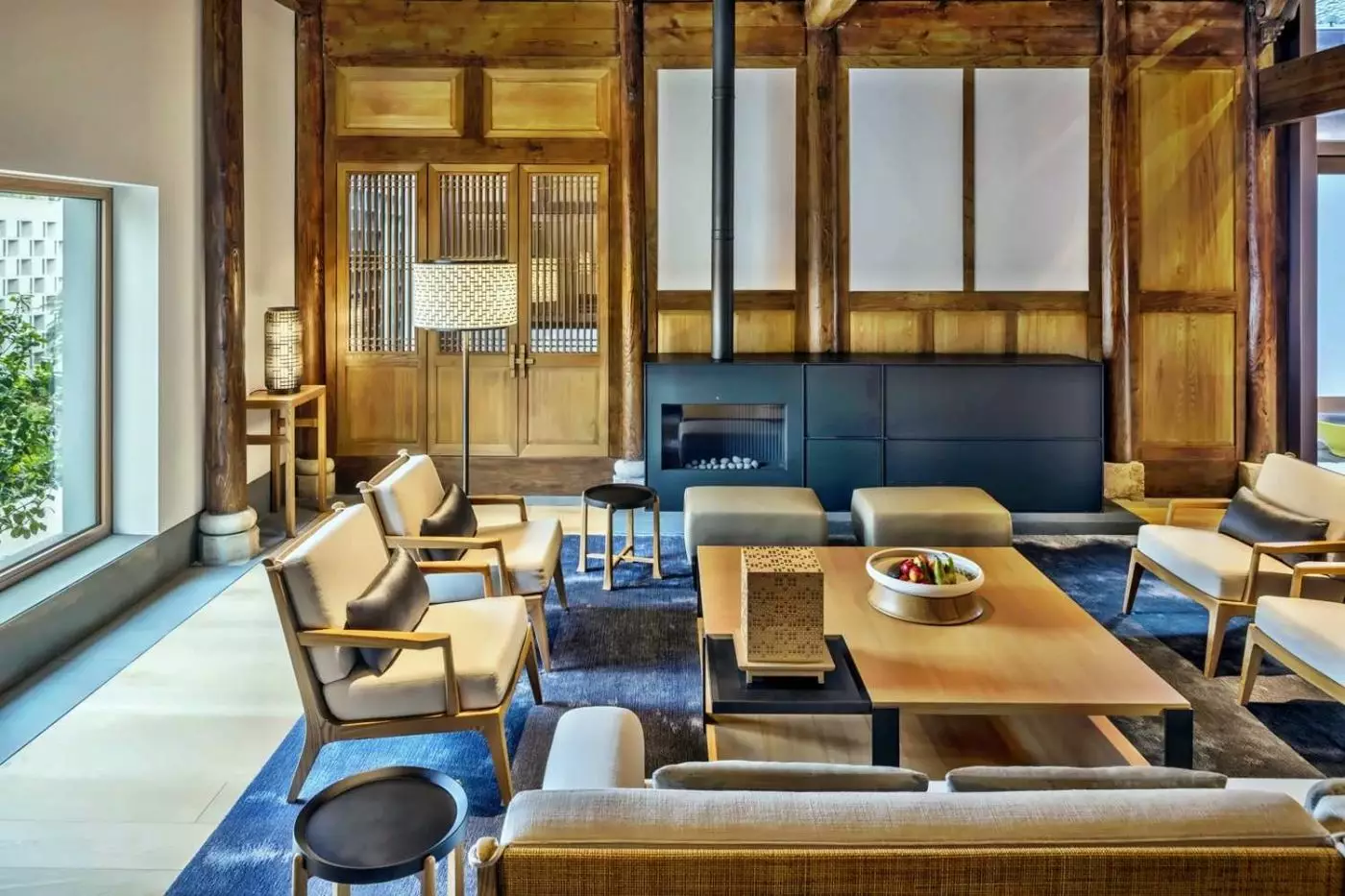
Views extend into the camphor woodland from this restored house. The living and dining rooms flow into one another, with sofas and wood-framed chairs grouped around a low table. Timber screens, ceiling beams and blue seating give the sitting room its character.
Each bedroom has its own bathroom with twin basins, a bathtub, a separate shower and toilet. Large wardrobes sit within the sleeping quarters, and a desk provides space to write. Ming and Qing details remain throughout the house. From here, there is direct access to the outdoor courtyard.

Views extend into the camphor woodland from this restored house. The living and dining rooms flow into one another, with sofas and wood-framed chairs grouped...
One bedroom is in the historic house; three are in the adjoining modern wing.
The dining room has seats for ten, with a large pantry nearby. A fireplace anchors the living room, where pale sofas sit around a low wooden table. Two private studies provide space away from the main lounge, and several courtyards open up the grounds outside.
Ming and Qing features remain in the restored part of the house. The newer wing contains two Ming Pavilions and a Ming Deluxe Pavilion. All bedrooms have en-suite bathrooms with twin vanities. A bathtub and walk-in wardrobe feature in one of the bedroom suites. There is a separate guest toilet, and warm wood finishes continue through the living and sleeping spaces.

The dining room has seats for ten, with a large pantry nearby. A fireplace anchors the living room, where pale sofas sit around a low...
Two bedrooms are in the historic house; two are in the modern wing, linked by a private passageway.
Several private courtyards and clipped gardens surround the house. Inside, the living room centres on a fireplace and opens into a dining area with seats for ten. A large pantry serves this space, while two private studies offer quieter places to read or work.
The old part of the villa retains Ming and Qing design details. Its bedrooms have walk-in wardrobes and dressing areas, and two of the en-suite bathrooms contain oversized tubs. Twin basins feature in every bathroom, with a separate guest toilet elsewhere in the villa. The newer rooms form a Ming Pavilion and a larger Ming Deluxe Pavilion, each with its own bathroom.

Several private courtyards and clipped gardens surround the house. Inside, the living room centres on a fireplace and opens into a dining area with seats...
A private bridge lit by lanterns leads through the gardens to this restored house. High ceilings and picture windows set off the carved details. The furniture draws on the Ming and Qing periods, and several courtyards extend the living space outdoors.
Inside, the main lounge has a fireplace and flows into a dining area with seats for ten. Two private studies sit apart from this social space. Each bedroom is in the historic building and has its own bathroom. These have twin basins, a bathtub, a separate shower and toilet. Dressing areas and large wardrobes provide storage, and a separate guest toilet serves the shared rooms.

A private bridge lit by lanterns leads through the gardens to this restored house. High ceilings and picture windows set off the carved details. The...
All four bedrooms are in the modern wing; the main living room is within the restored house.
The restored house stands at the centre of a courtyard, with a large living room beneath its old timber roof. Tall columns and exposed beams frame the seating, where pale sofas and armchairs gather around low wooden tables. Camphor trees rise above the walled grounds.
The bedroom suites are set around the courtyard, each with its own bathroom and ample wardrobe space. Twin vanities, a bathtub and a separate shower feature in every en suite. A dining area provides space for meals together, with private outdoor areas around the villa. The buildings belong to the group of historic homes moved from Jiangxi and rebuilt at the resort.

The restored house stands at the centre of a courtyard, with a large living room beneath its old timber roof. Tall columns and exposed beams...
Two bedrooms are in the restored historic house and three are in the modern wing.
A private courtyard forms part of the villa's outdoor space, with living and dining areas inside for time together. The old house and its newer wing share the same grounds. In the historic rooms, period details sit alongside modern bathrooms. The bedrooms in the newer wing have a simpler, modern style.
Each bedroom has an en-suite bathroom with two basins, a bathtub, a separate shower and toilet. Large wardrobes provide storage in the sleeping quarters. The older building was taken apart in Jiangxi and carefully rebuilt here, preserving the form of the original home.

A private courtyard forms part of the villa's outdoor space, with living and dining areas inside for time together. The old house and its newer...
The story begins in rural Fuzhou, where a reservoir project threatened historic villages and camphor forests. A philanthropist from the region arranged the relocation of houses and trees to Shanghai, and the buildings were carefully reassembled. Amanyangyun grew out of that preservation effort. Its historic structures have a past elsewhere, an important distinction for guests interested in the relationship between the original villages and the resort they see today.
Kerry Hill Architects designed the resort with an intimate village feel, bringing contemporary accommodation into the same landscape as the restored houses. The villas are not simple replicas. Old stone and timber sit alongside modern living spaces, with private outdoor areas connecting the buildings to the forest. The strength of Amanyangyun is the conversation between them: ancient structures, clean contemporary space, and the forest around both.
It sits at 6161 Yuanjiang Road in Minhang, away from the density of the city but still connected to Shanghai. It is best understood as a countryside-style retreat on the city's fringe, not as a downtown hotel. The location makes sense for travelers who want to slow down after time in central Shanghai or combine the city with a wellness-led stay. Visits to the Bund and other central districts belong to planned outings rather than the immediate neighborhood.
Hongqiao International Airport is approximately 24 kilometers away, while Pudong International Airport is around 55 kilometers from the resort. Road journeys depend on traffic. Within the grounds, cycling follows a different pace, passing camphor trees, lakes and restored villas. Aman describes the setting as 140 hectares, allowing outdoor time to become a substantial part of the stay rather than a brief walk around a hotel garden.
Aman presents contemporary suites and pavilions alongside restored Antique Villas, with the choice going beyond a simple suite-versus-villa split. A suite or pavilion lets couples experience the forest, spa and cultural program without taking an entire four-bedroom villa. Larger parties can give more weight to shared living areas and the arrangement of bedrooms, as well as the balance of historic and contemporary space.
Ming Courtyard Suites occupy the contemporary wing and are listed at 99 square meters, with two private courtyards. The outdoor space gives these suites a more residential character than a conventional city room. For guests who expect to spend afternoons within their accommodation, the courtyard is a useful part of the layout, while the resort's restaurants and cultural spaces remain reasons to step outside.
Ming Pavilions are 115-square-meter spaces with a living room and two private courtyards. One courtyard has a fireplace; the other has an outdoor bath and shower facing the bamboo garden. The bathroom includes twin vanities and a bathtub, with king or twin beds offered in the sleeping area. Ming Deluxe Pavilions provide another contemporary option, while Antique Pavilions place guests within restored historic houses.
The Four-Bedroom Antique Villa combines one bedroom in the restored house with three in the contemporary wing. A private swimming pool and several courtyards extend the living space outdoors. Inside, a kitchen, pantry and dining room with seating for ten make private meals a practical option. Dedicated butler service supports this residential arrangement, which gives families and friends somewhere to gather outside their separate bedrooms.
In the Four-Bedroom Qing Antique Villa, two bedrooms are in the historic house and two are in the contemporary wing, reached by a private passageway. It also has a private pool, courtyards and shared living and dining areas. The different balance of historic and modern bedrooms is worth considering when choosing between villas, particularly when experiencing the restored architecture matters as much as having space for everyone.
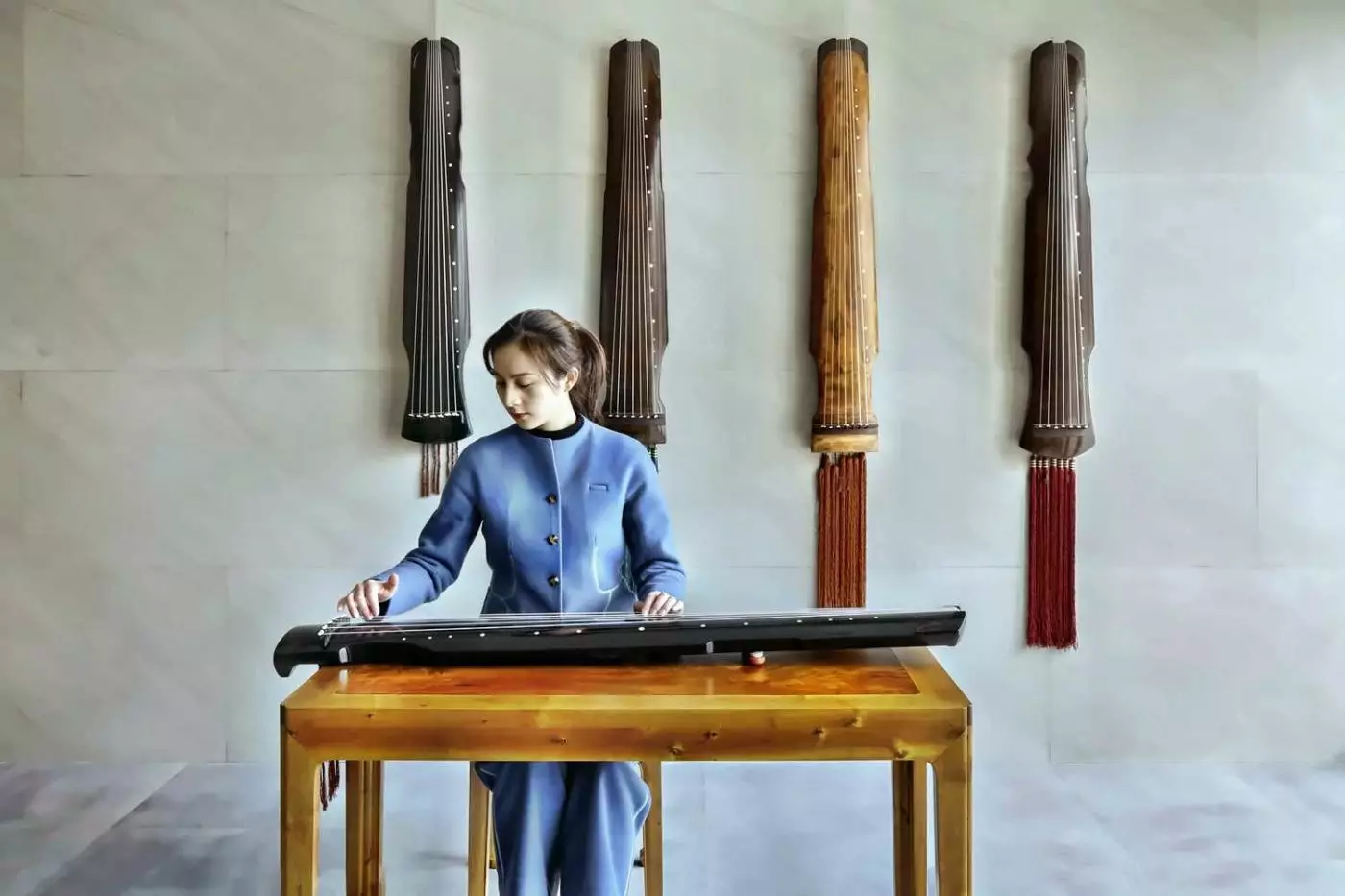
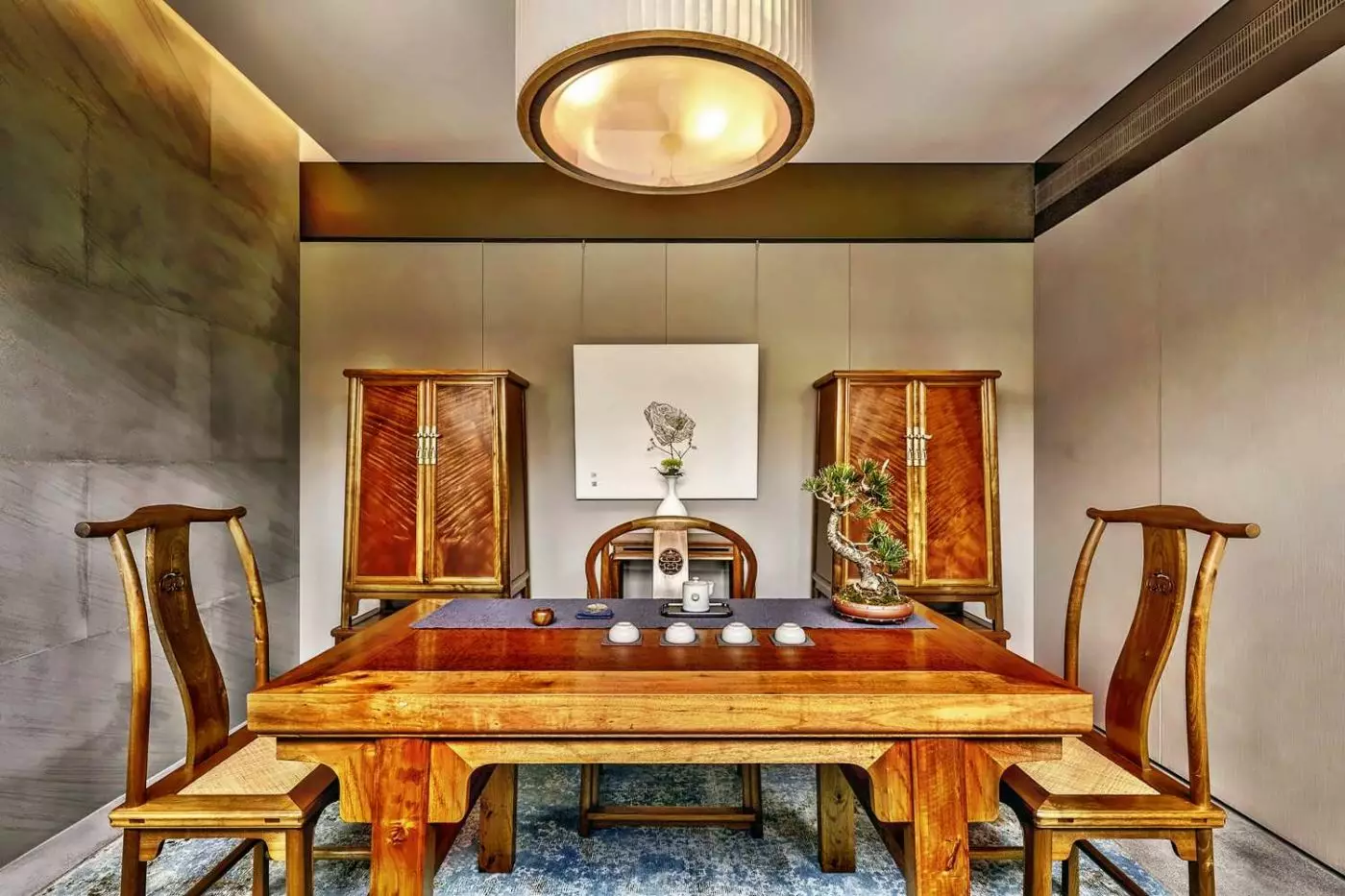
Nan Shufang is the cultural heart of Amanyangyun. It takes its name from a royal reading pavilion in the Forbidden City and occupies antique buildings brought from Fuzhou. Nanmu wood furniture recalls Ming interiors, while the setting draws on the scholars' studios of 17th-century China. Calligraphy, painting and music give the rescued architecture a continuing purpose as a place for learning and practice.
Tea ceremonies explore Chinese tea varieties and their preparation, and traditional instruments include the guqin and guzheng. Incense is another route into the daily rituals of the literati. These experiences deepen the connection between the houses and the culture they once accommodated. Spending time with a craft or ceremony offers a different understanding of the resort from simply walking through its courtyards.
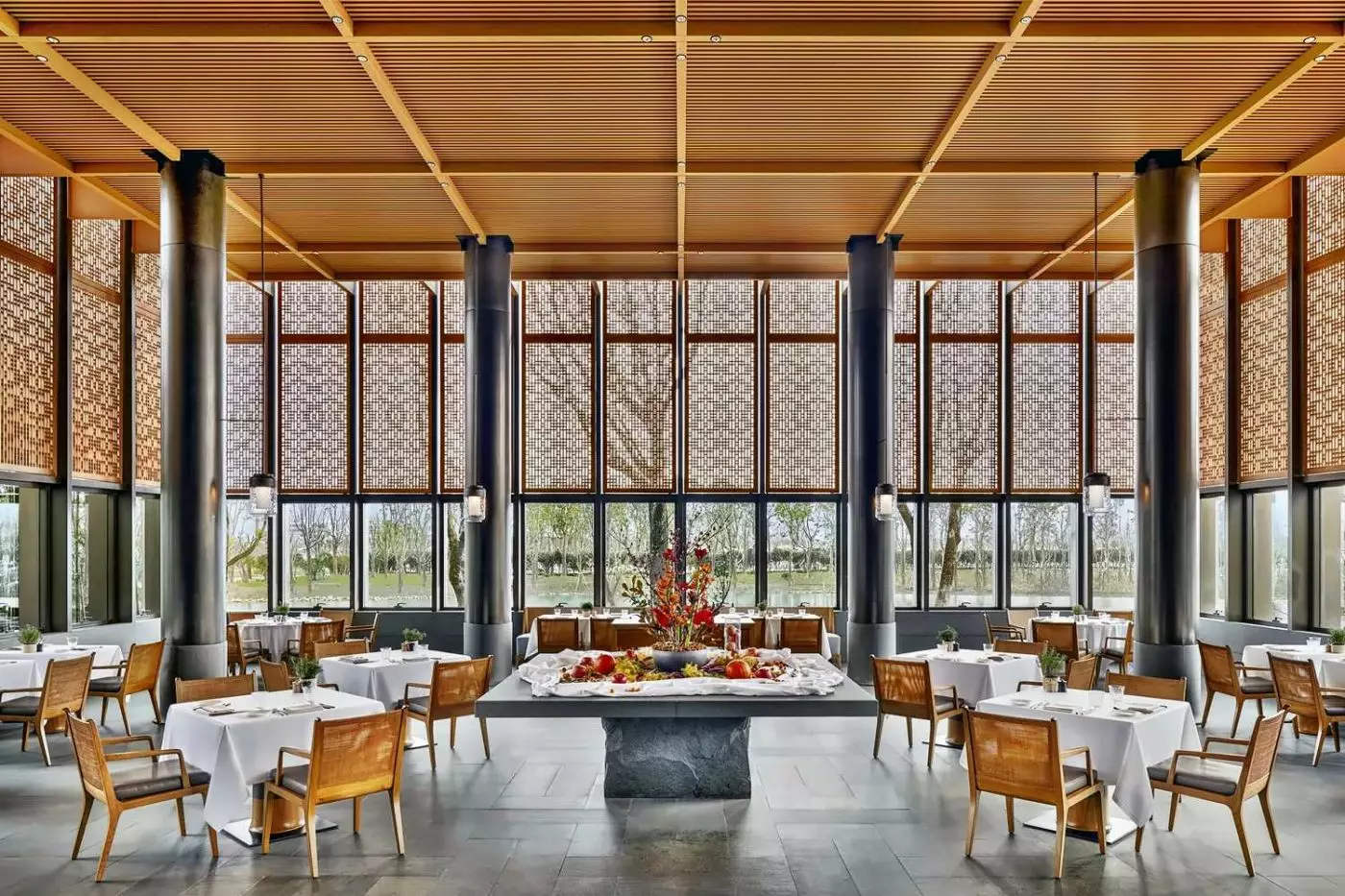
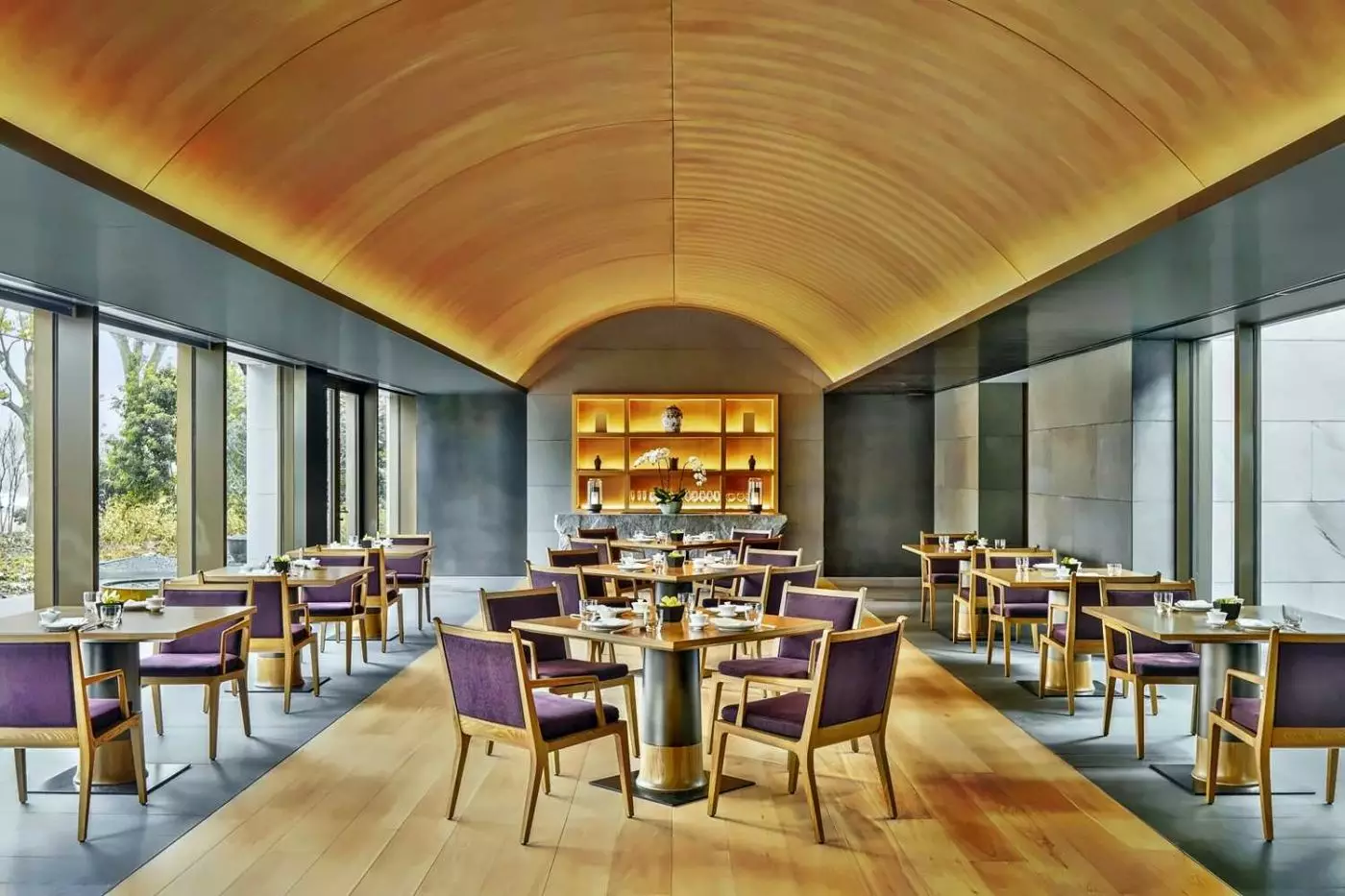
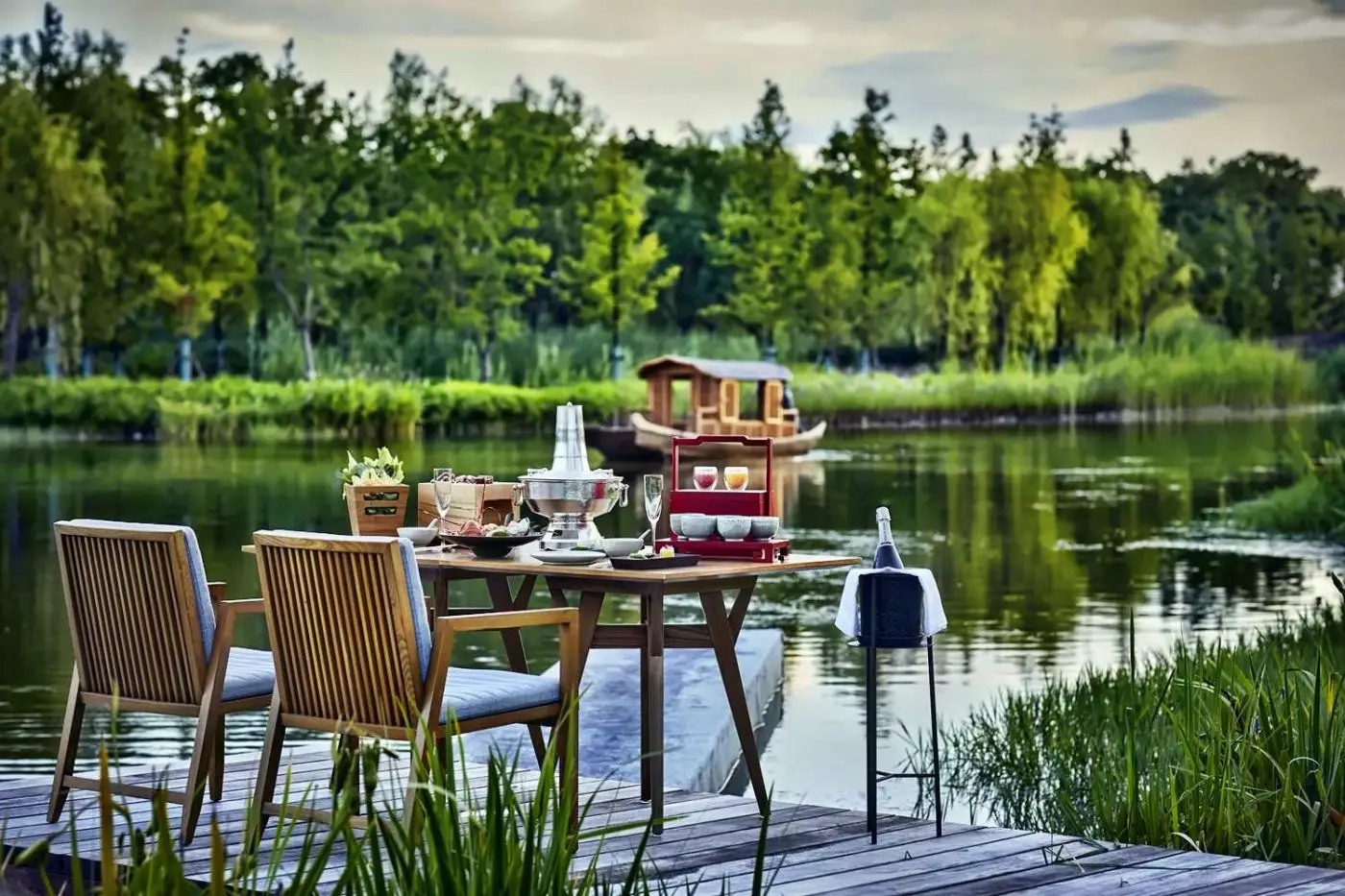
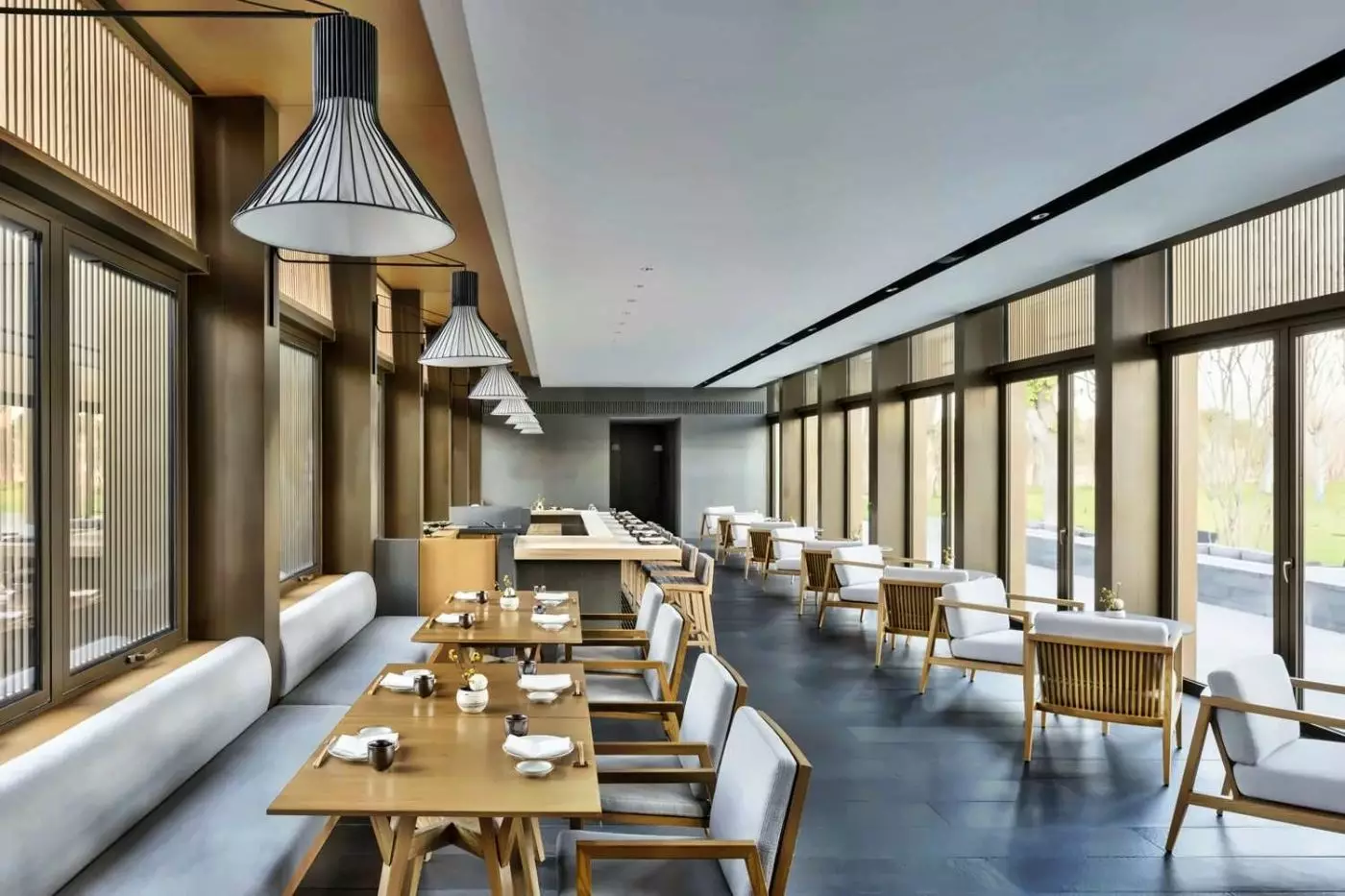
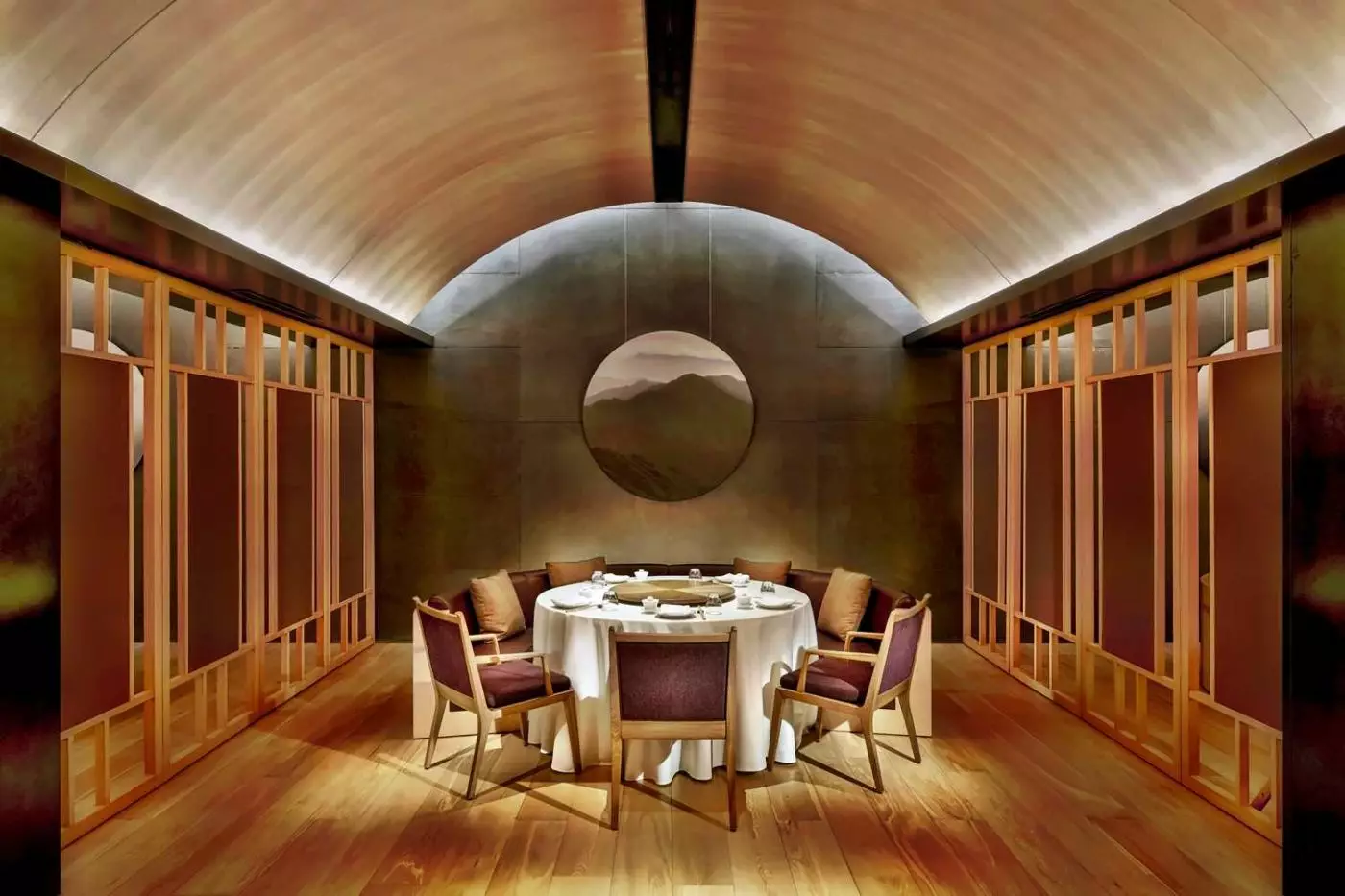
Five dining venues give meals distinct settings. Lakeside Arva draws on Italian farm-to-table cooking, while Lazhu serves Jiangxi cuisine overlooking a bamboo grove, with private dining rooms facing gardens. The connection to Jiangxi continues the story told by the houses. Yinlu approaches Chinese dining through Cantonese-style hotpot, giving a group another way to share a meal without repeating the same restaurant experience.
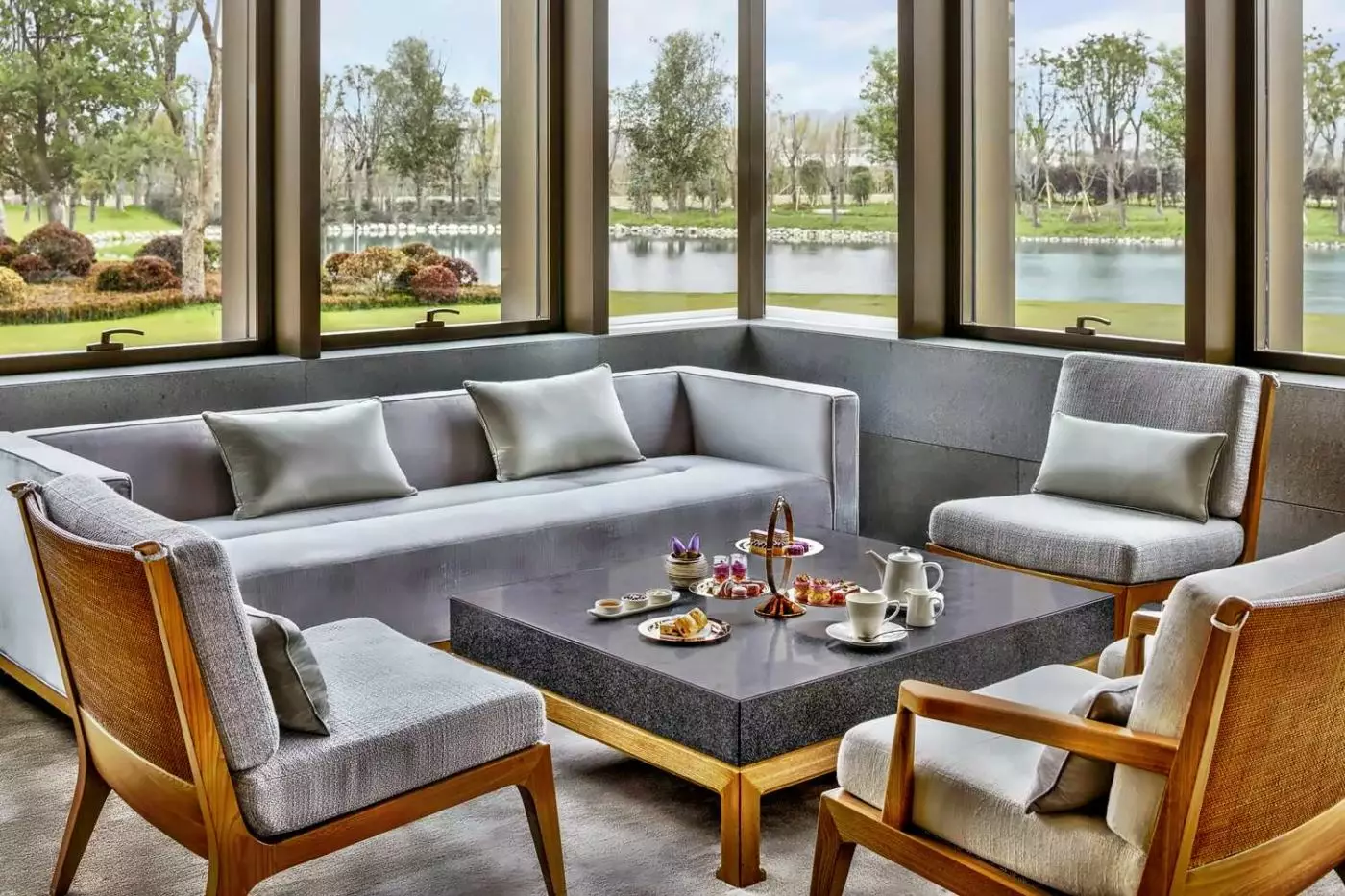
The Lounge serves afternoon tea and drinks, and Bei TeaHouse focuses on brewing and drinking Chinese tea. Lakeside afternoon tea brings the landscape into the meal. A 200-square-meter organic herb and vegetable garden supplies the kitchens with seasonal produce, and guided garden visits explain that part of the food program. The variety is useful at an address where spending a full day on the property is part of the attraction.
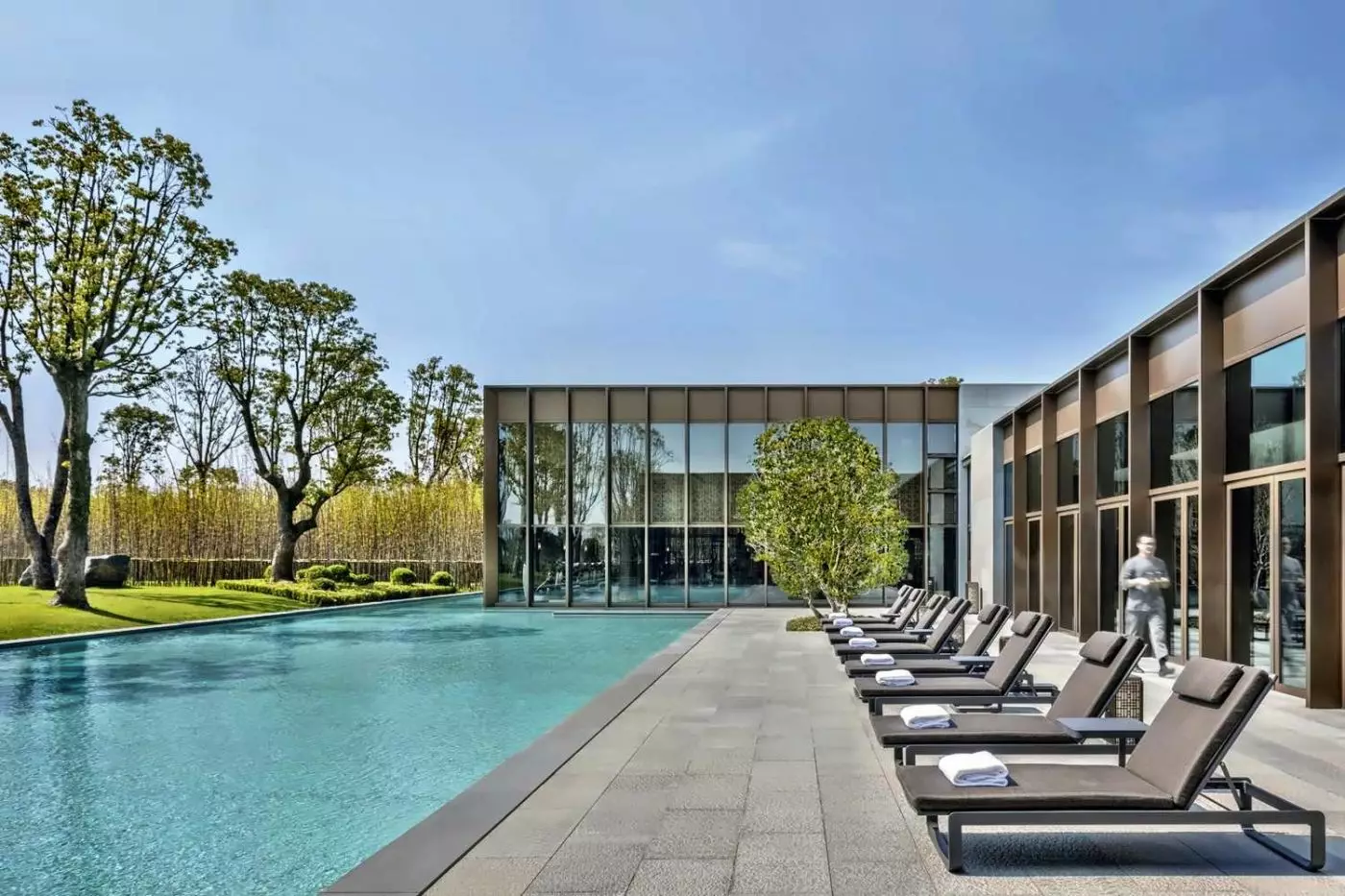
The Aman Spa and Wellness Centre has ten treatment rooms, bathing suites with banya and hammam facilities, a sauna and a cold plunge pool. A heated indoor swimming pool complements the outdoor pool facing the forest. Fitness, Pilates and yoga spaces allow a wellness stay to include movement as well as treatments. The facilities make the resort a considered extension to a city visit when rest deserves its own place in the itinerary.
For younger guests, the Children's Discovery Centre brings Chinese culture into activities such as lantern making, paper cutting and pottery. Family cycling adds time in the forest, while the villas provide shared space for quieter hours together. This combination lets a family stay have its own rhythm alongside the resort's cultural and wellness interests, without making every day depend on a trip into central Shanghai.
Amanyangyun is a rescue story on a grand scale. Ming and Qing villas were moved from Jiangxi to Shanghai.
The camphor forest gives the resort its soul. Ancient trees make the city feel far away, despite Shanghai being close.
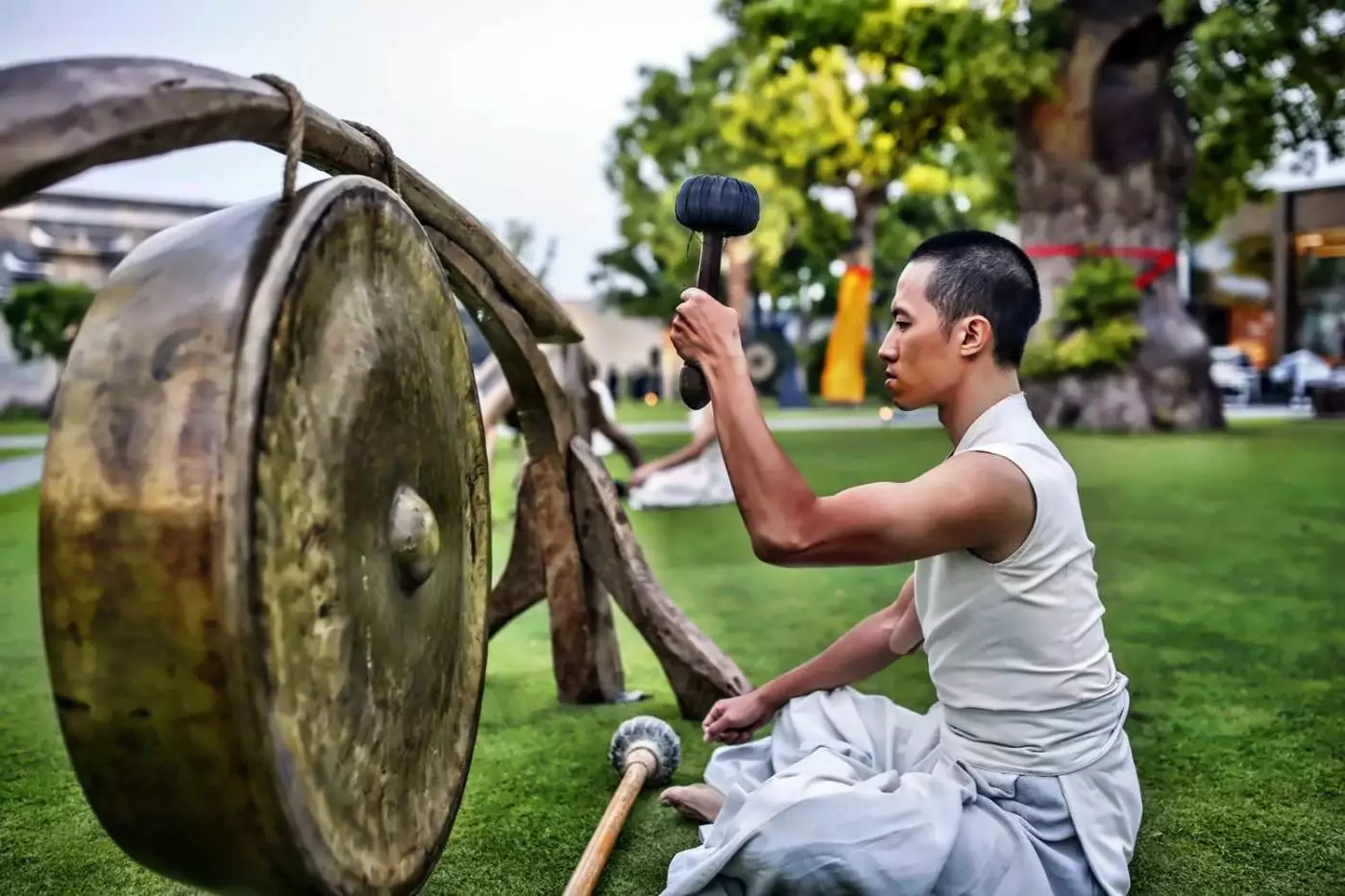
Nan Shufang is the cultural heart. Tea, calligraphy, and music unfold inside a restored antique villa.
6161 YUANJIANG ROAD
Playing this video may share data with YouTube. Please see our Privacy Policy.
Yes. Amanyangyun is a strong choice for travelers who want Aman privacy, cultural depth, nature, and Shanghai access. The resort has 24 suites, 13 ancient villas, restored Ming and Qing houses, camphor trees, five dining venues, and a large Aman Spa.
Amanyangyun is on the outskirts of Shanghai, set in a large landscaped sanctuary away from the city's busiest districts. The location suits travelers who want a peaceful resort stay while keeping Shanghai's dining, shopping, museums, and business areas reachable by car.
Amanyangyun is set among rescued camphor trees, lakes, gardens, and restored historic villas moved from Jiangxi Province. The project combines architectural conservation, landscape restoration, and Aman-style hospitality in a way that feels rare near Shanghai.
Amanyangyun has 24 contemporary suites and 13 ancient villas, including larger configurations for families and groups. This small inventory helps the resort feel private, even though the grounds are expansive and full of facilities.
Suites and pavilions have calm modern interiors, garden views, outdoor space, natural materials, and a refined residential mood. The ancient villas add more heritage character, with restored stone, timber, courtyards, and larger layouts.
More amenities
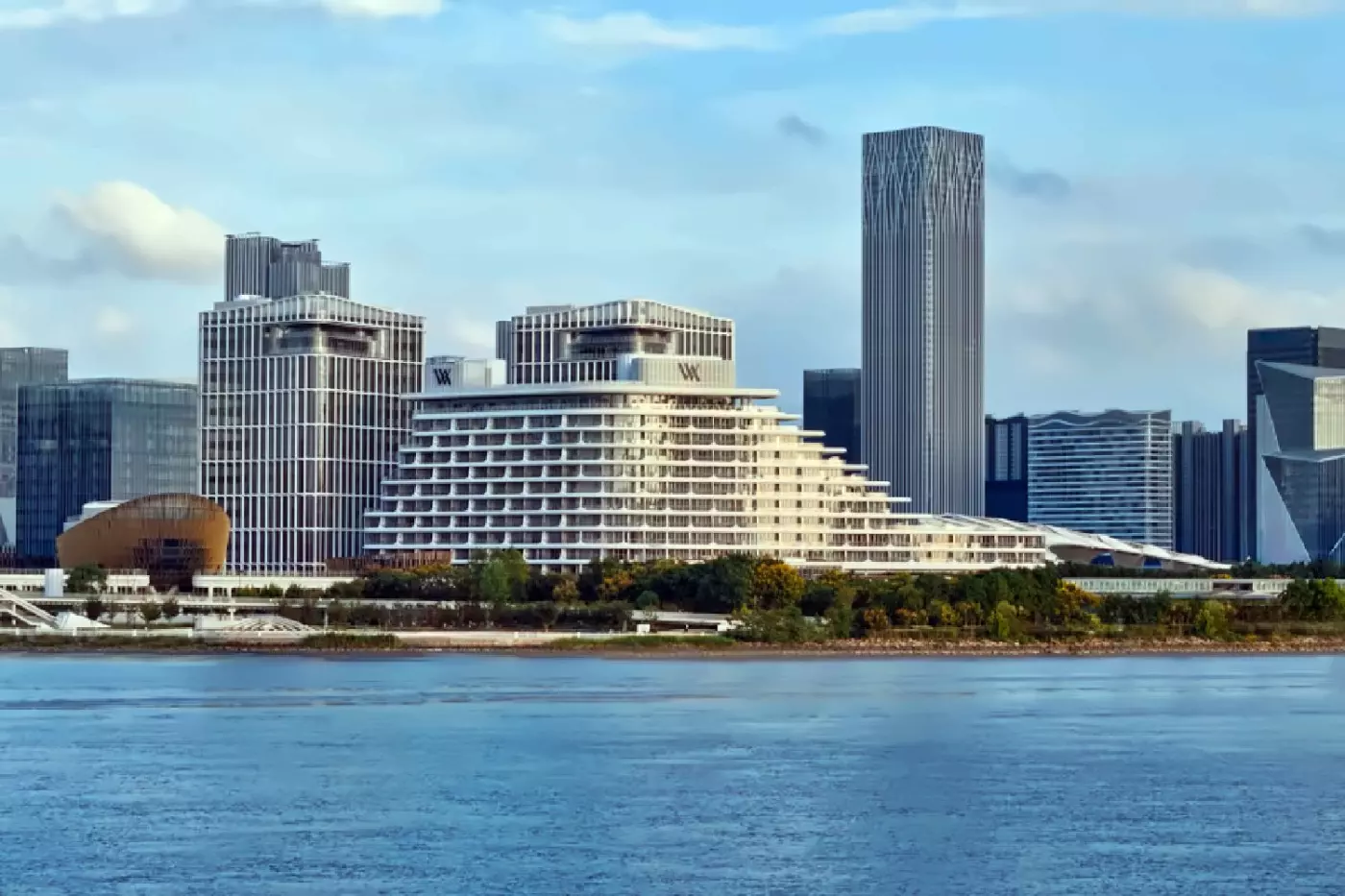
Waldorf Astoria Shanghai Qiantan sits on the Huangpu River in Pudong's Qiantan district, a newer waterfront area often descri...
More amenities
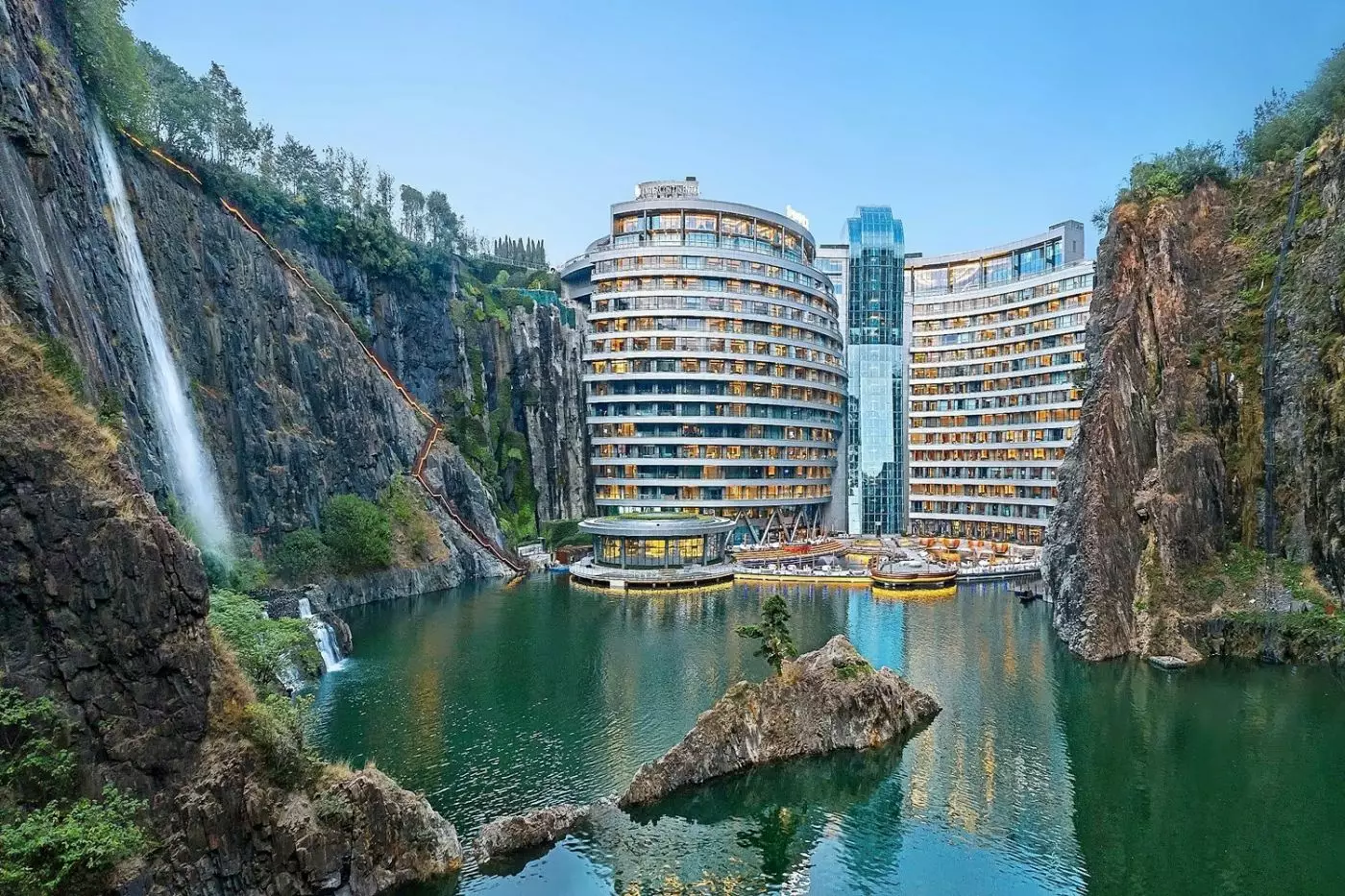
InterContinental Shanghai Wonderland is not a normal Shanghai luxury hotel. It is a destination property in Songjiang, built...
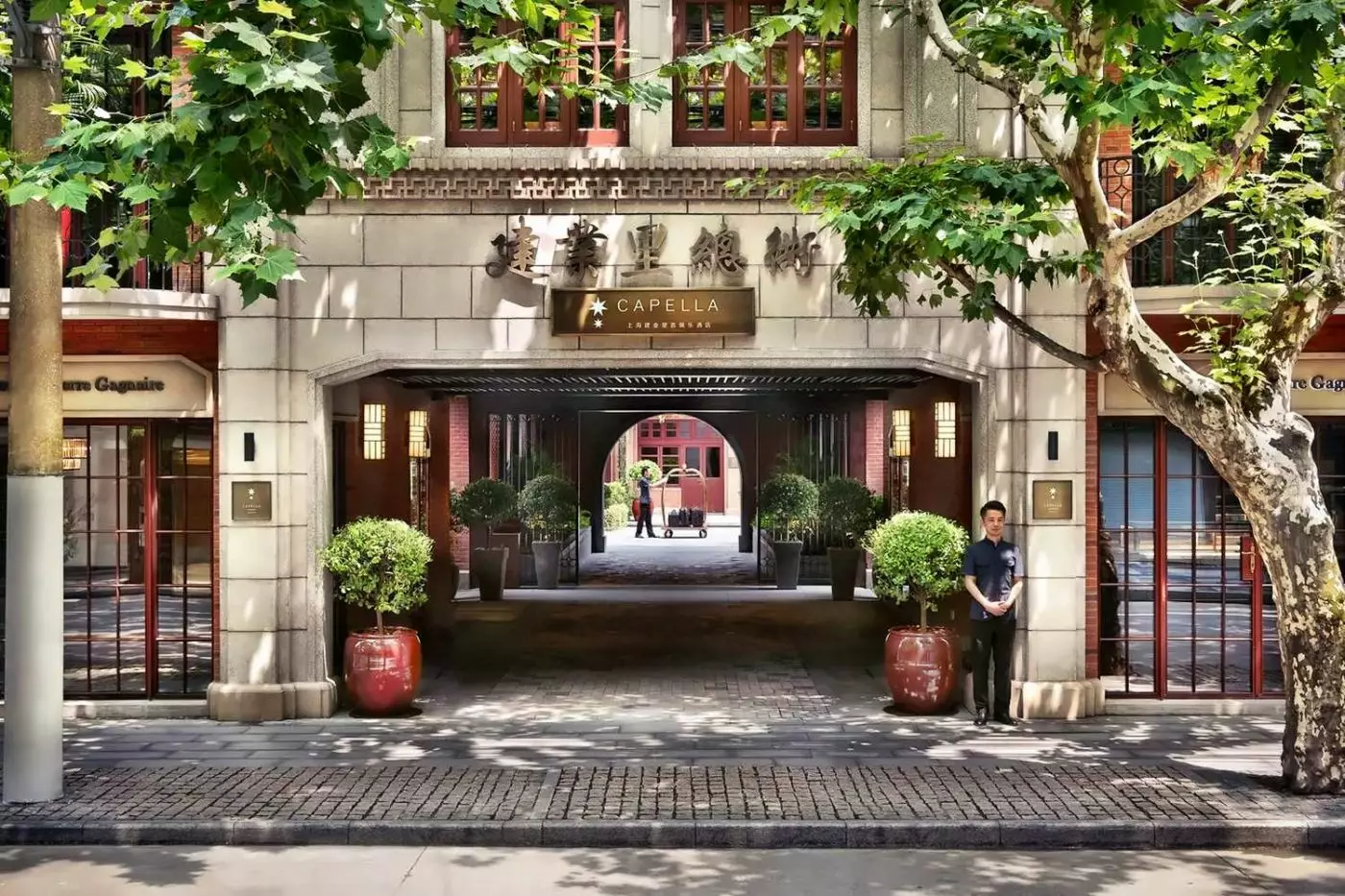
Capella Shanghai, Jian Ye Li is one of the most distinctive luxury hotels in Shanghai because it does not behave like a tower...