

Best for
Book Park Hyatt Siem Reap if you want a 104-room luxury hotel with Angkor access, central location, pools, spa, and dining. Choose another hotel if you prefer a remote resort, a lower price point, or a property directly beside the temples.
Please choose a hotel or destination from the list.
Your private search
Finding exceptional stays
Best for
Book Park Hyatt Siem Reap if you want a 104-room luxury hotel with Angkor access, central location, pools, spa, and dining. Choose another hotel if you prefer a remote resort, a lower price point, or a property directly beside the temples.
What makes it special
Park Hyatt Siem Reap is a strong luxury choice for travelers who want Angkor access, city convenience, dining, spa, and service. It suits couples, culture travelers, families, Hyatt guests, temple visitors, and guests who want a central Siem Reap base.
Insider tip
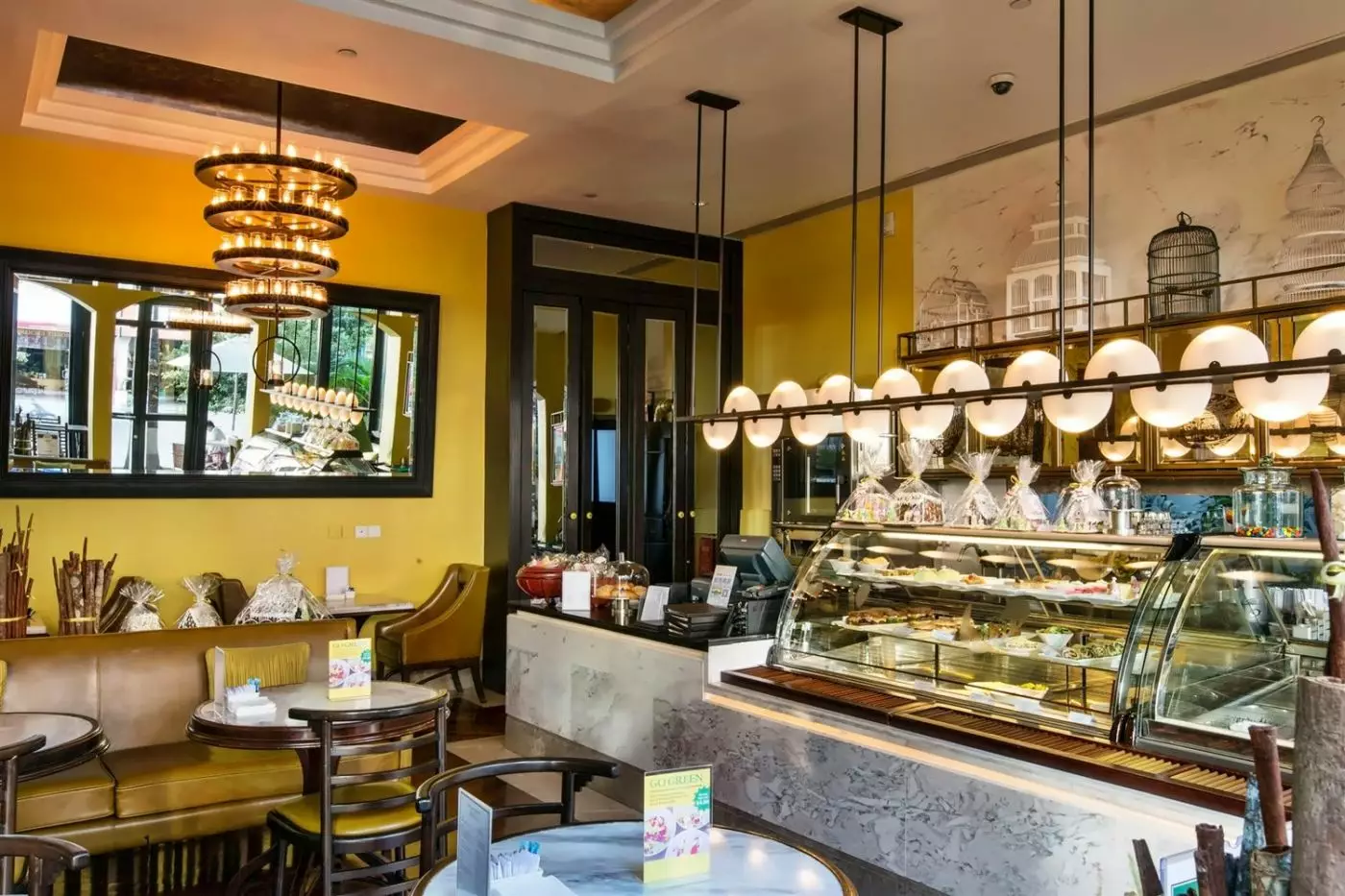
Park Hyatt Siem Reap offers dining venues such as The Dining Room, The Living Room, and Glasshouse. Guests can enjoy Khmer flavors, international dishes, afternoon tea, cocktails, light meals, and refined hotel dining.
Free membership gives you access to preferred rates, exclusive benefits and current promotions for your stay.
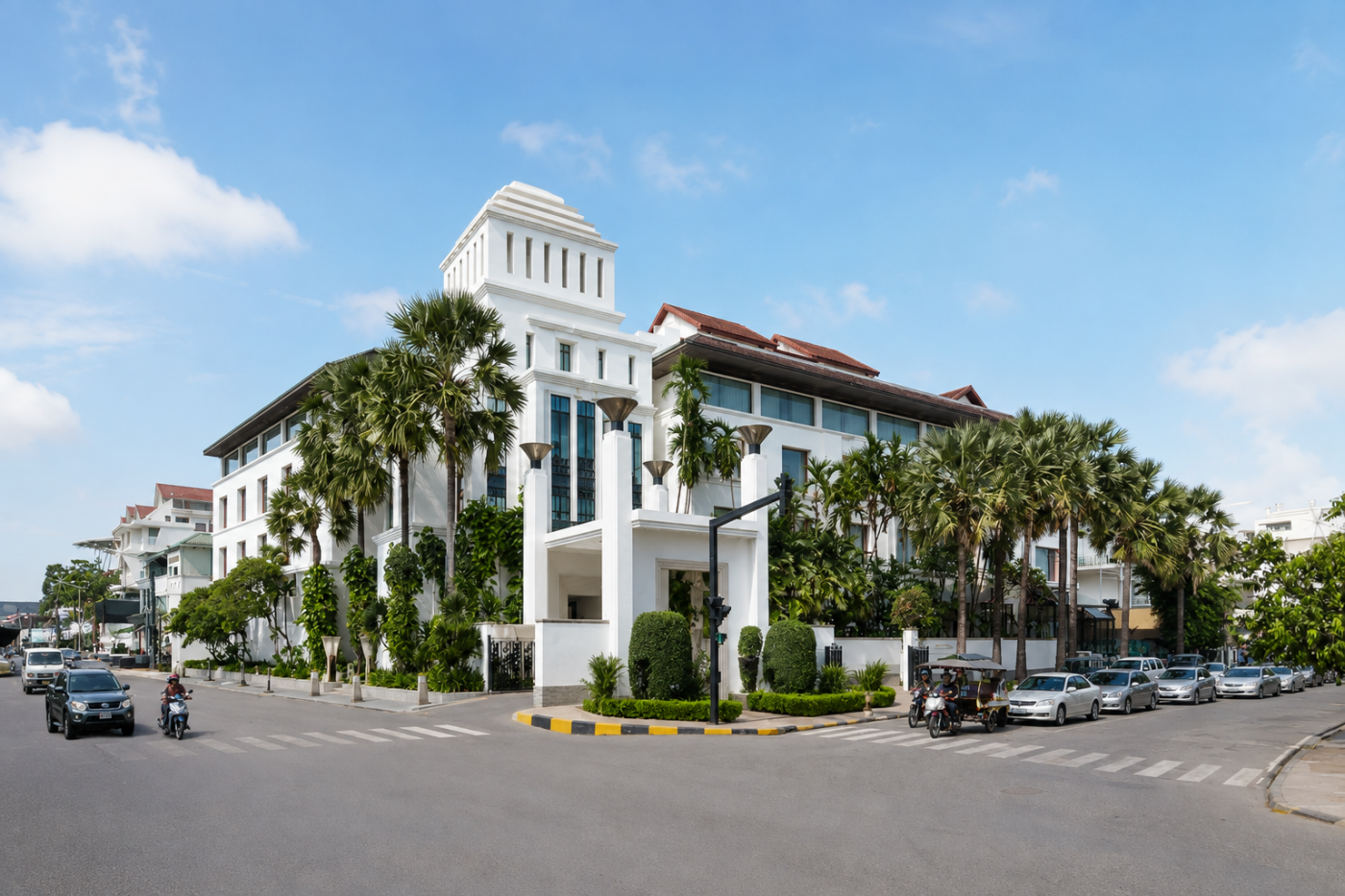
Park Hyatt Siem Reap puts you in the center of town without making the hotel feel exposed to it. Old Market, Pub Street, restaurants, and the riverside are within walking distance; Angkor Wat is a drive away. Behind the Sivutha Boulevard frontage, the rooms, courtyard, and pools provide a quieter counterpoint to a day among the temples. This is a city hotel with places to pause, not a countryside resort. Its appeal lies in being able to spend the morning at Angkor, return for a swim, and go out on foot in the evening.
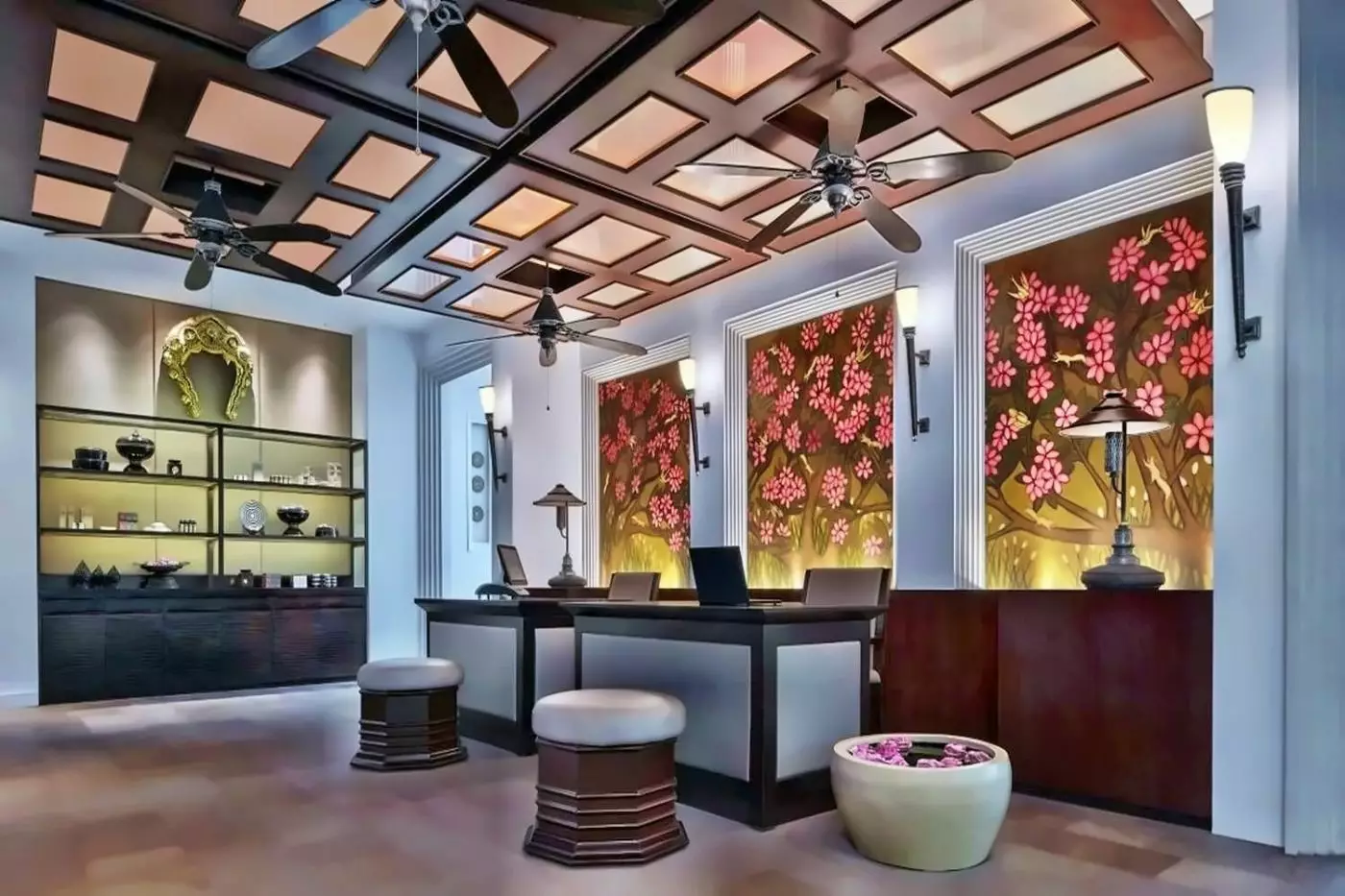
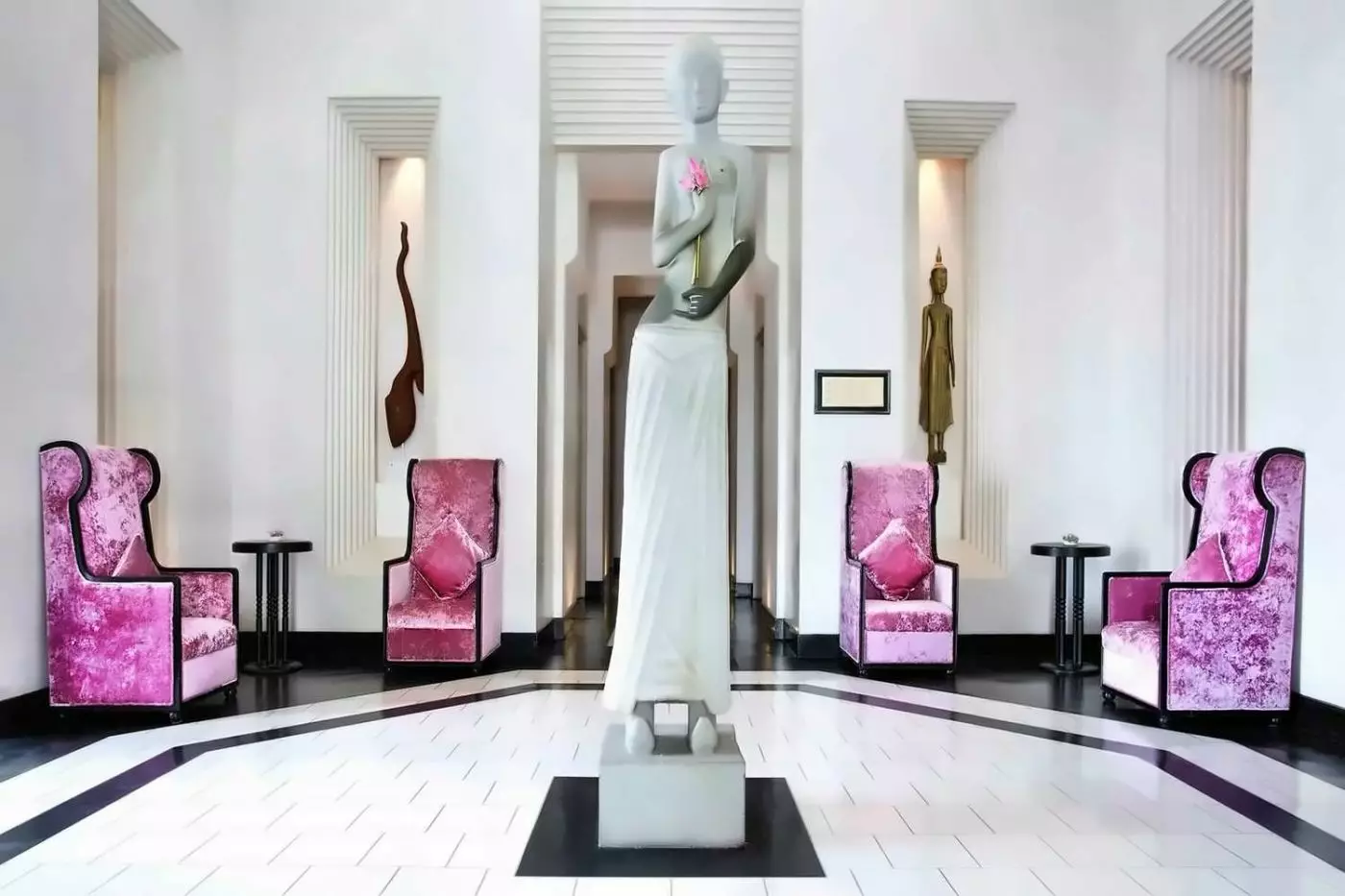
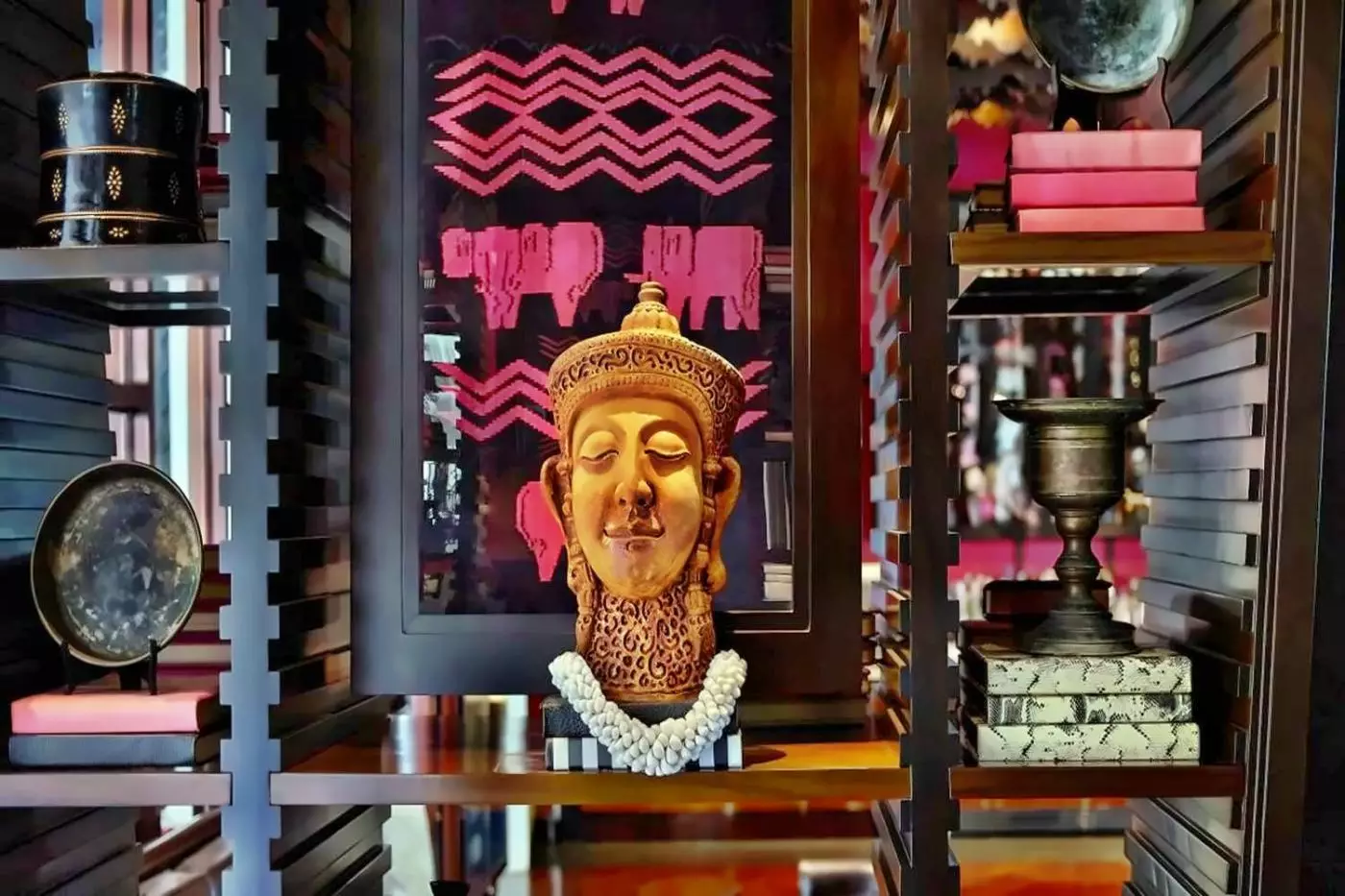
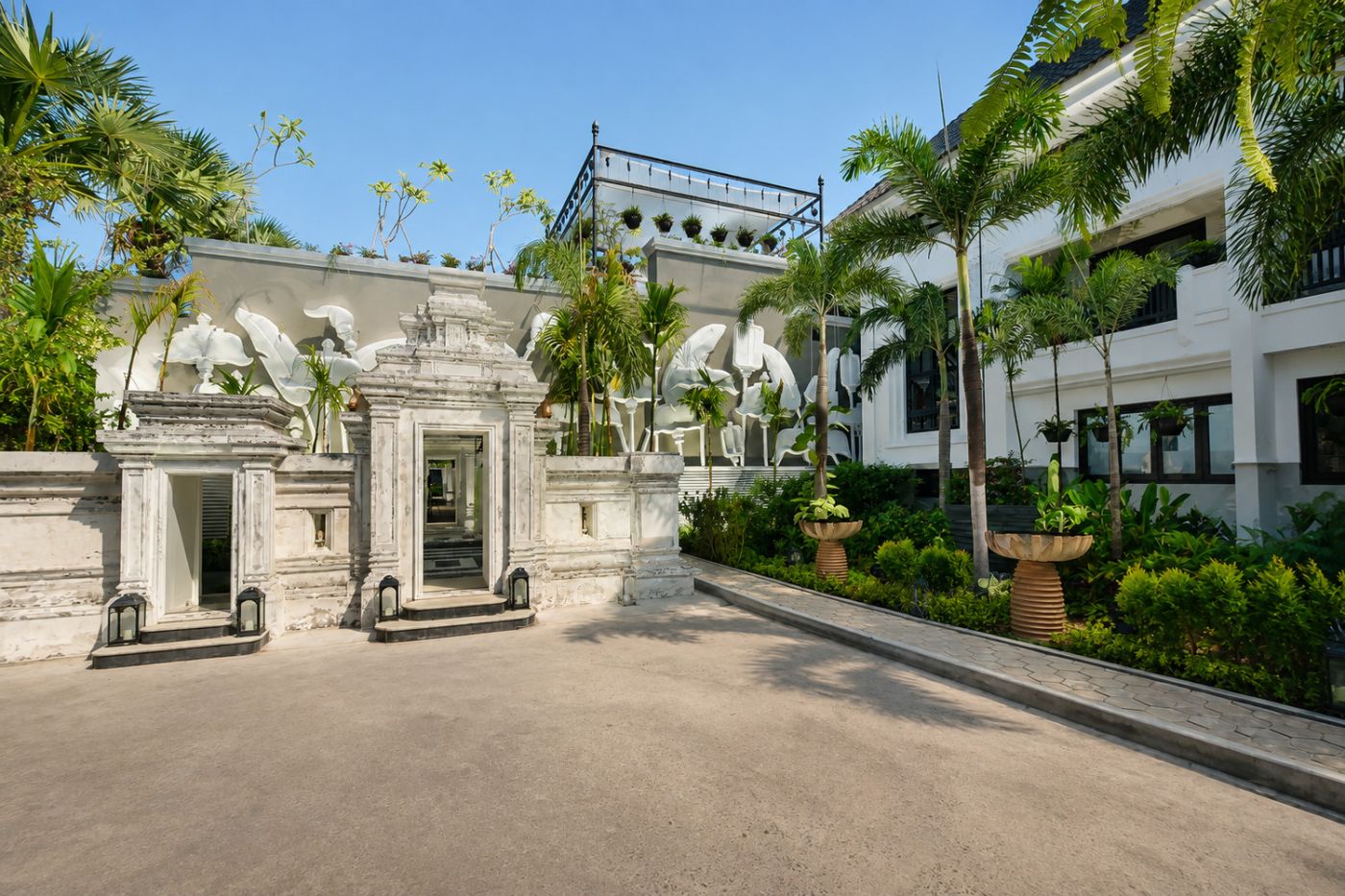
The building was formerly Hotel De La Paix, and Bill Bensley's redesign gives it a recognizable mix of Art Deco lines and Khmer references. Marble, dark wood, ceramics, and planted courtyards bring detail to a relatively compact footprint. There is a sense of arrival as you move in from the street, but the design does not depend on grand grounds or a distant view. Travelers who want their hotel to feel connected to Siem Reap, while retaining the standards and service of Park Hyatt, will understand the choice quickly.
 104
104
 Charming
 Fitness
 Pool
Pool
 Spa
Spa
 Culture
 Adventure
 Wheelchair Accessible

The Park Room offers a serene retreat where comfort meets refined elegance. It spans a generous 35 square meters, allowing guests to move freely. Contemporary...

The Garden View Room offers a tranquil space filled with warmth and charm. It spans 35 square meters, providing enough room for comfort and relaxation....

The Deluxe Room offers an inviting space that feels both elegant and comfortable. It is noticeably larger than standard rooms, measuring a generous 54 square...

The Park Suite offers a refined escape in the heart of Siem Reap. It blends modern comfort with timeless elegance. Measuring 71 square meters, it...

The Park Executive Pool Suite in Siem Reap offers a sanctuary of refined luxury. Spanning 99 square meters, it provides ample room for comfort and...

The Rooftop Garden Suite is an exquisite retreat offering unmatched elegance and space. It spans 152 square meters, creating a haven for comfort and style....

The 2 Bedroom Pool Suite in Siem Reap is a sanctuary of elegance and comfort. It offers an expansive 182 square meters of living space,...

The Presidential Suite in Siem Reap is the pinnacle of refined luxury and comfort. Spanning an impressive 248 square meters, it offers a sanctuary of...
The location works particularly well when temples are only one part of the visit. The Old Market and Pub Street are close enough for an unplanned evening walk, and the Siem Reap River is also within walking distance. Angkor Archaeological Park, including Angkor Wat, is roughly 15 to 20 minutes away by car according to the hotel. That is convenient for a sunrise departure, though it is worth remembering that the wider archaeological area is extensive; a good driver and a measured itinerary matter more than a few minutes saved at the start.
Arrivals require a little more planning than older Siem Reap guides may suggest. Siem Reap-Angkor International Airport is about 50 kilometers from the hotel, with the drive typically taking around 50 minutes depending on traffic. Private transfers can be arranged in advance at an additional charge. Once settled, guests can ask the concierge to organize transport and guides for Angkor Wat, Bayon, and Ta Prohm. The hotel's central position makes it easy to split sightseeing across several days instead of treating the temples as one exhausting circuit.
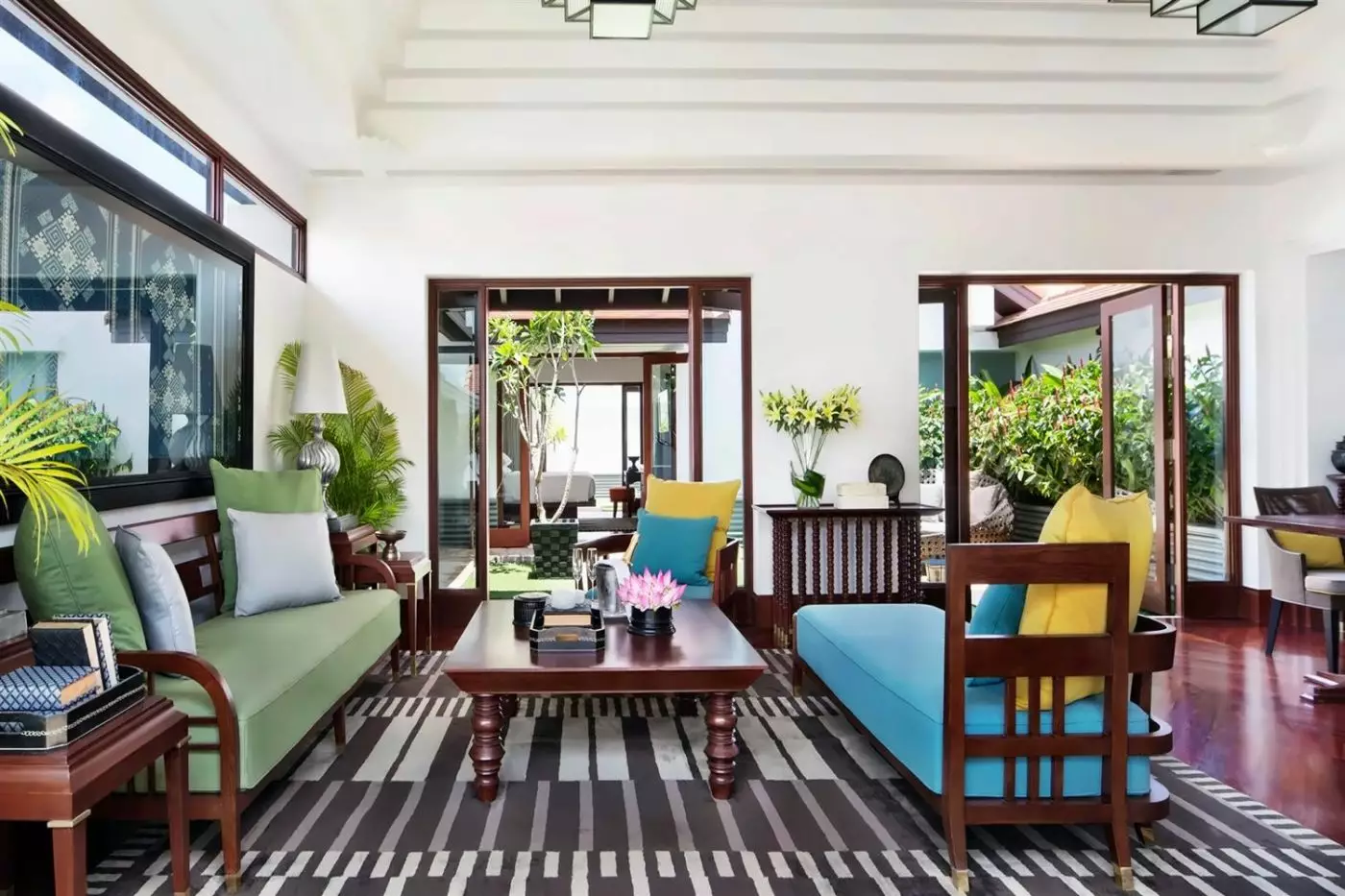
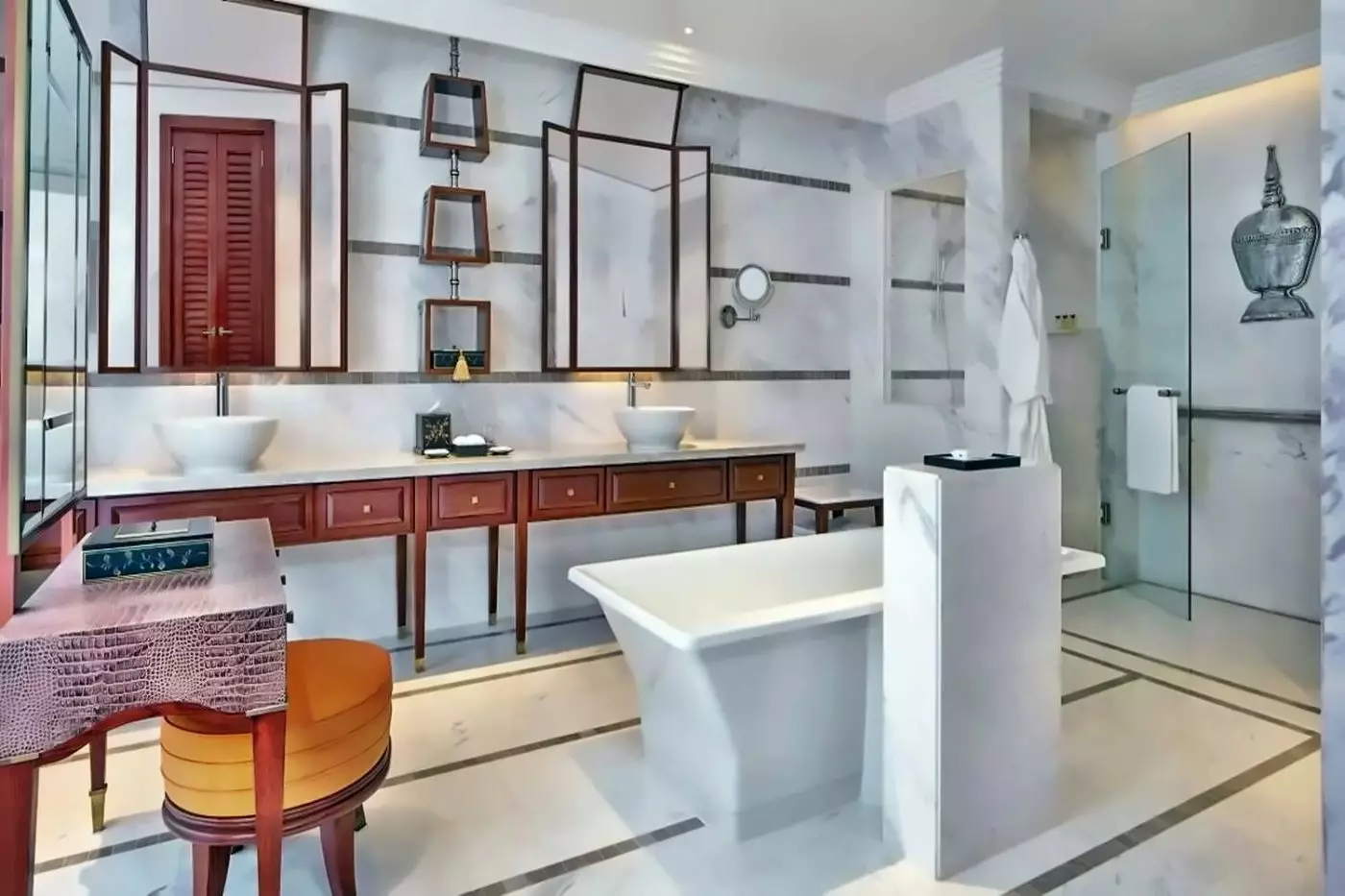
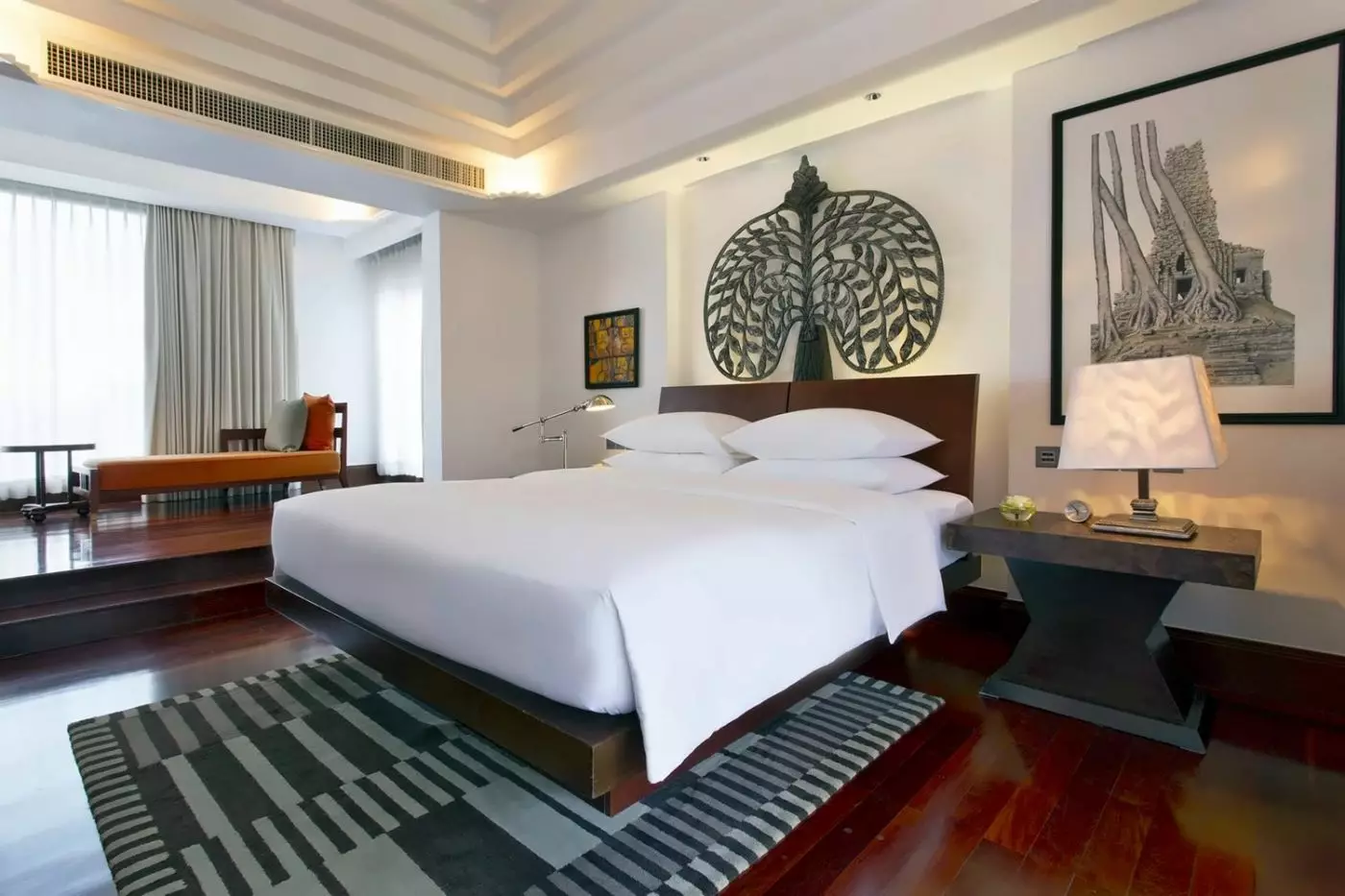
There are 104 rooms and suites, including 13 suites. The standard king and twin rooms measure 35 square meters and have marble bathrooms with a bathtub and separate rain shower. This is a sensible base for travelers who expect to spend long days outside. For a more sheltered outlook, book a garden-view category rather than assuming that every room faces the inner courtyard; city-facing rooms look toward the surrounding streets. The 54-square-meter 1 King Bed Deluxe adds a longer lounge area, which can make a meaningful difference when afternoons are spent inside.
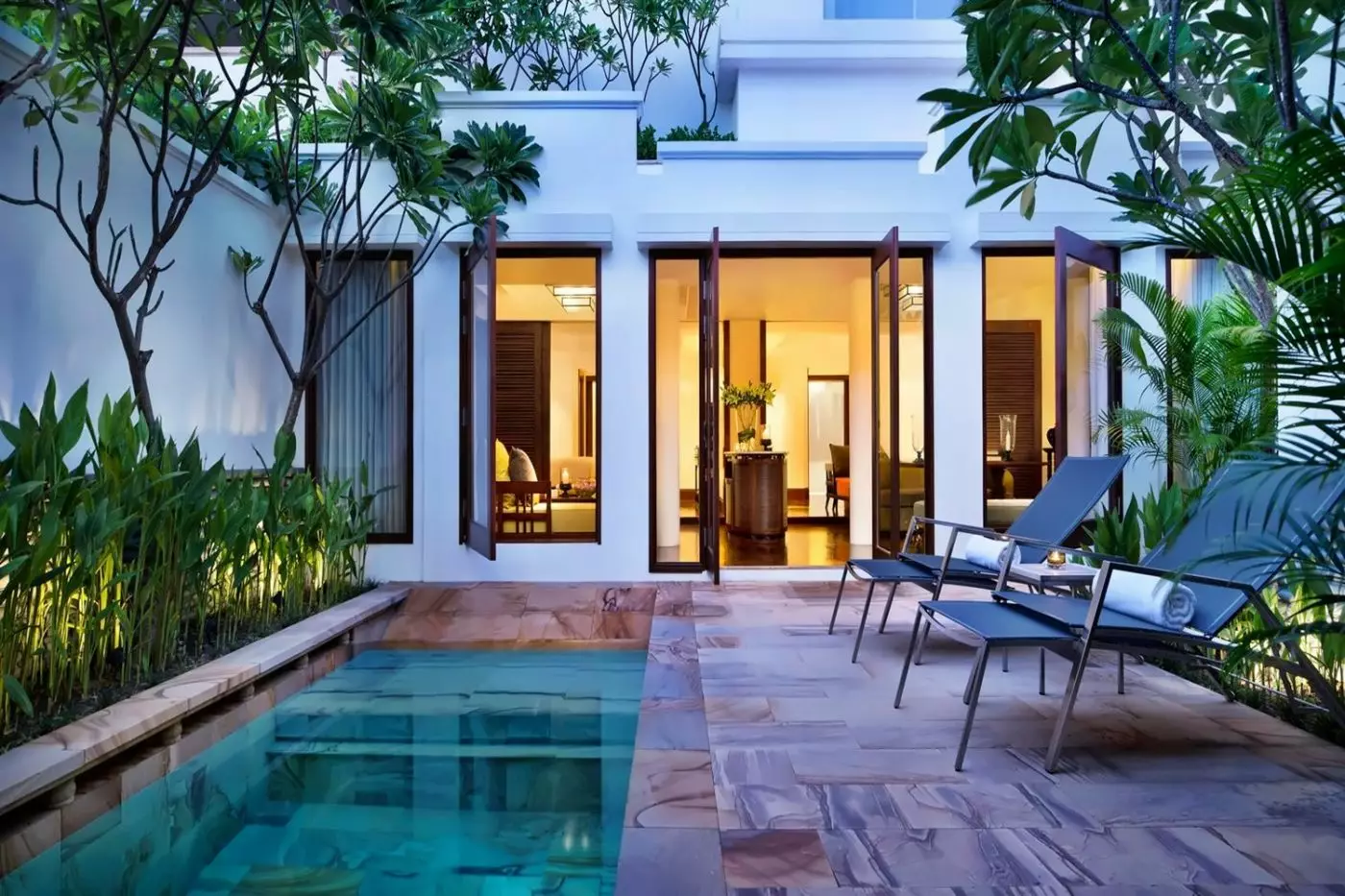
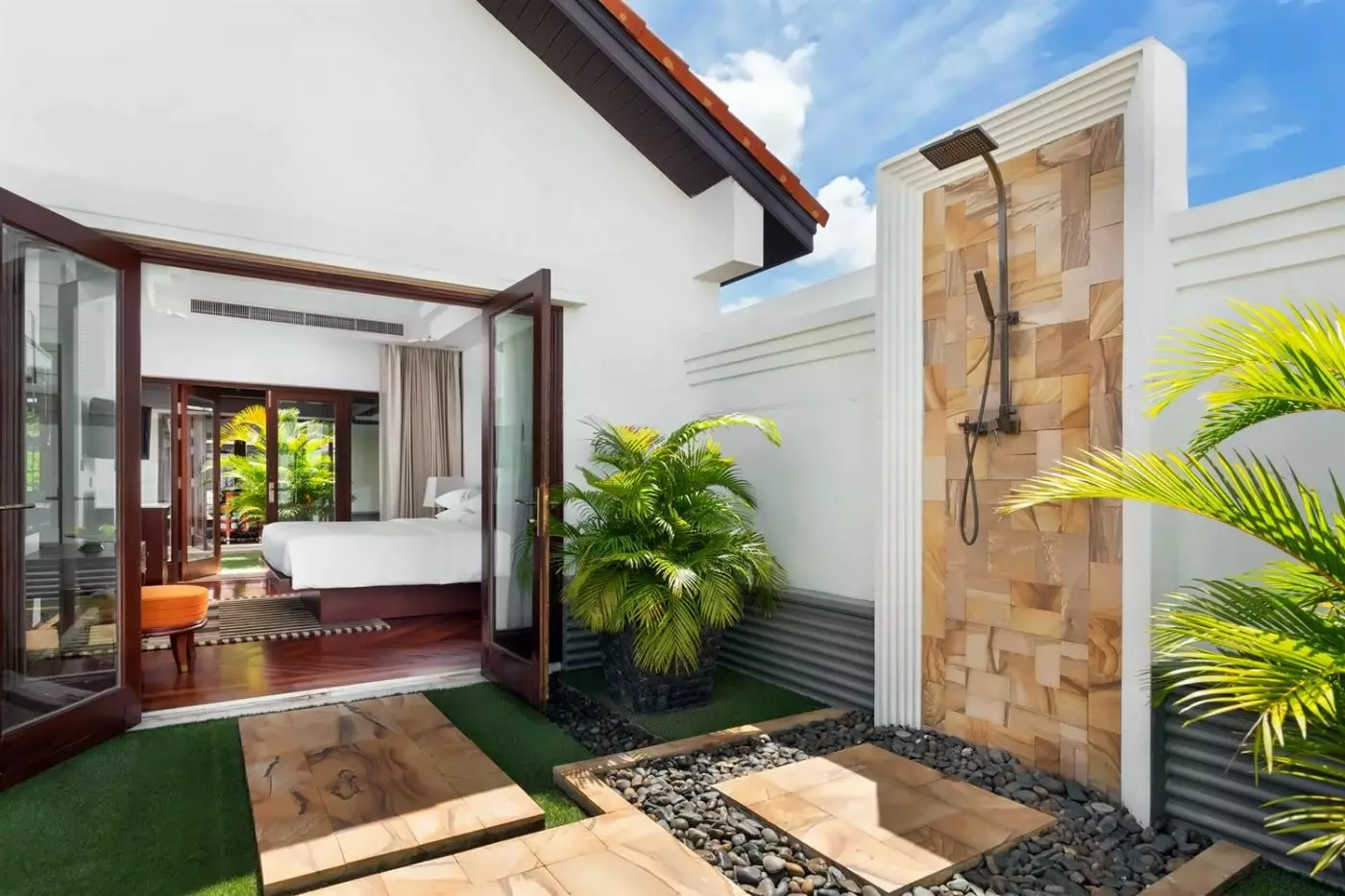
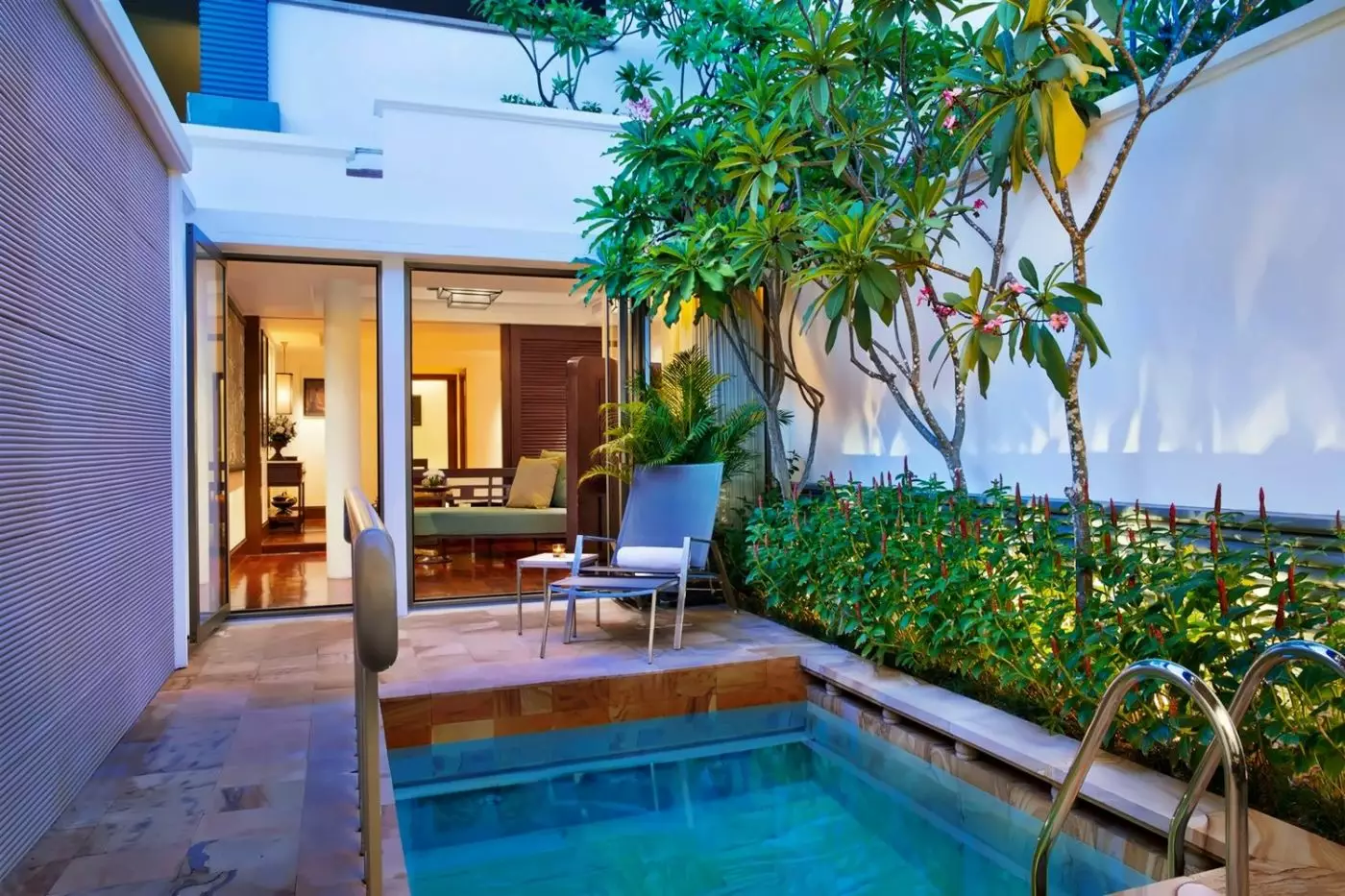
The Park Suite King is a clearer step up for a longer stay: at 71 square meters, it has a separate living room and bedroom. The 99-square-meter Park Executive Suite adds a private plunge pool, giving guests a place to cool off without returning to a shared pool. For outdoor space rather than a pool, the Rooftop Garden Suite has a private garden and an outdoor rain shower. Its internal stairs make it less suitable for some travelers with mobility needs, so the floor plan deserves attention before booking.
Families and friends traveling together have a more distinct option in the Two Bedroom Pool Suite. At 182 square meters, it has two bedrooms with en-suite bathrooms, two living areas, and a private plunge pool. The larger Presidential Suite has two bedrooms, gardens, and separate dining and living areas, though it too includes internal stairs. Connecting or adjoining rooms are possible in selected categories but are limited and should be requested ahead of time. Cribs are available on request, while extra-bed arrangements depend on the room and availability. Confirm the sleeping layout rather than relying on suite size alone.
The Dining Room is the main setting for breakfast and dinner. Its marble floors, Khmer ceramics, and Art Deco furnishings make a more composed backdrop for a meal than the casual spaces elsewhere in the hotel. The menu draws on Cambodian food culture alongside broader choices, so it is useful both for a first evening after travel and for a dinner devoted to local flavors. Breakfast here also fits the rhythm of an Angkor visit: guests can plan an early return from the temples before deciding whether the afternoon calls for another excursion.
The Living Room changes the pace. It serves lunch, afternoon tea, dinner, and cocktails in a setting suited to a less formal meal or a quiet hour between outings. Its Khmer-focused selections offer another way into regional ingredients without committing to a long dinner. The Glasshouse is the lighter stop for pastries, ice cream, coffee, and small dishes, with terrace seating as well as an indoor space. These venues give the hotel useful range over several nights, although its central address also makes exploring independent Siem Reap restaurants easy.
The courtyard can become a dining setting in its own right, with Khmer dishes and Apsara dance presented beneath the banyan tree. Performance schedules are not guaranteed every day, so ask the hotel what is planned during your stay before building an evening around it. That small piece of planning is worthwhile: the experience has a different character from dinner in The Dining Room, and the courtyard is one of the spaces that makes this urban property feel set apart from the streets outside.
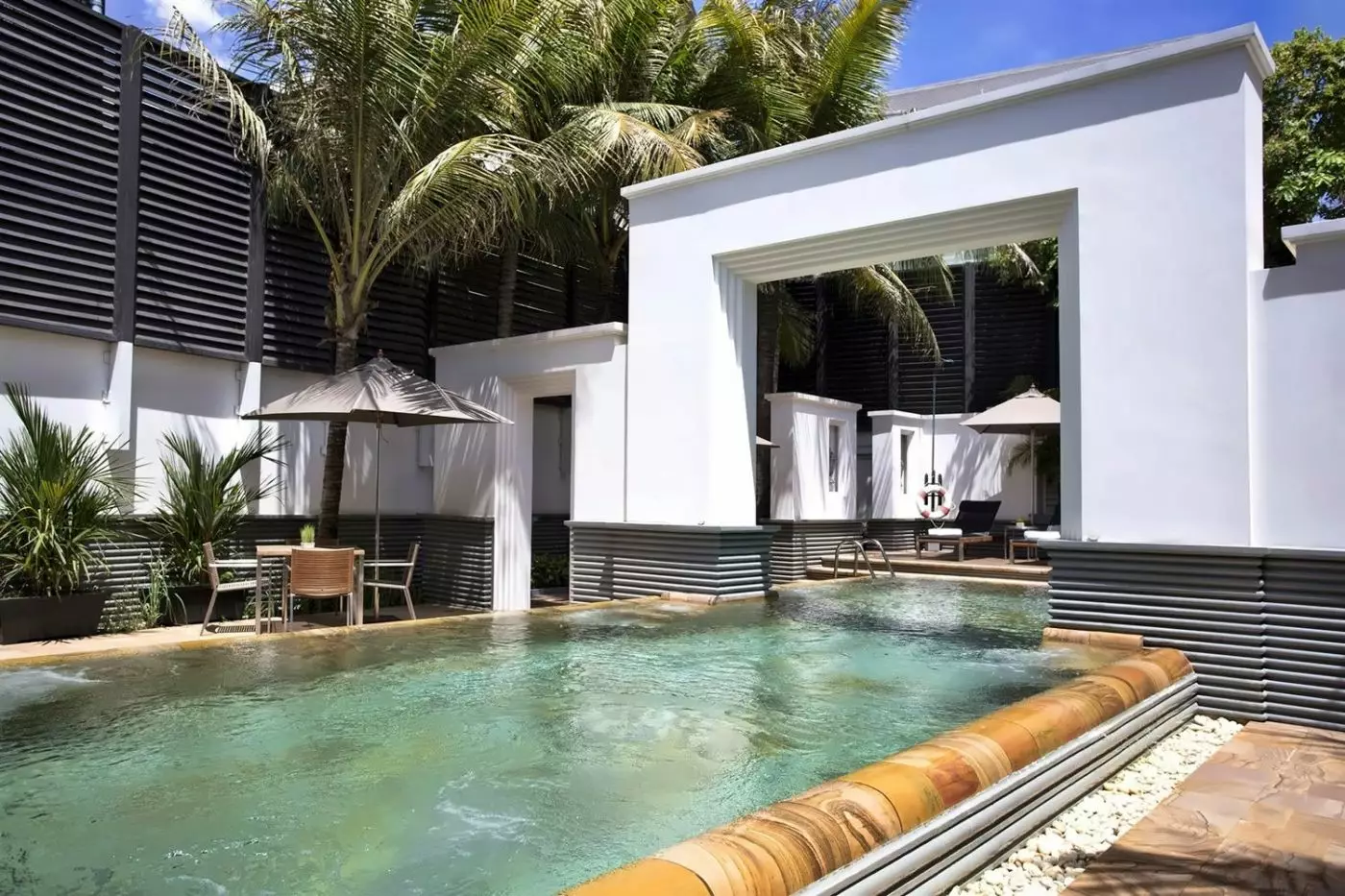
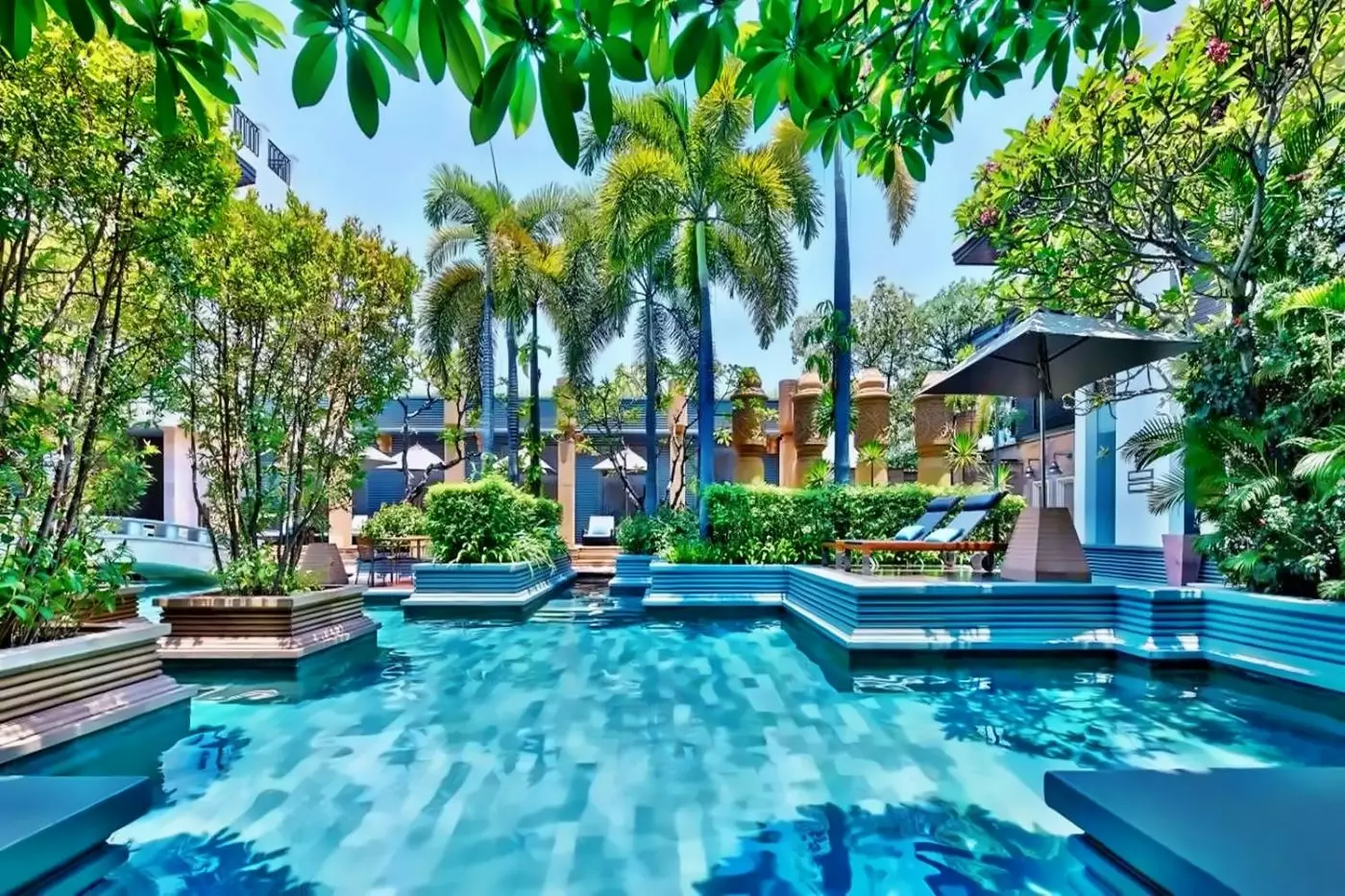
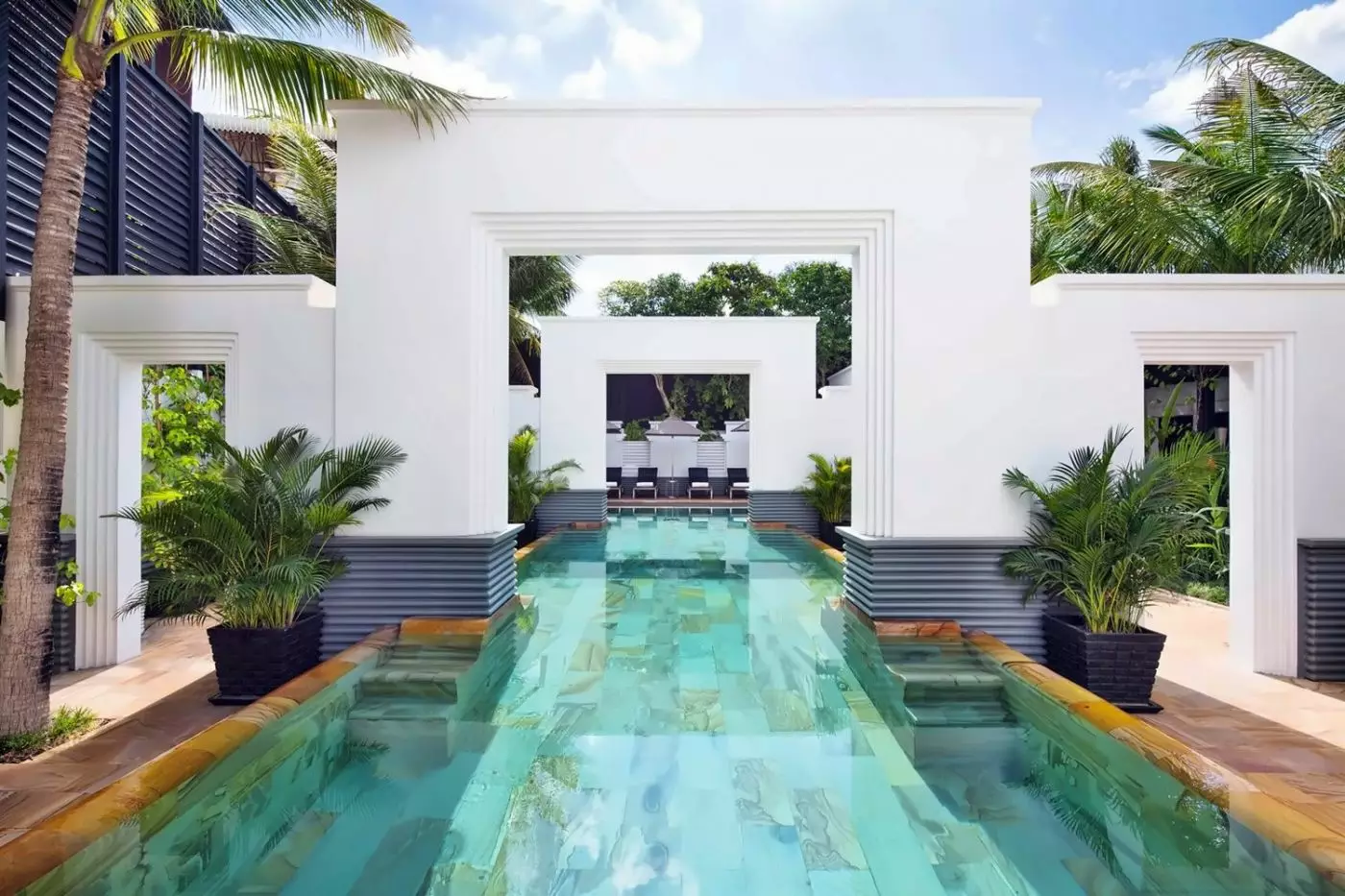
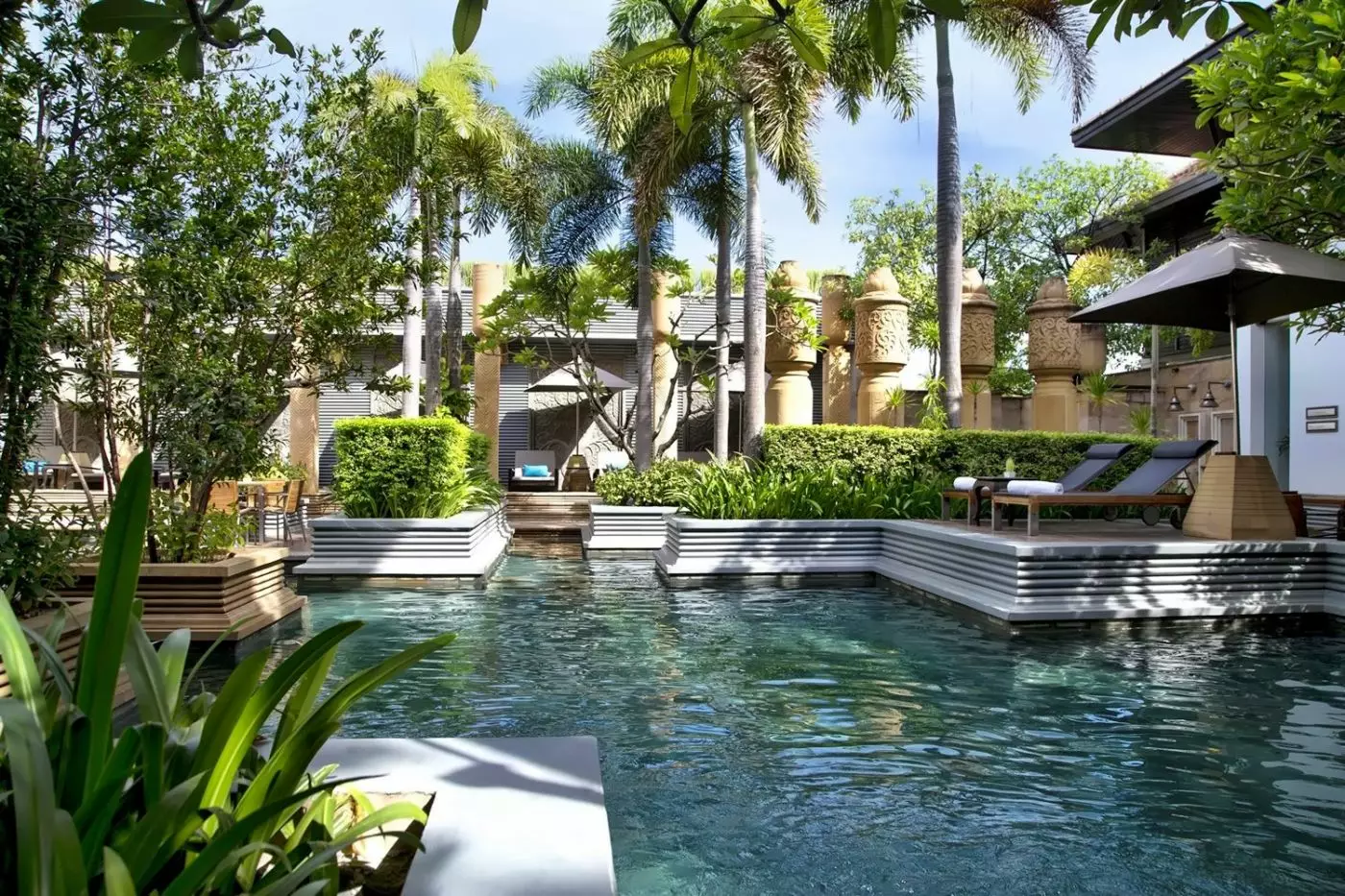
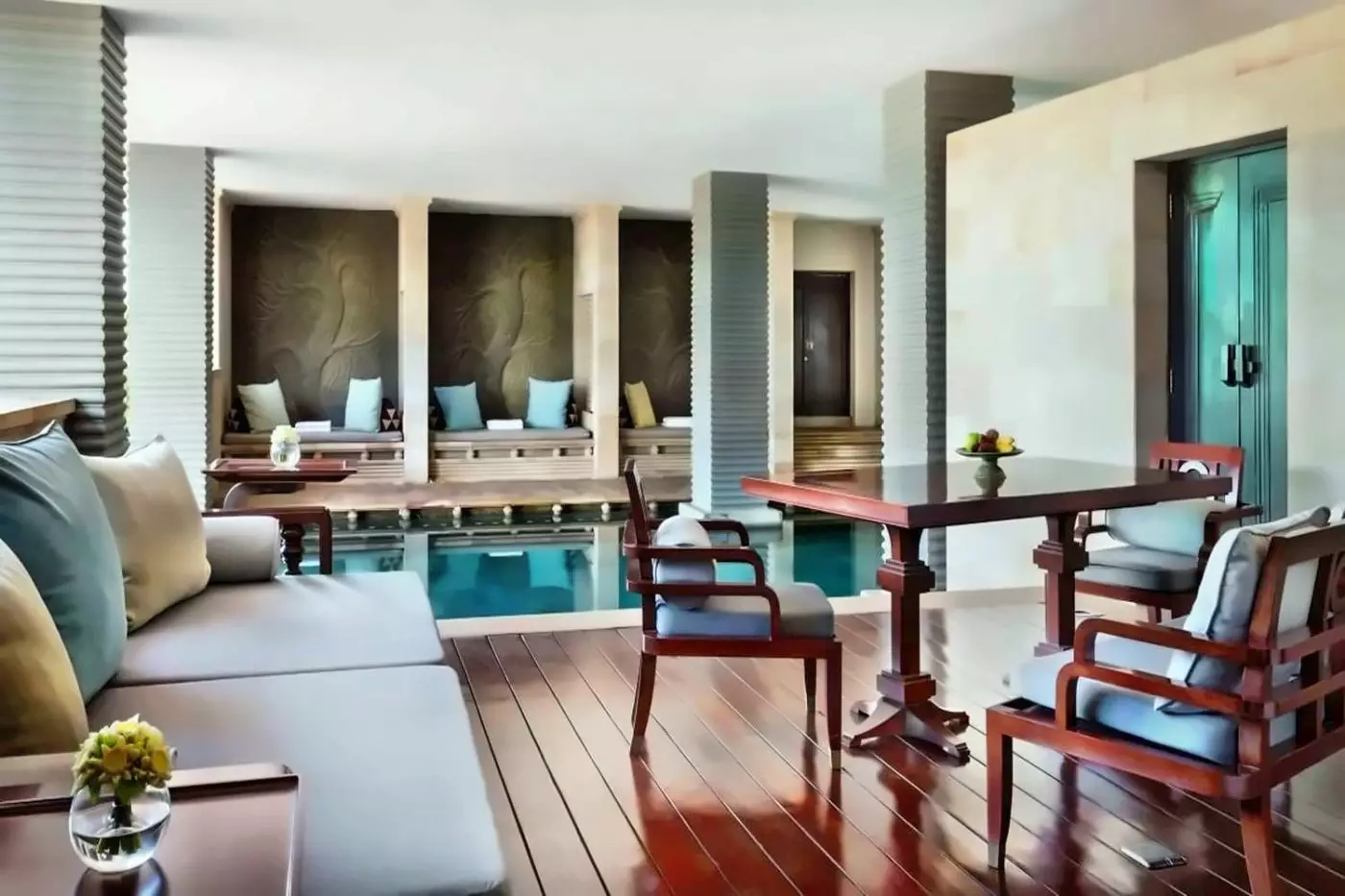
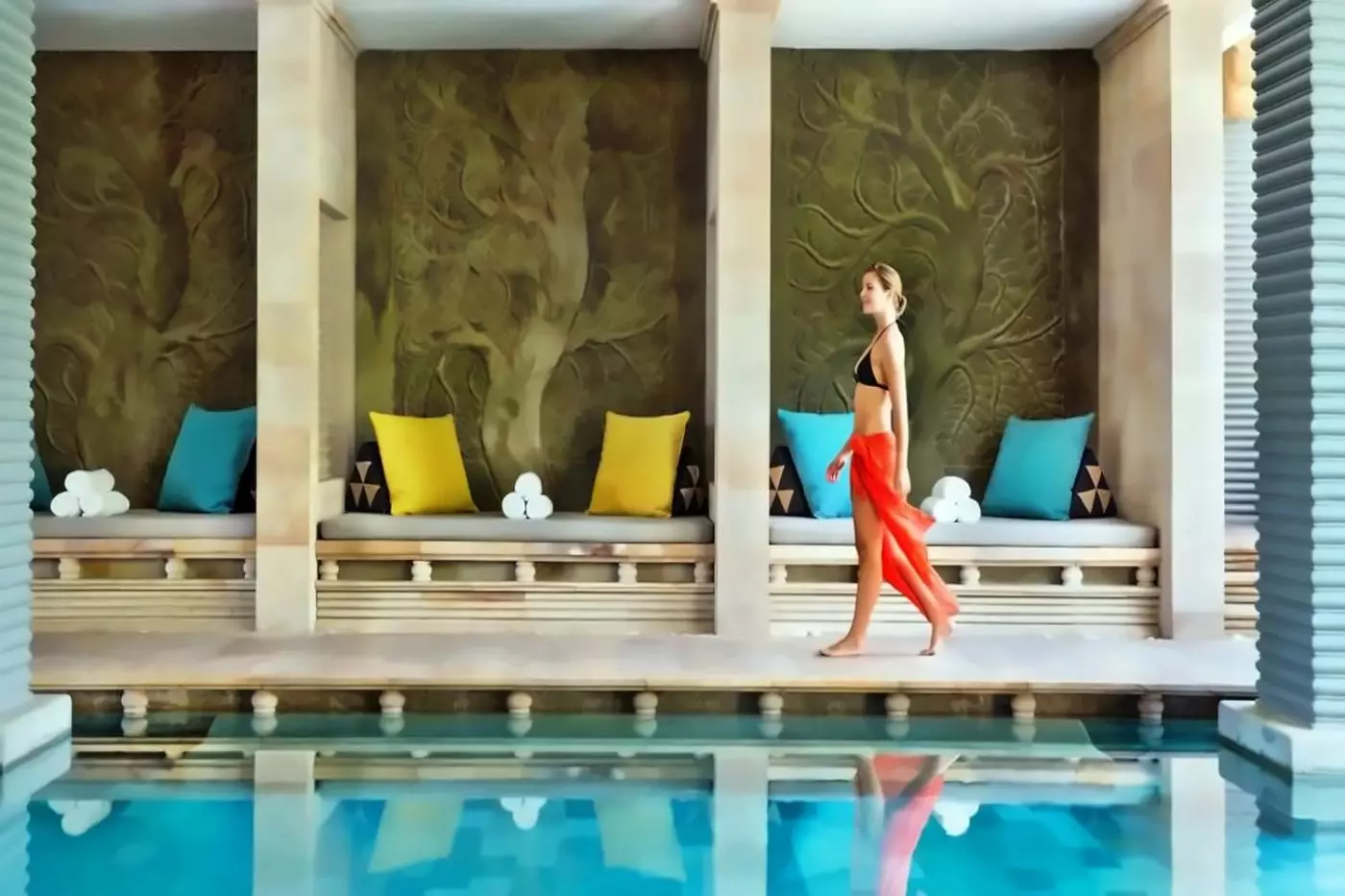
The two pools serve different purposes. On the ground floor, a saltwater lap pool sits in the courtyard garden beneath parasols and cabanas. The first-floor free-form pool has a more leisurely, lagoon-like shape, with tropical planting and places to sit in open air or partial cover. Neither turns the hotel into a sprawling resort, yet both are particularly useful after hours of walking on stone in the heat. Families should note that children must be accompanied by an adult at the pools.
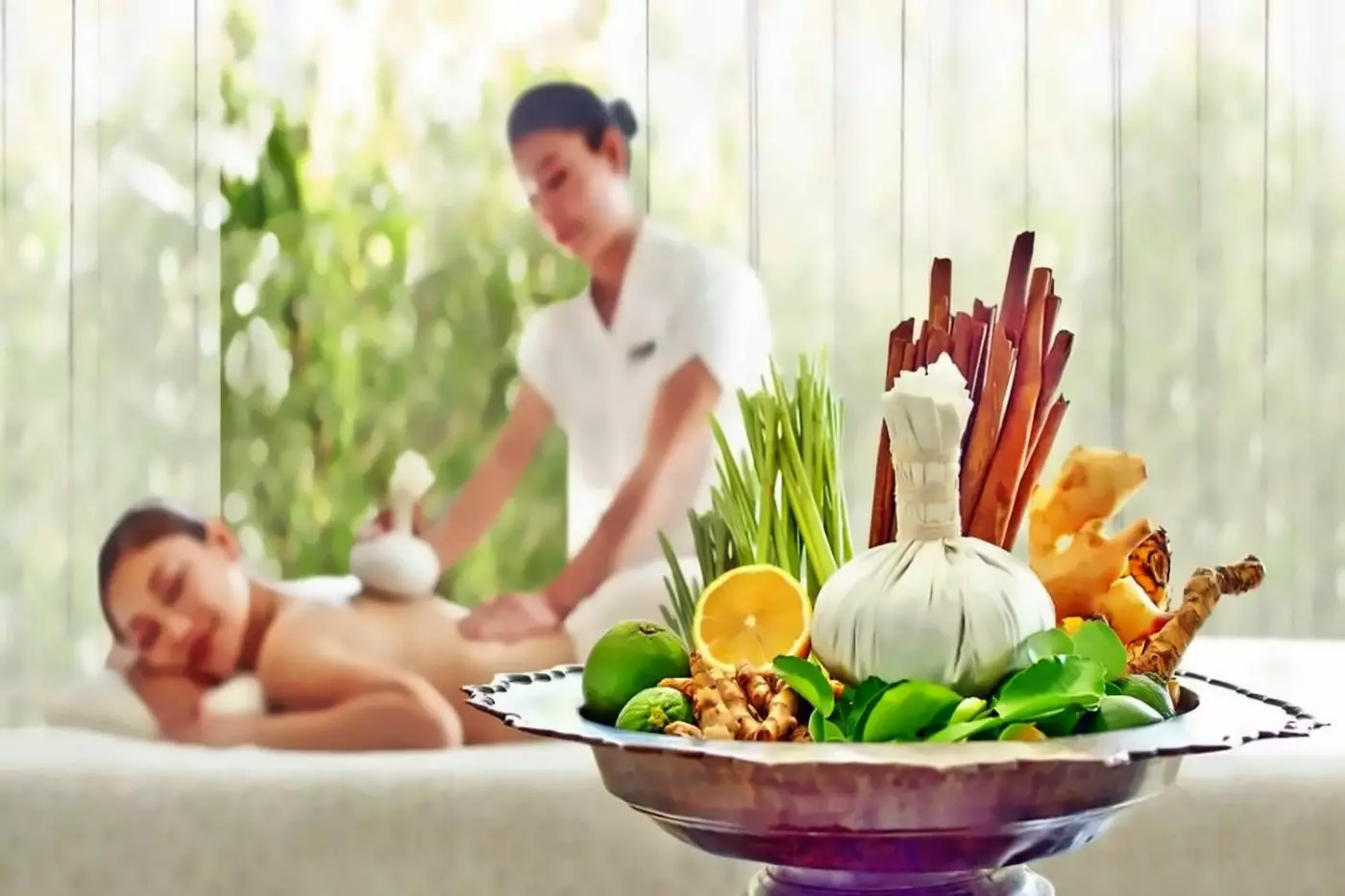
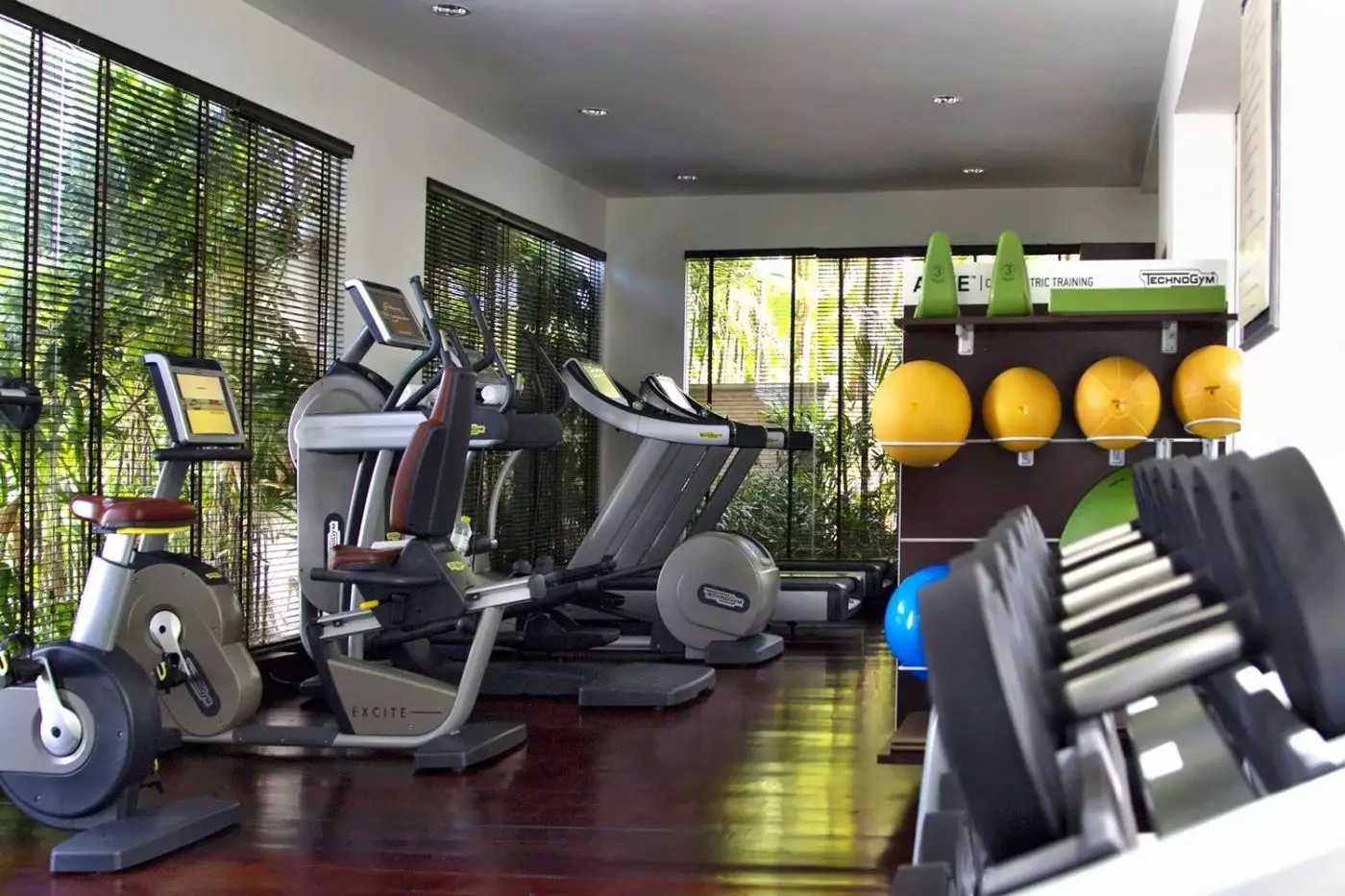
The Spa at Park Hyatt Siem Reap offers treatments inspired by Khmer wellness traditions, including massage and body care using locally inspired ingredients. A foot massage by the pool is an appealingly simple way to recover after a temple visit. The fitness center is open around the clock, and private movement or yoga sessions are among the hotel's wellness experiences. This is enough to build restorative time into a sightseeing stay, though guests seeking a trip centered mainly on extensive wellness facilities may prefer a more spacious resort setting.
Siem Reap rewards a slower schedule than a checklist of famous temples. The hotel's concierge can arrange guided temple journeys and other Cambodian cultural experiences, including cooking and craft activities; reserve ahead for those involving guides or transport. Families can ask about child-suited activities and children's menus, while in-room babysitting may be arranged subject to availability. Laundry and 24-hour in-room dining are practical supports for a stay of several days, especially when early starts and hot afternoons change the usual meal and clothing routine.
Park Hyatt Siem Reap is most persuasive for travelers who want Angkor by day and the freedom of central Siem Reap afterward. Its design, dining choices, pools, and varied suites make returning to the hotel part of the day rather than simply the end of it. The trade-off is clear: there are no broad resort grounds or rural silence beyond the room. If walking into town matters as much as a calm place to return to, that compact urban setting becomes the reason to stay.
A luxurious colonial residence in the city's downtown area. Park Hyatt Siem Reap was completely reimagined by award-winning designer - Bill Bensley.
A heritage landmark in Siem Reap since 1957. This architectural jewel takes inspiration from Cambodian art and the world-famous Angkorian ruins.
Begin your journey into the rituals and traditions of the ancient Khmer civilization. Enjoy experiences - from exquisite dining and culinary tours.
SIVUTHA BOULEVARD
Playing this video may share data with YouTube. Please see our Privacy Policy.
Yes. Park Hyatt Siem Reap is a strong luxury choice for travelers who want Angkor access, city convenience, dining, spa, and service. It suits couples, culture travelers, families, Hyatt guests, temple visitors, and guests who want a central Siem Reap base.
Park Hyatt Siem Reap is located in central Siem Reap, close to restaurants, shops, and night markets. The hotel is also practical for guided visits to Angkor Wat and the wider Angkor Archaeological Park.
Park Hyatt Siem Reap has 104 guestrooms, including 13 private suites. Some suites add private gardens or plunge pools, making them useful for couples and longer leisure stays.
Park Hyatt Siem Reap combines Khmer-inspired design, a central city location, calm courtyards, pools, dining, and refined service. It gives guests a polished retreat after early temple starts, warm days, and busy sightseeing routes.
Yes. Park Hyatt Siem Reap is well placed for visiting Angkor Wat. Guests usually visit the temples by car, tuk-tuk, or guided tour, often starting early for cooler weather.
More amenities
Shinta Mani Siem Reap is a small, design-driven retreat in Cambodia's temple town, shaped by the imagination of Bill Bensley...
More amenities
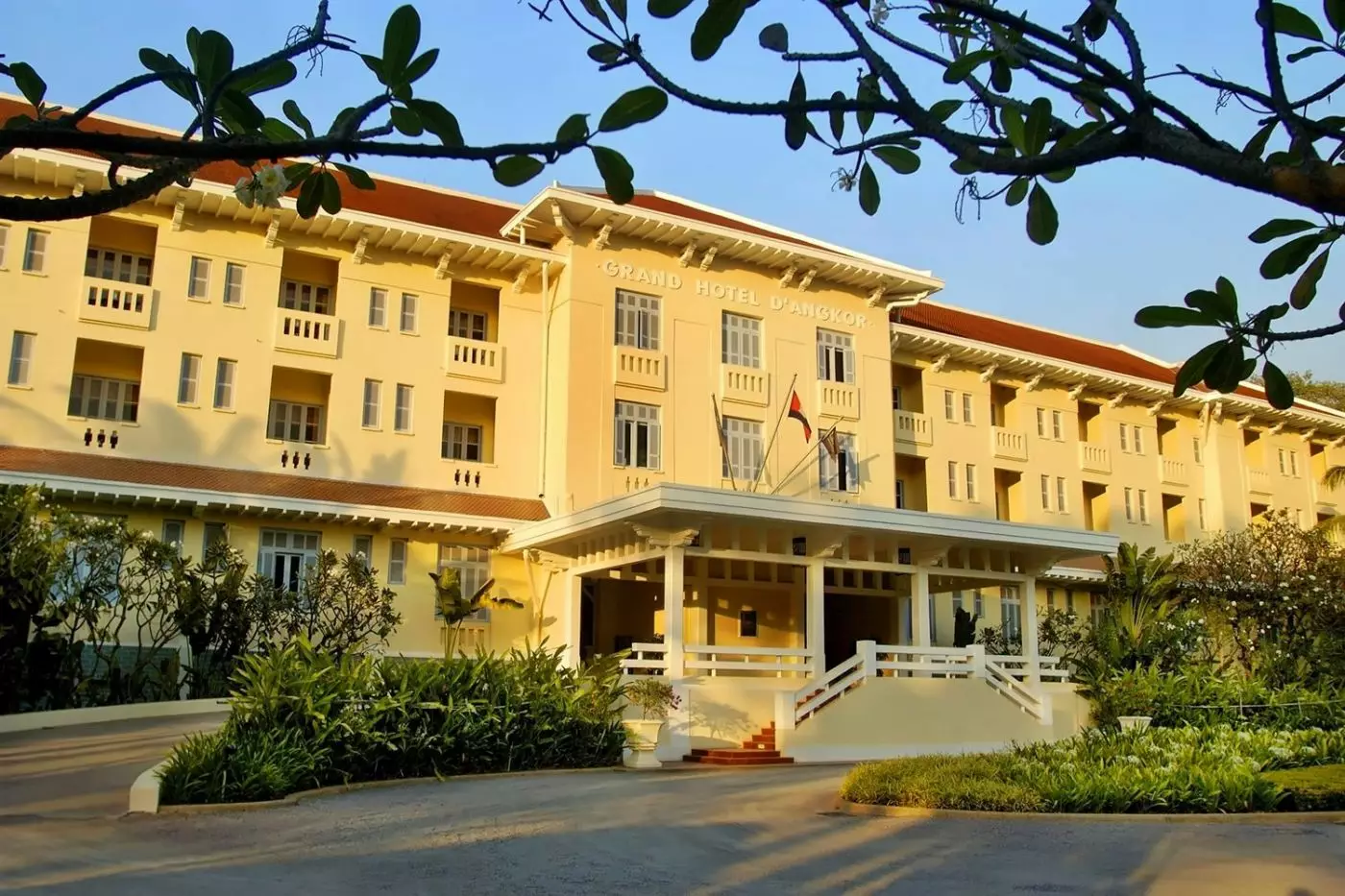
Raffles Grand Hotel d'Angkor is the heritage hotel of Siem Reap, a 1932 landmark created for early travelers to Angkor and st...
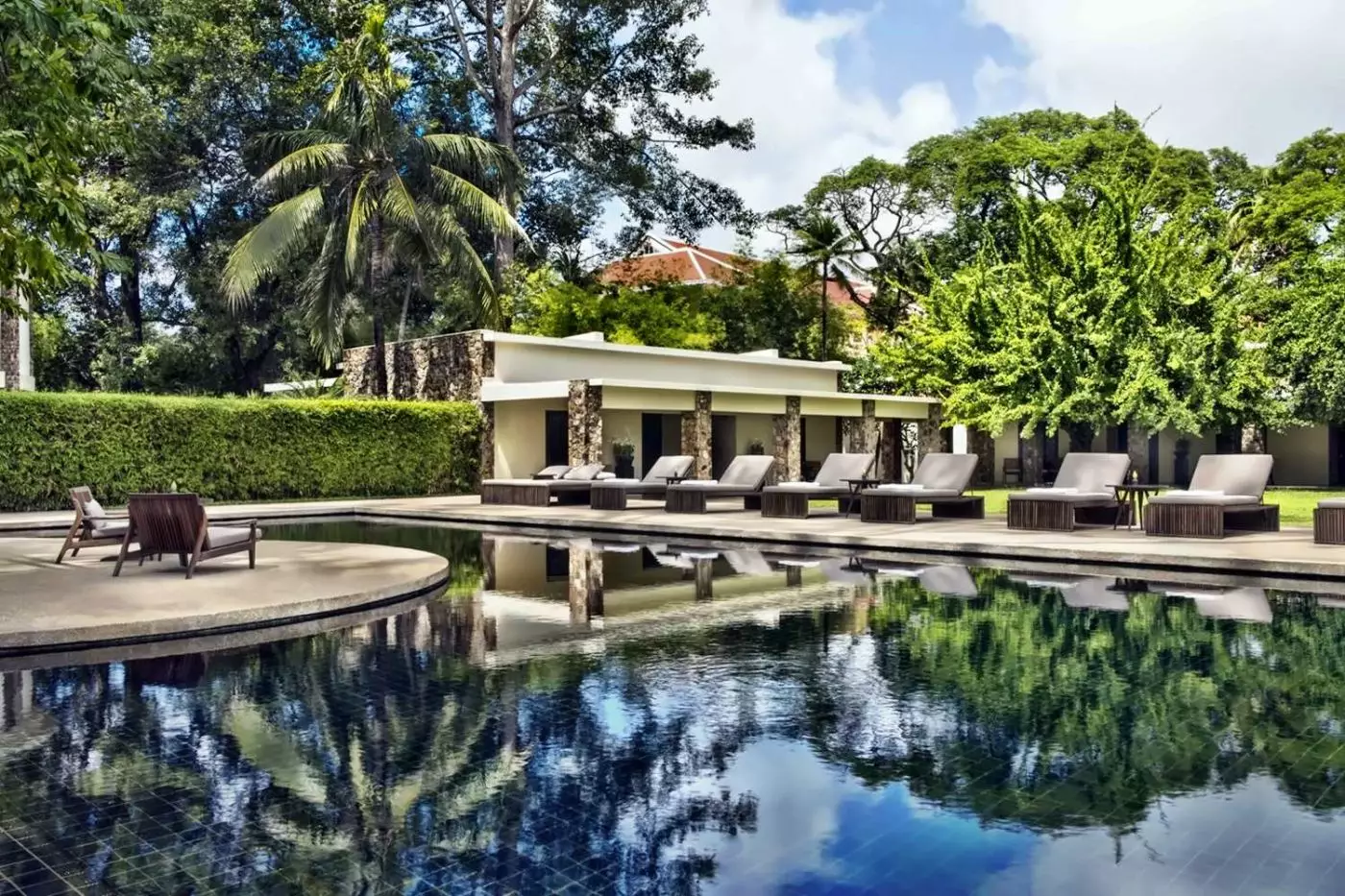
Amansara is a luxury hotel near Angkor Wat in Siem Reap, Cambodia, with 24 suites in a former royal guest residence. Once use...