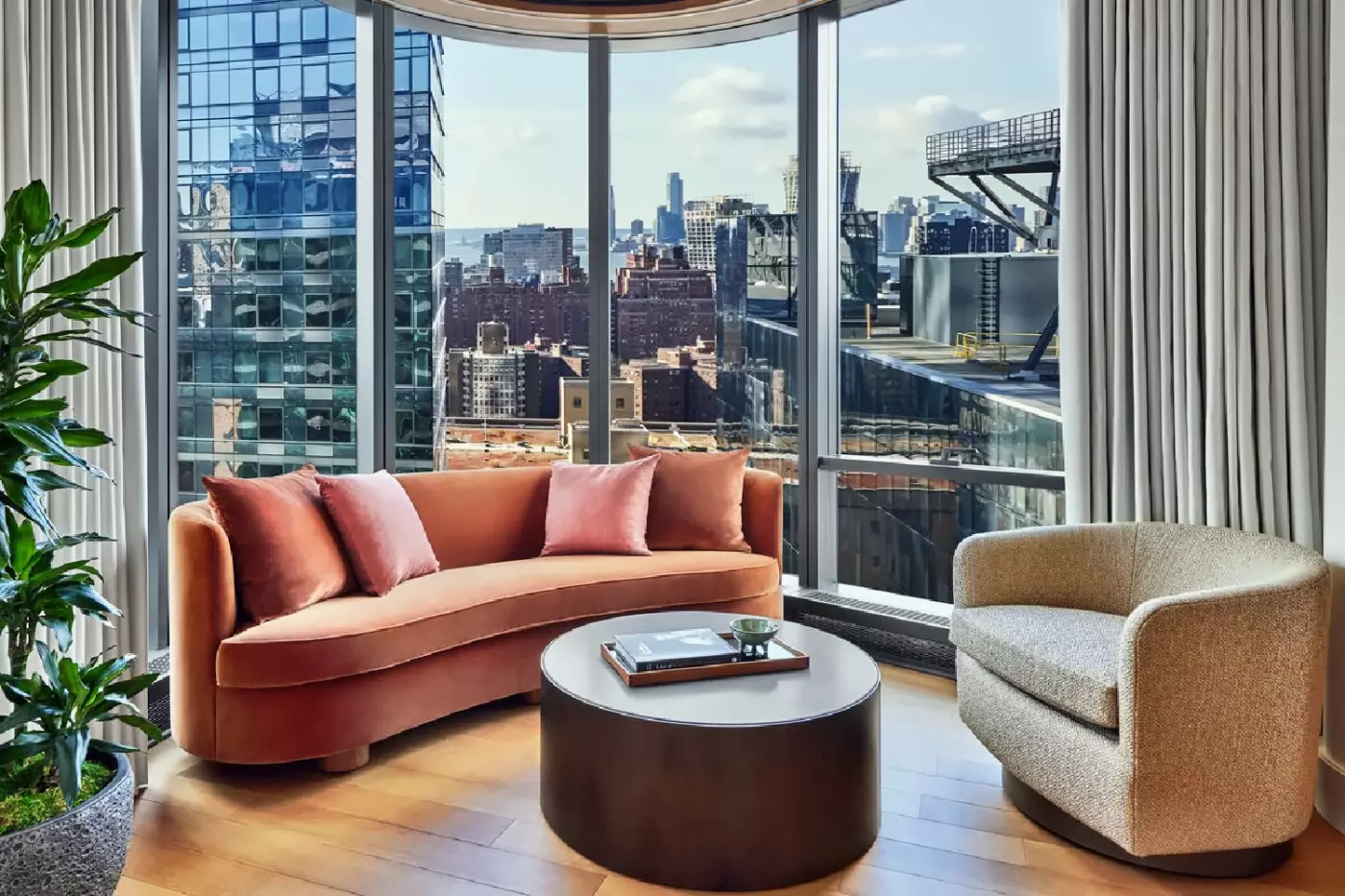
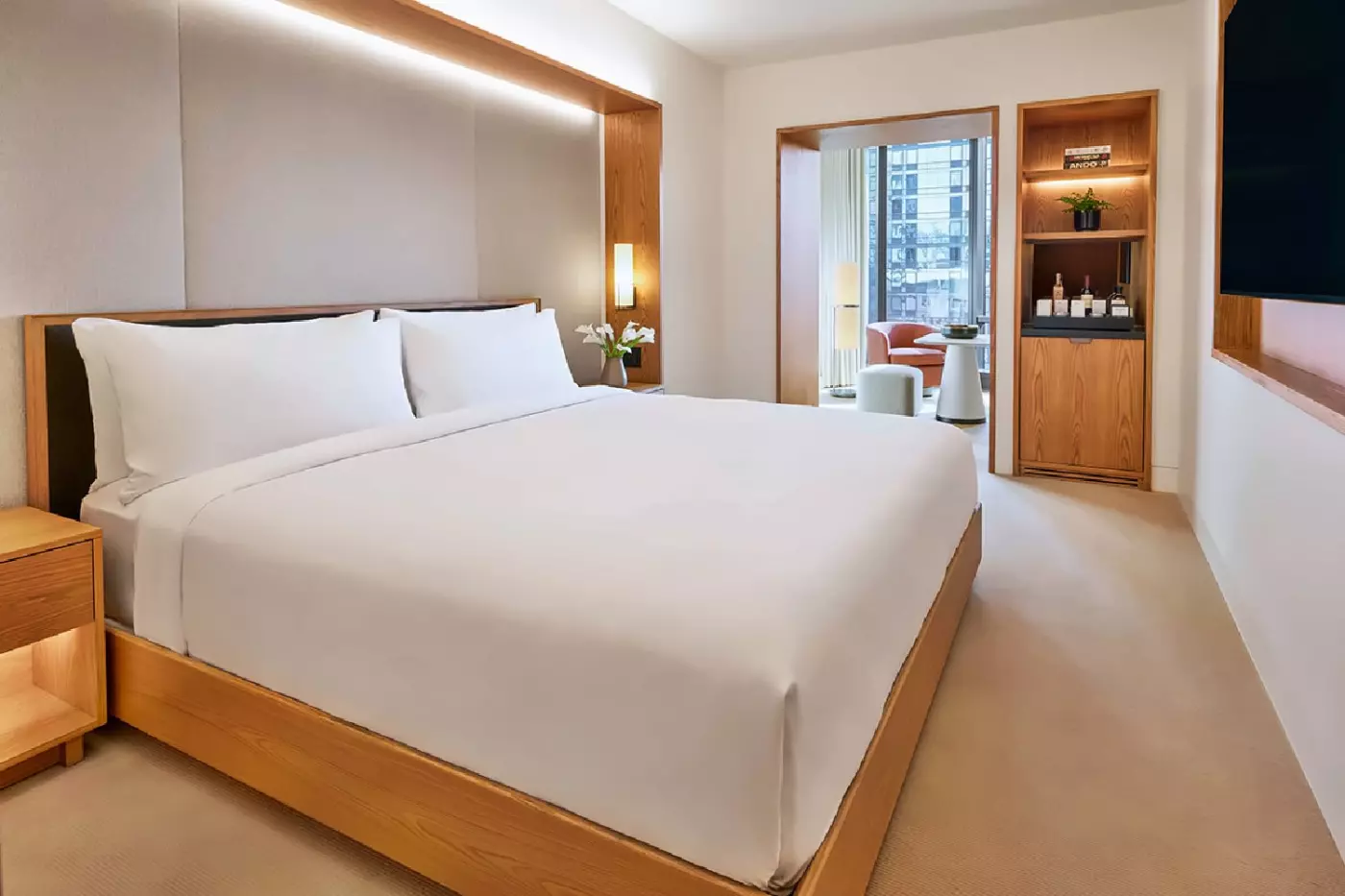
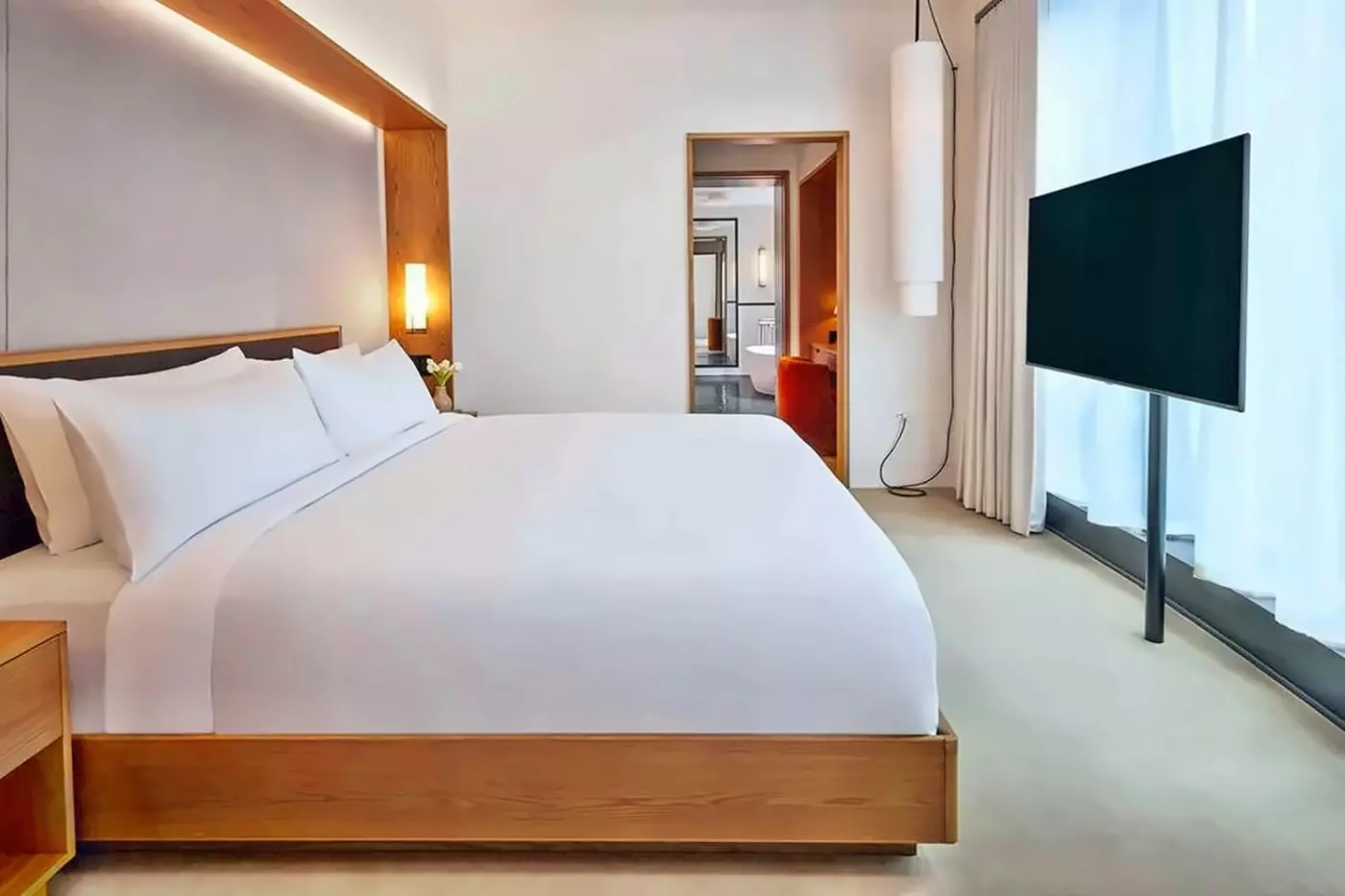
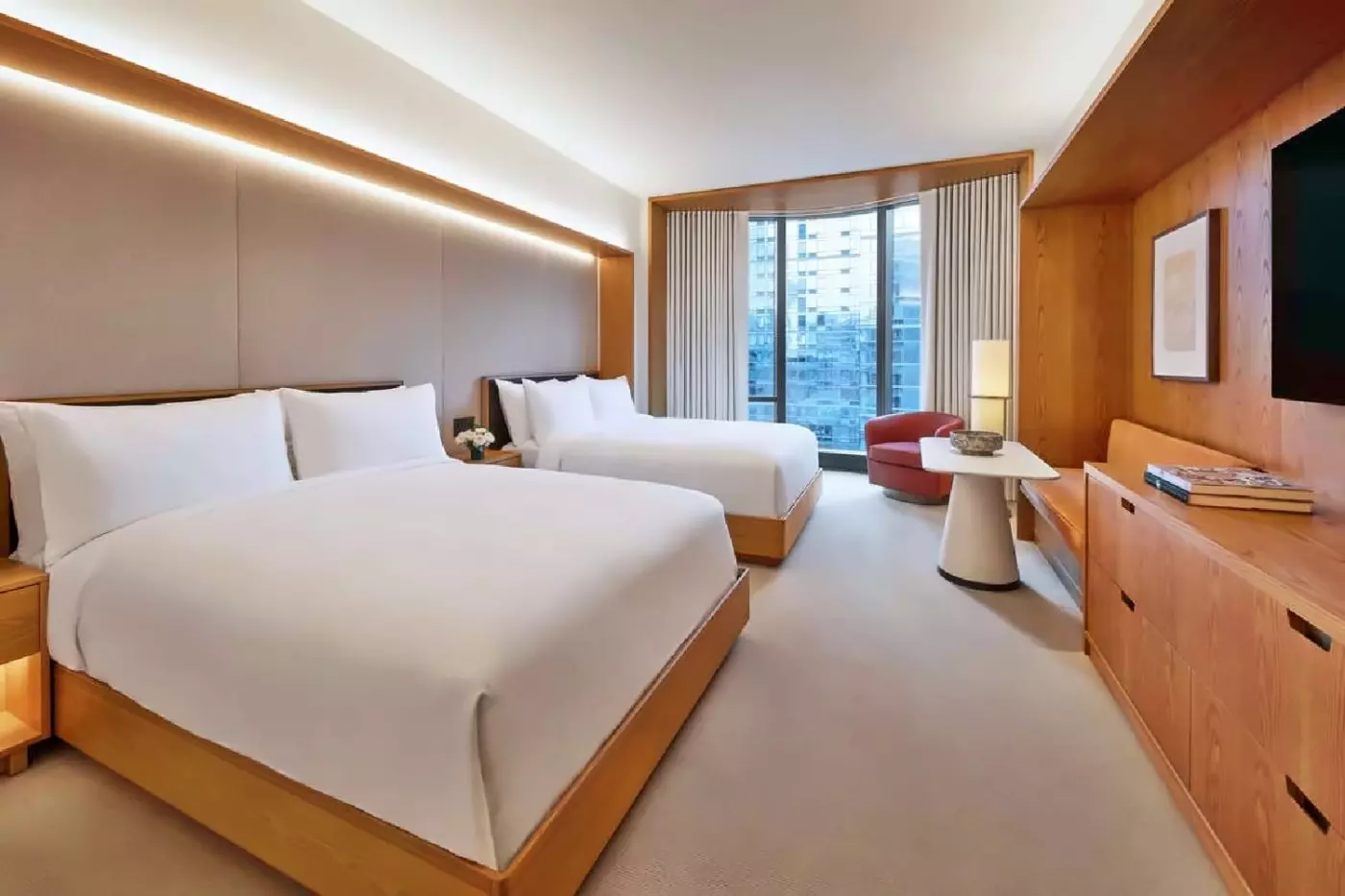
The difference between categories matters here. Deluxe City King and Skyline King rooms offer a sitting area and floor-to-ceiling windows, with the Skyline category placed on upper floors for city views. These are sensible choices for guests who expect to spend most of their day outside the hotel. The quieter materials and residential feel help the room serve as somewhere to reset, without asking guests to commit to a suite for a short stay.
For work, longer visits, or simply more room to spread out, the Alcove Studio adds a separate study and looks toward the Manhattan West plaza. Corner Studio Suites have an open-plan living area framed by a wall of windows. The distinction is useful: the Alcove's separate study creates a clearer boundary between sleep and work, while the Corner Studio puts the view and living space at the center of the room. A skyline designation changes the outlook, so it is worth choosing the category deliberately rather than assuming every room faces the same way.
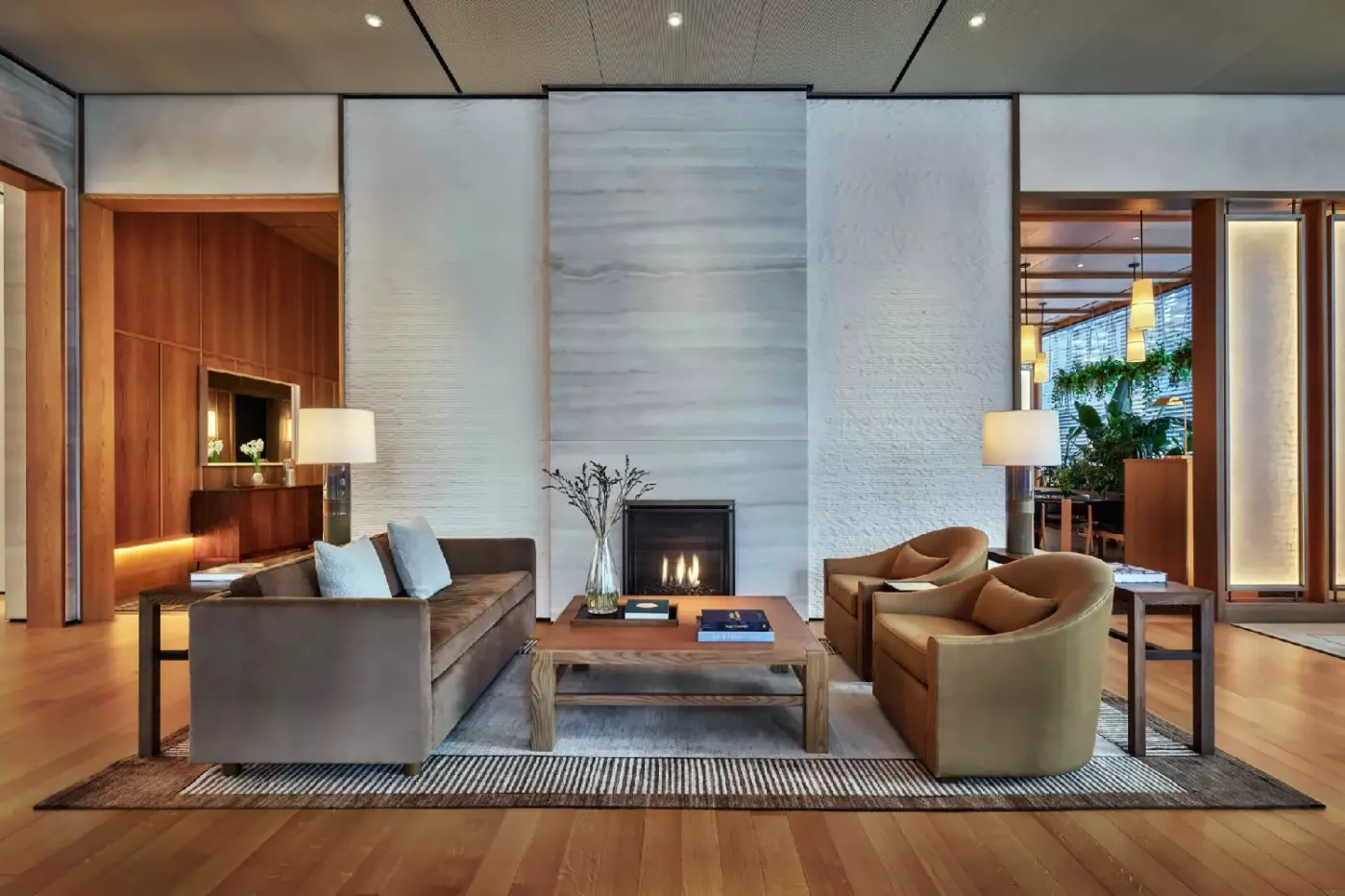
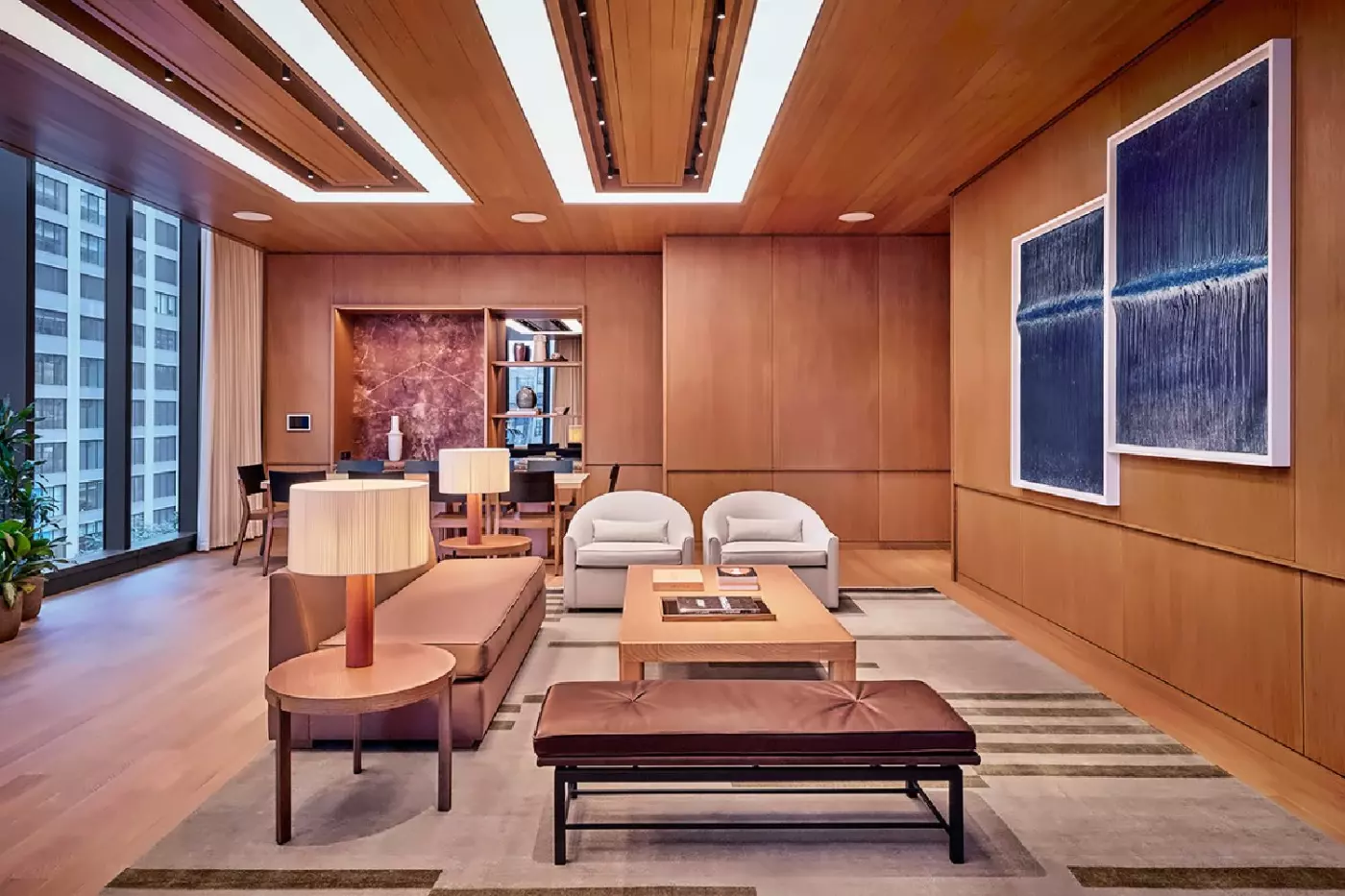
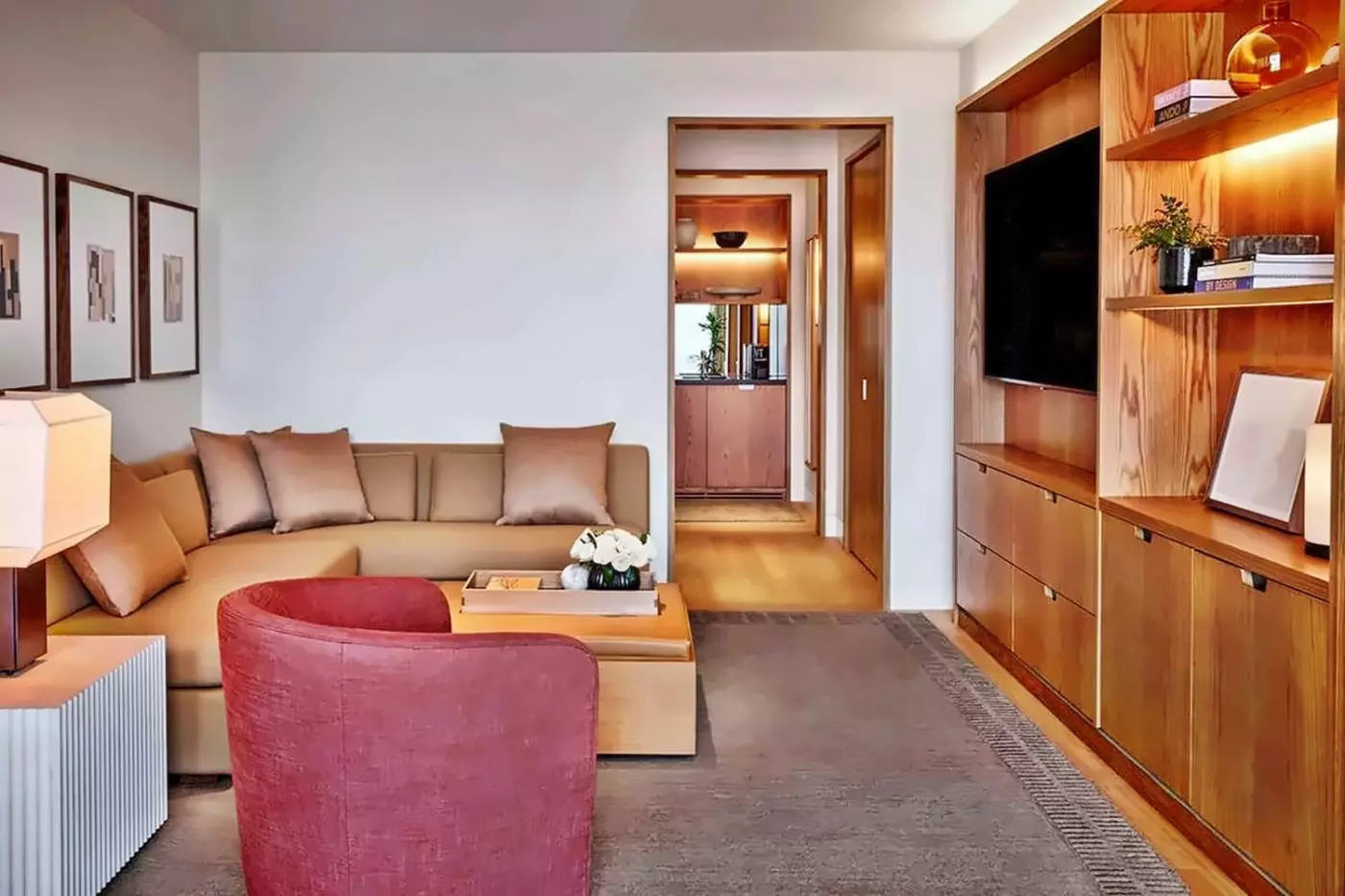
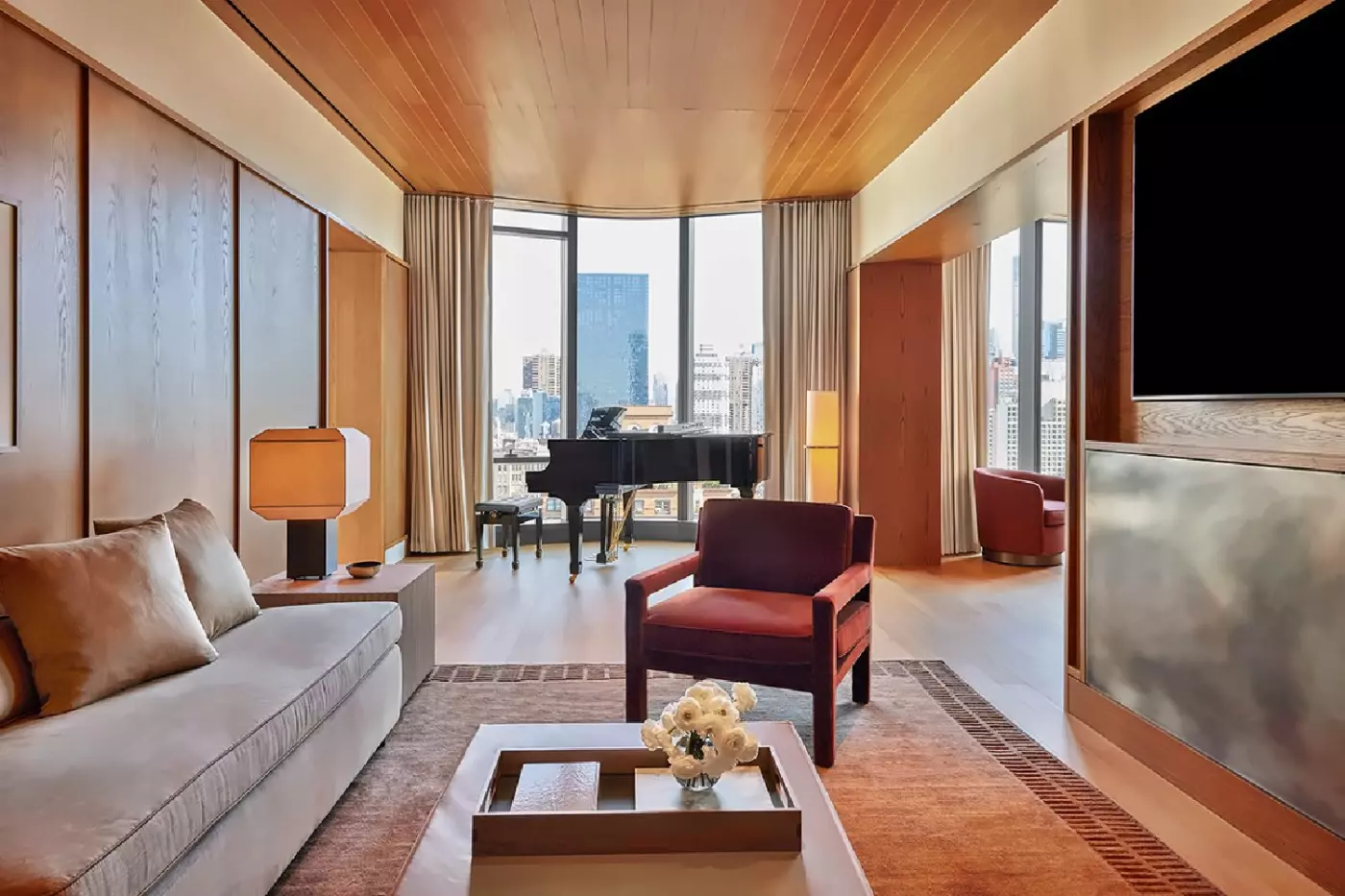
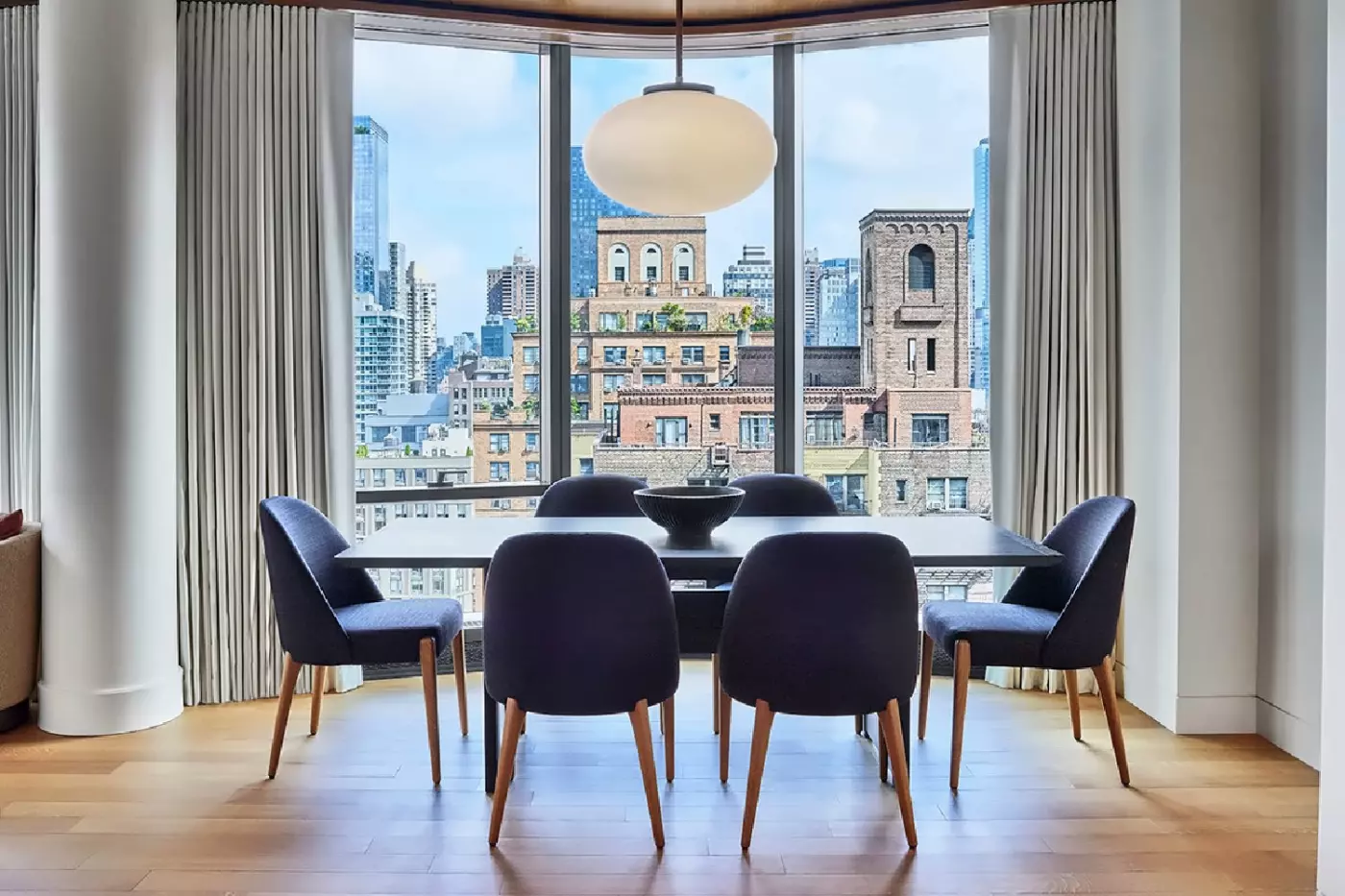
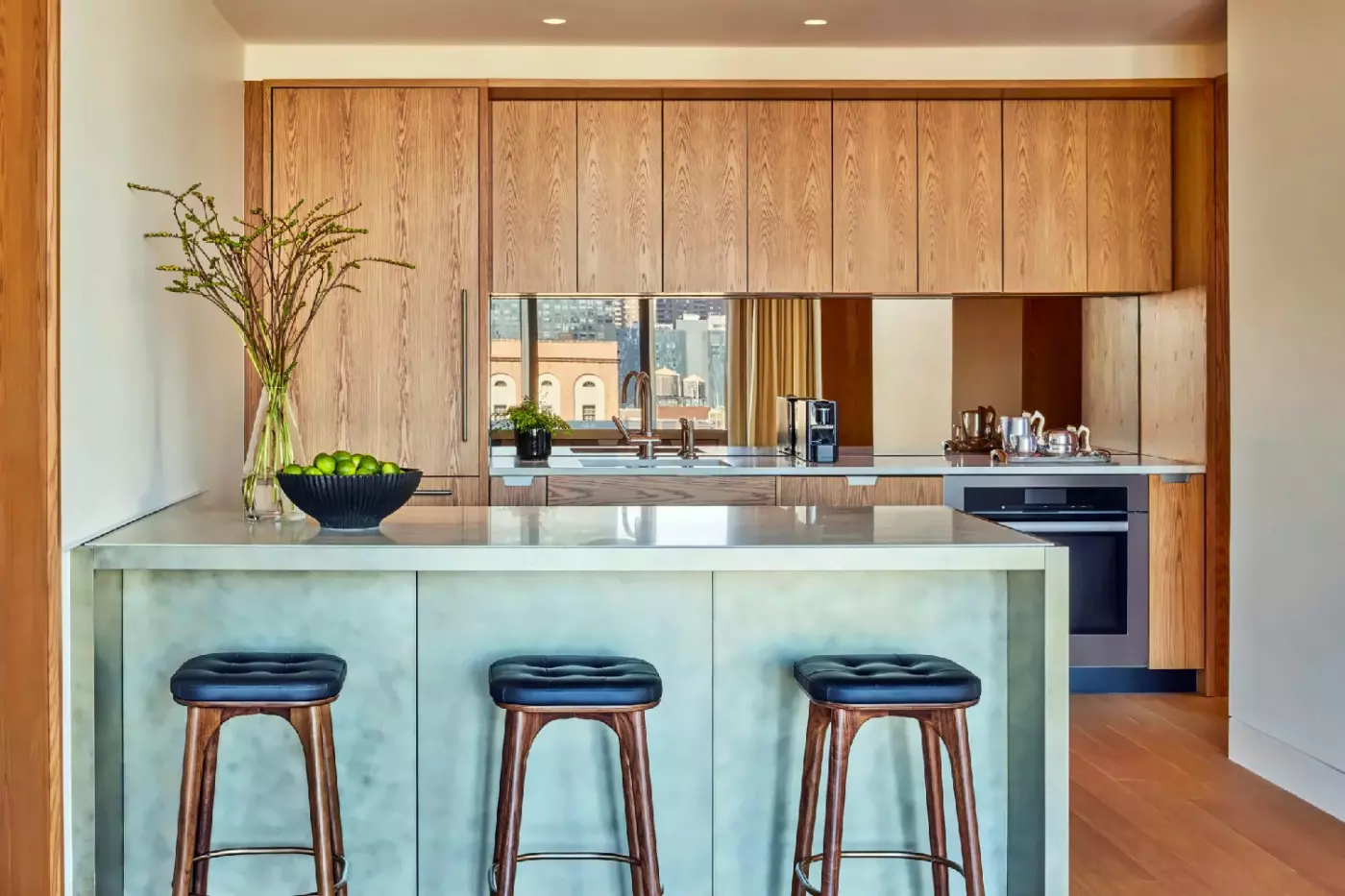
One-bedroom suites offer a more residential arrangement. The Skyline Corner One Bedroom Suite has separate living areas and a dining table, making it easier to host a quiet conversation or settle into a longer stay. At the top of the range, the Pendry Suite has a separate living room, a Steinway piano, fireplace, and kitchenette. Those details give it a distinct purpose beyond extra square footage. The hotel also lists two-bedroom and connecting configurations, though the exact options depend on the category selected.
Families and groups should compare layouts as closely as the headline room size. A two-bedroom configuration can be more useful than one large open space, while a room with two double beds may suit a short family visit. Pendry also lists accessible rooms, studios, and suites with adapted features. Anyone who needs a particular connecting arrangement or accessibility detail should confirm the exact category before booking; neither is a universal feature of every room.