



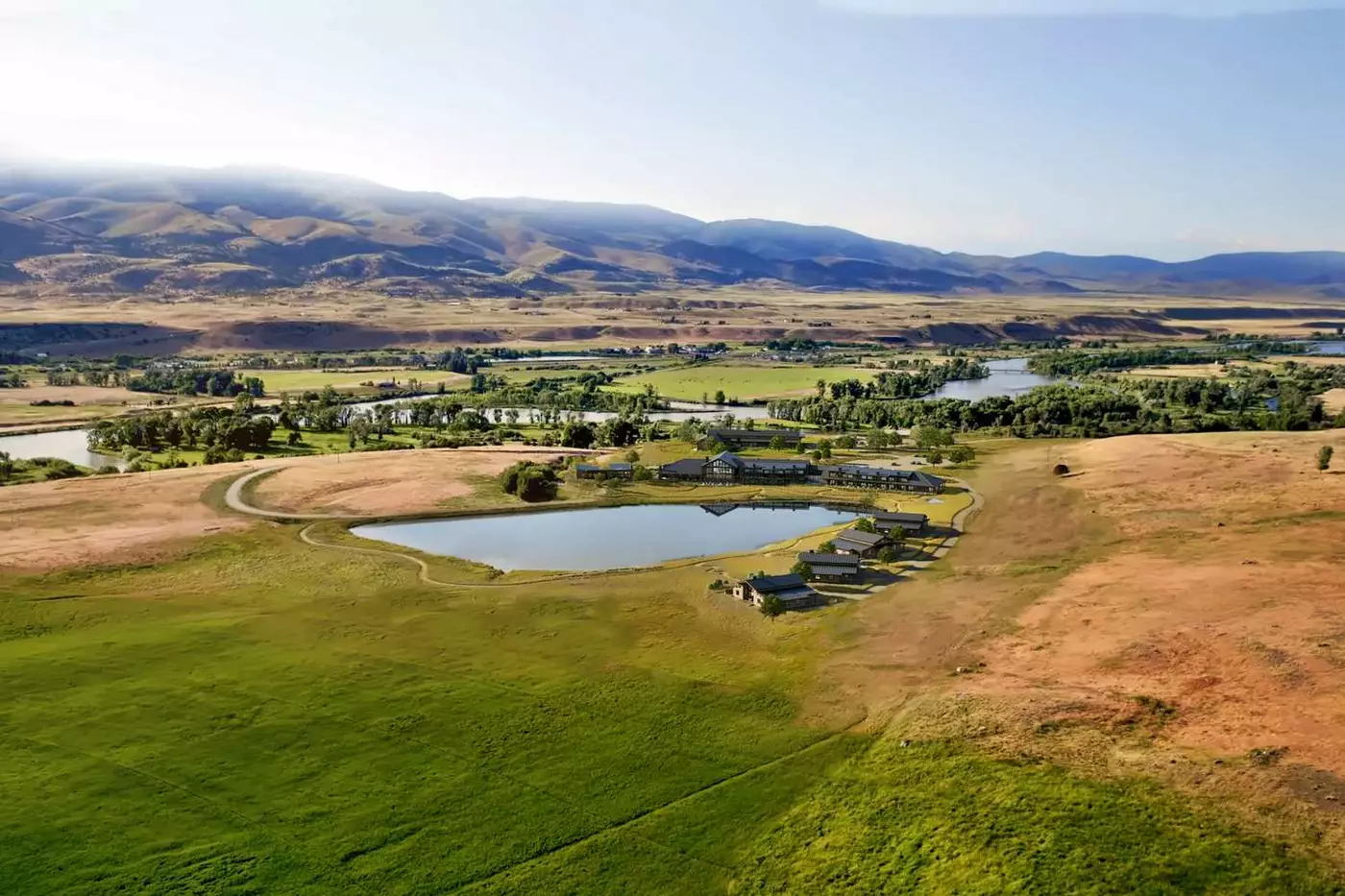
Sage Lodge
Prices From 555 USD
+2
More amenities
- Wellness
- Adventure
Sage Lodge sits in Montana's Paradise Valley, on the banks of the Yellowstone River with the Absaroka and Gallatin ranges sha...
Please choose a hotel or destination from the list.
We couldn’t open your search results. Please try again.
Your private search
Finding exceptional stays
The Montana base in this Yellowstone collection is Sage Lodge, near Pray in Paradise Valley beside the Yellowstone River, outside the national park. A stay here brings the valley landscape into the journey alongside the park’s northern and deeper regions.
Prices From 555 USD
More amenities
Sage Lodge sits in Montana's Paradise Valley, on the banks of the Yellowstone River with the Absaroka and Gallatin ranges sha...
The river-and-mountain setting near Pray has a local purpose beyond park excursions. Fly fishing provides one way to engage with it, while local walks offer another. Choose between those interests for the part of the landscape you want to understand.
Mammoth Hot Springs introduces a thermal landscape built from limestone rather than a single erupting geyser. Heated groundwater dissolves calcium carbonate and deposits it at the surface as travertine. The resulting terraces change as water shifts between outlets.
The Gardner River canyon adds older landscape history. Sandstone walls and ancient mudflows frame the river, while juniper, cottonwood and Douglas-fir grow more densely here than on the open prairie below.
Fort Yellowstone’s clapboard and sandstone buildings record the Army’s administration of the park. Officers’ quarters, barracks and a guardhouse had practical roles in a conservation outpost where soldiers dealt with poaching, fires and visitor management. The later stone buildings used sandstone from a local quarry near the Gardner River. The Albright Visitor Center was originally accommodation for unmarried officers; its architecture belongs to that military phase of park protection.
Keep the park’s changing seasonal road access central to the route. Winter and the broader driving season provide different ways to experience Yellowstone, so a road itinerary should not be carried unchanged from one season to another. The enduring attraction is the landscape, with the actual route arranged for the visit.
Our Montana destination guide provides the wider regional context for this Paradise Valley and park setting.
No. The national park spans three states. A Montana hotel label describes this particular base, rather than the boundaries of the whole park. Keep those different scales clear when planning a longer regional journey.
The North Entrance at Gardiner is the geographical starting point from Paradise Valley: US Highway 89 follows the Yellowstone River south from Livingston towards Gardiner. Mammoth Hot Springs lies inside this entrance. West Yellowstone serves a different entrance on the park’s western side, while Cooke City and Silver Gate belong to the Northeast Entrance. These are separate approaches, not interchangeable hotel neighbourhoods; seasonal road arrangements still shape the practical itinerary.
Stay on designated boardwalks and trails in thermal areas. They protect both visitors and the fragile setting. Choose a view from the appropriate route rather than treating the ground beside a feature as an extension of the path.
Use binoculars or a suitable lens and observe from the required distance. A patient view respects the animals and can add more to the visit than trying to turn an encounter into a close photograph.
Choose instruction and an appropriate stretch of water for learning, rather than judging the day only by a catch. Time spent understanding the technique can give the river landscape a more personal meaning without promising a particular result.