



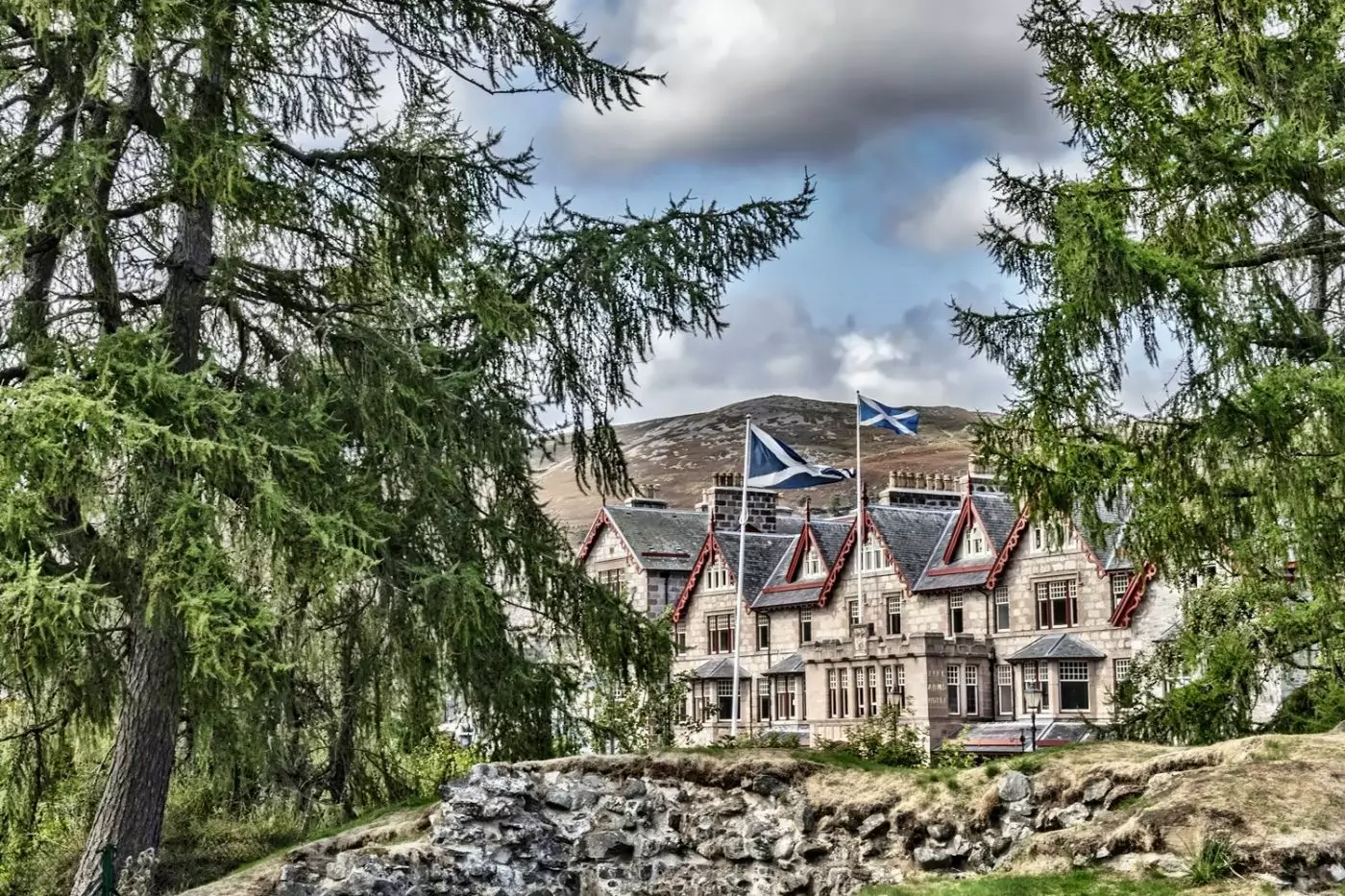
The Fife Arms
Prices From 489 USD
At The Fife Arms in Braemar, the Cairngorms are part of the reason to come. So is Zhang Enli's ceiling in the Drawing Room, w...
Please choose a hotel or destination from the list.
We couldn’t open your search results. Please try again.
Your private search
Finding exceptional stays
Braemar brings a village scale to the Cairngorms landscape. The Clunie Water gives the settlement a river setting, while moorland and woodland shape its surroundings. Alongside the familiar mountain interest, a stay can reveal the relationship between village life, a river corridor and land cared for by the local community.
Prices From 489 USD
At The Fife Arms in Braemar, the Cairngorms are part of the reason to come. So is Zhang Enli's ceiling in the Drawing Room, w...
Braemar sits on the gorge of the Clunie Water, a tributary of the River Dee. That river relationship gives the village a different scale from the surrounding mountains. The Fife Arms provides a hotel reference within the village, rather than an address that represents every part of the national park.
Clunie Meadow lies between the village and the River Clunie, combining woodland, grassland and wetland. It is community-owned land, giving the local landscape a social dimension as well as a natural one.
West of Braemar, Mar Lodge Estate brings heather moorland, Caledonian pine forest and the wetlands of the Quoich into a wider Cairngorms landscape. The estate surrounds a nineteenth-century sporting lodge, linking its natural history with the Highland hunting-estate tradition.
Woodland regeneration gives a forest visit a particular ecological interest. Reducing grazing pressure allows native pine, birch, rowan and willow to seed and recover. In glens such as Derry, Lui and Quoich, the relationship between mature trees and young growth is part of the woodland's story.
The conservation landscape also includes peatland. Restoring dried gullies with dams and vegetation helps retain water in these upland soils.
The United Kingdom hotel guide provides the wider national context.
No. It is a village in the Cairngorms National Park, with mountain and woodland surroundings. Choose it for that inland landscape rather than expecting a seaside setting.
No. The wider area has routes of different lengths and difficulty, while village time, history and the hotel atmosphere provide other interests. Choose the level of activity that fits you rather than the most ambitious option.
Its history includes several roles, from a hunting lodge to a garrison and family home. That gives the outing a historical thread separate from simply enjoying another scenic building.
Yes. The Fife Arms has an art-led identity, allowing the hotel itself to contribute a cultural counterpoint to the landscape. Choose it when those interiors are part of the experience you want to enjoy.
The Duke of Rothesay Highland Games Pavilion explores the Braemar Gathering through photographs, costumes, documents and sporting objects. The J.S. Milne Gallery explains events such as caber tossing and piobaireachd, while trophies and tankards reflect competitors' achievements. It is a cultural-history interest in the sport, music and village society behind the Gathering, separate from attending the event itself.