



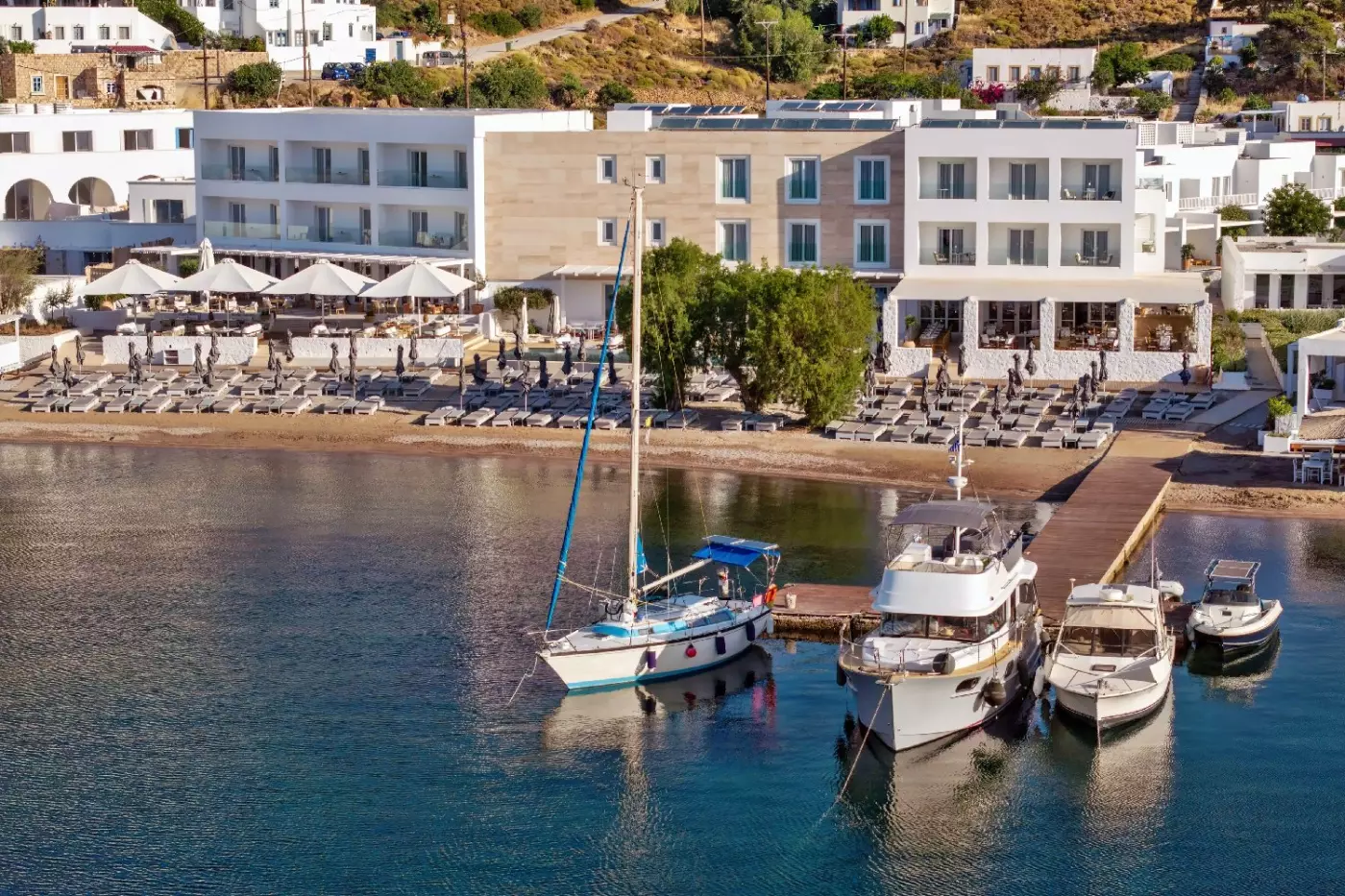
Patmos Aktis Resort & Spa
Prices From 242 USD
+3
More amenities
- Sauna
- Beach
- Adventure
Patmos Aktis Resort & Spa faces Grikos Bay from one of Patmos's most appealing stretches of shore. The beach is immediately i...
Please choose a hotel or destination from the list.
We couldn’t open your search results. Please try again.
Your private search
Finding exceptional stays
Patmos combines a coastal hotel stay with an island landscape shaped by work as well as spiritual life. Choose a base for the surroundings you want to enjoy each day. The windmills above Chora add an industrial-history subject, giving the island's familiar hilltop outline another meaning.
Prices From 242 USD
More amenities
Patmos Aktis Resort & Spa faces Grikos Bay from one of Patmos's most appealing stretches of shore. The beach is immediately i...
Patmos Aktis is at Grikos Bay, providing the collection's coastal accommodation reference. Consider the surroundings you want before and after an outing, including the hours you would spend close to the hotel. A bay setting gives the accommodation a particular role within the wider island journey.
The monastery's three windmills stand on a hill in Chora. Two date from the sixteenth century and the third from the nineteenth, making the group a record of building across different periods. Look at them together as part of the town's outline, giving their arrangement attention alongside individual details.
For someone interested in architecture, the group offers a different scale from a street of houses. Consider how the structures relate to the hill rather than treating them only as a recognizable silhouette. This gives an outing a precise visual subject.
The mills produced flour until the 1950s, before abandonment and deterioration followed. Their history brings food production into a landscape often approached through religious heritage. They were working buildings with a purpose beyond their place in a view.
That earlier use provides another way to look at the structures: ask how making flour shaped the building's role in island life. Our Greece destination guide places Patmos within a broader journey, with other stops chosen for the different subjects they add.
No. It brings together Chora's historic center, the Monastery of Saint John the Theologian and the Cave of the Apocalypse. The relationship between the places is part of their significance.
The Monastery of Saint John, founded in 1088, combines a fortified enclosure with towers and crenellations, manuscripts, icons and liturgical art. The Cave of the Apocalypse lies midway along the road from Skala to Chora. Its significance centres on the Christian tradition that John dictated Revelation to his disciple Prochoros there.
Its merchants' houses reflect the island's trading history as well as its religious importance. An architectural walk can therefore add a different subject to a pilgrimage-focused visit.
Skala is the port settlement, distinct from Chora and Grikos Bay. Keep those names clear when arranging the day so arrival, town exploration and beach time have the right settings.
There is a recognized walking route between them. Treat the change of level as part of the outing and choose whether that walk, rather than only the destination, is something you want to enjoy.