



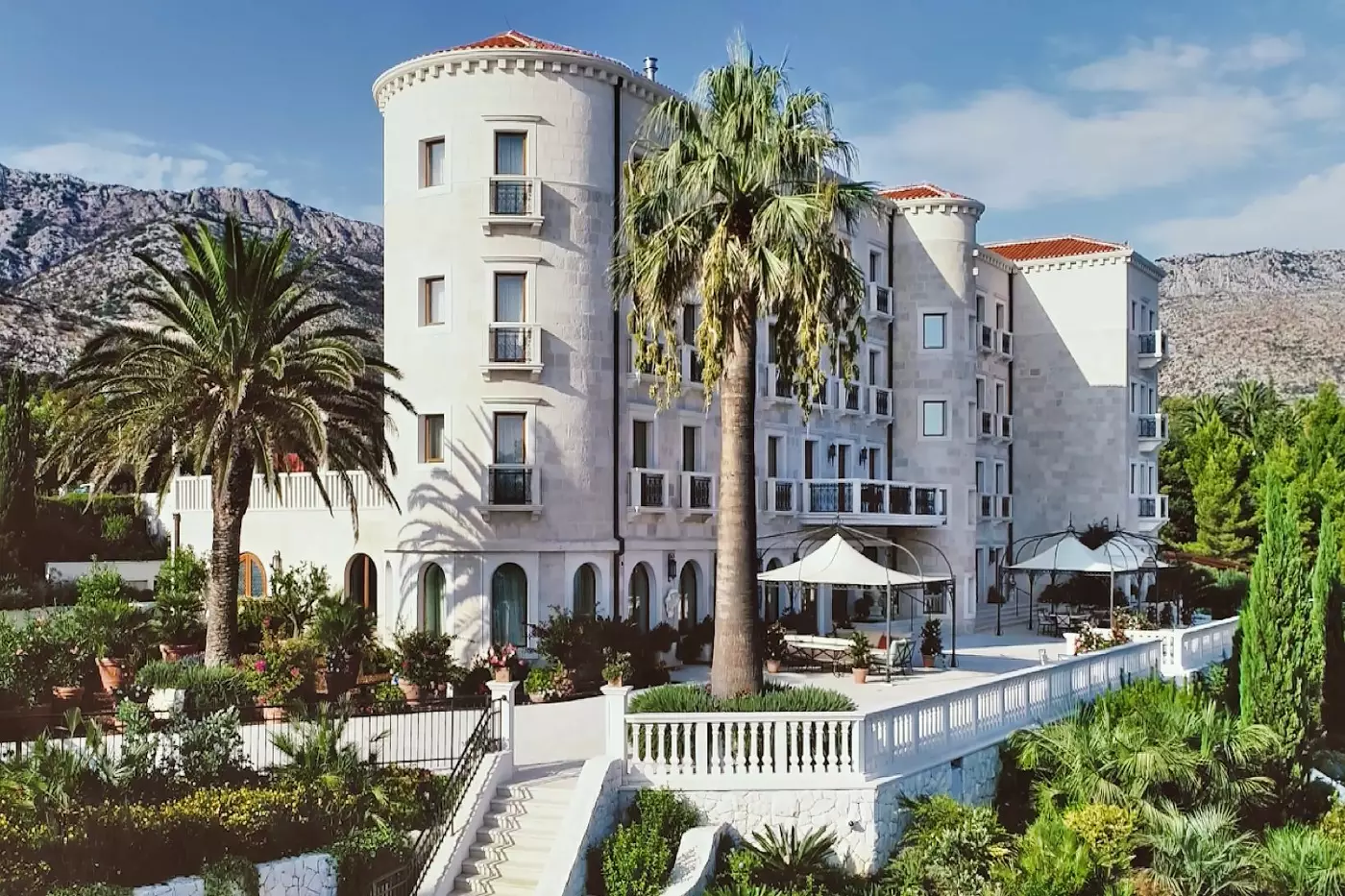
Villa Korta Katarina
Prices From 2’232 USD
+3
More amenities
- Sauna
- Beach
- Romantic
Villa Korta Katarina sits above the Adriatic in Orebic, where the Peljesac Peninsula narrows toward the water and the island...
Please choose a hotel or destination from the list.
We couldn’t open your search results. Please try again.
Your private search
Finding exceptional stays
Pelješac brings wine-growing landscapes and an Adriatic coastal setting to a southern Croatia journey. Postup and Dingač give a wine interest specific geographical references. Choose a hotel with the part of that landscape you want to explore clearly in mind.
Prices From 2’232 USD
More amenities
Villa Korta Katarina sits above the Adriatic in Orebic, where the Peljesac Peninsula narrows toward the water and the island...
Villa Korta Katarina sits above the Adriatic in Orebić. Its position provides a coastal accommodation reference within Pelješac. Keep the immediate hotel surroundings distinct from the wine-growing countryside you may want to understand during the stay.
Postup is a wine-growing area at the entrance to Orebić, as well as the name used for wine from its Plavac Mali vineyards. Small stone settlements lie behind the coastal plots. Dingač has a different physical setting on the peninsula’s seaward slopes: sunlight reflected from the sea and stone intensifies the exposure of the vines. Both names concern the same local red grape, with the vineyard position making the distinction.
Ston occupies the narrow connection between the peninsula and the mainland. The Dubrovnik Republic’s fortifications crossed this neck to protect the territory and its valuable salt production. Ston and Mali Ston were planned on the protected side of the walls, at opposite ends of the fortified line. Their layout is part of the historical subject, alongside the fortresses themselves.
The salt pans add an industrial landscape to the medieval stonework. Their regular basins contrast with the walls rising over the hill: one was productive infrastructure, the other its defence.
Our Croatia destination guide places Pelješac alongside the country's other coastal and regional choices.
No. Pelješac is a peninsula. Korčula is a separate island across the channel from Orebić. Keeping that distinction clear helps when shaping a regional trip, particularly if an island stay is intended to have its own character rather than function as another coastal outing.
An exact base makes the daily setting easier to understand. Orebić combines a coastal position with maritime heritage. Choose it because those qualities suit the stay, then consider the rest of Pelješac as selected excursions rather than an indistinct hotel neighborhood.
Kuna Pelješka, inland below Rota hill, is the birthplace of painter Celestin Mato Medović. His works connect the village’s childhood home, church of Our Lady of Delorite and Franciscan monastery gallery. Ivan Meštrović’s monument to the painter stands in the village centre. Nearby Crkvice, on the peninsula’s northern side, was a wine-trading port and has Medović’s early twentieth-century summer house.
Mali Ston Bay is known for cultivated oysters and mussels. Its shellfish farms give the peninsula a seafood interest alongside its vineyards, with the bay’s sheltered water forming a different landscape from the exposed wine slopes.
Korčula Town Museum’s collections explore stonemasonry and shipbuilding, two crafts central to the island town’s history. Household objects and an old attic kitchen introduce domestic life. At St Mark’s Cathedral, local stonework is visible in Marko Andrijić’s bell-tower work and the ciborium above the high altar.