Call your Travel Designer +1 617 778 2318
The City View Deluxe Room is a guest room with either a king bed or two double beds and offers a city view. It presents
The City View Premier Room offers a choice of a king bed or two double beds with a view of the city. This spacious guest
The Garden View Room is a guest room with either one king bed or two double beds, offering a delightful view of the garden. The
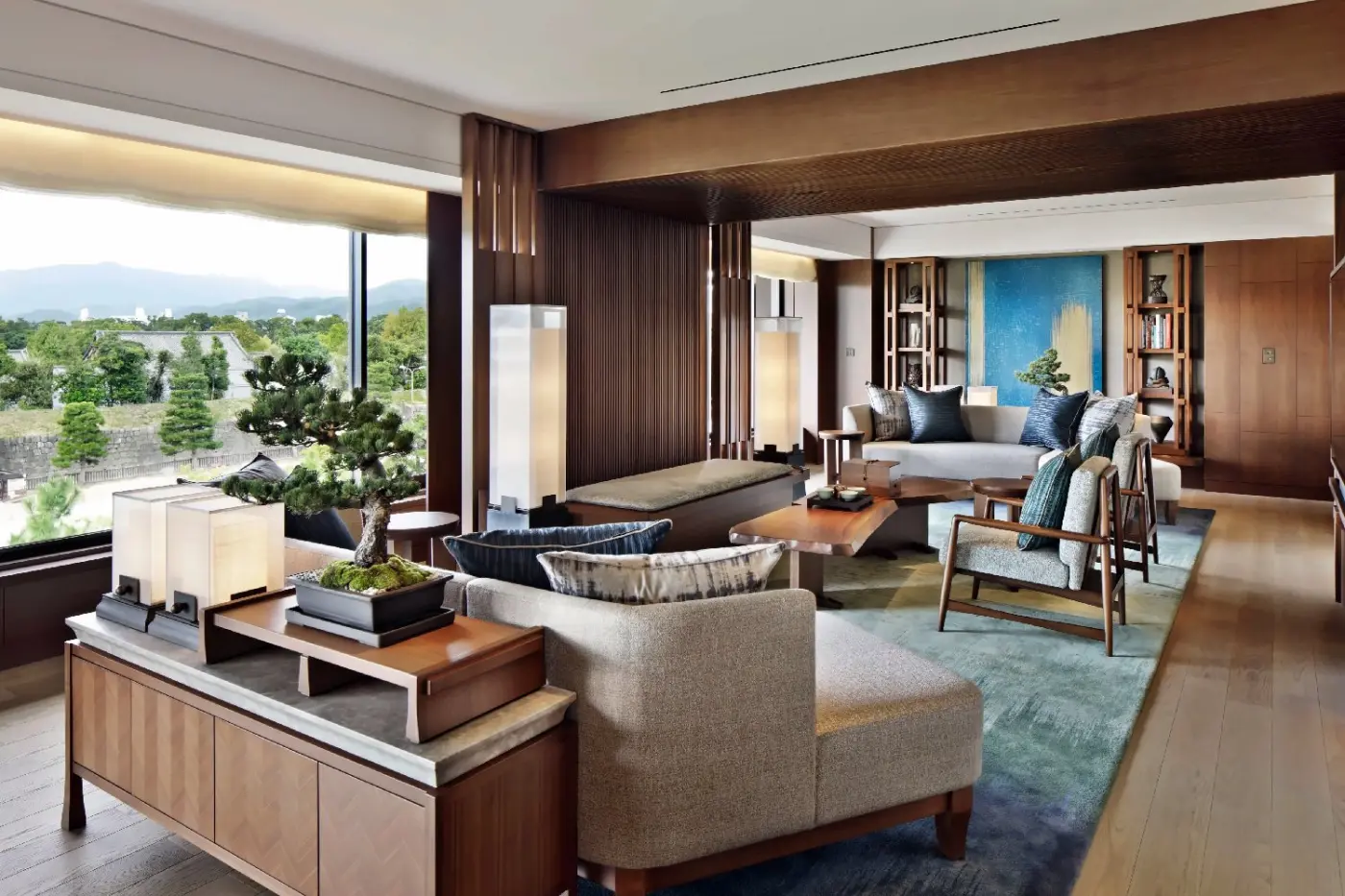
The City View Deluxe Suite offers a stunning city view from its highest floor location. It consists of a separate living room and bedroom, beautifully
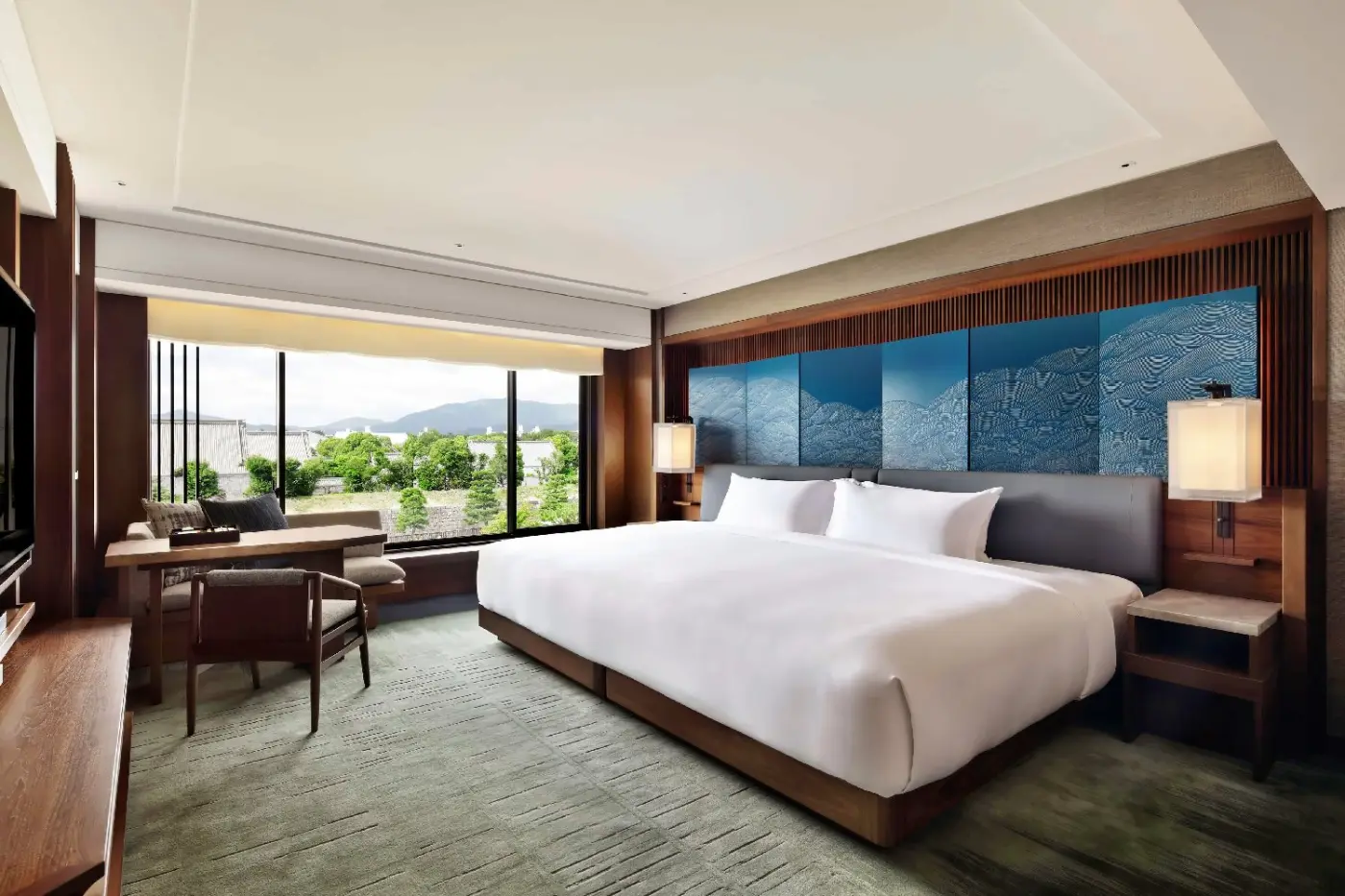
The Castle View Nijo Room offers a choice of 1 King bed or 2 double beds, with a captivating view of Nijo-jo Castle. Built in
The City View Executive Suite offers a spacious and luxurious 1-bedroom accommodation with a choice of a king bed or 2 double beds. Located on
The Garden Suite is a spacious 1-bedroom suite with a garden view. It pays homage to the former Mitsui residence, featuring a modern recreation of
The Castle View Nijo Suite, a spacious 1-bedroom suite offers a stunning view of Nijo-jo Castle. With its own living room and bedroom areas, the
The Courtyard View Onsen Suite is a spacious 1-bedroom suite with a courtyard view. It offers a relaxing experience with its own outdoor onsen bath
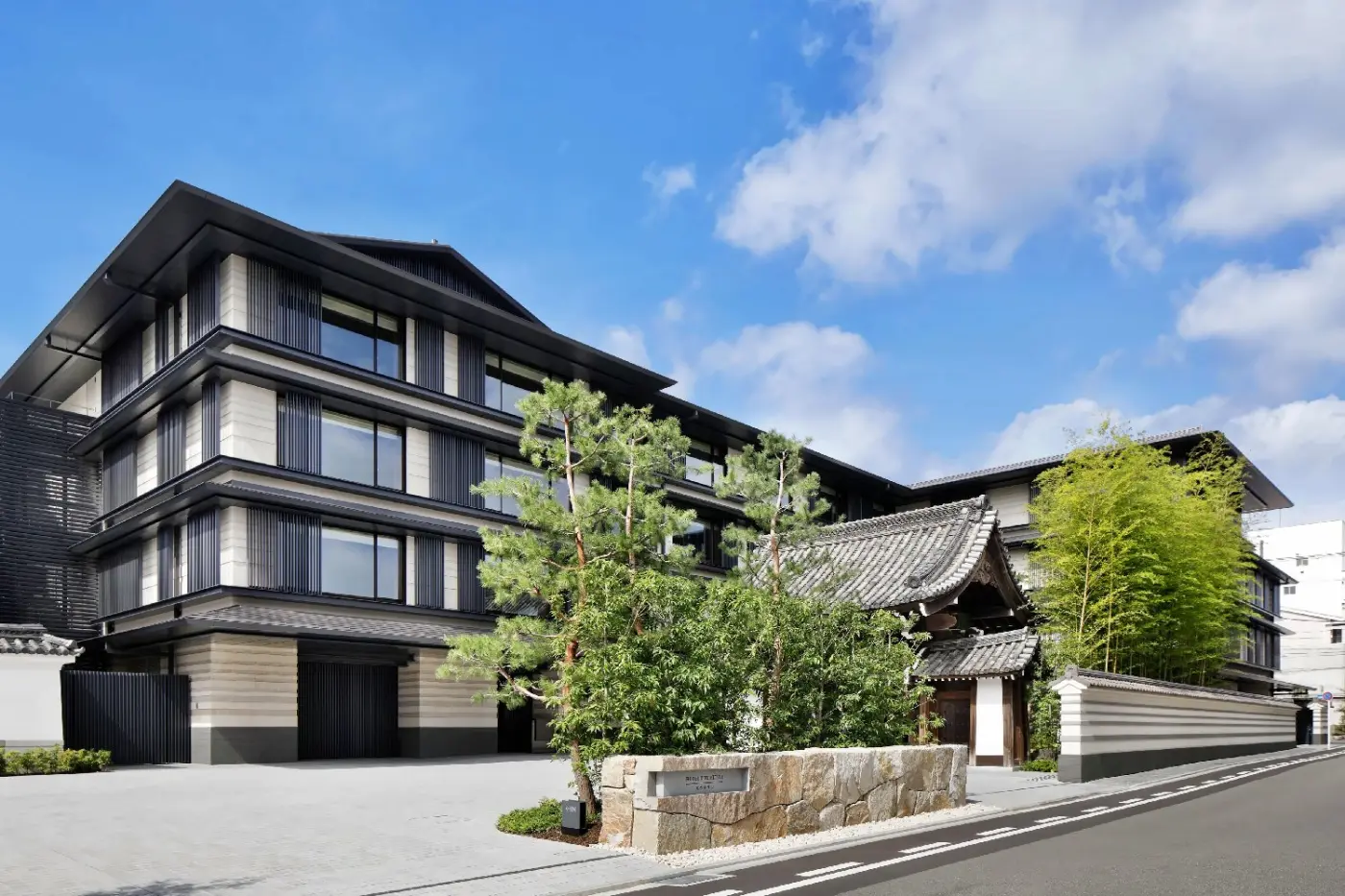
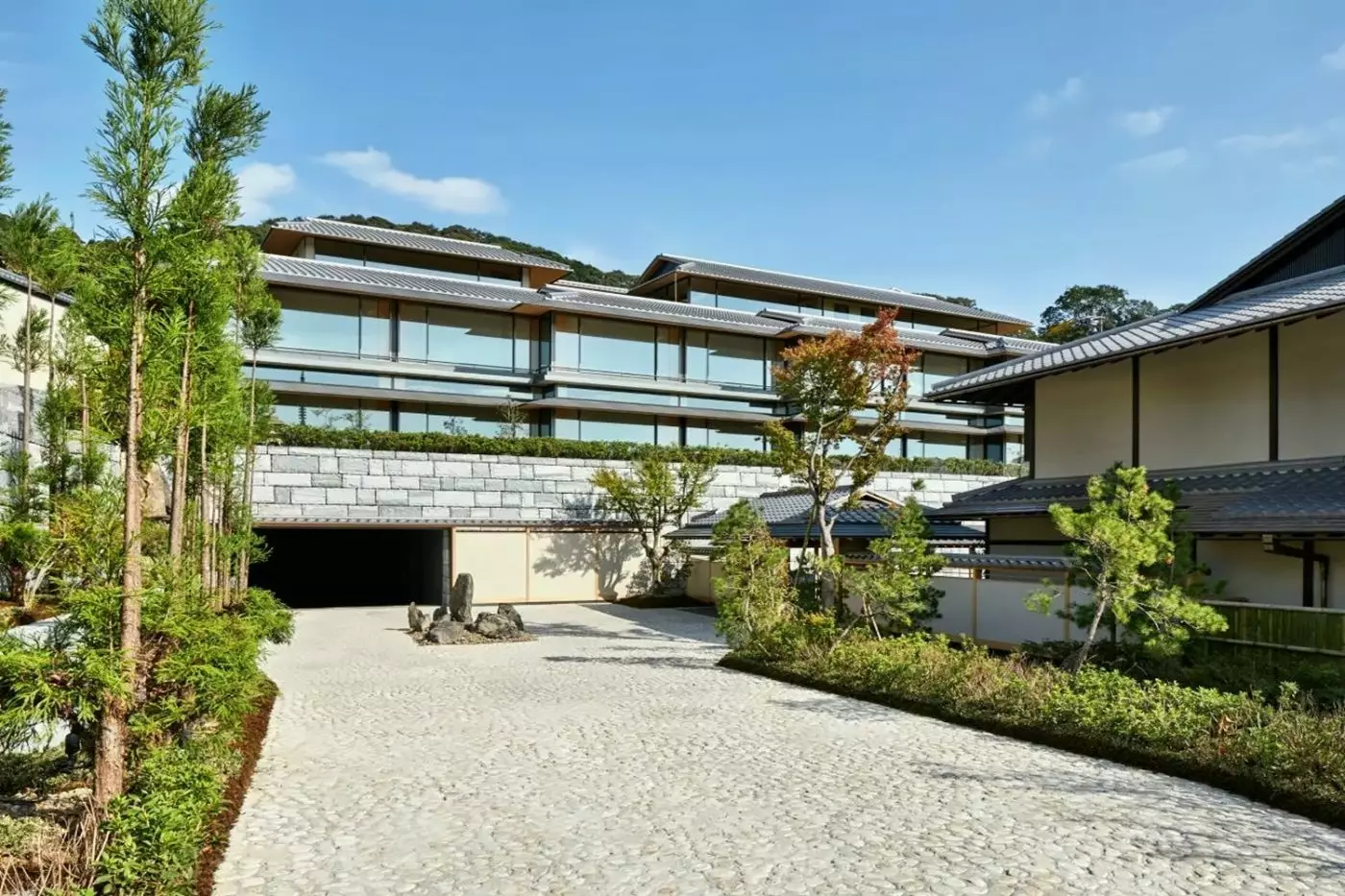
Hotel The Mitsui Kyoto sits beside Nijo-jo Castle on land tied to the Mitsui family for more than 250 years. The address places guests in central Kyoto, yet the hotel feels inward-looking, shaped by garden views, natural materials, a restored gate, and water drawn from an on-site spring. It is a calm base for travellers who want Kyoto's culture close without losing quiet.
The hotel stands in Nakagyo-ku, close to Nijojo-mae Station on the Tozai Line and about 15 minutes by car from Kyoto Station. Nijo-jo Castle is next door, giving the property one of the city's strongest historic neighbours.
This location is useful because Kyoto can spread out quickly. Guests can move toward temples, markets, museums, station routes, and dining areas, then return to a calmer part of the city. The hotel works as a pause between Kyoto's many layers.
The site has deeper meaning than a good map position. It was once the Kyoto home of the Kitake, the executive branch of the Mitsui family. That history shapes the hotel's garden, architecture, and sense of welcome.
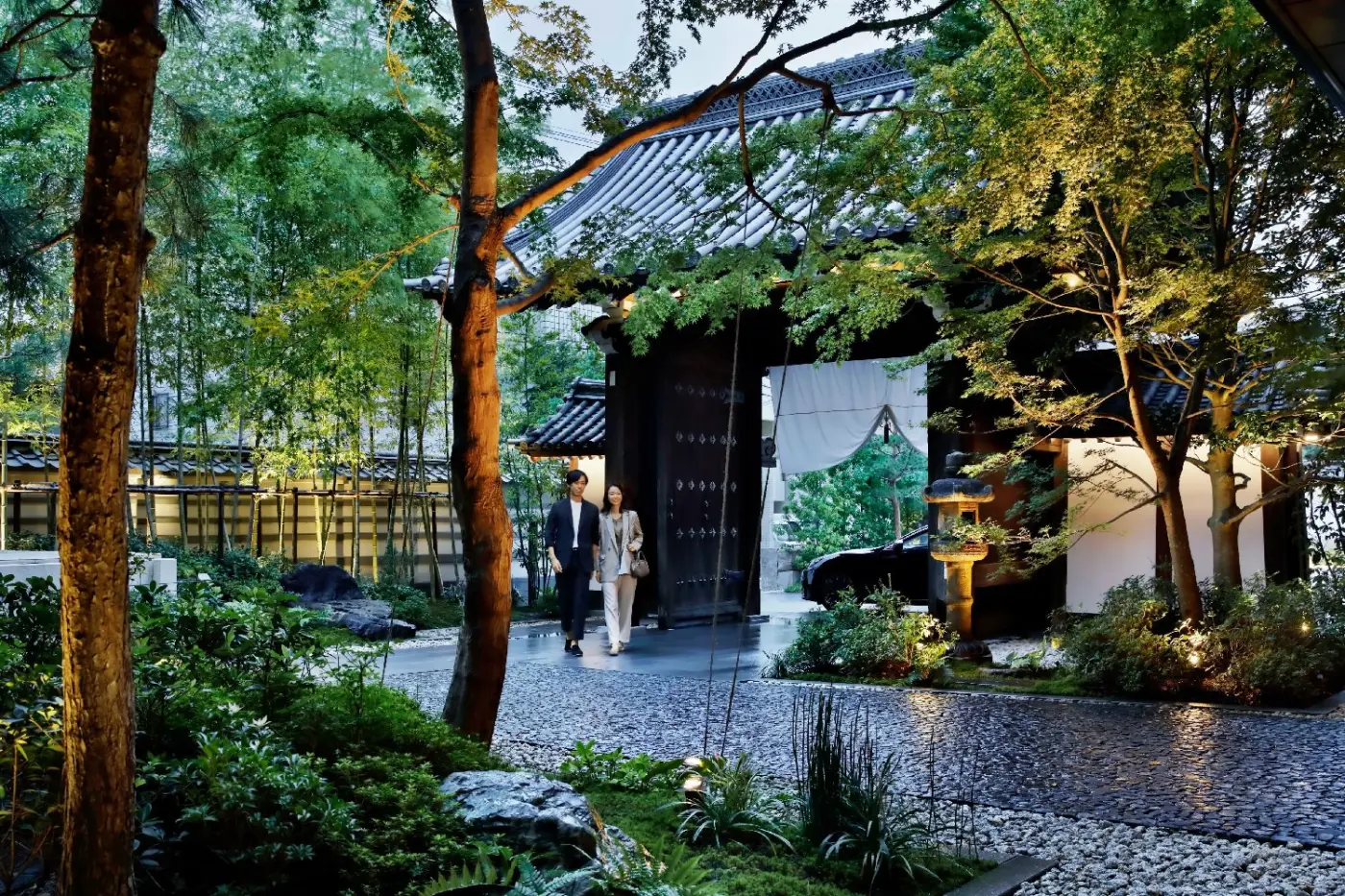
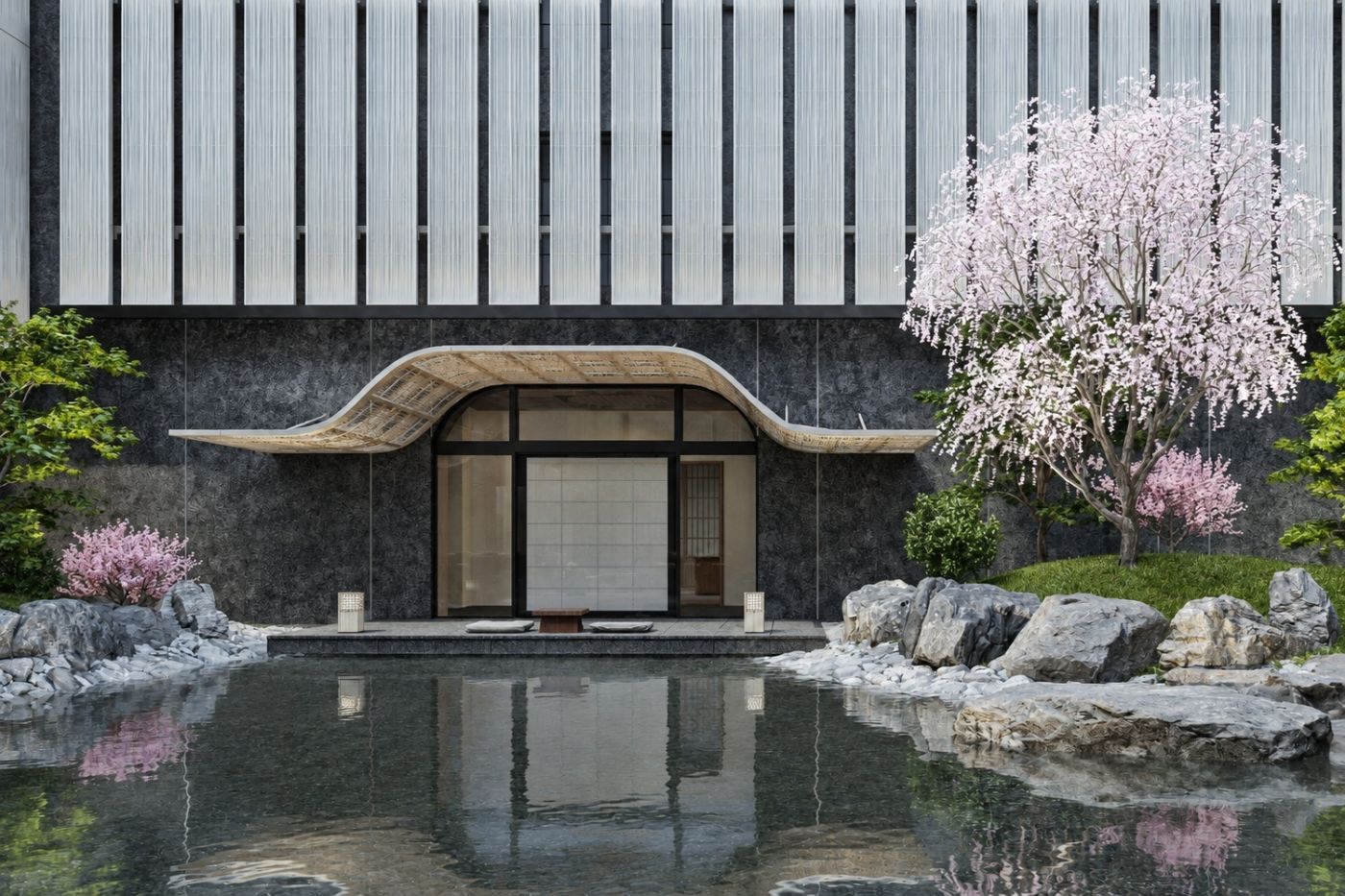
The Kajiimiya Gate is one of the first signs of that continuity. It frames the arrival with weight and restraint, suggesting that the hotel is not only a new build beside a landmark, but a carefully composed address on storied ground.
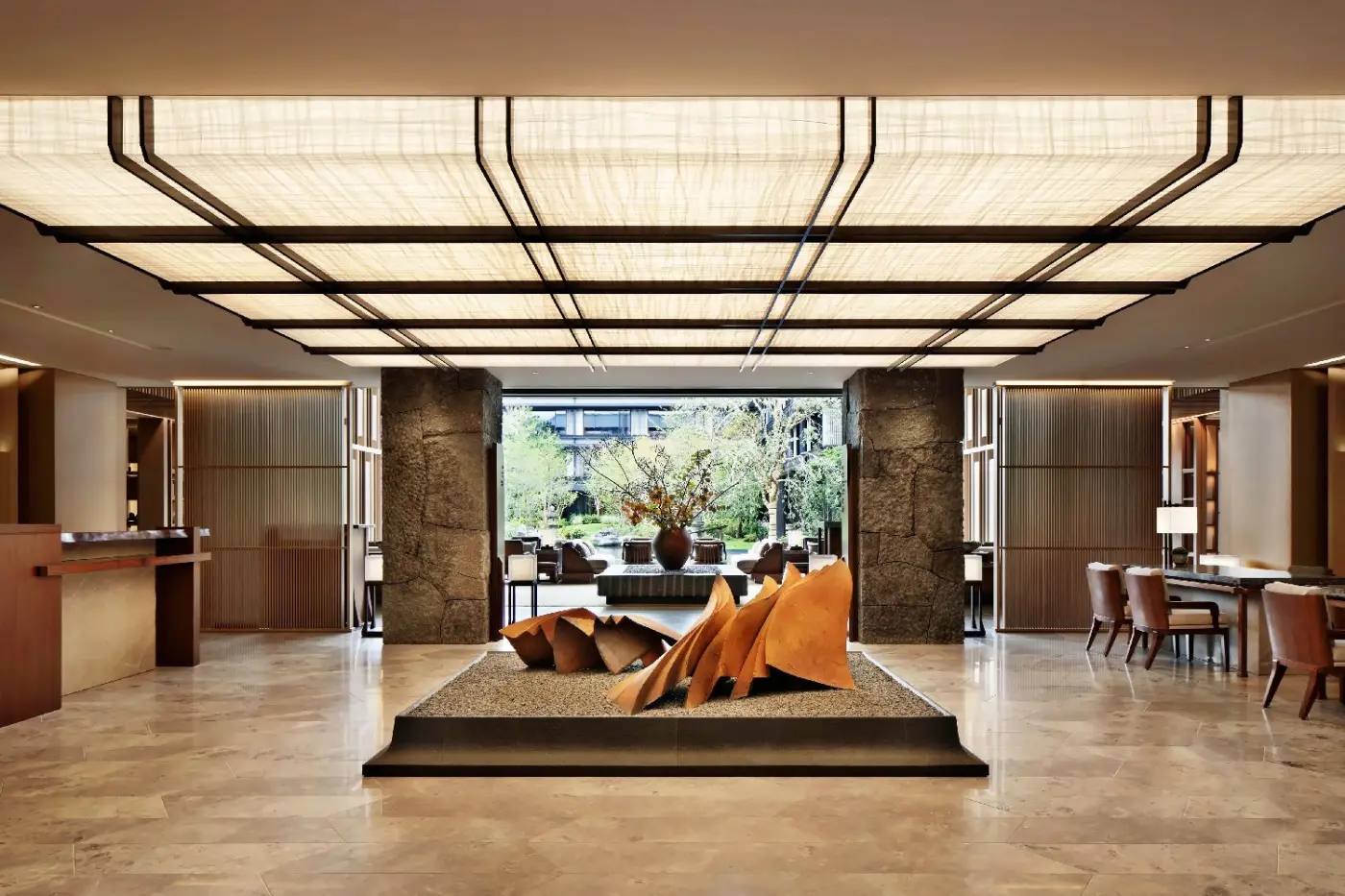
The hotel's concept is built around embracing Japan's beauty. That idea can sound broad, but here it becomes concrete through stone, wood, water, craft, and the measured use of space. The hotel does not need to shout to feel special.
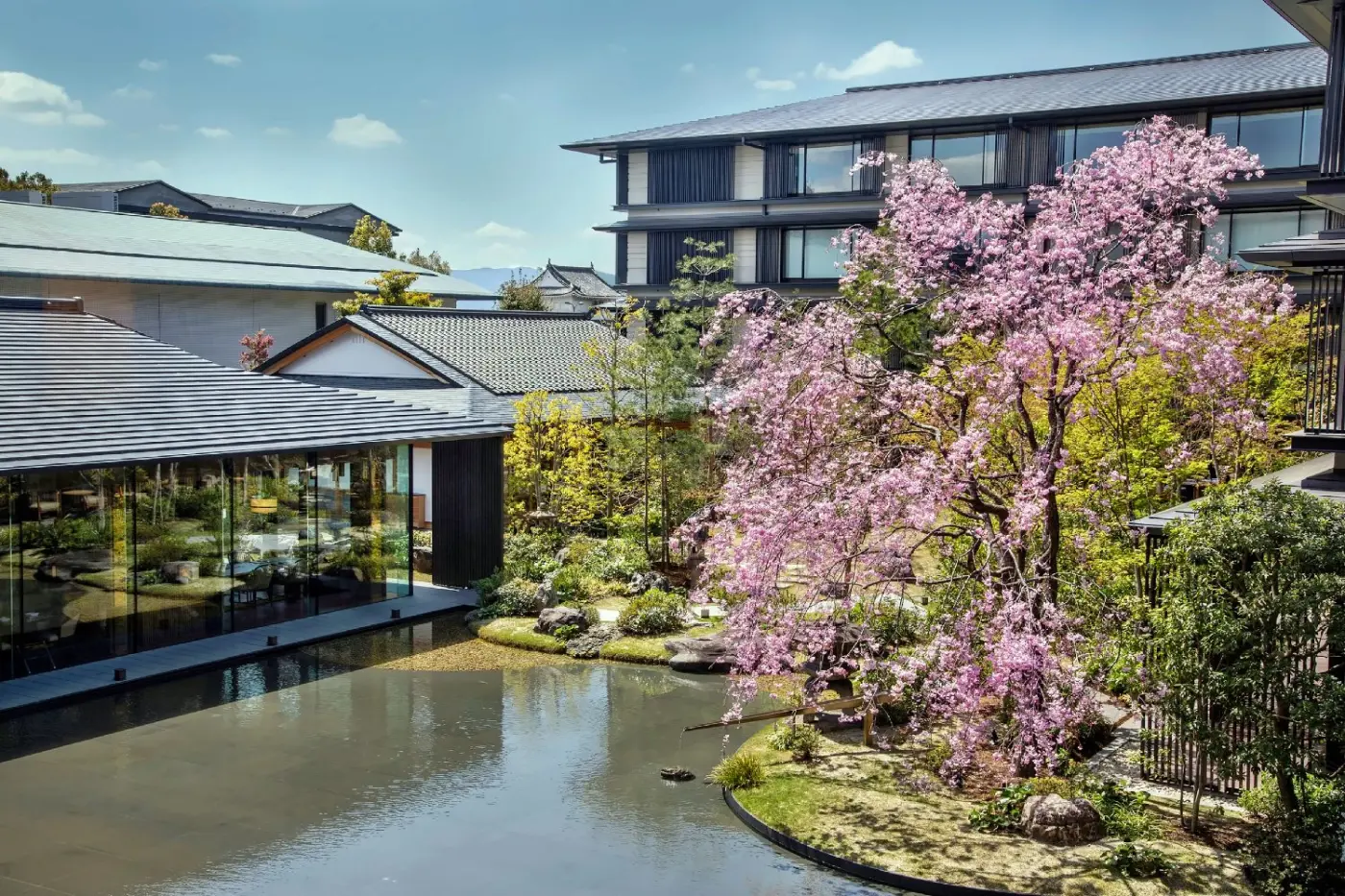
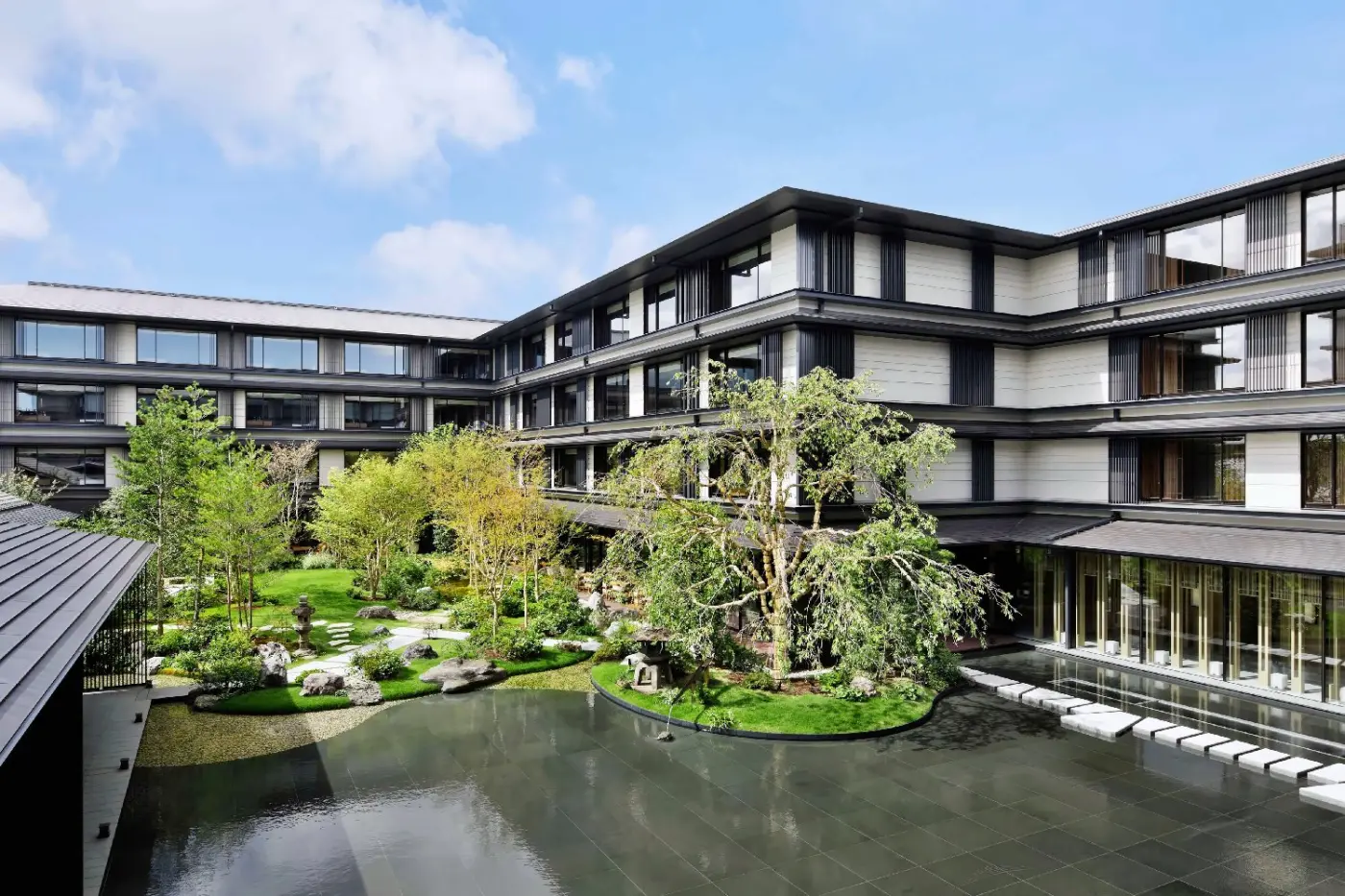
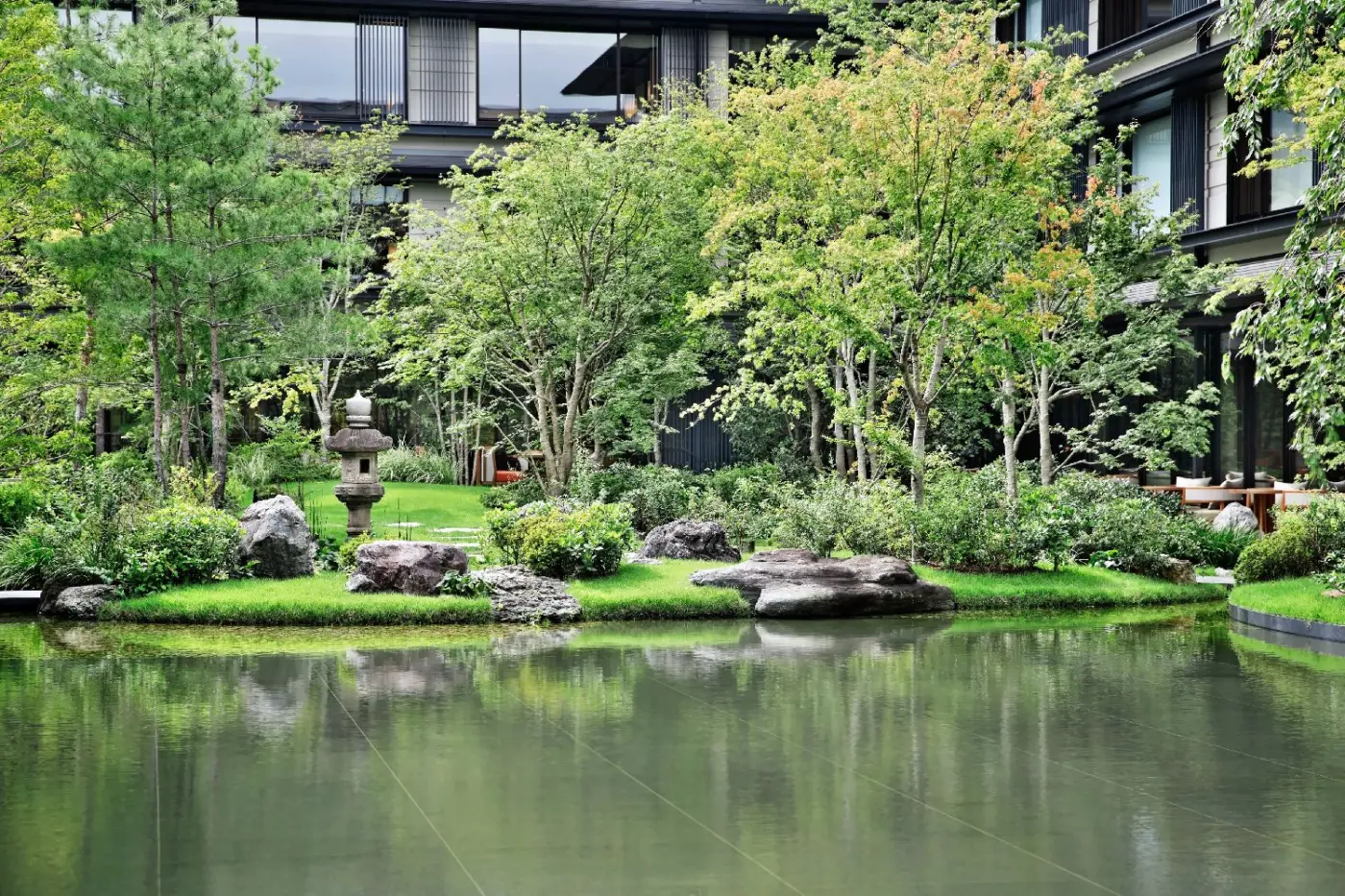
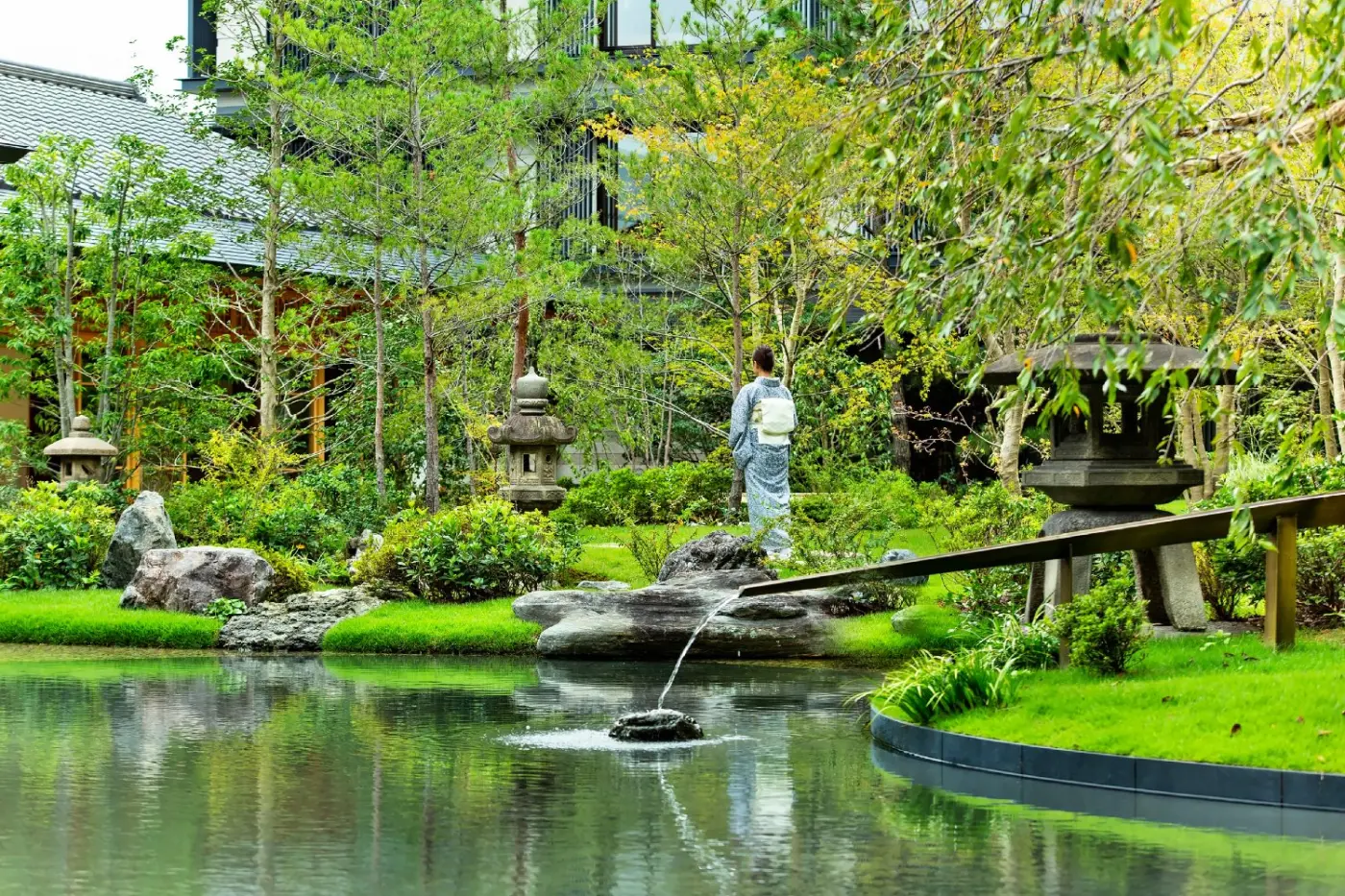
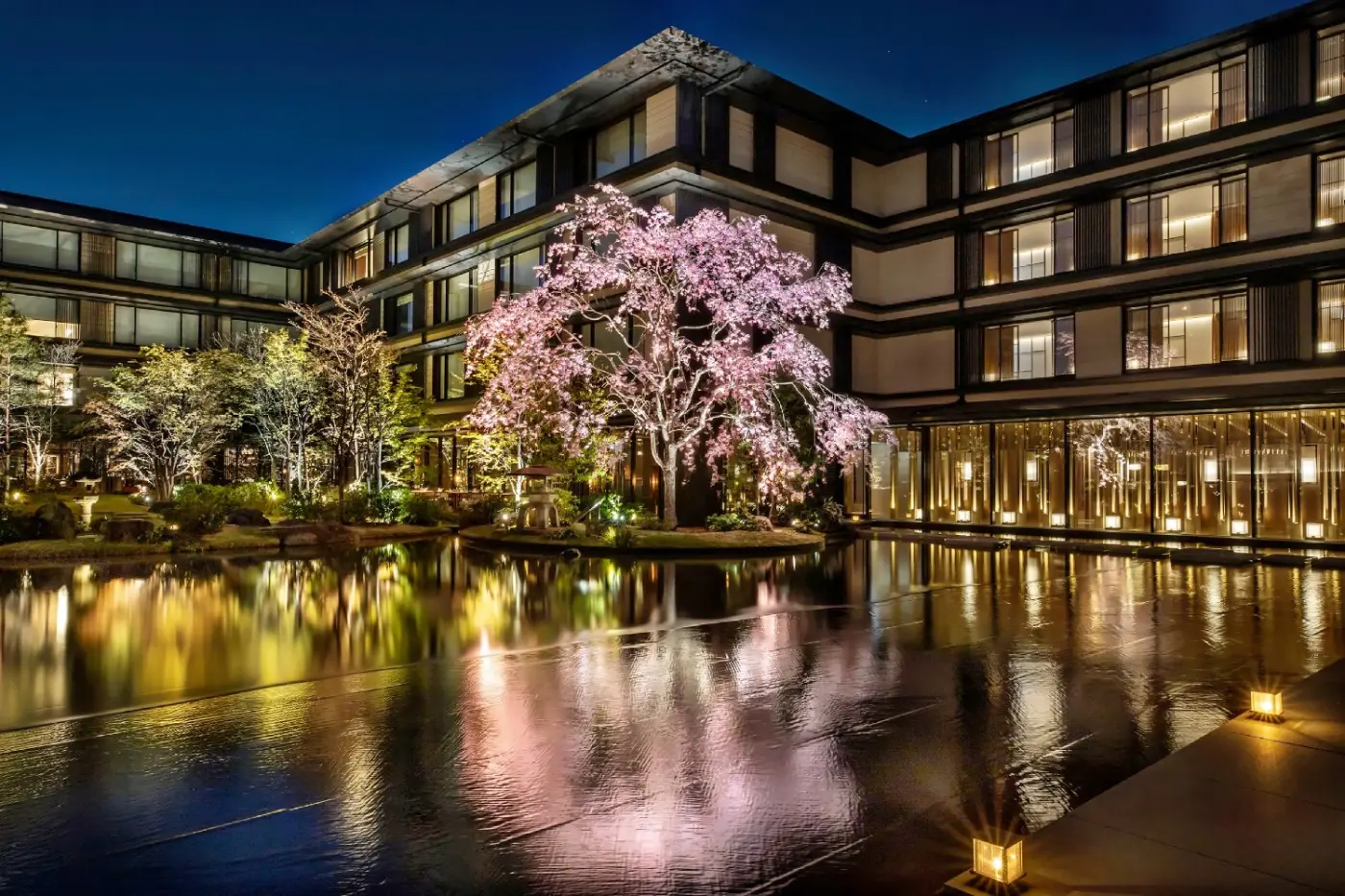
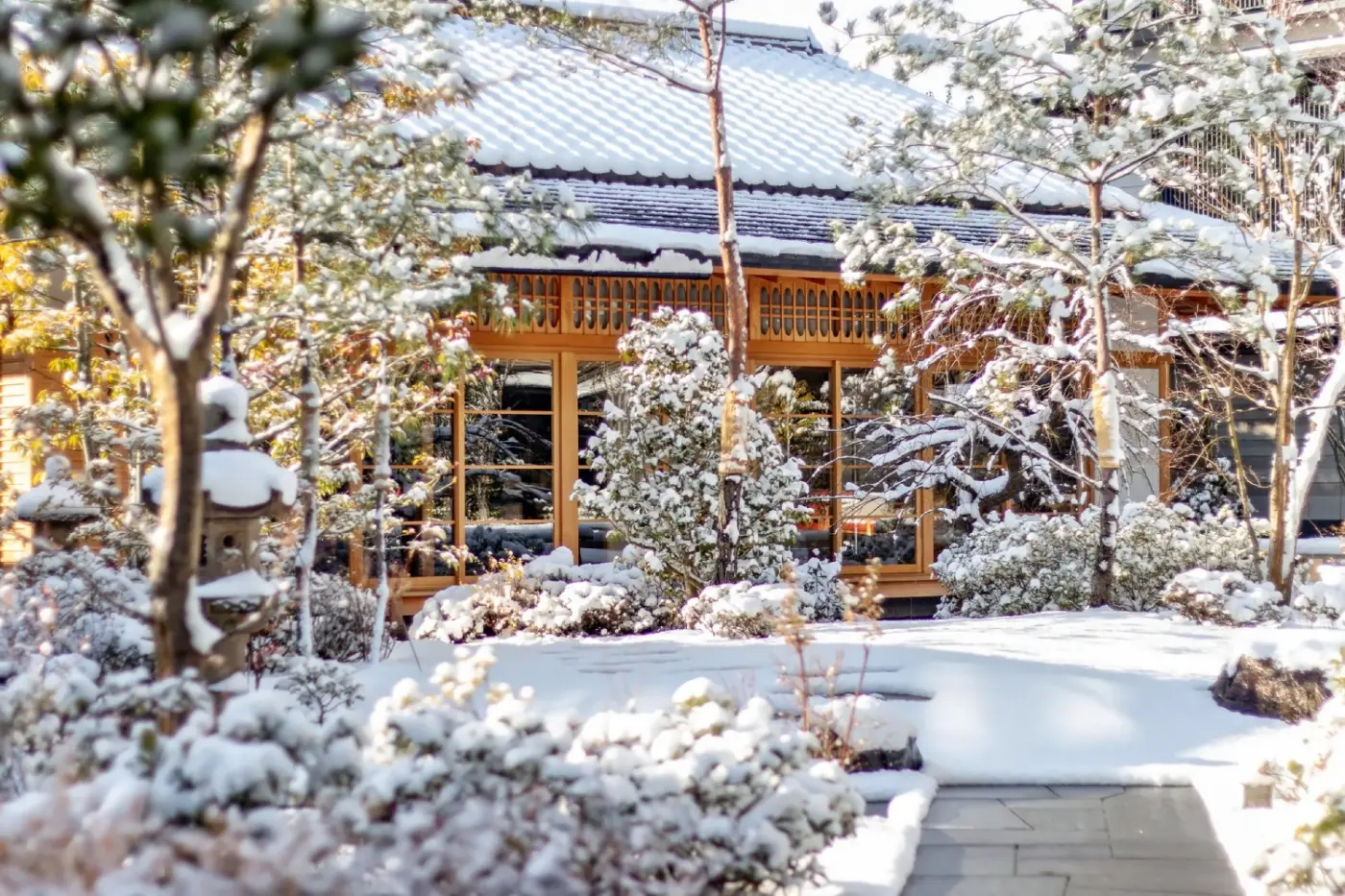
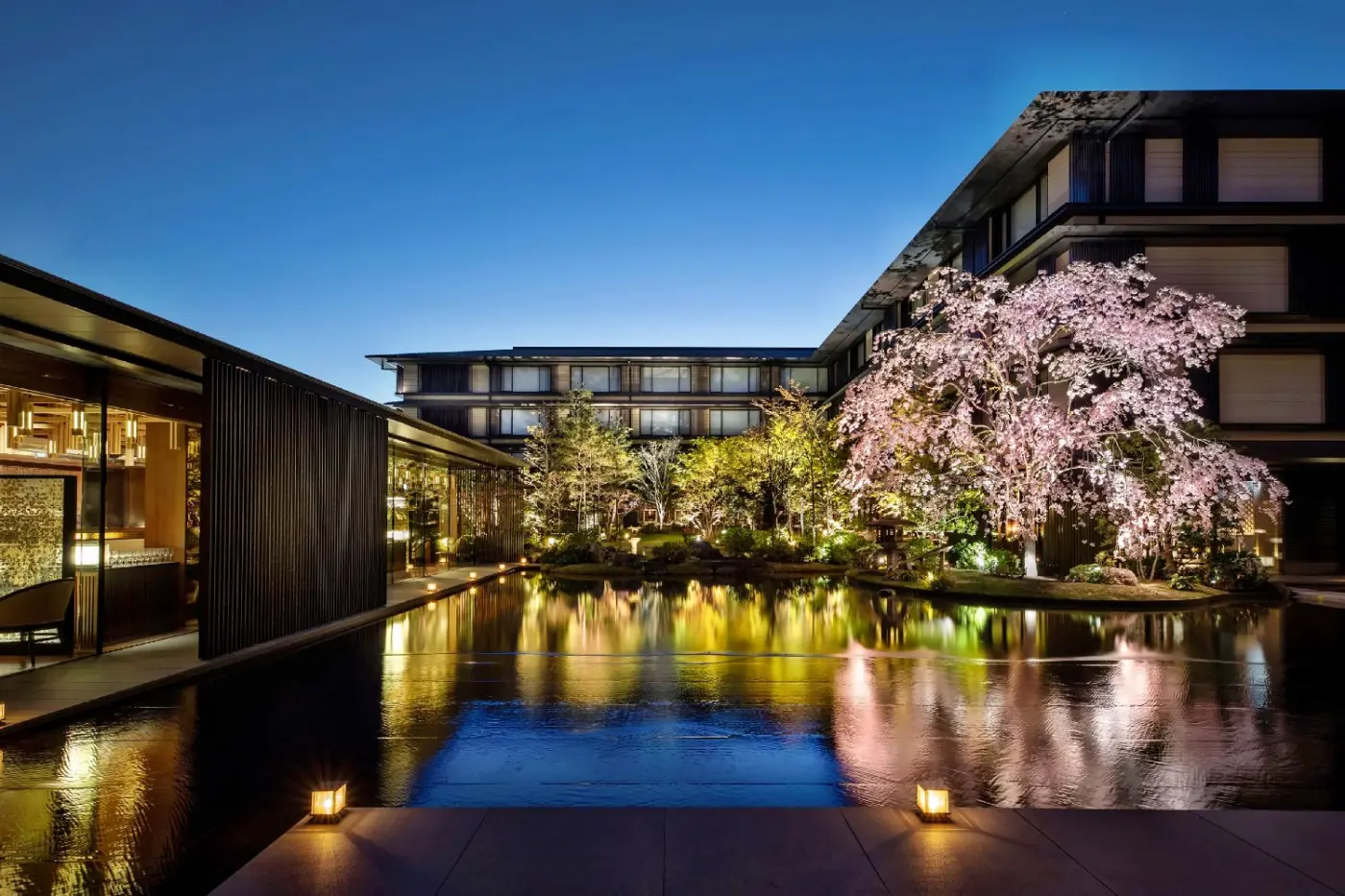
The central garden is one of the property's defining features. Rooms, restaurants, and public areas look toward it, so the seasons become part of the stay. Rain, summer green, autumn colour, winter air, and spring blossom all change the mood.
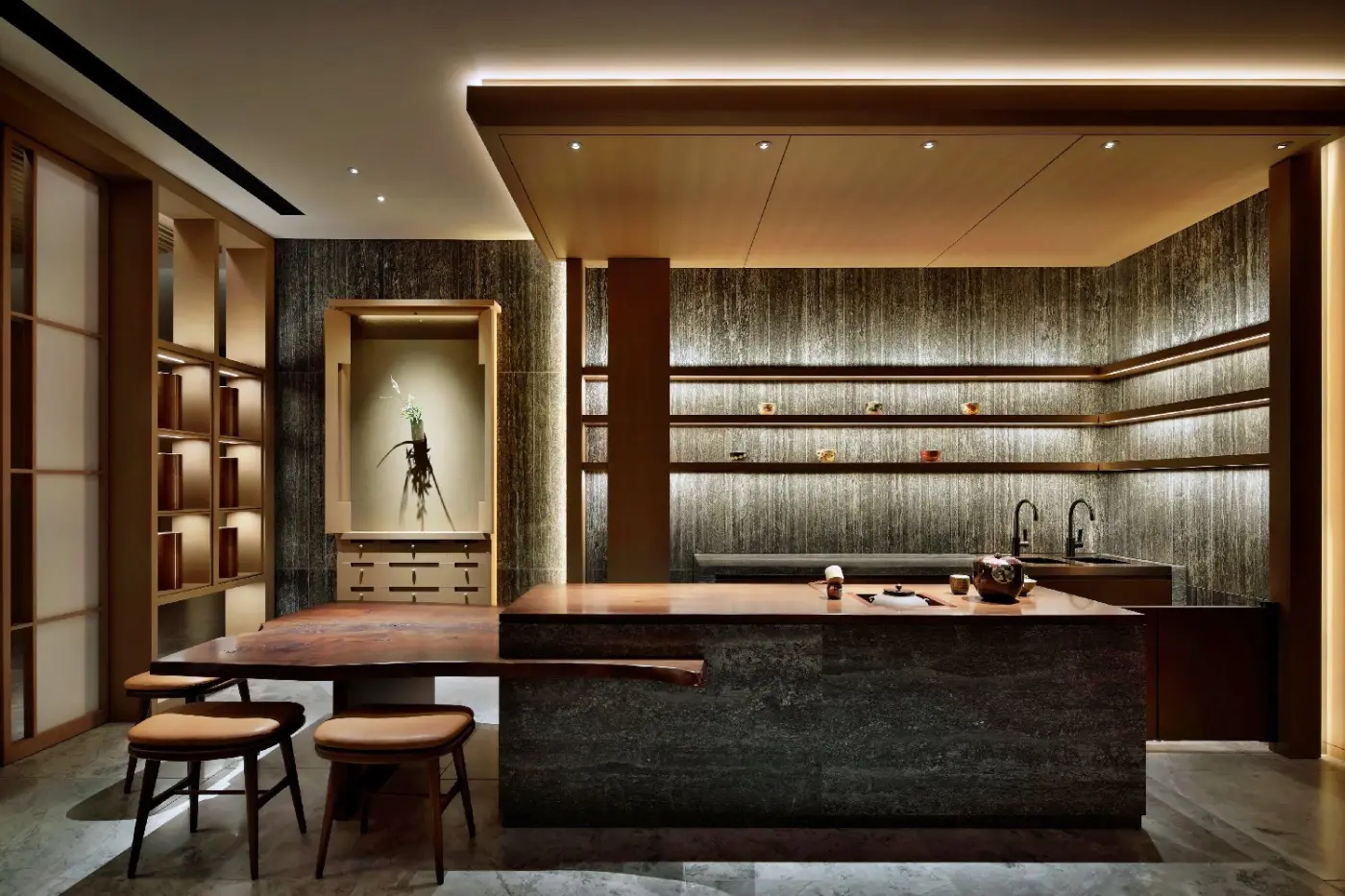
SHIKI-NO-MA adds another historic layer. The hotel describes it as a modern reconstruction of part of the former Mitsui home, built from Japanese cypress. It can be used for exclusive dining events, tea ceremony gatherings, and private occasions.
That kind of room matters in Kyoto. Many hotels refer to local culture, but fewer give guests a setting where it can be experienced with this level of calm. The space helps the hotel feel rooted rather than themed.

The hotel has 160 guest rooms. Marriott describes them as a modern interpretation of the Japanese tea room, shaped by the Way of Tea tradition. That reference is visible in the quiet proportions, natural materials, and thoughtful restraint.
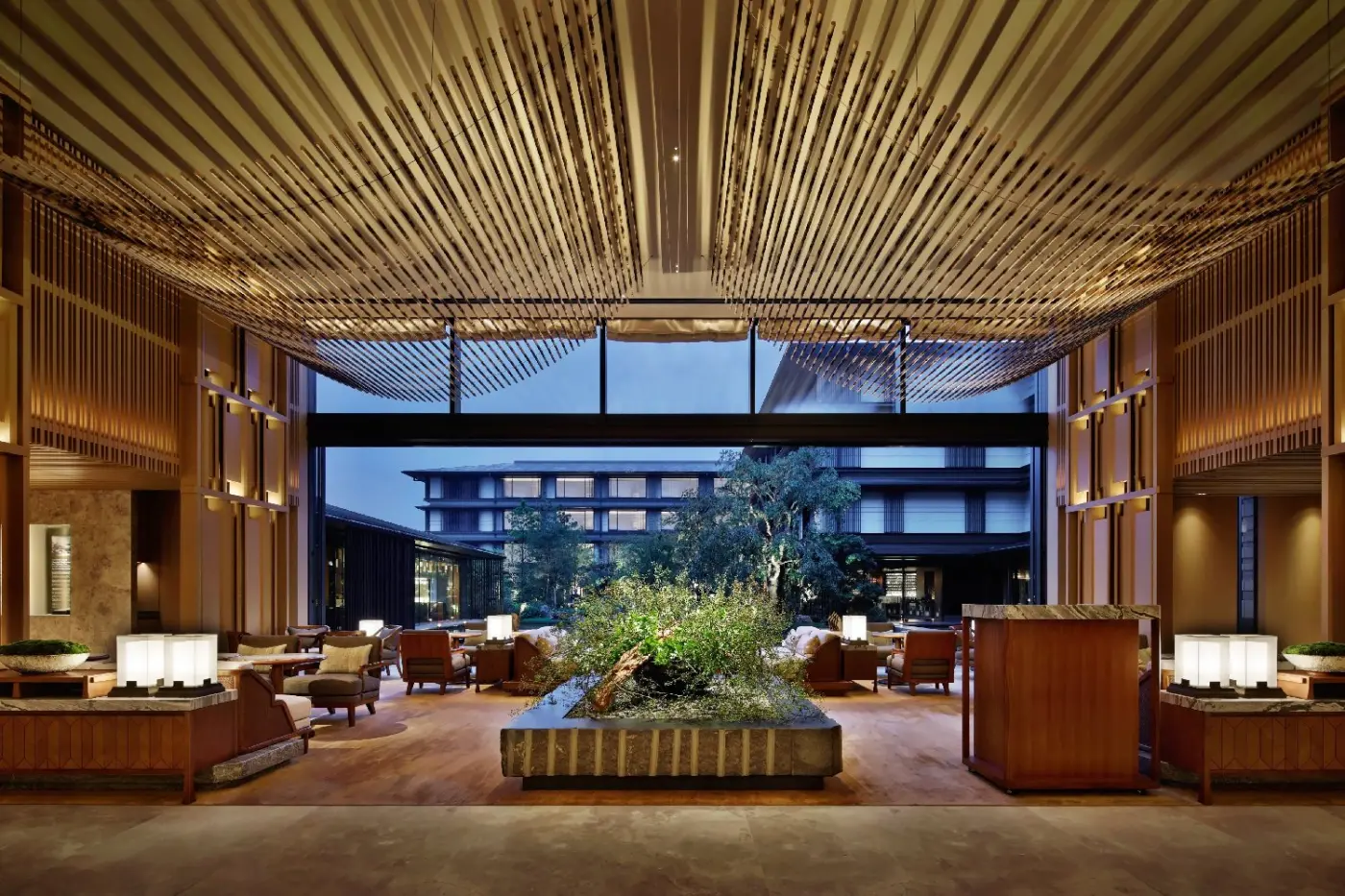
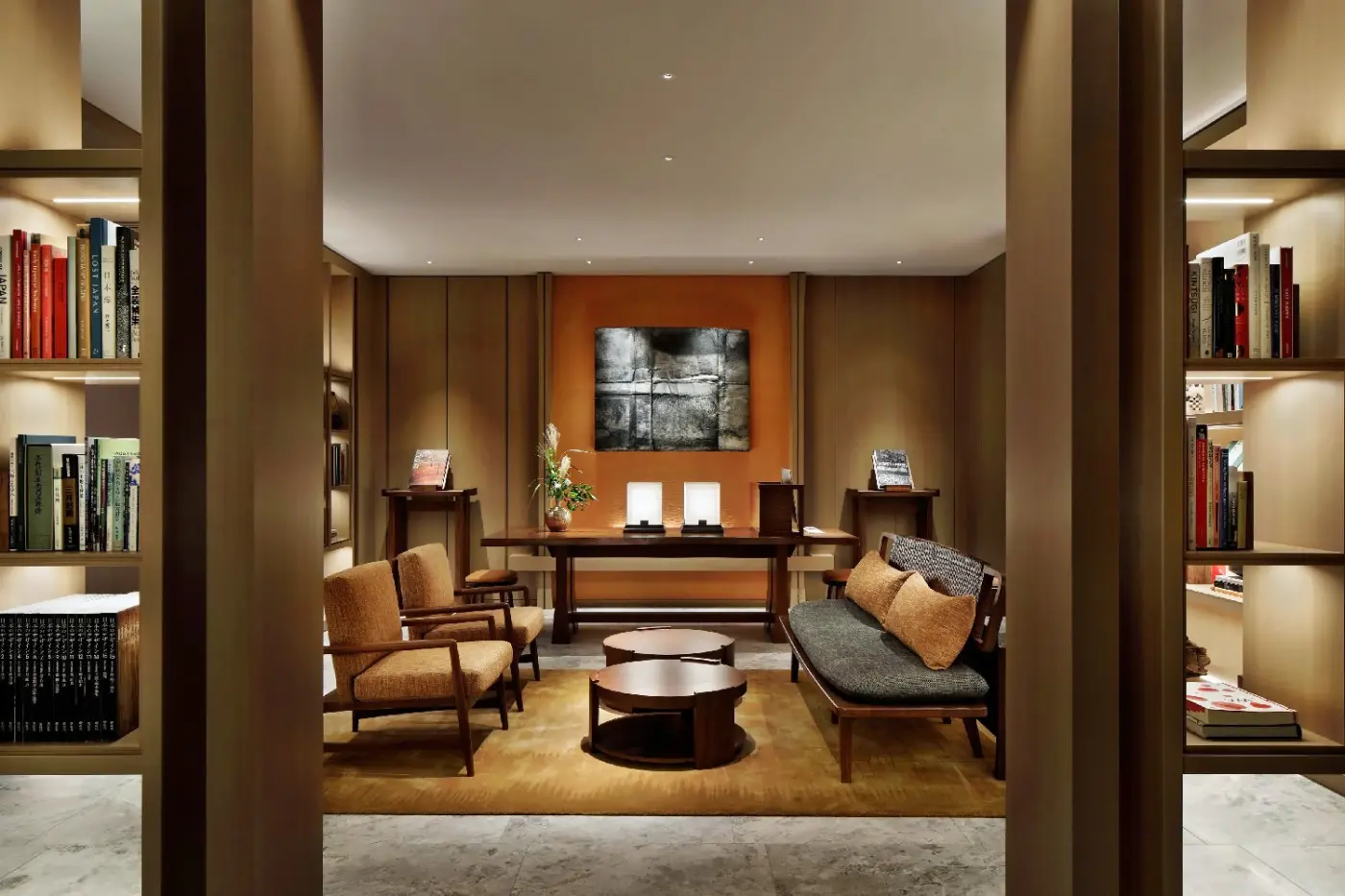
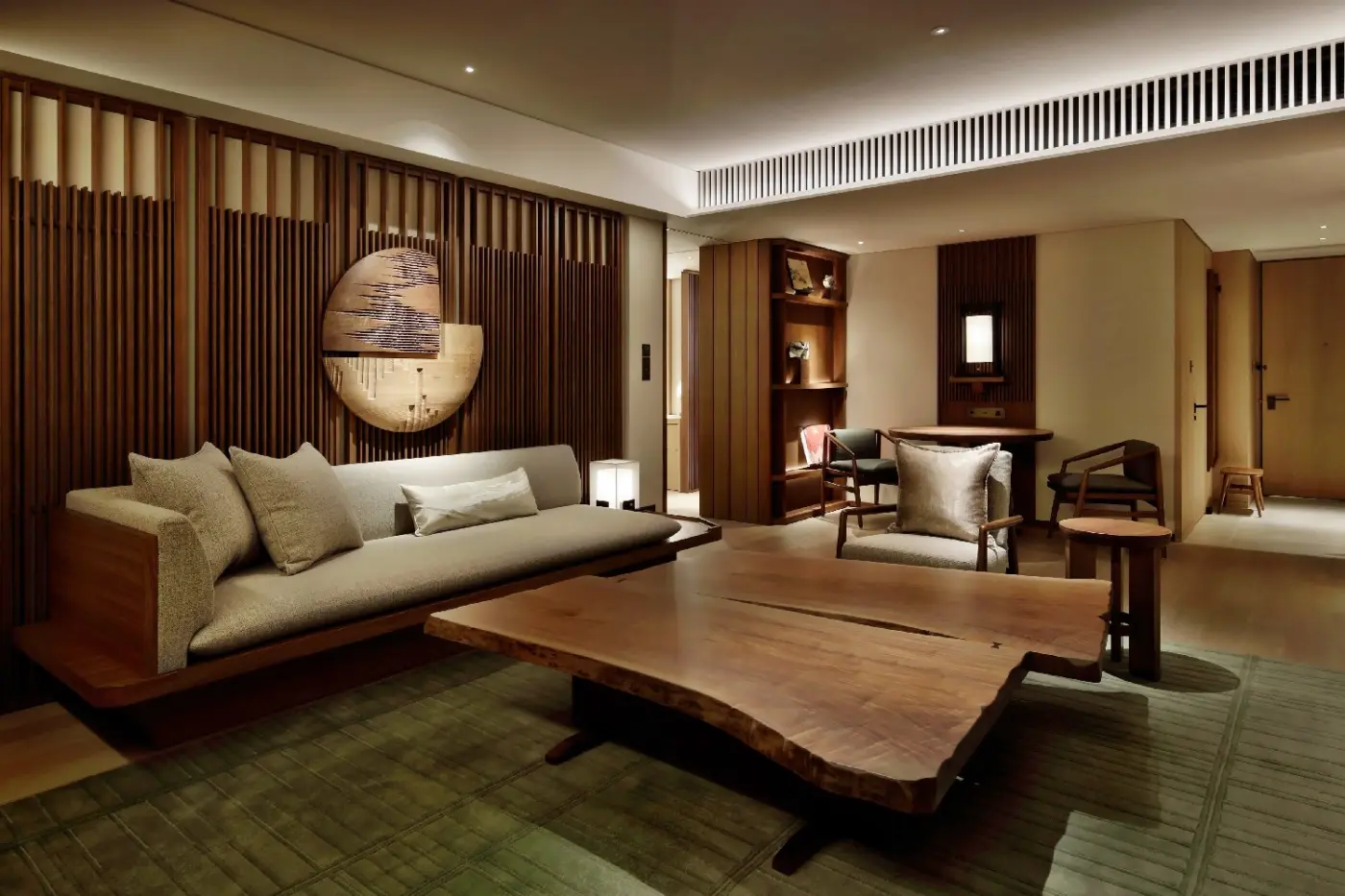
Room design favours calm over display. Stone, wood, soft light, and carefully chosen textures create a sense of stillness. The best rooms do not compete with Kyoto outside. They give guests a place to absorb it.
Some rooms look toward the garden, while others connect to Nijo-jo Castle or the city. Each outlook changes the stay. Garden views feel private and seasonal. Castle-facing rooms remind guests that Kyoto's long history is not an abstract idea here.
Bathrooms are also part of the experience, with generous stone bathtubs noted on the Marriott room pages. In a city built around long days of walking, bathing becomes more than routine. It is part of the reset.
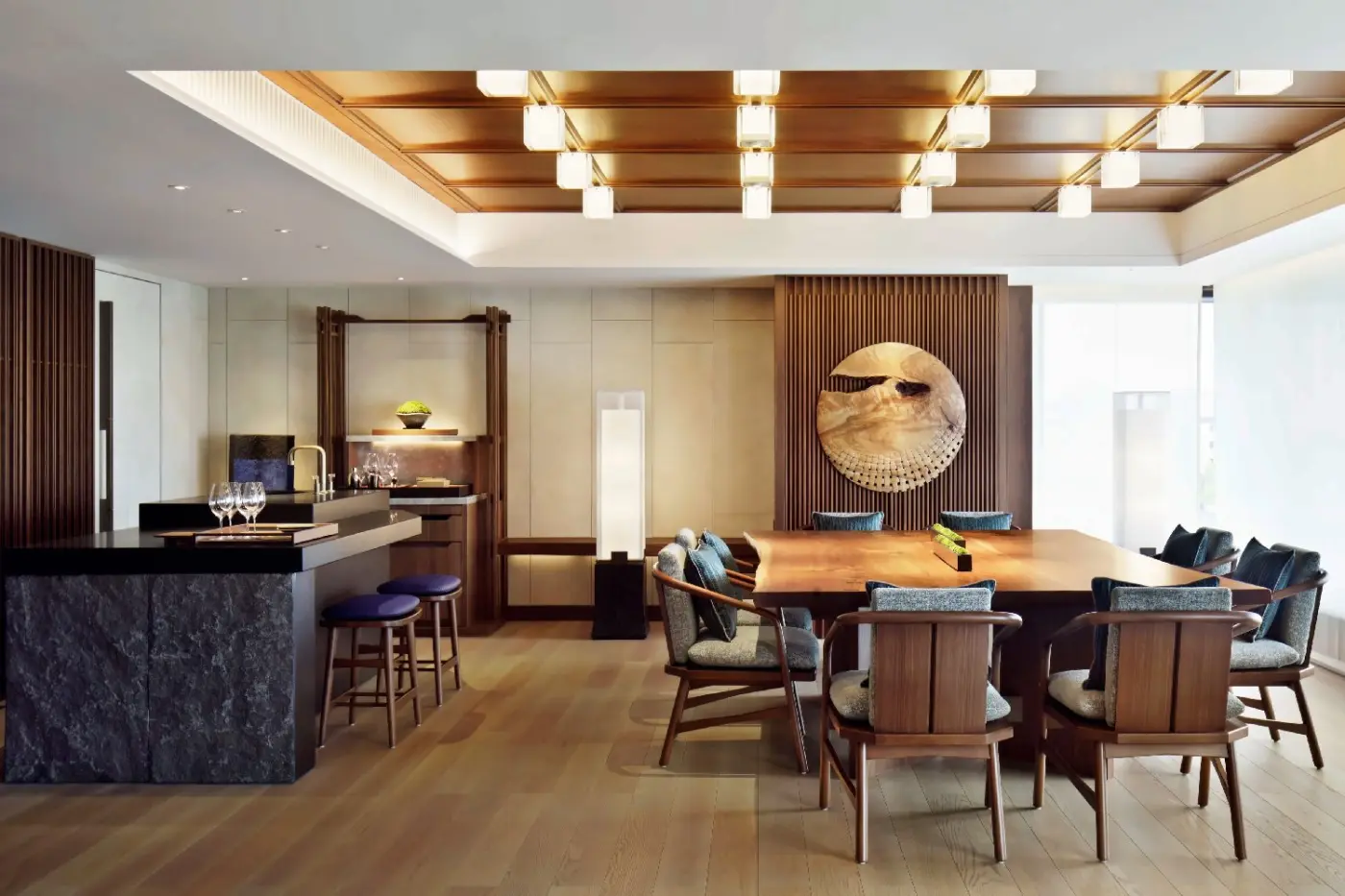
Suites offer a broader residential feeling, with more space for guests who want a slower Kyoto stay. Some suite categories include access to natural onsen bathing, sourced from the hotel's on-site spring. That gives the room itself a stronger sense of place.
The Thermal Spring Spa is one of Hotel The Mitsui Kyoto's most distinctive features. It uses natural spring water drawn from an on-site source, turning water into a central part of the stay rather than a simple spa detail.
The spa concept is described as an oasis of serenity. In practice, that means guests can step away from the pace of Kyoto and enter a quieter environment built around warm water, stillness, and recovery.
Private onsen options and spa treatments add flexibility. Some guests will want the shared thermal space, while others may prefer a more private bathing ritual. Both choices suit Kyoto, where bathing, craft, and seasonal awareness often meet.
The gym rounds out the wellness offer. It matters for longer stays and for travellers who want routine between temple visits, meetings, or train journeys. The hotel feels contemplative, but it also works for a modern travel schedule.
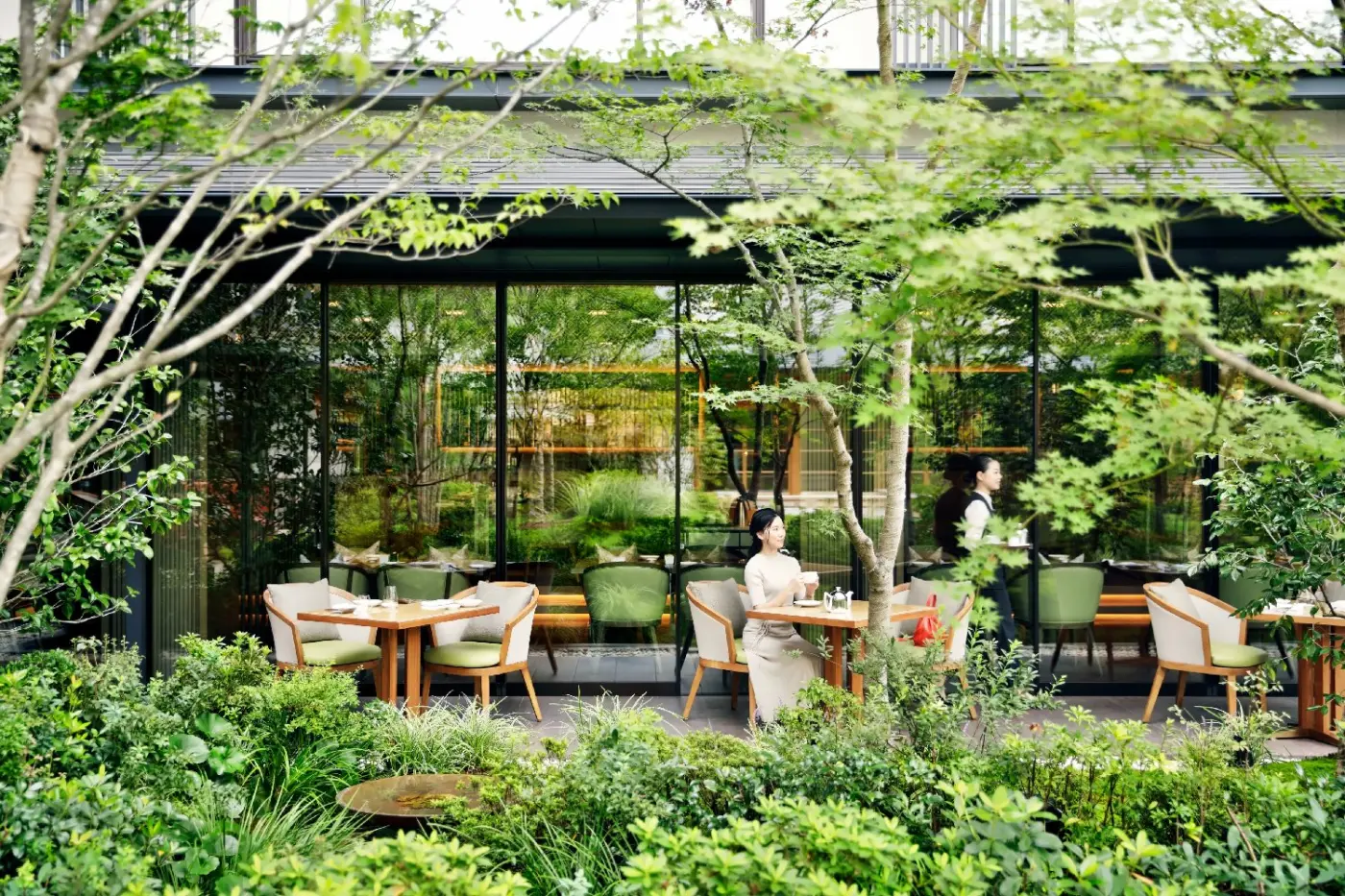
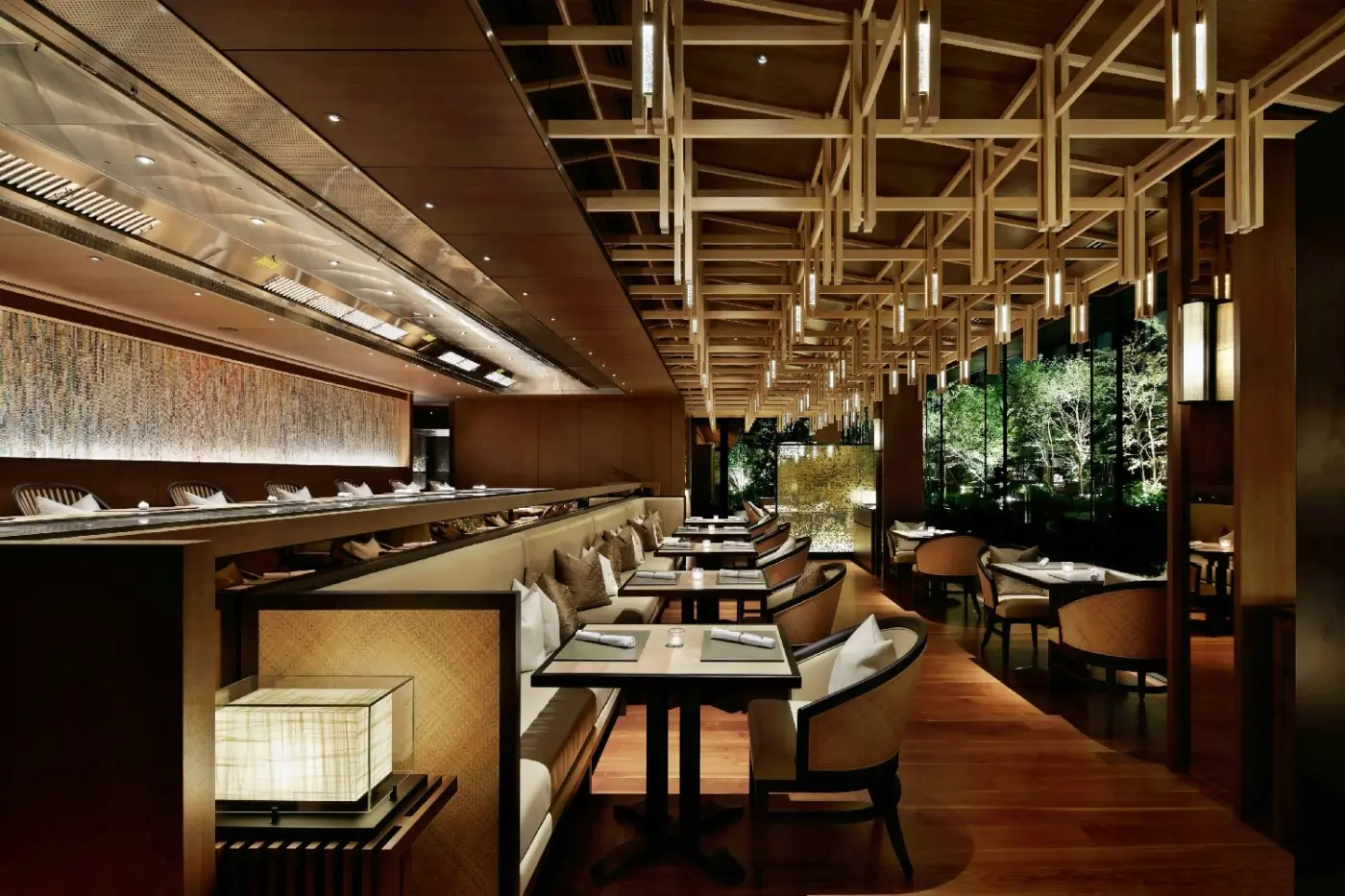
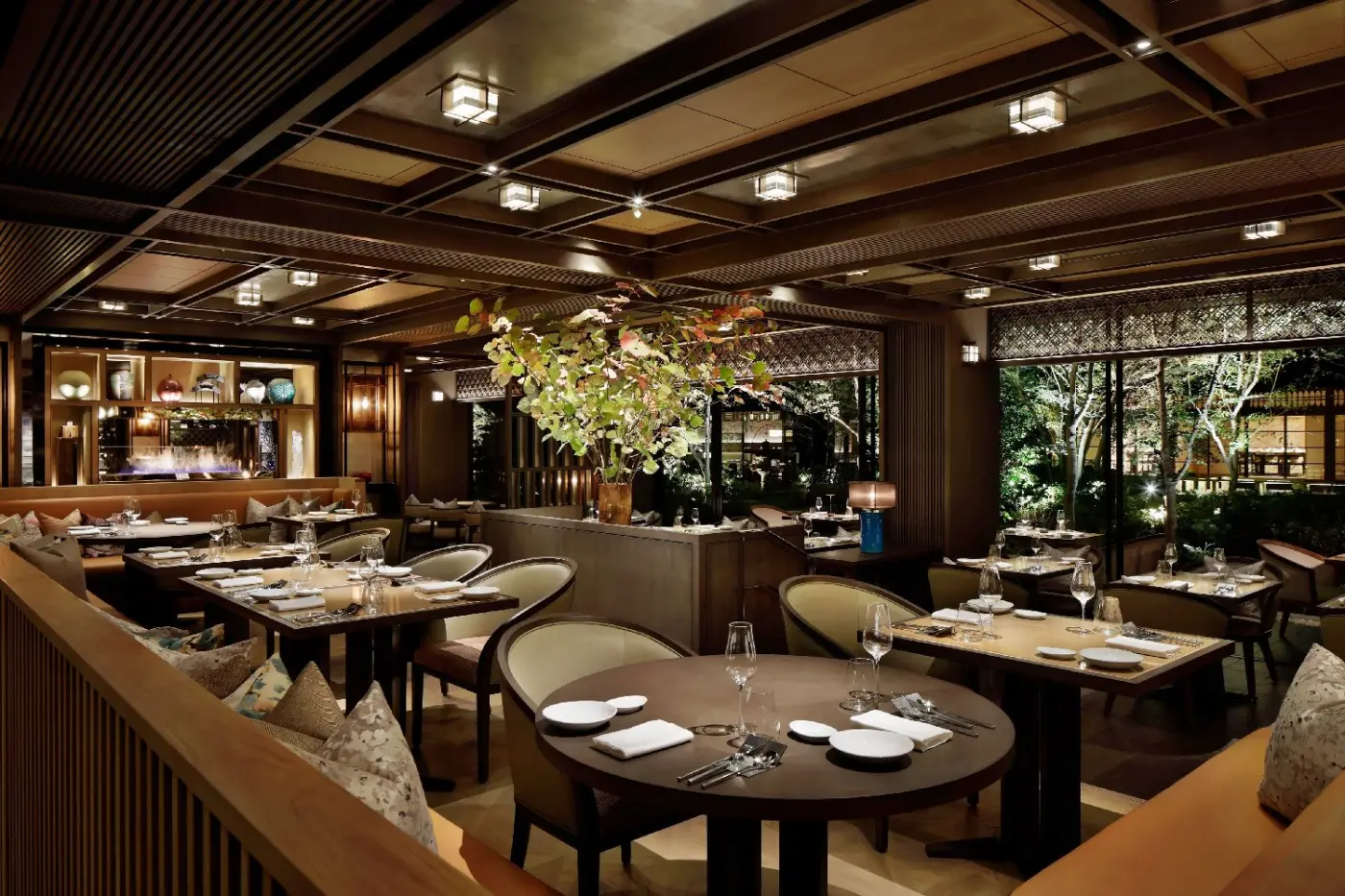
The hotel's restaurants and bar are arranged around the garden, which gives dining a strong sense of place. The food program includes TOKI, FORNI, THE GARDEN BAR, and SHIKI-NO-MA, with each space playing a different role.
TOKI is the more refined dining expression. It draws on Kyoto produce and broader Japanese ingredients while allowing room for contemporary technique. The experience fits guests who want dinner to feel connected to the city rather than interchangeable.
FORNI brings an Italian rhythm into the hotel. It is more relaxed and can work for breakfast, lunch, or dinner depending on the day. The garden views keep the room linked to Kyoto even when the cooking looks toward Italy.
THE GARDEN BAR gives the property a quieter social space. It can be used for tea, drinks, and a pause beside the seasonal garden. Kyoto often rewards small pauses, and this bar is built for that kind of time.
SHIKI-NO-MA deserves its own place in the story because it carries the strongest connection to the former Mitsui residence. Built from Japanese cypress, it is not a generic event room. It is a cultural space with a clear reason to exist.
The room can host tea ceremony gatherings, private meals, and exclusive events. For guests, that creates the possibility of a more intimate Kyoto experience without leaving the hotel. The setting gives form to the idea of hospitality through ritual.
Private dining here feels different from a restaurant table. It is slower, more framed, and closer to Kyoto's tradition of rooms designed around season, view, and gesture. The value is in the atmosphere as much as the menu.
This is where the hotel becomes most specific. Many city hotels can offer comfort and service. Fewer can offer a reconstructed part of a historic family home as part of the guest experience.
Hotel The Mitsui Kyoto has gained major recognition in recent years. Marriott notes that it was honoured with Three Michelin Keys in 2025 and named among The World's 50 Best Hotels 2025. The hotel's own news also points to further travel awards in 2026.
Awards are not the reason to stay, but they do reflect how strongly the hotel is regarded. The more important point is how quietly the property carries that attention. The experience does not feel built around trophies.
Instead, the hotel works through control and detail: the garden, the gate, the thermal spring, the room materials, the dining spaces, and the staff rhythm. Each piece supports the next. Nothing needs to be overexplained.
This confidence suits Kyoto. The city has little patience for empty spectacle. Places that last tend to be those that understand proportion, silence, and the passing of seasons. The Mitsui Kyoto reads that language well.
From the hotel, guests can begin with Nijo-jo Castle, then move toward Nishiki Market, the Kyoto Imperial Palace area, Gion, temples, craft shops, or train routes to Arashiyama and eastern Kyoto. The location is central enough to keep plans flexible.
Kyoto days can be full, but they should not feel rushed. The hotel helps by giving guests a strong return point. A morning temple visit can be followed by garden tea, a thermal bath, or dinner without crossing the city again.
Seasonality is important here. Spring, summer, autumn, and winter all change the garden and the city's daily rhythm. A hotel built around natural materials and water can make those changes easier to notice.
That is why the property suits both first-time and repeat visitors. New guests gain a calm base beside a major landmark. Returning guests gain a place where Kyoto can be experienced with fewer moving parts.
Hotel The Mitsui Kyoto suits travellers who want a central Kyoto address, refined room design, garden atmosphere, serious dining, and a rare thermal spring spa. It works for couples, culture-led stays, wellness-focused trips, and guests who want Japanese craft expressed with restraint.
Choose it for the Nijo-jo Castle setting, 160 rooms, Mitsui family heritage, Kajiimiya Gate, TOKI, FORNI, THE GARDEN BAR, SHIKI-NO-MA, and the on-site spring. The hotel is strongest when used slowly: walk Kyoto, return to water and garden, then let the city settle before the next outing.
Sign up now and benefit from VIP Status, Room Upgrades, free daily breakfast, 100 USD Hotel credit with every booking. Best Available Rates & Free Membership!
By watching the video, you agree that your data will be transmitted to YouTube and that you have read the privacy policy.
The information provided is circumstantial - and is not indefinite in accuracy. Changes may have occurred.
The Ritz-Carlton, Kyoto sits beside the Kamogawa River, where the city feels calm, layered, and deeply tied to water, gardens, craft, and season. The...
Park Hyatt Kyoto is an intimate luxury hotel in Higashiyama, set along the historic stone lanes of Ninenzaka with views toward Yasaka Pagoda and the o...
Capella Kyoto is located in Kyoto's Miyagawa-cho district in Higashiyama, one of the best areas to stay in Kyoto for culture, dining, and temple walks...