

Best for
Make Aman-i-Khas your wildlife stop in Rajasthan if you prefer sleeping under canvas near Ranthambore to staying in a conventional hotel.
Please choose a hotel or destination from the list.
Your private search
Finding exceptional stays
Best for
Make Aman-i-Khas your wildlife stop in Rajasthan if you prefer sleeping under canvas near Ranthambore to staying in a conventional hotel.
What makes it special
Arrange a private Machan dinner on the raised forest platform, where a dedicated chef cooks traditional dishes over an open fire.
Room to consider
For a private dip between outings, choose a Tented Pool Pavilion, which adds a plunge pool and open-air deck to camp life.
Insider tip
Keep spa appointments clear of the safari departures just after sunrise and in late afternoon, so treatments don't compete with wildlife outings.
Free membership gives you access to preferred rates, exclusive benefits and current promotions for your stay.
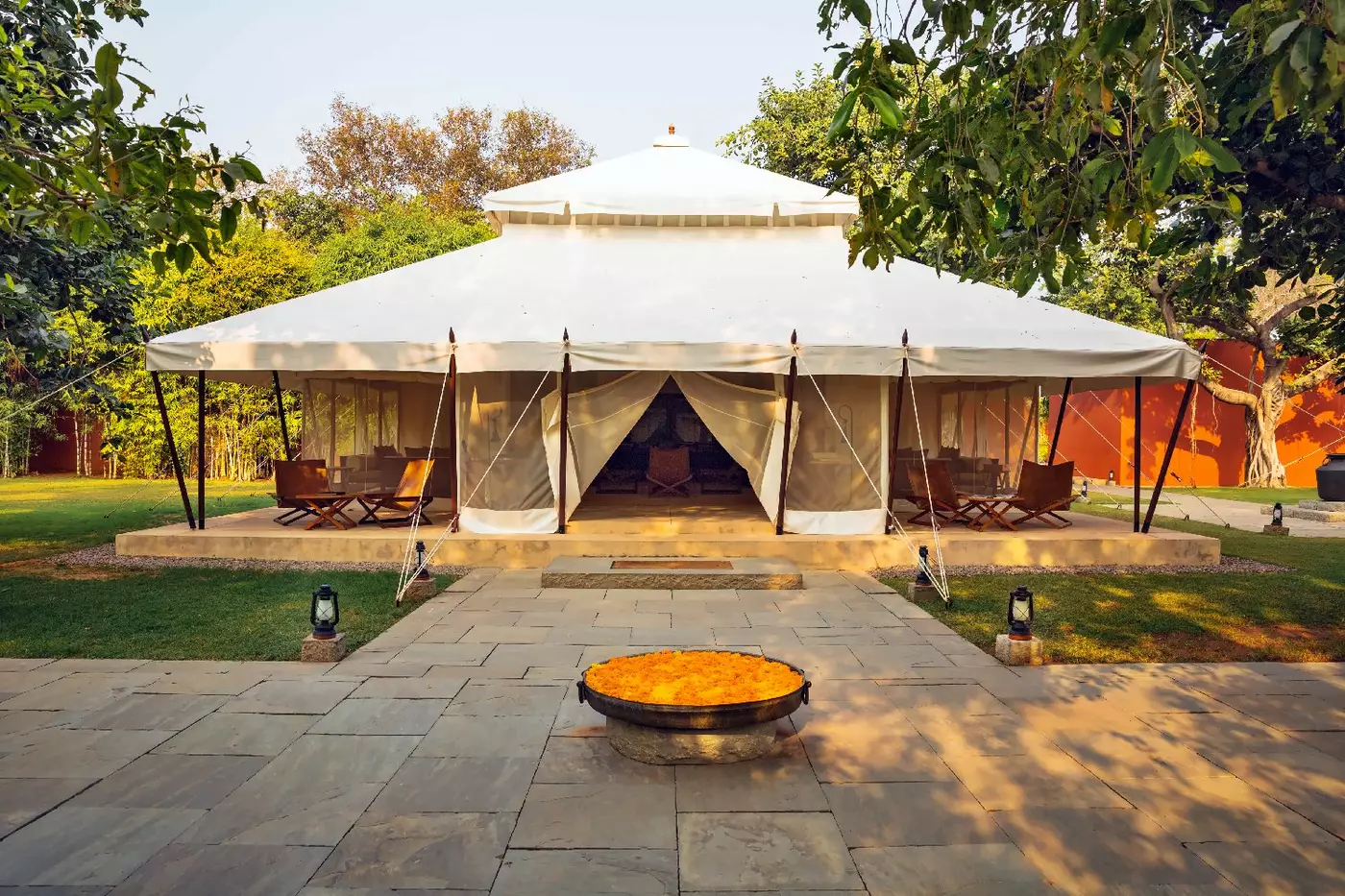
Aman-i-Khas is a luxury safari camp near Ranthambore National Park in Rajasthan, India. Its Mughal-inspired tents sit among brushwood and trees outside the reserve, with guided wildlife drives providing the main reason to rise early. Back at camp, a stepwell-style pool, a tented spa and meals shaped by the kitchen garden give the hours between outings their own appeal. This is a small-scale base for exploring tiger country, with proper bedrooms and bathrooms beneath canvas rather than a conventional hotel building.
 10
10
 Relaxed
 Pool
Pool
 Spa
Spa
 Romantic
 Adventure

The Tented Pavilion offers a private sanctuary surrounded by nature's calming presence. Each pavilion spans 108 square meters, providing a spacious retreat filled with natural...

The Tented Pool Pavilion has 164 square meters of calm space. It's perfect for relaxing and enjoying privacy. Every detail creates a balance between modern...

The Grand Tented Pool Pavilion offers a rare blend of adventure and refined comfort. Surrounded by lush nature, it stands in complete seclusion, ensuring peace...
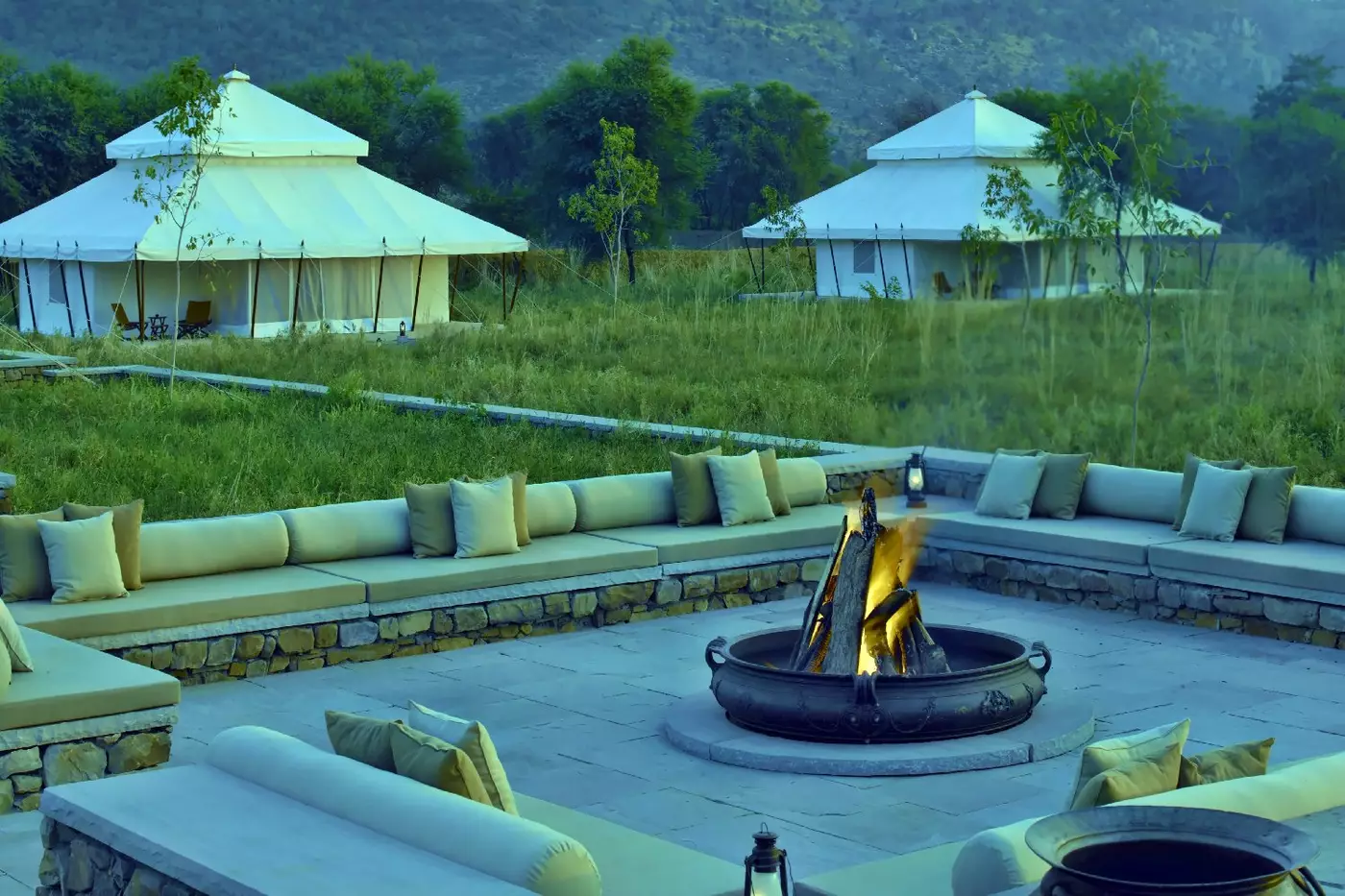
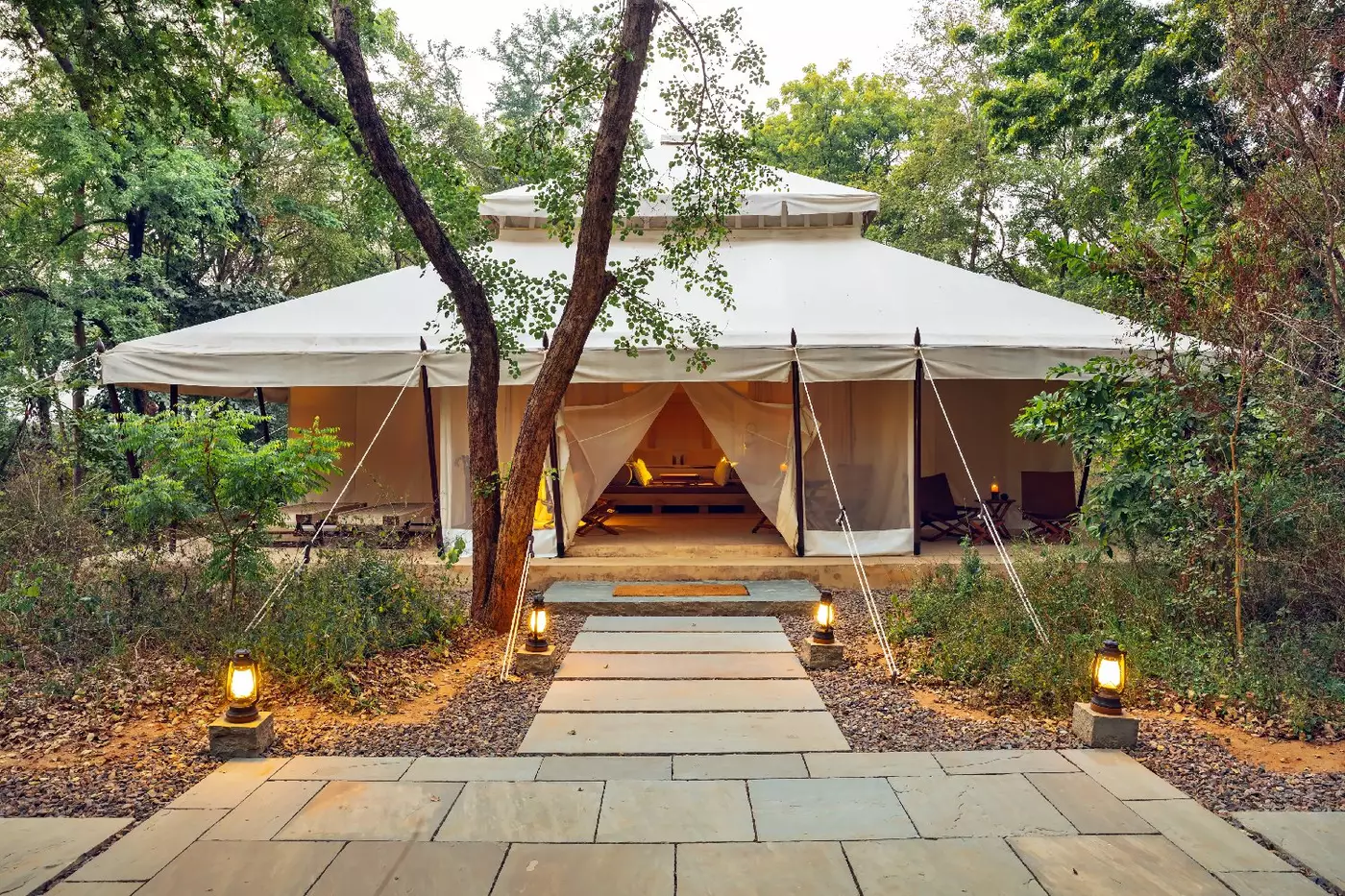
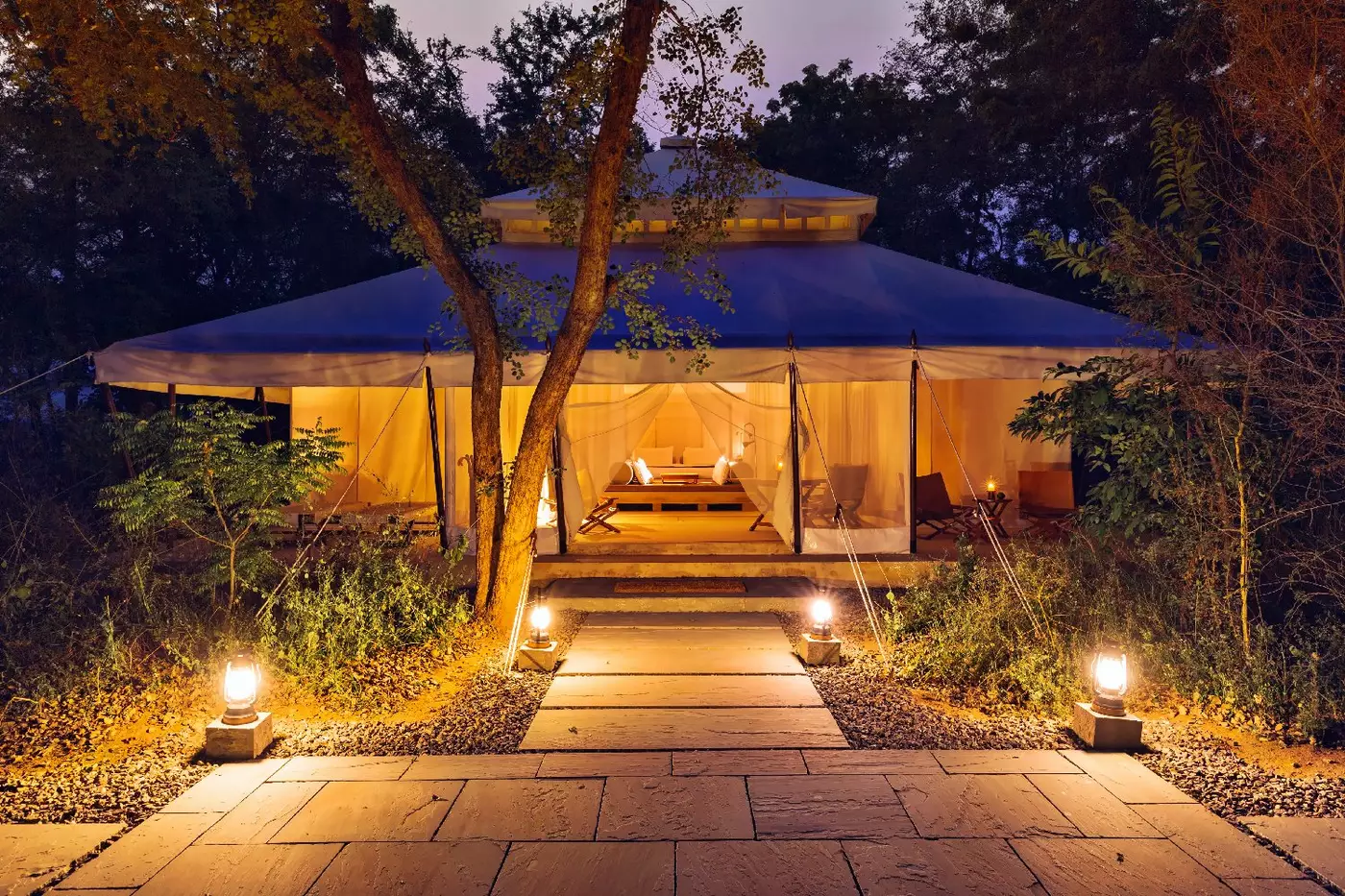
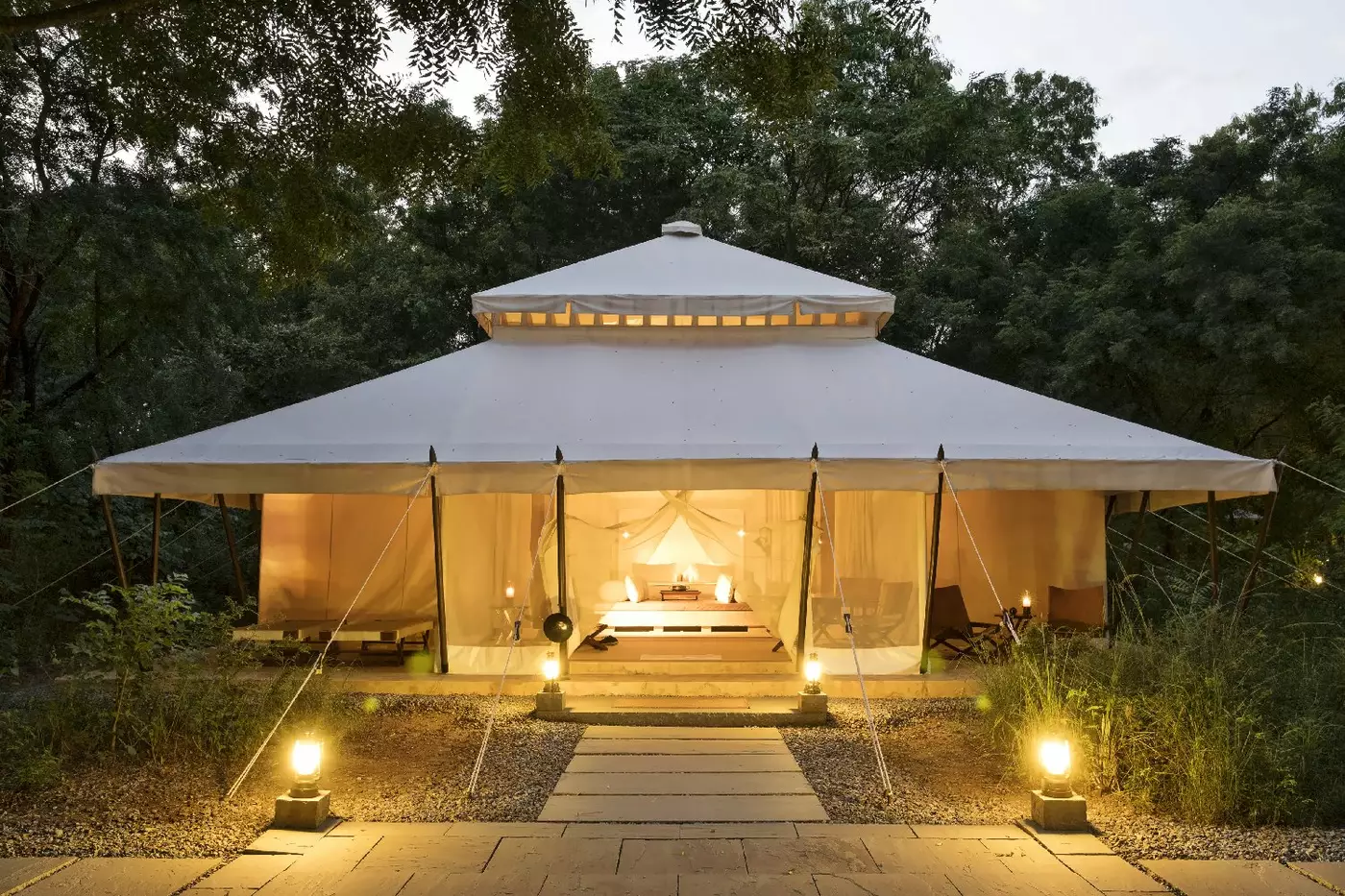
The address is Village Sherpur-Khiljipur on Ranthambhore Road, near Sawai Madhopur. Staying here places the forest ahead of the city: days can begin with a safari and end around the camp's outdoor fireplace. The tents recall the traveling camps of the Mughal era, with tall canopies and draped interiors. That reference is architectural, not a demand to rough it. Air-conditioning, heating and ceiling fans help manage the changes between warm afternoons and cooler nights.
Aman-i-Khas operates seasonally, normally from October through May. Confirm the camp's opening dates and the available safari arrangements before fixing a Rajasthan itinerary. The Lounge Tent, beside the Dining Tent, is a useful retreat between excursions. Its armchairs, sofas and reading tables are accompanied by books on Indian wildlife and Rajasthan's history. A few hours spent here need not compete with another organized outing.
The accommodation comes in three categories: Tented Pavilion, Tented Pool Pavilion and Grand Tented Pool Pavilion. The decision centers on a private pool and the amount of living space, rather than a different location elsewhere in the region. All retain the camp's canvas architecture. For a stay built around early departures, the standard pavilion already provides separate places to sleep, eat, bathe and sit outside.
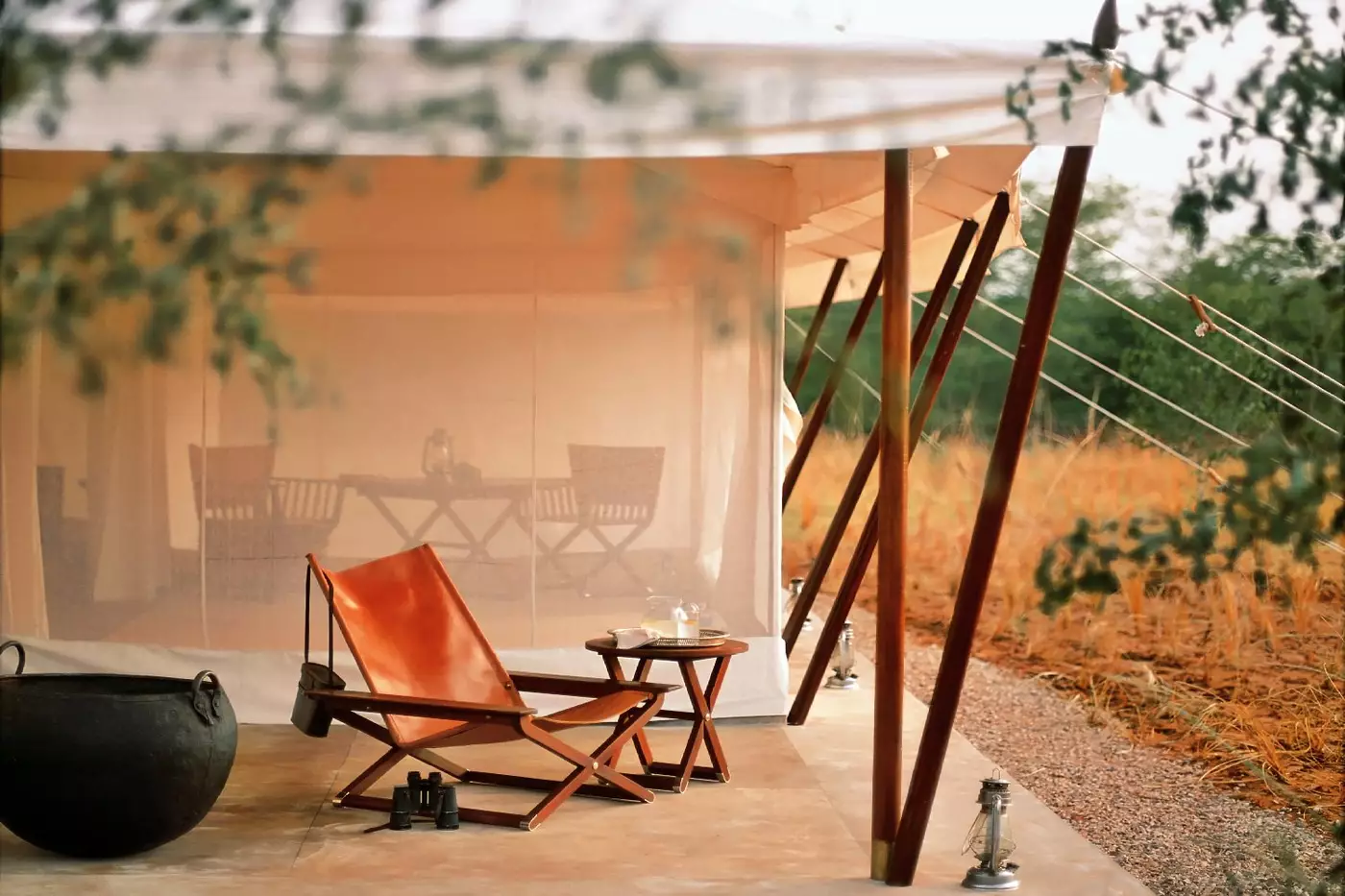
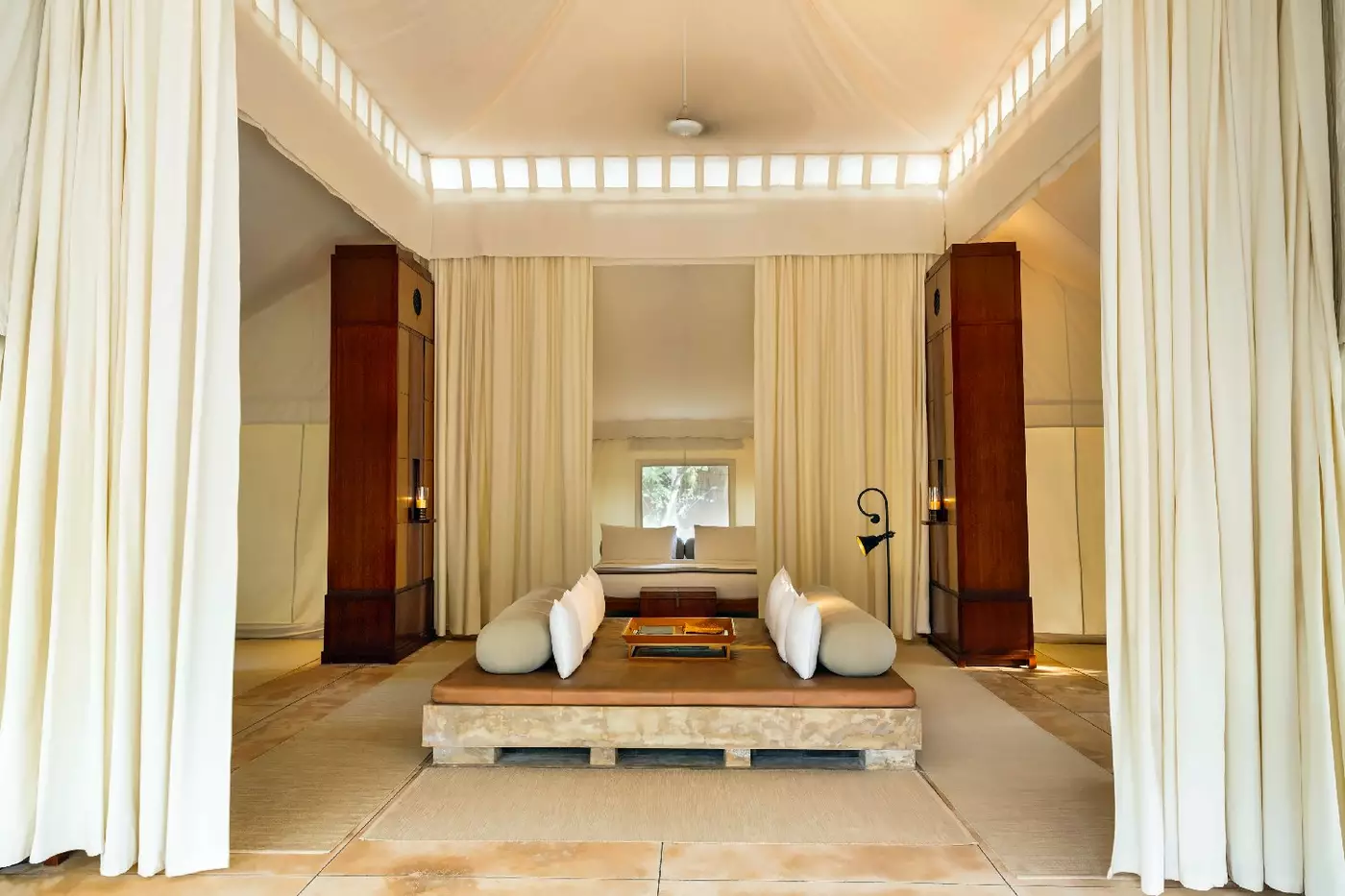
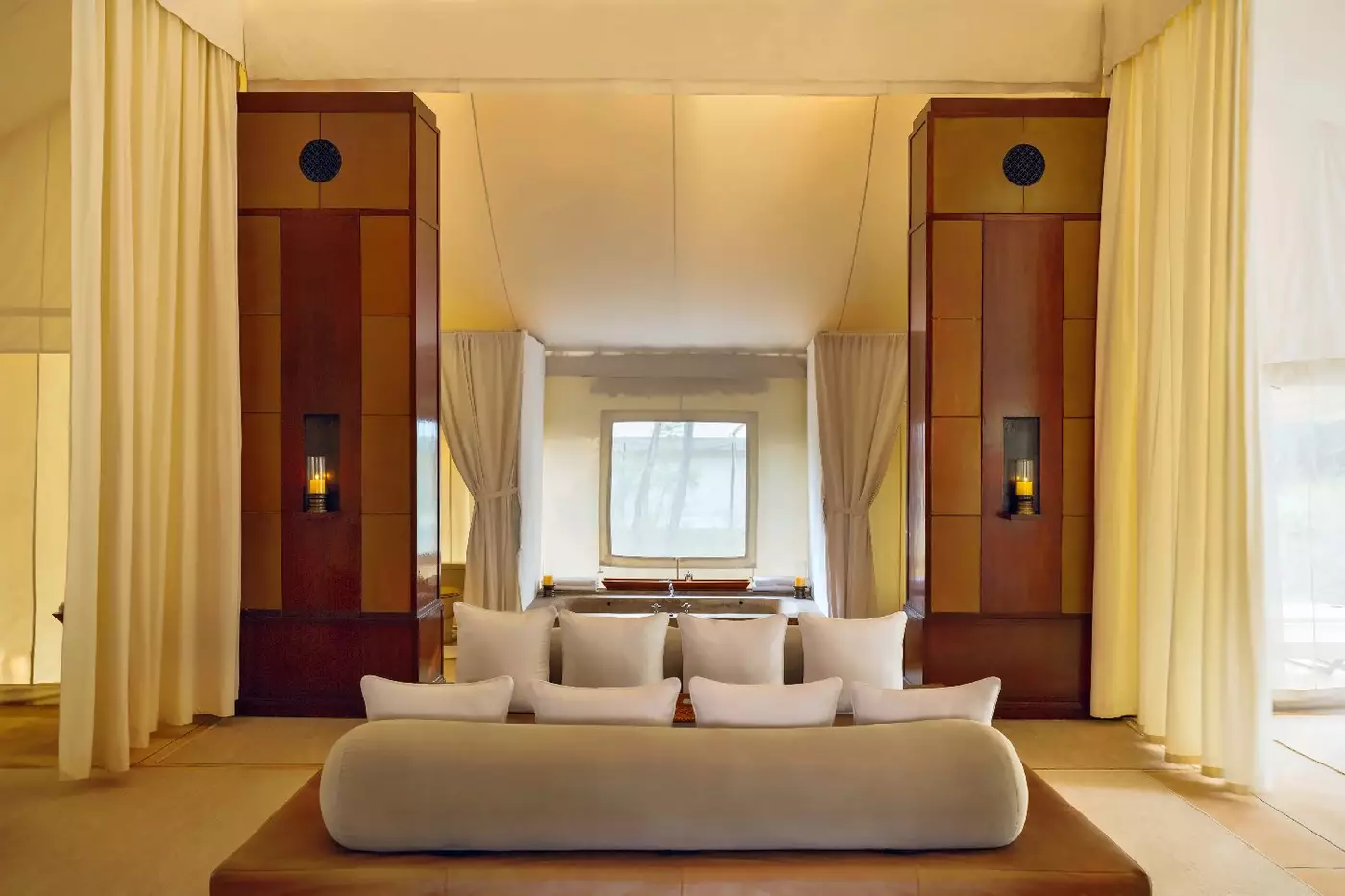
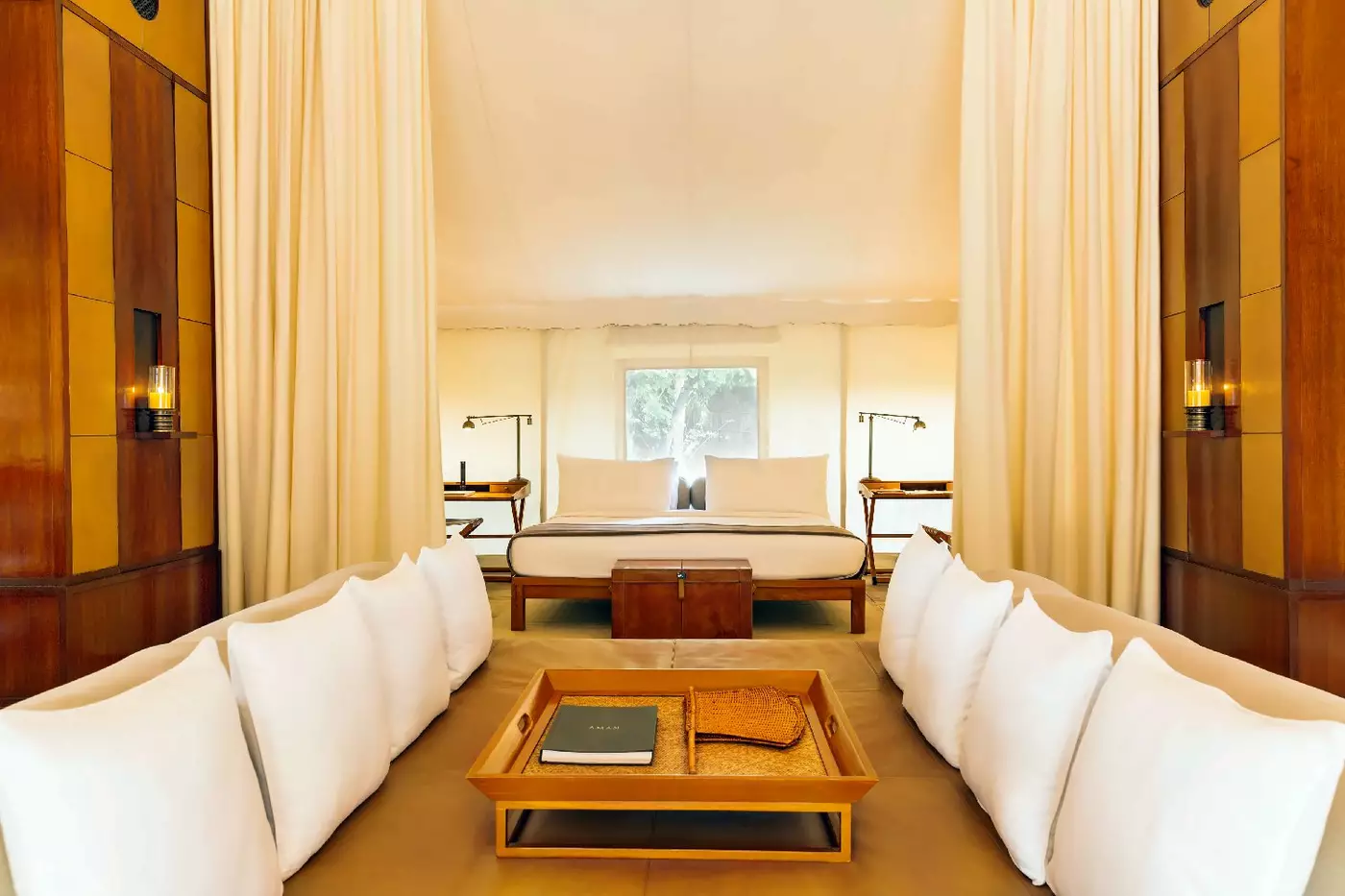
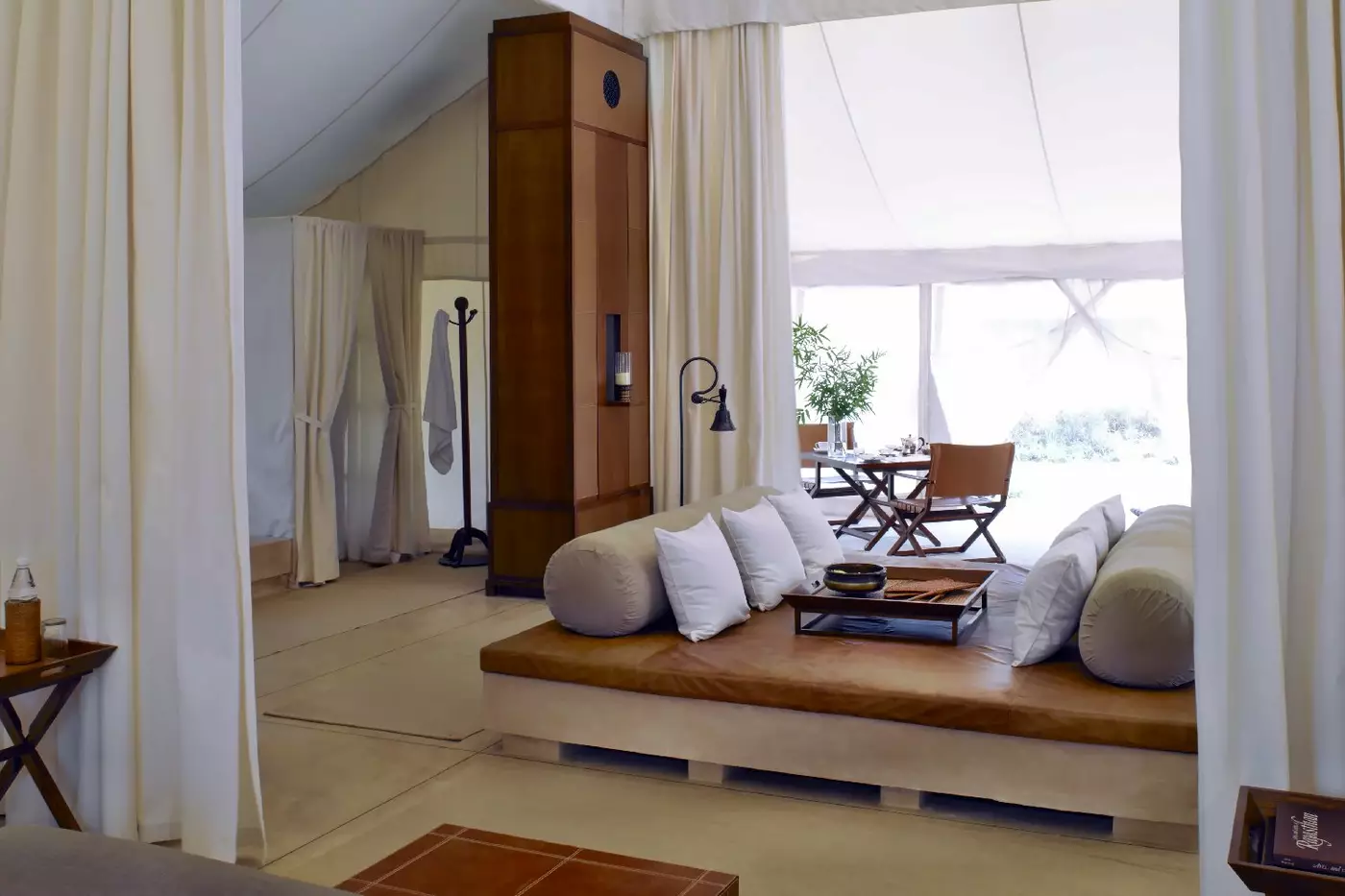
A Tented Pavilion measures 108 square meters. A king bed or twin beds sit beneath the high canopy, with a large daybed in the living area. There is a dining space, twin writing desks and a dressing area with two vanities. The bathroom has a freestanding tub, a shower and a separate toilet. Outside, the sundeck faces the camp's vegetation and gives you somewhere to watch birds without joining a drive. These are substantial tented rooms, with enough usable space to spend an afternoon inside as well as outdoors.
The Tented Pool Pavilion extends to 164 square meters and adds a private plunge pool measuring three by three meters. Its deck suits a dip after a dusty excursion or a quiet hour before dinner. Inside are king or twin beds, a daybed, a dining area and a bathroom with a freestanding tub and walk-in shower. Choose this category when having water just outside your tent matters more than the largest floor plan.
At 256 square meters, the Grand Tented Pool Pavilion has a temperature-controlled outdoor pool and an enclosed open-air deck. A sunken living area, dining space and large bedroom give it a more residential layout. The bathroom includes a corner bathtub, while a walk-in wardrobe provides storage away from the living area. It is still a king-or-twin bedroom arrangement, not a multi-bedroom villa. Families needing separate sleeping rooms should discuss their setup with the camp rather than rely on the category's size alone.
The camp arranges guided drives twice daily, shortly after sunrise and again in the late afternoon. Open vehicles and experienced guides take guests into Ranthambore to look for Bengal tigers and other native wildlife. Sambar deer, jackals, leopards and crocodiles are among the species found here. No sighting is guaranteed, and leaving room for more than one drive makes sense if wildlife is the focus of your visit.
Ranthambore's appeal extends beyond its best-known predator. Dry deciduous forest gives way to lakes, meadows, rocky slopes and the remains of older settlements. Dhok, fig and banyan trees form part of the habitat, while chital, nilgai and langurs reward attention along the route. The park is popular, so arrange safari reservations ahead of travel and check access for your dates. A flexible plan leaves time to notice the landscape rather than judge every outing by a tiger sighting.
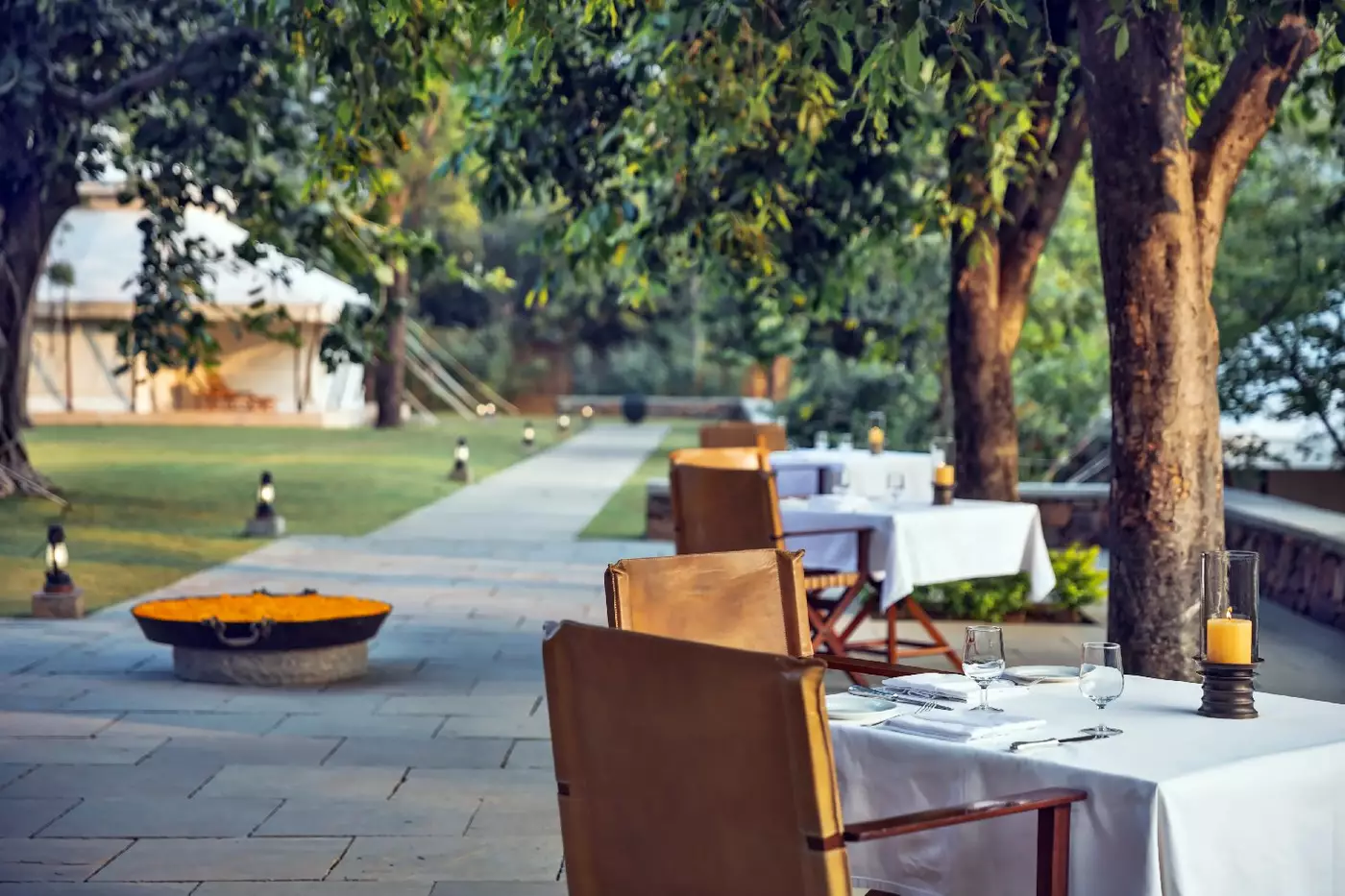
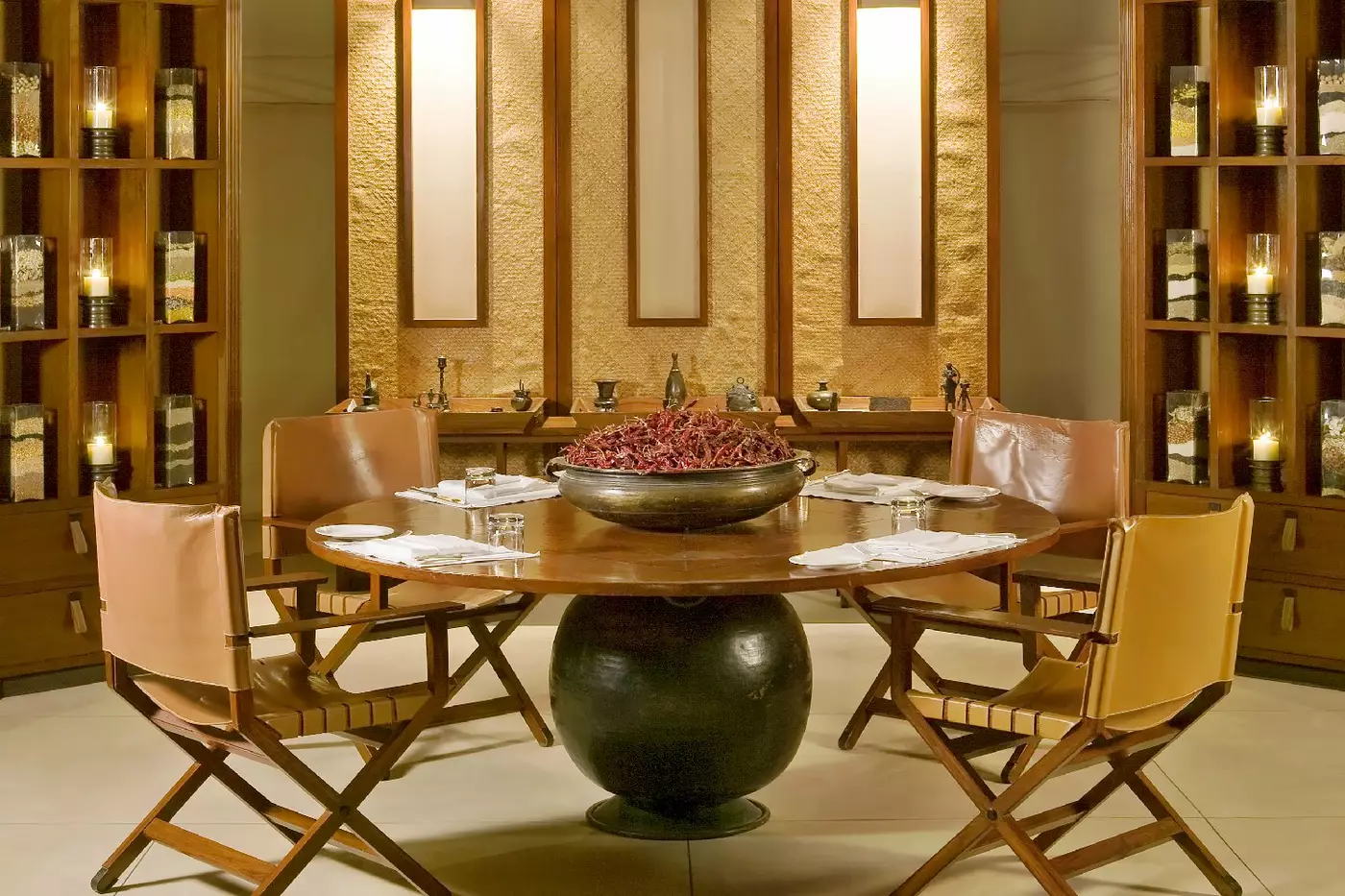
The Dining Tent serves Indian dishes alongside lighter and international choices. A large communal table encourages conversation, while smaller tables and the terrace suit a more private meal. Rajasthani thalis bring together curries, dhal, rice and roti; the camp's garden supplies vegetables, fruit and herbs. Guests can also explore the growing areas with the team.
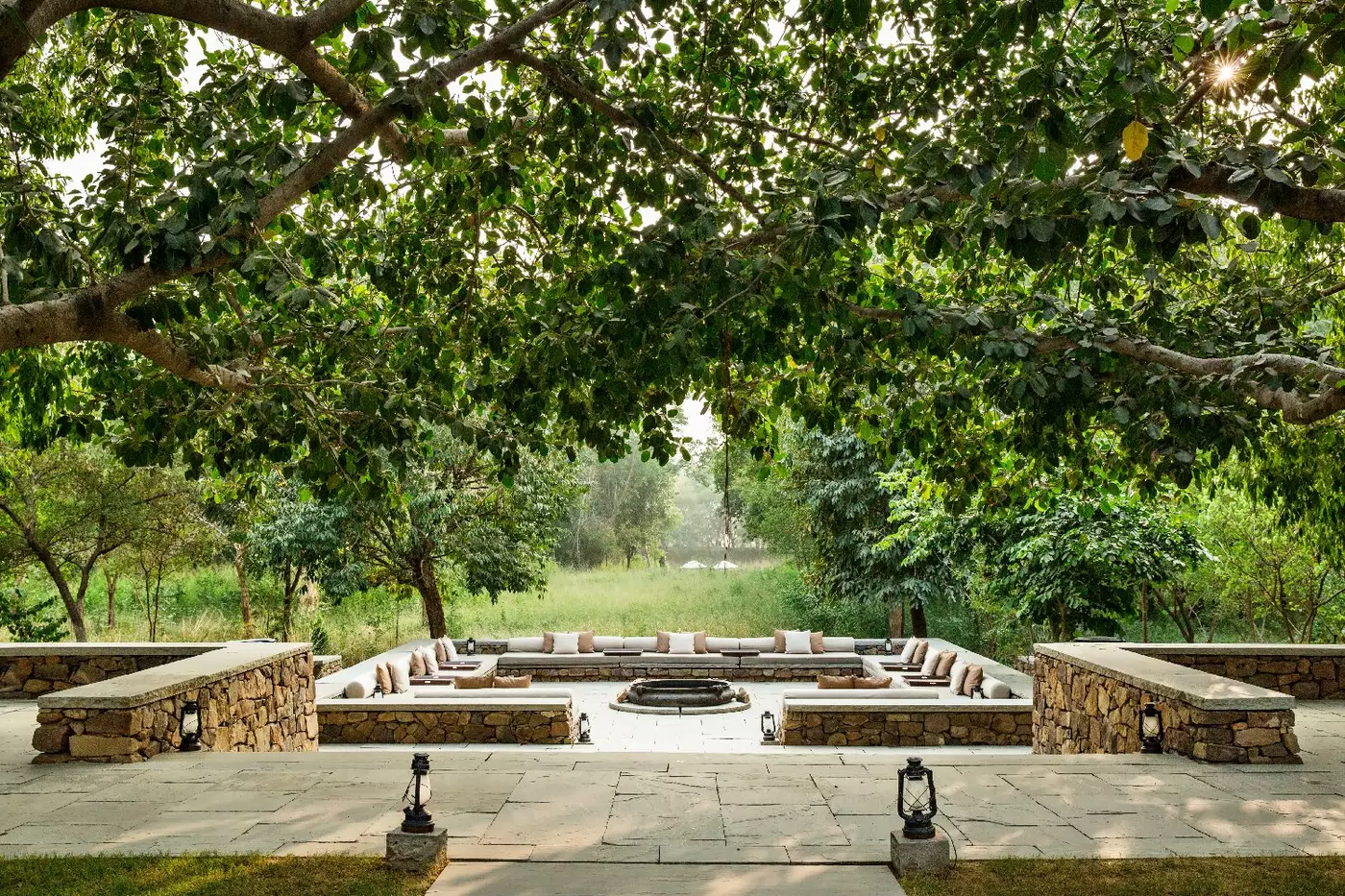
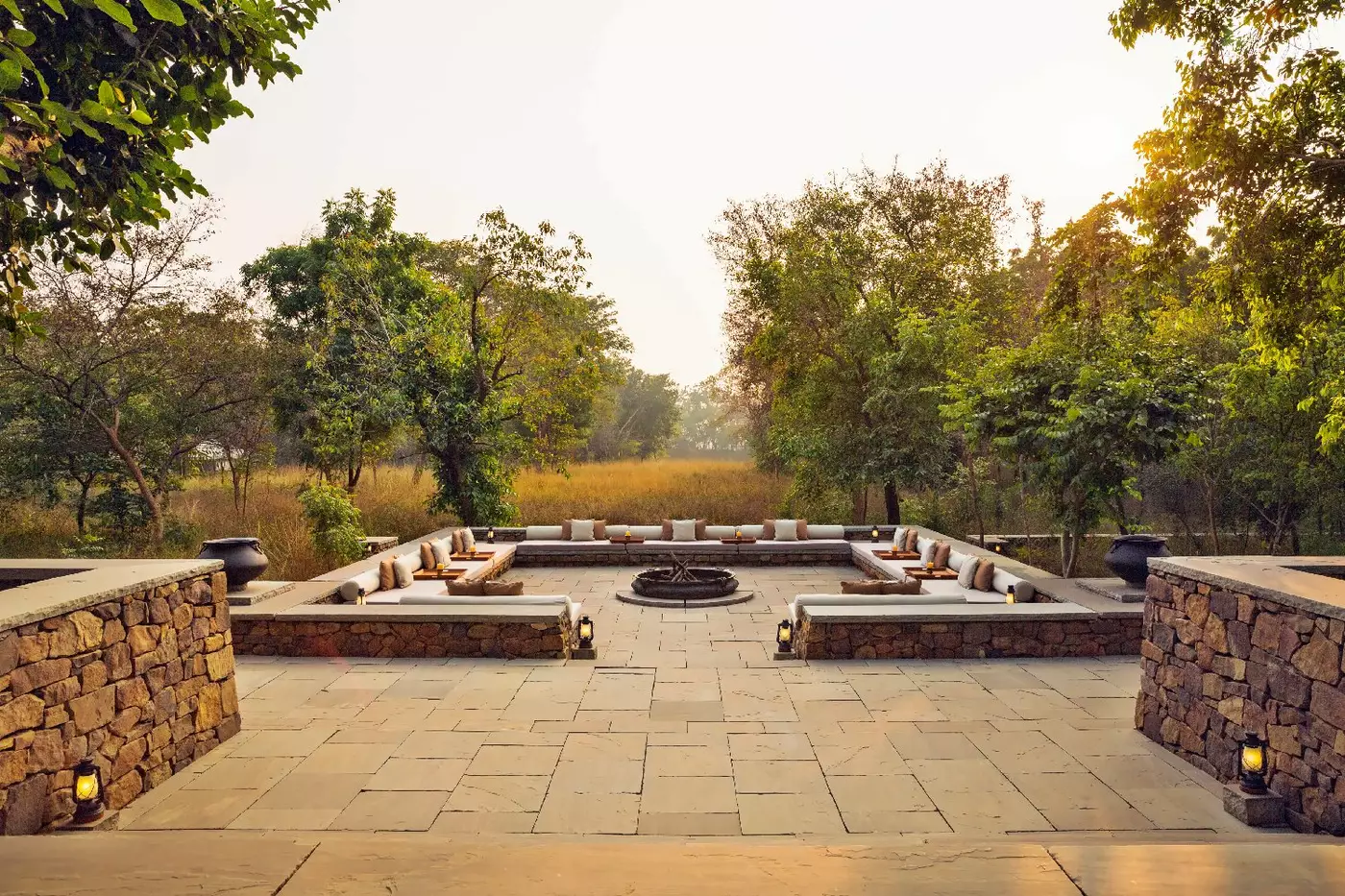
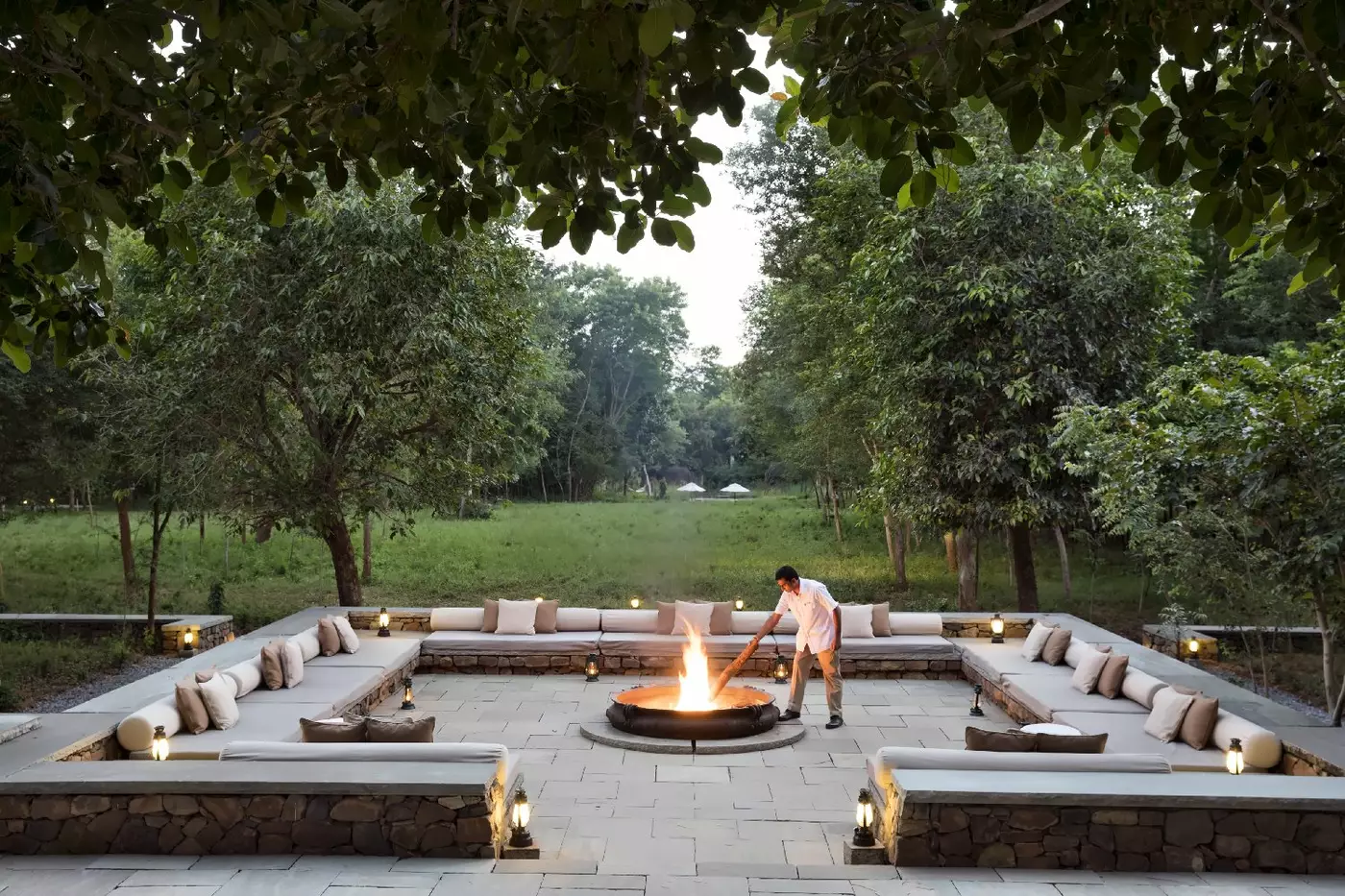
Meals beyond the tent can be arranged. A raised machan, about 20 feet above the ground, places dinner among the trees with cooking over an open fire. At the farm, a private meal takes place in a rustic garden hut. These settings give a longer stay some variety without turning dinner into another long journey. The central firepit is the natural gathering point afterward.
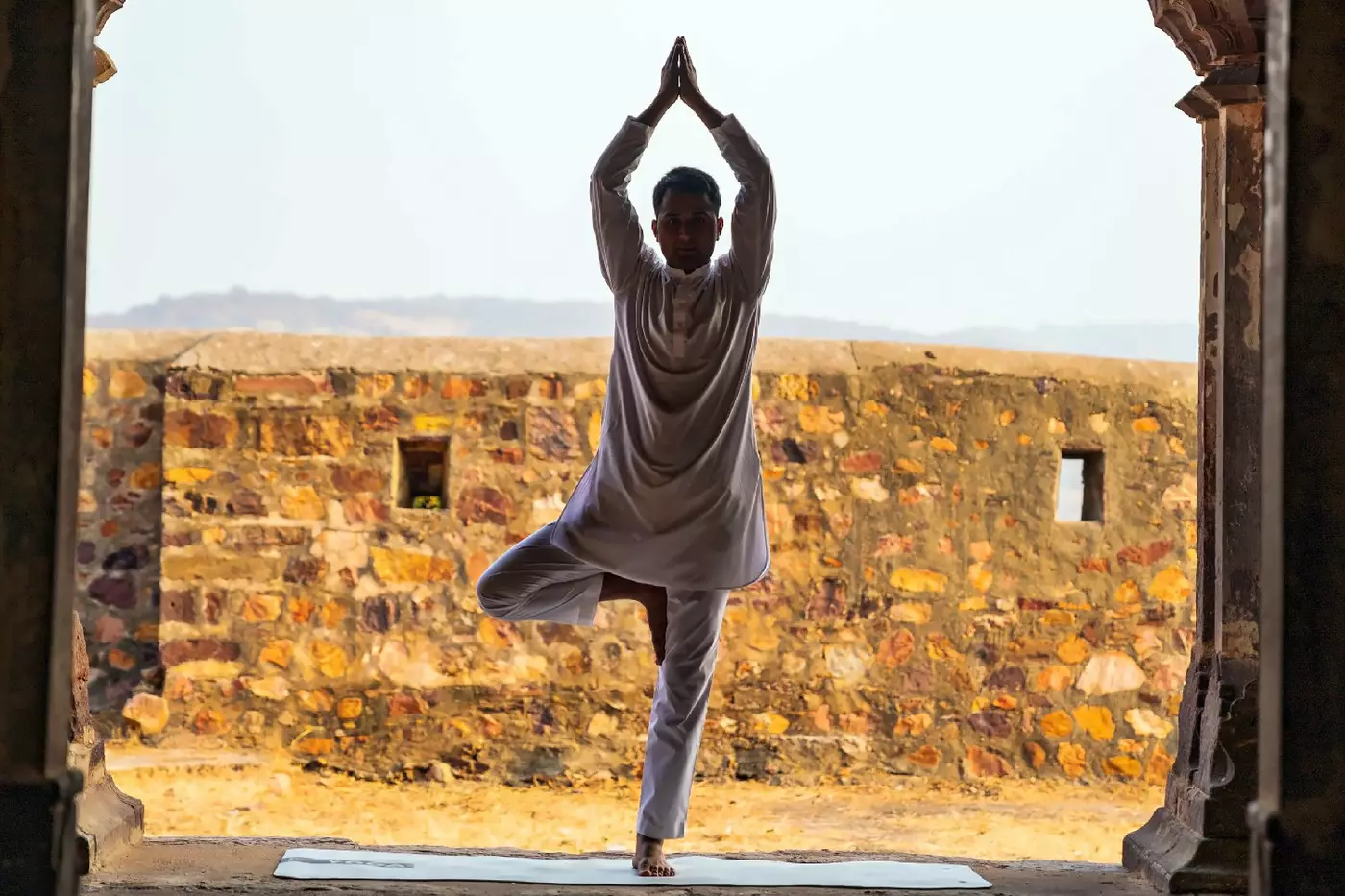
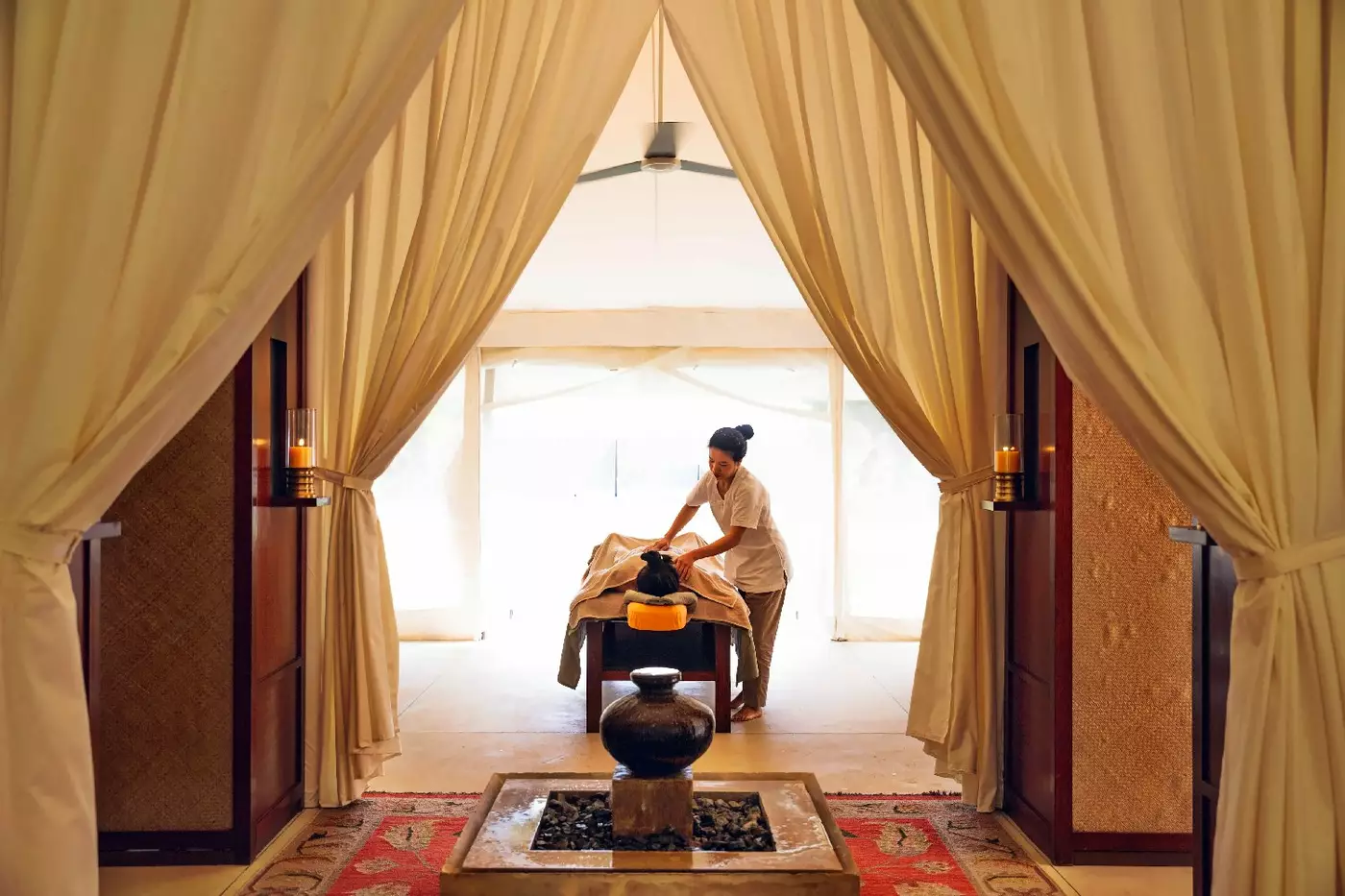
Two double treatment rooms surround a fountain in the Spa Tent. Treatments include massages, scrubs, wraps and baths, with Ayurvedic traditions informing part of the menu. The rooms have heating and air-conditioning, keeping the treatment setting comfortable across the season. Yoga and meditation can also be arranged, including private outdoor sessions.
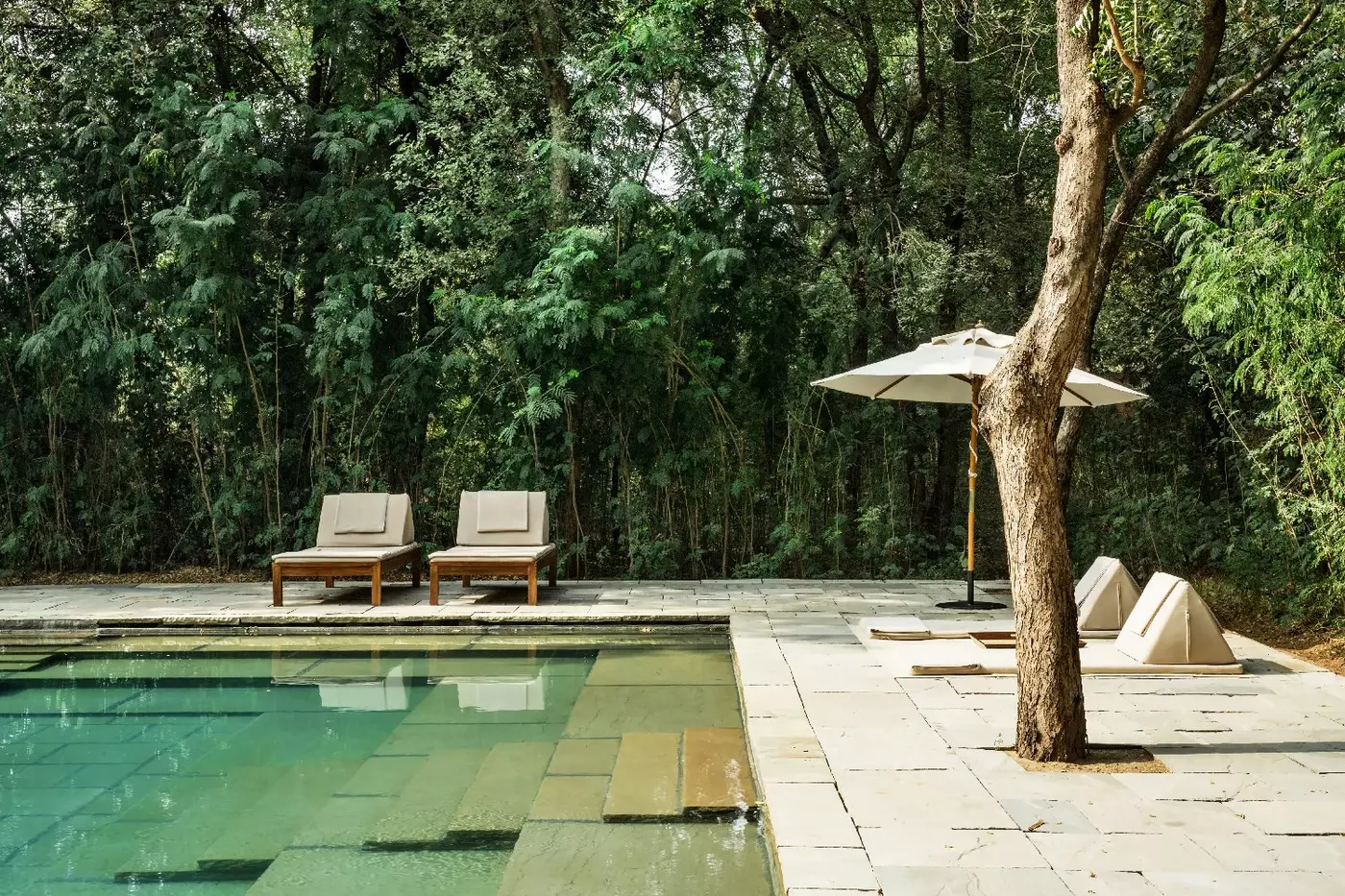
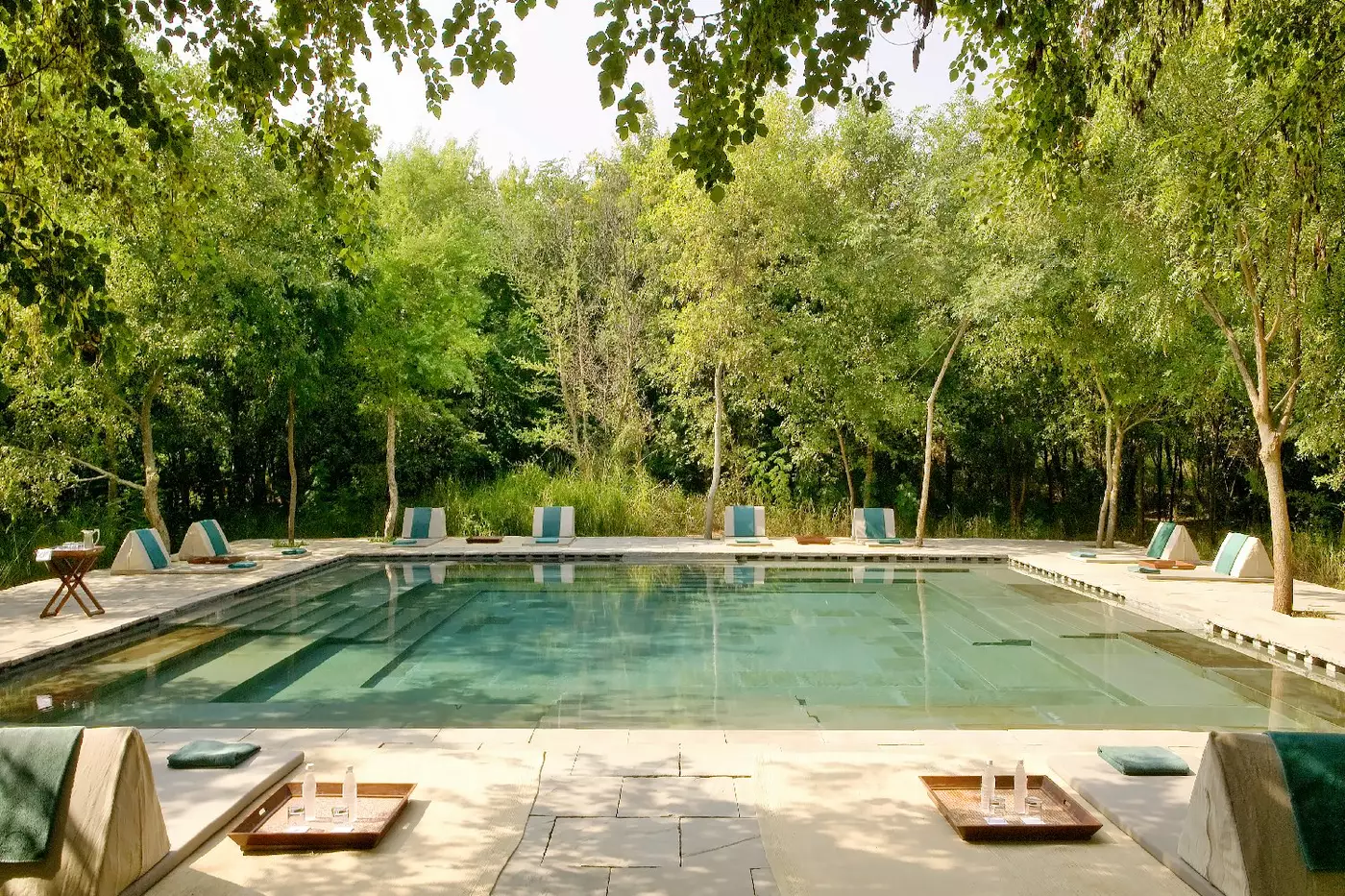
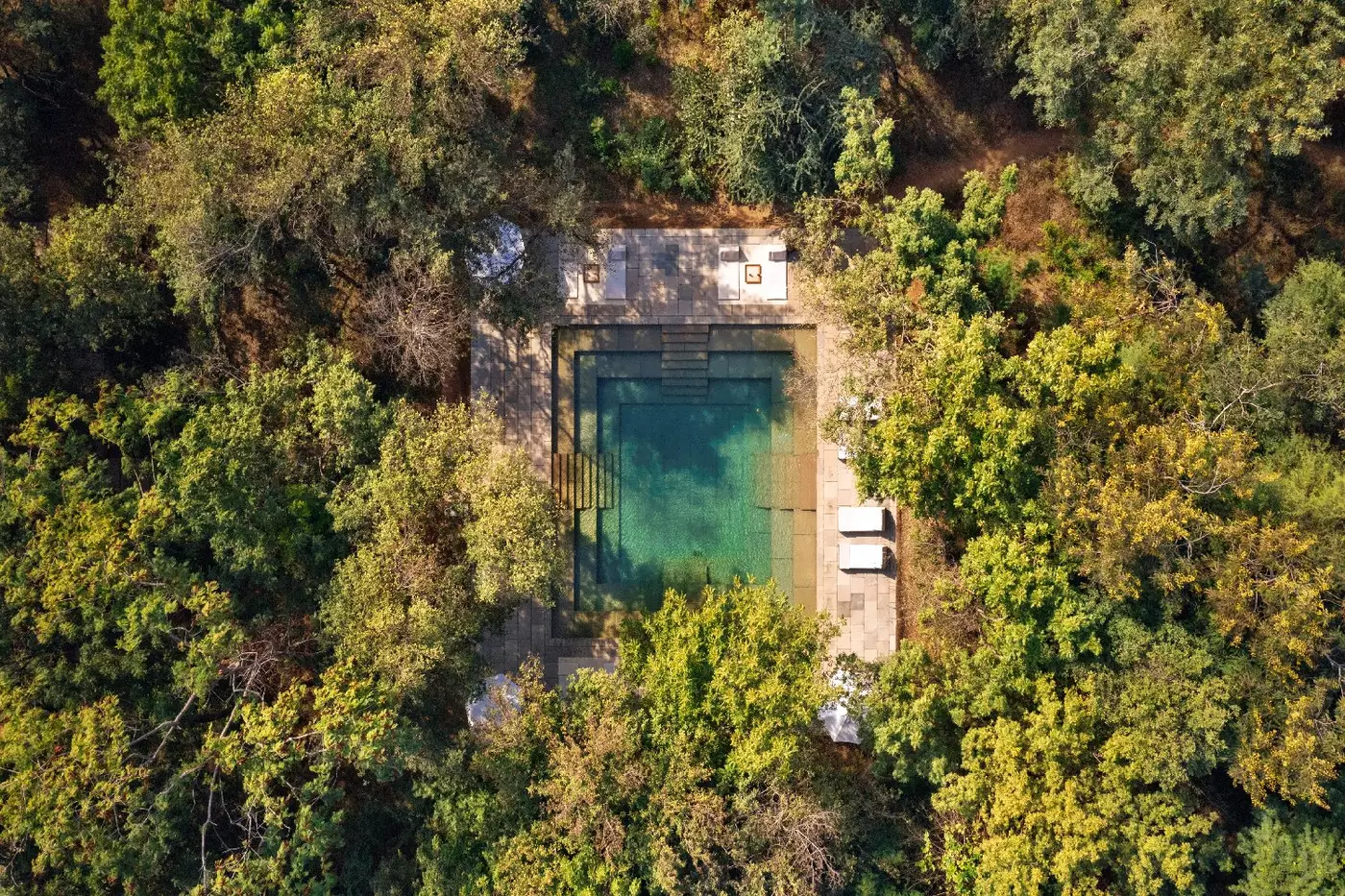
The main swimming pool draws its shape from Rajasthan's stepwells, with loungers on the surrounding terrace. It provides a place to swim even when your pavilion has no private pool. An outdoor gym beneath the tree canopy uses equipment developed with local artisans and fitness instructors. Alongside a nearby movement space, it adds a practical option for exercise on days spent largely in a safari vehicle.
Excursions need not all follow animal tracks. Ranthambore Fort brings temples and regional history into the itinerary. The camp also arranges visits to Khandar Fort, roughly 90 minutes away by car, where the approach includes a steep trail. A naturalist-led outing on the Chambal River turns the attention to birds, turtles and the possibility of seeing gharials. For families, a camel-cart outing can include a craft workshop with block-print paper art.
Jaipur International Airport is about three hours away by road, while Aman estimates around four and a half hours from New Delhi airport; traffic and conditions can change either journey. Rail travelers can use Sawai Madhopur station, followed by an approximately 20-minute drive to camp. Avoid packing arrival day too tightly. A few nights allow time for successive safaris, a fort visit and an unhurried meal at camp, without making every hour depend on the next departure.
Indian family recipes sit alongside lighter dishes and international options, with menus adapted to individual tastes for guests with different food preferences.
Nightly log fires turn the central fire pit into a gathering place where guests can swap stories after a day of exploring.
Two double treatment rooms in the Spa Tent give couples the option of side-by-side massages, adding shared downtime to a safari stay.
RANTHAMBHORE
Playing this video may share data with YouTube. Please see our Privacy Policy.
Yes. Aman-i-Khas is one of India's most refined wildlife camps for travelers focused on Ranthambore National Park. The camp has 13 large tented accommodations, safari access, calm service, spa treatments, open-air dining, and a quiet wilderness mood.
Aman-i-Khas is near Ranthambore National Park in Rajasthan, close to Sawai Madhopur in northern India. The setting is outside the park, with easy access to safari gates, rural landscapes, old ruins, and the wider Ranthambore region.
Aman-i-Khas has 13 expansive tented accommodations inspired by Mughal hunting camps. This small scale creates a private camp atmosphere, with personal service and plenty of quiet between safari drives.
The tents are large, air-conditioned spaces with sleeping, bathing, dressing, and living areas under high canvas canopies. The design feels simple, elegant, and practical for the bush, with a stronger sense of adventure than a normal hotel room.
Yes. Aman-i-Khas is built around Ranthambore safaris, with morning and afternoon drives arranged through the park system. Tiger sightings are never guaranteed, but Ranthambore is one of India's best-known reserves for seeing Bengal tigers in the wild.
More amenities
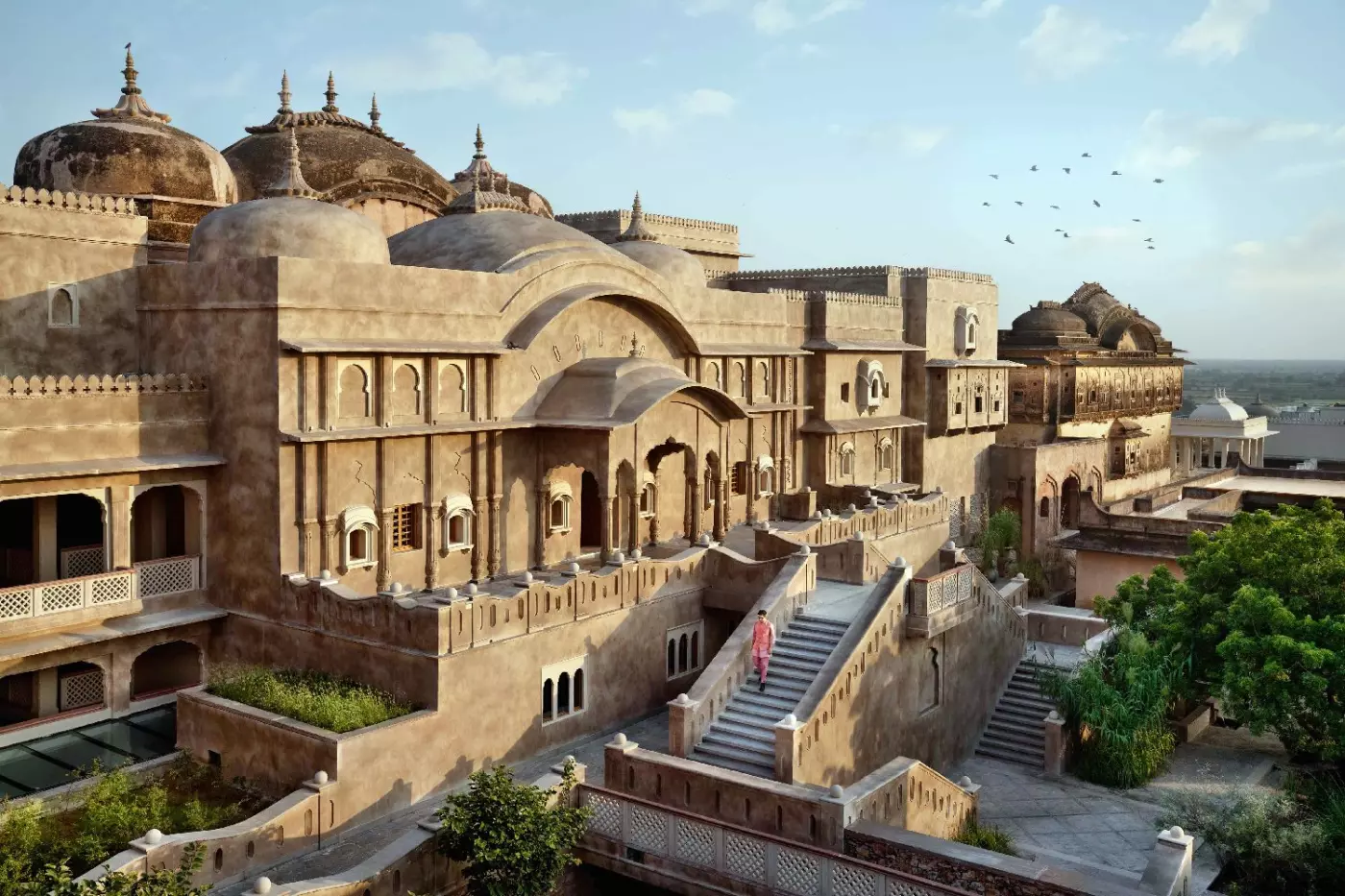
Six Senses Fort Barwara brings new life to a restored Rajasthani fort near Ranthambore. The resort sits within the walls of a...
More amenities
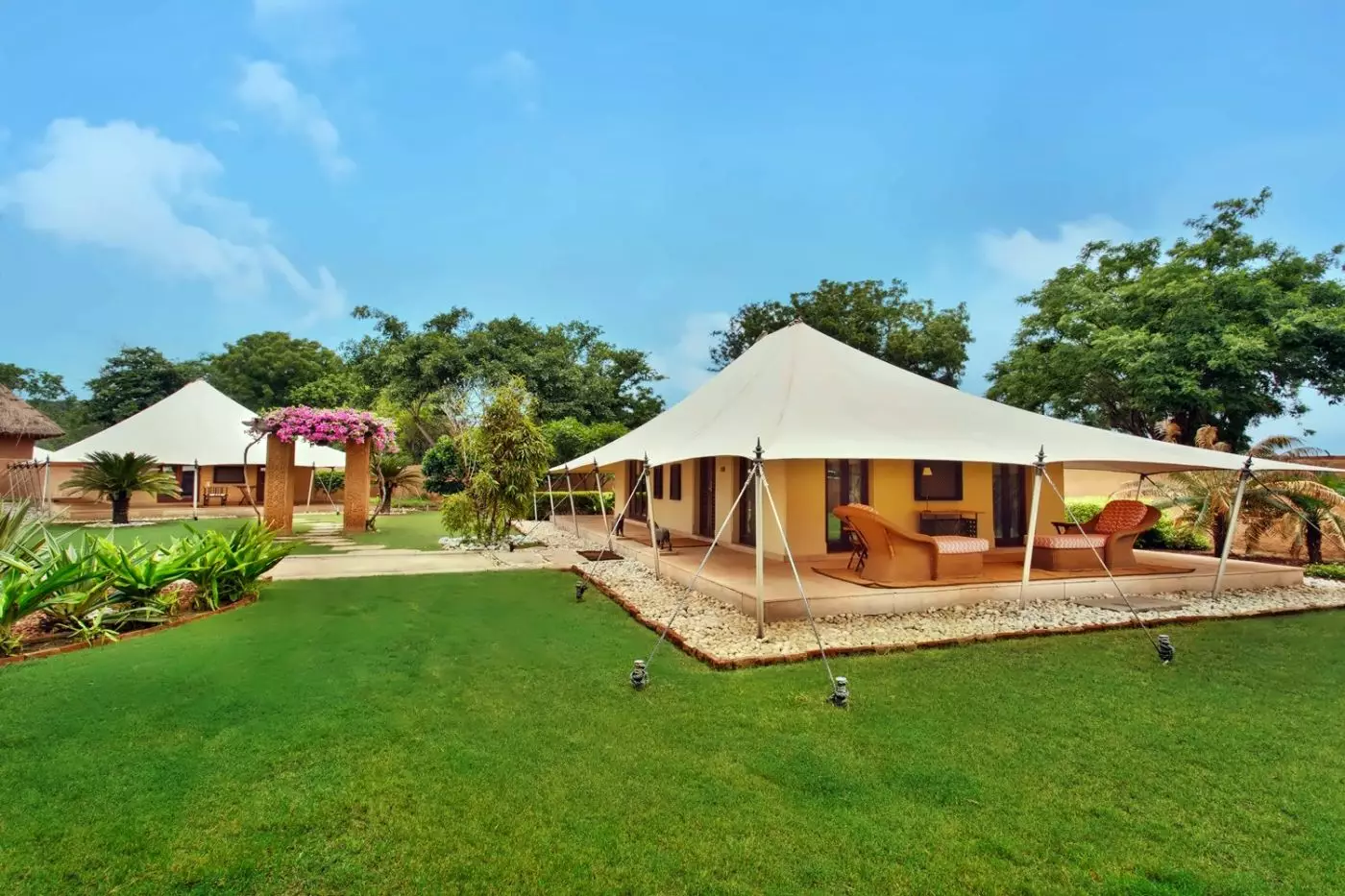
The Oberoi Rajvilas sits east of Jaipur on Goner Road, with 32 acres of gardens between its rooms and the city's busy streets...
More amenities
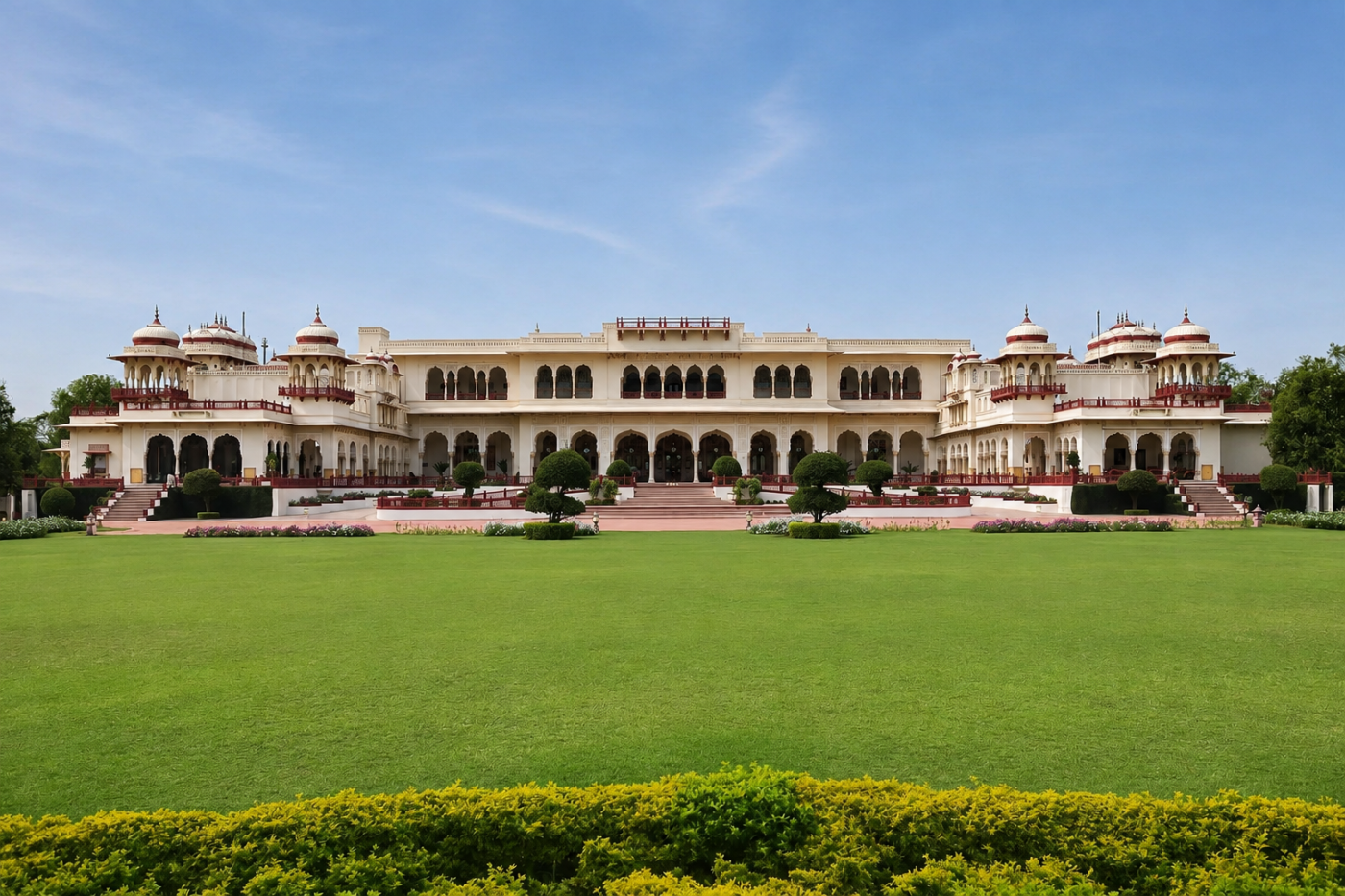
Rambagh Palace is Jaipur's classic royal palace hotel, a Taj landmark on Bhawani Singh Road with gardens, marble corridors, c...